MAGIC, 32 YEARS AGO

Illustration: Shyam G Menon

Remembering Freddie Mercury

July 1985.

News of the concert had been brewing for a while.

In that time, the newspapers had made Bob Geldof and The Boomtown Rats names to know. I knew nothing more of them. All-knowing by instant search wasn’t yet in. Google’s birth was another thirteen years away; easily accessed Internet even more. Being curious about universe and welcoming of world, I memorized the names for conversation with musically inclined friends. Geldof was the main organizer of the upcoming Live Aid, a massive rock concert to help victims of the famine in Ethiopia. It was to be held simultaneously in London and Philadelphia. The event was to be broadcast live across 150 countries; India was one of them. Some of the world’s biggest bands were heading straight to our living room. Television in India was young those days; colour TV younger still. There was only one broadcaster. Single broadcaster catering to the tastes of 780 million people (India’s population in 1985) meant that something fitting your taste on screen was both fleeting and a household event. Rock concert on TV was very rare. That year – 1985 – had seen the release of Brothers in Arms, the album that made Dire Straits a phenomenon. Thanks to Thiruvananthapuram’s music collectors and the network of the interested, we used to make up for Google’s absence and somehow access the music. I liked Dire Straits; they were expected to play at Live Aid as was Led Zeppelin in a much awaited reunion. D-Day was July 13. We watched the telecast together, as a family.

What I remember best from that telecast is what has since become famous as the greatest live performance in the history of rock music. We gazed in amazement at the TV screen as the people gathered at London’s Wembley Stadium (over 70,000 were present that day) raised their hands in the air and clapped in unison to Queen’s Radio Ga Ga. Then Freddie Mercury put them through a few vocal improvisations and they sang as he did, note for note. By the time the band was concluding its set with We Are the Champions, the Wembley crowd was swaying like a forest in the wind. On stage, Freddie Mercury was brilliant. It would be revealed later that Queen’s sound engineer may have tampered with the volume limit assigned to speakers, making the band the loudest act of the day at Wembley. If so, the band was unrepentant about it. Unlike many of the other bands at Live Aid who reportedly took their performance casually, Queen had come prepared and rehearsed. They intended to leave an impression. They did just that. Journalists writing on rock music have since compared it to one of those defining moments a lifetime of existence gravitates to. Freddie on stage at Live Aid was in such a moment.

Live Aid is supposed to have reached over a billion people. The world’s human population in 1985 was 4.8 billion. That would put the event’s TV viewership at close to a quarter of humanity, in days preceding Internet, Facebook, Twitter and human swarms trolling to enforce `like.’  Twenty minutes of Queen was Live Aid’s undisputed high point. As many would conclude later, Queen at Live Aid is rock music’s greatest live performance yet. Rock bands connect to audience through the technical proficiency of their musicians and through their front man. Queen was well balanced in this regard. Those writing on Queen have noted that none of its four members – Freddie, Brian May, Roger Taylor and John Deacon – could dominate individually, a trend capable of destabilizing bands. Further, each of them has contributed to writing one or the other of Queen’s many hits. Yet as often happens in rock music, the charisma of the front man influences a band’s perception by the public and Queen was no exception. Freddie Mercury was an electrifying act. Born Furrokh Bulsara on September 5, 1946 in Zanzibar, his father hailed from Bulsar, also known as Valsad, a town 150 km north of Mumbai. His mother was from Mumbai. Freddie spent most of his childhood in India (he attended school in Panchgani, 240 km away from Mumbai) before moving back to Zanzibar and then in the wake of the Zanzibar Revolution, onward to England. On November 24, 1991, a little over five years since that day at Wembley for Live Aid, Freddie Mercury passed away due to complications arising from AIDS. He was 45 years old. In 1996, at the opening of a photo exhibition on the life of Queen’s lead singer, the band’s lead guitarist, Brian May, would say (video of quote available on YouTube),“ to be truthful I am against recreating Queen in any other form as I think without Freddie it would always be something less than what it was.’’

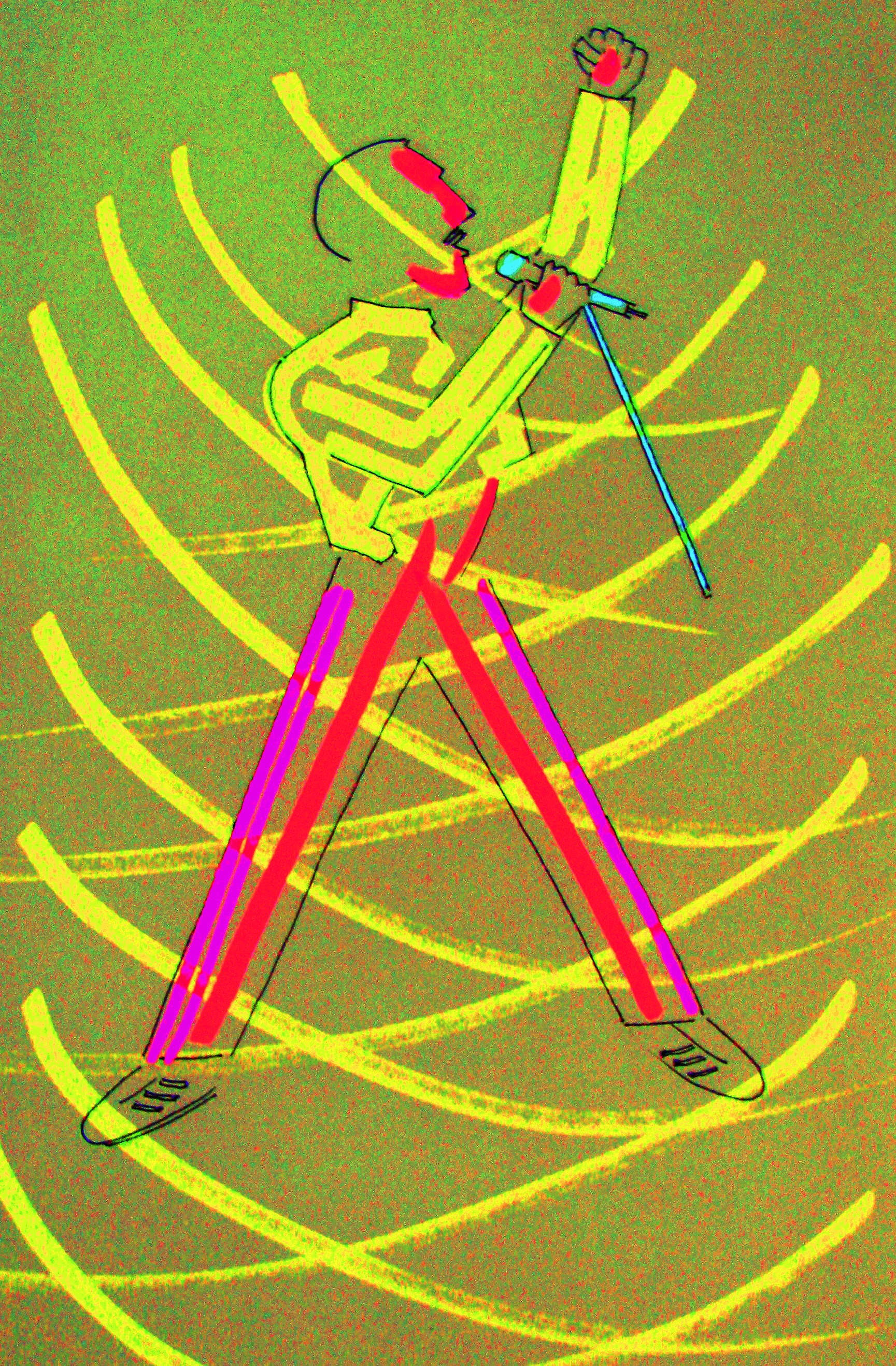
Live Aid was also an opportunity to see U2, two years before they became a smash hit (and one of my favorite bands) with the album, `Joshua Tree.’ Queen and U2 warmed up to me differently. U2 peaked with my own advent to rock music-loving age, my craving in ever lonelier world for music as companion. I fell in love with Still Haven’t Found What I’m Looking For the first time I heard it. It remains a favorite even now. Which seeker in the head can resist such a song? Queen on the other hand, took time to connect. Notwithstanding their popularity, I found the architecture of Queen’s music stiff and set in an ecosystem that was very European and British.  They felt like a group hang-out. You bonded over their songs. For example, it isn’t music you seek in We Will Rock You, a song so evocative of tribe; you seek belonging. Long after Live Aid, I had friends who swore by Bohemian Rhapsody and We Will Rock You. I found Bohemian Rhapsody an engaging mix; it was baroque, operatic and rock. But a sucker for the traveling spirit, I wanted something less rooted. Perhaps something less grand and more portable? As a young journalist in Mumbai enjoying life’s early flush of hard earned income, I also remember sitting in pubs and singing along to I Want To Break Free. I outgrew that. More to my taste were songs like Breakthru and The Invisible Man. But over time, it was another Queen number, A Kind Of Magic, which remained in head enduring life’s ageing process. I love its barreling sense of momentum, soaring vocals and surface-skimming lead guitar; it gives me a feeling of hurtling along to somewhere and nowhere in particular, all at once. Above all I love the unbridled energy that characterizes Freddie’s rendition of this song at the July 12, 1986 concert in Wembley, a year after Live Aid. It is an image of absolute confidence. The video of the performance (available on YouTube) reminds you of Live Aid. It smacks of sensing opportunity. Just past the 45th second as Freddie launches into the song, he looks towards the audience, through the haze caused by the fog machine, tad uncertain of what to expect. A minute and couple of faint smiles later, he looks to the camera and you see that glint of acknowledgement; he knows the audience is in the mood for magic.
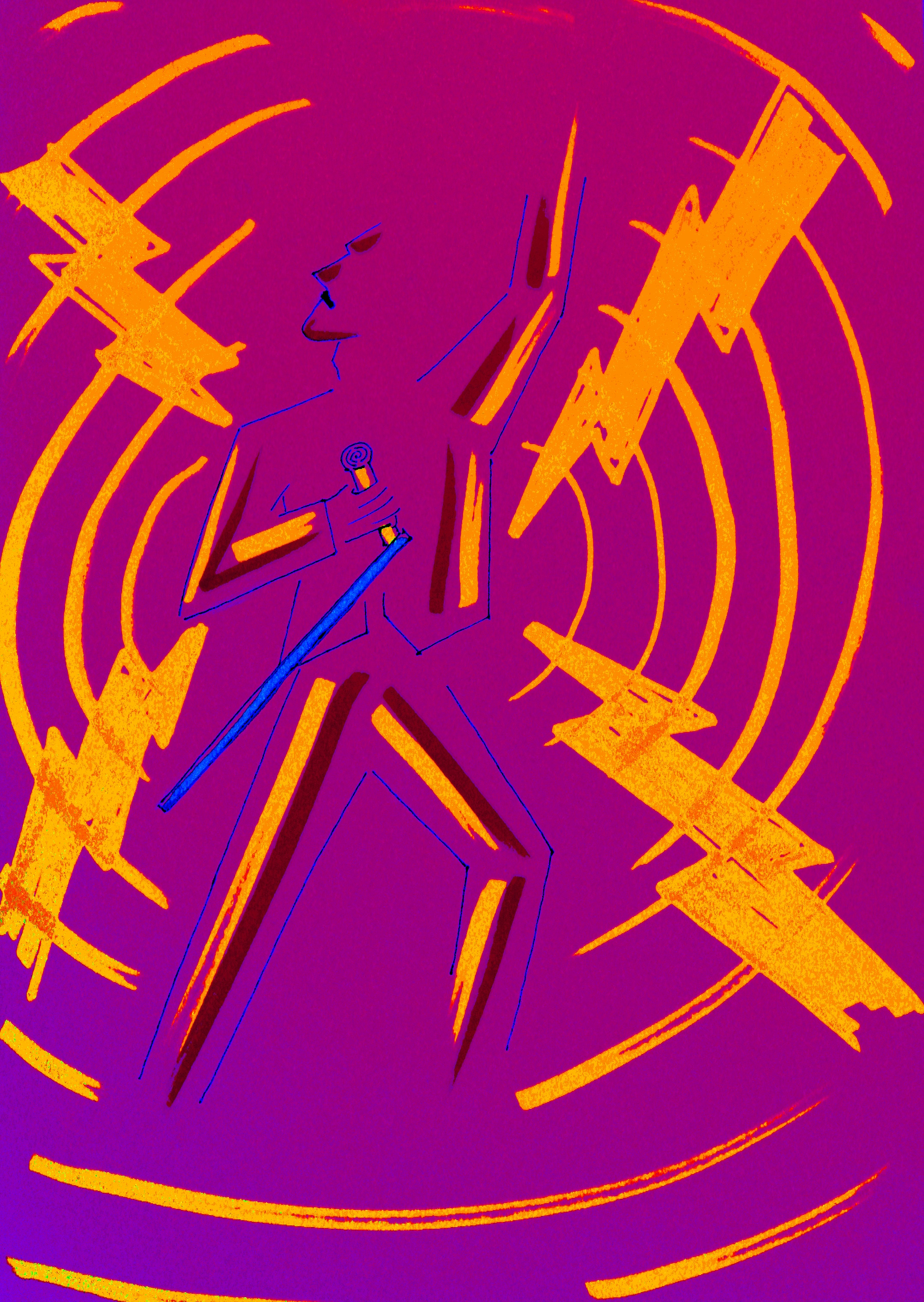
Illustration: Shyam G Menon

Twenty five years after Freddie Mercury’s demise, at a book fair near Navi Mumbai’s Vashi railway station I picked up Lesley Ann-Jones’s 2012 biography of the singer. My curiosity for it was the same as for a book on running, climbing, cycling, swimming or any such activity. Why should rock music be seen differently? Its all life; its all universe. Among other details, the book noted that Freddie’s first band was the `Hectics,’ formed at school in Panchgani by a 12 year-old Freddie and his schoolmates. An artistically inclined person given to sketching, he later took a diploma in art and graphic design, in London. His idol in rock music was Jimi Hendrix. According to the book, as successful rock star, Freddie rarely elaborated on his early years in Africa and India. On the other hand, it suggests that prolonged separation from his parents at so early and sensitive a stage in life, thanks to his schooling in distant India, may have impacted Freddie and contributed to the performer and person he became later in life. For long, Queen was a favorite with rock fans in Mumbai. Now a new generation and their music have taken over. Not to mention, Bollywood. The last big act in town was Justin Bieber (he was born three years after Freddie Mercury died). Movies have been made on artistes like Jim Morrison, Johnny Cash and Ray Charles. In 2010 a film was announced on Freddie Mercury’s life. In the years since, the cast and producers underwent change. When last reported in the international media, Egyptian-American actor, Rami Malek, was set to play the role of Freddie.

Live Aid happened 32 years ago.

Had Freddie Mercury been alive, he would turn 71 years old, this September 5, 2017.

(The author, Shyam G Menon, is a freelance journalist based in Mumbai.)     
FOOTNOTES: FOR THOSE WHO LIKE THEIR RUNNING WITH A DASH OF AWARENESS

Minutes before I started writing this book review, I was watching The Walk, the 2015 biographical film from director, Robert Zemeckis, on the life of French high wire-artist, Philippe Petit.

There is without doubt much physics and math in tightrope walking. But at some point, it is an art. Even if art can be analyzed and demystified by science, given the way it is sensed and picked up as skill, art is different from how science handles itself. It is so almost to the point of saying – if science chooses to explain art, it is incumbent on art to stay ahead.

Art may have become minority in our age of technology (at times I feel, art was always meant to be minority). But art still begs being understood differently. Out in the middle, on the wire straddling the void between the erstwhile Twin Towers of New York, Joseph Gordon-Levitt’s Petit conducts himself like an artist and on completing the daring tightrope walk – including moments spent sitting and lying down on the wire – describes his feeling as one of the greatest peace. Notwithstanding cinema as digital medium, does the high wire-artist’s observation seem the product of technology and artificial intelligence or does it seem very human; a state of acute consciousness and mind stilled?

Mountaineering and climbing have always defied categorization as sport. Climbing has made it to the Olympics; sport climbing will debut at the 2020 Tokyo Olympics. Yet sport climbing is only a small part of the larger world of climbing, which is as much the stuff of achievement as it is of poetry, art, spirituality and philosophy. The latter aspect – what I would call, the aesthetic and spiritual side of these pursuits – is frequently referred to in the accounts of intense climbers but very rarely do you find these qualities becoming the subject of a book. That’s what made Robert Macfarlane’s 2003 book, Mountains of the Mind special. It dared to explore what mountains have meant to us in our history and why we came to like being there, why we like pitching ourselves against vertical terrain. Such angle of enquiry in writing, unafraid to call on references from art and literature as opposed to technology, was an exception in sport progressively lost to industrial athleticism. It is for similar reasons, that I now recommend Vybarr Cregan-Reid’s 2016 book: Footnotes: How Running Makes Us Human. It is among the most interesting books on running I have read since Christopher McDougall’s Born to Run.

Author, Vybarr Cregan-Reid is a runner. He is also Reader in English and Environmental Humanities at the School of English, University of Kent. His knowledge of literature has played a role in sculpting the narrative of Footnotes. This is a book on running that mentions or quotes – unusually for the subject it is tackling – literary figures like William Shakespeare, Walter Scott, Charles Dickens, Jane Austen, E.M. Forster, Oscar Wilde, Thomas Hardy and Henry David Thoreau. There is recourse to scientific studies and research reports to support observations on running. But they are not as memorable as the unconventional perspectives on running, the author offers.  That’s what makes this book special. For, research papers as proof – of that, there is no shortage in age of science and technology. What you miss everywhere is, interesting perspective.

Among the great legacies of the twentieth century, would be the rise of the industrial state, existence within which has shaped our thinking in ways more than we assume. We run with purpose, we run to achieve, we set goals, we measure how long we take to cover distances, we compete – it is as if running is work. Around the middle of Footnotes, a chapter opens, titled: In Praise of Idleness: How to Run Away From Work. Below the chapter’s title is a quote from the German psychologist, Eric Fromm: There is no other period in history in which free men have given their energy so completely for the one purpose: work. As you dwell on it, Fromm’s observation would appear to have impacted how we look at running too. We like to run as a team, we like to keep our bio-mechanics trained and oiled for the task, we obsess with brands and gear to gift ourselves the best shot at opportunity, we eliminate failure and because we approach running as work, we adhere to schedules and ration the days we take leave from it. The other dimensions of existence that running can show us are very much there. Question is – do we wish to see it and if we did, will we pursue it for what it is without hoisting our compulsions on it?

For the most part, Footnotes revolves around exploring things we have felt while running but overlooked; very often, in favor of attributes our age of work wishes us to conform to. For instance, all runners talk of ` runner’s high.’ But what exactly is it that we feel? Why do we feel it? Particularly, why do we seek it and like it when the overwhelming narrative of world around us is that it exists for our happiness? By attempting to answer such questions, Footnotes takes the discourse around running away from predictable lines inspired by industry, technology and market, to one that embraces aesthetics. It addresses such issues as why we like running outdoors (as opposed to indoors on a treadmill), the effect of the colour green on our senses, running to explore etc. Among the most amazing set of pages in this book for me, were those spent tracing the origins of the treadmill to the prison system of Victorian England, where the predecessor of the modern treadmill was used on prisoners condemned to hard labour. One of those sentenced to hard labour during this period and spending time on the treadmill was writer and poet, Oscar Wilde. How many of us running on a modern treadmill are aware of its origin in such a bleak, restricted environment? Notwithstanding the convenience they offer, how many of us see treadmills and gyms as indicative of our own confinement by industrial society? Had we enough open space to run on, would we court the treadmill?

The book’s potential weakness is the very reason for its appeal. Too much of literature and thought may put off those who would rather get tips on how to improve their running and better their prospects. Plus – as with Mountains of the Mind – this book too, occasionally alienates the reader by basing itself too much in the geographical details of England, Europe and North America. But if you are capable of analogy and metaphor, this is an insightful book, anywhere. The credit for introducing me to this book goes to the manager of Thiruvananthapuram’s Modern Book Center. He saw me pick up a book on running and suggested I sample Footnotes too.

(The author, Shyam G Menon, is a freelance journalist based in Mumbai.)      
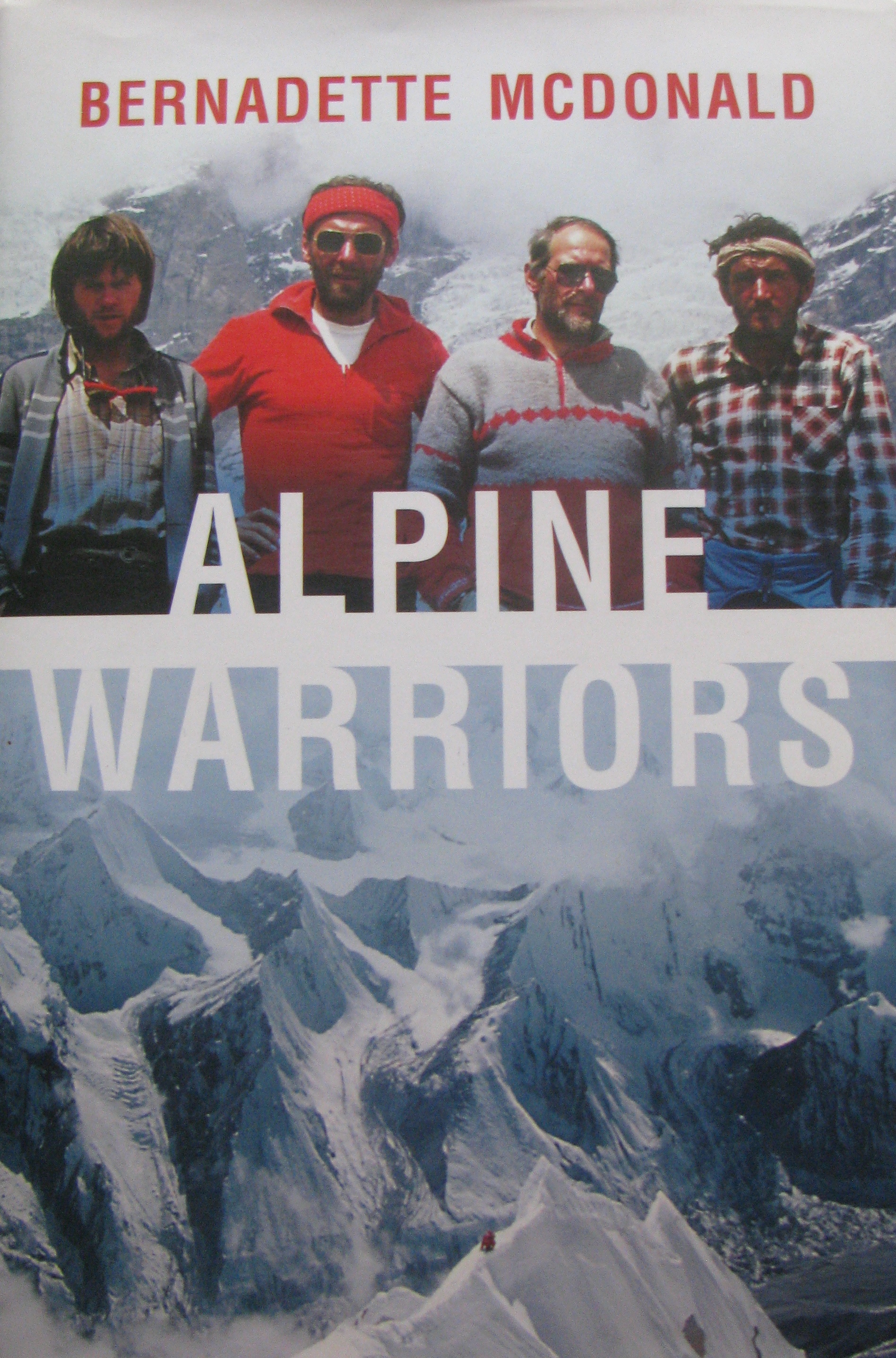
ALPINE WARRIORS – ANOTHER GOOD BOOK BY BERNADETTE MCDONALD

What drives people to climb; what makes them climb the way they do? – The question has fascinated writers.

Back in 2011, Bernadette McDonald’s ` Freedom Climbers’ was an unusual book for the way in which it juxtaposed the top notch ascents Polish mountaineers essayed in the Himalaya, against the backdrop of political and economic changes that happened in their country.

The author’s latest offering in the same genre is `Alpine Warriors,’ a study of Slovenian mountaineers, who though arriving late on the scene (like the Poles), left an indelible impression on Himalayan climbing with some terribly difficult routes accomplished. In paradigm and narration, the book is similar to Freedom Climbers. The angle explored in the earlier book was the effect of life in Poland post World War II, on that country’s brand of mountaineering. Being a good climber and getting selected for expeditions overseas was a way to escape the Iron Curtain. Climbing in the Himalaya, they took incredible risks and credited to their names a repertoire of tough routes and winter ascents. The reputation this initial batch of Polish climbers – they included names like Jerzy Kukuczka, Wojciech Kurtyka and Krzysztof Wielicki – garnered in Himalayan climbing is unparalleled. On the other hand, as Poland shifted from being a regulated economy within the Iron Curtain to an open country with a free market, the subsequent brand of alpinism it manufactured appeared to lack some of the drive that had characterized its earlier lot of climbers.

Slovenia’s predicament played out tad differently. For much of the twentieth century, Slovenia was part of Yugoslavia. Living in the mountainous part of erstwhile Yugoslavia, Slovenians have long considered it almost a national duty to ascend Triglav, the highest peak in the region and the highest peak in the Julian Alps. In April 1941, Yugoslavia was overrun by the Axis powers. Post World War II, the Yugoslav monarchy was abolished and a Communist government headed by Josip Broz Tito took over. Although socialist, Yugoslavia under Tito stayed largely independent. It was adjacent to but separate from the Iron Curtain Soviet Russia cast across East Europe. With love for mountains strong at home and socialist economy to cope with, Slovenian mountaineering’s situation during its years as part of Yugoslavia likely resembled Poland’s under the Iron Curtain. There was scarcity of resources and they were arriving late on the world’s mountaineering stage. In their early expeditions to the Himalaya, Yugoslav teams sought challenging routes to define themselves. They climbed faces and untamed ridges, achieving these goals with strong team work. During this time appeared the poetic writings of Nejc Zaplotnik, among Slovenia’s best climbers and a member of some of these expeditions. His book `Pot’ (translated and quoted in Alpine Warriors), inspired fellow countrymen to take up mountaineering.

As region denoting the cultural overlap of Europe and Asia, memories ran deep in the Balkans. Old victories still counted, old defeats still rankled. Revenge lurked below the surface.  Following Tito’s demise, Yugoslavia descended into internal conflict. In some parts, it was a madness lasting a decade. Slovenia acquired stability early but in places like Croatia, Bosnia-Herzegovina, Serbia – the killings continued. Getting away to the Himalaya became an escape from ideas of nationhood played out to the extreme. Bernadette McDonald’s latest book commences with the early Yugoslav expeditions to the Himalaya noted for their team effort. It then takes you through the intervening years of Yugoslavia’s break-up, war in the Balkans and eventually the rise of names like Tomo Cesen, Tomaz Humar and Marko Prezelj who stunned the world with their climbs; the first two – Cesen and Humar – famous for their solo ascents. In the process it tells the stories of several top Slovenian mountaineers from the country’s years as part of Yugoslavia; its pioneering expedition leaders, the tenacity these climbers brought to expeditions, shows us the working of big expeditions, alpine style climbs and solo climbs and provides an idea of how Slovenia’s new generation of climbers perceive mountaineering.

As in Freedom Climbers, Alpine Warriors explores its chosen theme and leaves you with pointers to continue inquiring. A good book is like a mountain you wish to climb. There may be answer or summit but what endures is the journey.

If you liked Freedom Climbers, Alpine Warriors won’t disappoint you.

(The author, Shyam G Menon, is a freelance journalist based in Mumbai.)
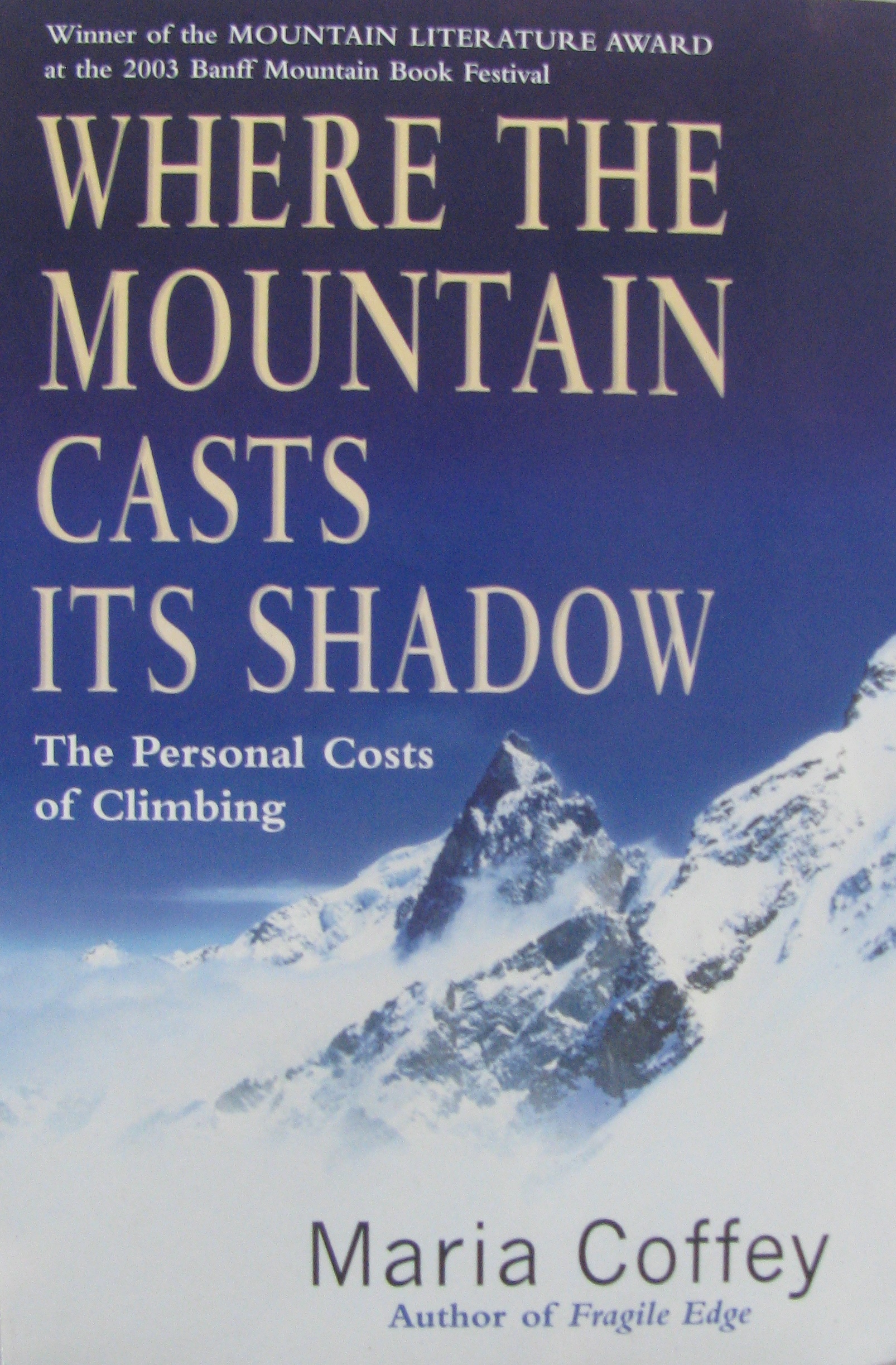
A MIRROR OF A BOOK

It is a dozen years since Maria Coffey’s book Where the Mountain Casts Its Shadow was published.

In 2013, she was there at the writer’s festival at Mussoorie’s Woodstock school. Her talk, remarkably different from others’ for the topic it covered, was ample reason to buy her book and read it. By the time I reached the counter selling books, the few available copies had already got picked up. It was a couple of years before I finally found a copy at a bookstore. Eventually, I read it. This is a book on a set of subjects, climbers would rather not talk about – death on the mountain, long absences from home and how friends and family cope with mountaineers’ obsession for distant ranges and high altitude. The reluctance to talk is understandable. It is proverbial triangle with slightly different actors. A man or woman invests in a comfortable pad with partner; even raises a family, yet there is no getting away from that other partner in the frame – the mountain.

The bulk of climbing literature is written by climbers for other climbers or the general public. Point is – it is always the mountaineer’s perspective that shines forth. The adulation we have for climbing flows back from climbers being privy to a coveted perspective (visual and experiential), to obtain which the vertical and its accompanying challenges have to be handled. That challenge is frightening, the successful outcome, impressive and the perspective sold, so compelling that the adulation is spared questioning. But frankly speaking, much as George Mallory quipped, “ because it’s there’’ to why he wanted to climb Everest, there is no good reason for anyone to put his / her life in danger and climb a peak. The world is right if it finds it madness. Mercifully, ` adventure’ comes to the rescue, making it a fashionable madness.

Just as a big expedition leverages the work of many to plant a climber or two on the summit of a peak, covering those two in glory and the rest in anonymity, anyone venturing to wilderness is there thanks to a network of human beings he / she encountered or befriended in life, some of who have sacrificed their happiness so that he / she may gain the experience sought. And as with expedition members consigned to anonymity, friends and family are often taken for granted. Veteran mountaineers and expedition leaders can sit and count the number of people they know, who died in the mountains. Over time, the dead and the maimed, become statistic. Some of the dead – the famous dead – get written about. But that is to highlight their lives, their climbs, what they were like in the mountains, why they loved being there; in other words, it’s all about them. How many of us know what it is like to endure a long separation with partner gone to the mountains or cope with tragedy if he / she didn’t come back alive? Or bring up children when husbands or wives are away for long or plain, dead? The other side of mountaineers’ lives – the people they leave behind at home, their version is rarely heard.

Maria Coffey’s book is important because she gives the quiet, unheard ones, voice. Doing so, a little known side of climbing comes to the fore. It’s a side you won’t normally hear from mountaineers’ mouths. The subject being such, a lesser writer would have made this book a collage of emotional responses. Maria Coffey strikes a balance; a lot of what she says is grounded in personal experience, conversations and extended interviews with others, not to mention much reading. The book gives considerable insight into how tragedies in climbing played out, particularly how they impacted and were dealt with.

Lest you conclude this is all about censuring mountaineers or deeming that obsession with climbing – irresponsible, let me hasten to add: there are instances in which children brought up amid long absence by one parent or growing up with one parent dead, have found themselves in the mountains and realized, you can’t fault the obsession. There are instances in which widows have remarried (at times to a friend of the deceased) and felt their new found happiness to be a gift from the one who passed away. There are instances in which the surviving partner has realized that there is an appetite for risk in his / her own personal make-up which is what made them love a mountaineer in the first place or makes them seek others cast similarly when one goes away. Who then, is to blame? It would seem, for all the stability we crave and celebrate, there is an edginess we secretly admire. The mountains are not only beautiful; they hold a mirror to our lives. So does this unusual book.

(The author, Shyam G Menon, is a freelance journalist based in Mumbai.)   
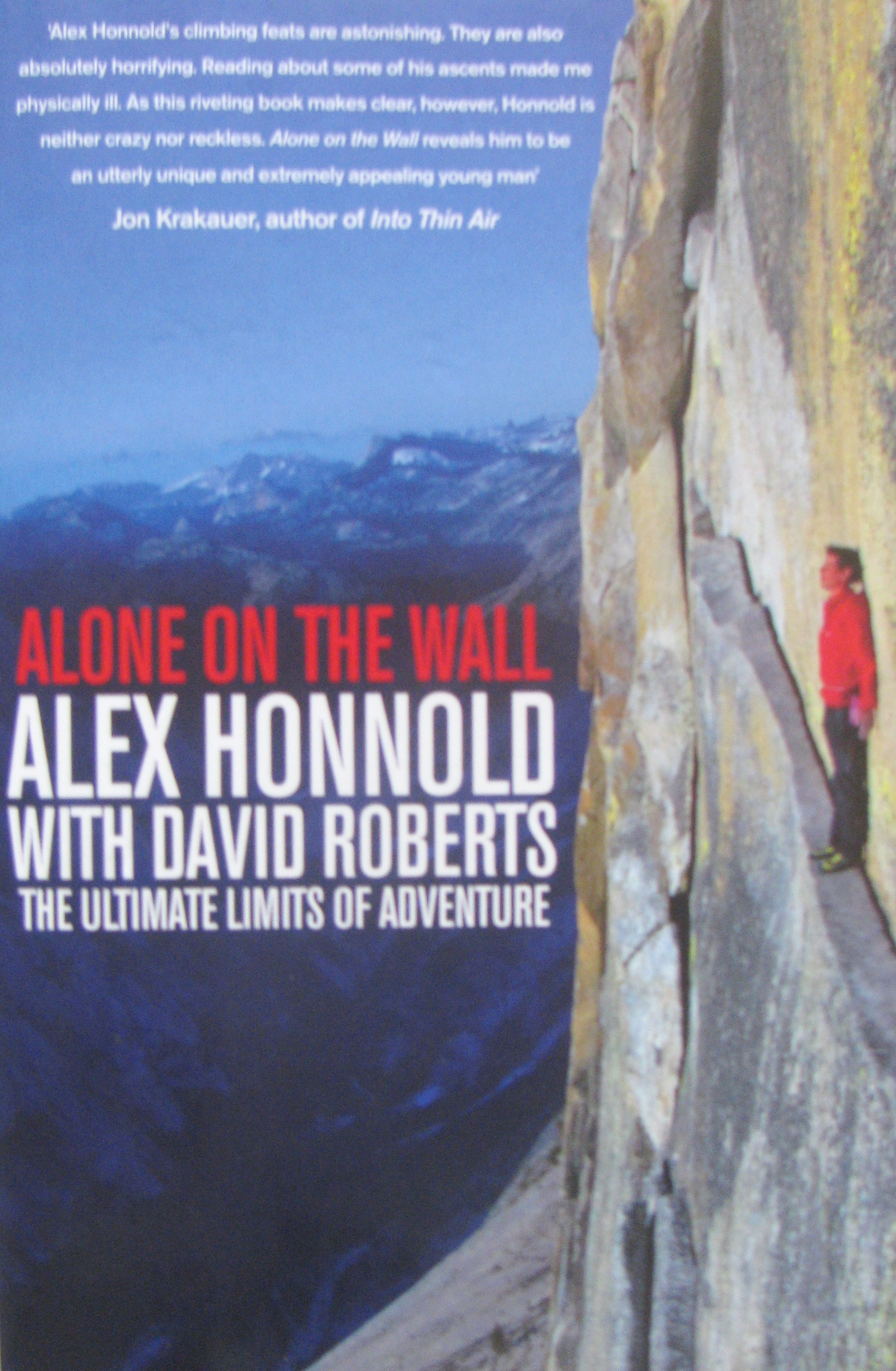
ALONE ON THE WALL

Alex Honnold is notorious for quietly doing what he wishes to and then, underplaying what he accomplished. In sharp contrast to the media savviness that characterizes much of sport today, the world woke up to some of his riveting climbs with a lag. Like – done, then word gets around and people are startled. Honnold is the world’s leading practitioner of the art of free solo in climbing; a branch of climbing in which, the climber uses no rope for protection. It’s just person, rock shoes, a chalk bag and big rock walls – if you take Yosemite, Alex’s favorite playground – walls that rise up to almost 3000 feet. While there have been others who free soloed, what set him apart are a few things. Free soloing appears to be the bulk of what he does and within that discipline he has to his credit records straddling both speed and endurance. That’s an unusual mix.

I picked up the book Alone on the Wall less because of Honnold and more because of co-author David Roberts. The latter is one of the finest writers on the outdoors. The book didn’t disappoint. Its idiom suits narrative about an intense, young talent in our midst. The story focuses on Honnold with research in the near vicinity of story. Done so, except for its portions explaining specific climbs in great detail, the book moves fast. You get a ringside view of the life of a free soloist and what it is like to climb rope-less on a big wall. Friends and observers think Honnold has the ability to switch off fear. Not true, he says; he lives with fear, just that he handles it and panic, better than the rest of us. From the book, you learn much about Yosemite and names associated with climbing in Yosemite. You get an idea of how the climbing routes there developed, how the speed and endurance records set on those walls evolved and how Honnold’s accomplishments compare. Away from Yosemite and the US you get a taste of climbing in Chad and Patagonia. You are also introduced to the Honnold Foundation. In its own words: the Honnold Foundation seeks simple, sustainable ways to improve lives worldwide. Simplicity is the key; low impact, better living is the goal. These days, private foundations are usually the Corporate Social Responsibility (CSR) end of big companies or the philanthropic pursuit of jet setting billionaires. Against that, you imagine Honnold and his life in a van, harassed by security personnel at parking lots he tries to camp at and being shoed away. If climbing is what matters, then the nomad’s life makes sense. One of the interesting twists in the book is its delving into the link between Honnold, media and sponsors. All these are part of forces shaping contemporary climber’s professional ecosystem. Perceptions matter because mileage through media is what attracts sponsors in the modern paradigm of sustainable sport. It creates distortions and tussles. There are also sponsors who back off should the extreme trajectory of an extreme sport be too extreme for brand’s own good.

Honnold didn’t become a free soloist because that’s what he wanted to do. A reserved person, he couldn’t easily find company when he wished to climb. So he started to climb alone. Slowly, as the pages turn, profile of individual takes shape in reader’s mind. Intrigued, you search the Internet for a video or two on Honnold and you see lone man sans rope on challenging rock face, his face – smiling when it meets the camera – hardly betraying the immense risk all around. Just one regret – free soloing being one of the most stunning accomplishments in climbing, I missed seeing in the book a chapter or two on the art form, its history and evolution. Whatever was provided so was in measured dose such that it does not overshadow immediate narrative.

This is a good book, worth reading.

(The author, Shyam G Menon, is a freelance journalist based in Mumbai.)  
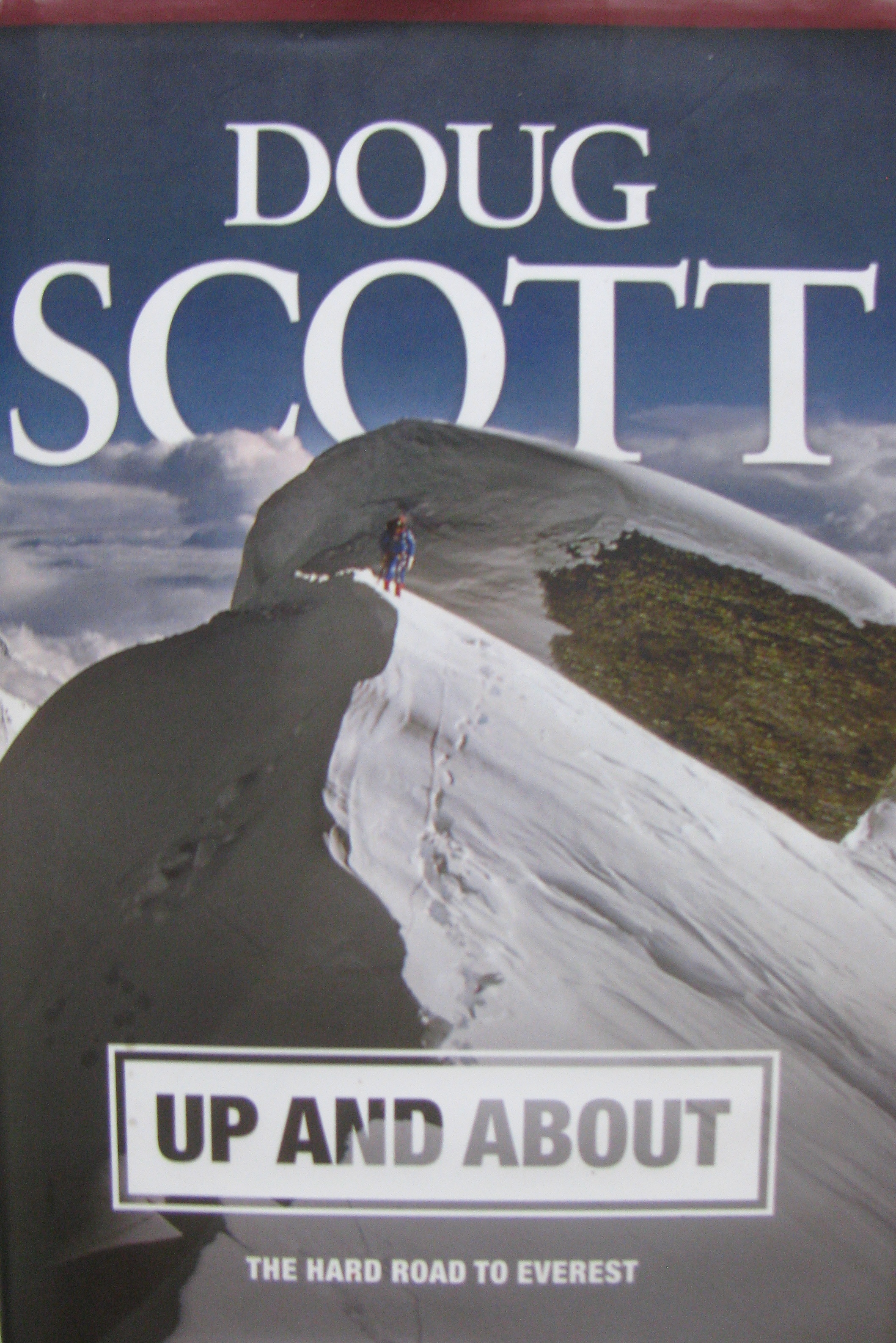
UP AND ABOUT, THE HARD ROAD TO EVEREST

doug-scott-1One of the wonderful spin offs of the 1994 film Forrest Gump was the album containing its sound track. Director Robert Zemeckis used popular songs to indicate the passage of time and social context. The result was a film about an individual that was more than the individual and felt the sum of its parts. Climbing – indeed anything we do – is similar. Everything has its ecosystem. George Mallory was a gifted climber. But you won’t understand why he was what he meant to the British, unless you understand the First World War and its impact on Britain. That understanding is what Wade Davis offered in his book, Into the Silence.

For some time into reading Doug Scott’s autobiographical work: Up And About, The Hard Road to Everest, I wondered how I – an Indian – would relate to the meticulous detailing of his growing up years, ranging from incidents and persons to hills, rivers – indeed the geography – of those parts of Britain and Europe, he moved through. It felt alien. Among most accomplished mountaineers of the twentieth century, Scott has strong roots in rock climbing. Rock climbs, unlike the panoramic scale of mountaineering, is less universe and more specifics. Scott writes those initial chapters like a rock climber who traded piton for pen. You meet every crack and chimney. Such is the recall and detailing of life. About a quarter of the way, the book opens up to a chapter of exploratory climbing in Chad (Africa) and slowly but steadily, in a pattern that reminded me of Forrest Gump’s soundtrack, all those details about his life and times alluded to, provided context.

Scott was born in 1941, roughly two years after the Second World War commenced; his childhood included the years Britain was bombed by Germany. Nineteen years later, The Beatles was formed in Liverpool and by the late 1960s and the 1970s when Scott was in the thick of climbing, the post war world had journeyed into Cold War, Vietnam war, Prague Spring, student movements, civil rights movements and Woodstock. Youth was experimenting; established conventions were being questioned, cultures were blending at their edges, freedom was valued. Curiosity for wider world births the urge to travel, including to remoteness.  Adding flair is the fact that some expeditions featured road trips bridging continents. The expedition to the Tibesti Mountains of northern Chad for instance, has Scott – a person interested in geography and history – and his friends, driving through the Sahara to access their chosen climbs. At other times, to get around affordably in Europe, he becomes adept at hitch hiking. Commitment to one’s passion soon forces that response from employer: maybe you should choose between work and climbing? The teacher who also climbed becomes full time climber. That transition and the changing times take their toll on marriage, wife and family life. The book takes you through all this and more to Scott’s successful ascent of the South West face of Everest with Dougal Haston in 1975.

The book’s finest hour is arguably the narrative of Scott in Yosemite, the cradle of big wall climbing – a chapter in climbing’s history that was intermingled with the social trends influencing young people then. Unlike today when much of sport (including climbing) has devolved to a furtherance of the same competitive urges one sees at work places and therefore harks of conformism, big wall climbing in Yosemite was alternative lifestyle and imagery in the days of its pioneers. While the extent of Scott’s willful embrace of counterculture is a matter of conjecture (at its strongest, it is only obliquely indicated as in others describing him as a hippie), he does transform in the book’s photos from bespectacled clean shaven look to bespectacled, long haired and bearded, with at times, a head band; a sort of Bjorn Borg of the climbing world. Scott mentions that he hasn’t written everything about his life but there is anyway much poured into the book.

This is one of those rare books on climbing being published in recent times that bears a classical stamp. By that I mean the survival of research and reflection despite the popular association of climbing with action, often action for action sake. In the late 1990s, when I got into climbing and was eagerly sampling rock climbing videos, the bulk of them had a dull ring to it. You said “wow!’’ seeing the movement but little else intrigued. In subsequent years, the visuals improved dramatically with technology but the question remained – is being aware and reflective, a baggage in climbing? Scott may not be young anymore; he is in his mid-seventies, but the restoration of reflection to a narrative on climbing is welcome reminder of what a life in climbing can actually be – it’s all about evolving. And, that glance backward becoming richer by the evolution. The classical feel is also in part thanks to the other climbers mentioned or profiled in the book – names like Don Whillans, Joe Brown, John Hunt, Peter Habeler, Dougal Haston, Royal Robbins, Tom Frost, Warren Harding and Chris Bonington; all names from an era when climbing still meant exploration of terrain and technique.

In contemporary world where fame and not necessarily life lived, qualifies people to write autobiographies, a book that traces the evolution of a life lived, world in which life was set and one’s chosen sport, is definitely worth reading. Don’t expect it to be a breeze. Like any climb, this is a book you have to be patient with, moving from hold to hold with struggles in between before you see it all in retrospect. Up And About, The Hard Road to Everest, the first part of Doug Scott’s autobiography, won The Himalayan Club’s Kekoo Naoroji Book Award for 2016. Scott received the award at the club’s annual seminar in Mumbai recently.

(The author, Shyam G Menon, is a freelance journalist based in Mumbai.)
STILLED TO PERFECTION

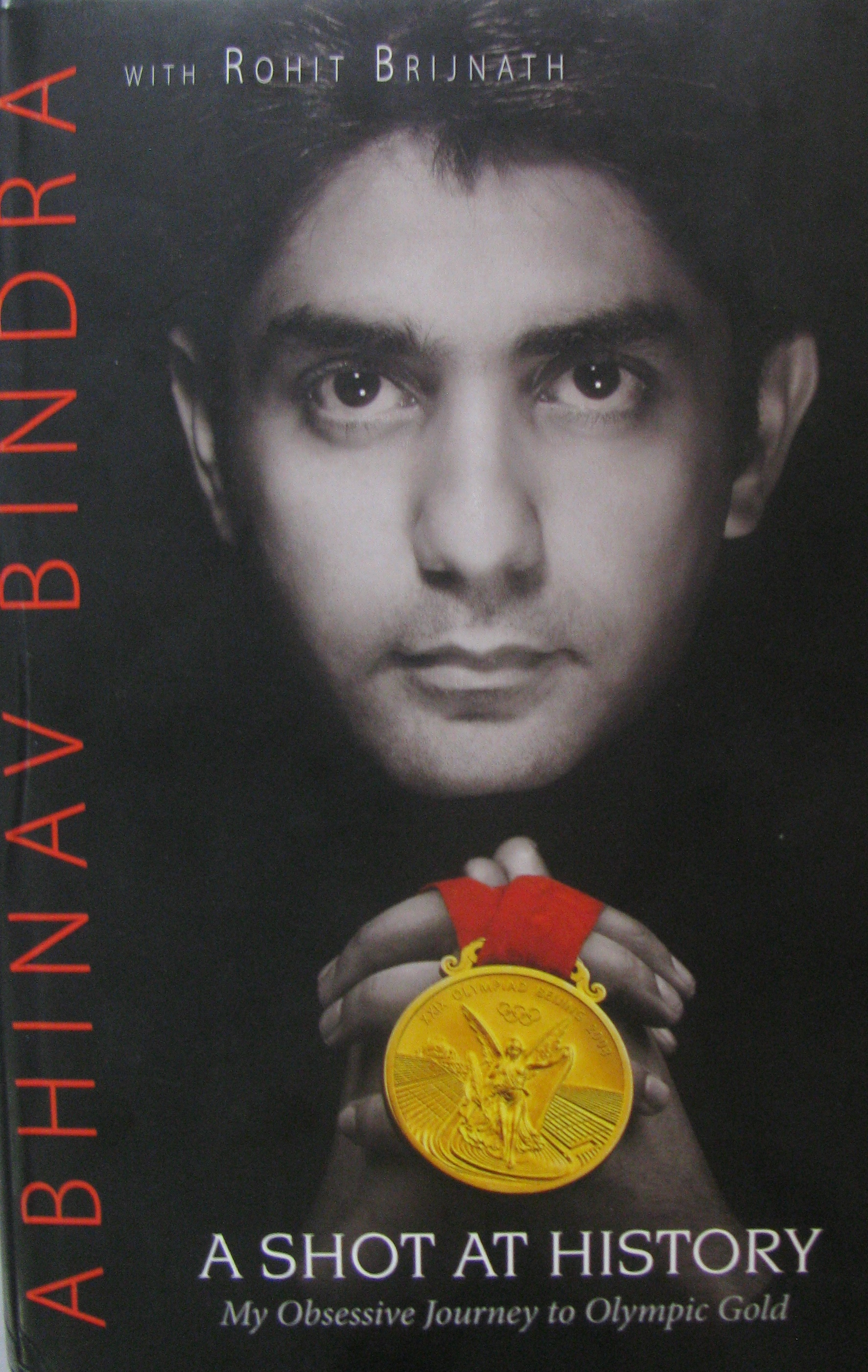
bindra-1A Shot at History was published in 2011 roughly three years after Abhinav Bindra won gold at the 2008 Beijing Olympics.

Bindra (with co-author Rohit Brijnath) writes honestly, starting with the puzzle most lay persons (including me) have – what is so riveting about a sport like shooting that entails no movement? Drawing you in with that question for bait, he shows you how difficult the quest to be still is and the extent to which an athlete aiming for an Olympic gold in shooting must go, to get that elusive perfectly still moment in which all works well and a coveted score is had without intent tripping the result. The burden of too deliberate an intent affecting outcome makes the moment of pulling the trigger seem a bit like quantum physics. But that is what it appears to be – in as much as there is a method to the madness of being perfect, being able to repeat it, shot after shot, competition after competition has an element of chance by universe. And yet with years of practice preceding a perfect shot would you call it chance?

The book may be accused of overdoing its intense dissection of the art of shooting perfectly, but staying so it drives home the specter of Bindra’s sport being a contest separated by decimals in a field of already perfect scores. The book introduces the reader to the author’s love for the sport, details of the sport, the equipment used, the moments spent competing, the disciplined training, the competitors and coaches, the competitions ranging from those in India to the World Championships and Olympics – in short the world of competitive shooting. You can’t have a better guide for the journey than Bindra.

The penultimate chapter, which tells how officials mess up sports in India, is a treat to read, coming as it does from the only Olympic gold medalist India has yet produced.

If you haven’t read this book, read it.

(The author, Shyam G Menon, is a freelance journalist based in Mumbai.)
HIMALAYAN CLUB BOOK AWARD AND ANNUAL SEMINAR: DOUG SCOTT, LEO HOULDING

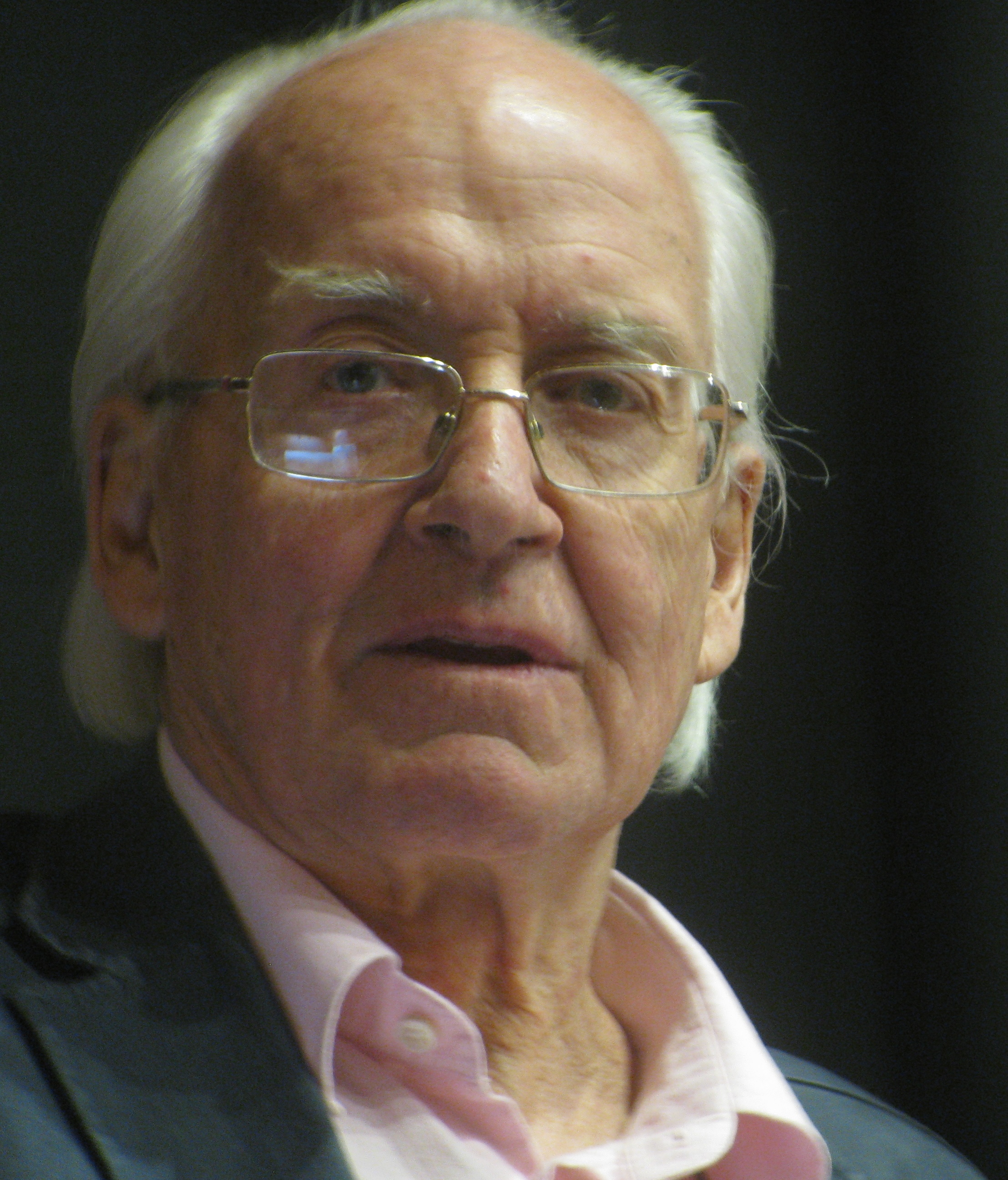
Doug Scott (Photo: Shyam G Menon)

Doug Scott (Photo: Shyam G Menon)

Lectures from mountaineering’s years gone by are like a breath of fresh air.

Many of the slides shown at the auditorium of South Mumbai’s K.C. College were from the 1960’s and 70’s. The story teller was visible in some of the frames, long haired and sporting a head band, reminiscent of the counter culture of the period. Likely, streaks of the same counter culture that fueled big wall climbing in California’s Yosemite Valley; a legacy that survived in climbing even as counter culture lay smothered by a blanket of conformism. In his days in climbing, British mountaineer Doug Scott was associated with big walls and the desire to transpose that on the Himalaya. He was also a fan of climbing alpine style, favoring small teams as opposed to the siege tactics of large expeditions. Scott’s tenure on stage – he was the winner of the 10th Kekoo Naoroji Book Award from the Himalayan Club – consisted of an acceptance speech (mostly about why he hesitated to write his autobiography) and two slide shows. The tenor of his presentation may be summed up in a quote he resorted to, just ahead of reading out the prepared text of his acceptance speech to no accompanying slides or PowerPoint: you are not going to be spoon fed. He added in jest  for good measure, “ you have to use your imagination. It is a good thing to read books.’’

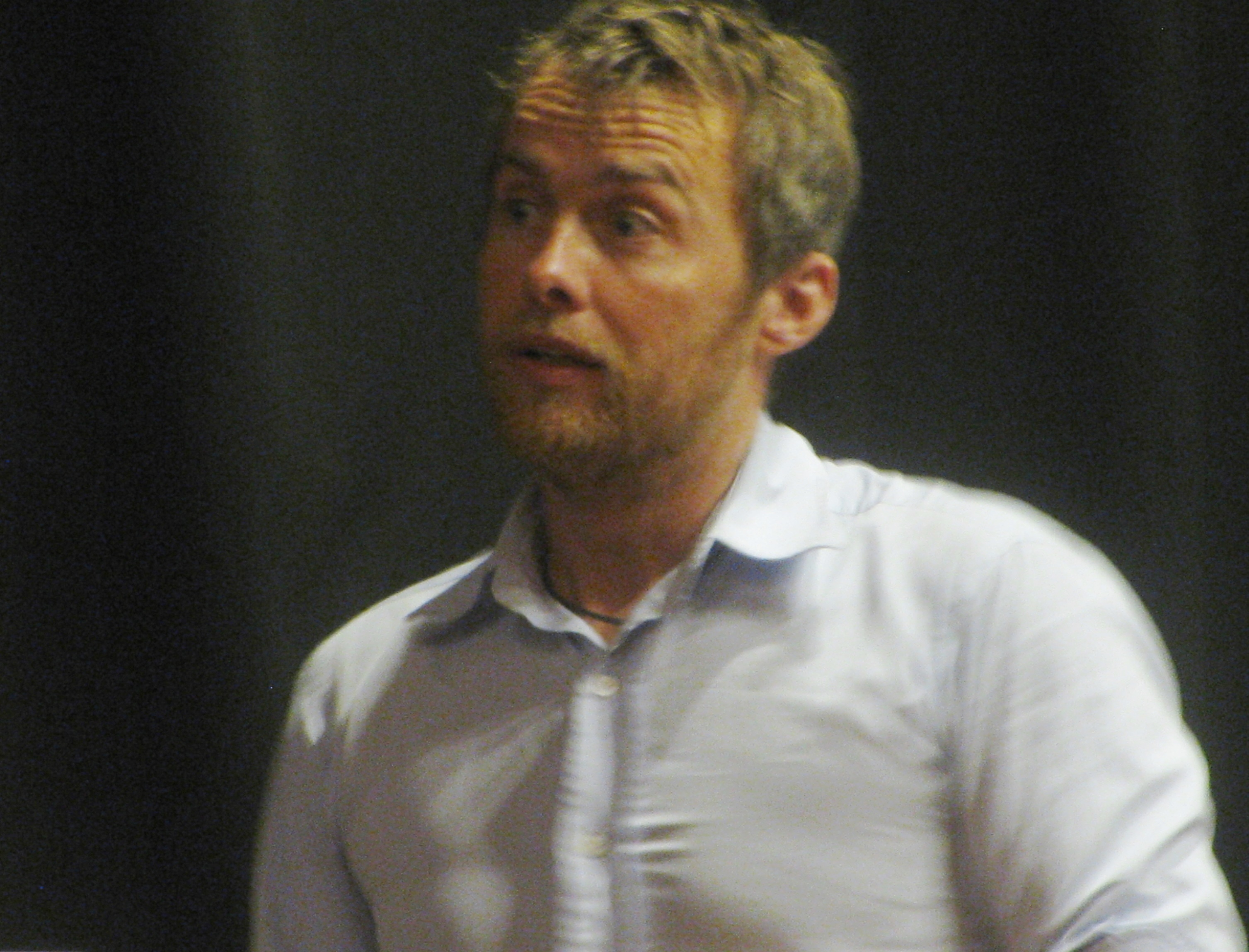
The other main speaker – here to deliver the Kaivan Mistry Memorial Lecture – was Leo Houlding. At 36, Leo was roughly 40 years junior to Doug, as much apart in age as the last hurrah of book shops from PowerPoint and world by Instagram. He was similar to the veteran in the essence of his pursuits yet dissimilar in tenor for in the decades that separate them, technology evolved sufficiently to leave nothing to the imagination. Both climbers have a penchant for big walls but while Doug became known as a mountaineer, Leo, despite an Everest ascent in the company of Conrad Anker, said he isn’t a great fan of snow, ice and altitude. What attracts him is world stacked vertical; big rock faces – from Greenland to the Americas and Antarctica – that run uninterrupted for up to a mile vertically. The monasticism that graced the suffering of climbers from Doug’s period in climbing, you found in the technologically superb visuals of Leo’s climbs. What you once saw imprinted in the soul of man as the aftermath of a climb, you now see in the pixels of a camera sensor as it brings home to you what it was like to be out there. From the world’s still remote areas came visuals of vast snowfields with orange-brown rock thrusting up from them like teeth in a crocodile’s jaw. “ Those fangs – that’s what I like to climb,’’ Leo said. Intended or otherwise, Doug and Leo were an engaging mix at the club’s annual function for the transition by 40 years, they represented in climbing.

Leo Houlding (Photo: Shyam G Menon)

Leo Houlding (Photo: Shyam G Menon)

In 1975 Doug and Dougal Haston had essayed the first successful ascent of the south west face of Everest. The climb included a bivouac on the south summit at 8760 m (28,908 ft). The much climbed peak is still trampled by many adding it to their bag of conquests, by the tamer, well used south east-ridge route. In climbing season, this route features a line of people making their way up Everest. Speaking of the predicament on Everest and other mountains, Doug said, “ if only you go around the corner, there will be nobody there. There is plenty of scope to commune with the mountain; just that nobody goes there.’’ In his life, one trip to the mountains led to another, all the way to Everest and beyond. “ Beyond?’’ he asked, adding in praise of alpine style climbing, “ Yes, I discovered that less is more. Less people, less equipment, less cost; it’s just you, your friend and a rope in between. Alpine style is simply wonderful.’’ He said that the problem with large, siege type expeditions “ is that only two people make it to the summit and everybody else is left wondering what it may have been for them.’’ Doug wrapped up his presentations with a slide show backed-account of his descent from Baintha Brakk aka The Ogre (23,901 ft) in Pakistan, an epic multi-day crawl of a descent given he broke both his ankles during an abseil. Accident notwithstanding, that trip in 1977 produced the first ascent of the peak. Thanks to Leo, the audience were treated to a film in the wake of George Mallory’s body discovered on the slopes of Everest, in which Conrad Anker and Leo follow in the footsteps of Mallory and Andrew Irvine. It showed a very rare instance of the Second Step (a rock face below the summit) being free climbed to test whether Mallory and Irvine could have reached the summit with what climbing techniques they possessed, long before a ladder came to be stationed there. Leo’s own take on whether the British duo may have reached the summit before Edmund Hillary and Tenzing Norgay: possible but not probable.

The annual seminar also featured a film by a team from the Himalayan Club about an expedition in Ladakh and a presentation by Nungshi and Tashi Malik, famous for being twin sisters climbing some of the world’s well known mountains.

(The author, Shyam G Menon, is a freelance journalist based in Mumbai.)
`DARK MONEY’ – THE DARK SIDE OF THE RIGHT

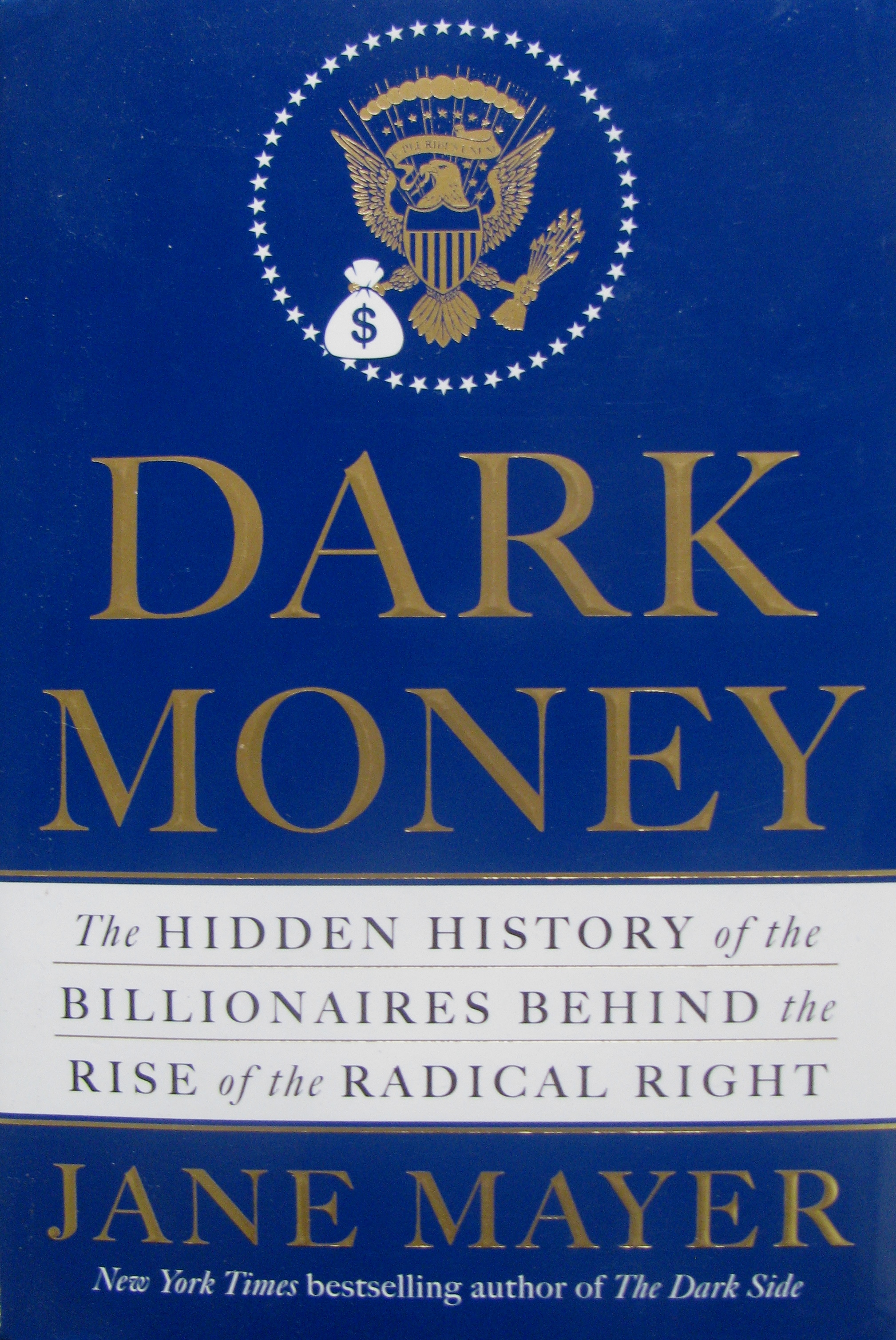
dark-moneyJane Mayer’s book ` Dark Money’ is a well-researched account of the rise of the far right in American politics through the twentieth century and into the twenty first.

The book illustrates how a tangled web of donations, charities and think tanks secretly funded by conservative, super wealthy businessmen, pushed a brand of libertarian (not to be confused with liberal) politics that sought to reduce government control. Protected behind the seemingly benevolent public façade, was inherited wealth and business interests, including in some cases – industries damaging the environment. Of particular interest to me – being an Indian reader, whose impression of the US is largely as one of the world’s major democracies and a country of great universities – is how academia was penetrated by this group. They patiently wait for a new crop of sponsored academics and researchers to shape the thinking behind government policy, to their tastes. As the book shows, at a global level, one of the casualties of the conservative business-academia nexus was the climate change debate.

Dark Money is heavily focused on America; so much so, that for a reader in India, the book can at times, be a plod. It strikes a chord because of a few factors. First, it reminds you of the growing subversion of our times by money. Second, what unfolded in the US is being copied in India. Third, the libertarian agenda is amid wealth distribution, increasingly polarizing in society. Even if a libertarian economic agenda is not yet pronounced in India, economic inequality is significant and polarized wealth is becoming a fashionable state of affairs. Fourth, as a pattern of social and political behavior what is narrated in the book is relevant to any geography that is home to conservative business minds. In the end my take away from Jane Mayer’s book was the pattern of manipulation it exposed. This is a book that by virtue of what it unearths makes you aware of the dark side of the political right; for that matter, the dark side of any political side – right or left – as these patterns can be anyone’s chasing exclusive agenda for power. It makes you aware of the intelligent subversions that characterize contemporary life.

(The author, Shyam G Menon, is a freelance journalist based in Mumbai.)
 

THE PAIN HANDBOOK: ONE FOR KEEPS

pain-handbook-3Keeping the most essential things accessible is a habit we all grow up with.

You know well where you have that song which struck a chord, where you have the book that meant a lot, where you have the movie you like to return to.

What you value; you find a place for it and remember where you kept it.

Dr Rajat Chauhan’s book, ` The Pain Handbook – A Non-Surgical Way to Manage Back, Neck and Knee Pain,’ falls in this league. Its one for keeps.

The book deals in the main with lower back pain, which is the most common pain reported. Doing so, it deals with the spine, knee, hip and foot besides touching upon other related points. Some problems are explained with case studies. The book’s biggest contribution, I felt, is how it helps you understand what is what in your back and lower body and what may be happening in your anatomy and lifestyle that is the cause of those aches and pains. It shows how the modern sedentary lifestyle is taking a toll on us; even how the health care system makes a business of the opportunity. The book encourages doctors to go beyond seeing their patient as mere statistic and attempt comprehension of person. After all, the cause of pain may range from injury to simply stress.  Despite proliferation of advanced technology, some aches and pains can be addressed with the simplest of solutions.

The book is written in a reader friendly style; almost conversational. The non-surgical way to managing pain is underscored by a portfolio of exercises and photos of the same, provided in the book. The narrative is partial to being a practical overview of pain (within that, lower back pain) and a useful handbook to refer. If you are looking for the science and phenomenon of pain or an exploration of its biological relevance, you may find the inquiry limited. Where it scores is in its larger appeal as guide (handbook) in times of predominantly sedentary existence with attempts made by the denizens of that world, to embrace a more active lifestyle. Besides being a doctor specialized in sports exercise medicine and osteopathy / musculoskeletal medicine, Dr Chauhan is a distance runner and the main architect of La Ultra-The High, a challenging ultramarathon at altitude held annually in Ladakh.

This is a book I would like to remember where I have in the house.

It is certainly worth buying, reading, keeping.

(The author, Shyam G Menon, is a freelance journalist based in Mumbai.)