RUNNER, UNEXPECTEDLY

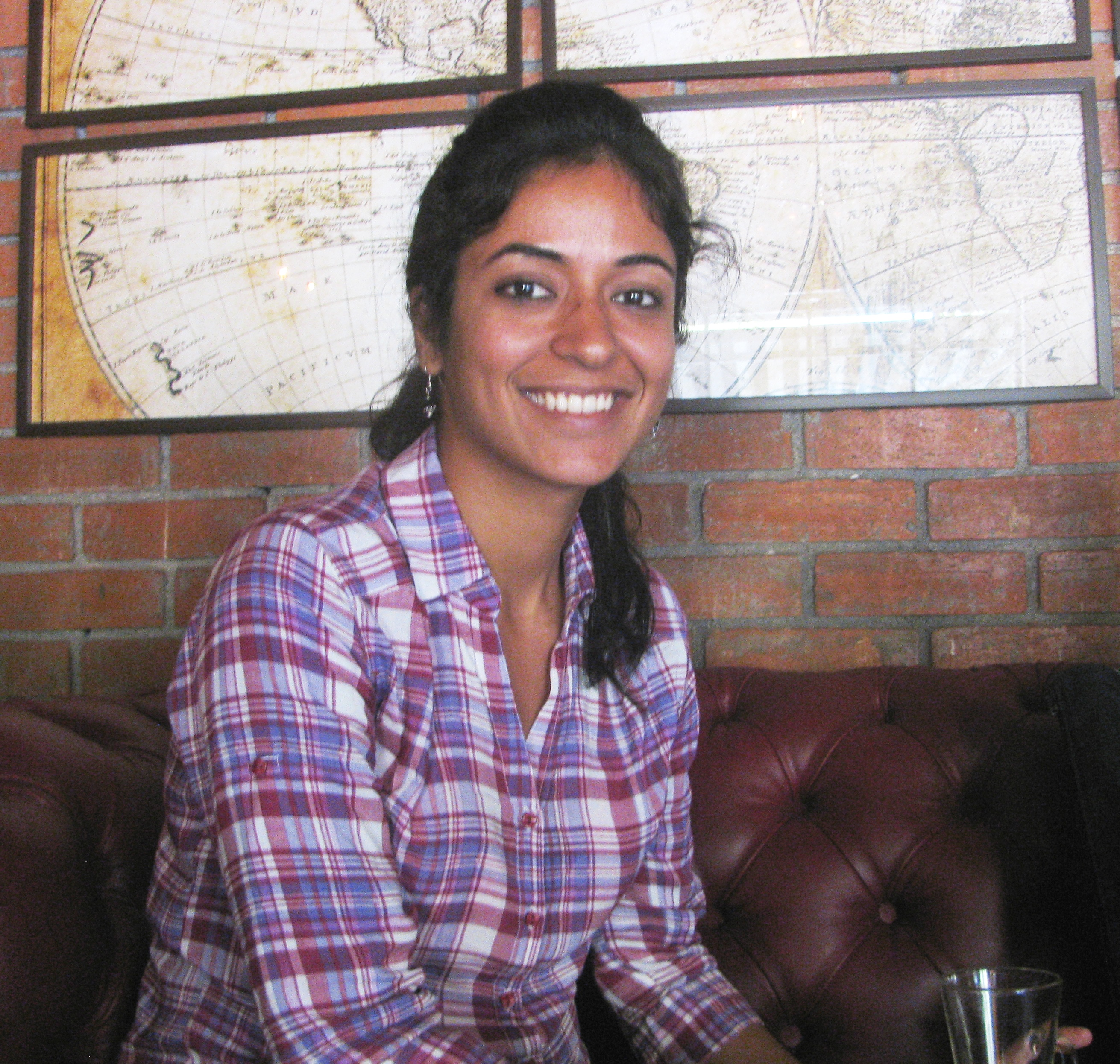
Simta Sharma (Photo: Shyam G Menon)

Tohana is on the border of Haryana and Punjab.

The nearest big city is Hisar. It is typical Haryana, relatively flat and according to Wikipedia “ desert land’’ until the Bhakra Nangal sub-branch canal came along. Once irrigation water became available, Tohana developed into an agricultural hub. Simta Jhamb (now Sharma) was born here in January 1988.

Her father ran a grocery store in town; she was the eldest of three siblings, two sisters and a brother. As a child, she was prone to the occasional epileptic seizure. Her schooling was entirely in Tohana, during which time, sport wasn’t a pronounced part of day to day life. However life in general was a physically active one; she walked or cycled to school, enrolled for the National Cadet Corps (NCC) and thanks to that irrigation canal which changed the fortunes of Tohana, learnt to swim and enjoy swimming at an early age. There was also a brush with karate when she was in junior school. But there was nothing to indicate a runner latent in her. She never thought of herself as a prospective runner.

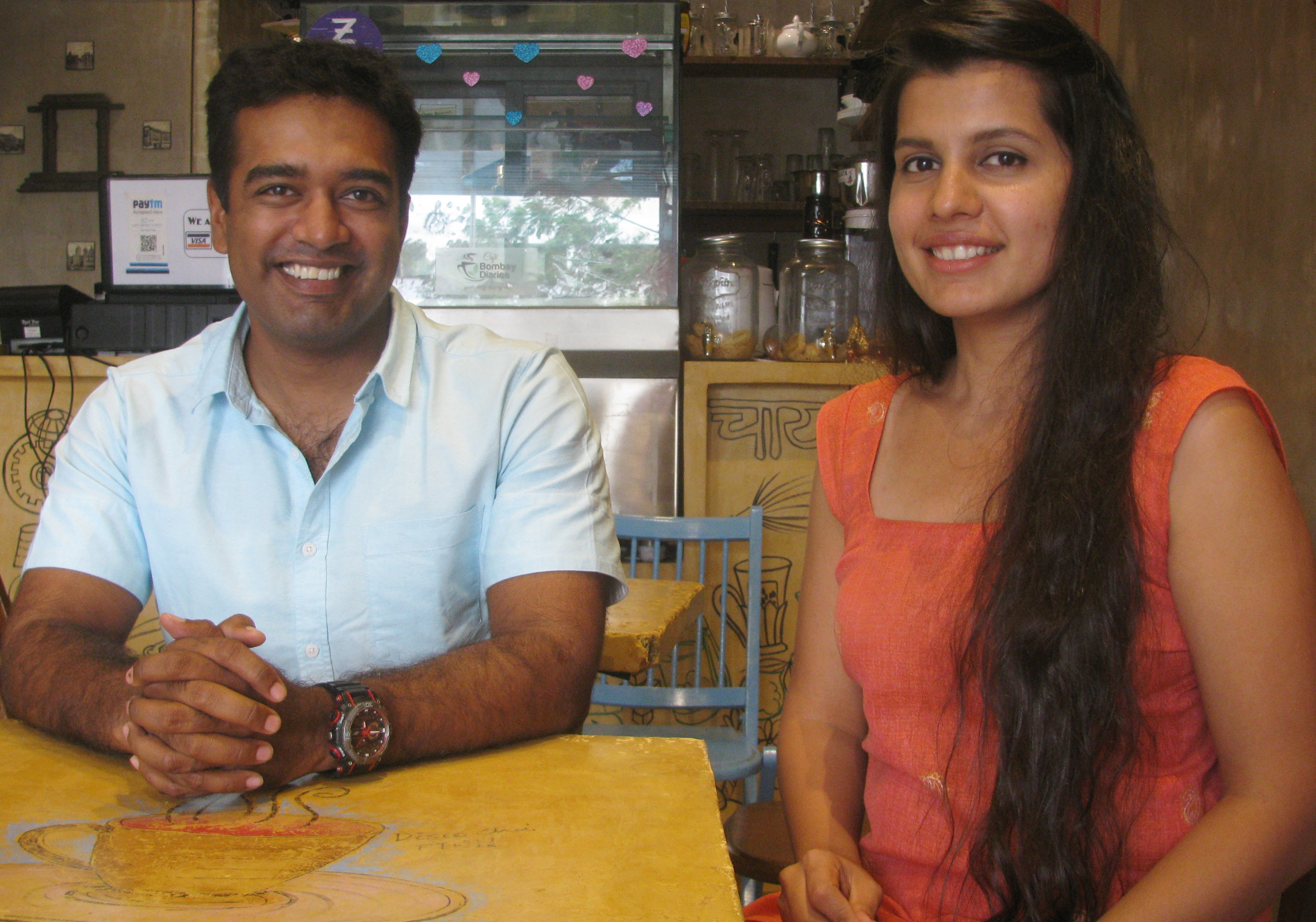
On completing her school education, Simta moved to Chandigarh to do her BSc in Computer Applications at the MCM DAV Women’s College. “ I always wanted to be in a big city,’’ she said. Following her graduation, in 2009, she traveled to Mumbai out of her own choice, to do her Masters in Computer Applications (MCA) from the city based-SNDT Women’s University. Initially, she lived at the university’s hostel near Churchgate in South Mumbai. Here, like many do an early morning in mid-January, she too stood by the roadside to see those running the annual Standard Chartered Mumbai Marathon (SCMM). “ There was no emotional connection to the spectacle or a tug in my heart to participate one day. I just watched it, the way I would watch anything,’’ Simta said, sipping a cup of black coffee. We were at a café in Marol, like Tohana a name on a border, in this case, the overlapping border land of central Mumbai and north Mumbai. The running season was slipping to hibernation. Outside, the summer of 2017 had suddenly made its presence felt after what had been, strangely, a pleasant January-February. Mumbai lay cloaked in a simmering heat.
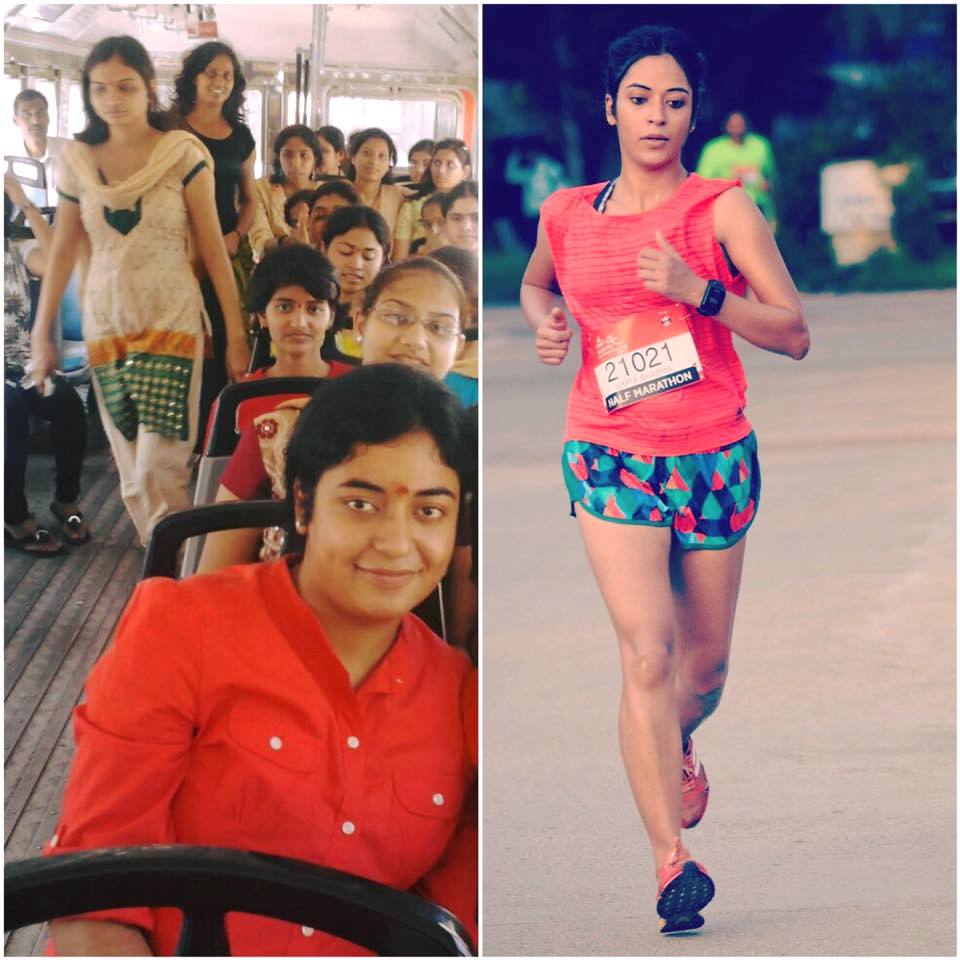
(Left) The Simta of 2010; new to Mumbai she would indifferently watch that year’s SCMM (Right) Simta, 2017 (Photo: courtesy Simta Sharma)

In appearance, Simta Sharma is quite athletic. That wasn’t the case when she watched her first SCMM in 2010. She was then on the heavier side and having issues with her thyroid. After that initial phase of stay near Churchgate, Simta shifted to Juhu in the city’s western suburbs, where her college too was located. There she commenced going for morning walks in an effort to reduce weight. A week long camp conducted by the National Service Scheme (NSS), introduced her to yoga. She found it helpful and continued to practise it even afterwards. She also started jogging. In 2011, she participated in a seven kilometer-run (the event was called Mast Run) and ended up third on the podium with a three thousand rupee-cash prize to boot. That was both unexpected and motivating.

A year later, she started to work for Nautilus Software Solutions, a company based in Wadala. While working there, yet another edition of Mast Run cropped up. This time it was a 21 km-run. Relying on nothing but her trusted mix of yoga and jogging, she went ahead and ran the race. She isn’t sure how much of it she covered and so declined to name it as her first half marathon. Simta followed this up with a 10 km-run in Powai, which she completed in 53 minutes. Her boss at Nautilus Software Solutions was Vivek Sasikumar. Associated with the city based running group Striders, he took note of emergent runner in office. Vivek encouraged Simta to run regularly and as means to step up mileage, introduced her to the monthly Bandra-NCPA run organized by Mumbai Road Runners (MRR).  This training run, held on the first Sunday of every month, spans the distance of a half marathon. Over the years it has become an institution in Mumbai’s running circles. In February 2013, Simta, now a resident of King’s Circle in the city, reported for her first Bandra-NCPA run. This was her formal introduction to Mumbai’s running community. “ Vikas Mysore was the first runner I said hello to,’’ she said. She became a regular at the monthly Bandra-NCPA run and as she did so, her circle of friends in running slowly grew. Ajit Singh is a popular face on the Bandra-NCPA run. A member of MRR, he works for FDC, the company manufacturing Enerzal, the well- known energy drink. He recalled Simta’s early days. “ She came in through the Facebook group. She was into fitness and had run only events featuring short distances. She had no experience of the half marathon. So with her, we first ran at Juhu. It was three of us – my friend Purnendu and I, both of us runners who prefer to run bare-chested, with Simta in the middle. She didn’t say it then but later she admitted that she had felt embarrassed!’’ Ajit said in jest. The Bandra-NCPA run was a significant addition to Simta’s life from another angle too. On the second Bandra-NCPA run she reported for – the run of March 2013 – she met Kshitij Sharma, her future husband. They would be married less than a year later, in February 2014.
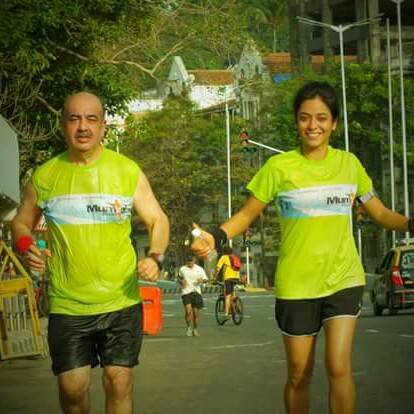
Simta with her father in law Anil Sharma (Photo: courtesy Simta Sharma)
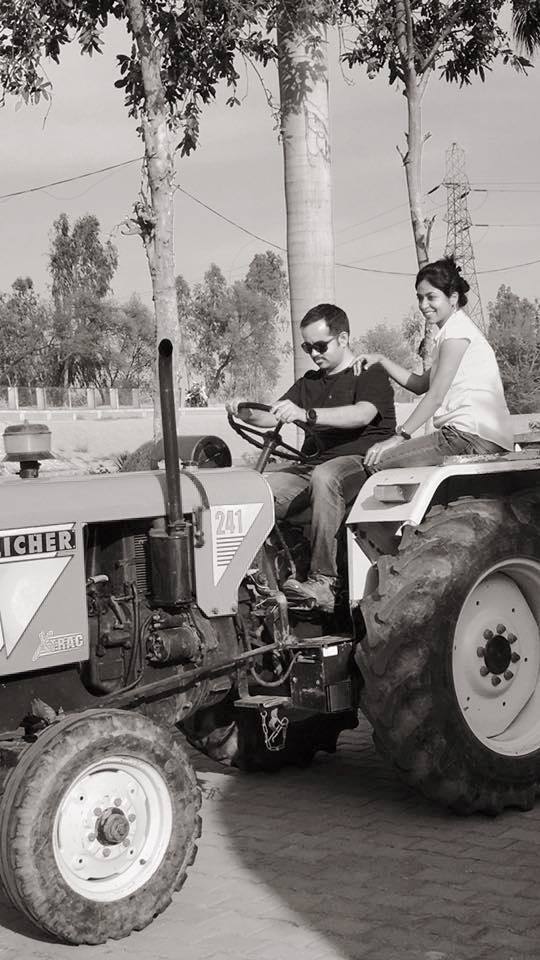
Kshitij and Simta in Tohana (Photo: courtesy Simta Sharma)

Soon after marriage, she shifted from her King’s Circle residence in central Mumbai to Kandivali in north Mumbai. During the period from 2014 to 2015, she worked with Development Bank of Singapore (DBS) at their D.N. Road office in South Mumbai. The distance between her place of stay and place of work in a Mumbai that operates daily on a north-south tide of human and vehicular movement, limited her ability to find time for running. She couldn’t train seriously with any group of runners. “ It was difficult to spare every morning for that,’’ she said. In August 2014, she shifted to Vile Parle, a move in the southerly direction from Kandivali, which brought her tad closer to work. While living in Vile Parle, her father-in-law was diagnosed with diabetes. He was determined to control it through diet and exercise. He was already into walking and exercising but the diagnosis made him more serious in the pursuit of fitness. In some ways, her father-in-law’s decision to be serious about exercise proved synergic with Simta’s interest in running. What she had been missing until then was drive and determination. Suddenly that seemed found. The two of them started running every morning at a nearby ground. More important – Simta’s training became more focused in the process. This phase was a turning point in her life as runner.

Every year, Total Sports (a chain of shops selling sports goods in Mumbai) and Run India Run organize a 10 kilometer-race in Borivali, northern Mumbai. In 2014, Simta won this event in her category; she won it again in 2015 and was placed third in 2016. Notwithstanding her given place on the podium, her timing was steadily improving – it was 52 minutes, 48 minutes and 44 minutes respectively in those three years at that event. “ It was a good feeling’’ she said of her first win in 2014, her first major podium finish. Meanwhile in the run up to that podium finish, she had completed her first major half marathon in Thane. She completed it in 2:01. Through all this, a new runner was also born in the Sharma family – Anil Sharma, Simta’s father-in-law. Now 59 years old and a Chief Manager with Central Bank of India, he graduated through running seven kilometer-races to 10 km and 21 km and eventually, a full marathon.
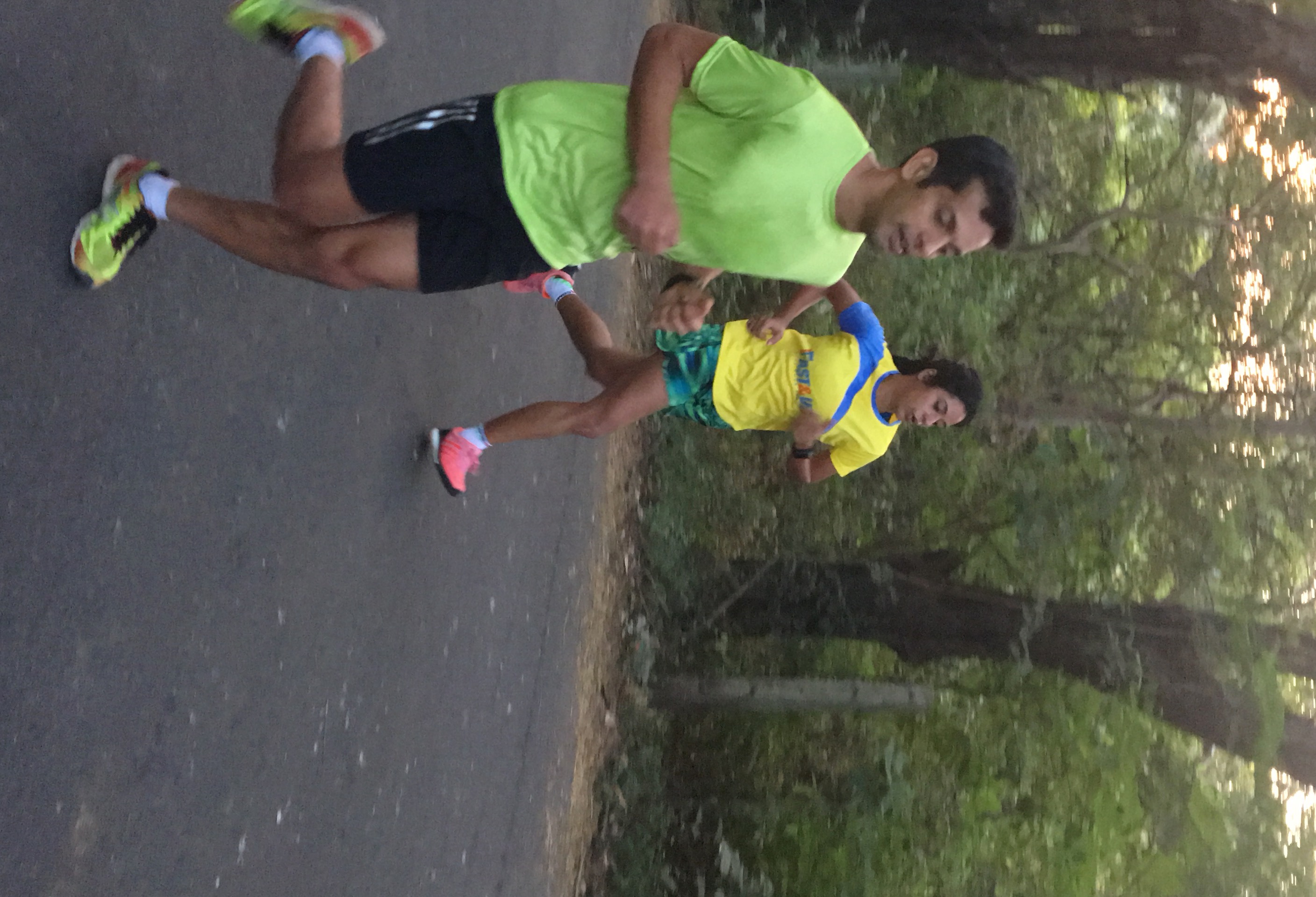
On a training run with Vijayaraghavan Venugopal, good friend and one of the core team members of FastandUp India, Simta’s nutrition partner (Photo: courtesy Simta Sharma)

Simta too progressed to the full marathon. Her first major full marathon was the 2015 Bengaluru Marathon, which she completed in four hours to place second in her category. An interesting aspect about Simta is her apparent lack of long term focus on any particular distance category and adoption instead of short term focus on whatever is the distance of the event she is training for. Thus, she says she has no problem shuttling between 10 km, 21 km and 42 km; moving from one to the other, forward or backward. On the other hand, she said, “ the greater mileage I had to put in while training for the full marathon had a beneficial impact on my shorter runs as well. It is possible to improve timing across distances.’’ One discipline she has had mixed fortunes with is the ultramarathon. She attempted the ultramarathon in Vadodara, twice. The first time, she went off course and ran longer than needed. The second time she had to call it quits at 33 km, resulting in a Did Not Finish (DNF).

For her first major full marathon at Bengaluru, she trained for about two months. As said, thanks to her work schedule, Simta was never in a position to formally train with any runners’ groups or have a dedicated coach. Post marriage her husband, Kshitij, who is a Senior Network Analyst with FIS Global Business Solutions in the city, became her coach.  He draws up her training schedules. “ I never miss my work-outs,’’ Simta said. She appeared content training under her husband who is an amateur runner. We asked Kshitij why he had taken on the role of Simta’s coach. “ I know her lifestyle well, her diet, sleeping pattern – these details matter. If she trains under a coach, these details may not get articulated or may get overlooked. As a runner, I had trained under coaches and know what they offer and what they don’t notice. In Simta’s case, she was also epileptic and I did much research to find out the best approach she can have,’’ Kshitij said. According to him, Simta has fine endurance. “ I have noticed how she runs three to four hours in the morning, comes home, prepares food and leaves for office without any strain,’’ he said. He thinks she has reserves she can tap into before the duo – runner and coach – enter the more challenging realm of extracting incremental improvement. Simta puts a lot into her training runs. The events she chooses to race at are few and handpicked. It is a different matter that she won some events, which she treated as training runs. “ You become stronger when you are running, not when you are burning out,’’ Kshitij said explaining the conservative approach. Amid all this, Simta also moved to a new job at Turtlemint (via another job in between at Purple Squirrel), which has its office in Andheri East, not far from her home in Vile Parle. Work place being closer to home meant better attention for training. On a regular day, she rises early and cycles to her chosen location for training (usually Juhu). It was a Simta shaped so by her life experiences, who geared up for the 2016 edition of The Wipro Chennai Marathon (TWCM) in January 2017.
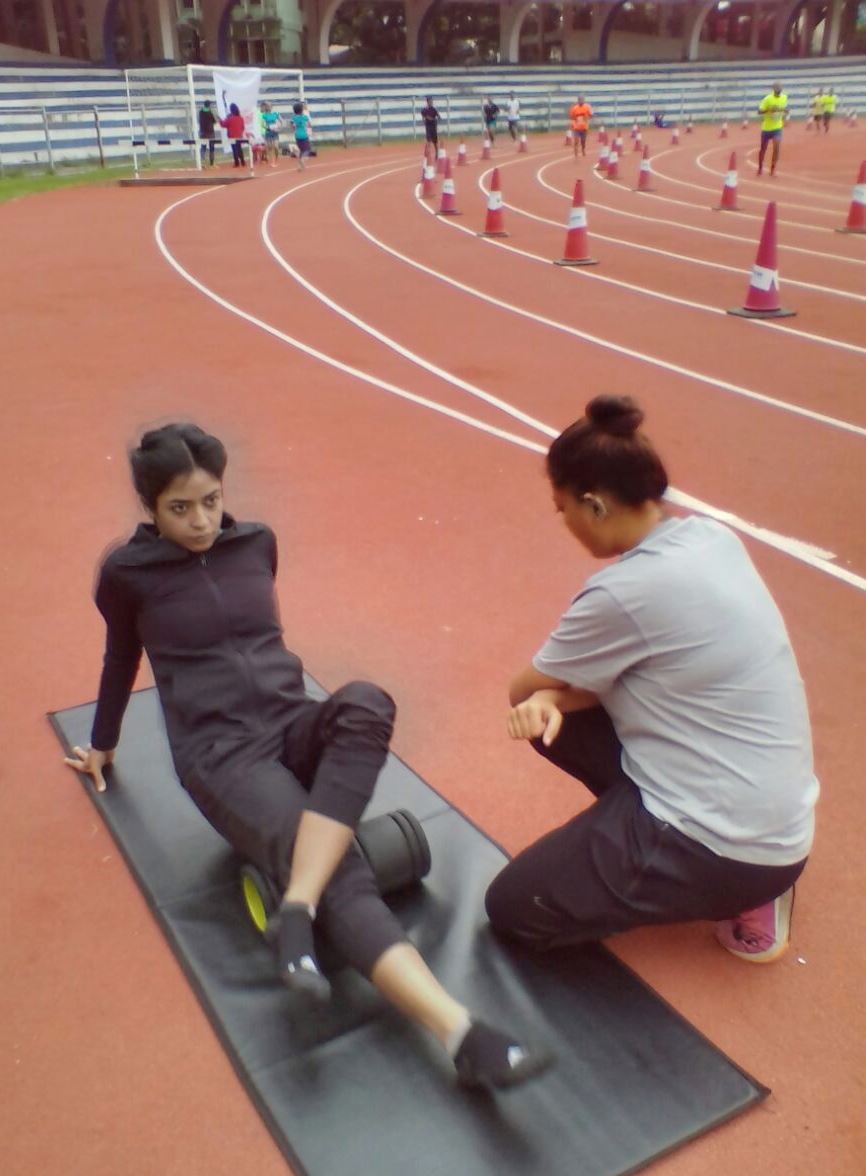
Some time with the physio ahead of a stadium run in Bengaluru (Photo: courtesy Simta Sharma)
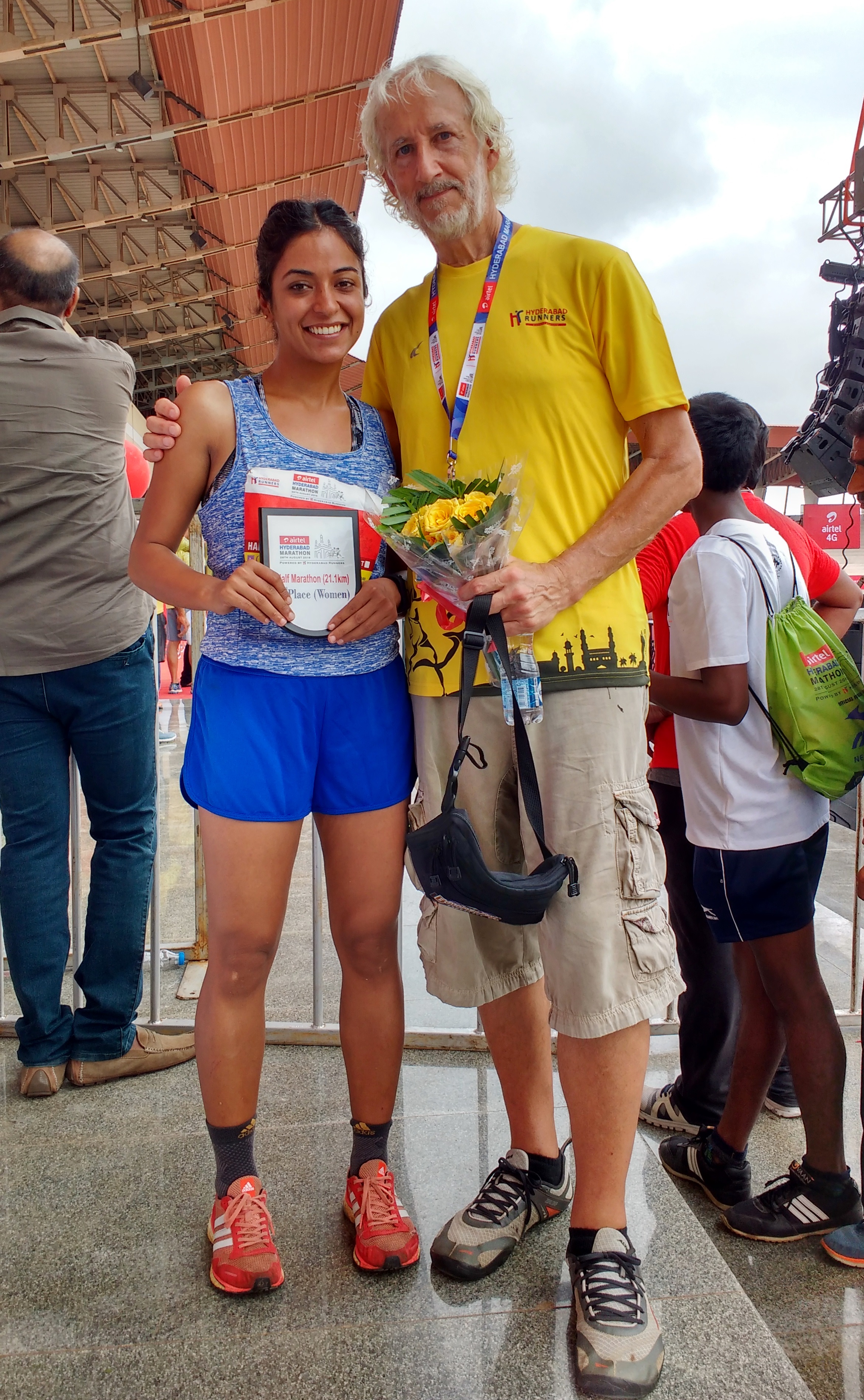
Simta with Dr Phil Maffetone after she secured first place in the half marathon for women at the Hyderabad Marathon (Photo: courtesy Simta Sharma)

TWCM is the brainchild of the Chennai based runners’ group, Chennai Runners. Indian IT major Wipro Ltd has been the main sponsor of this event since 2012. The company has a strong association with running through its annual Spirit of Wipro run and its in-house running club (Wipro Running Club, begun in 2012), which boasts a membership of 150-200 people. The 2016 edition of TWCM was to be the event’s fifth edition; 20,000 runners were expected to participate. TWCM includes a full marathon, a half marathon, a 10 km-run and a fun run for differently abled children. The event usually falls in December. The 2016 edition was however postponed following the hospitalization of former Tamil Nadu Chief Minister, J. Jayalalithaa. She eventually passed away. As it turned out, the postponement appeared wise not just from the perspective of avoiding any political turbulence; in December 2016 Chennai was also lashed by Cyclone Vardah, one of the most powerful cyclones to strike India’s eastern sea shore. Originally set for December 11, 2016, the 2016 edition of the marathon was rescheduled to January 8, 2017. As was routine, Simta had trained ahead for the Chennai marathon. Her approach was diligent; Ajit recalled some training runs they were on together in the run up to TWCM. Simta’s family had made plans to holiday in Goa after TWCM. When the event got postponed it put a question mark on the holiday, for Simta now had to stay in practice longer. They found a creative solution. Why not practise in Goa? The 2016 Goa River Marathon was due on December 11. Simta managed a late entry. As it turned out she ran the half marathon in 1:38 finishing first in the open category for women. Both running and holiday in Goa were salvaged!
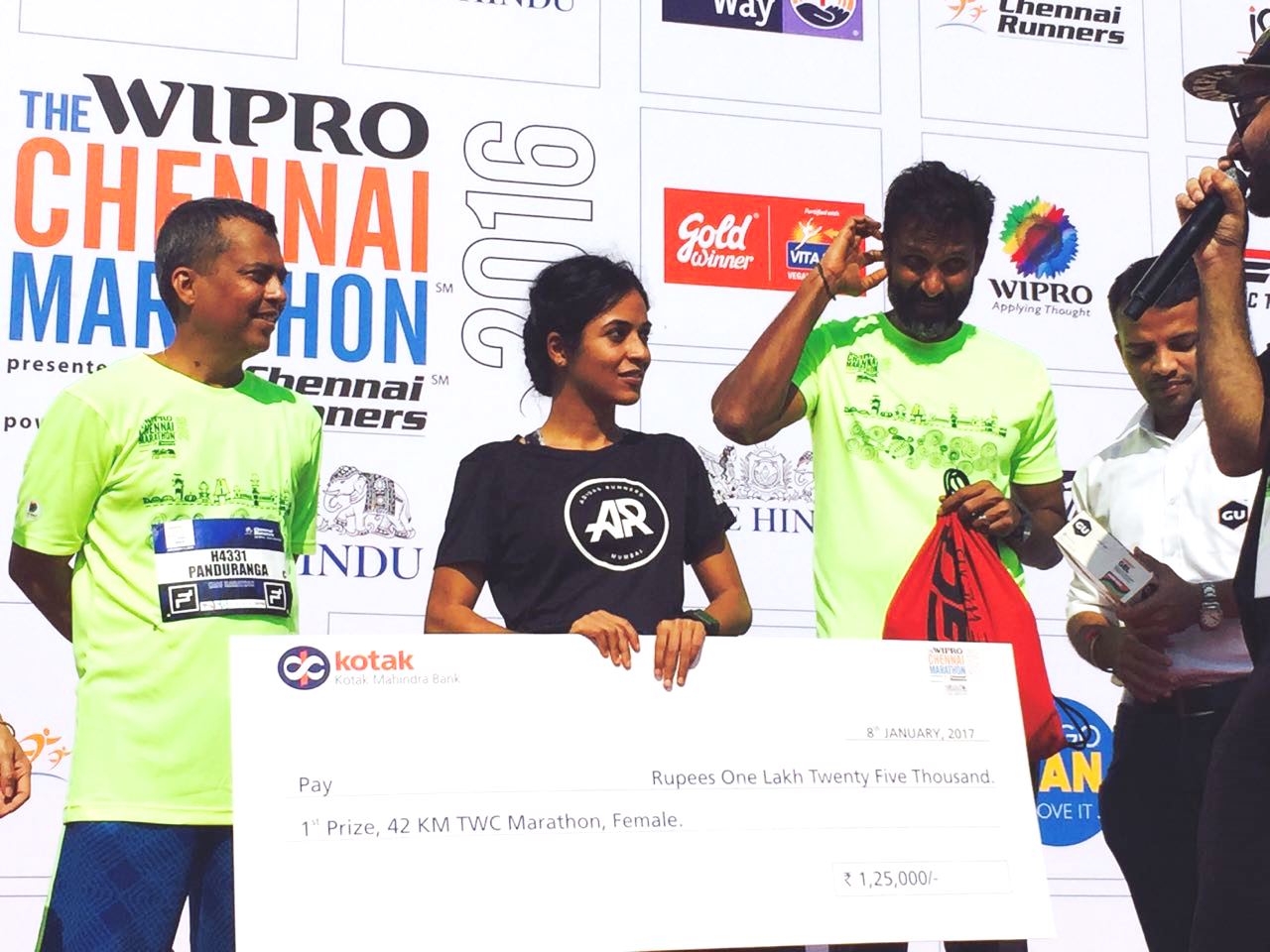
With the winner’s cheque at TWCM (Photo: courtesy Simta Sharma)

Chennai, January 8, 2017: it was for Simta, a humid day. “ Humidity was the biggest challenge for me while running TWCM,’’ she said. There were also two other issues, according to her – there was a festival that day and it occasionally brought people on to her path for a couple of kilometers; second, as measured by her GPS, the whole route appeared to be tad longer than usual (by about 800m or so), which given the competitive circumstances of a race made its impact felt towards the finish. “ I couldn’t stand up after finishing,’’ Simta said. On the brighter side, she loved the fact that the pilot vehicles kept her company three to five kilometres from the start itself. “ They were cyclists and not motorcyclists. They gave me water and snacks on the go. It meant I did not have to stop at any aid station along the way and could keep moving,’’ she said. This was a major difference from many other races where the pilots appear only towards the finishing stage of a marathon. “ I love running with the pilots,’’ she said. Simta finished the full marathon in 3:34:27 placing first in the open category. The win at Chennai was an important victory for the runner from Tohana, TWCM being a major race in the national calendar for marathons.

Less than a month after the full marathon in Chennai, on February 5, 2017, she ran a full marathon at Rajkot in Gujarat winning it in 3:28. Rajkot’s is not as high profile an event as Mumbai’s SCMM or Chennai’s TWCM. Why deign to run Rajkot, when you are on a high after victory in Chennai? For Simta, the common thread running through her choice of events is that her timing is improving – she clocked 3:34 in Chennai; that was down to 3:28 in Rajkot. Should anything else matter? A critical observer may question otherwise – if you run at smaller events aren’t your chances of podium finish that much higher?  Runners obsessed with podium finish are known to harbour that streak; strike gold where competition is less. Simta argues that is an incorrect view. As example, she points to her participation in the half marathon at Rajkot in 2016. She had finished the distance in 1:40. “ Yet I was placed tenth. There were people running the distance in 1:23,’’ she said. Aside from the fact that she likes running in Rajkot, Simta said that smaller events bring forth a category of local talent that is genuinely competent but rarely makes it to the big events in India’s large cities for want of resources. These are good Indian runners and they shine at the smaller events they participate in, returning timings that would be the envy of city based-runners. “ I enjoy participating in these smaller events,’’ Simta said.
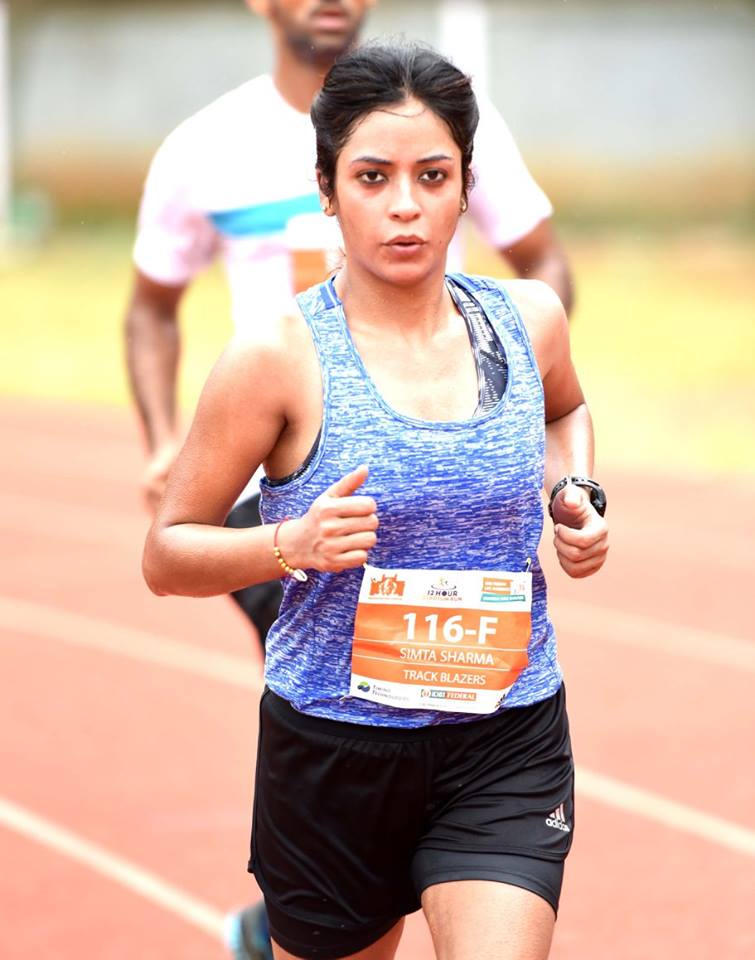
Photo: courtesy Simta Sharma

Tohana to Bengaluru, TWCM and Rajkot – it has been a journey of transformation. “ Simta’s improvement has been dramatic – from someone with very little experience in running, she has become a podium finisher in the sport. The thing about her is that she is dedicated and trains hard. She is also very focused on the event she is planning to participate in. She doesn’t let that focus be upset by any other event advertising itself as potential distraction,’’ Ajit said.  Noteworthy performance has fetched Simta sponsors. After her podium finish in Bengaluru, Adidias elected to support her. Later FastandUp and TomTom joined in. Concerned more about training than participating in events, Simta hadn’t yet figured out her calendar for 2017 when we met her in late March. “ I am looking at the Airtel Delhi half marathon. As regards a full marathon for the year, I haven’t decided yet,’’ she said. She was however clear about one thing – she is now focused on running.

Simta Sharma – Personal Bests (as of end March 2017)

10 K – 00:44:29

21 K – 1:35:17

42 K – 3:28:13

(The authors, Latha Venkatraman and Shyam G Menon, are independent journalists based in Mumbai. The timings at races are as provided by the interviewee.)

MUMBAI MIRAGE

Illustration: Shyam G Menon

The Mumbai Metropolitan Region is among the most populous metropolitan regions of the world. It was, until some decades ago, India’s industrial capital. Now that title is unclear. As industrialization gathers currency elsewhere too, the ingredients of being industrial capital lay scattered across several large Indian cities. Mumbai survives though as India’s financial capital.

The metropolitan region includes among others, Mumbai city, Thane and Navi Mumbai – all well-known urban entities with municipal corporations that are by no means poor. On paper for instance, Navi Mumbai – its growth anchored by the City and Industrial Development Corporation of Maharashtra Ltd (CIDCO) – is one of the largest planned townships in the country. Despite Mumbai featuring sharply contrasting images of super wealth and daily economic struggle with a huge chunk of its residents living in slums, Mumbai’s municipal corporation is among Asia’s wealthiest. Wikipedia’s page on the Brihanmumbai Municipal Corporation (BMC) states that its annual budget is bigger than the budget of some of India’s small states. Further, a clutch of India’s biggest private sector companies are headquartered in Mumbai.

Juxtapose on this a few facts from the outdoors. The first civilian expedition from Maharashtra to successfully climb a peak in the Himalaya was from Mumbai – a Girivihar expedition, years ago. Girivihar is Mumbai’s oldest mountaineering club. In 1988, the club staged an expedition to climb Kanchenjunga – the world’s third highest peak. It was the first Indian civilian expedition to an 8000m-peak and saw two climbers reach above 8000m. Ten years later in 1998, it was a Tata-sponsored Everest expedition that put Surendra Chavan on the roof of the world. He was the first person from Maharashtra to gain that summit. There is a tradition of hiking and climbing in the Western Ghats, in Mumbai. The city is home to dozens of outdoor clubs. Among clubs with a Mumbai address is the venerable Himalayan Club, reputed as a repository of information on India’s biggest mountain chain, particularly exploration and climbing in the Himalaya.

Mumbai is home to a community of rock climbers coping with crags under threat or progressive loss of access to crags. In some cases, the crags are being encroached upon by real estate players, slum dwellers and religious institutions; in other cases, government agencies doing their best to guard depleting forests and green belts have clubbed climbers with the forces to be checked. Amid this, regular climbing has managed to survive in the crags of Belapur in Navi Mumbai, Names like Manori and Mumbra, crags elsewhere in the Mumbai region, are still heard in climbing’s grapevine. Belapur went on to host an annual sport climbing competition (initially on rock and then on artificial bouldering walls) for over a decade, the learning from which eventually led to the  IFSC World Cup in Bouldering held in Vashi, Navi Mumbai in 2016. Several years ago, plans for an adventure academy (with emphasis on climbing) were shared with CIDCO by a bunch of climbers from Girivihar. It envisaged in the main, a climbing gym.

Till date, despite the cumulative monetary wealth of the Mumbai-Thane-Navi Mumbai region, the plethora of outdoor clubs around, the giant companies headquartered in the region and a World Cup held in 2016 – despite all that, there is not one world class lead climbing wall or a complex of such walls in the region. Thanks to the World Cup, one international caliber bouldering wall is now available. Post World Cup, that wall emerged from storage to host an open climbing competition in early 2017. But as of March 2017, a permanent home for the wall was still to be found. Just as in the case of people, a home for a bouldering wall is tough to find in region notorious for blistering real estate price. One solution is to house it in the city’s outskirts. But the economics of urban sport is also fueled by incidental fancy; people drawn to try because they could easily see it, easily access it. Where is the scope for incidental fancy if climbing is showcased in the city’s periphery?

As far as this writer knows, there hasn’t been a meeting of the city’s outdoor clubs (at least in recent times) to investigate why the Mumbai region lacks climbing infrastructure like a world class lead climbing wall, how to develop consensus on the matter or what it would take to get a world class lead climbing wall up and functioning in the region, ideally in Navi Mumbai. One says Navi Mumbai because comprehensive plans to develop climbing were submitted here earlier. It is home to a respected climbing competition which the local administrative agencies have been good enough to support. The agencies are thus empathetic to climbing. Navi Mumbai has a well-developed yet slowly disappearing natural crag in Belapur (the crag is a victim of encroachment) and was host to a World Cup. It is connected by suburban rail to Mumbai and Thane, it is close to India’s biggest container port (critical when it comes to importing infrastructure for sport) and it is due to get a new airport (relevant for visitors in sport) – all of which add to this location as ideal address for a world class climbing gym / complex. Yet compared to the urge to have more competitions including more World Cups and such, focus on establishing climbing infrastructure and training facilities languish.

Unlike Mumbai, other cities have moved ahead in this department, however small their achievements in climbing infrastructure may be. Some of them have proper lead climbing walls and bouldering gyms. Delhi, Pune and Bengaluru – they all have it; they are also the cities from where the bulk of India’s best sport climbers now hail. None of them have Mumbai’s population, municipal corporations as rich as Mumbai’s or private companies (potential sponsors) as big as those headquartered here. So what’s holding back the Mumbai region? There’s something puzzling about an ecosystem that succeeds at hosting a World Cup but can’t roll out a reliable blue print for world class climbing infrastructure with equal, if not more, urgency.

A point to remember is that sport holds much promise in India by quirk of demographics alone. More than 50 per cent of this country is now young and young people need room for activity. Conversely, restrict such room and you may be staring at frustrated youngsters. In at least a few countries, climbing on artificial walls received state support for exactly this reason.

That elusive world class lead climbing wall – for now, it is a case of Mumbai mirage.

(The author, Shyam G Menon, is a freelance journalist based in Mumbai. This essay reflects his personal opinion on the subject and has been written with a view to get readers thinking on why the predicament mentioned in the article prevails.)    

THE INDIAN WEST COAST, ON A KAYAK

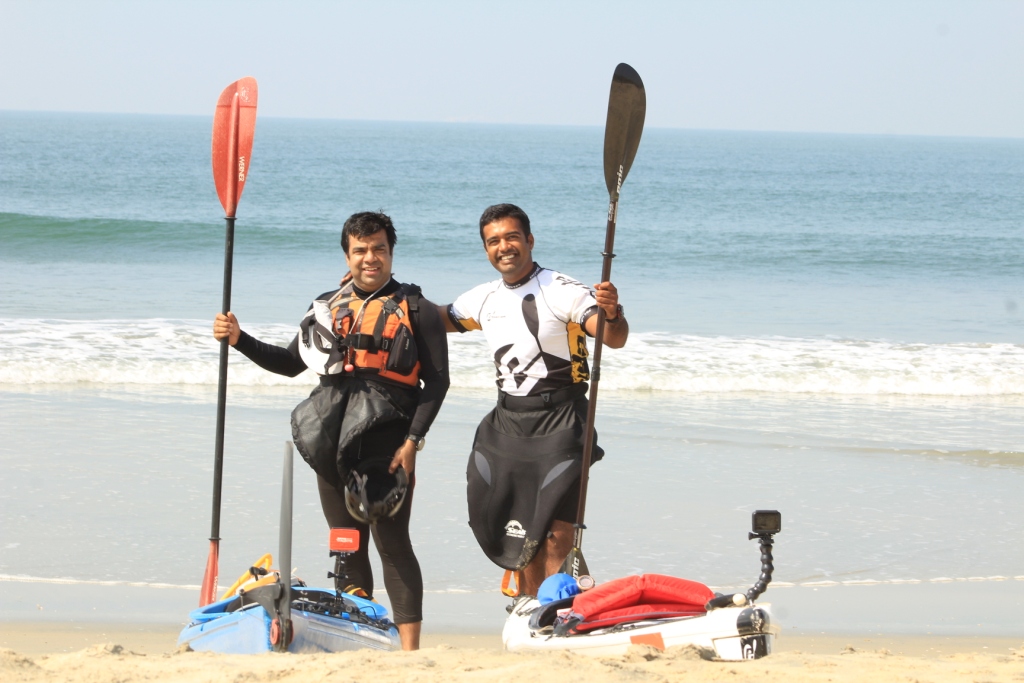
Kaustubh Khade and Shanjali Shahi (Photo: Shyam G Menon)

Kaustubh Khade hasn’t rested on his laurels.

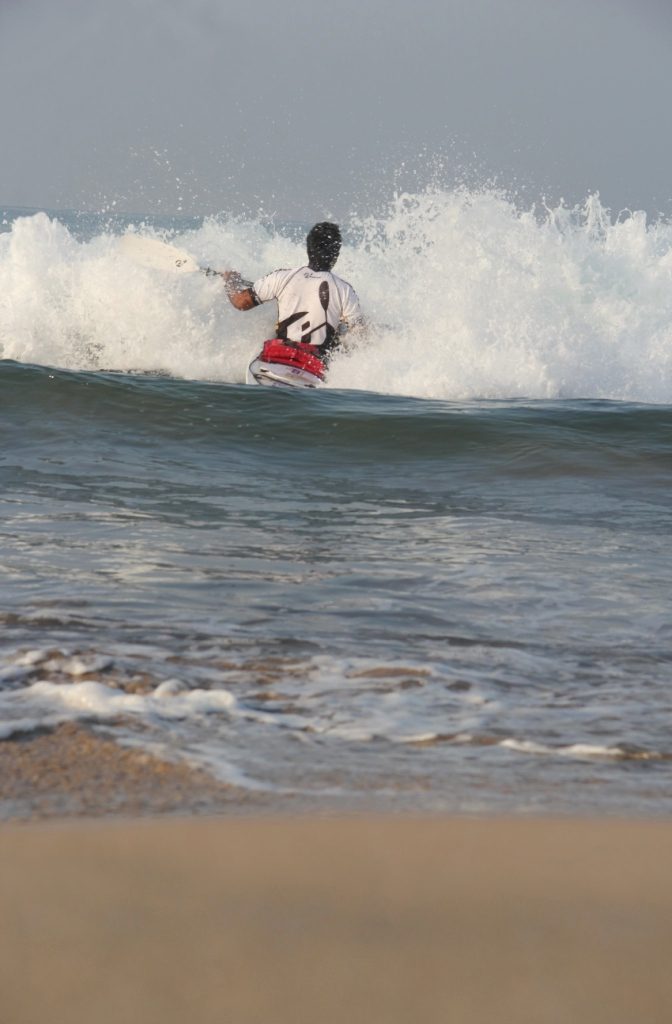
In February-March 2015, he had successfully paddled his kayak from Mumbai to Goa. A journey of modest proportions, that trip was actually stepping stone to a larger plan he had in mind.

India ranks twentieth worldwide in terms of total length of coastline. At almost 7500 kilometers, the Indian sea coast – spanning Gujarat to West Bengal – is longer than the Himalaya up north, which nevertheless grabs more attention as home to snow and ice, mountaineering and military strategy. Despite the long coastline, water sports are yet in their infancy in India. In the lead up to Kaustubh’s Mumbai-Goa sea kayak expedition, he had read Joe Glickman’s book `Fearless,’ about paddling around the coastline of Australia. Something similar hadn’t been done in India. If it is to be done, isn’t it best done by an Indian? – Kaustubh reasoned. That was the thought with which he embarked on planning the smaller Mumbai-Goa expedition, which served both as an accomplishment by itself and also a laboratory to perfect measures for a bigger trip. He commenced the Mumbai-Goa trip on February 14, 2014 and completed the 413 km-journey by sea in 14 days of paddling (excluding rest days). The details of the trip can be accessed on this link: https://shyamgopan.wordpress.com/2015/11/18/mumbai-goa-on-a-kayak/)

Casting off from Vengurla, Maharashtra (Photo: courtesy Kaustubh Khade)

Kaustubh returned from the Mumbai-Goa kayak expedition in early March 2015. A year later in March 2016, he quit his job signaling commencement of preparations for the bigger project – kayaking down the coast of India from west to east. For two reasons, this project was split into two separate phases – the west coast and the east coast with the west, spanning Gujarat to Kanyakumari (Cape Comorin) being taken up initially. The first reason was that the ideal seasons for paddling on both these coasts are different and not contiguous. It is difficult to stitch together a seamless journey from one end to the other. Second, as he found out and the event organizer entrusted with the project, Meraki, advised him: sponsors who would anyway have a tough time warming up to a kayak project may be even more reluctant if they found the overall journey to exceed 7000 kilometers. It isn’t just water sport that is in its infancy in India; so is, sponsorship for adventure sports. You can’t confront hesitant sponsors with a major project they can neither fathom nor connect in turn to India’s predominantly sedentary market. It appeared better to divide the large project into two and seek support for the first half – the west coast bit. From March 2015 onward Kaustubh started training for the project, which entails a significantly greater amount of paddling compared to Mumbai-Goa. The new expedition also acquired a shape, different from the earlier trip.

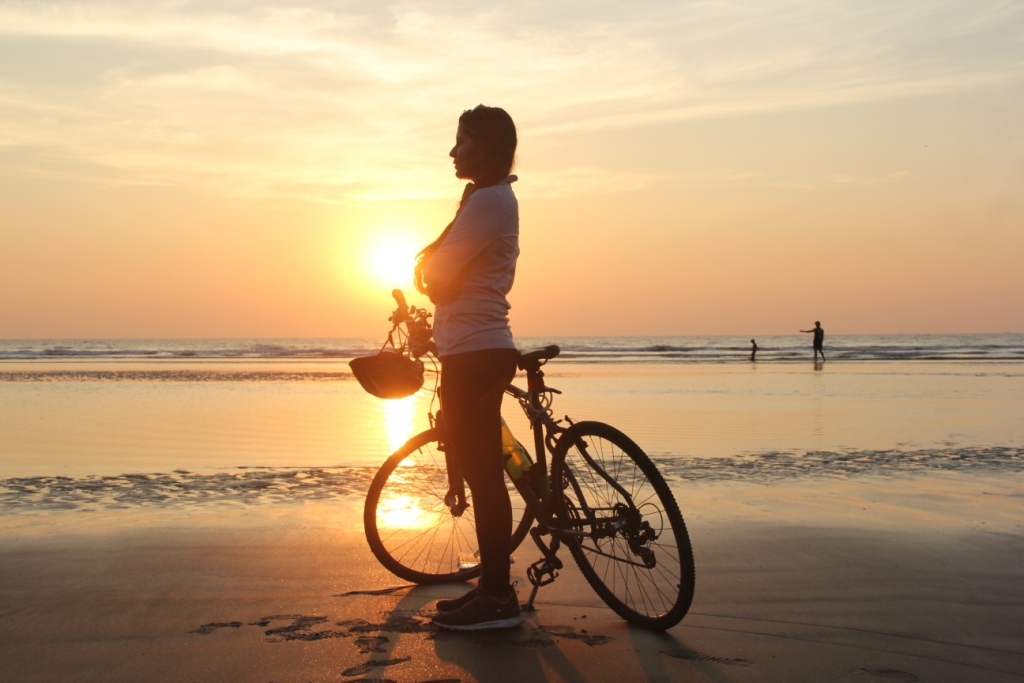
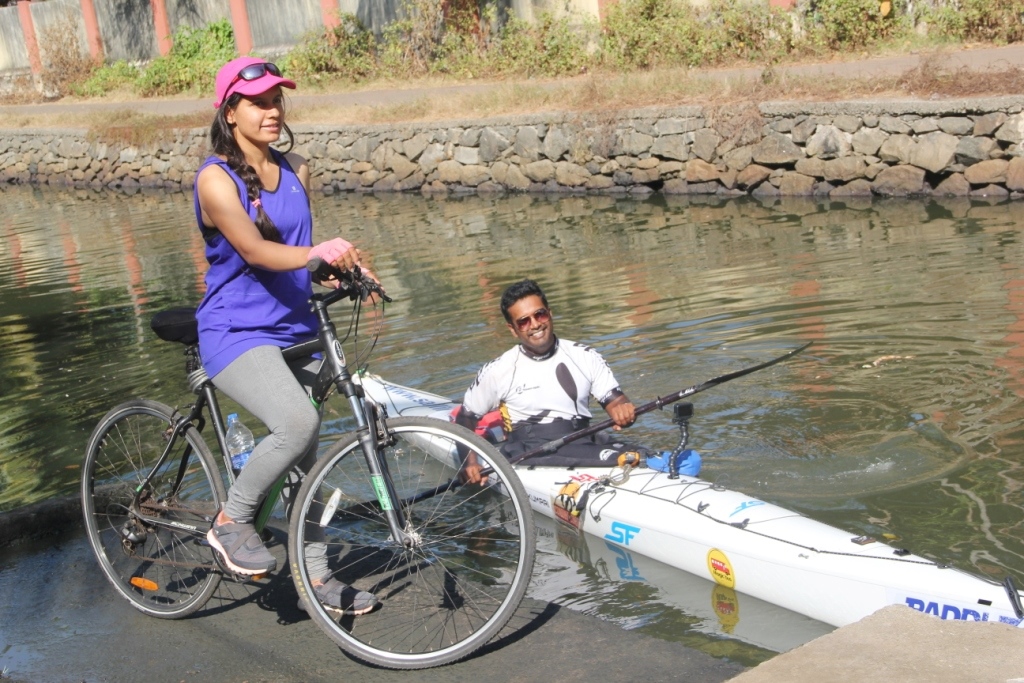
Among those who had worked on planning the details of the Mumbai-Goa expedition was Kaustubh’s girlfriend, Shanjali Shahi. They met as colleagues at AppsDaily, one of the companies Kaustubh worked at. Shanjali is interested in cycling. Together they floated the idea of Kaustubh paddling along the coast by sea and Shanjali shadowing his journey on land on her bicycle. It isn’t as simple as it seems – left alone, a cycle is faster than a kayak. An expedition featuring both would need patience and coordination. Although she knew cycling and was interested in it, Shanjali didn’t have much experience doing extended trips. Not long after Kaustubh resigned his job, Shanjali followed suit. Soon thereafter, the two cycled to Goa via the coastal route, avoiding the main highway. It gave Shanjali an idea of multi-day trip and what lay in store. Not one to stay content with a Mumbai-Goa bicycle trip, she enlisted for a supported cycling trip from Manali to Leh in the Himalaya and completed it. Another element of difference in the new expedition was in terms of accompanying support crew. On the Mumbai-Goa trip, Kaustubh had engaged a motor boat to follow his kayak at a distance. His mother travelled in the boat, while his father tracked their progress on land in his car. All three teams met every evening. It was done so to keep the first expedition a family affair as well. Needless to say that whole expedition was funded by Kaustubh and family. This time, there would be no parents. There would be Kaustubh kayaking at sea, Shanjali on a bicycle on land and with her, a support vehicle bearing essentials for her trip and Kaustubh’s. A key player in this altered arrangement would be the driver of the support vehicle. They needed somebody to drive Kaustubh’s car who wouldn’t just be driver but someone who buys into the expedition and anticipates its unfolding needs, risks and urgencies. The driver had to be an enterprising, sensitive individual. They interviewed a few candidates and finally settled on Nitin Kotawadekar.

Shanjali at Harihareshwar, Maharashtra, one of the team’s rendezvous points (Photo: courtesy Kaustubh Khade)

With window for the west coast expedition identified as the period from November 2016 to February 2017, cast off was scheduled for November 2016. But as late as October 2016 no sponsor had come aboard. Sponsorship was critical. Kayaking the entire coastline costs a lot of money and Kaustubh’s rough estimate was that the whole west to east journey would cost around thirteen lakh rupees (Rs 1.3 million). That’s a lot of money. Eventually SF Watches, a line of watches made for adventure enthusiasts by the well-known Indian watch maker Titan, came aboard as main sponsor, picking up almost 80 per cent of project cost for the west coast. What worked was that SF was no stranger to kayaking. They knew the sport and knew how to leverage the sport for advertising mileage. The last major hurdle to cross was approval from security agencies. According to Kaustubh and as per the advice he obtained from those well placed in seafaring, a recreational kayaker out for sport does not need clearances from anyone to put his craft to sea. “ You don’t seek official approval to cycle from one place in India to another – do you?’’ Kaustubh asked. However, in practice, approval from security agencies dominating the coast helps given contemporary India’s growing obsession with security. With this in mind, before leaving Mumbai he ensured that word about the expedition was reached to state maritime boards and marine police down the coast. He also obtained a letter from the chief of the Marine Police in Mumbai.

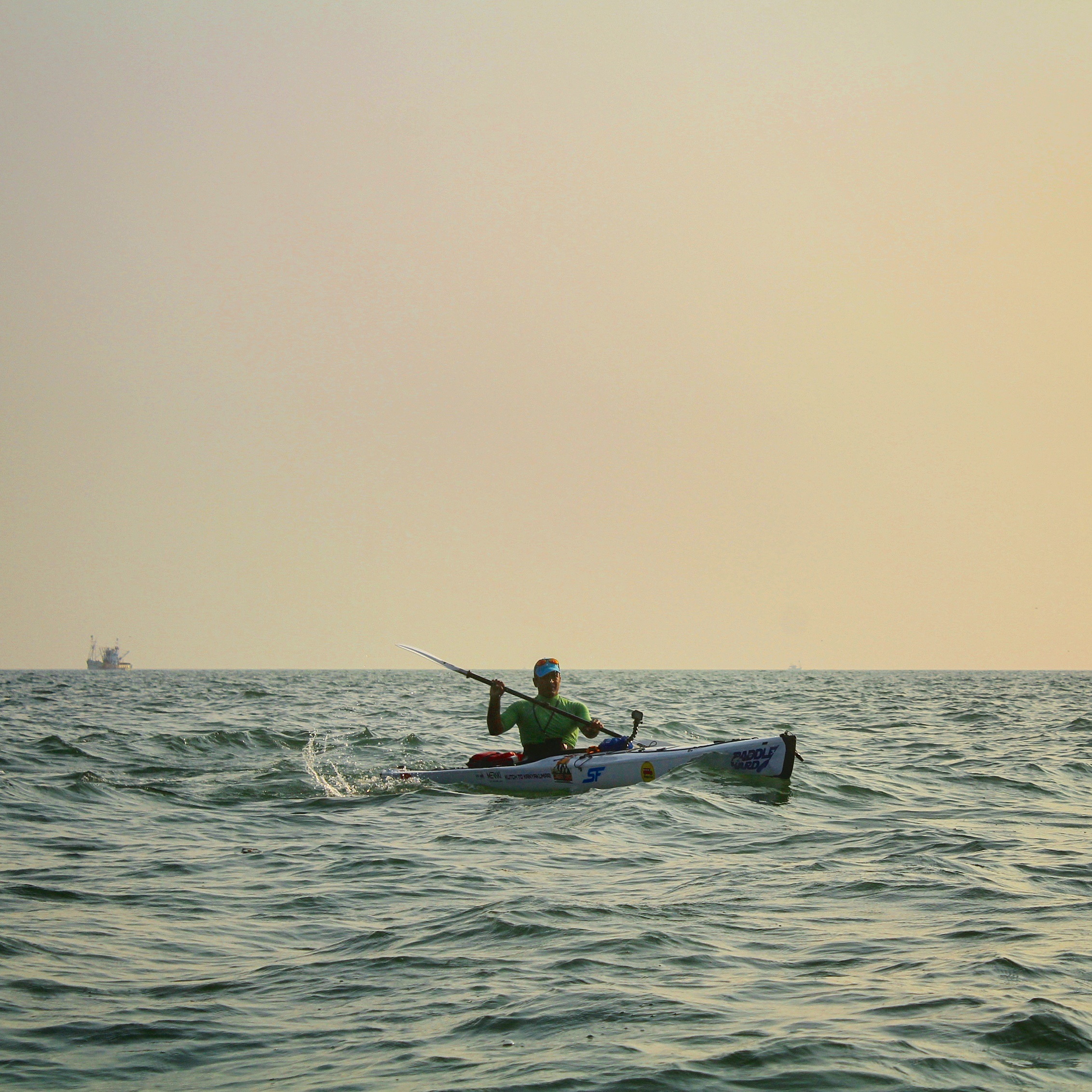
Kayaking off the coast of Goa (Photo: courtesy Kaustubh Khade)

The Indian state with the longest coastline is Gujarat. On the map, this length is deceptively hidden by the layout of the Gujarat coast which is curved in many places. As coastline for kayaking, Gujarat is tricky. This portion of the coast is strongly tidal creating powerful ingress and egress of water. In some parts, currents can drag a kayak off course. Winds can also be powerful, blowing a small boat off track. Further, some daily battling is inevitable because although you can cast off aided by the egress of a receding tide there is no guarantee that you will reach your destination riding the ingress of an advancing tide. If you reached in the middle of a receding tide, you have to battle your way against the current to access land and evening’s rest. On the average, Kaustubh kayaks at a speed of about 6.5 kilometers per hour. A thumb rule to follow would be that he shouldn’t be tackling any currents exceeding this speed. With all this factored in, including suggestions that he had best not cross some of the current ridden-gulfs in the area, Dwaraka was chosen as cast off point for the expedition. It seemed to add a touch of history too to the trip, steeped as the town is in ancient Indian mythology, not to mention its prominence in marine archaeology.

On November 14, 2016, Kaustubh cast off from Dwaraka. Two minutes later he was back ashore; he had been stopped by the Gujarat Police who couldn’t wrap their heads around a kayaker venturing into the sea. Familiar questions about permission – whether he has it, who gave it, why he is indulging in this madness – all returned to haunt. To convince local officials, Kaustubh looked around for an apt person to meet, finding him a drive away in Okha. Enter Harish More, Commanding Officer in Okha for the Indian Coast Guard. He saved Kaustubh’s expedition. More informed all his officers in Gujarat of the paddler on kayak making his way down the coast. Armed with More’s support, Kaustubh cast off from Dwaraka on November 17. Keeping him company in these parts was the occasional dugong. A medium sized marine mammal, the dugong is the only strictly herbivorous marine mammal; it is largely dependent on seagrass and is found in coastal habitats that support seagrass meadows. The International Union for the Conservation of Nature (IUCN) has classified the dugong as a vulnerable species. According to Wikipedia a highly isolated population of dugongs exists in the waters of the Marine National Park in the Gulf of Kutch. These animals are 1500 kilometers and 1700 kilometers distant from their nearest brethren in the Persian Gulf and the sea around southern India, respectively. “ I freaked out seeing them,’’ Kaustubh said of his encounter with dugongs in the waters off western Gujarat. That was in the early days of the voyage. Ahead lay some 3300 kilometers of the Indian west coast.

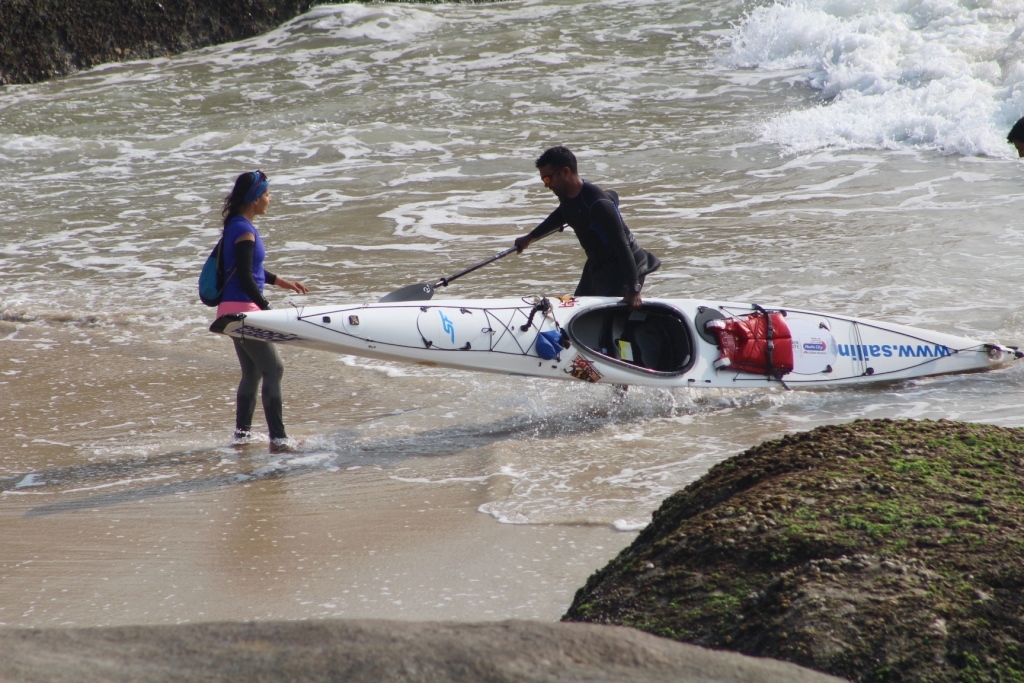
Shanjali helps Kaustubh get his kayak ashore near Kapu lighthouse in Karnataka (Photo: courtesy Kaustubh Khade)

From a technical point of view, the Gujarat coast was the toughest portion of the voyage for Kaustubh. To tackle the water current problem and to find the best points to cut landward for his daily rendezvous with Shanjali and Nitin, he used to keep an eye on fishing boats. “ Fishermen know the coastline well because they regularly go out to sea and come back,’’ Kaustubh said. On one instance, a fishing boat that passed him by and proceeded landward, returned to make sure that he was alright and able to find the right passage amid swirling currents. While Shanjali and Nitin traveled as a team of bicycle and car on land, their evening meet-up with Kaustubh required not only micro-mapping of roads along the coast but also some bit of mutual tracking of their respective positions in real time using the app `Life 360’ aka Friend Finder. Despite this, Gujarat was tricky because the coastline is rocky and beaches are few. Where there is no rock, a given beach may be steep implying undercurrents. You can hope for a landing spot based on data and arrive to find something quite different. Three to four times in Gujarat, Kaustubh crash-landed. He usually had two cell phones on the kayak – a smart phone with capacity for GPS and for reliable communication with his team on land, a life saver of an old world, sturdy Nokia cellphone. To set direction at sea, he used the compass on his watch, which had a GPS. He also had a couple of GoPro cameras aboard. Interestingly, although on this trip he was by himself at sea without anyone at hand for assistance, Kaustubh’s emergency response plan appears to have been frugal. Should the kayak capsize, he had decided that he wouldn’t try a roll to bring it back up; a roll being done with kayaker still seated in the vessel. Instead, he would get out of the kayak, flip it back into position and get back in. Should the kayak hit rocks and be damaged or something similar happen, his plan was to use that sturdy old world phone and call up the nearest Coast Guard office. For this, he carried with him the phone numbers of the nearest Coast Guard office for each segment he was paddling. Aside from this he had no emergency equipment; no emergency beacon for example.

Once the two teams met up and a place to stay for the night was found, sponsorship related work took over. A bunch of photos and write-ups had to be dispatched to keep websites focused on the expedition, going. Sponsored expedition comes with its accompanying baggage of media responsibilities and media instincts. The daily photo dispatches is one. The other is, knowing that you have to dispatch photos by evening you look around for good pictures while kayaking, something a committed kayaker doesn’t always like to do. Quite frankly, media is a distraction. But then: no media, no sponsorship and no money, no expedition. Such is the modern paradigm for adventure. Amid the paddling, Kaustubh lost two smart phones at sea and had to replace them with new smart phones bought from wherever he landed. It added to expedition expense.

Kaushiq Kodithodi (left) with Kaustubh, just before their cast off from Payyoli in north Kerala. Kaushiq who owns Jellyfish, a water sports facility near Kozhikode, paddled for two days with Kaustubh (Photo: courtesy Kaustubh Khade)

The Gujarat coast took a long time to get past. Unlike the peninsular portion of India which converges to Kanyakumari, the Gujarat coast is intensely folded. When you are a kayaker tracking coastal undulations, you go in and come out multiple times gaining little lateral distance on the map but quite a bit on the water. “ Gujarat took almost a month to get past,’’ Kaustubh said. One positive about these parts was that the water was sparkling blue. At Rajpara, Gujarat’s fishing villages abruptly ended. Here the sea was pronouncedly rough making him fear that capsize was imminent. But he managed. Kaustubh also remembered a day in southern Gujarat when soon after early morning cast off he saw a beautiful sunrise followed by a sharp change in the colour of water from clear to murky. The Maharashtra coastline was a repeat of what he had done on his previous trip. During that earlier Mumbai-Goa trip, he had covered the distance in 17 days overall; this time that stretch of the coast went by in 13 days. For Shanjali however, the Maharashtra stretch took more time to cover. This was one part of the whole journey where the coast was hilly introducing uphill and downhill segments to the roads she was cycling on.  Unlike in the other states, where it was routine for Shanjali to reach ahead of Kaustubh at their daily rendezvous point, on the Maharashtra stretch, it was largely a case of Kaustubh arriving first. At the beginning of the Karnataka coastline, Kaustubh’s oar broke. Luckily the kayak manufacturer – EPIC – on hearing of his planned expedition had supplied him a set of spare oars. He switched to using that. The remaining portion of the trip was relatively smooth save a bout of heavy winds in north Kerala and three occasions for concern, the first two of which dealt with problems on land for Shanjali.

Shanjali and Kaustubh; location – backwaters slightly north of Kochi in Kerala (Photo: courtesy Kaustubh Khade)

Kannur in north Kerala is notorious for its political clashes. The day the expedition reached Kannur, an incident of political violence occurred in the district. Next morning while Kaustubh paddled out to a sea free of politics, Shanjali cycled out to roads observing hartal (shut down) to protest against the incident. For Mumbaikar (resident of Mumbai) generally used to city that doesn’t sleep, the tension and uncertainty of Kerala’s hartal were unnerving. She said she was stopped by activists but allowed to proceed when they heard of the expedition. The second instance was in the union territory of Mahe, famous as a watering hole. Part of the larger union territory of Pondicherry on the Indian east coast, Mahe on the west coast is surrounded by Kerala’s Kannur and Kozhikode districts. For young woman on bicycle, the sight of drunken people on the road was scary. There was also an incident of pestering (Nitin had to sternly warn off the culprit) following which, Shanjali loaded her bicycle on the support car and resumed her cycling only after Mahe was done and over with. The third occasion for anxiety was on the southern Tamil Nadu coast past Kerala, where measures taken to prevent coastal erosion made the waters in that area turbulent with resultant insecurity for man on kayak.

On February 7, 2017, the expedition reached Kanyakumari. Kaustubh had paddled approximately 2700 kilometers out of the total length of India’s west coast. His fingers were swollen from all that paddling. It took him almost three weeks to recover from the toll the expedition had taken. Both Kaustubh and Shanjali are already speaking of the expedition’s second half – the Indian east coast. On her part, Shanjali would like to do a complete outline of India on her bicycle, including the mountainous terrain up north and the desert and marshland to the west. Kaustubh is also eying a trip by kayak to Lakshadweep from north Kerala, which if he attempts, would be the first time he is cutting across the sea as opposed to tracking a coastline.

(The author, Shyam G Menon, is a freelance journalist based in Mumbai. This article is based on a conversation with Kaustubh Khade and Shanjali Shahi as well as a formal press briefing they did later in mid-March.)

ALONE ON THE WALL

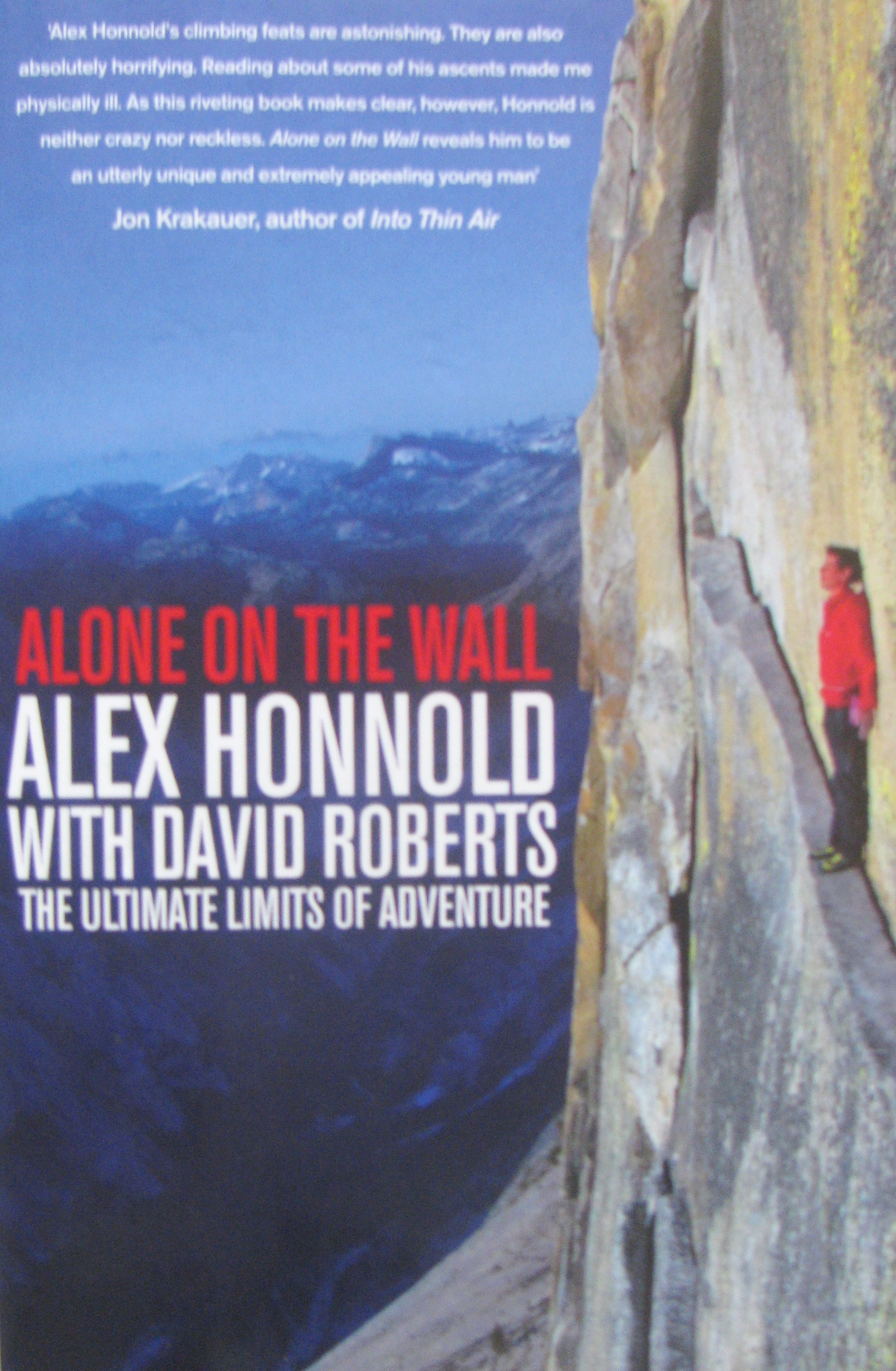
Alex Honnold is notorious for quietly doing what he wishes to and then, underplaying what he accomplished. In sharp contrast to the media savviness that characterizes much of sport today, the world woke up to some of his riveting climbs with a lag. Like – done, then word gets around and people are startled. Honnold is the world’s leading practitioner of the art of free solo in climbing; a branch of climbing in which, the climber uses no rope for protection. It’s just person, rock shoes, a chalk bag and big rock walls – if you take Yosemite, Alex’s favorite playground – walls that rise up to almost 3000 feet. While there have been others who free soloed, what set him apart are a few things. Free soloing appears to be the bulk of what he does and within that discipline he has to his credit records straddling both speed and endurance. That’s an unusual mix.

I picked up the book Alone on the Wall less because of Honnold and more because of co-author David Roberts. The latter is one of the finest writers on the outdoors. The book didn’t disappoint. Its idiom suits narrative about an intense, young talent in our midst. The story focuses on Honnold with research in the near vicinity of story. Done so, except for its portions explaining specific climbs in great detail, the book moves fast. You get a ringside view of the life of a free soloist and what it is like to climb rope-less on a big wall. Friends and observers think Honnold has the ability to switch off fear. Not true, he says; he lives with fear, just that he handles it and panic, better than the rest of us. From the book, you learn much about Yosemite and names associated with climbing in Yosemite. You get an idea of how the climbing routes there developed, how the speed and endurance records set on those walls evolved and how Honnold’s accomplishments compare. Away from Yosemite and the US you get a taste of climbing in Chad and Patagonia. You are also introduced to the Honnold Foundation. In its own words: the Honnold Foundation seeks simple, sustainable ways to improve lives worldwide. Simplicity is the key; low impact, better living is the goal. These days, private foundations are usually the Corporate Social Responsibility (CSR) end of big companies or the philanthropic pursuit of jet setting billionaires. Against that, you imagine Honnold and his life in a van, harassed by security personnel at parking lots he tries to camp at and being shoed away. If climbing is what matters, then the nomad’s life makes sense. One of the interesting twists in the book is its delving into the link between Honnold, media and sponsors. All these are part of forces shaping contemporary climber’s professional ecosystem. Perceptions matter because mileage through media is what attracts sponsors in the modern paradigm of sustainable sport. It creates distortions and tussles. There are also sponsors who back off should the extreme trajectory of an extreme sport be too extreme for brand’s own good.

Honnold didn’t become a free soloist because that’s what he wanted to do. A reserved person, he couldn’t easily find company when he wished to climb. So he started to climb alone. Slowly, as the pages turn, profile of individual takes shape in reader’s mind. Intrigued, you search the Internet for a video or two on Honnold and you see lone man sans rope on challenging rock face, his face – smiling when it meets the camera – hardly betraying the immense risk all around. Just one regret – free soloing being one of the most stunning accomplishments in climbing, I missed seeing in the book a chapter or two on the art form, its history and evolution. Whatever was provided so was in measured dose such that it does not overshadow immediate narrative.

This is a good book, worth reading.

(The author, Shyam G Menon, is a freelance journalist based in Mumbai.)  

A STEP IN THE RIGHT DIRECTION

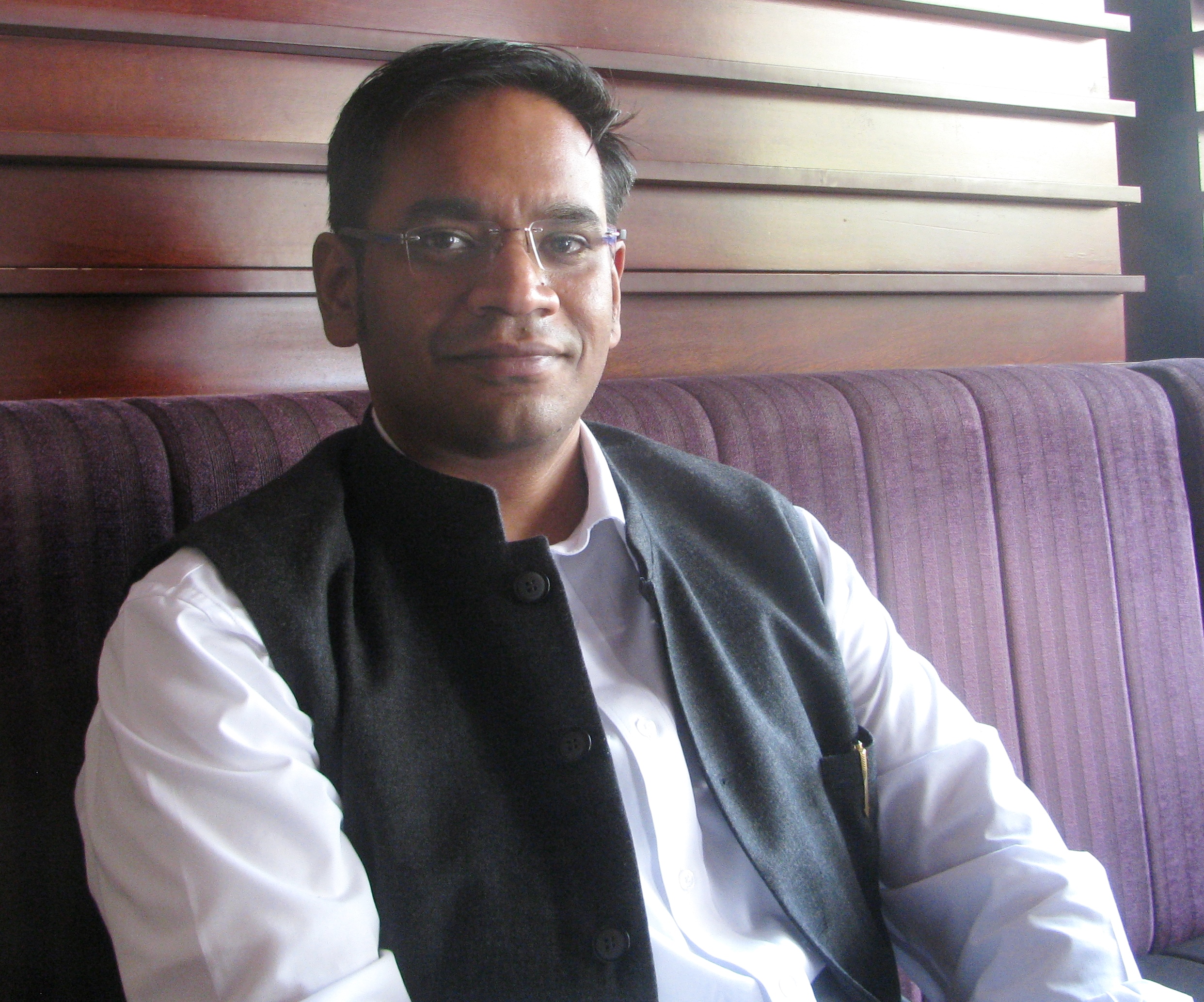
Dr Abhijeet Ghosh, Head (Health Administration Team), Bajaj Allianz General Insurance Co Ltd (Photo: Shyam G Menon)

A small step has been made with regard to meaningful insurance cover for those engaged in adventure sports.

Since the middle of 2016, Bajaj Allianz General Insurance Co Ltd, among leading private insurance companies in the domestic market, has piloted a Personal Accident (PA) insurance product that includes cover for adventure sports as one of the options. As yet the company is the only private insurer in the space. What makes the cover particularly relevant is that once availed, the cover – offered as an additional option under its PA product: Global Personal Guard (GPG) – meets the cost of evacuation in the event of medical emergency, as well. This is an improvement from the earlier prevailing situation in the Indian market.

Previously, in a scenario of insurance for adventure sports shunned by most Indian insurers, one public sector insurance company was sole exception, acknowledging its necessity. However that insurance policy (Indian mountaineers are familiar with it), while meeting medical expenses to an extent, did not include evacuation cost. The product from Bajaj Allianz is claimed by the company to be the first in the domestic market that meets evacuation cost for those into adventure sports. The evacuation cost will be met only if accidental injury resulted in a medical emergency.

Why should inclusion of evacuation cost matter?

Among fundamentals they teach you in a wilderness first aid course, is that in the event of serious mishap with potential for loss of life or limb, once relevant first aid has been administered at accident site, the focus is on enabling formal medical intervention at the earliest. The quicker a seriously injured individual is reached to hospital, the better the chances of survival. If you are backed by insurance cover, the confidence to call in a chopper (should the circumstance be such that a helicopter is genuinely required) is more. According to Dr Abhijeet Ghosh, Head (Health Administration Team), Bajaj Allianz General Insurance Co Ltd, adventure sports is one of twelve additional options that a customer can choose to avail cover for, when purchasing GPG. In the case of adventure sport, the maximum cover offered is up to one crore rupees (ten million rupees). It comes with a condition attached – the client’s adventure must have been a supervised one; there should be an expert / supervisor in the frame (Dr Ghosh said that in the case of experienced adventurers going out by themselves, proof of expertise / training can be considered as alternative for supervisor). Should a GPG customer not have availed cover for adventure sports initially but is beset with an opportunity for adventure sport and wants the cover, then he should be able to activate it through his agent in two to three hours, Dr Ghosh said.

GPG is a global product and therefore the cover is effective in India and overseas. The company covers a basket of adventure sports. Within that, it treats the risk across sports as the same; in other words, the premium paid is related to the sum insured and not the sport covered. Compared to the company’s other insurance policies, premium for GPG with adventure sports included, is on the higher side; it can be two to four times higher. However depending on the cover size, the premium maybe as affordable as Rs 1200, Dr Ghosh said.

According to him, Bajaj Allianz decided to test the waters due to a combination of factors. There is 40-50 per cent growth in the outdoor activity segment and even online booking for such trips are happening, he said. Many people traveling abroad also sample adventure sports, providing scope for the adventure option to be tagged along with travel insurance. Interestingly, India’s changed demographic profile now very partial towards youth hasn’t been a pronounced driver in the company cosying up to adventure sports.  As Dr Ghosh pointed out, interest in the active life appears to be more in a slightly older lot; not the young saddled with responsibilities like EMI payments. He maintained that these are very early days for the product covering adventure sports as the overall market (pool of customers) is still small. There is an encouraging volume of inquiries but conversions into actual deals lag. “ Out of 100 GPG policies sold, maybe three percent opt for adventure sports as additional option,’’ he said. It is therefore too early to speculate about a stand-alone product solely meant to cover risk in adventure sports. “ I don’t see a stand-alone product materializing in the next three to four years. For now, this is a bridge to build the data and understand the risk in a better way,’’ he said.

Although it is as yet the only private insurer in the adventure sports space, Bajaj Allianz hasn’t been vocal about its product. Dr Ghosh says that is not the company’s style. “ We would rather be efficient in dealing with claims than advertise. Word of mouth publicity for work done well is more effective,’’he said. According to him the company has been in touch with outdoor clubs and adventure tour operators. Prima facie there are challenges for acceptance like the seasonality of adventure tourism versus the twelve month-cycle of the policy or the need for single trip-insurance versus a year-long policy. It makes people working in the adventure space and clients wonder why they should seek cover. Dr Ghosh felt that given low awareness about the benefits of risk cover, the ideal scenario would be a top-down dissemination of information about the positives of insurance by the management / leadership of clubs to its members. One example in this regard was on display at the recent annual seminar of The Himalayan Club in Mumbai. Office bearers, speaking ahead of the seminar (which was open to the public) said that the club was attempting a multi-tiered membership with select benefits accruing to each level of membership. The highest category proposed, which seemed oriented towards whatever support may be required for expeditions, had among options under consideration – insurance. “ If insurance cover can be blended in with a club’s membership fee, that would be a step forward,’’ Dr Ghosh said.

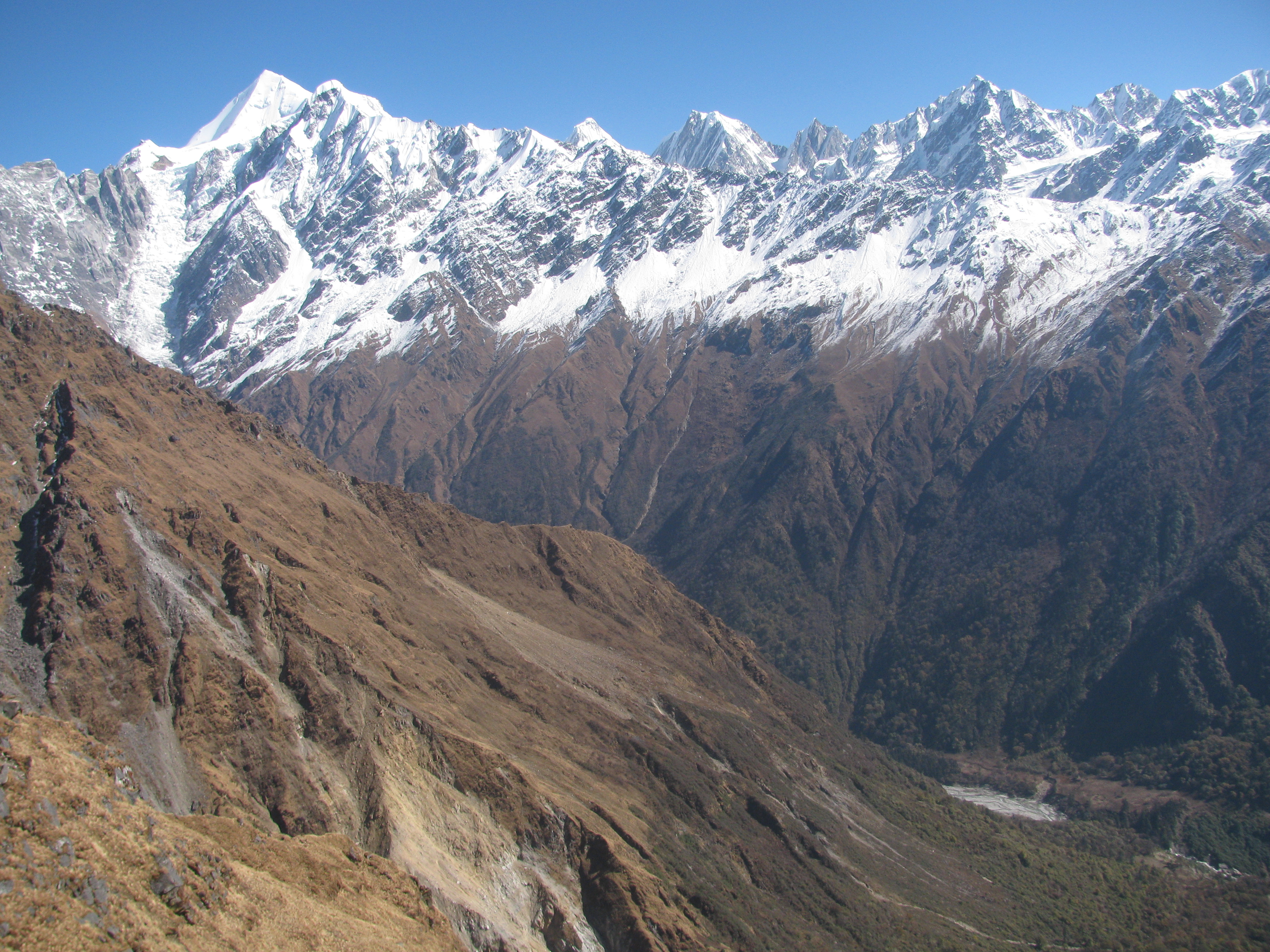
Panchchuli, seen from near Munsyari. This picture was taken from the ridge above Balatigad (Photo: Shyam G Menon)

Asked for his opinion, a leading adventure tour operator pointed out that while forays into the risk-cover segment by insurers are welcome, the real lacuna in emergency response in India continues to be bureaucratic hassles in the actual evacuation process and consequent delay. Cut to 1992 and one of the most iconic photos of a rescue underway in the Indian Himalaya: it showed an Indian Air Force (IAF) helicopter, its rotors inches away from a steep, snow clad-mountain face and a crumpled human being on the chopper’s skis. “With no space to land, the pilot could only bring the helicopter close and hold it steady. Stephen had to be on the ski,’’ Harish Kapadia, veteran mountaineer and among India’s best-known explorers of the Himalaya, had said in 2012, pointing to the photograph. We had met for a chat on search and rescue. The picture in question was clicked by Dick Renshaw at around 21,000ft on Panchchuli-V — a 21,242ft-high peak rated the toughest in Kumaun’s Panchchuli group. The rescue was spectacular and despite severe injury, Stephen Venables, one of Britain’s best climbers, survived. Also surviving was a footnote: two persons had to rush all the way to Munsyari, normally a four day-trek, to report the accident and have the authorities dispatch a helicopter. Many years before this, Kapadia fell into a crevasse on the 22,400ft-high Devtoli, damaging his hip. He was brought to Base Camp at 12,000ft where he waited nine days for a helicopter.

Much has changed in the Indian Himalaya since. Climbing gear, road and telecom network – all have improved. But rescue can still entail waiting. On the other hand, the number of people heading to the mountains has steadily risen – it means the need for quick response and dedicated infrastructure is all the more indispensable. If you are in a place where mobile phones don’t work, you have to run to the nearest village or military/paramilitary outpost to report the incident and get the word out. In other countries, this problem is overcome by using satellite phones. However, that communications life-saver was banned in India after misuse by anti-national elements and reported refusal by an international service provider to comply with security norms. India has treks where local rules stipulate that an expedition carry a satellite phone. In such cases, the phone can be hired from an approved source like the local mountaineering institute. But phones for hire are few. Satellite phones make a difference. In August 2011, after a successful first ascent of the 24,809ft-high Saser Kangri-II in Ladakh, Steven Swenson, president of the American Alpine Club, developed respiratory problems. In his case – details were available on his blog — a satellite phone helped in medical diagnosis and timely evacuation by chopper. The actual evacuation though could begin only after some “bureaucratic wrangling”. Courtesy security concerns, detailed maps of the Himalaya, Global Positioning System (GPS) and emergency beacons – all risk being viewed with an element of suspicion.

The accident reporting process is layered. Typically, the first person alerted somehow is the concerned tour operator. In the case of a foreigner, the tour operator informs the client’s insurance company as evacuation by chopper is expensive (increasingly the IAF flies two choppers for the purpose). Then the embassy concerned and the external affairs ministry are contacted, which in turn alert the defence ministry. From there, word reaches the air force or army headquarters in Delhi, which alert the air force or army chopper base nearest to the accident site and get a bird in the air. The chopper may succeed in the first sortie if weather is good; if not, another sortie or more as required. This roundabout process takes time; not to mention the added risk of the accident getting reported on a holiday when government offices are shut. Yet, on the request of a district magistrate, Indian trekkers and mountaineers get evacuated and the armed forces have to be thanked for responding with their helicopters. Given the absence of comprehensive insurance cover until last year, what the armed forces did for Indians qualified to be social service.

Some countries including Nepal have private players participating in search and rescue. The tour operator this blog spoke to said that he had tried to obtain clearance for a private search and rescue apparatus using helicopters he was willing to invest in. “ I wasn’t motivated by profit. My thinking was – such a facility has a positive impact on the overall adventure tourism space,’’ he said. But his suggestion was discouraged because parts of the Himalaya are deemed strategic and the defence forces prefer to keep the skies there restricted. A silver lining, according to him, is that the government has acted on the satellite phone issue but as expected, clarity down the chain of command and into the trade is still awaited. In the meantime as recent as August-September 2015, a rock climber from Mumbai, who was seriously injured in a mishap in the Himalaya, could be reached only after several days from the time of accident, by when he was no more. So while insurance can enable action, quick response at ground level is a separate issue altogether. If insurance is complemented by a responsive, efficient evacuation infrastructure in the mountains, the impact will be more.

For now, an insurance policy with evacuation cost covered, is a beginning in the right direction.

(The author, Shyam G Menon, is a freelance journalist based in Mumbai. This article is a composite of a March 2017 conversation with Dr Abhijeet Ghosh in Pune, a February 2017 conversation with the tour operator mentioned, a January 2012 article by the author in The Telegraph newspaper and relevant updates. The primary intention of the article is to provoke thought on how India can have an affordable, easily accessed and efficient search and rescue apparatus, useful for adventurers.)

UP AND ABOUT, THE HARD ROAD TO EVEREST

doug-scott-1One of the wonderful spin offs of the 1994 film Forrest Gump was the album containing its sound track. Director Robert Zemeckis used popular songs to indicate the passage of time and social context. The result was a film about an individual that was more than the individual and felt the sum of its parts. Climbing – indeed anything we do – is similar. Everything has its ecosystem. George Mallory was a gifted climber. But you won’t understand why he was what he meant to the British, unless you understand the First World War and its impact on Britain. That understanding is what Wade Davis offered in his book, Into the Silence.

For some time into reading Doug Scott’s autobiographical work: Up And About, The Hard Road to Everest, I wondered how I – an Indian – would relate to the meticulous detailing of his growing up years, ranging from incidents and persons to hills, rivers – indeed the geography – of those parts of Britain and Europe, he moved through. It felt alien. Among most accomplished mountaineers of the twentieth century, Scott has strong roots in rock climbing. Rock climbs, unlike the panoramic scale of mountaineering, is less universe and more specifics. Scott writes those initial chapters like a rock climber who traded piton for pen. You meet every crack and chimney. Such is the recall and detailing of life. About a quarter of the way, the book opens up to a chapter of exploratory climbing in Chad (Africa) and slowly but steadily, in a pattern that reminded me of Forrest Gump’s soundtrack, all those details about his life and times alluded to, provided context.

Scott was born in 1941, roughly two years after the Second World War commenced; his childhood included the years Britain was bombed by Germany. Nineteen years later, The Beatles was formed in Liverpool and by the late 1960s and the 1970s when Scott was in the thick of climbing, the post war world had journeyed into Cold War, Vietnam war, Prague Spring, student movements, civil rights movements and Woodstock. Youth was experimenting; established conventions were being questioned, cultures were blending at their edges, freedom was valued. Curiosity for wider world births the urge to travel, including to remoteness.  Adding flair is the fact that some expeditions featured road trips bridging continents. The expedition to the Tibesti Mountains of northern Chad for instance, has Scott – a person interested in geography and history – and his friends, driving through the Sahara to access their chosen climbs. At other times, to get around affordably in Europe, he becomes adept at hitch hiking. Commitment to one’s passion soon forces that response from employer: maybe you should choose between work and climbing? The teacher who also climbed becomes full time climber. That transition and the changing times take their toll on marriage, wife and family life. The book takes you through all this and more to Scott’s successful ascent of the South West face of Everest with Dougal Haston in 1975.

The book’s finest hour is arguably the narrative of Scott in Yosemite, the cradle of big wall climbing – a chapter in climbing’s history that was intermingled with the social trends influencing young people then. Unlike today when much of sport (including climbing) has devolved to a furtherance of the same competitive urges one sees at work places and therefore harks of conformism, big wall climbing in Yosemite was alternative lifestyle and imagery in the days of its pioneers. While the extent of Scott’s willful embrace of counterculture is a matter of conjecture (at its strongest, it is only obliquely indicated as in others describing him as a hippie), he does transform in the book’s photos from bespectacled clean shaven look to bespectacled, long haired and bearded, with at times, a head band; a sort of Bjorn Borg of the climbing world. Scott mentions that he hasn’t written everything about his life but there is anyway much poured into the book.

This is one of those rare books on climbing being published in recent times that bears a classical stamp. By that I mean the survival of research and reflection despite the popular association of climbing with action, often action for action sake. In the late 1990s, when I got into climbing and was eagerly sampling rock climbing videos, the bulk of them had a dull ring to it. You said “wow!’’ seeing the movement but little else intrigued. In subsequent years, the visuals improved dramatically with technology but the question remained – is being aware and reflective, a baggage in climbing? Scott may not be young anymore; he is in his mid-seventies, but the restoration of reflection to a narrative on climbing is welcome reminder of what a life in climbing can actually be – it’s all about evolving. And, that glance backward becoming richer by the evolution. The classical feel is also in part thanks to the other climbers mentioned or profiled in the book – names like Don Whillans, Joe Brown, John Hunt, Peter Habeler, Dougal Haston, Royal Robbins, Tom Frost, Warren Harding and Chris Bonington; all names from an era when climbing still meant exploration of terrain and technique.

In contemporary world where fame and not necessarily life lived, qualifies people to write autobiographies, a book that traces the evolution of a life lived, world in which life was set and one’s chosen sport, is definitely worth reading. Don’t expect it to be a breeze. Like any climb, this is a book you have to be patient with, moving from hold to hold with struggles in between before you see it all in retrospect. Up And About, The Hard Road to Everest, the first part of Doug Scott’s autobiography, won The Himalayan Club’s Kekoo Naoroji Book Award for 2016. Scott received the award at the club’s annual seminar in Mumbai recently.

(The author, Shyam G Menon, is a freelance journalist based in Mumbai.)

“ I DON’T HAVE TIME’’ ISN’T A VALID EXCUSE

Peter Van Geit

Peter Van Geit

Interview with Peter Van Geit, founder, Chennai Trekking Club (CTC)

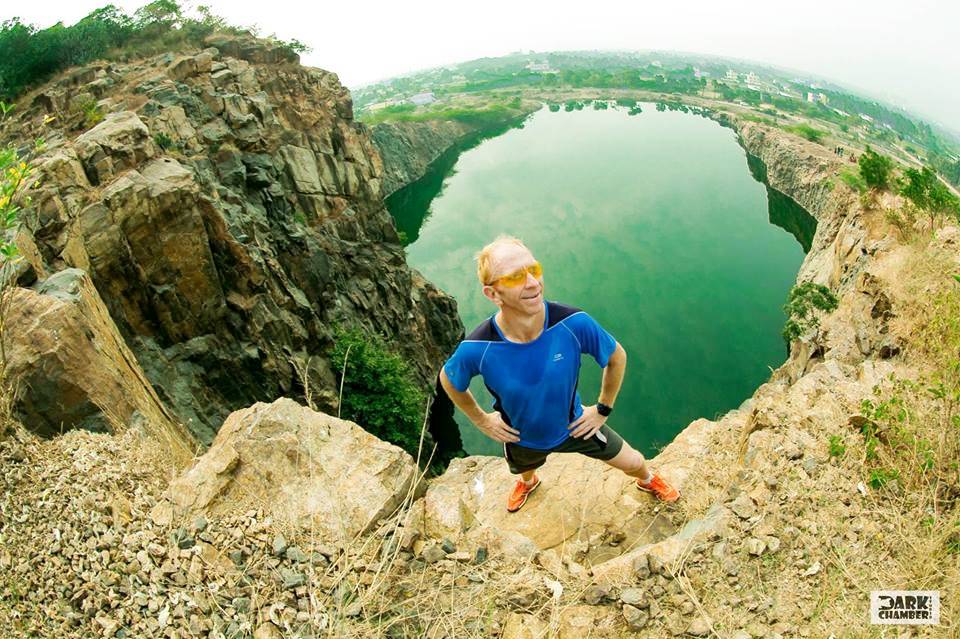
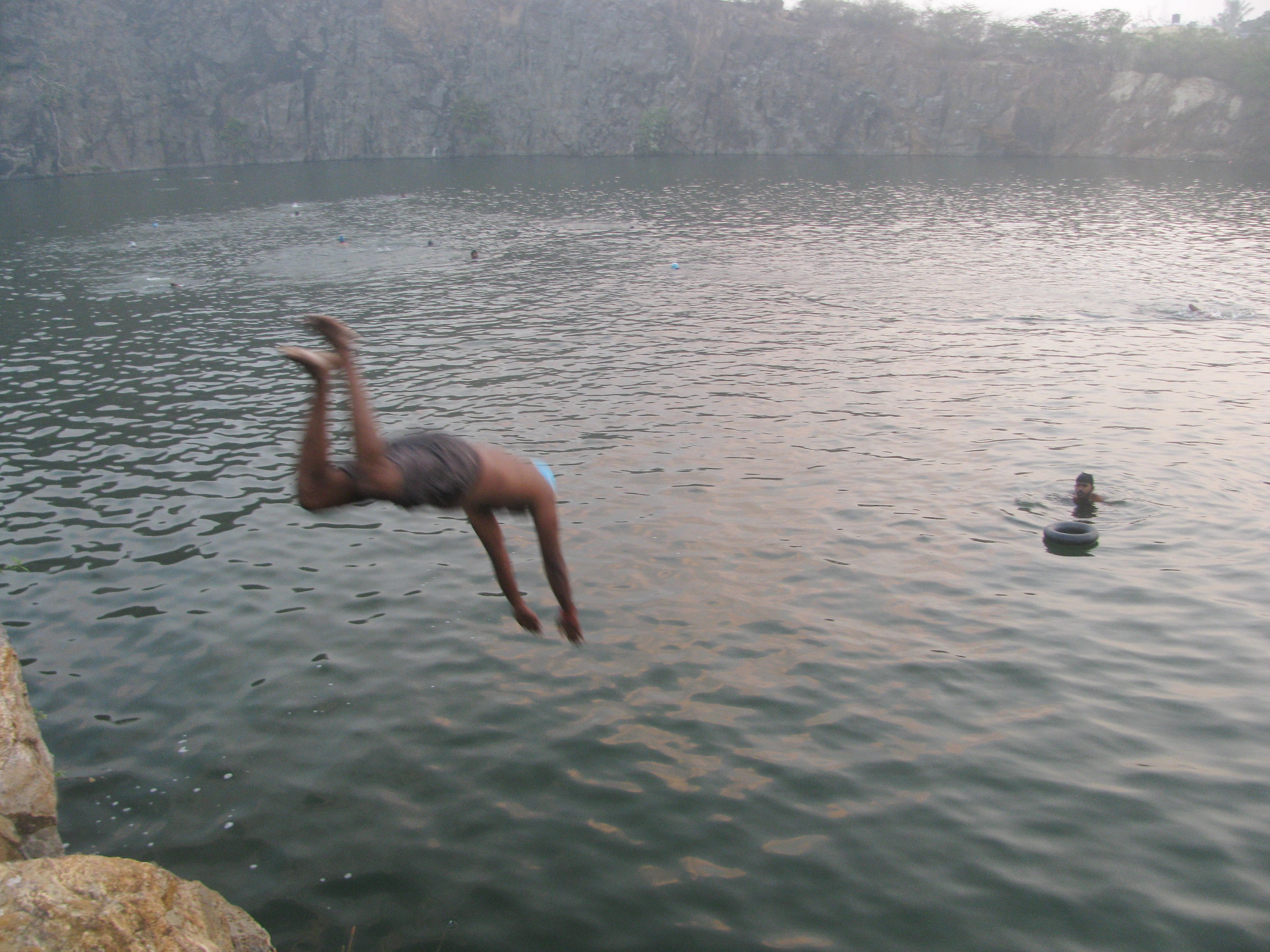
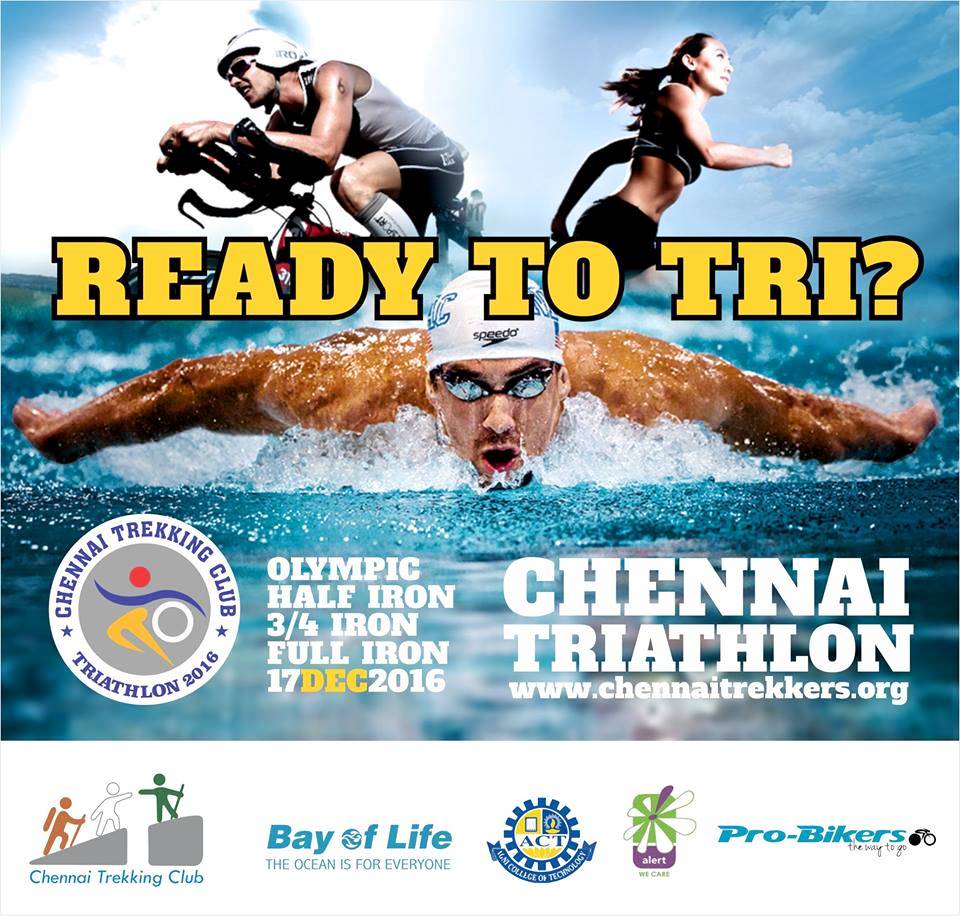
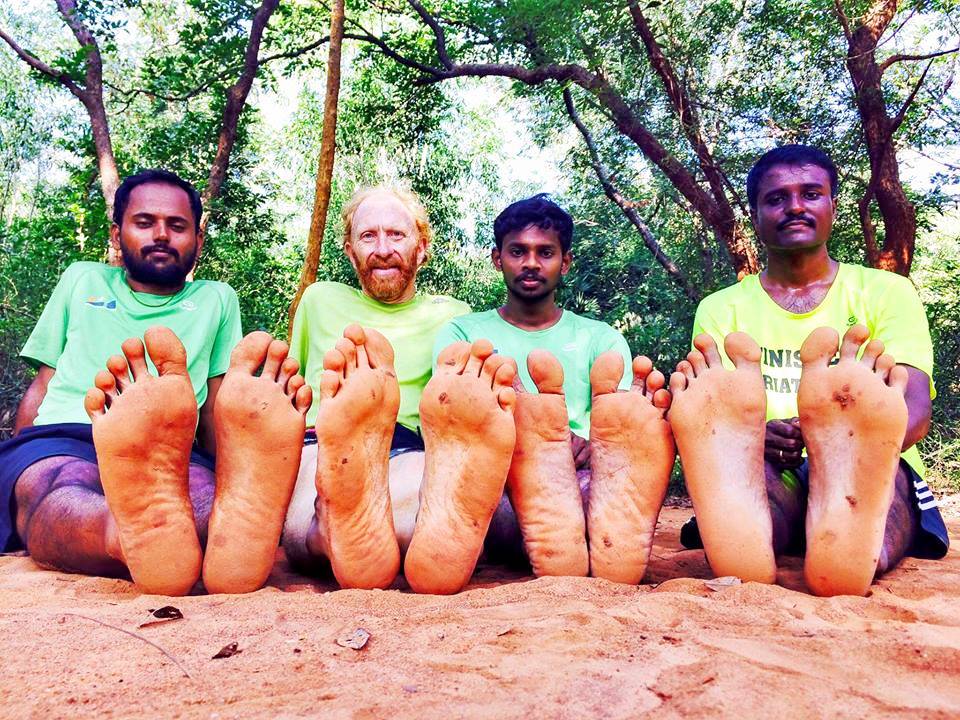
A few days after we spoke to Peter Van Geit, we came across a video on the Internet. As person wielding the camera, his voice was audible in the background. Some of those we had met along with him were in the frame. The location was out at sea; it appeared to be a sea-swimming session. A bunch of happy young people bobbed up and down in the gently heaving sea. Chennai’s profile graced a line on the horizon. The pleasure in talking to Peter is that despite his acceptance of social media as tool for networking, he hasn’t traded the outdoors for the comfort of commanding a virtual community. To meet him, we had to be at a large, deep pool – an abandoned quarry – at Ottiambakkam on the outskirts of Chennai. It was 6.30 AM and members of the Chennai Trekking Club (CTC), which the Belgian national founded years ago, were already swimming laps in it, preparing for the triathlon. Some of them, like Peter, were swimming after a stint of running still earlier in the day. The location wasn’t far from Chennai’s IT corridor. Swim done, the IT corridor was where many of those who came, headed to. Early morning run and swim, straight to office thereafter. A few days after we came across the video on sea swimming, Peter was in the news for running from Chennai to Puducherry (Pondicherry) and then running a marathon at Auroville. As Peter told us, I don’t have time – isn’t an excuse for denying oneself the active life.  If you are keen, you will find time. Born January 1972 in Lokeren in Belgium and completing his masters in computer studies from the University of Ghent, Peter moved to Chennai in 1998. Excerpts from an interview with Peter, founder of CTC and a project manager at Cisco:

Early morning; CTC members at the abandoned quarry in Ottiambakkam (Photo: Shyam G Menon)

Early morning; CTC members at the abandoned quarry in Ottiambakkam (Photo: Shyam G Menon)

CTC claims a Facebook driven-membership of 40,000 people. That’s a lot for an outdoor club. How do you keep them engaged? Do you have a busy calendar?

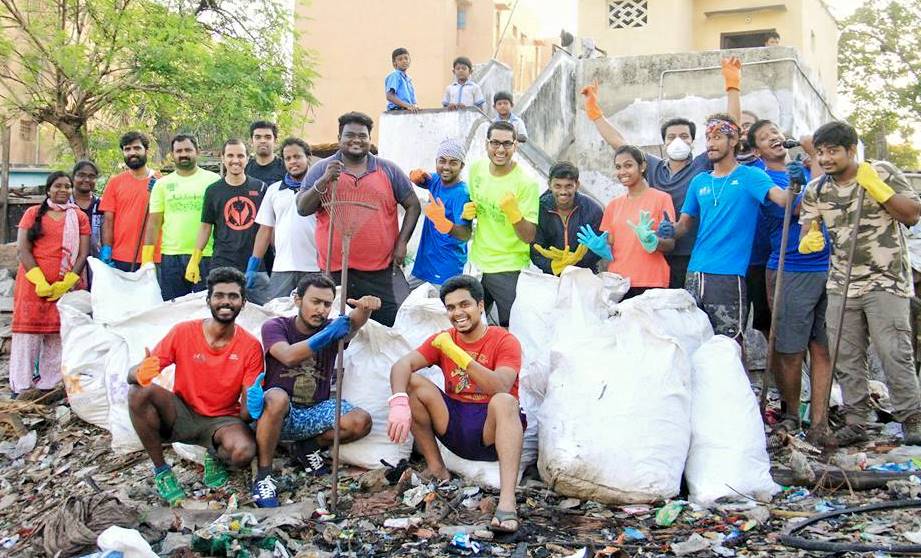
Our activities have evolved nicely and naturally over the years. Nothing planned. Every year we get into five new activities. Open water swimming, triathlon, ultra-running in the hills – it all happened so. Initially, we were focussed only on the weekends because all of us work. We never thought of making time for weekday mornings. Now they get up at 5 AM, they run, they swim; they do so many activities during weekday mornings. In the earlier days, it was mostly hiking on weekends. About two to three years ago we realised that we had time; so we started planning all 52 weekends. There are biking trips, hiking trips, photography trips. We also started doing major events like big marathons where over 1,000 people participate, triathlons and cleaning up of Chennai’s coastline. It got very busy with a mix of major and minor events. That’s why two to three years ago I started thinking how can we do more and thus became active on weekday mornings too. Now from Monday to Friday we do many activities such as running, swimming, cycling and zero waste community work. We go to fishermen’s hamlets for cleaning up the place, educate people on segregating dry and wet waste. We have been successfully doing this for the last six months in fishing hamlets close to Marina Beach. There are tree plantation activities going on. So a lot of things are happening on a daily basis. This February marked nine years since Chennai Trekking Club started.

peter-2

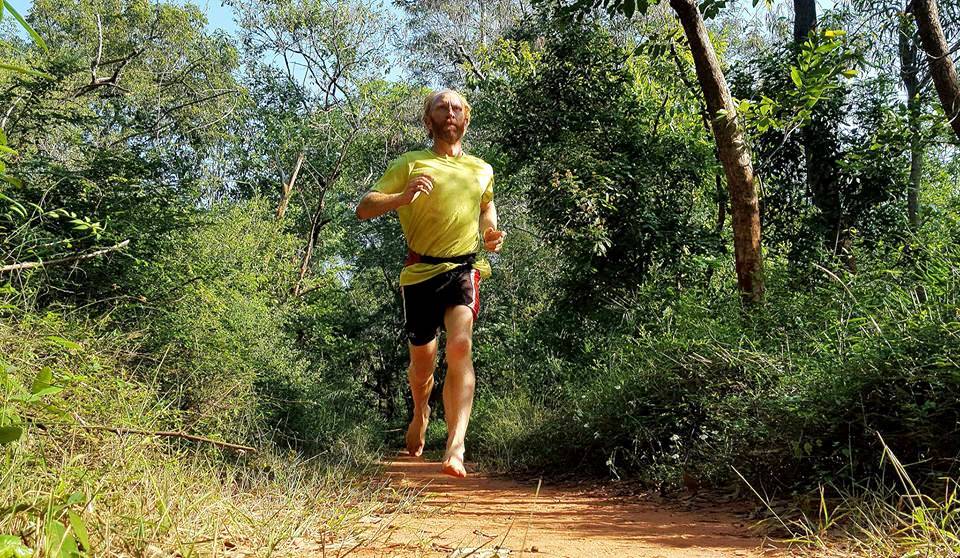
Trail running

Of the 40,000 members, how many are truly active?

That’s of course an interesting thing. I am a bit of a known person here. Whenever we meet there is somebody or the other who tells me, “hey Peter I am one of your members.”  My response is, “have you been to one of our events?” Nine out of ten people will say I have been a member for one year but I haven’t had a chance yet to attend. A lot of people become members seeing our pictures on Internet links and our Facebook page. I would say of the 40,000 members about 5,000-10,000 would be active. That is also a sizeable number. Of these, there are some people who probably come just once a month or for some weekend activity.

When it comes to a physically active life, the popular excuse you hear is that there is no time for it. In a city like Mumbai many activities are held over the weekend. How do you take out time during weekdays? Today for instance, you all first ran, then swam and will shortly proceed to office. How do you find time for this on a day to day basis?

Too many of us come up with excuses. All of us are working. Most of our active members are working in the IT corridor, which is within 30 minutes from where most of our activity is. If they start working at 9 AM then definitely they can do something till 8-8:30 AM.  I don’t think office is the limitation. It is more like people getting into morning habits. It is a mental issue. The morning is so beautiful. If you sleep by 10 PM and get a good night’s rest, you can start early with some activity. Once you get used to it, it is very addictive. If you go to office after three hours of sports you feel so fresh, so focussed.  This morning physical activity routine is so good. Everyone has time according to me. People think they don’t have time. Everyone has time. It’s just a question of discipline and motivation to get up early and start the day.

peter-10peter-12CTC is now a multi-activity club. Did this profile of activity grow organically or were there people driving specific interests?

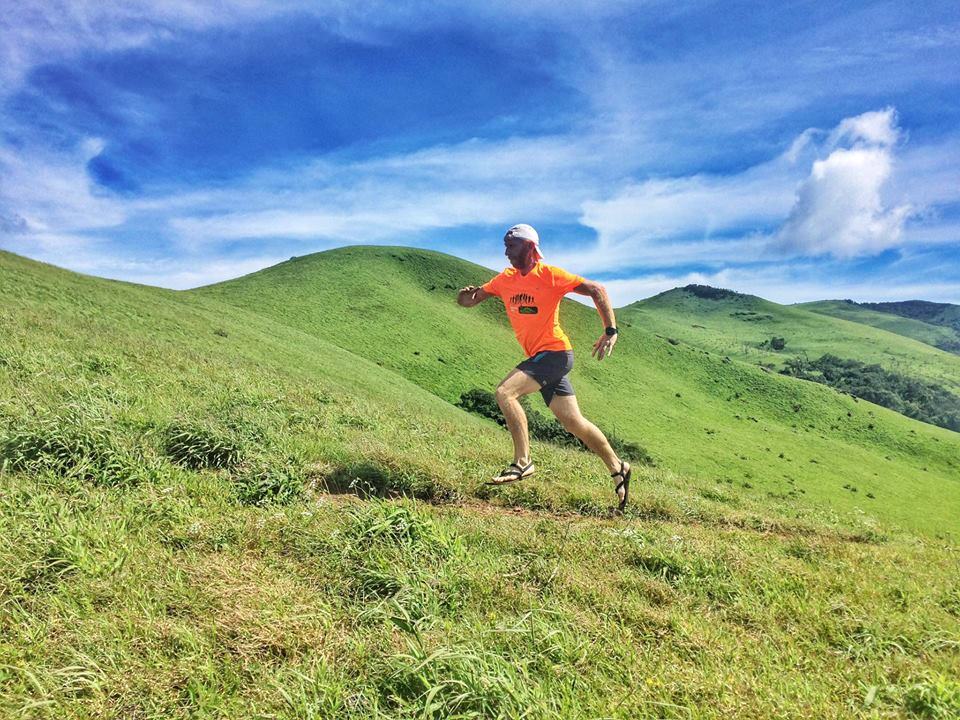
Nothing was planned over the past nine years. It started with hiking. Then it was natural for a lot of photographers to join our group. So we had photography related trips. We took people to beautiful natural places. We were good at map reading; topographic map reading. So we were able to make our own trails. Because of my background in biking we also did a lot of biking trips. About 4-5 years ago we started getting imported bicycles in India. So we started mountain biking trips. More recently, running became quite a rage with the help of social media. Initially we did 10 km runs around the city. Now for the last two years I have also been actively involved in hill running. Once a month we go to a beautiful hilly place to do trail running. We have a lot of hills in Tamil Nadu. We do ultra-trail running; sometimes 50 km on Saturday, 50 km on Sunday. We run from morning till evening. It is not like a marathon where we run for four hours. All these activities have happened naturally. Once we started running we discovered this big quarry just 30 minutes away from our office and then we started swimming. We then started organising triathlons. Now people come from all over the country for these triathlons. We also saw a lot of natural places being spoilt by garbage and anti-social activities. So we started clean-ups and created awareness automatically. Then we went to the next level of garbage segregation and zero-waste communities. We are working with corporates and with schools to create awareness about it. Every year some three to four new activities are being added to the list.

How receptive are your members to these activities?

We have a very well connected group. We have a mailing list of 30,000 people and a Facebook group of 40,000 people. We are pretty good in capturing whatever we do with social media, visual photography, smartphone etc. We post a couple of pictures and then it gets picked up. Thanks to digital photography we are able to capture beautiful pictures and upload them quickly. The only thing that we need to do is to keep the activities going consistently. Our organisation is pretty flat and open. But we do have a core group which plans and drives activities. .

peter-22Events like triathlons can be competitive. When you look at CTC, are you looking at it from the perspective of building a competitive group of people or making activity more participatory in nature?

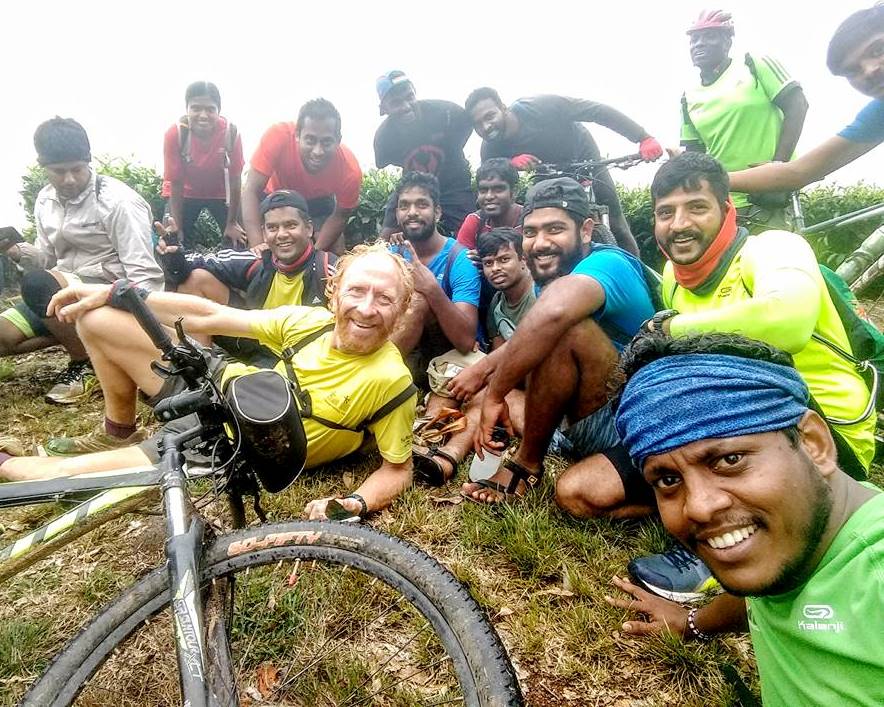
There are two elements here. One is inspiring more people to get into a healthy lifestyle. The other is competition. We are not that competitive. We do timed events so that people do the sporting events seriously maintaining the spirit of the event. That said, in the last few triathlons we did not have any rankings or places on the podium. We really want as many people as possible to get into swimming, cycling and running without it being too competitive. When I see people going for the top five or top three positions, I suspect they are losing out on passion as they are too obsessed with time and podium. For us it is not just sports. CTC’s mission is being close to nature such as beautiful jungles and mountain ranges. So we always combine sports with nature. We will not swim in swimming pools; we will not run on city roads. We always take people to natural places. If you spend one hour close to nature you feel so refreshed. You get so much from nature. All of us are born in nature. During the Republic Day weekend some 25 of us went to Meghamalai forests. For four days we ran and cycled through the tea estates and dense forests from morning till evening. The amount of positivity and freshness you get from doing this close to nature rather than doing 10 km loops in the city is something totally different. It is important for people to be close to nature because everybody in cities are so disconnected living in air-conditioned cubicles and enduring traffic, chaos and stress. They desperately need to reconnect with nature. The great outdoors has such a detoxifying and destressing impact on us. Most deaths in urban India are related to lifestyle problems. We want to move people into a healthy lifestyle. Nature is very important for physical and mental wellbeing.

peter-20

Running in the hills of South India

The Himalaya is often spoken about as the place to go to for outdoor activity. You have a great amount of experience in the outdoors of South India. What do you think about the options for outdoor activity in the south?

The Himalaya has always made a big impression on people, including me. Last September I did a self-supported 500 km solo run through Zanskar valley and Ladakh. In 2015 also, I ran 1000 km with a small group of people; not just in the touristy places of Manali-Leh but in remote places like Spiti. We carry our own tent. The magnitude, the remoteness and the beauty of the Himalaya is fantastic.

But here in the South also there are a lot of beautiful places. Many people say Bangalore and Pune are good. The Western Ghats are beautiful. Chennai is also blessed with beautiful mountain ranges. We have a couple of ranges like Nagalapuram, which is just two hours from the city. We also have a lake called Pulicat Lake. Lot of evaporation takes place, so clouds form, they rise and hit this range which is about 800 m high and then condense to form rain. Rains fall throughout the year in this place. Throughout the year there are pristine springs and because of that it is possible to go there throughout the year. Once you get inside the jungle, it is lush green forest. You have Kolli Hills and Javadhu Hills. We go to places in Kerala and Karnataka. There is the Kabini forest. In the four southern states there are so many options for hiking and other activities. Hiking in the south is nice because the weather is good. It is not too cold like the Himalaya. Also, the Himalaya attracts people for the snow and the peace. In portions, it is more like barren land, vegetation is bare. Here, on the contrary, we have beautiful jungles, lush forests; lot of water is present in these forests. In the Himalaya you cannot take a dip, here you can swim easily. Here it is quite safe to trek, there you have to be very careful because weather conditions can be life threatening. Here you can trek light, you don’t have to carry much.  I prefer hiking in the south.

peter-17peter-18The peninsula is where the Indian subcontinent meets the sea. We are blessed with a long coastline, one that is longer than the mountains to the north. Do marine sports interest you?

Once every two weeks we go for a long swim in the sea. I stay at Pallavakkam, just 200 m from the sea. So whenever I feel like it, I walk out of my home in swimming trunks, enter the sea and do a 2 km-swim. That’s again an amazing experience because of the vast openness. There’s nothing above you, nothing around you and all you can see is small houses along the coast line. It’s peaceful to swim in the sea. Eventually, we would like to organise triathlons in the sea.

You have had accidents at CTC, including a couple of fatal ones. Many states have begun drawing up regulations for outdoor activities. Arguably, there is a problem in India when it comes to imagining regulations for the outdoors. Given that Indian lifestyle is predominantly sedentary, rules and regulations are often imagined by people partial to the convenience of settled life. Do you find this a problem? Do you feel that rules and regulations are not sufficiently empathetic to the pursuer of an active lifestyle?

A couple of things on that: one thing that has been difficult for us is dealing with government agencies, whether it is forest department for permission to go on a hike or the sports department of the government. There is small time corruption. It is difficult for us to get permission to get swimming pools for triathlons. Similarly, it is very difficult to get permission from forest officials to get to do a hike. It is more like an administrative hassle and I am not even coming to the rules and regulations that might be there for adventure activity. It is the administrative hassle.

peter-16Do you think there is sufficient appreciation for adventure activity?

In Bangalore, there is an outdoor culture. Also, in the Himalaya there is a large community that is involved in the outdoors. But Chennai is very conservative. There is so much beauty around but people would go to the beach or visit Mahabalipuram. Or they would go for a movie and nothing else. Even now when we go hiking, many of the parents are wary as they think those going for hiking or trekking are just going to booze and do some anti-social activity. They don’t look at it as a positive activity. Many of the guys who come with us on a trek may not have informed their parents and that becomes a problem.  If an injury or a fatality occurs we have to deal with hostile parents. It is not easy but things are changing.  In the last three to four years outdoor activities have become popular mainly because of social media. If you look at Wipro Chennai Marathon, it has grown phenomenally in terms of participation. About four to five years ago very few people used to run the marathon but now it has grown to 20,000 in terms of participation which was unimaginable 3-4 years ago. Runners would post pictures of podium finishes and other related pictures and that would put peer pressure on others to join. Sometimes people are obsessed about doing something quickly without proper training. We are trying to get people on a regular basis into sports, make it part of daily life and not just see it as competitive events. I prefer regular ongoing activities rather than one marathon and one month to recover.

In Europe and America people grow up with the outdoors as part of their life. There is nothing like outdoor experience being apart from one’s normal existence. In India, life is largely around human clusters and space indoors. The outdoors is distinctly ` outdoors.’ Do you find anything different in the way the average Indian relates to the outdoors?

I see that youth here is so much focused on education and studies that there is absolutely no space left for other activities. I see very few parents encouraging their wards to get into other activities. These kids are always busy at school and occupied with studies. You only see them in the month of May when schools close for longer holidays. Outdoor activity has very less priority, I would say.  That’s a problem. I got a lot of exposure to nature during my younger days. I started swimming quite early. I used to go hiking with my parents. Whatever you do at a young age makes a huge impact. Young minds are very perceptive. Doing something later becomes much more challenging.

Chennai is pretty conservative compared to other cities. In school and college years, youngsters are busy with studies. Once out of college and into a job, particularly the IT sector; then, they join us. Some of them are very passionate and quite regular. Then after about two to three years they disappear completely. Once they get married they are off the radar. Not like in Europe where you see parents with two kids coming for adventure activities. Here, once you are married you are not supposed to do any of these activities. About 90 per cent of them would disappear into married lives. This is a problem for me. I need organizers to carry on activities. Some disappear as they get relocated to other parts of India. Once they get out of Chennai they lose the momentum. Also, they don’t have that energy. Some people are lost when they change jobs and then they get too busy. Some go abroad for further studies. These are some of the reasons, active people disappear completely. That’s very sad because whatever passion they had will have to be buried and whittled down.

peter-19When it comes to outdoors there must be emphasis on environmental sensitivity. Your organization brings large volumes of people to the outdoors. How much do you emphasise environmental sensitivity?

There were reports about organisations taking people to Himalaya in large groups of 50 or so. Himalaya is a very sensitive place. What we do here is we put a head count. On a hike, we won’t take more than 20-25 people. We are very strict on that because if you take more numbers there is the issue of safety and also the issue of environmental impact. It is a bit of a challenge. Almost every weekend we take people to some spot or the other. One thing we do – judiciously, depending on the place – is that we don’t follow specific trails. We go through the wilderness using maps and GPS like explorers making our own trails. That way we kind of spread out and don’t go on the same trail. We don’t want to leave a permanent trail. People have criticised Chennai Trekking Club because we were taking 300 people to some places. We have to strike a balance between bringing people close to nature and yet keeping nature largely undisturbed. We try and do activities in places which are not virgin nature. More than hiking we do a lot of trail running. Here again, we don’t go into deep jungles but mostly run on jeep trails between villages. Hiking is now pretty balanced. We never leave any garbage behind. We are very strict and disciplined about littering. We ourselves carry out environmental campaigns where we educate people about garbage. When people come with us they learn about the place and get very excited about the natural beauty. But some of them return with private groups and that’s when the problem of littering starts and things get nasty especially in places which are easily accessible.

How do you ensure safety? Do you have safety clinics at CTC?

Safety is very important and has many aspects to it. One very important aspect is to have the right organisers. All our organisers have grown as people. They have been coming with us for years and they are very responsible, very experienced. We often have two leaders on a trip, one in the front and one at the back of the group so that managing groups becomes easy and people don’t get lost. Number one killer is water. There are some people who get very excited seeing water and sometimes they jump in even though they do not know swimming. They assume someone will pull them out. We had a couple of cases in which people have drowned. Another problem is people straying away from the main group and then doing stuff which they are not supposed to do. Lack of adherence to safety is the number one killer in these outdoor activities. We are very strict about safety. We also make sure that our organisers and rescue team are excellent swimmers and are able to pull out people safely. We always ensure that non-swimmers carry tubes or life jackets with them when they enter water. In Himalaya, weather is the reason for calamities but here it is mostly water that causes fatalities. We do a lot of treks to places where there are beautiful streams and waterfalls around. We ensure that we keep an eye on people going into water. We do regular workshops in the group on first aid, basic CPR and we have an ERT group (emergency response team) who we can call anytime. When some people go missing, we call the ERT. They are very experienced and they come within a couple of hours. All these systems have naturally evolved over the years.

peter-14When you dealt with serious accidents like fatal ones for instance, what did you personally feel? Did you feel that you were dealing with people who understood what you are doing or was it a case of adventure, outdoors – all those tags automatically branding you as guilty?

Everything completely depends on the reaction of the parents. There are parents who say this was fate. And then we have had parents who went against us even though we had nothing to do with this. One time there was a youngster who jumped into the water wearing jeans. He is a good swimmer but all of a sudden something happens and he drowns. It all depends on the reaction of the parents.

In many instances the victim of an accident in adventure / outdoor activity is an adult who consciously participated. Yet when things go wrong, that wilful participation by an adult is overlooked in the quest to fix blame.

That’s definitely an issue. People in their 40s and 50s are still living with their parents and listening to their parents about what they should and should not do. I come from Belgium, which is not as forward as other countries. I come from a place where there are divorces and kids run away. I come from a place where the social fabric is disturbed. I concede that. But here people are too much under the control of their parents and too entangled in the social lives of relatives. I see many people who are extremely passionate about the outdoors facing tremendous pressure from their parents to get married, have children and then focus on the lives of children. It’s a vicious circle.

Now there are situations wherein people don’t inform their parents about doing a trek because they are conservative. This becomes a problem. We, therefore, have a disclaimer that people joining in for our activities are doing so at their own risk. Ours is not a commercial organisation. We are all doing these activities because we are passionate about them and we do it in our free time. We all come together on an equal footing. About 20 or so people come together to do some activities. Of course, we ensure safety to the best of our ability. We have had serious difficulties with some parents, who were politically connected. We try to do a lot such as supporting the parents, helping in recovering the body, helping in transporting the body home and such stuff. There was once a case when one person from the group strayed off the path and went on his own trail. That gave us a lot of negative publicity. For the next four days we were looking for that guy. He went on his own journey. He never understood what trouble he caused us. The first thing we did was we informed the parents about their missing son and also gave them the location with latitude and longitude details. Police could have easily come there but police do not have the capability to come there. We went on a very active search inside a thick jungle.

From a clean-up drive by CTC. in Chennai.

From a clean-up drive by CTC in Chennai

You did exemplary work during the time of the Chennai floods. What was the motivation for that?

Our group is an open group. It is fully volunteer-driven. People come because they have a shared passion. Bangalore has so many groups but some of them have a commercial purpose. In contrast, we are a group of people driven by a shared passion who come together to run, swim, cycle and trek. So the energy and spirit is much more open. When something like a natural calamity happens, automatically people come together. During the floods, in a couple of days we had about 400 volunteers coming together and setting up relief centres. Social media helped in bringing everybody together but people came on their own. We started making kits that would help one family for two weeks. The coming together of people to help was akin to volunteering during an event. For instance, during a triathlon also volunteers are happy to organize the entire event. People spontaneously volunteer for events, they don’t sleep for two days, they prepare everything, set up the route, set up podiums and do all the preparatory work. We have been involved in clean-ups throughout the years. Perseverance is the key to keep the momentum up. And then it is backed up by social media.

(The authors, Latha Venkatraman and Shyam G Menon, are independent journalists based in Mumbai. Where photo credit hasn’t been provided, the photo concerned was downloaded from the Facebook page of Peter Van Geit and used with his permission.)

STILLED TO PERFECTION

bindra-1A Shot at History was published in 2011 roughly three years after Abhinav Bindra won gold at the 2008 Beijing Olympics.

Bindra (with co-author Rohit Brijnath) writes honestly, starting with the puzzle most lay persons (including me) have – what is so riveting about a sport like shooting that entails no movement? Drawing you in with that question for bait, he shows you how difficult the quest to be still is and the extent to which an athlete aiming for an Olympic gold in shooting must go, to get that elusive perfectly still moment in which all works well and a coveted score is had without intent tripping the result. The burden of too deliberate an intent affecting outcome makes the moment of pulling the trigger seem a bit like quantum physics. But that is what it appears to be – in as much as there is a method to the madness of being perfect, being able to repeat it, shot after shot, competition after competition has an element of chance by universe. And yet with years of practice preceding a perfect shot would you call it chance?

The book may be accused of overdoing its intense dissection of the art of shooting perfectly, but staying so it drives home the specter of Bindra’s sport being a contest separated by decimals in a field of already perfect scores. The book introduces the reader to the author’s love for the sport, details of the sport, the equipment used, the moments spent competing, the disciplined training, the competitors and coaches, the competitions ranging from those in India to the World Championships and Olympics – in short the world of competitive shooting. You can’t have a better guide for the journey than Bindra.

The penultimate chapter, which tells how officials mess up sports in India, is a treat to read, coming as it does from the only Olympic gold medalist India has yet produced.

If you haven’t read this book, read it.

(The author, Shyam G Menon, is a freelance journalist based in Mumbai.)

HIMALAYAN CLUB BOOK AWARD AND ANNUAL SEMINAR: DOUG SCOTT, LEO HOULDING

Doug Scott (Photo: Shyam G Menon)

Doug Scott (Photo: Shyam G Menon)

Lectures from mountaineering’s years gone by are like a breath of fresh air.

Many of the slides shown at the auditorium of South Mumbai’s K.C. College were from the 1960’s and 70’s. The story teller was visible in some of the frames, long haired and sporting a head band, reminiscent of the counter culture of the period. Likely, streaks of the same counter culture that fueled big wall climbing in California’s Yosemite Valley; a legacy that survived in climbing even as counter culture lay smothered by a blanket of conformism. In his days in climbing, British mountaineer Doug Scott was associated with big walls and the desire to transpose that on the Himalaya. He was also a fan of climbing alpine style, favoring small teams as opposed to the siege tactics of large expeditions. Scott’s tenure on stage – he was the winner of the 10th Kekoo Naoroji Book Award from the Himalayan Club – consisted of an acceptance speech (mostly about why he hesitated to write his autobiography) and two slide shows. The tenor of his presentation may be summed up in a quote he resorted to, just ahead of reading out the prepared text of his acceptance speech to no accompanying slides or PowerPoint: you are not going to be spoon fed. He added in jest  for good measure, “ you have to use your imagination. It is a good thing to read books.’’

The other main speaker – here to deliver the Kaivan Mistry Memorial Lecture – was Leo Houlding. At 36, Leo was roughly 40 years junior to Doug, as much apart in age as the last hurrah of book shops from PowerPoint and world by Instagram. He was similar to the veteran in the essence of his pursuits yet dissimilar in tenor for in the decades that separate them, technology evolved sufficiently to leave nothing to the imagination. Both climbers have a penchant for big walls but while Doug became known as a mountaineer, Leo, despite an Everest ascent in the company of Conrad Anker, said he isn’t a great fan of snow, ice and altitude. What attracts him is world stacked vertical; big rock faces – from Greenland to the Americas and Antarctica – that run uninterrupted for up to a mile vertically. The monasticism that graced the suffering of climbers from Doug’s period in climbing, you found in the technologically superb visuals of Leo’s climbs. What you once saw imprinted in the soul of man as the aftermath of a climb, you now see in the pixels of a camera sensor as it brings home to you what it was like to be out there. From the world’s still remote areas came visuals of vast snowfields with orange-brown rock thrusting up from them like teeth in a crocodile’s jaw. “ Those fangs – that’s what I like to climb,’’ Leo said. Intended or otherwise, Doug and Leo were an engaging mix at the club’s annual function for the transition by 40 years, they represented in climbing.

Leo Houlding (Photo: Shyam G Menon)

Leo Houlding (Photo: Shyam G Menon)

In 1975 Doug and Dougal Haston had essayed the first successful ascent of the south west face of Everest. The climb included a bivouac on the south summit at 8760 m (28,908 ft). The much climbed peak is still trampled by many adding it to their bag of conquests, by the tamer, well used south east-ridge route. In climbing season, this route features a line of people making their way up Everest. Speaking of the predicament on Everest and other mountains, Doug said, “ if only you go around the corner, there will be nobody there. There is plenty of scope to commune with the mountain; just that nobody goes there.’’ In his life, one trip to the mountains led to another, all the way to Everest and beyond. “ Beyond?’’ he asked, adding in praise of alpine style climbing, “ Yes, I discovered that less is more. Less people, less equipment, less cost; it’s just you, your friend and a rope in between. Alpine style is simply wonderful.’’ He said that the problem with large, siege type expeditions “ is that only two people make it to the summit and everybody else is left wondering what it may have been for them.’’ Doug wrapped up his presentations with a slide show backed-account of his descent from Baintha Brakk aka The Ogre (23,901 ft) in Pakistan, an epic multi-day crawl of a descent given he broke both his ankles during an abseil. Accident notwithstanding, that trip in 1977 produced the first ascent of the peak. Thanks to Leo, the audience were treated to a film in the wake of George Mallory’s body discovered on the slopes of Everest, in which Conrad Anker and Leo follow in the footsteps of Mallory and Andrew Irvine. It showed a very rare instance of the Second Step (a rock face below the summit) being free climbed to test whether Mallory and Irvine could have reached the summit with what climbing techniques they possessed, long before a ladder came to be stationed there. Leo’s own take on whether the British duo may have reached the summit before Edmund Hillary and Tenzing Norgay: possible but not probable.

The annual seminar also featured a film by a team from the Himalayan Club about an expedition in Ladakh and a presentation by Nungshi and Tashi Malik, famous for being twin sisters climbing some of the world’s well known mountains.

(The author, Shyam G Menon, is a freelance journalist based in Mumbai.)

MAKING UP FOR YEARS LOST

Venugopalan Arunachalam (Photo: Shyam G Menon)

Venugopalan Arunachalam (Photo: Shyam G Menon)

It wasn’t difficult locating Venugopalan Arunachalam in the park.

True, Tower Park in Chennai’s Anna Nagar had many people by evening. But there was only one person in distinct running shoes, track pants and a bright colored T-shirt that said: Chennai Runners. No need for smartphone and quick reference of Facebook photo; your senses said he had to be the quiet person, sitting at one end of a park bench. That’s another attribute, if one may submit, of those who have journeyed long in endurance sports – they typically have an air of self-contained detachment.

Over the next two hours, we were treated to a conversation that every company in the country – public and private – should perhaps take note of. A septuagenarian now, Venugopalan was born almost 600km away in the port town of Thoothukudi (Tuticorin). He was the third child among six siblings. His father worked in the Post & Telegraph Department. That meant several transfers on work within the country. Venugopalan started school in Jodhpur but soon enough, the family shifted to Kalyan near Mumbai. There, he studied up to third standard before moving south to Thoothukudi, where he stayed with his maternal grandmother and studied up to class six. “ It was there in school that I won my first race in running. I was probably ten years old and a got a red soap box as prize,’’ he said. While Venugopalan was in Thoothukudi, his father had continued at his work in Kalyan. With his father being transferred next to Jabalpur, Venugopalan followed, struggling in the process with the shift from Tamil medium of education to English medium. At school in Jabalpur, he found himself qualifying in the heats for the 100m, 200m and 400m races. He practised daily for the finals. “ In the finals I came last in all three. The competition was really good,’’ he said. However that outing was both beginning of life as runner and a precious lesson learnt – maybe his strength wasn’t racing fast but racing long?

Venugopalan (left) at an event (Photo: courtesy Venugopalan Arunachalam)

Venugopalan (left) at an event (Photo: courtesy Venugopalan Arunachalam)

In those days, the “ mile-race’’ was a popular fascination. For the following year, Venugopalan thought of registering for the 800m and 1500m events. He was a small, lean lad. In his tenth, eleventh and twelfth standards, the rather reserved and independent thinking youngster from Thoothukudi trained regularly for the distances he aspired for (he used to run five kilometers everyday) and consistently managed podium finishes in the 400m, 800m and 1500m disciplines. He also merited a second place finish in a 3.5 mile-race. “ It convinced me, I am better at long distance running,’’ he said. He practised his running mostly at night. His family was supportive. “ They didn’t know how much I was running but they were happy to see the certificates come home,’’ he said.

Following his school years, Venugpolan opted to study mechanical engineering. While his father shifted to Delhi on work, Venugopalan moved to the Benares Hindu University (BHU). There, after other students had completed their daily dose of football, he would run on the ground, savoring the everyday fix of five kilometers he had got used to from school. On BHU’s annual Sports Day, he would participate in the 800m, 1500m and 5000m competitions, usually winning all three. “ Engineering students are typically a studious lot. Work load is high and they don’t have much time for sports. The competition I faced in these races was mostly from arts and science students,’’ he said. Venugopalan passed out from BHU in 1968. He secured a job at Bharat Heavy Electricals Limited (BHEL) in Trichy. The company – a public sector undertaking (PSU) – was one of the leading industrial enterprises of the government. It was Venugopalan’s first job after BHU. For the next 40 years or so, until his retirement over a decade ago, aged 60, he remained at BHEL. Joining the company was a turning point. Life changed drastically for the young man used to running five kilometers every day and enjoying races, since school.

Photo: courtesy Venugopalan Arunachalam

Photo: courtesy Venugopalan Arunachalam

At Trichy, BHEL had its own cocooned ecosystem. Its township was a good 14 kilometers away from town. There was running and sports in Trichy. But its vibes rarely reached the insulated township. “ The problem I faced was this. Both the Indian Railways and the military encourage athletics as part of sport. PSUs, in contrast, were partial to games. They had no interest in comparatively solitary pursuits like athletics,’’ Venugopalan said. By nature, he had little interest in games.  Result – at BHEL, his active life came to an utter standstill and his fitness nosedived. At Anna Nagar’s Tower Park, the septuagenarian Venugopalan cut a trim figure. Back in his BHEL days, despite no smoking and drinking, by the time he hit his mid-thirties, he had sprouted a tummy. Around that age, all BHEL employees had to go in for a mandatory medical check-up. In the check-up, he was found to be mildly diabetic. It rang alarm bells for there is a history of diabetes in his family. Venugopalan speaks rather bitterly about this turn of events. Although he resorted to walking to stay fit following the medical diagnosis of diabetes, up until his eventual retirement and exit from BHEL, there was no relapse to running. He says it was simply impossible in the ambiance of the township. For instance, the athlete in him was soon looking for ways to make walking more engaging. He read up on race-walking and began practising it. Needless to say, that made him an oddity. By the time people hit that midlife medical test, many would be advised to walk. But few – likely none – race-walked as they do at the Olympics. One man doing something different stands out in crowd of conformists. Is that why the industrial environment is partial to games? Games teach you to collaborate and conform as a team, while athletics is often a solo trip to self-discovery? One wonders.

Illustration: Shyam G Menon

Illustration: Shyam G Menon

“ I firmly believe athletics should be encouraged at PSUs. On the one hand we say that it is not machines but manpower that is the wealth of an organization. But then, we make no provision for the health and wellbeing of this manpower. In their own interest, corporates must make arrangements for their people to have an active life. Running is the least infrastructure-intensive of sports. You can even do it alone. Nowadays, the private sector has begun recognizing this but PSUs in India still lag,’’ Venugopalan said. It wasn’t BHEL alone that appears to have weaned athlete away from his regimen. Along the way, Venugopalan got married and raised two sons. In the Indian context – as both culture and economics – family is a commitment and society’s perspective of this institution rarely accommodates what the individual desires personally for meaning and fulfilment in life.

Photo: courtesy Venugopalan Arunachalam

Photo: courtesy Venugopalan Arunachalam

When Venugopalan shifted from mere walking to race-walking what catalyzed that move in man tucked away in industrial-township was the growth of the Internet. The worldwide web brought the notion of larger planet home; suddenly it was possible to leap over immediate society and notice others like you elsewhere. “ I read up on race-walking and started to practise it,’’ Venugopalan said. Used to having an early dinner, he was the type who experienced wakeful hours by 3 AM. So he started to go out for race-walking that early, come back and sleep again. Slowly, a commitment and devotion to something he was passionate about, built up.  In 2005, Venugopalan retired and moved to Chennai where he stayed on rent in Anna Nagar West Extension while his house was being built in Anna Nagar West. Given he had elected to tackle his diabetes through exercise he continued the daily walking he had started at age 35. One day when out walking, he saw a marathon underway and elite African athletes go by.  “ It ignites a spark in you. Such images, you don’t forget at all,’’ he said. Long forgotten running legs stirred restless again.

As luck would have it, in ` The Hindu’ newspaper, he read about the group – Chennai Runners. He joined their Google group, regularly perusing their posts on running, occasionally pitching in with a comment. Meanwhile, his friend and running partner from BHU days – Brigadier K. Venkatraman – called up from Bengaluru informing that he had been running the marathon. “ That is how the seed to resume distance running was sown in my head,’’ Venugopalan said. His first attempts at running in the local park were a total failure; he would be out of breath in no time. So he started to jog around in his apartment, emerging to run in public only after he felt ready for the transition. He chose a 10.5km-loop in Anna Nagar for his daily run, covering it on the average in about 70 minutes. He ran 10km every day, raising the distance to 15km on weekends. Soon enough, he reached that point where he could run 10km without a break. Then the inevitable happened: one day he did two laps of the circuit, making it a half marathon. That was the first time, he had done 21km. “ It was a really good feeling,’’ he said.

Photo: courtesy Venugopalan Arunachalam

Photo: courtesy Venugopalan Arunachalam

The East Coast Run in Chennai featured distances of 10km, 20km and 30km. In 2009, he did the 30km segment, completing it in a mix of running and walking. “ There I got recognition from Chennai Runners that at close to 64 years of age, I was able to cover 30km on foot. The way they used to talk and chat about it; that gave me self-confidence. It really helped me. People came to me, they spoke to me, they became friendly,’’ he said. The sight of elite athletes in action, which sparked the resumption of running, had been from the Chennai Marathon. A year after that sighting, Venugopalan did the half marathon segment of the event, completing it in 2:20. “ Towards the end, I was quite tired,’’ he said. Then a smaller version of the BHEL-quarantine struck. Like most Indian parents, Venugopalan and his wife wanted to see their sons married and settled in life.  The sons though – the elder one in particular – had a mind of their own. Over time, Venugopalan’s wife, initially skeptical of her husband’s running, had both become empathetic towards it and even commenced her own share of walking. However as prospective alliances for their sons fell by the wayside, she decreed that Venugopalan’s running should be halted till the required marriages occurred in the family. Two years went by so. During that period spanning 2010-2012, his friends in running would call up to inform of upcoming events, even offer to get him out of the house and running. He declined the offers, determined to address family responsibilities. At best, he went along to see his friends run. “ That’s hell, to see others run and not be able to run myself. My children are now married. Thank God the embargo on running did not extend to my children having children too,’’ he said laughing in jest about the many eccentricities of the Indian predicament.

In 2013, Venugopalan ran his first full marathon at Auroville in Pondicherry, covering the distance in 4:55. Later in the same year, he participated in the Wipro Chennai Marathon. He completed the full marathon there in 4:05. He has since gone on to get podium finishes at the Standard Chartered Mumbai Marathon (SCMM), finishing third in his age category in the full marathon in 2014, first in 2015 and third again in 2016. His personal best in the full marathon is 4:04. Aside from walking at aid stations along the way, at full marathons, he runs the rest of the distance. In between, he also did a race involving six hours of cycling and six hours of running. However, the gains have not been without their share of related problems. He has had to cope with running injuries. But what has laid him low is herpes. Its onset has meant a weakening of muscles. It forced him off the 2017 SCMM; he didn’t participate. Ageing athlete hasn’t given up. He has embraced the Pose Method of running, wherein gravity is roped in as active partner to aid one’s running. “ Using this method I am now able to cover 20km in 2:18. I must now add speed. I haven’t run a race yet using the Pose Method. Now I have to,’’ Venugopalan said.

Photo: courtesy Venugopalan Arunachalam

Photo: courtesy Venugopalan Arunachalam

The evening light was now slowly fading and as the sun threatened to drop out of sight, the urgency of those playing games in Tower Park grew. A misdirected smash from a volleyball match racing against sunset saw the ball land close by. “ Careful, careful,’’ Venugopalan gently told the youngster who came to pick it up. He has often thought of what made him run years ago. He didn’t have a single answer. In his childhood he has chased after his older brother as the latter and his friends ran around pushing their toys – was that how it all started? He doesn’t know. “ I don’t quite know why running interests me. I think I like the feeling of the wind blowing in my face. It used to give me a lot of happiness. It is also true that when I run, I feel my body and mind is one and not limited. It is expanding. I feel I am one with the universe,’’ he said.

(The authors, Latha Venkatraman and Shyam G Menon, are independent journalists based in Mumbai.)