“ THERE IS NO REASON WHY THAT STRUCTURE CANNOT EXIST IN INDIA’’

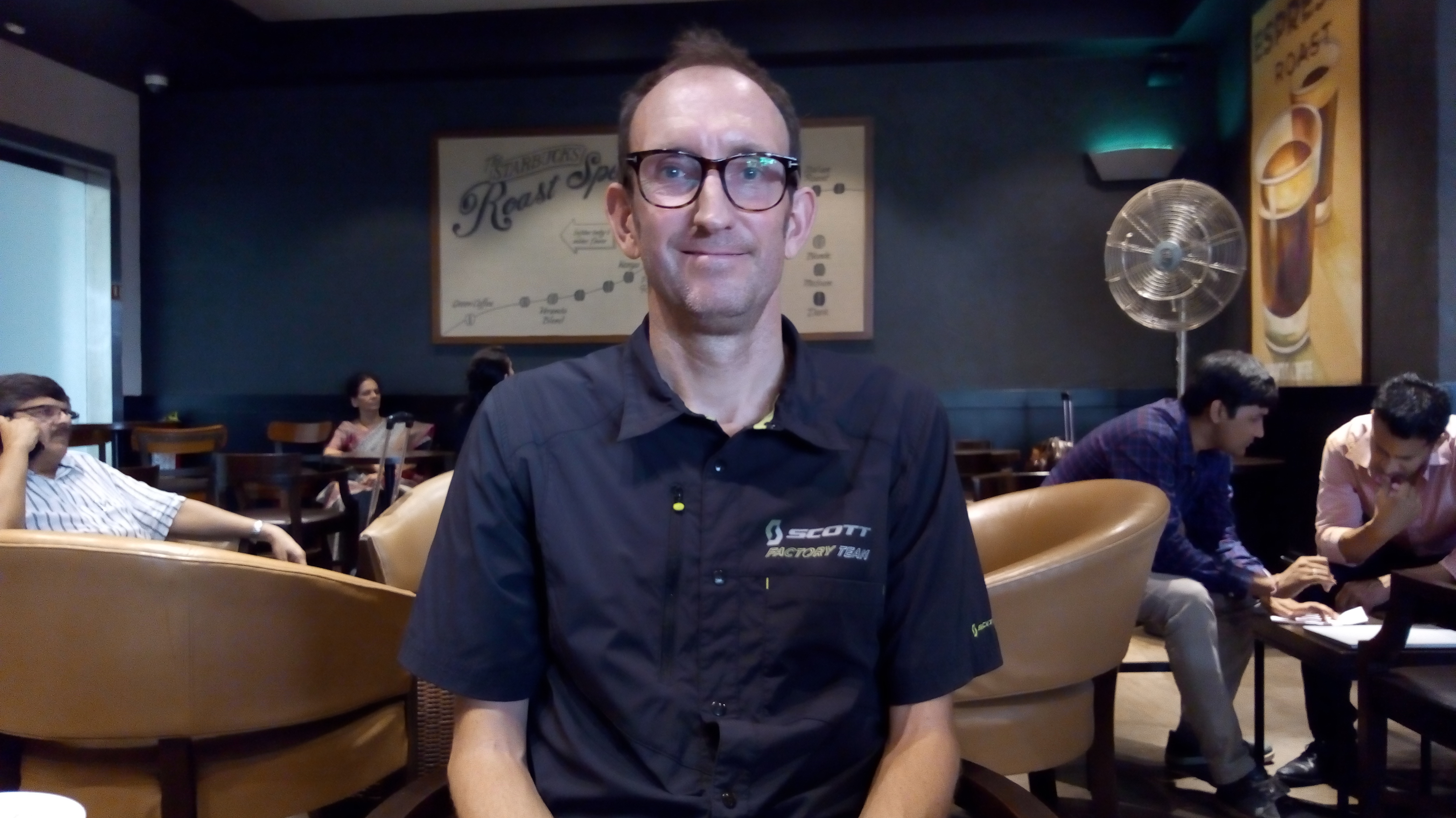
Nigel Smith (Photo: Shyam G Menon)

Nigel Smith is a Level 3 Cycling Coach, accredited through his National Federation, British Cycling, in the UK. He is currently based in Mumbai. He brings to his views on Indian cycling, the quality of the outsider’s perspective. As with many sports in India that is a valuable point of view, for you see things as they are, in ways residents lost to life within, don’t. Excerpts from a recent conversation with Nigel, an afternoon at Mumbai’s Bandra Kurla Complex (BKC):

In the time you have spent here, what is the dominant aspiration you have seen Indian cyclists seeking advice for? I define aspiration here in terms of attributes like distance, endurance, speed, track, trail, touring.

In terms of the cyclists that I am currently working with or have been receiving enquiries from, certainly in Mumbai, the dominant performance aspiration is around triathlon. If I look at the sport from the perspective of mass participation, then if you move up from leisure cyclist to someone with aspiration, maybe among the first things you would attempt is one of the BRM (Brevets Randonneurs Mondiaux) events. These are not competitive. They are more around completion of event. Beyond that I am working more and more with triathletes. There are those who are looking at their first triathlon of Olympic distance and they are looking at getting it done in three and a half hours. Conversely, I am also working with a lot of people who have stepped up to half Ironman distance and rather than looking at a completion type-goal, they are looking at setting themselves a target like six and a half or seven hours. Those people are seeking my guidance as a specialist coach in cycling. So perhaps they tackled Olympic distance doing all the training themselves; now, they have set themselves a bigger goal with time target attached. I also get calls from people who are looking to challenge themselves more.
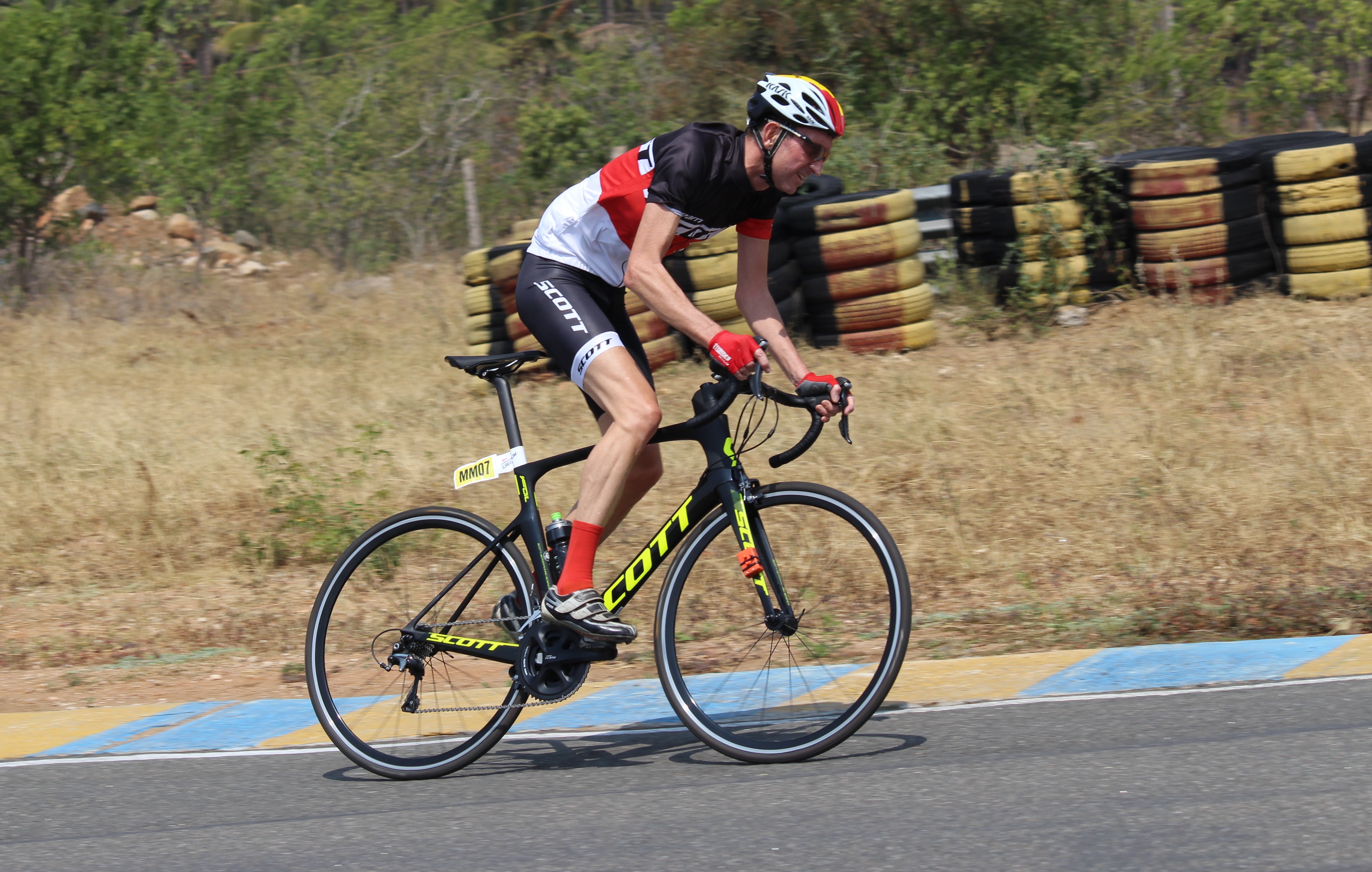
Nigel; from a race in India (Photo: courtesy Nigel Smith)

You had expressed dismay last year at the popular fascination for Race Across America (RAAM), even as races like Tour de France and other similar European races exist. Why do you think this has occurred in the Indian context? Is it a case of herd following established precedent or is it a case of Indian – as person in given context and exposure to cycling – assuming what he / she may be naturally good at? If the latter, then are we making a mistake overlooking fast paced, multi stage, severely competitive formats like the Tour and its ilk?

Yes and yes (laughs). From my perspective as a foreigner who has lived in this country for nearly three years, I feel the fascination for RAAM could be born out of previous exposure. Perhaps the RAAM imagery ties in with what the Indian cycling population has been previously exposed to. If you are somebody who has been exposed to BRMs, the logical step would be to do the 200, 300, 600 BRMs and the next challenge on the horizon could be RAAM. Similarly I see people wanting to do things like Deccan Cliffhanger and maybe challenge themselves to do it solo. That is another personal goal beyond just doing BRMs. It is also interesting that goals are more around completion rather than racing. I see the general Indian population very interested in challenging themselves personally as opposed to pitching themselves against other people. I do not know whether that is an Indian mentality or not. Certainly if you put a cricket ball in their hand, they want to win! It is the same with running. I meet a lot of runners and their interest is in completing a marathon as opposed to racing people in their category. It could be because mass organized endurance sport is still in its infancy here. The competitive nature has yet to come to the surface. It is there; I have seen some wonderful performances. But the current trend is more towards challenging oneself rather than pitching self against others.

From a cyclist’s point of view, what is the difference between a RAAM and a Tour de France? What is your view on the level of competition at these events? How differently do these two races impact rider in terms of personal strain?

RAAM is predominantly an exercise in personal endurance. Whilst the athletes are trying to complete the distance faster than each other, they are not directly ‘racing’ each other. Effectively, it is an ultra-long time trial where you must keep your effort well below threshold, whilst trying to be as fast as possible, supported by relatively very little rest and managing the accumulating effects of sleep deprivation. It’s about 30 per cent longer than Tour de France but completed in less than half the time, since there are no scheduled daily ‘start’ and ‘finish’ points.

By comparison, a Grand Tour, such as the Tour de France, requires a few hours – up to six – a day but is ridden at a higher intensity and a wider range of intensities in a wheel to wheel ‘race’ scenario. The winners of each 21 stages, whether it be a flat – sprint – stage or a mountainous stage will inevitably have to dig far deeper and produce far greater performances – in terms of producing ‘numbers’ or riding at their limit, then recover overnight and repeat for 21 days.

The supreme athlete that is Christoph Strasser averages about 16 miles per hour (26 kilometers per hour) for his solo RAAM efforts. A Grand Tour winner will average about 25 miles per hour (40 kilometers per hour), though they do have aerodynamic help with drafting and so on.
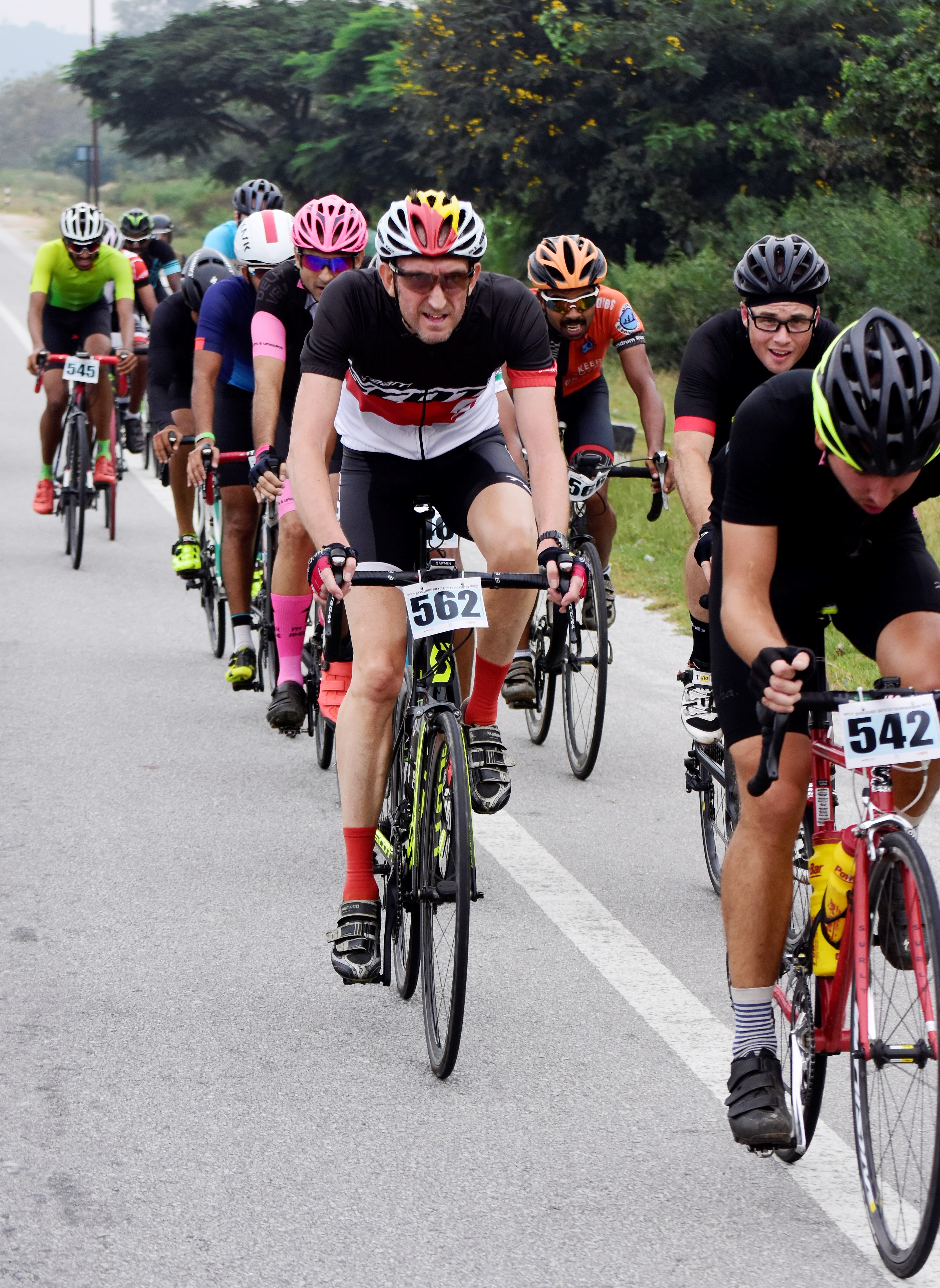
At the 2017 Bangalore Bicycle Championship (Photo: courtesy Nigel Smith)

To go back to a point you mentioned earlier, what do you think needs to be done to move from challenging oneself to competing with others?

From an individual point of view, the first thing would be to ride with other people; ride in groups. Challenge yourself and understand what it feels like. Perhaps read up a little and talk to a coach – find out what must be done to handle the greater workload. And then obviously, you got to find competitions. Competitive cycling can be found only in certain pockets across the country. What they are doing in Karnataka is very well organized. You have a wonderful series of events across all terrains. It is attracting hundreds of riders every month to compete, not only against themselves but also against each other, across different age groups, male and female. On the other hand, here in Mumbai, we are not getting that. So to go back to the original question – what should people do? – It is a case of: you need some governance from the CFI (Cycling Federation of India) to bring together a state by state policy for racing, training camps and such. You have to make things more organized and uniform across the country.

There are bicycle races being held in India. What is your view on the Indian racing calendar as means to grow for someone wishing to be a proficient bicycle racer? Do we have the required distances; the required types of races? Are there gaps / shortcomings and if so, what would they be?

The number of races available – if you are prepared to travel – is more than adequate. What invariably happens is that races are not published at the beginning of the season. I understand, as is the way of the world here, people have to get permissions – from local authorities, the police and sponsors and everything happens at the last minute. Consequently it is very difficult to plan your race calendar because you don’t know what is going to come up. If you have an annual calendar published in advance, then you could have all the best cyclists in the country going to the same races and competing against each other rather than three or four times a year, maybe once a month. The way races are promoted also play a part. In Bengaluru you have a wonderful set up with very good cyclists and great competitive racing. Prize money? Zero. They go there for the racing. On the other hand in Mumbai, we have races where the prize money is close to a lakh of rupees. You get riders coming from all over in big teams and racing very badly because somebody has to win that money and share it with the team. That promotes poor racing, negative racing and dangerous racing. They are not racing for the love of racing. They are racing because they want the money. If racers across the country agreed that for any race, prize money does not exceed a certain level, then you start getting people going to the races because of the quality of organization, management and safety; not because there is a lakh of rupees at the end of it.

To your mind, what is the ambiance that has been most successful at growing talent in cycling? India has a big bicycle industry and no internationally known racers. What is it about the European cycling context that made it churn out so many champion cyclists?

There is nothing special or unique about what happens in Europe. Whatever is going on across Europe – whether it is UK, Belgium, France, Italy, Spain, it is going on across America, Australia, New Zealand and some Asian countries – it is structure, process, organized calendar of races and a good club system. Here in India, there is no real club system where you have a club that is affiliated to the regional body, which is affiliated to the national body, you pay your subscriptions, you have your club kit, though your club you get exposure to local events, riding with other riders, organized training rides as a group. All of that goes on across every European country, every western country. Above that, they have a recognizable structure from their national body down to club level, which allows riders who are good, to enter local, regional and national races, then to be recognized by the national federation, go to a talent camp, be spotted, be put on to an academy and be sent abroad to race for a while. If they are good enough they will succeed. If not, they will come back. Right now as we speak, Naveen John is in Belgium trying to get the best racing experience he can. He is living and racing within that structure. There is no reason why that structure cannot exist in India. It is just a case of the national body and the state bodies putting their heads together and doing something about it.
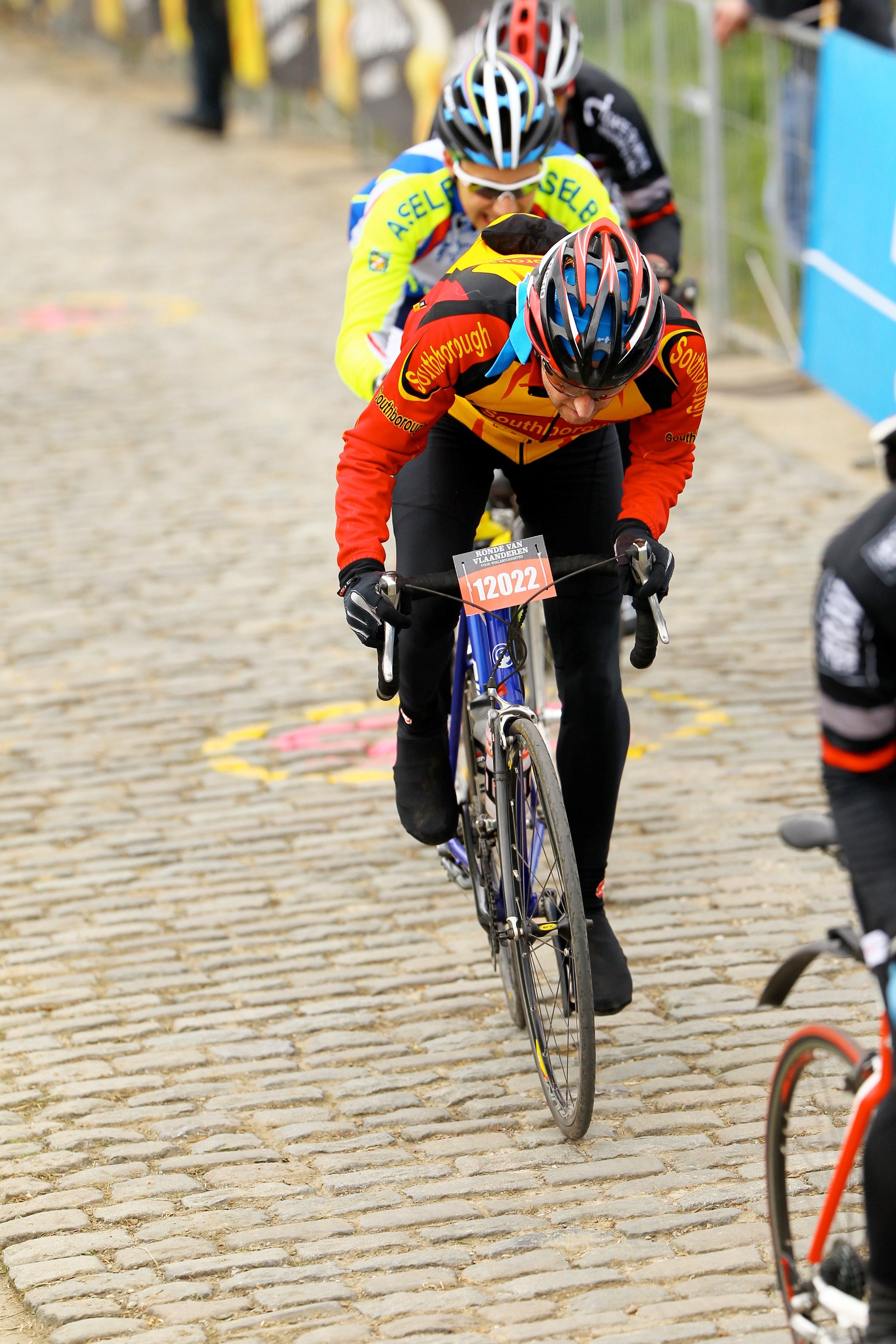
Riding on cobbles in Belgium, during the 2012 Tour of Flanders Sportive (Photo: courtesy Nigel Smith)

I would imagine that when Naveen’s team goes to Europe to race, the national federation has very little to do with it. It is an initiative by cyclists who are keen to improve and the sponsors backing them. Let me mention an old incident that happened in Mumbai – almost 15 years ago. A climbing club here pioneered a competition. One of its early editions was extended support by the apex body in climbing globally but the support was shot down by domestic authorities who felt they were being circumvented……

That is entirely in line with what I perceive about cycling. Another example would be – by 2010, when Delhi hosted the Commonwealth Games, we had a world class velodrome in Delhi comparable to velodromes in Manchester, Glasgow and the one used for London Olympics as well. That was eight years ago. You would think that by now you would see the green shoots of development in bicycle racing, courtesy such facilities. But where are they?

How much initiative are clubs allowed to enjoy in the UK? To what extent must the national body be involved if a club team desires to compete overseas? What is the structure there?

My club in the UK doesn’t race abroad but there are plenty of other clubs in the region that travel to Belgium or France to do events. All we need is a race licence that is given by the national body. So if I am a member of a club, that club is affiliated, I am a member of British Cycling, I have a British Cycling race licence – that is enough. My coach in the UK; once a month he and his team mates would go across to Belgium for the weekend, race and come back. I can go and join them because I have the required race licence.

As a foreign coach in India, you have the benefit of seeing what is going on from an outsider’s perspective without being invested too much internally, which is what bogs people here down. It is obvious from your comments that Bengaluru seems to have the most evolved bicycle racing scene in India. What is it about Bengaluru that works in its favor?

I don’t know the history of how the set up in Bengaluru started. But I imagine there was a large community of individuals attached to certain bike shops and brands, who got together and made some things happen. Second, Bengaluru has access to some fantastic roads for good riding. In Mumbai, if I want to do some good riding, I have to get beyond Thane, beyond Kalyan and be on the Nasik highway. That’s an hour’s drive before I even get the bike out of the car. So if I have to meet up with some good riders, get some rolling roads and get some good riding done, that’s an hour’s drive away. And to get everyone to do that, to organize that – it’s not going to happen. We are kind of hampered here by living in a sprawling metropolis.  I know from riding around that the roads are difficult, the policing is difficult. We are hampered by the infrastructure that we are living in. However there are some guys in Delhi who put together some interesting events. So it can be done.
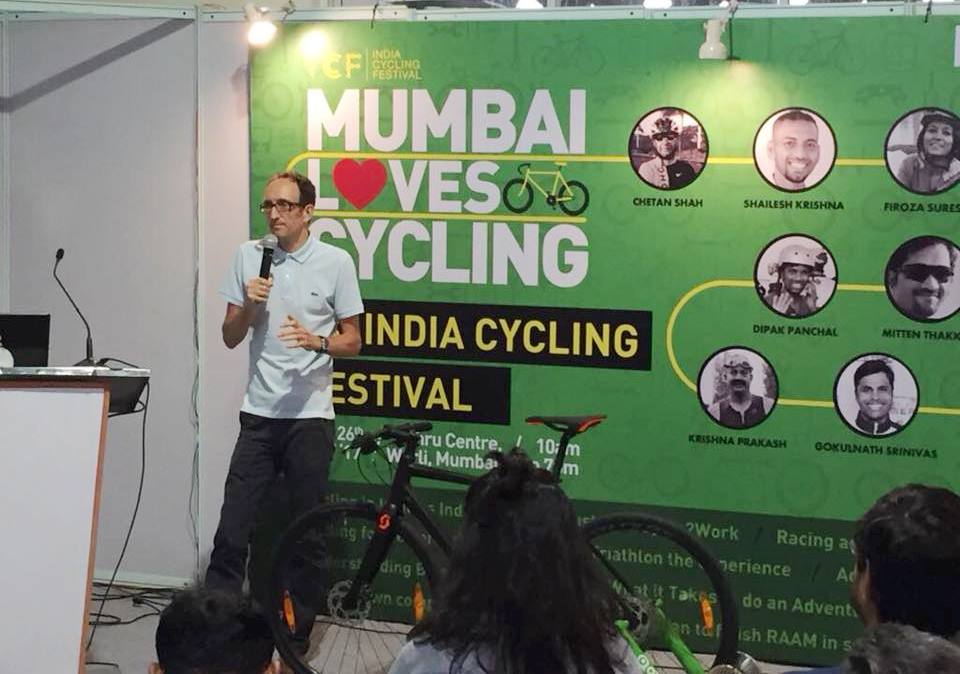
Speaking at the 2017 India Cycling Festival (Photo: courtesy Nigel Smith)

You work with Scott India’s team. Can you describe the coaching work you do through Scott India?

When I started working with Scott India they had just signed up 10 or 12 cyclists for their supported-athlete program. They brought me in to oversee the coaching side of it. From Scott’s point of view, they are investing in a group of athletes across the country but they have no way of making sure whether they are training correctly or have someone to talk to and work with. I was providing that role initially. Over the years, a number of athletes have come and gone from the program. We are now in the process of refining what the athlete program should look like and how it should function. So the first question is: how do we select? There are some selection criteria we are laying out now. Plus there will be some performance benchmarking. We are looking to try and lend some professional elements to it. The rider has to deliver. We will give them as much support as we can. But they are responsible for their performance. So if I am working with a rider who I am going to see rarely because they live in the very north of the country, then all of it is coaching remotely. As a coach I need to make sure that I am instructing them well not just on the sessions they are doing but on how they are riding, the skills and techniques they are supposed to perfect. They should send me the data using whichever platform they are using so that I can monitor. We look at cadence, power, heartrate etc. I might ask them to send me video footage of themselves so that I can see their technique. From all this we try and optimize the training program required for that particular athlete. The more you work with them, the better you understand their specific goals – short, medium and long term. We work out what their race program should look like, when they should be at the gym, what they should be doing at the gym and for how long. I try and take out all the myths. There is a lot of information on the Internet which can be assembled the wrong way. I help them get it right. I try to get them thinking in terms of annual plan, break it down to phases and then, what they should be doing in each phase. It all has to be structured and it has to follow a goal oriented plan. That is what I help with.

One of the things cyclists from here would look for, when they join a program of the sort you outlined, is opportunity to race. Not just races here, but races overseas. Is that built into Scott India’s imagination of the program or is the current position one of laying the ground work and visualizing participation in races only after the basics have been met?

Yes. So going back to the structure of the athlete program, the first thing is – we have the selection criteria. That is based on age, physical attributes, physical potential and also for want of a better word, professionalism; because these guys are going to be brand ambassadors. They have a responsibility to represent the brand in the right way. They also have a responsibility to take care of themselves and train according to the program that has been given to them. If they have those mental and physical attributes, then they are on the program. The program will dictate a certain number of races they need to be doing each year. Broadly speaking, we are looking at state championships, national championship, regional races and one or two larger Indian races. You give them a race program. If that goes well what we are trying to do at Scott India is – how do we utilize Scott’s global reach to the best advantage of these riders? There is the Mitchelton-Scott World Tour Pro Team. They also have an under-23 continental level team that is currently racing in the under-23 Giro d’Italia. They are registered in China. So it is a UCI (Union Cycliste Internationale) Asia-registered team which does a lot of racing in Europe. What we are trying to see is whether we can work out a pathway to connect the best athletes on the Scott India training program to a training slot on the under-23 team so that they at least get to live like an under-23 full time athlete. They are parachuted in for a period of time and they can experience it. We haven’t got someone to that level yet and the law of averages says we have to see a lot of riders first before we find someone who fits the bill. But that is the goal – to get someone, who in one or two years, maybe even next year, gets to train with these guys. They will be pitched against the best under-23 Scott riders. If that team of people reckons that our trainees have the required talent, they get invited back for a race program and then it takes on from there. My goal is to train our Indian cyclists to the level where they get aboard an under-23 semi-professional team.
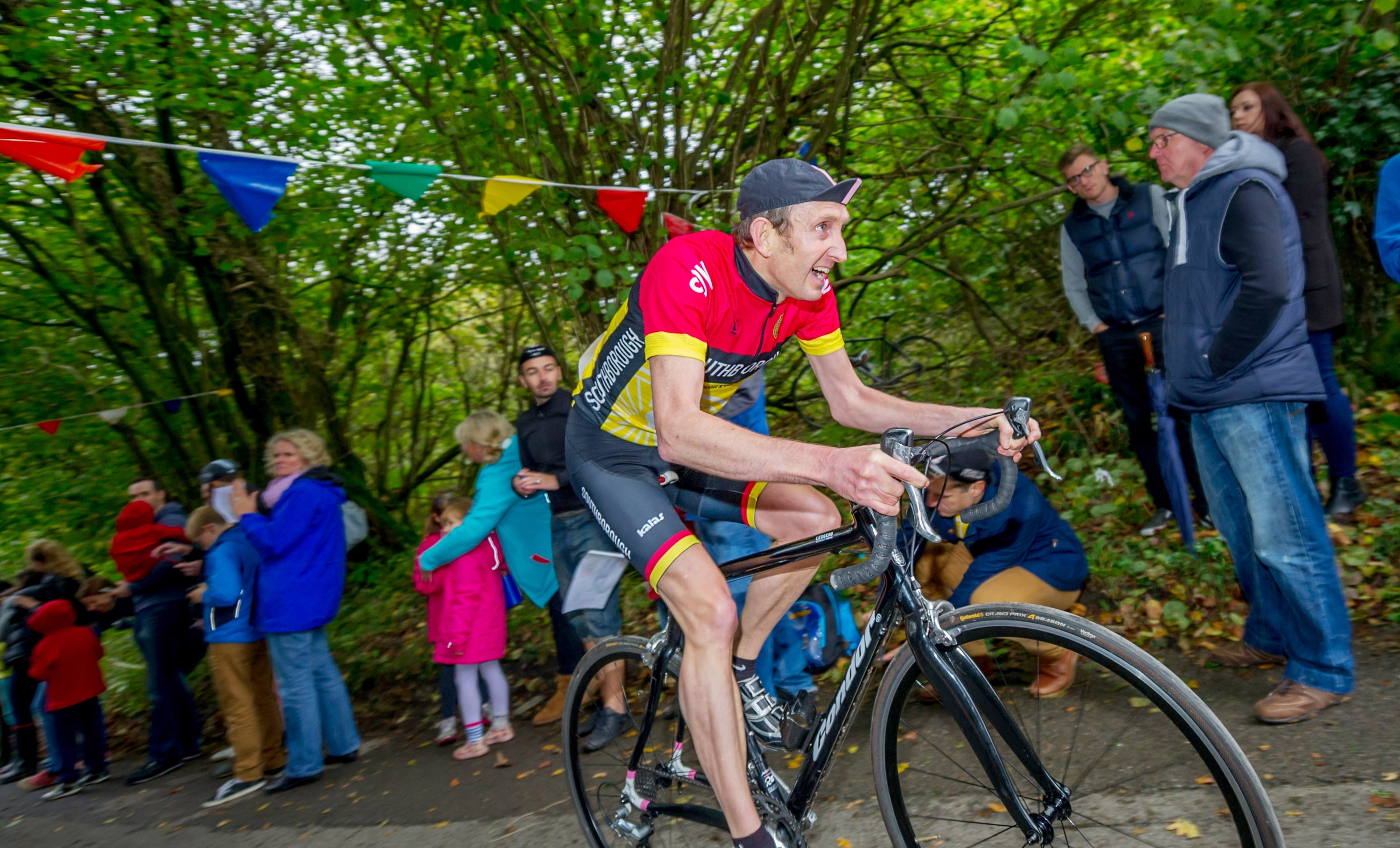
From one of the many hill climb events that fill the late season UK cycling calendar. This particular event was promoted by the BEC Club in South East London, 2014 (Photo: courtesy Nigel Smith)

We discussed the Indian fancy for RAAM earlier. If we traded that fancy for a fast paced, highly competitive, multi-stage format like that of Tour de France, how far would you say are Indian cyclists from making a beginning in that direction? Do you see the necessary ingredients to attempt that journey?

We are seeing Indian cyclists competing at RAAM and they are just completing it. That is the accomplishment. I have had this conversation multiple times: my question to any youngster imagining Tour de France is – what do you think the guys on Tour de France teams have achieved? A typical world tour team is 25 riders of which, eight get to ride Tour de France for that team. That means there are 17 riders that aren’t riding Tour de France, who would be riding the smaller races. Some of them will ride three week-grand tours. Some of them won’t. All those riders were picked from pro-continental teams, which is the next tier down. Typically they could be under-23 teams or smaller pro teams. A rider has to be very, very good at pro-continental level to get picked for the tier above. Below pro-continental is continental. There is probably about half a dozen continental level teams in the UK. They are a very small set up, they do a lot of domestic races and they occasionally go to northern Europe to do small stage races there. To get onto one of these teams you got to be probably at the level of an Indian national champion. So if you look at what Naveen is doing – he is the best of the best among Indian riders – he is right now racing at that UCI continental level in Belgium for however many weeks he is out there. He is very open and it is great that he is sharing everything that is happening. We can see how well he is doing against regular club guys, academy regulars and under-23 sorts. That’s the best from India. That’s where India stands. So if an Indian cyclist thinks he wishes to race professionally or at least at that level where expenses are taken care of, you got to be better than that. The first thing to do is get from whatever level you are at in India, to Naveen’s level.

In your assessment what is the distance between Naveen and the rest in India?

It’s bridgeable. It’s not massive. Certainly from the racing scene in Bengaluru, Coimbatore and some of the other races, I would say – there are very good cyclists. But again, they need the structure and support system to close that gap. They need to be able to visualize where they are now, where they wish to be and what steps they should take to go beyond it. After that they can think of what races they should do outside India. It is one step at a time. It will be great if in the next couple of years – with what Naveen is doing – if we go from one Naveen John to maybe five or six. And then maybe one of them will break through and something will happen. We need to create that structure, that process and that support network.

It is very common in India to link our lagging behind in sports to economic development. In the case of bicycles, despite big volumes traditionally produced in India, it is less than two decades since we have had modern cycles being available. Would you accept that as a valid excuse for where we find ourselves in, in bicycle racing?

No, no. Because by exactly the same argument, running in the city is a bigger sport and running costs only a pair of trainers. You have wonderful races in running all through the year in India. But we don’t see performance. So no, I don’t buy equipment as a valid excuse.

So it boils down to passion and how much you will drive yourself to get to that level….

Yes. Again I will use my native country as example. We had the big running boom in the 1980s. The first London Marathon was in 1981. Within a few years hundreds of thousands of people were running and thousands of them were running sub-three hour-marathons. It just exploded, talent grew and the performances were a match for any other nation. I can’t tell you why this hasn’t happened in India.
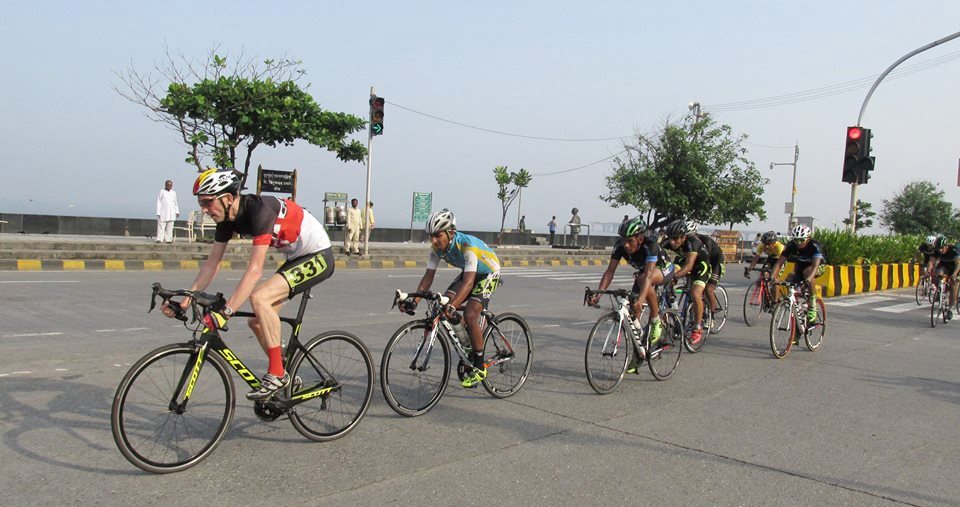
From the Mumbai Championship (Photo: courtesy Nigel Smith)

There is a lot of premium attached in India to well settled life; pursuit of this ideal shapes Indian existence. An Indian youngster – especially one who isn’t wealthy – going into cycling or any sport other than cricket, is written off as walking a risky path. Sometimes even social acceptance is denied. How secure in the mind is the average youngster in Europe wishing to go into cycling?

Certainly they will get social acceptance. You can take up any sport in Europe, join a club and there will be hundreds of similar minded others. But you don’t necessarily take up sport thinking at the back of your mind, that there is livelihood in it, that it is going to be your job. However you may find that you are very good at it because the structure is there; there is the talent spotting and coaching structure. If you do get spotted, you may get invited to play for a team in a higher league or be better supported, whatever the sport. Through that you get opportunities to develop further. The only time you have a sport versus academia issue is when you get guys who are around 18 years of age and there is the question – do I choose sports or do I go to university? Some sports lend themselves to training and academics side by side. Athletics is one. Maybe if you are a football or rugby player that is not possible. Depending on the sport, you make a choice. Most people say: I am 18 years old; I will give sports a shot. If it fails in the next three years, I can always go to university when I am 21. I am not going to lose that much of my life through trying sport.

So would you say that a flexible approach to education and a flexible education system is critical for developing sports? Being able to take a break from studies and going back after a gap….

A lot of people do that. I read about a lot of people who get a seat at university and then ask to defer it for a year. You try to improve in the sport of your choice during that period and if it doesn’t work out, then you go back to academics.

What would be the most important pieces of advice you would give a youngster in India wishing to be a good, strong bicycle racer?

Whatever you do, you got to get the basics right. First, you don’t need the most expensive equipment. A basic heart rate monitor for instance, will suffice. Second, learn to ride the bike properly in terms of bike handling, developing smooth cadence and technique of pedaling; you got be able to do 90 rpm for hours at a time with relaxed shoulders, using your core to keep you upright and eventually you have to be good at bike handling. Third; rest. In training, there will be hard sessions and light sessions. But you must rest. The harder you train, the longer you have to rest. It is very difficult to pull back riders who are thinking I have got to train hard; I have got to train hard. At some point, you haven’t got to train hard, you got to train easy. You have to let yourself recover.
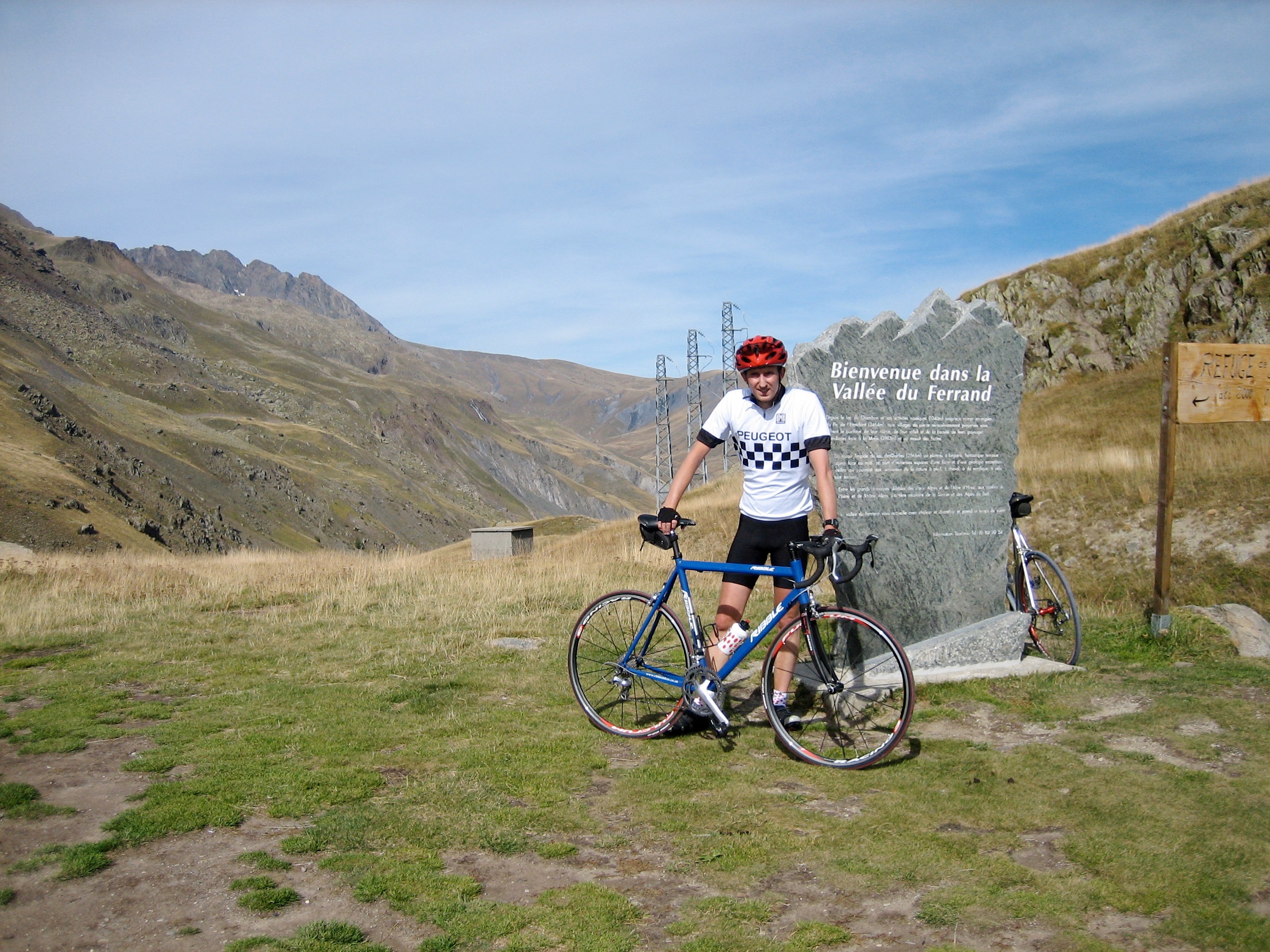
From Nigel’s first bicycle trip to the Alps in 2007 (Photo: courtesy Nigel Smith)

What got you into cycling and what got you to being a coach for cycling?

The first is easy – it was a broken ankle. I was a regional level club athlete for 25 years. I used to do 1500m, 5000m and steeplechase in summer and cross-country races in winter. This was interspersed with road races. Then I broke my ankle. I returned to running, got back to training and then realized that it was going to take me another year to get back to the fitness level I used to be at. I was 35 years old and I decided – realistically I wouldn’t get any faster. The only thing left for me was to either improve my half marathon personal best or try the marathon, which I wasn’t interested in. So I took up cycling in 2007 because I wanted a sport that would keep me fit and also be fun to indulge in. The competitive drift slowly occurred and I found myself chasing benchmarks. I soon progressed from doing a couple of rides a week to joining a club, competing, racing and so on. Up until 2015 I had a full time job in consumer goods product development.  From 2013 to 2015 I used the services of a full time cycling coach. I enjoyed working with him. In 2015, my wife and I moved to Mumbai for her career. I resigned my job and the question cropped up – do I want to use this time to do something I love? I took the opportunity to avail the coaching classes available with British Cycling. That has taken me two and a half years.  I have got to level three, which is the highest level.

The wonder of a UK club is that the people coaching you are genuinely qualified to help you get better. I was lucky to learn from some really good people over the last 37 years whether it was athletics and running or cycling. Working with British Cycling has taken that to another level. They have worked with British Academy, British pro teams, British Olympic development team and other global federations. The tools and details they gave me, I am now passing on to those training with me. All I am doing is, help my trainees create a structure for themselves such that they can be the best they can be because I cannot influence the state or national structure. I have written to the national body three times and that was it. However I can work with athletes and help them.  It brings us back to the beginning of our conversation – what is missing is that structure. You give the athletes the training, the coaching and advice and then if they have a structure in their sport, they can thrive.

(The author, Shyam G Menon, is a freelance journalist based in Mumbai.)
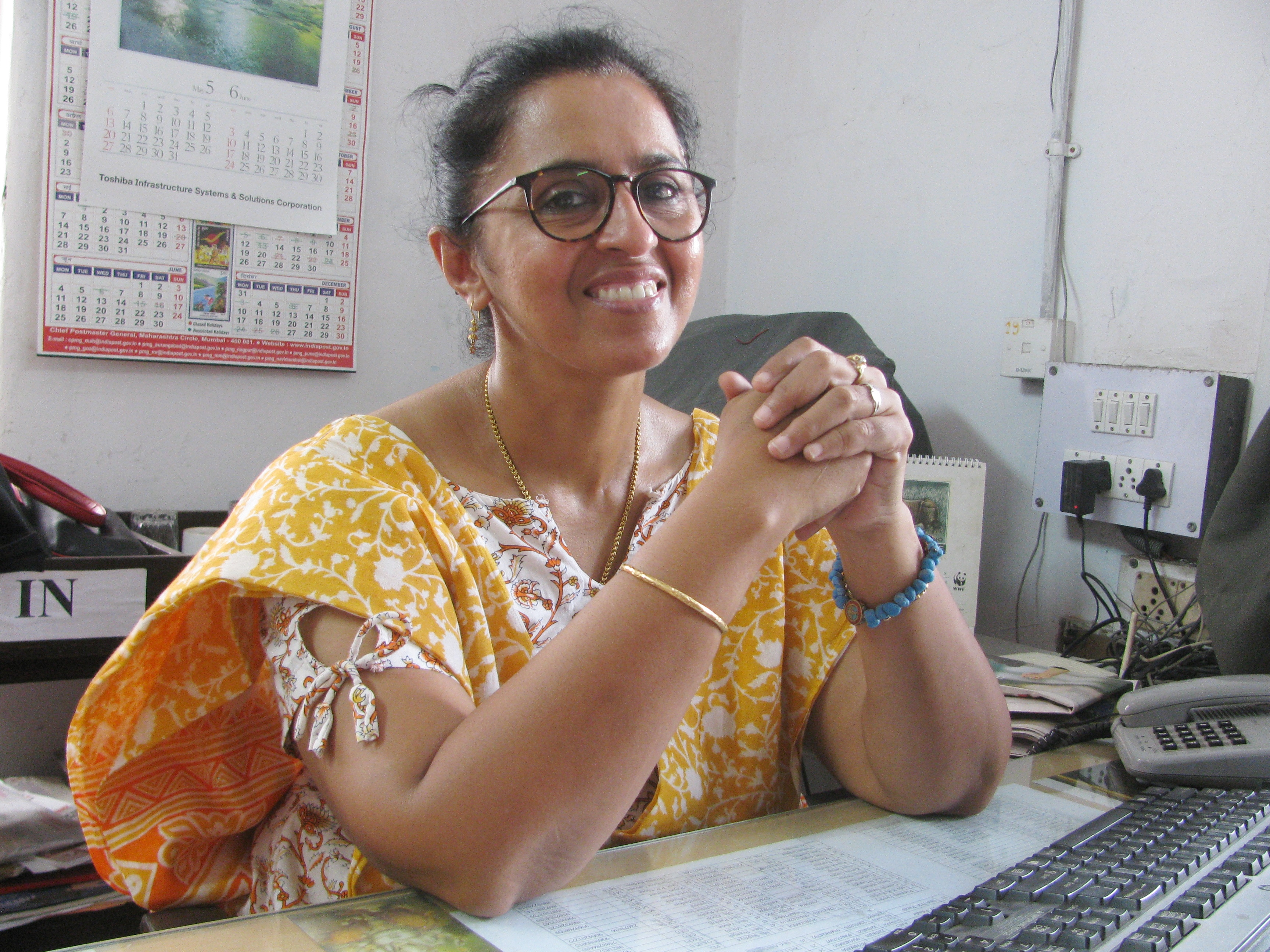
CURIOSITY AND THE TRIATHLON

Sree Sivadas (Photo: Shyam G Menon)

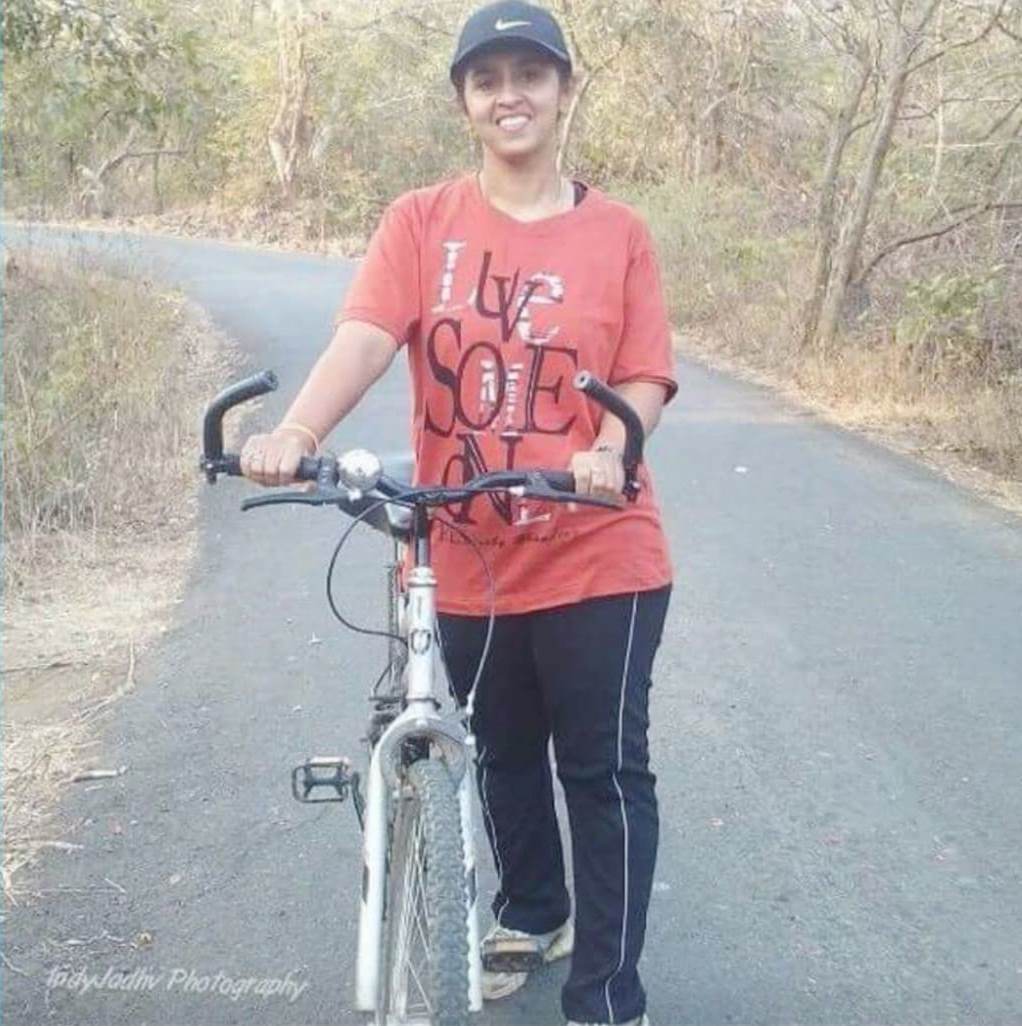
In 2015, Sree Sivadas – then 48 years old – decided to attempt the triathlon. She had just learnt to swim; she didn’t know cycling.

The brain is everything.

Wikipedia describes the nervous system as that part of an animal coordinating its actions by transmitting signals to and from different parts of its body. Needless to say, this function is vital for sports. At the center of the nervous system and reigning as the most complex organ in any vertebrate’s body, is the brain. Thanks to advancements in science, the brain is understood much better now; yet it is also mystery awaiting science. The operation of individual brain cells has been comprehended in detail but the way they cooperate is still a subject of study.

The brain is well protected. There is the skull and then, the brain and the spinal cord are encased in three membranes called meninges. There is also the cushion and protection provided by cerebrospinal fluid. As with all inventions, language would have been impossible without the brain. Human language is very sophisticated. In Greek, `meninx’ means membrane. In medical parlance `itis’ denotes inflammation. That’s how meningitis, the medical condition caused by inflammation of the meninges, got its name. Sometime in the beginning of the 1980s, an eighth standard student came down with meningitis in Mumbai. Hers was a miraculous recovery. The medicines she had to take included steroids, a category notorious for its side effects. Sreedevi (Sree) Sivadas recovered from meningitis but at the cost of how she looked – she started to pile on weight. It wasn’t long before she realized she had to do something about it.

From a trek (Photo: courtesy Sree Sivadas)

Walking has never been a glamorous activity. Walking is so fundamentally human – it is what defines us; the idea of it as distinct activity takes some getting used to. Runners typically view themselves as superior to walkers just as climbers and mountaineers do, to hikers. Young people living the age of distinction aren’t known to celebrate ordinary things like walking. Sree’s father – he moved to Mumbai from Kerala in 1963 – worked at Rashtriya Chemicals and Fertilizers (RCF). Not a very sporty person – Sree’s interest in sports never exceeded recreational level – and beset with need to reduce weight, the school girl joined morning walkers in Chembur, the Mumbai suburb where RCF has a residential colony. For those conscious about standing out from the rest, it was an unusual sight – school girl walking for exercise; most others engaged so alongside were senior citizens. Sree wasn’t bothered. She also enlisted for taekwondo, making it to green belt.

This phase was followed by a shift of residence to Vashi. Soon after her college education, Sree worked briefly at RCF. Then she wrote the staff selection exam conducted by the central government and was initially offered a job with the department of defence. Her posting was at Nhava Sheva, at that time an outpost away from Mumbai with port and defence installations for address. She elected to join India Post instead. She had a secure job. Marriage followed. In 1994, Sree got married. Her husband, Sivadas, ran his own business in engineering goods. A year later, their daughter was born.

In 1996, Sree joined the gym. She worked out in the early morning hours. The confines of a gym – that wasn’t something Sree liked. “ I got bored of the gym. So I shifted to aerobics,’’ she said. Then she got into kick boxing, eventually settling for a combination of activity with gym visits twice a week. But the activity she liked the most – and which probably explains the drift away from gym – was none of this. What Sree genuinely liked and did the most was a cousin of all the walking she did as a student seeking to lose weight – trekking. She liked the outdoors. It was a friend – Anitha Varghese, who worked at National Bank for Agriculture and Rural Development (NABARD) – who got her into trekking. Sree is now a life member of Youth Hostels Association of India (YHAI); she joined the outfit in 2005. She did a lot of treks – short and long ones – through YHAI.

October 2015; learning to cycle at Borivali National Park (Photo: courtesy Sree Sivadas)

In 2004, thanks to Anitha again, Sree became curious about Mumbai’s annual marathon. For two years – 2004 and 2005 – she participated in the seven kilometer-Dream Run. In 2006, without any prior training, she attempted the event’s half marathon segment. “ I didn’t know a thing about running,’’ she said of how she went in for the event. She is aware of how politically incorrect such an approach seems in world where running has become an industry driven by logic and protocols.  Equally, an aspect of world where human activity has become edifice wrapped in perfection and achievement, is that nobody wants to fail. The less you are prepared to fail, the less you try anything new. Sree doesn’t mind trying new things. “ I don’t dwell on failure,’’ she said.

In Mumbai, elevators speak a lot. The elevator at the city’s General Post Office (GPO) screamed heritage building and go-find-who-John Begg-is. As the old, elegantly cast metal cage ascended in shaft open to world, you saw and heard machinery at work; something you don’t, in the secluded ambiance of modern elevators. By 2018, it was 81 years since Begg, Scottish architect known for his Indo-Saracenic architectural style, died. Mumbai’s GPO is his design. Sree, personal secretary to the Post Master General, had her office in one of the building’s turrets. The small room was circular in lay out. With its sunlit windows, the room had a faint Disneyland feel to it; like being in a fairy tale castle albeit one with a heavy touch of government office to it. In appearance, Sree is hardly the sought you would associate with sport. The way it is being promoted, sport is increasingly competitive even at amateur level. As performance becomes main goal and room for error shrinks, the approach smacks of going to office. Conversation with Sree is comfortable; you don’t sense office. She completed that 2006 half marathon in three hours, forty minutes. That is a very slow time. The evening of the half marathon she went for her regular dance classes.

Roughly two years later, in 2007-2008, a 40 year-old Sree began addressing another shortcoming in her life. She didn’t know how to swim. She joined for classes in swimming, learning the skill from scratch. There is however one problem in self-navigated learning. You may be good at breaking the ice; you may not be as good at sustaining the learning. “ I joined for classes, learnt the basics and then I dropped out,’’ Sree said. During this time, she also kept running, pursuing it as best as she could; general awareness of her abilities for guide. Then in 2010, tragedy struck. Her husband died of cancer. The disease developed rapidly. There was little time to respond through treatment.

At the Wada duathlon (Photo: courtesy Sree Sivadas)

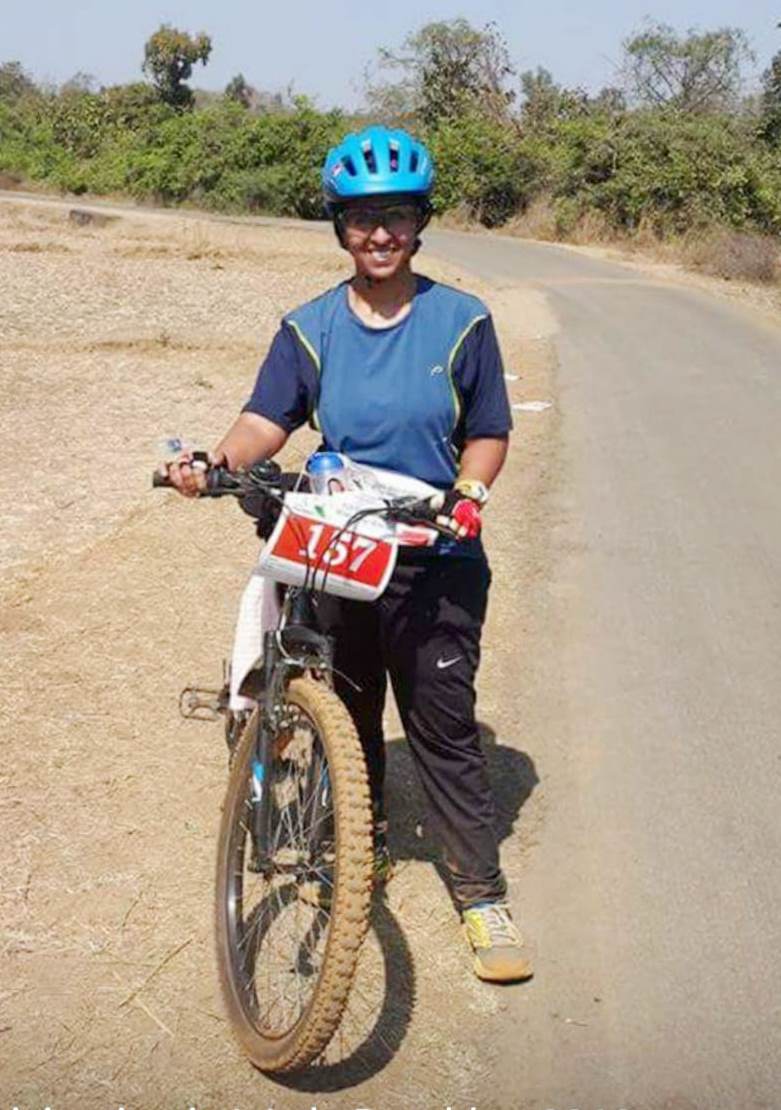
“ Have you met Sree Sivadas?’’ Naushad Asanar asked. He is a senior member of Soles of Cochin, the Kochi-based runners’ group. The conversation was about triathlon, which entails swimming, cycling and running. Naushad mentioned how Sree, having just got into swimming and not knowing how to cycle yet, had enrolled for a triathlon. It put her on a voyage of discovery. According to Sree, her journey to greater intensity in amateur sport had nothing to do with escaping grief. In the years following her husband’s demise, she soldiered on doing the things that interested her, keeping her life interesting. In 2014, as a continuation of her curiosity for running, she joined BNP Green Runners (BNP stands for Borivali National Park). This was the first group of runners she was joining and they introduced her to more systematic training methods. In 2015, Sree met Naushad, Vijayan Pillai and Mathew Mapram – all runners from Soles of Cochin – at Mumbai Ultra, where she was assisting as volunteer. Held every year, Mumbai Ultra is a non-competitive 12 hour-run (5AM to 5PM); it is run on a six kilometer-section of road earmarked for the purpose in the Shivaji Park-Worli Sea Face area. A good swimmer, Naushad had done a triathlon in Goa. During their conversation he suggested that Sree try the Goa triathlon. Sree resolved to give it a shot. At that time, she had rudimentary knowledge of swimming and was still learning to balance on a cycle. “ I just went for it as I was interested in doing all the three disciplines together. I just wanted to try it out,’’ Sree said when asked how she decided on attempting the Goa triathlon after that conversation at Mumbai Ultra.

In October 2015, Sree started to learn cycling. “ I began with a small bicycle meant for children. I learnt it slowly at the Borivali National Park,’’ she said. BNP – as the park is known in running circles – sees a lot of regular walkers and runners. Sree was dismissive of the specter of her learning to cycle on kid’s bike amid all that humanity. If you want to learn something new, you have to go through the process. “ It took me two to three months to get the hang of riding a bicycle. Then I shifted to using a bigger bicycle which I rented at BNP,’’ she said. Later that same year, she bought her first bicycle – a Schnell mountain bike. In the meantime, she also registered for the triathlon in Goa. As a stepping stone to Goa, she decided to do a duathlon – 10 kilometers of running and 40 kilometers of cycling – that was due in Wada, less than 100 kilometers away from Mumbai. “ Even now, I can’t hop on to a bicycle like those who learnt cycling in childhood do. I have to keep the bike stationary, get on to it and then start pedaling. If the surroundings become too congested or traffic gets too gnarly, I grow concerned,’’ she said outlining her competence on two wheels. Wada was tough for her. The cycling there was a combination of road and trail. Newly entered into cycling, she finished long after everyone else did. “ I think everyone was surprised to see me approaching the finish,’’ she said. Sree’s learning was exactly that – she finished! In her mind, Goa seemed doable.

Sree at a triathlon; shouting her bib number after every lap (Photo: courtesy Sree Sivadas)

The Goa event required swimming 1.5 kilometers in the sea, 40 kilometers of cycling and 10 kilometers of running. She started to train again in swimming, electing alongside to stick with the breaststroke as she was comfortable with that style. About the sea, her coach and friends assured her that her worry was “ psychological.’’ Although ` psychological’ is frequently thrown around in India as panacea for beginner’s fears it addresses much less than it proposes to. There is more to sea-swimming than overcoming fear of depth and distance. For example, as distance increases both the swimming style used and strokes deployed therein have to be hydrodynamic and efficient. Rather than fearless mind making you confident (which is the usual Indian argument), it is good technique that makes you confident and thereby, less afraid. In February 2016, at the event in Goa, a mere 100 meters out to sea, Sree panicked.

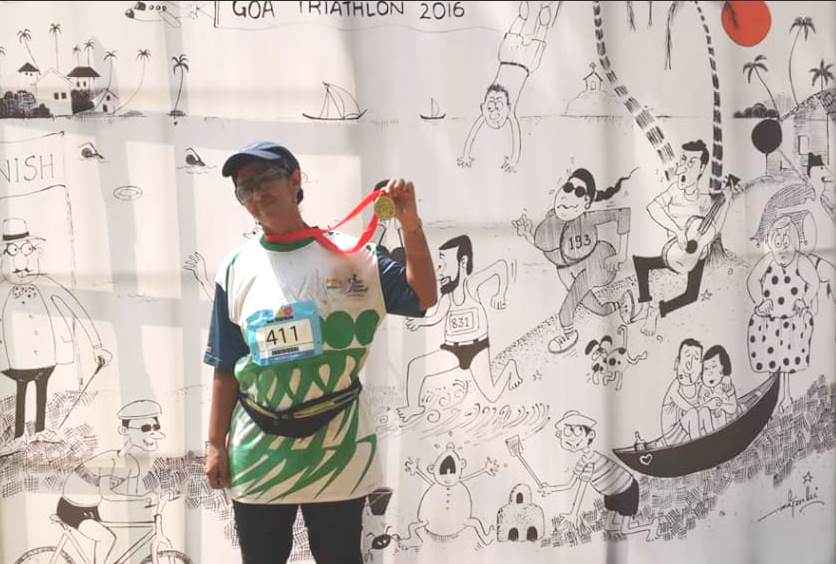
One attribute about the Goa triathlon, you hear often, is that it is well organized. That helped Sree. In the sea, overcome by fear, she made for a lifeboat nearby. She hung on to it for ten minutes. Then the organizers asked her if she wished to continue. She said yes. “ Thereafter I faced no problem. The sea also helped; it is more buoyant than the waters of a swimming pool,’’ she said. However the event wasn’t without mishap. Shortly after she commenced the cycling leg, she crashed and broke a tooth. “ I still remember. There was a photographer watching all this. He picked up the broken tooth and gave it to me,’’ Sree said. Although she completed the cycling, her knee was swollen. The running was therefore difficult. But as at Wada – she completed the event. She finished in approximately five hours, forty five minutes. “ It was a feeling of mission accomplished,’’ she said. Less than five months after Goa, Sree completed the triathlon in Chennai organized by Chennai Trekking Club (CTC). “ Thankfully that went off without any accident. I didn’t fall from my cycle,’’ she said laughing. The swimming for the CTC event was in a big abandoned quarry. According to her, the cut off for the Chennai event was seven hours. Sree said she finished in roughly five hours, thirty minutes. In November 2016, Sree completed a triathlon in Pune, designed to Olympic distances. Here the swimming was in a lake and the cycling was in the hills. “ This one was really tough for me,’’ she said. Sree completed the event. She took way beyond six hours for it. “ I just managed to finish, that’s all. I was not prepared for the cycling route,’’ she said.

At the Goa triathlon (Photo: Sree Sivadas)

Three triathlons old, the unassuming India Post staffer, begins her day around 4 AM. Depending on the day’s choice of workout, she trains for about two hours and gets back home by 6.30. On weekends she trains for three hours. To help her use time efficiently, she has bought a home trainer that allows her to cycle at home. She is also moving away from breaststroke as preferred swimming style at triathlons. Breaststroke leaves the legs feeling tired and at a triathlon, all the three disciplines involved, require use of legs. If a swimming style – like freestyle – can be more efficient, it makes sense to learn it. She has also realized how flawed her bicycle purchases have been. From the Schnell MTB she progressed to a Fuji hybrid. But a bike fit she got done at a 2017 cycling expo in Mumbai, showed her that both cycles were not of recommended frame size. Some of the difficulties she continues to face in cycling probably stems from this. Meanwhile, the legacy of those steroids from childhood linger. At one point in her childhood, the injections had been a dozen a day. Then it was brought down to eight, finally six. “ I have always been on the heavy side,’’ Sree said.

For future project, she hopes to do a Half Ironman someday, provided she can balance the training with her work schedule. Triathletes are often the most meticulous and disciplined of athletes. Viewing life differently, Sree hasn’t allowed the sport she has got into or the projects she has signed up for, to reduce her life to a matrix of goal-setting and achieving. “ I don’t fret if I can’t keep up a training schedule. I do the triathlon for fun. I hope one day I can attempt a Half Ironman overseas,’’ she said.

(The authors, Latha Venkatraman and Shyam G Menon, are independent journalists based in Mumbai. Timings at races are as mentioned by interviewee.)

RAAM 2018 STARTS / VIEW FROM OCEANSIDE

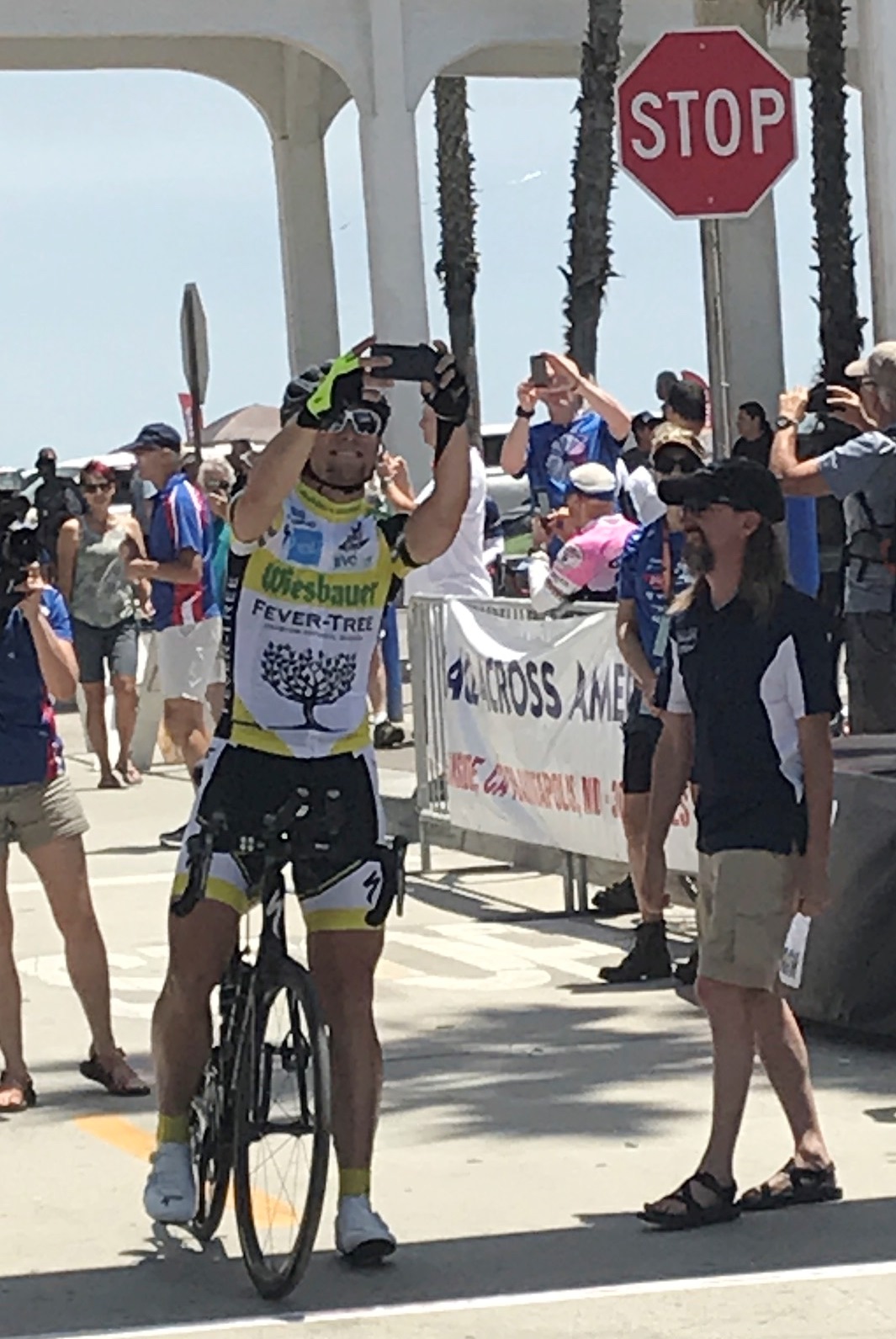
Austria’s Christoph Strasser takes a selfie at the start line of RAAM 2018 (Photo: Rajeev G)

This report mixes an on the spot account of the start of RAAM 2018 with relevant background information. Rajeev G, was at Oceanside for this blog.

The 2018 Race Across America (RAAM) began from Oceanside, California on June 12.

The race, which traverses the United States from Oceanside on the west coast to Annapolis in the east, entails cycling a distance of approximately 4800 kilometers. The race ends on June 25. Last year’s winners in the solo category for men and women were Christoph Strasser of Austria and Sarah Cooper of the US.

Strasser, one of the leading ultra-distance cyclists in the world today, is racing at RAAM this year too.  While Sarah Cooper is not listed for 2018, a name to watch out for among women doing RAAM solo would be Switzerland’s Nicole Reist. Also participating is Seana Hogan of the US, veteran cyclist and six time winner at RAAM who is seeking to improve her record in the fifty plus age category.

San Diego based-engineer, Rajeev G, was there at Oceanside to witness the start of RAAM. “ Strasser was the last rider to start. He looked very relaxed and was smiling and laughing at the start line,’’ Rajeev wrote in. Strasser who has dominated RAAM in recent years, paused to take a selfie at the start line before pedaling off into the race.

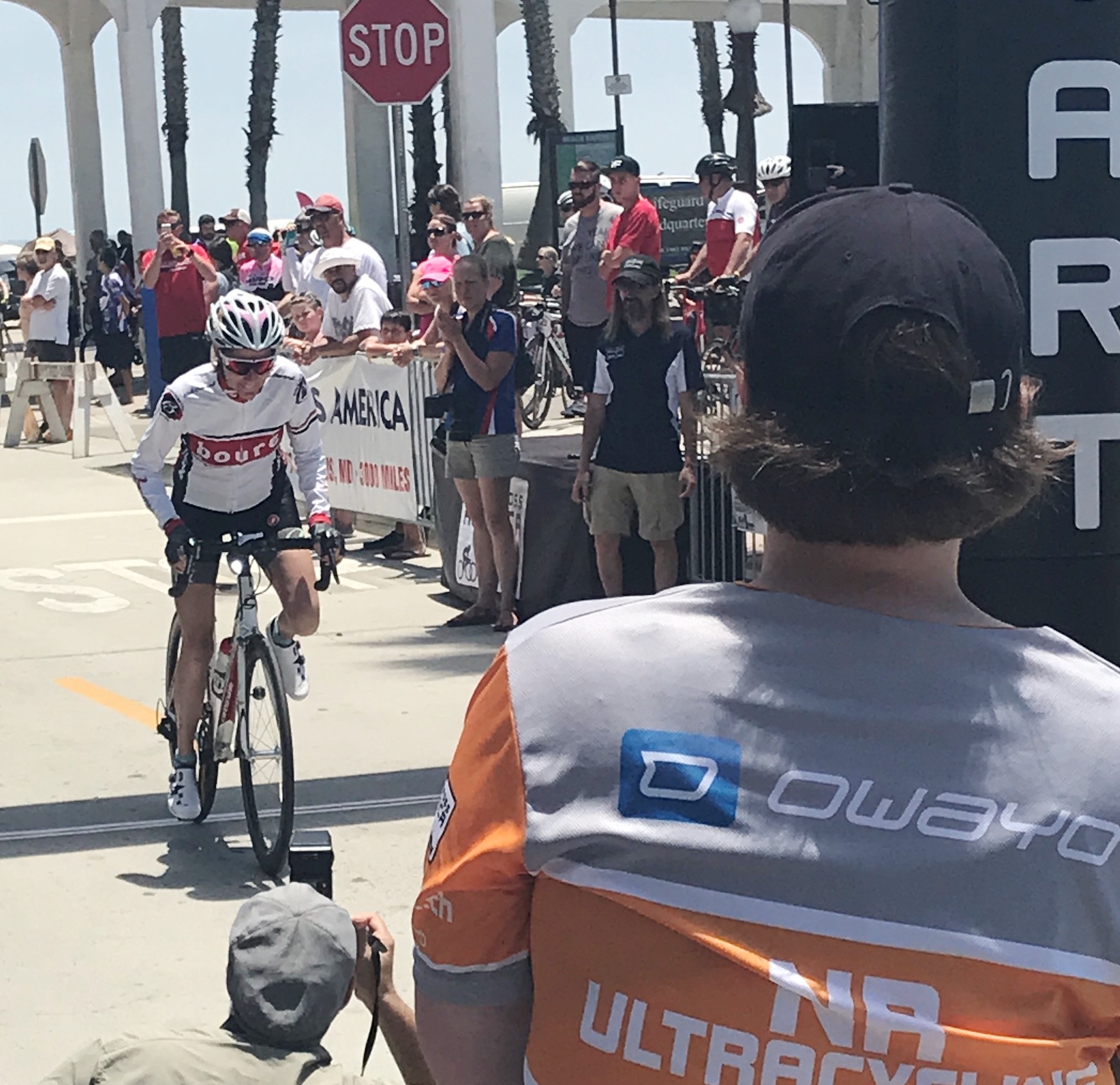
Kathy Roche-Wallace at the start line of RAAM 2018 (Photo: Rajeev G)

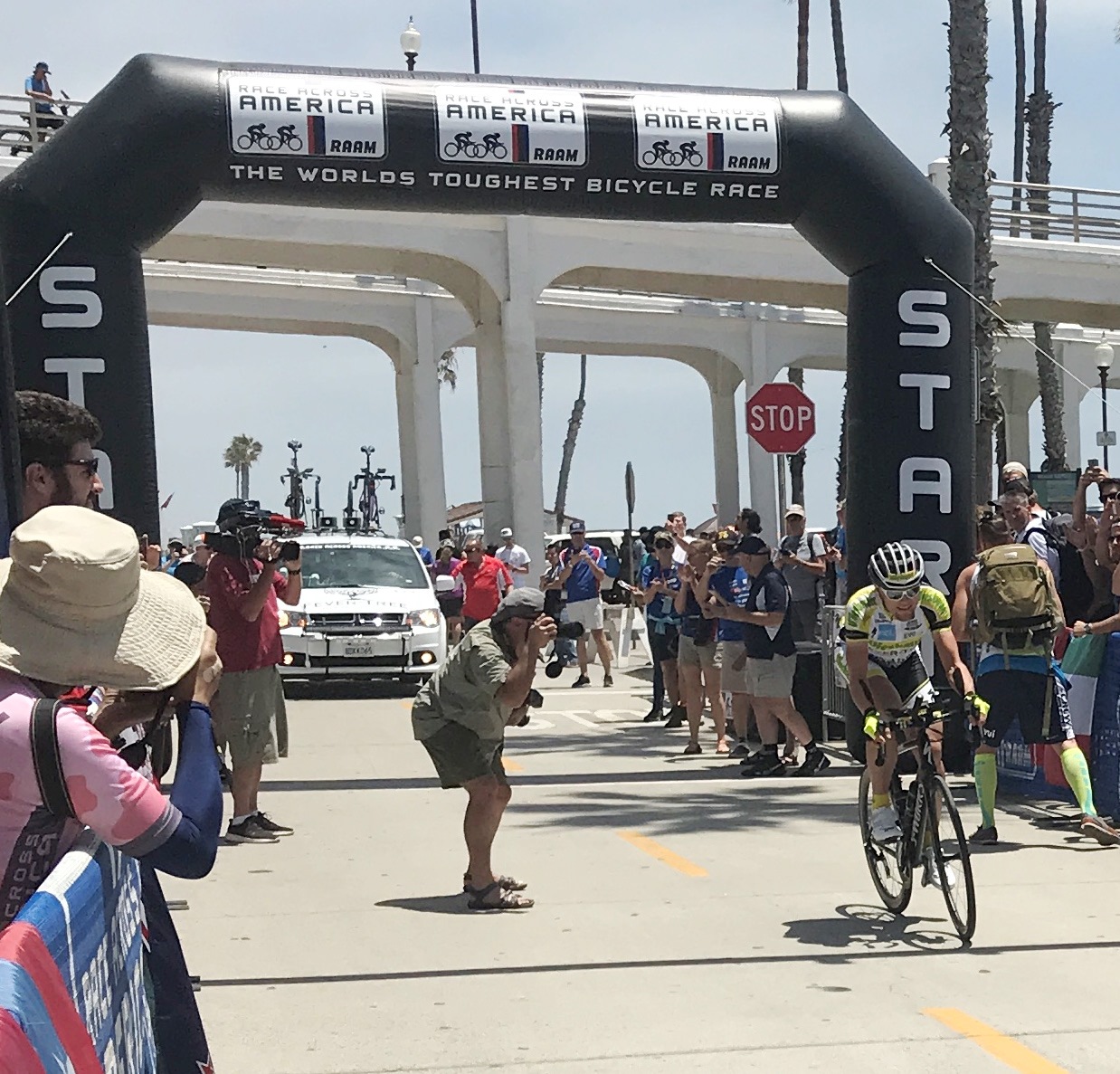
Christoph Strasser commences his race at RAAM 2018 (Photo: Rajeev G)

Unlike many of the other riders, Strasser did not seem to have a dedicated fan club or many supporters in the crowd at Oceanside. However everyone knew who he was and you could sense awe in the crowd. Thanks to her crew members, Nicole Reist enjoyed the loudest cheering. She was one of the early riders to start. “ Reist had the most vocal support of anyone,’’ Rajeev noted. According to him, Seana Hogan was one of the first racers to start (apart from all the RAAW riders of course). “ She was clearly very popular; terrific acknowledgement from the crowd as her name was announced. Seana was in good spirits at the start as well. She left rather quickly after reaching the starting line,’’ he said.

Rajeev had been at the start line in 2017 too.

Compared to last year, he felt that the ambience was subdued this time around. “ Hanging around near the start, I met Bob and Darlene Mckenzie from Tulsa, Oklahoma. Bob was scheduled to ride as part of a four-person team (Team RAAM Polio). Darlene was his crew chief; she claimed that is the tougher job. They watched the start for a while before heading to the airport to pick up Bob’s three Austrian teammates. Darlene mentioned that there are fewer solo riders in this year’s RAAM, but neither of them knew why,’’ Rajeev wrote in.

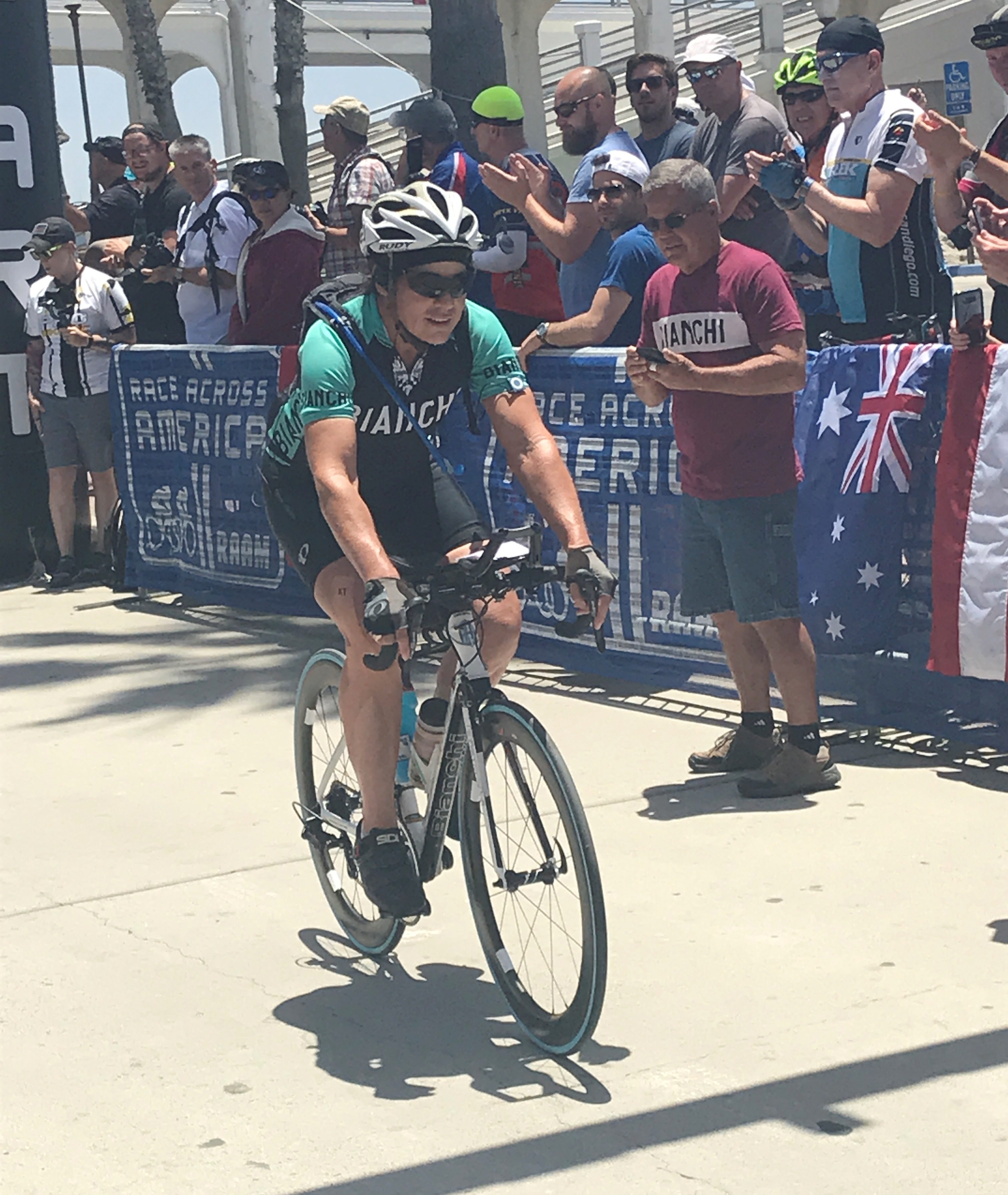
Seana Hogan starts her race at RAAM 2018 (Photo: Rajeev G)

Nicole Reist at RAAM 2018 (Photo: Rajeev G)

He added, “ Bob had a pretty interesting story. He only picked up road riding close to his 60th birthday six or seven years ago. He told me that he was totally unathletic before that. Apparently since he took up cycling, he has lost fifty pounds and completed almost 300 centuries (100 mile-rides). 2018 will be his third time doing the RAAM team race, each time with a four person-team. Last year his team had finished in just over seven days. This year, the goal is to finish in under seven days.’’

In 2017 Lt Col Srinivas Gokulnath had become the first Indian to complete RAAM, followed by Amit Samarth. This year there are no Indian cyclists in the fray. Sundaram Narayanan from Goa, who had registered to participate in the solo category, withdrew following injury while training in San Diego.

At the time of writing this report (June 14, 3.35 PM in India), Strasser was leading the solo riders having covered 716.8 miles. Nicole Reist was at 583.3 miles and Seana Hogan at 501.1 miles.

(The author, Shyam G Menon, is a freelance journalist based in Mumbai. This article has inputs from Rajeev G, engineer based in San Diego. He provided the view from Oceanside.  All photos used herein have been provided by Rajeev.)

COMRADES 2018 / BONGMUSA MTHEMBU WINS FOR THIRD TIME

Bongmusa Mthembu of South Africa emerged overall winner at Comrades 2018, held this Sunday.

He finished the race in 5:26:34 hours.

Joseph Mphuthi, also of South Africa, finished second with a timing of 5:35:09. Britain’s Stephen Way finished third, completing the ultramarathon in 5:35:27.

For Mthembu, it was his third win at Comrades.

He had previously won in 2014 and 2017. Last year he completed the race, which was run uphill, in 5:35:34.

Among women at Comrades 2018, Ann Ashworth of South Africa won with a timing of 6:10 hours.

In second place was Gerda Steyn of South Africa (6:15:34) while Alexandra Morozova of Russia (6:20:21) placed third.

Surat-based Sandeep Kumar appeared the fastest among Indians who participated in the event. He completed the 90.184 kilometer-ultramarathon in 7:30:17, ranking 628 overall, 601 among men and 376 in his category.

This was the 93rd edition of Comrades, the world’s biggest and oldest ultramarathon. As per the event’s official website featuring results, 16,844 runners participated in 2018. According to news reports, Bongmusa Mthembu is the first South African to win Comrades back to back since Bruce Fordyce in the late 1980s. Fordyce holds the record for the most number of wins – nine. Eight of those wins were consecutive. Participating in the period from 1977 to 2012, he ran the race 30 times.

A total of 161 runners from India had registered to participate in the 2018 edition of the race, run annually between Durban and Peitermaritzburg in South Africa. This year, the run was downhill from Pietermaritzburg to Durban with finish at Moses Mabhida Stadium in the coastal city of Durban.

(The author, Latha Venkatraman, is an independent journalist based in Mumbai.)

TEAM SUNDARAAM PULLS OUT

Sundaram Narayanan who was scheduled to participate in the 2018 Race Across America (RAAM), has pulled out of the event.

In a mail received early Saturday (June 9) morning, Sundaram informed that he suffered a crash while training in San Diego, California.

It resulted in a fracture to his left thumb.

“ Hence I withdrew from RAAM 2018,’’ the cyclist from Goa, wrote.

Sundaram was to race in the solo category.

He and his support crew were registered as Team Sundaraam.

When contacted, Dr Pankaj Mhatre, Crew Chief of Team Sundaraam, said that following the cyclist’s injury, they had sought opinion from various doctors.

“ Opinion is that RAAM is not possible for him this year,’’ he said.

 (The author, Shyam G Menon, is a freelance journalist based in Mumbai.)
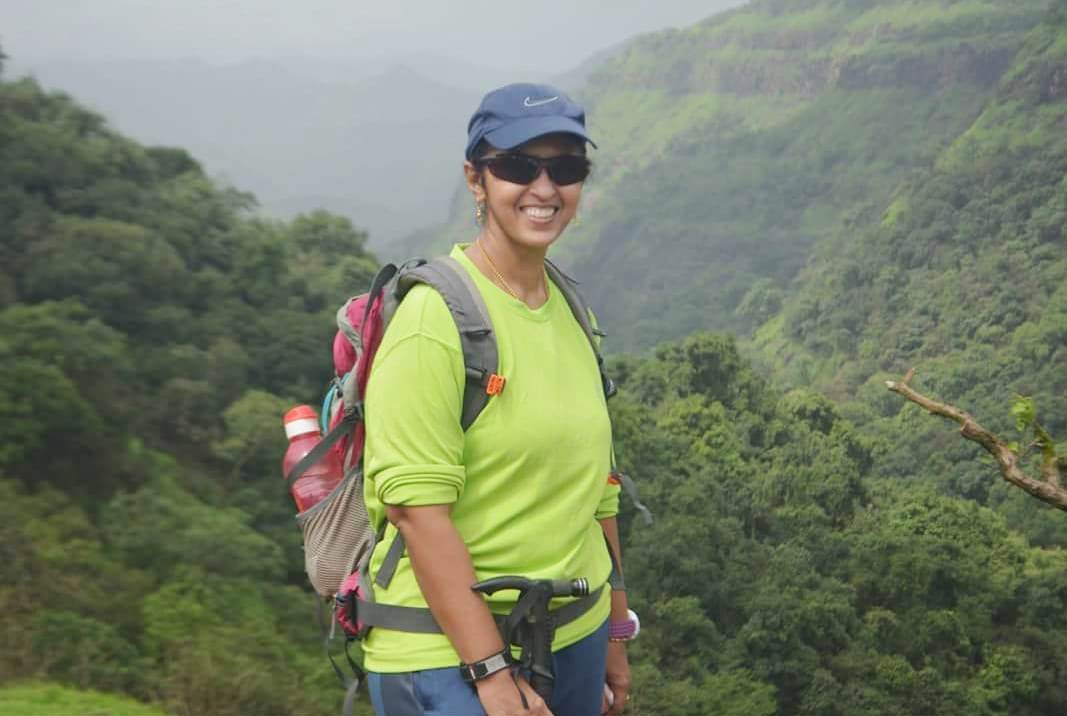
SUNDARAM NARAYANAN SOLE RACER FROM INDIA AT 2018 RAAM

Sundaram Narayanan (Photo: courtesy Pankaj Mhatre)

Sundaram Narayanan is the sole participant from India at the 2018 edition of Race Across America (RAAM), which commences at Oceanside, California on June 12. The cyclist from Goa will be racing in the solo category.

RAAM is a 4800 kilometer-long ultramarathon bicycle race that traverses the United States from its west coast to the east.

Across RAAM and the shorter Race Across West (RAW), three Indians had registered to participate in 2018. As per indications on Wednesday, June 6 (with less than a week left for commencement of race), Sundaram alone remained in the fray. He was already in the US. Last year Lt Col Srinivas Gokulnath had become the first Indian to complete RAAM solo. He was followed by Dr Amit Samarth. Sundaram had been part of the support crew for Srinivas Gokulnath in 2017 (for more on Srinivas Gokulnath please click on this link: https://shyamgopan.com/2017/08/25/after-raam-there-is-race/). Crewing is widely advised as means to familiarize oneself with demanding endurance races like RAAM. Many racers crew before they get down to attempting the race themselves.

Sundaram’s team – registered under the name Team Sundaraam – has nine members, all of them passionate about cycling. They include Dr Pankaj Mhatre who is the crew chief, Vinod Pai, Rick Zwestch, Ajay Dongre, Raghav Gowda, Rutvik Khare, Chakravarthy Birur, Venkatesh Shivarama, Dhanasekhara and Niranjan Upasani. Five of them have previous RAAM experience. Family members of solo racers have often featured as part of support crew. Sundaram’s wife Harshal, who is a nutritionist, will be joining the crew, Dr Pankaj Mhatre said.

Participating in RAAM is an expensive affair.

Sundaram was supposed to participate in the race in 2017 but could not due to insufficient funds. His team then decided to have him crew and gain experience. According to Dr Mhatre, Sundaram got into serious cycling some time in 2012. At that time, like many in India, he used a basic mountain bike. His interest in road biking grew by leaps and bounds. He achieved multiple Super Randonneur titles, was attracted to RAAM and qualified for the race twice. His RAAM project has been on since 2015. A medical physicist by profession, Sundaram has been in Goa since 2012.

For RAAM, Sundaram will be using two bikes and three wheel-sets. To ride, he will have at his disposal a Merida Scultura 5000 and a Merida Scultura 4000, upgraded to Ultegra group-set.

The 2018 RAAM begins on June 12 and ends on June 24.

Christoph Strasser of Austria, who won last year’s RAAM, is registered to participate this year too (for a report on his win last year please click on this link: https://shyamgopan.com/2017/06/22/raam-christoph-strasser-wins-again-amit-and-srinivas-are-past-the-2250-mile-mark/). In October 2017, Strasser – he is a four time winner of RAAM and holds the record for the fastest time – was in the news for smashing the 24 hour-track cycling record; he rode 941.873 kilometers in 24 hours at a velodrome in Grenchen, Switzerland. According to news reports, he completed 3767 laps of the 250 meter-track at an average speed of 39.42 kilometers per hour.

(The author, Shyam G Menon, is a freelance journalist based in Mumbai. For an article on Samim Rizvi, the first Indian participant at RAAM, please click on this link: https://shyamgopan.com/2017/05/23/chasing-a-10-day-raam/)  

SUMIT PATIL: SEGUE FROM RAAM TO MANALI-LEH

Sumit Patil (Photo: Shyam G Menon)

In mid-June 2018, when the year’s Race Across America (RAAM) kicks off in Oceanside, California, Sumit Patil won’t be there. The Mumbai cyclist qualified for the event and registered for it but cannot go for want of funds. Sumit won’t be sitting idle. He has other plans up his sleeve.

In Mumbai, Colaba is well known. It is the southern tip of the city; home to Gateway of India, the Taj Mahal hotel, the flea markets of the tourism district and the local military cantonment. With its popular pubs, longstanding eateries, the iconic Regal Cinema, the fish market at Sassoon Docks and proximity to other South Mumbai nodes like Churchgate, Nariman Point, Kala Ghoda and the Chhatrapati Shivaji Maharaj Terminus (formerly Victoria Terminus), Colaba is a place many in Mumbai visit once in a while. Beyond Colaba is the Arabian Sea, albeit a busy portion of it, for it is through the nearby shipping channel that ships headed for the region’s two major ports and naval base navigate their passage. That channel is a bit out to sea. Closer to shore are the sail boats, yachts and ferry boats.

Not many people know Kulaba.

Kulaba is the old name for Maharashtra’s Raigad district. As the crow flies, it is approximately 45 kilometers, south-south east of Mumbai. While Mumbai is a composite of islands, Raigad is on the mainland. The administrative headquarters of Raigad is Alibag. If Matheran and Mahabaleshwar are the hills Mumbai frequented to escape itself, then Alibag is where it went for sea and farm life. The city’s rich and famous are known to own property there. According to Wikipedia, the name – Alibag – is rooted in farming and plantations. The place was historic hinterland of Bene Israeli Jews. One of them, Ali, was a wealthy person owning plantations of coconut and mango. The region where he stayed came to be known as Alichi Bagh (garden of Ali in the Marathi language); over time that became Alibag. The first major industrial unit in these parts was the factory producing urea and chemicals, set up by Rashtriya Chemicals and Fertilizers Ltd (RCF), a company owned by the central government and having significant presence in Mumbai and Raigad. Born 1985, Sumit Patil studied at the school in RCF’s Alibag campus. His father worked at RCF while his mother was employed with India Post. He has a younger sister; she is now a doctor. “ Alibag was close to Mumbai. Yet it was so unlike Mumbai,’’ Sumit said. We were at a café opposite Mumbai’s famous Siddhivinayak temple, in the suburb of Prabhadevi. Although Saturday, the arterial road outside, linking South Mumbai to places like Bandra, Andheri and Borivali roared with traffic. Alibag was a vision in mind dreaming slow life.

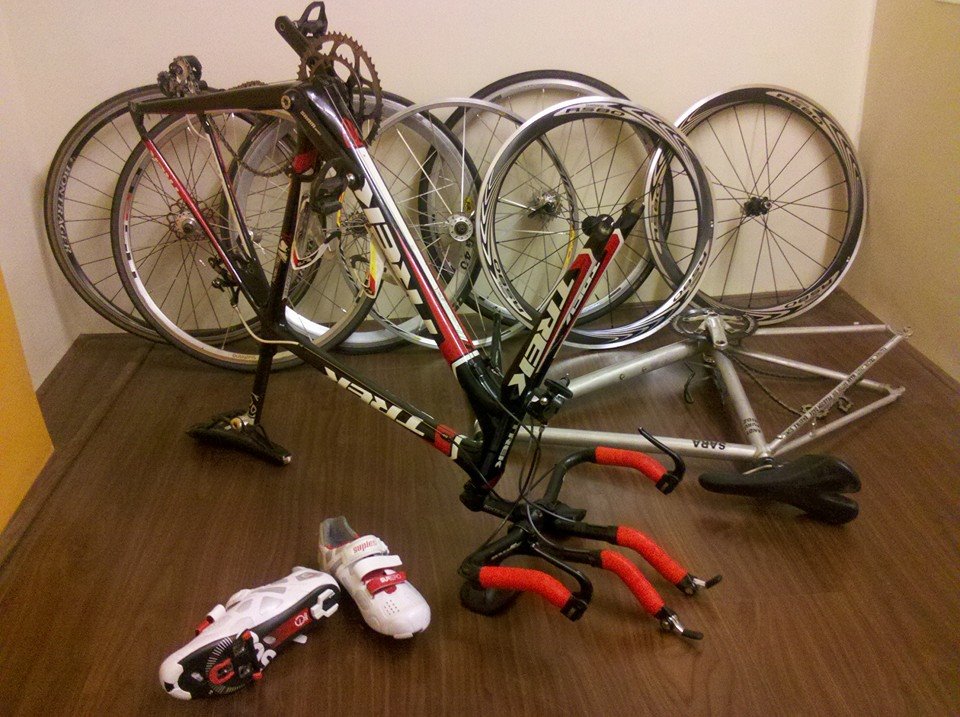
Anatomy of an interest; in the foreground, Sumit’s Trek Madone (Photo: courtesy Sumit Patil)

Life at RCF’s school in Alibag was interesting. “ We had two large football grounds and an Olympic size swimming pool,’’ Sumit said. He made use of it. He also took to swimming in the sea. These are possibilities hard to find in wealthier Mumbai with its congested environs. “ When I moved to Mumbai, I realized that most people here hadn’t enjoyed such facilities in their childhood,’’ Sumit said. Besides the facilities at school, Raigad provided options for hiking and star gazing. Having picked up cycling around the third or fourth standard, he recalled a memorable field trip facilitated by mobility on two wheels. A class on what taluka (an administrative division in South Asia) is came alive after the students cycled around their taluka for improved comprehension. Very simply put, in Alibag, free of overwhelming urban currents Sumit could indulge his childhood curiosities. The shift to Mumbai was gradual. Determined to join the armed forces and required to clear the relevant exams, he used to come to the city on weekends for coaching classes. Although in his eyes, the interest in the armed forces was a major influence shaping his life, in retrospect, that would seem to compete with another trend setting in strongly. From a very early age, volunteering appears to have captured his imagination. Among the first major instances of this was a multi-day cycle trip organized by Dnyan Prabodhani, a Pune based-school that saw Sumit and other students visit places ranging from Vigyan Ashram founded by Dr Shrinath Kalbag to the Giant Meterwave Radio Telescope to Ralegan Siddhi and its social activist, Anna Hazare, and a night climb up Shivneri fort, the birth place of Chhatrapati Shivaji Maharaj, founder of the Maratha empire.  In all the students cycled some 600-700 kilometers taking a little over a week to do it. “ Today you would call it bicycle touring,’’ Sumit said. Uniquely, it wasn’t the cycling that left an impression. The take away for Sumit was the volunteering he saw at many of the places he visited. That and subsequent similar experiences, has left him deeply suspicious of and uncomfortable with commercial instincts in human activity, including sports.

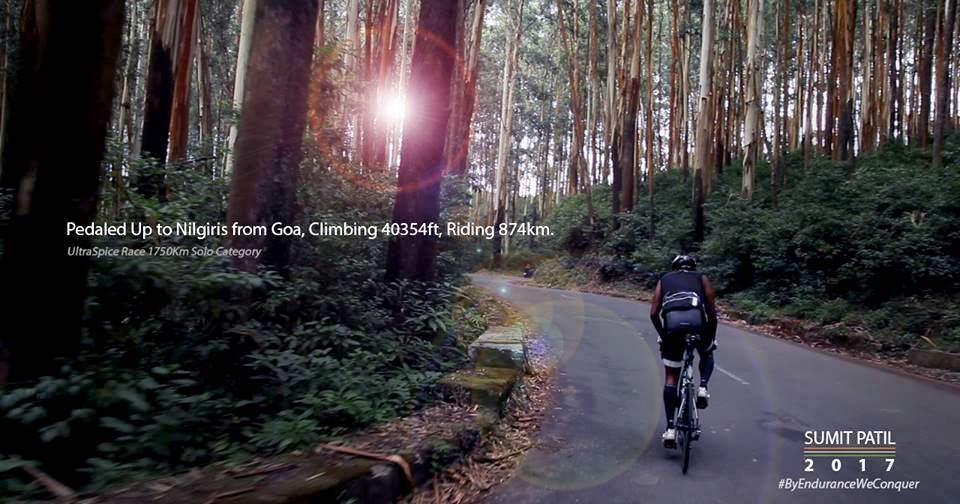
Cycling up the Nilgiri hills (Photo: courtesy Sumit Patil)

Following school education, Sumit joined Ruia College in Mumbai to do his graduation in Physics, following that up with MSc in the subject. Away from studies, two lines of interest characterized college days. To bolster his chances at joining the army, he stayed active in the National Cadet Corps (NCC). Within NCC, participation in the annual Republic Day camp is prized. Selected to go and adjudged best cadet from Mumbai Group Headquarters, the camp however eluded him as he came down with jaundice. But his desire to join the military was the strong. Over the years that followed, Sumit would attempt selection to the armed forces 13 times and be rejected at some stage or the other.  He exhausted his last chance via these selection tests in 2012. He hasn’t given up hope yet; the final port of call is the Territorial Army, a second line of defence after the regular army, composed of volunteers. The other thing which happened during Ruia days was immersion in Mumbai’s hiking scene. According to Sumit, the attraction for hiking was as much outdoors as it was an opportunity to mimic the military, popularly associated with all things tough. “ You saw them as heroes and when you hiked, you walked a bit like them with rucksack on your back,’’ Sumit said laughing. Mumbai has many outdoor clubs with the local hiking season peaking during the rains. He didn’t join any of the clubs. He trekked with whoever came along. The hills and mountains would become a major influence in his life. In April 2001, he did his Basic Mountaineering Course from the Nehru Institute of Mountaineering (NIM), Uttarkashi.

In Mumbai, with Btwin FC 7 (Photo: courtesy Sumit Patil)

Sumit is a little unclear on what exactly pushed him into endurance sports. In 2005 he suffered a road accident in Alibag. He was on a two wheeler and was hit by large truck. The truck drove away from the scene; he was left unconscious on the road. Passersby ensured he was taken to the hospital. Among injuries, he had a fractured wrist and a broken mandible. Coupled with the consistent failure to get into the army, this was a trying phase. He admits he may have looked for release, an outlet to vent his frustration. From some years earlier, the Indian bicycle market had begun to slowly change. Firefox entered the market with bicycles that attracted for their design; they were also sold at swanky showrooms, another first in the trade traditionally associated with heavy, steel bikes and a retail format that paid little attention to customer. Firefox was also local distributor for Trek bicycles. The Firefox-Trek combination (Firefox has since been purchased by Hero Cycles and Trek now retails in the Indian market on its own) was the first whiff of change. By 2006, a large shopping mall that opened in Mumbai’s western suburbs had begun selling imported Raleigh bicycles. Sumit bought a Raleigh M-Trax, a MTB. Meanwhile in 2004, the Mumbai Marathon commenced. With all that exposure to sports in school, the intermittent cycling and his fondness for hiking, Sumit was a decent runner. He participated in the Mumbai Marathon’s half marathon segment in 2007, 2008, 2009 and 2010; his best timing across these years was one hour, forty two minutes. With this came another realization. Thanks to the RCF pool, he knew swimming from a young age. Alibag’s proximity to the sea had also ensured that he swam in the sea and held no fear for it. Now he was into cycling and running. Had the time come to attempt the triathlon? – That was the thought.

Serendipity is a 2001 romantic comedy directed by Peter Chelsom; it stars John Cusack and Kate Beckinsale in the lead roles. Sumit liked this movie. In 2010, there was a triathlon announced in Goa. Event in mind, Sumit bought his first road bike. It was a Trek 1200 SL. He named it Sara after Kate Beckinsale’s character in Serendipity. As it happened, the triathlon didn’t take place that year. Given bike anyway bought, Sumit rode to Goa from Mumbai. On the third day of cycling, he heard a passing three-wheeler driver shout something about the road ahead. Sumit couldn’t understand what he said. Ahead was a series of badly built speed breakers. That was the end of Goa trip for Sara and rider. Sumit returned to Mumbai in a state transport bus, nursing his injuries. Sara lay lashed to carrier on the vehicle’s roof.

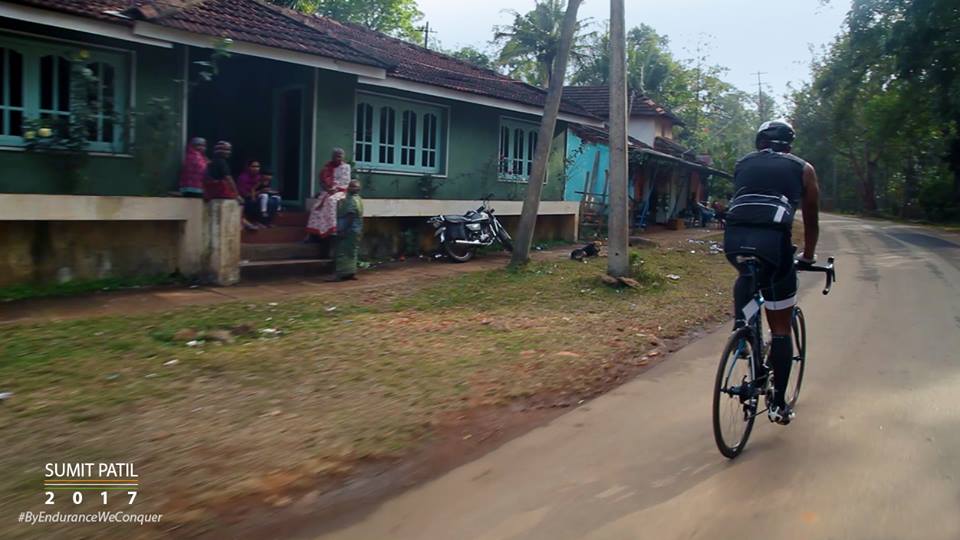
Riding in Kerala (Photo: courtesy Sumit Patil)

In cycling, audax means audacious. According to Wikipedia, the first recorded audax cycling event took place on June 12, 1897; twelve Italian cyclists attempted to cover the 230 kilometers from Rome to Naples during daylight hours. As similar events gained popularity, a French journalist, Henri Desgrange, formulated rules and regulations for audax events. Riders rode as a group and successful rider were awarded a certificate called Brevet d’Audax. The onus of organizing events was assumed by Audax Club Parisiene (ACP). But following a disagreement, Desgrange withdrew ACP’s right to organize events using his regulations. The ACP created its own version of the sport with successful riders being awarded certificates called Brevets des Randonneurs. This format came to be popularly known as randonneuring. It has its own eccentricities. A brevet – which is how these rides are called – is not a race. No order of finishers is published; everyone is equal. Riders may ride alone or in groups. They are required to be self-sufficient between check points. To that extent, randonneuring is sometimes considered a cousin of touring. Brevets come in various distances and cut-off times. They are: 200 kilometer-brevet to be completed in 13.5 hours; 300 km / 20 hours, 400 km / 27 hours, 600 km / 40 hours, 1000 km / 75 hours, 1200 km / 90 hours (or 80 hours or 84 hours as the rider chooses) and 1400 km / 116:40 hours (or 105:16 hours or 93:20 hours). A rider who completes a 200 kilometer-brevet is called a randonneur. Brevets are many in the world but some are iconic. One of the most famous is Paris-Brest-Paris; started in 1891 and currently the oldest regularly held bicycling event in the world. It is held once in four years and to participate, a cyclist must complete a series of brevets in one year.

From a ride in Coorg (Photo: courtesy Sumit Patil)

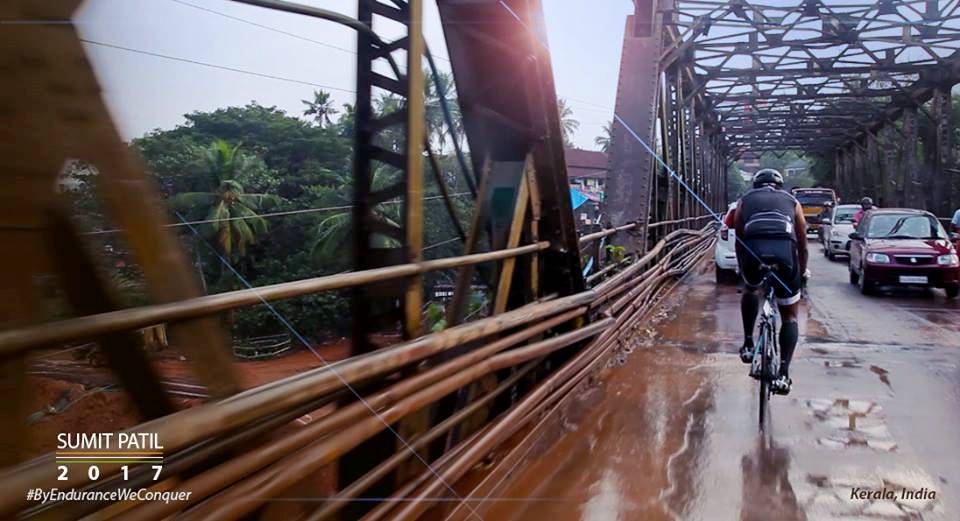
The first thing Sumit did when he got back to cycling after the accident was, buy a helmet. He hadn’t been wearing one on the ride to Goa. To buy a helmet, he visited the shop run by Prabodh Keny. During their conversation Prabodh mentioned about an upcoming BRM (Brevets des Randonneurs Mondiaux), the first 300 kilometer-BRM being held in India, from Mumbai to Vadhivare near Nashik and back. The distance had to be covered in 20 hours. “ At that time, I was doing 100 kilometers in four to five hours. So I calculated in my head and decided 300 kilometers in 20 hours should be very doable. That was the first mistake; my first lesson in endurance – there is no mathematics in this madness,’’ Sumit said. On the day of BRM, Sumit rode Sara, breezing past the first 100 kilometers in good style. That was when reality hit home – he had no clue about how he would fare for any kilometer following that first 100 kilometers as he hadn’t ventured past such distances at a stretch, before.  It was a cardinal error – thinking that all the stages of a ride unfold similarly. Ideally, you should visualize the whole distance and plan your hydration, nutrition and pacing for each stage. Such ability is a product of experience and maturity; it comes from having lived life and having been out there cycling, for long. “ As Indians we specialize in racing straight off the blocks in a mad rush to be first. That is what we are taught at our schools. In the race between the hare and the tortoise we reserve our admiration for the hare. Endurance is all about being tortoise,’’ Sumit said. By the time, Sumit reached Kasara Ghat the BRM had become a killer for him. He tagged along with Raunak, a friend. Eventually he completed the BRM in 19 hours, 45 minutes. From finish line in Mumbai, he had to go to the RCF colony in Chembur in the eastern suburbs, where he lived. Utterly drained from the ride, he alternatively walked and cycled, treated himself to dinner at Chembur’s roadside food stalls and slept the exhaustion off. “ After this first BRM, I started attempting BRMs like anything. It was now familiar territory. The more I became aware of what I did, the more analytical I became. I then consulted the Internet for advice. It is awash with people’s experience and suggestions. You have to pick what is relevant for you and adapt it to your reality,’’ Sumit said.

BRM was brought to India by Satish Patki, among Mumbai’s most respected cyclists. Now in his late sixties, interviews done with him and available on the Internet say he splits his time between the US and India. Satish is more than cyclist. According to published articles, he has a background in mountaineering and has indulged in a variety of adventure and endurance sports. The first BRM Sumit went for was the second BRM Satish organized. Sumit remembers being overtaken very early in the BRM by this much older cyclist, who he saw next only at the finish line. Satish was what endurance cycling was all about. He had tonnes of experience, he had the required maturity to assess a route and plan his strategy. “ Satish was older than many of us youngsters recently entered into distance cycling. Yet he was so much stronger and better than us that pretty soon, we knew, he was the guy to beat. Satish used to finish two to three hours ahead of the rest. For us the only goal was to beat this veteran. How was he managing to finish so? ’’ Sumit said. Listen carefully to Sumit’s talk and you understand this wasn’t competition with another person. Newcomers, in their attempt to improve, seek external benchmarks. For Sumit, his first such quest was to be as good as his friend Kaushik Iyer, who had more experience in cycling and had done a Tour of Nilgiris before the two started attempting BRMs together. Beyond Kaushik, the person to catch up with was Satish. Sumit considers Satish his mentor. Their camaraderie has seen its share of ups and downs.

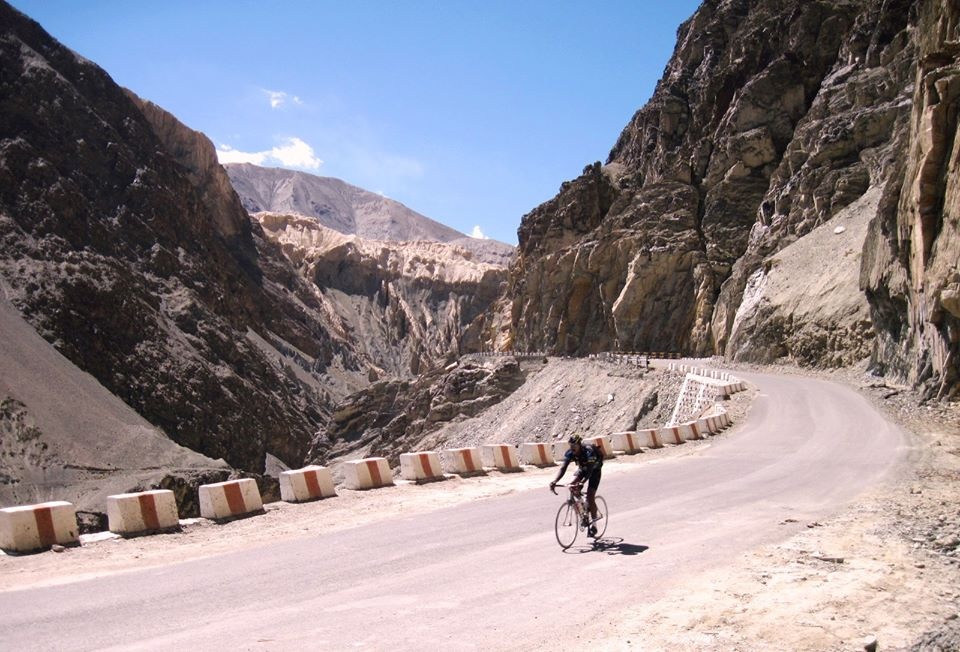
Sumit cycling in Ladakh (Photo: courtesy Sumit Patil)

2010 was a busy year. Sumit kept attending BRMs regularly. He also planned a cycle trip from Alibag to Leh. That plan had to be abandoned following cloud burst in Leh. But around this time, he read an article about Samim Rizvi in the media. Samim, who hails from Mumbai but lives in Bengaluru, was the first Indian to attempt Race Across America (RAAM). It is a 4800 kilometer-long ride across the US, from west to east, with the winners typically finishing it in eight to nine days. As he gathered more information on RAAM, the race captured Sumit’s fancy. Same year, a 600 kilometer-BRM with 40 hour-cut off – from Pune to Kolhapur to Lonavala and then back to Pune – occurred. Sumit and Kaushik finished this BRM by cut-off. “ Those days BRMs had an accommodative ambiance. It wasn’t about competition. Riders helped each other. They looked out for each other. They left none behind,’’ Sumit said. Nevertheless one thing he had to do to feel good about his abilities was beat the maverick; which he did at a 2011 600 kilometer-BRM from Mumbai to Ratnagiri and back. Sumit passed Satish at Mahad and reached Ratnagiri two to three hours ahead. On the return leg from Ratnagiri to Mumbai, which was after some rest, they rode out together. Sumit was now at peace. He knew what he can do. Satish told Sumit to go ahead, for the BRM was opportunity to ensure a slot at the upcoming edition of Paris-Brest-Paris (PBP), subject to qualifying in 2011. Sumit eventually finished the BRM three hours before cut-off, earning his slot at PBP. He subsequently qualified for PBP as well. Then the young man in him set about complicating the opportunity.

At the Pune-Kolhapur-Lonavala-Pune BRM, one of the participants was Samim Rizvi. That BRM had been opportunity for Sumit to talk to Samim and get acquainted with RAAM. However he didn’t mention his own interest. He researched RAAM more and found an imminent avenue to qualify. PBP offered three options for participants – you could sign up to complete it in 80 hours, 84 hours and 90 hours. Sumit found that there was a provision at PBP, whereby if you finished it in 64 hours, you qualified for RAAM. An old bug – the sort that had bitten him just ahead of his first BRM – got to Sumit. While most others from Mumbai signed up for 90 hours, Sumit signed up for 80 hours. Others tried to talk him out of it to no avail. Then to compound matters, his visa for France got delayed. He reached France with less than 24 hours for PBP to start. By the time he got to the venue the riders aiming for 80 hours had already cycled off. He was allowed to ride with the 84 hour-group but it was hopeless. His ride was terminated at Brest. Sleep deprived from having reached the venue straight from airport and tired by the cycling that followed, he was hallucinating, mistaking Brest’s architecture for Mumbai’s CSMT. That year, there were two Indian finishers at PBP – Samim and Kailas Patil.

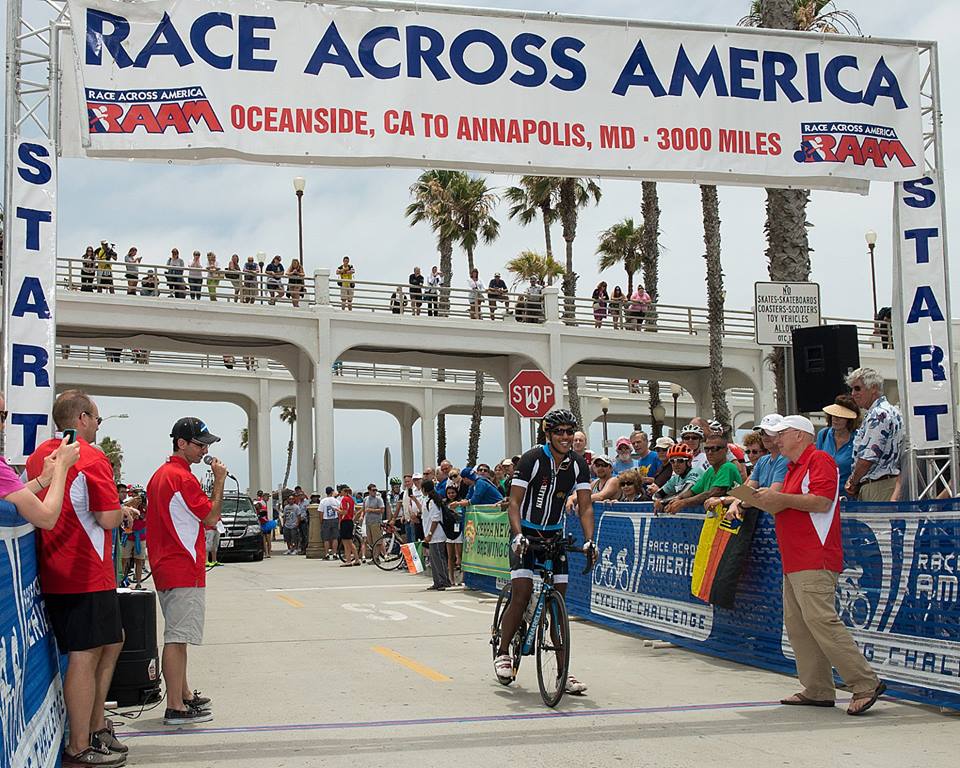
At the start line of 2014 RAAM (Photo: courtesy Sumit Patil)

After the 2011 PBP, Sumit continued to go for BRMs. But his interest was slowly waning. The first BRM he went for after PBP was a 200 kilometer-trip. In due course, Satish stepped down as organizer and a new set of organizers took over. While he didn’t articulate it as such, it was clear from Sumit’s talk that among reasons for his fading interest in local BRMs, was the event’s own maturity, a process that progressed in tune with cycling’s growing popularity in the country. In any sport, such progression is characterized by love for camaraderie and purity of sport in the beginning. Then as the movement gathers momentum, the original values rust a bit. “ I kept going for BRMs despite my receding interest because the mileage all of us put in matters for country at PBP,’’ Sumit said. As per rules, the more the cumulative mileage earned by cyclists completing BRMs in a given country, the more the slots allotted to that country at PBP. At a 600 kilometer-BRM – his third time at Pune-Kolhapur-Lonavala-Pune – Sumit’s disenchantment eventually caught up with him. Some 180 kilometers ahead of finish, he got off the bike, handed over his energy bars to his friend and sat by the road. He was done. An antidote for the obsession with competition in India is to stretch endurance so much that completion itself becomes a daunting task. As his fancy for BRM receded, RAAM grabbed attention in Sumit’s mind. It was an ultra-endurance event. He qualified for RAAM at the 2013 Ultra Bob, a RAAM qualifier in India conducted by Globeracers.

2013 was also the year another portal to opportunity presented itself. That year, Sumit started working as volunteer with Youth Hostels Association of India (YHAI). His job was to shepherd YHAI’s clients attempting to cycle from Manali in Himachal Pradesh to Khardung La, the high mountain pass near Leh. This is high altitude landscape. Cast into volunteer mode, a style of work he has had considerable respect for since childhood, Sumit liked the assignment. YHAI charged a fee that was much lower than many private operators. The approach appealed to Sumit, who has an ideological disagreement with steep sums of money charged for adventure activity that results in those who are talented but not wealthy, being unable to try it. The work gave him considerable satisfaction. Sumit wishes for those entrusted to his care to have done their homework and prepared in advance for the trip. Thereafter, if someone struggles, he helps by giving them company. Sumit has been YHAI’s point man for the Manali-Leh trip for many seasons. In turn, it has meant prolonged cycling at altitude. He stays in Leh for a few months every year and ends up doing the Manali-Leh cycle trip two to three times. An endurance monster like RAAM wasn’t therefore a shot in the dark. Once back in Mumbai, Sumit shifted to Pune to train for RAAM. It was based on a simple logic – exit to highways and good roads with less traffic takes longer in Mumbai as it is a huge city. It takes less time in Pune. But even as he trained, there were other problems cropping up. Big expensive projects like RAAM have multiple components. There is the challenge of raising funds; there is the question of finding the right people for support crew. With endurance cycling and RAAM little known in India, raising resources proved a drag. Eventually the minimum required funds were pieced together thanks to two rounds of crowd funding and assistance offered by the Rotary Club of Mumbai, Worli.

Sumit with support crew at 2014 RAAM (Photo: courtesy Sumit Patil)

By then however, there were issues with the support crew. The original team Sumit had imagined – it featured some of the most experienced cyclists, managers and technicians around – didn’t seem keen to go along. A new team was assembled. But neither with this new team nor the earlier one, had he managed to put in long hours of training together. Mutual familiarity born from such training is critical for endurance races like RAAM. “ I tell people, it isn’t rider; it is rider plus support crew that win a race. Ideally the team should think for you. Sometimes if support crew is damn good, all a rider does is listen to what the crew says,’’ Sumit said. But most important of all, a rider won’t ride well if he has too many worries in the head. And that is what Sumit was beginning to face ahead of 2014 RAAM; the funds were in place only close to departure for the US and the support crew was relatively untested although he was happy that somebody came along.

From 2014 RAAM; Sumit’s support vehicles and his three bicycles (Photo: courtesy Sumit Patil)

In California, the 2014 RAAM got off to a shaky start for Sumit. Lack of adequate work with support crew before the event meant that details like hydration and nutrition wasn’t as aligned to his needs as it should be. By day three, race officials informed that he seemed unlikely to meet the cut-off at Durango. Currently, besides Sara, Sumit owns four other cycles – Mukta (Pinarello Dogma 60.1), Toothless (Btwin Alur 700), Veronica (Giant Trinity) and a yet to be named Trek Madone. Given he had a stint as technical partner with Btwin in India, he also owned a Btwin FC 7 in between. Of these, Mukta and Veronica were bought specifically for RAAM. However bought with funds gathered for the purpose, they had been acquired late and were still new to Sumit. On the road in the US, this too was a problem. For the first time Sumit developed blood blisters from long hours spent on the saddle. Shortly after his fate was spelt out by race officials, Sumit shifted to the Btwin FC 7, which he was familiar with. His pace picked up. One reason for this was tyre pressure. An experienced combination of rider and crew would calibrate tyre pressure to the sort of surface the bicycle is tackling. Mukta was mistakenly calibrated to smooth race track. Result – on the road, the high pressure kept air time (the time the wheels are in the air) high causing less traction. The Btwin didn’t have tyres that could hold air at such high pressure. So, even as the team continued to err on the tyre pressure front, the Btwin gripped tarmac and Sumit cruised comfortably. Noticing his improved pace, race officials relaxed the Durango cut-off and let him continue. However at South Fork, past the highest pass on the RAAM route and with approximately 1600 kilometers covered, Sumit pulled out. It was curtains for the 2014 attempt. On the bright side, according to Sumit, he learnt later that his RAAM attempt which had been back-ended into raising funds for charity had raised close to ten million rupees for a project distributing prosthetic limbs.

Cycling in Ladakh (Photo: courtesy Sumit Patil)

Big cycling projects are like mountaineering expeditions. The echoes of actions taken continue long after expedition. With performance at stake, things are said in the heat of the moment. Misunderstandings occur. Sumit burnt some friendships. He regrets it; there is pain sensing the void that has crept in where good relations once existed. Then there are the obligations emanating from resources raised. His RAAM attempt may have ended but his responsibility to those who supported, continue even after event. It was a three year contract. Sponsors expect you to meet these obligations. In the process, an attempt to set a record, cycling India’s Golden Quadrilateral (the highway linking Mumbai-Delhi-Kolkata-Chennai-Mumbai) had to be sacrificed so that the demands of sponsors, who backed his RAAM trip, could be met. In world smothered by the triad of money, media and marketing what they ask you to do may not be agreeable if you are someone wishing sport to stay pure. Sumit had to swallow his reservations and go along. June 2018, when I met him, Sumit had become free of all these obligations. The shadow of 2014 RAAM was gone. But his attempts to go for RAAM post 2014, had all failed. In the meantime, the first Indians to finish RAAM had also happened – in 2017, Lt Col Srinivas Gokulnath became the first Indian to complete RAAM; he was followed by Dr Amit Samarth. Sumit’s latest RAAM qualifier had been the 2018 edition of Shivalik Signature, which he completed successfully in April. He was also registered for 2018 RAAM as Team Agni. However lack of resources decided otherwise. As Indian teams registered for RAAM made their way to the US or were already there, Sumit was cautiously sipping coffee with me in Prabhadevi. A coffee lover, he has been told to restrict his caffeine intake. Reason – he suffers from Ankylosing Spondylitis. It was diagnosed after PBP; symptoms had set in earlier. Ignored, this type of arthritis can be debilitating. One of the best ways to keep the condition in check is to remain active. That is a solid reason to keep cycling. Coming up therefore was something else; a segue from RAAM.

In Ladakh, man on bicycle, another on motorbike (Photo: courtesy Sumit Patil)

Days after we met and a few days before the start of 2018 RAAM in the US, Sumit was scheduled to leave for Leh. Sometime in July, he will take up a project that seeks to improve a record he achieved in 2015. That year in September he had cycled from Manali to Khardung La, a distance of roughly 517 kilometers, in 71 hours, 28 minutes. The route features several passes – Rohtang (13,051 feet), Bara-lacha La (16,043 feet), Nakee La (15,547 feet), Lachulung La (17,598 feet) and Tanglang La (17,480 feet) before reaching Khardung La (17,582 feet). It gained him entry into the Limca Book of Records; the certificate awarded describes it as “ fastest solo bicycling across Himalayan passes.’’ According to Sumit, the choice of September for riding affected the time he took to finish. When you are riding with little rest, seeking record, you cannot decide when you will be on a high mountain pass. Sumit reached some of these passes in very cold circumstances. September is the beginning of winter. The real problem is in the descent. Wind chill adds to the cold and conditions can be quite unbearable for rider on bicycle. Consequently, he had to halt at times on descents, go down by car to wait out the cold, come back up to where he stopped and resume. This year, he plans to improve his record. He has chosen July for the attempt and believes that the halts of before may not be required in July’s temperatures. Daylight will also last longer, at this time of the year. The section selected is Manali-Leh and his goal is to cover the distance involved – approximately 490 kilometers – in under-40 hours. “ We hope to enter the timing in the Guinness Book of Records,’’ Sumit said. Both the Manali-Leh project and a similar attempt planned on the Golden Quadrilateral later this year, are steps towards showcasing endurance cycling in paradigm familiar to the public and thereby make cyclist deserving of support. The RAAM project lives.

(The author, Shyam G Menon, is a freelance journalist based in Mumbai. This article is based on a conversation with Sumit Patil. Except for the road distance mentioned in the Limca Record and those associated with BRMs, all elevations and distances quoted have been taken from the Internet. Save the first photo, all other photos used herein have been downloaded from the Facebook page of Sumit Patil and used with his permission.)             

IT’S TIME FOR COMRADES

From a weekend run in Mumbai with those heading for Comrades (Photo: courtesy Satish Gujaran)

This Sunday around 20,000 runners are expected to assemble at the start line of Comrades Marathon in Pietermaritzburg, South Africa.

Promoted as the “ Ultimate Human Race,’’ Comrades Marathon is actually an 87-89 km-ultramarathon, run between the cities of Durban and Pietermaritzburg. The former is on the coast; the latter, in the mountains.

The number of Indian runners participating in this race has been slowly inching up with 161 runners expected to attempt the 2018 edition of Comrades Marathon.

The race, which draws runners from several countries, was first held in May 1921. The route alternates each year between uphill and downhill.

From a weekend run in Mumbai with those heading for Comrades (Photo: Latha Venkatraman)

The 2018 edition is a downhill run with runners having to complete a total distance of 90.184 km in a time of 12 hours with six timing cut-offs in between. Runners will have to run a bit extra this year to finish the race at the Moses Mabhida Stadium at Durban. Last year, the finish line was at King’s Park Stadium. For the 2018 edition the finish line has been moved to Moses Mabhida Stadium adding an additional kilometre. This was done because of the event’s growing number of runners and spectators, its Twitter handle @ComradesRace said.

This year, runners from 80 countries are participating in Comrades Marathon, an official tweet said. The event has been gaining traction among Indian runners. Likely reasons for its popularity include a qualifying time that isn’t as tough to meet as some of the other major international marathons, South Africa being familiar to many in India in the atlas of Indian diaspora and the marathon-like crowd support and ambiance at Comrades, which is unique for an ultramarathon. Interestingly, the community you form once you register and the training done in India ahead of race, also appear to enhance the attraction for Comrades.

“ Comrades has gained popularity among Indian recreational long distance runners primarily through word of mouth,’’ Satish Gujaran, Mumbai-based ultramarathon runner, said. He has been running Comrades for the past eight years. The 2018 edition of the race marks his ninth attempt.

“ The experience of running this ultramarathon starts with the grueling training that lasts for about three to four months. The training is tough mainly because it coincides with India’s punishing summer,’’ he said. Comrades Marathon is usually held early June every year (for more on Comrades and Satish Gujaran please click on this link: https://shyamgopan.com/2015/10/22/the-comrade/).

From a weekend run in Mumbai with those heading for Comrades (Photo: Latha Venkatraman)

The key element of Comrades Marathon is the training, Dhiraj Dedhia, heading to South Africa this week to participate in the run, said. The camaraderie among runners while training for the race is not only infectious but immensely enjoyable, he said.

The crowd support, cheering, volunteering and the atmosphere in South Africa add to the experience, Satish said. This experience prompts runners to join in the carnival with numbers from India increasing every year. The collective training and the buzz around it has been a major reason for the growing popularity of Comrades among Indian runners.

(The author, Latha Venkatraman, is an independent journalist based in Mumbai.)
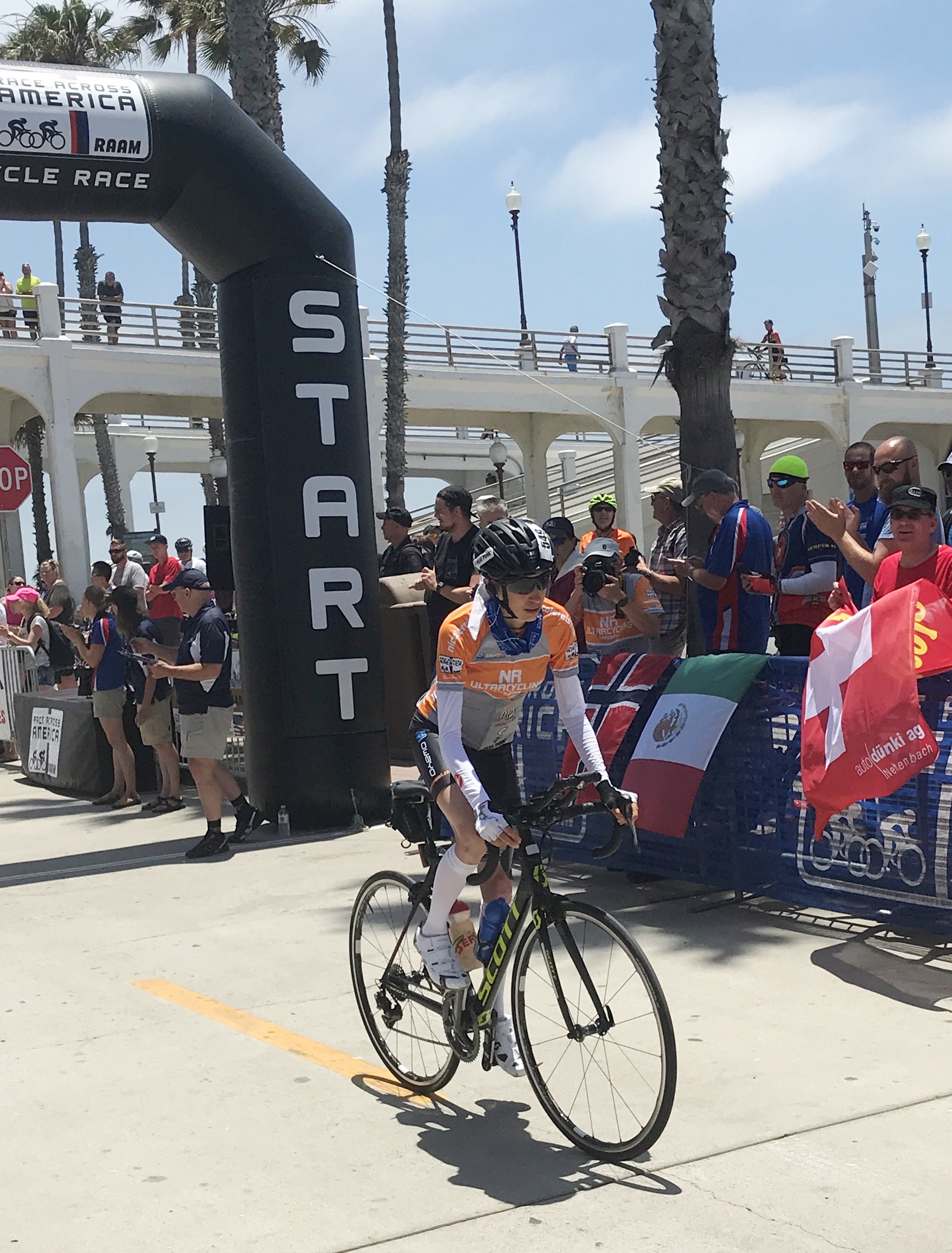
SHUBHAM AND THE OCEANS SEVEN

Shubham Vanmali (Photo: courtesy Dhananjay Vanmali)

A young man, who battled Learning Disability as a child and discovered purpose in swimming, is trying to complete one of the toughest challenges in open water swimming. This is his story; based on a conversation with his father. 

On May 29, 2018 the Navi Mumbai suburb of Nerul woke up to news of one from their midst completing a long distance swim in the US.

Twenty two year-old Shubham Vanmali had become the youngest person to complete the San Francisco Round Trip-Angel Island swim entailing a distance of 16.1 kilometers in the waters of the San Francisco Bay.

According to a statement from the North California Open Water Swimming Association (NCOWSA), the swim is reputed to be the most technically challenging in the Bay waters and has been attempted by more than 25 people over the past 40 years with only 12 completions. Besides being the youngest person yet to do it, Shubham is also the first Indian and the first to complete the swim under the newly formed NCOWSA. The swim starts and ends on the shared beach of San Francisco’s open water swim clubs, the South End Rowing Club and Dolphin Club. The course requires the swimmer to leave through the opening of Aquatic Park, swim past Alcatraz Island, swim around Angel Island through a body known as Raccoon Strait before returning past Alcatraz and back through the narrow opening of Aquatic Park. All this, while crossing three international shipping lanes twice, 12 ferry routes and swimming cross-current for the major part in 10-14.5C waters, the statement said.

May 29 evening, this blog caught up with Shubham’s father, Dhananjay Vanmali for a chat.

Shubham doing the San Francisco Round Trip-Angel Island swim (Photo: Pacific Open Water Swim Co)

He was due to leave for the US, the next day. Coming up was another swim, part of the main project Shubham has been working on. Over June 3-9, he will attempt swimming the Molokai Channel in Hawaii. According to Wikipedia the Molokai Channel aka Kaiwi Channel separates the islands of O’ahu and Molokai. The crossing of this channel is part of the Oceans Seven Challenge, which is the project Shubham has been working on for the past few years. The other crossings required for the Challenge are the North Channel (formerly called Irish Channel) linking the Irish Sea with the Atlantic Ocean, the Cook Strait between the North and South Island of New Zealand, the English Channel between Britain and France, the Catalina Channel in California, Tsugaru Strait between Honshu and Hokkaido in northern Japan and the Strait of Gibraltar connecting the Mediterranean Sea to the Atlantic Ocean. The only Indian to have done the Oceans Seven yet is Pune’s Rohan Dattatrey More who is also so far the youngest and the first Asian on the finishers’ list. The first person to complete the Challenge was Stephen Redmond of Ireland. A former rugby player and triathlete, he completed the Challenge over 2009-2012, at times requiring multiple attempts at some of the channel crossings. The Oceans Seven Challenge is positioned as swimming’s equivalent to the Seven Summits of mountaineering, which entails climbing the highest peak on each continent. The Challenge was conceived in 2008 by former professional marathon swimmer Steven Munatones who was world champion in the discipline in 1982 and coached the US national team for several years. Articles on the Challenge published in the media say that participants need to be hardcore endurance athletes with ability to swim in very cold and warm seas and be physically and mentally prepared to tackle adversity ranging from sea creatures to currents and strong winds.

Shubham; from the Dharamtar to Gateway of India swim (Photo: courtesy Dhananjay Vanmali)

Shubham comes from a family of sportspersons. His father is a former state player in volleyball, his mother used to play kabaddi and his sister used to be a competitive swimmer. According to Dhananjay, Shubham’s career in swimming commenced after an initial foray into football. Around 2001, Nerul Gymkhana started Mission 2010 seeking to train talented youngsters in football, swimming, hockey, cycling, tennis and athletics. Shubham was selected for football under Mission 2010. Born 1995, he was quite small and very likely would have not been well developed and competitive in the sport by 2010. “ So he was shifted to swimming,’’ Dhananjay said, adding that by around 2009, Mission 2010 ended for want of funds. Following this, Shubham moved to practising at the pool in the complex housing Nerul’s D.Y. Patil Stadium. However, from the point of view of becoming a competitive swimmer, he seemed to have a problem. Although he trained well, at the time of competition, all that hard work couldn’t be made to focus and deliver performance. By around eighth standard, Shubham was formally diagnosed with Learning Disability. It took a while to locate the correct doctors but eventually intervention by good psychologists and sports psychologists helped.

Shubham crossing the English Channel (Photo: courtesy Dhananjay Vanmali)

Around tenth standard, Shubham’s approach started to change. “ In the tenth standard he was selected for the state championship. By the twelfth, he had secured podium finish in the state championship in 1500 meters freestyle,’’ Dhananjay said. During his time in eleventh and twelfth standard, Shubham trained at the pool belonging to Father Agnel Sports Academy. Gokul Kamath became his coach in swimming. By the time Shubham reached college, he secured bronze in 100 meters, silver in 200 meters and gold in 400 meters and 1500 meters at the inter-college meet, Dhananjay said. Besides clear evidence of his emergent ability to focus his energies, it also indicated that his strength lay in the longer distances demanding endurance. In Shubham’s first year at college, there was a competition in Thane he participated in. Dhananjay recalled that a couple of senior Channel swimmers had come to attend it as guests; they were watching from the gallery. A month and a half after this event, Shubham approached his father and said that he wished to attempt crossing the English Channel. After discussing it with his coaches, the family decided to take up the project. Shubham started training for it. Besides his regular swimming, every Saturday and Sunday he used to go to Uran and be taken out to sea in a boat to do open water swimming for three to four hours.  “ We also did swimming at night,’’ Dhananjay said. For stepping stone to English Channel, Shubham first swam from Dharamtar to Gateway of India in Mumbai, a distance of roughly 35 kilometers. Then, on August 4, 2014, he swam across the English Channel becoming the youngest to do so at that point in time.

Crossing the Strait of Gibraltar (Photo: courtesy Dhananjay Vanmali)

Given he was going all the way to Europe and UK for doing this it made sense to attempt the Strait of Gibraltar soon thereafter. Approaching bad weather restricted his window for the Gibraltar swim. It was complicated further by the fact that the swim had to done the same day he was reaching the start point from UK. However Shubham went ahead. For a prospective record, the family first thought of trying a to and fro swim. Shubham gave it some thought and told Dhananjay that there was another option – he could try and reach the other side faster than any Asian had done so far. That’s what happened on August 14, 2014 – he became the fastest Asian to cross the Strait of Gibraltar, doing so in three hours, sixteen minutes. Dhananjay believes that it was from this trip to Europe and interaction with swimmers and other people he met that Shubham picked up the idea of Oceans Seven. With two of the required crossings done, it seemed worth pursuing.

Shubham (in the water, next to the kayak); from the Catalina Channel swim (Photo: courtesy Dhananjay Vanmali)

In 2015, Shubham successfully accomplished the swim in the Catalina Channel. “ He began the swim one night and finished early next morning. It took him 10 hours and 42 minutes,’’ Dhananjay said. Shubham followed up Catalina with the Manhattan Island Marathon Swim on the US east coast, thus completing a smaller challenge in marathon swimming called Triple Crown – it is composed of swimming the English Channel, Catalina Channel and the Manhattan Island Marathon Swim. Then a reversal of fortunes happened. In 2016, Shubham travelled alone to Ireland to attempt the North Channel aka Irish Channel. His family searched on the Internet and rented suitable accommodation for him to stay in Ireland and prepare for the swim. The Irish Channel is rated one of the toughest swims in Oceans Seven. On the day of the attempt, after 13 hours of swimming and a mere two kilometers from successful completion, Shubham developed hypothermia. He had to abort the swim at that stage.  It left him feeling low for quite some time. “ He didn’t swim much. He was into cross-fit. Then last year, he began returning to swimming,’’ Dhananjay said. On the Internet, the Molokai Channel is described as the longest swim in Oceans Seven. The sea is deep here, nearly 700 meters. Early June, should the young man from Nerul accomplish the swim in the Molokai Channel; that would be four down, three to go in his pursuit of the Oceans Seven Challenge. He plans to go back to Ireland to attempt the North Channel again.

Dhananjay (left) and Shubham after the Manhattan Island Marathon Swim (Photo: courtesy Dhananjay Vanmali)

Swimming at all these locations and the training required for it, requires financial resources. His family has funded Shubham so far. That was also among reasons, he felt bad after the North Channel attempt didn’t succeed; he apparently felt he had wasted his parents’ hard earned money. Dhananjay works with Bharat Petroleum Corporation Limited (BPCL); his wife works with Vijaya Bank. He tried getting sponsors. According to him, he would have repeated meetings with prospective sponsors but on the day of providing sponsorship they would offer an amount much smaller than what was originally promised. There were also other problems. Projects of this sort are PR intensive and securing such traction is not the forte of every athlete or his / her family. On the other hand, mileage in the media is what sponsors seek in return for their support. Further sponsors easily warm up to supporting games because that is a picture of team effort which is a popularly liked theme. It is also one that is in line with corporate imagination. Adventure sports and endurance sports are on the other hand, typically solitary pursuits. “ These things affect my motivation level,’’ Dhananjay said. He still looks for sponsors but in the meantime dug into his own resources to fund Shubham’s project. Among means of raising resources, he sold an apartment he owned. “ This is a unique feat and it is my son who is doing it,’’ he said at his house in Nerul, less than a day left for his flight to the US and opportunity for family to watch Shubham attempt the Molokai Channel.

(The author, Shyam G Menon, is a freelance journalist based in Mumbai. This article is based on a conversation with Dhananjay Vanmali.)
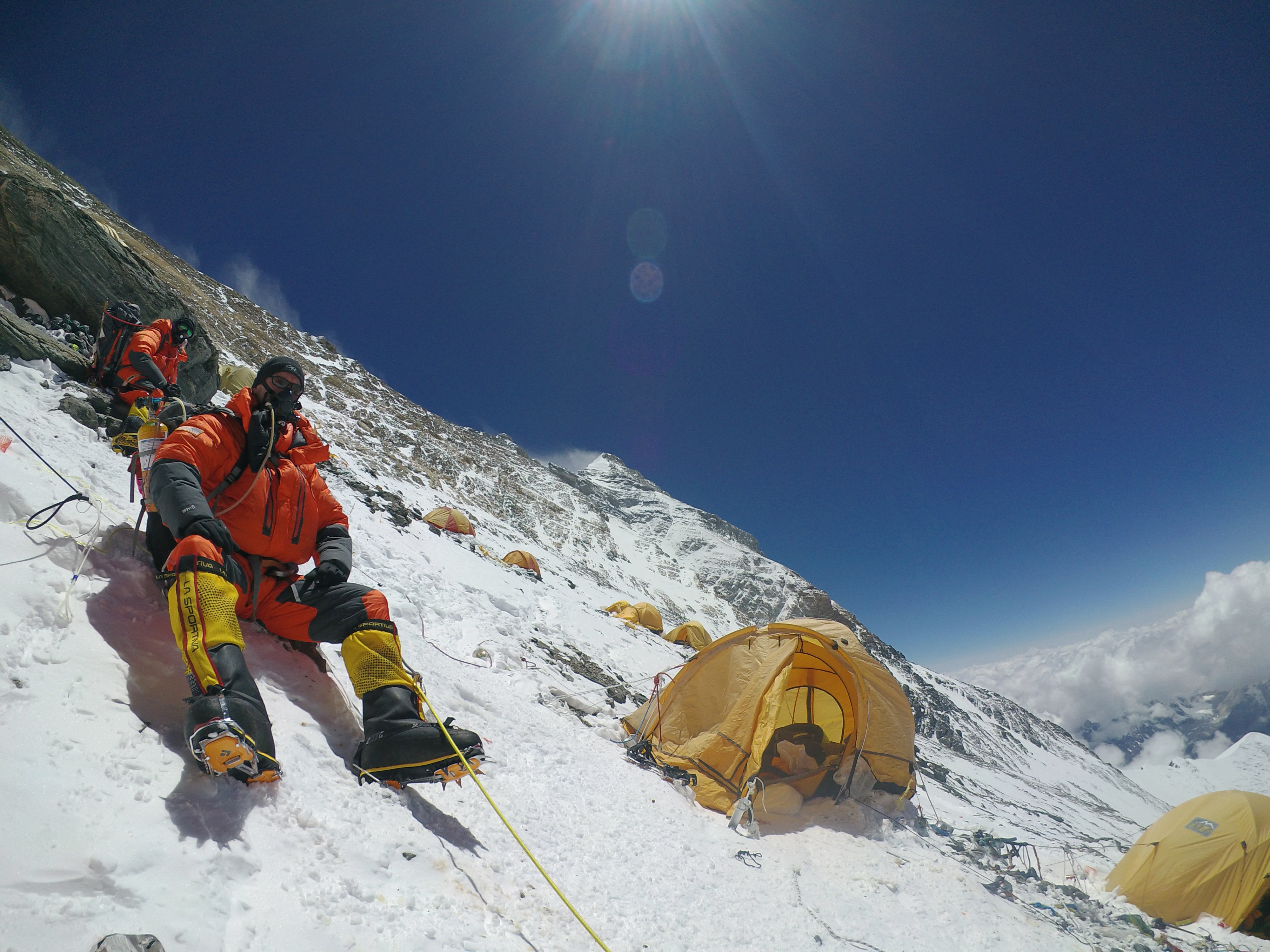
AFTER EVEREST

Grant Maughan; from the Everest expedition (Photo: courtesy Grant)

Grant Maughan is an experienced ultramarathon runner and adventure racer. Hailing from Australia, he is a freelance super yacht captain who also keeps a busy schedule as endurance athlete. He has participated in many ultramarathons including some of the world’s toughest. In India, he is remembered for his 2016 joint win – with Jovica Spajic – in the 333 kilometer category of La Ultra The High. In May 2018, Grant climbed Mt Everest successfully. In this interview done by email, he shares his thoughts about Everest, altitude, ultramarathon and plans he has around the theme of endurance and adventure.

Everest ascents happen from the Nepal (south) side and the Tibet (north) side. Was there any reason why you chose to climb from the north side? Did you want to be on that face or was that natural fall out of the group you chose to go with and their choice of route?

I chose the north side because inherently there are less people doing that route. I also find the history of Mallory and Irvine disappearing there in 1924 very interesting.

Can you briefly describe the climb? What were your testing moments therein?

Everything about the climb is difficult: the time it takes to acclimate, establishing camps and equipment at different levels, technical impediments, oxygen deprivation and fatigue. Your body and mind get worn down after weeks and weeks of ascending and descending. It becomes a real chore just to be there and accomplish some for the daily tasks. As you get higher on the mountain some of the technical sections become more difficult and your energy and focus at overcoming the tasks become harder to manage.

One measure often used to describe the challenge involved in an ultramarathon is cumulative elevation gain. Many ultramarathons have cumulative elevation gain exceeding the altitude of Everest. That is further complemented by the act of running and moving, often with little rest, to meet cut off times. Obviously you had a fascination for Everest despite the challenges in ultramarathons and adventure races. Can you describe the specific attraction / motivation you had for climbing Everest? Had you been thinking of it for long?

After some years of mountain running it became a natural segue to start climbing bigger mountains. It was a real fascination for me to get up some of the mountains. I spent years reading climbing books but never thought I would be able to achieve such things because I have a natural fear of heights. Even though I had flown hang gliders, tried free-fall parachuting and bungee jumping when I was younger I just figured high altitude mountaineering was for elite athletes and people much braver than I. My first big climb was Mount Rainier in the US and after that trip where I learnt some new skills and equipment selection, I was keen to try other mountains. I climbed Aconcagua in Argentina; then headed to Denali in Alaska where unfortunately we couldn’t make the summit because of a nine day storm that trapped us at almost 15,000 feet before we retreated due to lack of food and our permit, close to expiring. I have climbed Mt Shasta in California a number of times solo; Stok Kangri in the Indian Himalaya solo plus Mera peak and Imja Sja in the Nepal Himalaya. I really wanted to try an 8000 meter peak like Cho Oyu or Manaslu before considering Everest but this year after talking with a team leader I decided to just go for Everest and see how it turned out. I wasn’t sure if I would ever get the chance due to expense and the time required but everything fell in place and I only decided three weeks in advance to go on the expedition. Sometimes it is better that way so you don’t have much time to think about it and talk yourself out of it.

From the Everest climb (Photo: courtesy Grant Maughan)

How would you describe your relation with altitude? How well do you cope with it? Does the reservoir of endurance, distance runners have, make them better at tackling it or is altitude, the great unknown that even the best of runners must approach respectfully? What was your experience on Everest?

I definitely think that endurance athletes have a bit of an advantage when climbing big mountains. Endurance and fitness are part and parcel of some of the most important aspects of getting to the top. I seem to be able to acclimate fairly well and without too much trouble. I have developed breathing techniques for distance running that I cobbled together from the sport of free-diving and by just thinking about the mechanics of gas exchange that have worked for me really well. I did notice that at about 7000 meters the breathing techniques still helped but were not as efficient as at lower altitudes. Above that height everything just becomes harder. We started to breathe bottled oxygen above 7000 meters using different volumes of gas per minute compared to height and difficulty of climbing at the time. It definitely made things easier but never the same as lower down. It was always an extra worry about running out of gas or having a regulator or mask fail. So it actually added to the stress.

Distance runners and adventure racers are used to getting pushed to their limits. How extreme is this in the combination of strain and altitude that is mountaineering? In your Facebook post, you have described what you experienced on Everest as quite challenging. What made it so?

The limits are a little different. Sometimes you are struggling carrying a large, heavy backpack on steep terrain or trying to focus on getting over a technical section using hardware, both of which are not common in distance running or mountain ultras. The physical aspects can be very similar though: being on your feet for days on end, sleep deprivation, fatigue. I also found the danger aspect to be way higher than anything I have done before in the sport. A combination of the terrain, altitude, weather and support; there was always stress in the back of my mind of what could go wrong and how I would deal with it.

Aside from the busy calendar of ultramarathons and adventure racing you maintain, did you indulge in any training that was specific to your attempt of Everest?

No. I didn’t have time beforehand. I spent four months working on a ship in Antarctica with no training over Christmas; then went straight to Alaska to do the Iditarod 350 mile and then straight to Tennessee for the Barkley. One week later I was in Tibet at Everest Base Camp.   Some would say this is crazy but I seem to have the capacity to do things like this with no training and hardly any preparation of any sorts. Next month I have the 315 mile Vol State race across Tennessee and then straight to Death Valley for my sixth Badwater 135 race.

From the Everest climb (Photo: courtesy Grant Maughan)

Personally, what was it like for you to be on the summit of Everest? What did you feel right then or at the first instance you had to reflect on it?

I spent 14 minutes on the summit. It was blowing around 40 knots of wind and bitterly cold though the sky was a beautiful deep azure color. I was scared. It had taken 10 hard hours of climbing through the night to get there (we arrived at 8:50 AM on May 19th). I remember looking back down at the ridge line we had traversed in the dark and knowing how long it would take me to get back to any sort of safety at high camp number three and feeling the dread. I really just wanted to get started down to find out if I could make it back safely and get far enough down the mountain to get out of the death zone. My three cameras were all frozen as well as all my water. I didn’t know if my oxygen bottle would last and how hard it would be to descend the technical sections while being extremely tired. It was very stressful. Just after leaving the summit one of our team members got snow blindness and had to be helped all the way down. It was very difficult to manage to overtake this group on the narrow section we were on. So I lost a lot of time waiting and getting cold.

Do you have any other dreams similar to Everest and away from the world of ultramarathons and adventure races you are regularly associated with? By profession you are a seafarer. The sea is a magnificent medium; it too is wilderness. Do you have any projects on that front?

I plan to row solo across the Atlantic as well as climb some other 8000 meter mountains in the future. Lots of things to think about and plan…

(The author, Shyam G Menon, is a freelance journalist based in Mumbai For more on Grant Maughan please try the following links: https://shyamgopan.com/2018/04/05/barkley-2018/   https://shyamgopan.com/2016/09/16/the-captain-the-teacher-the-warrior-and-the-businessman/  https://shyamgopan.com/2016/10/13/living-the-interesting-life/)