LADAKH RUNNERS / FROM POTENTIAL TO PERFORMANCE

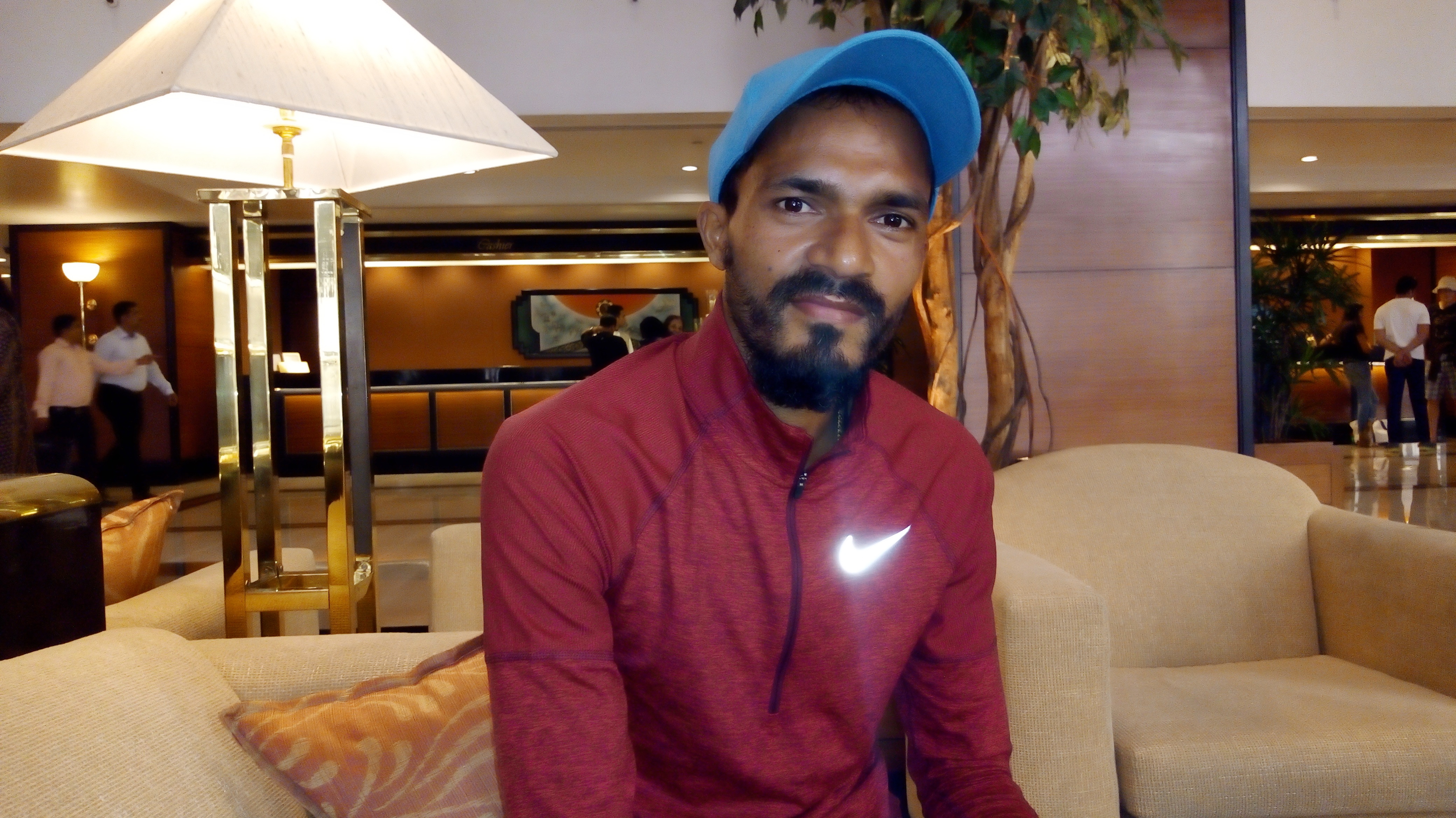
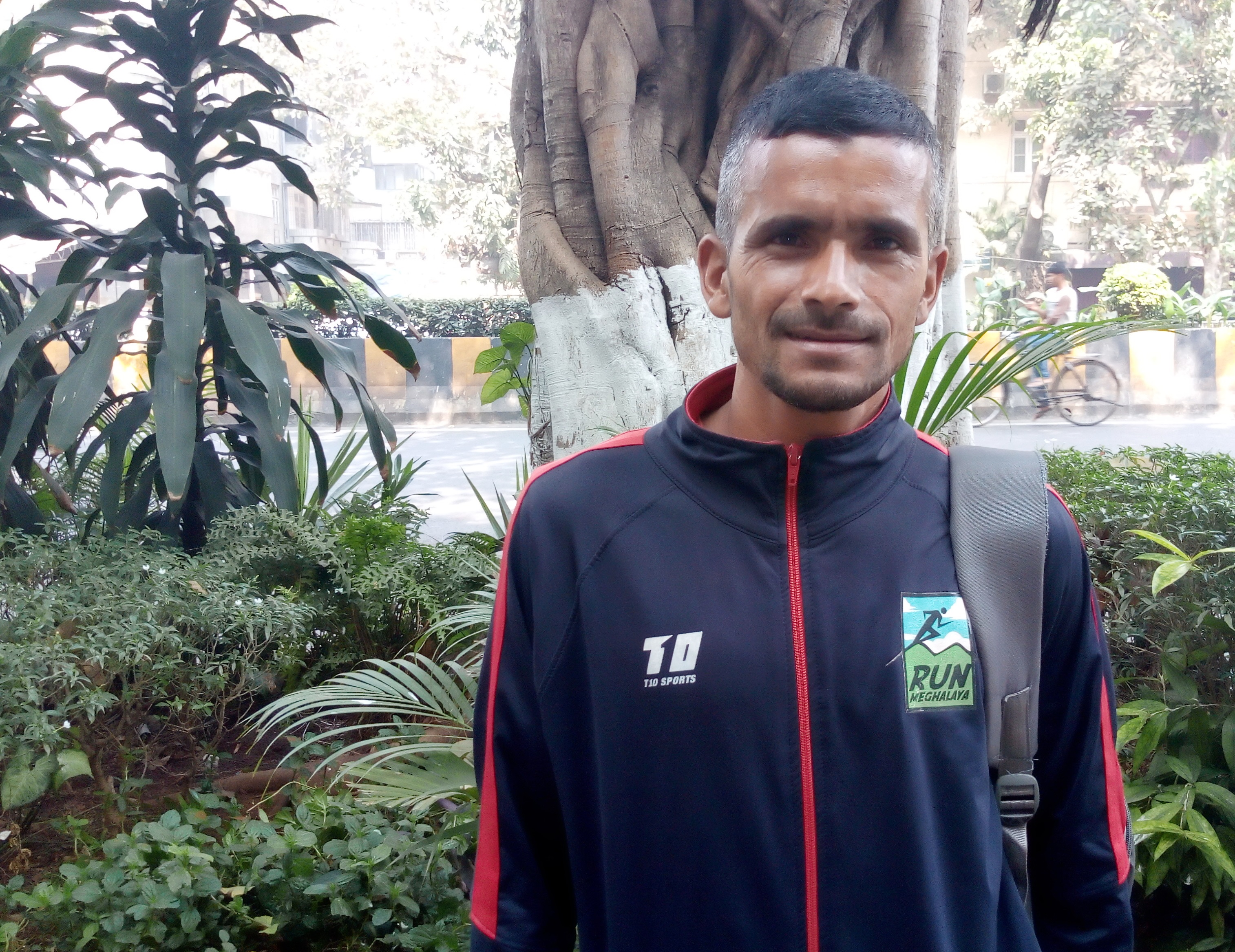
Jigmet Dolma (Photo: Shyam G Menon)

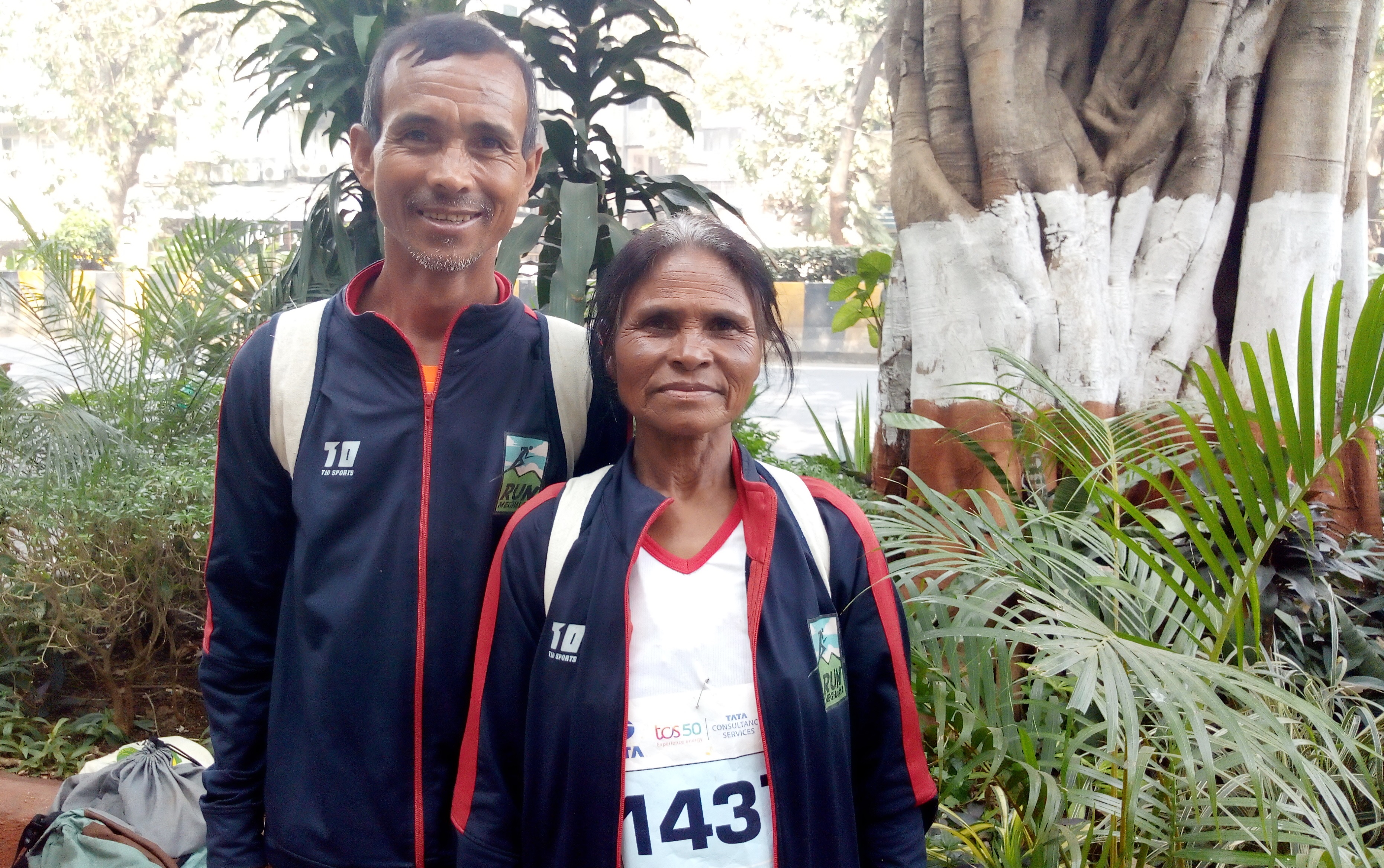
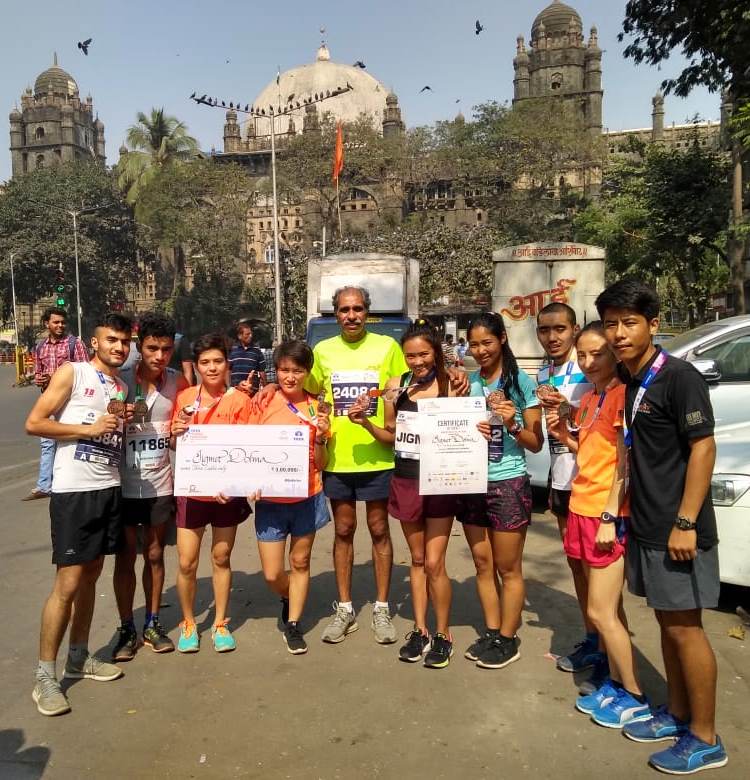
In seven years of participating at the annual Mumbai Marathon, Rimo Expeditions’ team of runners from Ladakh, have made it to the podium for elite Indian women, twice. The time taken by these women runners in the full marathon – they represent the new generation of runners from Ladakh – is yet to dip below three hours. But they are within striking distance despite the limitations in which they train back home. There is a sense of what’s next opening up in the program. Key to it is Indian sports authorities taking note of the improvements in performance made. Question is: will they?

Jigmet Dolma remembered the first time she ran in the elite category at the Mumbai Marathon.

She and fellow runner from Ladakh, Tsetan Dolkar, reported to the start line of the 2017 edition of India’s biggest marathon. It was a year when the field in Indian women didn’t have some of the prominent elite runners. But elite is nevertheless elite; the atmosphere is more purposeful, a sense of aim prevails. At such levels of competition, even relaxation is ingredient for enhanced performance. As runners warmed up ahead of battle, the duo from Ladakh felt nervous. “ I was a bit scared,’’ Jigmet said. But being underdog helps. Many runners who secured podium finishes in their career would recall the buoyancy afforded by that predicament. There are no expectations. You run free. That year Jigmet finished third in the elite category for Indian women. Tsetan completed the race in fourth position, the two separated at finish by a mere four seconds. Then, the uphill began. You have podium position to live up to.

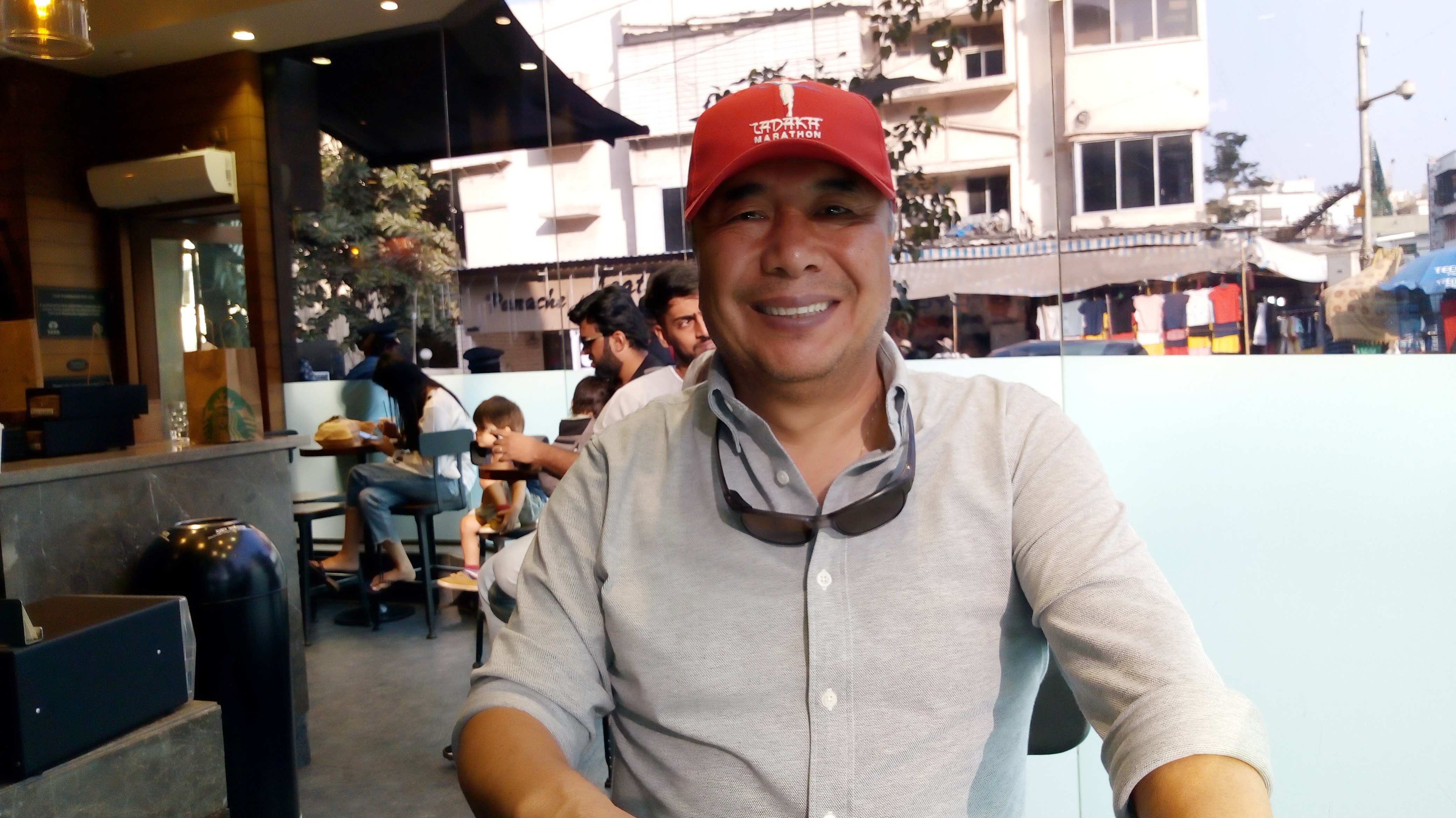
At a café in the Mumbai suburb of Bandra, some days after the 2019 Tata Mumbai Marathon (TMM), Chewang Motup put his project in perspective. Motup owns Leh based-Rimo Expeditions, among the best known adventure travel companies in India and organizers of the Ladakh Marathon. He started the Ladakh Marathon with a simple goal in mind. In distance running which counts on endurance, training at altitude is recognized as helpful. As location, Ladakh enjoys high average elevation; much of it is over 9800 feet high. Born to altitude, people from here should have a bank of endurance. Rigzen Angmo is good example. In the 1990s, she ran sub-three marathons, was podium finisher at national and international marathons. But that was years ago and a case, not repeated since in Ladakh. Motup wished to unlock the potential for endurance running in Ladakh by encouraging a culture of running. He also wanted to see local runners representing India at the Olympic Games. Hence the choice of the marathon for unlike the ultramarathon more easily associated with Ladakh’s mountainous landscape, the 42.195 kilometer-distance is firmly recognized as Olympic sport.

Chewang Motup (Photo: Shyam G Menon)

Hailing from Igoo village, Jigmet was into running while still at school. But it was the Ladakh Marathon staged in Leh at an elevation of over 11,000 feet that brought her (she used to run the half marathon) and Tsetan to local prominence. Although their early timings are quite slow compared to the pace at which marathons and half marathons are run in India’s cities, they were consistent podium finishers in Leh. Rimo Expeditions pioneered an annual program for Ladakhi runners – selected on the strength of their performance at the Ladakh Marathon – to travel to races at Indian cities with the Mumbai Marathon as main focus. “ My first visit to the Mumbai Marathon was in 2013,’’ Jigmet said. After a couple of years spent participating in the half marathon at the event, in 2015 (so she recalls), she ran the first full marathon of her life in Mumbai. “ I ran it at half marathon pace and ended up walking the last three kilometers to the finish,’’ she said outlining the lack of experience she had in races and race strategy then.

In the period that followed, Savio D’Souza – former national champion in the marathon and well known coach in Mumbai – was brought in to train the team. A structured approach was introduced. Given Ladakh’s cold winter with sub-zero temperatures, runners like Jigmet and Tsetan, begin their training in April. Around July, Savio visits them in Leh, gauges their standing, imparts tips and before returning to Mumbai, gives them a training schedule. “ We then keep in touch on the phone. They call me and tell me what they have been doing. The thing about them is – they are utterly dedicated. If it is too cold and they haven’t managed to run in the morning, they will run in the afternoon. I give them a training schedule, they follow it to the T,’’ Savio said. The intervention paid off. Between Tsetan and Jigmet, the latter was always the faster runner. Tsetan had completed the 2013 Ladakh Marathon in 4:54:05. By 2017, she was completing TMM in 3:14:42, four seconds behind Jigmet; both runners in the elite category for Indian women to boot. That was the year Jigmet finished on the podium for the first time in Mumbai.

A week had elapsed since 2019 TMM. It was late evening. At the Mumbai University’s athletic track, the hours of training had just concluded. “ Let me explain what happened in 2018,’’ Savio said. That year, the Ladakhi runners had failed to repeat their podium finish in the Indian women’s elite segment. “ The podium finish of 2017 was unexpected. Next year, it became a burden. Ahead of race their discussion was about who had turned up to compete in the elite category. If you run to defeat others, you end up running someone else’s race. You have to stick to your plan. But the whole thing was new for them. They were under pressure. When you run under stress, you commit mistakes; your race plan goes haywire. That’s what happened in 2018. Last year they got distracted by the elite runners. This year was different. They ran their own race. The attitude was – whoever comes, we are not bothered. Now we will do better,’’ Savio said. At 2019 TMM, Jigmet was back on the podium in the Indian women’s category; she placed third with a timing of 3:10:43, Tsetan finished fifth clocking 3:13:05. With podium finish secured for the second time, it appears both Motup and Savio have to contemplate: what next?

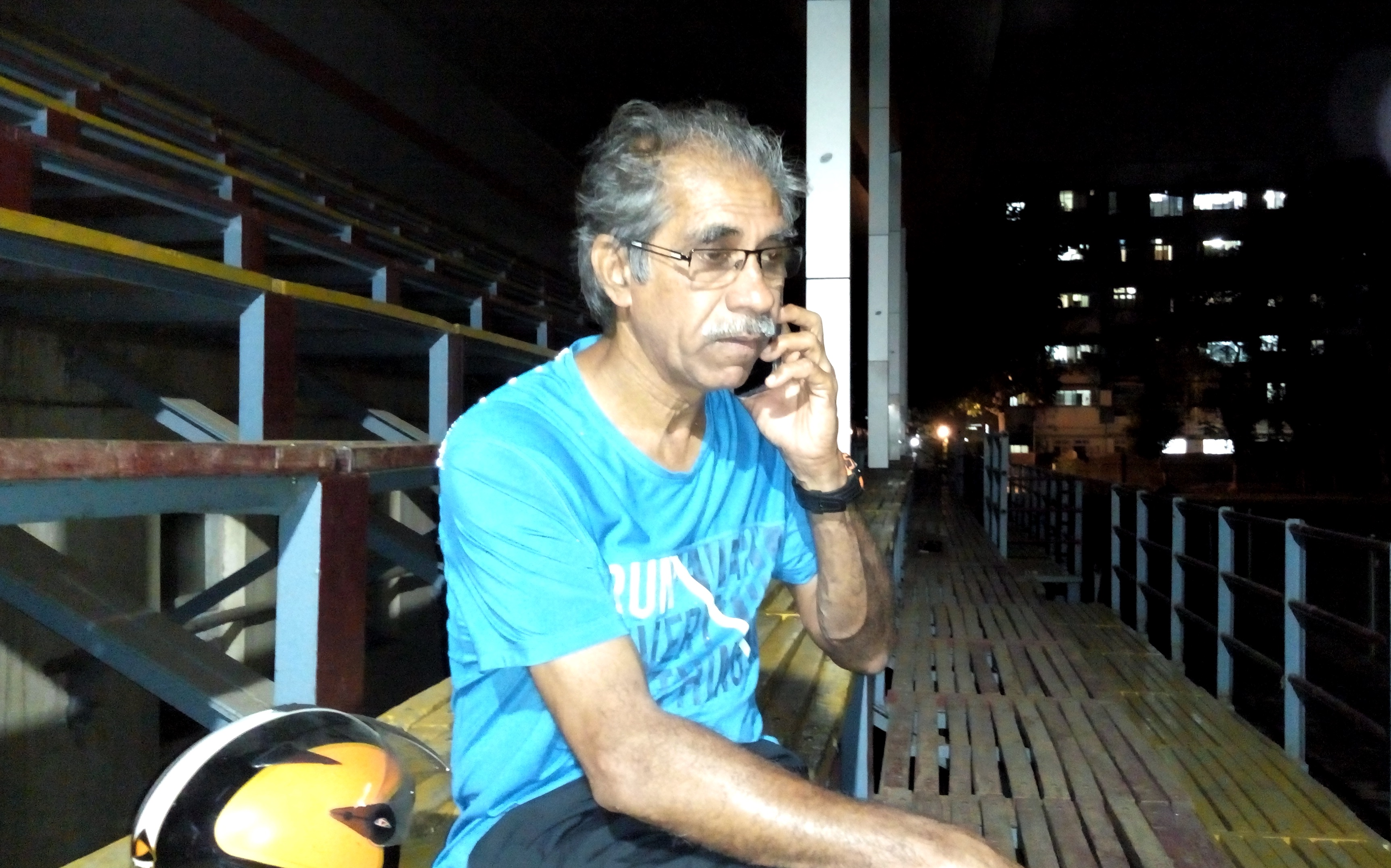
Savio D’Souza (Photo: Shyam G Menon)

Dr Aashish Contractor was Medical Director of the Mumbai Marathon from 2004 to 2014. Now Head of the Department of Rehabilitation and Sports Medicine at Sir H.N. Reliance Foundation Hospital, he produced a photo on his computer showing the Ladakhi runners from a 2018 visit to the hospital to assess their VO2 max level. “ VO2 stands for volume of oxygen – it basically tells you how much oxygen your body can consume while doing exercise. It is considered to be a gold standard of one’s cardiovascular fitness. For someone to do well on the world stage in long distance running, cycling, swimming, rowing or skiing – they must have a very good VO2 max. We tested six Ladakhi athletes. All of them had phenomenally high numbers, definitely world class,’’ Dr Contractor said. But it has to be seen in proper perspective. As the doctor put it, you can’t be a world class athlete without good VO2 max but high VO2 max does not automatically guarantee that you will be world class athlete. Between the two – potential and performance – lay other factors like circumstances; training, mental strength, diet, experience and strategy. VO2 max is therefore an indication of potential, especially endurance. “ That’s the most important attribute you can measure in a distance runner,’’ Dr Contractor said. At the apartment near Mumbai’s Chhatrapathi Shivaji Maharaj Terminus (CSMT), where the runners from Ladakh stay, Jigmet reflected on what she required to improve. “ My weaknesses are two. First, I am still slow compared to other elite runners. Second, I tend to run a marathon like a half marathon. My pace progressively drops,’’ she said. Figures prove her correct on the first and marginally correct on the second. At 2019 TMM, both Jigmet and Tsetan had pace across splits ranging from 13.1 to 13.5 kilometers per hour. This compares with Sudha Singh (winner among elite Indian women) who straddled 16-16.3 and Jyoti Gawate (second among elite Indian women) who ranged from 15.3 to 16. As regards splits, Jigmet was fairly consistent barring minor variations, which is actually good. Both Sudha and Jyoti had pacers. “ My goal now is to run a marathon in three hours,’’ Jigmet said. Savio wants her to get there on her own steam, without pacer.

“ Using the word speed can be misleading,’’ Dr Contractor said. All running involves speed. In a marathon you have to sustain decent pace for the two and half to three hours that the run lasts. This can be viewed as a case of endurance. But can high VO2 max – often cited to highlight endurance – be construed to also imply promise of maintaining good pace for the duration of a marathon? “ It is hard to answer it directly. Let’s put it this way – if you took a roomful of 50 people and you tested all for VO2 max and you made them all run five kilometers, it is likely that their performance would be in the order of their VO2 max roughly. If you train them all equally, they have the same circumstances in life – then again, the result would be the same. But if you take away those variables and everybody eats differently; lives differently – then there is the possibility that somebody with low VO2 max may beat somebody with a high VO2 max. Mental strength, how badly they want it – so much goes into it,’’ Dr Contractor said. In a competitive marathon, there are several elements at play – among them: endurance, race strategy and pace. Motup’s ongoing project is founded on the premise that Ladakhis have good endurance. Rimo’s team of runners brings that to the table. Not just that; team members couldn’t recall an instance of Did Not Finish (DNF) from their ranks, ever since they started traveling out to races in the plains. Both Motup and Savio said that no matter what difficulties they faced, the runners typically finished a given race. Between the two critical attributes – endurance and pace – pace would also seem an animal inspired in part by ecosystem. Endurance grows in you as part of location and lifestyle; probably why residents of hills and mountains end up with superior endurance compared to plains dwellers. Pace on the other hand – one can legitimately suspect – feeds off competitive circumstances too.

In Ladakh, there is only one marathon – the Ladakh Marathon. In a region with few popular initiatives in athletics, the Ladakh Marathon has been consistently topped by the likes of Jigmet and Tsetan. Given it is one of India’s most expensive marathons (acclimatization schedule forces long stay in Leh for participants) elite runners from the plains don’t turn up to participate even as a matter of curiosity to pitch their ability against high altitude. The event’s USP revolves around running in Ladakh, the adventure tourism destination. It has come to enjoy a high level of attraction among foreign runners with travel companies marketing packages around the annual marathon. It has also extended the local tourist season with hotels booked and high spending visitors – Indian and foreign – in town. Simply put – although local runners win the race comfortably, beyond a point neither the event nor the local ecosystem in running can serve as robust proving ground for the events of the plains because the required level of competition is absent. And without runners as good as you or better than you around, local runners needn’t feel compelled to push themselves. The ecosystem contrasts the circumstances runners from the plains hail from. But that is where Ladakh’s runners are for most part of the year; they come out to compete in city marathons for only around four months every year.

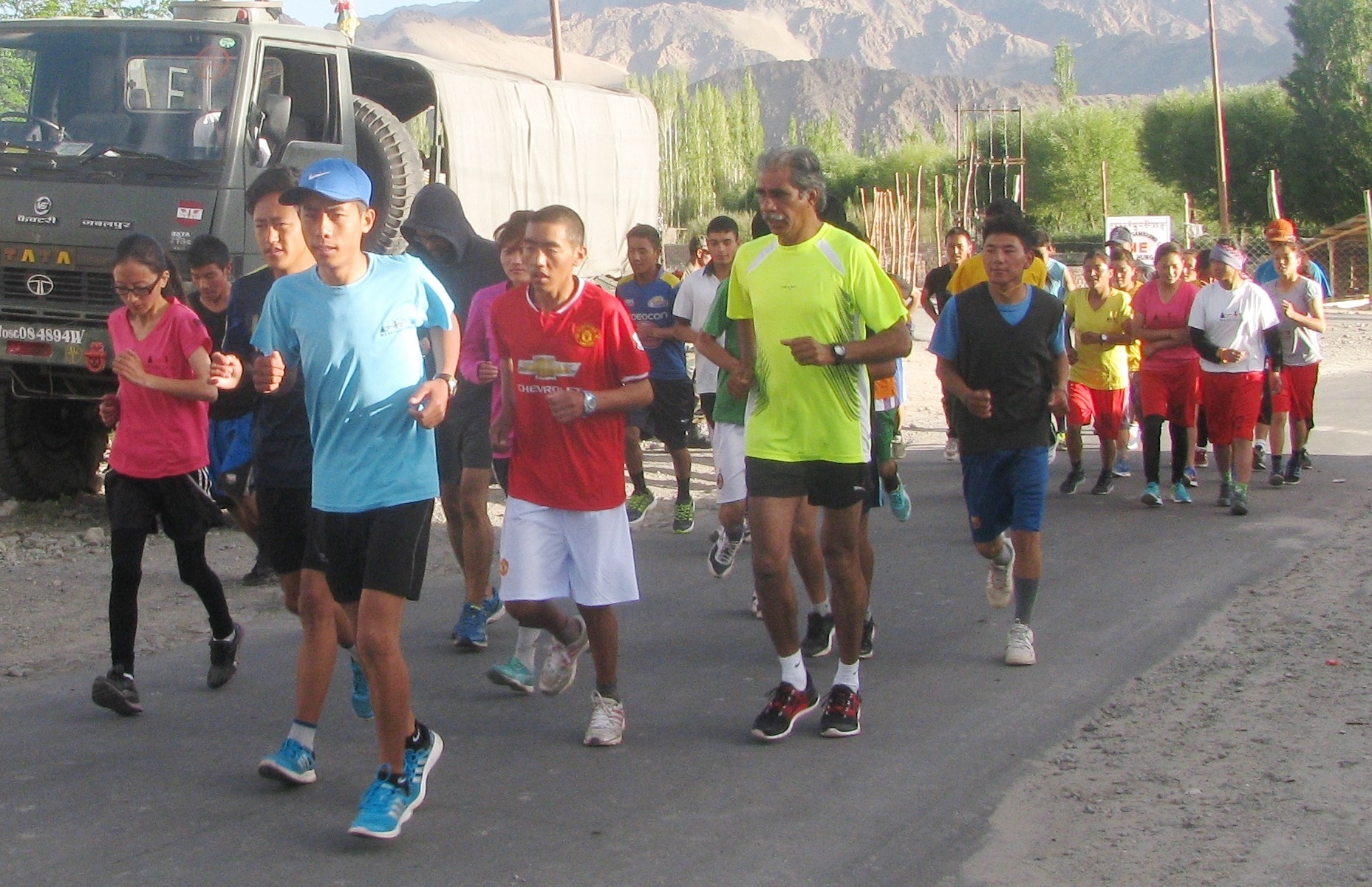
2015; Savio on a training run with Ladakhi runners during a visit to Leh (Photo: Shyam G Menon)

When they leave Ladakh for the plains in November, Rimo’s team of Ladakh runners – especially those running in elite category – make a jump to truly competitive environment instead of gradual transition. This was particularly felt in the run up to 2019 TMM because Delhi’s prestigious half marathon, which the team likes to run for accumulating race experience, got shifted to October. According to Savio, the team needs to participate in more races; there is also the need to have more races happening in Ladakh as that is runners’ home ecosystem. More local races contribute to bigger pool of local runners and hopefully thereby, greater competition for existing top notch runners in Ladakh. The breeding ground of most Indian marathoners is the middle distance categories (reference here being to 3000 meters to 10,000 meters) including the steeplechase. Indian elites like Nitendra Singh Rawat, T. Gopi, O.P. Jaisha, Sudha Singh and Lalita Babbar – all spent time in middle distance disciplines before coming to the marathon. It was true of the late Shivnath Singh too whose national record in the men’s marathon, set in 1978, was still standing at the time of writing. The great Emil Zatopek’s competence spanned 5000 meters, 10,000 meters and the marathon. Ladakh’s running calendar lacks a basket of middle distance races. Competitive ecosystem and middle distance – isn’t that where speed is picked up and ingested into potential marathon runner’s system? Both Sudha Singh and Jyoti Gawate (Jyoti who finished the full marathon at 2019 TMM in 2:45:48 hails from challenged circumstances) have more race experience than Jigmet. Sudha who has won medals for India internationally, has the ecosystem of the national camp – an assembly of India’s best – to train in. Further, both Sudha and Jyoti don’t have to worry about weather while training. “ When I go to Ladakh we do some speed training on the road. But road is not ideal surface as it can cause injury. Ladakh does not have an athletic track and so far, we haven’t been able to locate a good mud track. Further once the runners leave Ladakh for the plains, given races they are scheduled to participate in, we have to train conservatively making sure to avoid injury,’’ Savio said. Motup hopes he can pitch in to bridge the deficit with an array of treadmills to keep the momentum of training going on in Leh even in times of inclement weather. But the gap in infrastructure is clear.

A bit of a mystery in the story of Ladakh runners is the relation between altitude and distance running. Most people seem agreed on the link between altitude and endurance. But on the other hand, marathons have been increasingly won by those hailing from or training in mid-altitudes, not high altitude. India’s high altitude sports training facilities are also at these mid-altitudes as are the hills and mountains the elite runners of Kenya and Ethiopia belong to. Iten, the famous home of distance runners in Kenya, has an elevation of 7874 feet. Having said that, it must be pointed out that the Internet (to the extent this writer looked it up) did not specify a clear reason why training is set at this belt of elevation, apart from mention that it corresponds to where the best athletes currently hail from and also, where some of the high profile competitions are held, the latter likely in terms of threshold of elevation (for instance – Mexico City, location for the highest altitude at which the Summer Olympics have been staged so far, is at 7350 feet).

Rigzen Angmo with trophy after her win at the 1995 Bangkok Marathon (Photo: by arrangement)

For runners from Ladakh, the question is how to leverage their natural strengths, train and perform well at altitudes lower than where they come from. They need to marry endurance and pace. For this, do they train high (as in Leh) or train low? Can you simplistically conclude that if the middle altitudes are good for training in long distance running, then still higher altitudes would be better? “ No. Not necessary. You go very high, the air gets rarified; it is difficult to train. Living at altitude is beneficial. Everybody living at altitude will have those beneficial changes compared to you and me. But to be able to train – sometimes the altitude is so high that you get tired. Then training itself becomes difficult. How do you do your sprint workout and your long distance workout and all of that? I think there is a sweet spot as to what altitude is good to live and train at,’’ Dr Contractor said. The story of Rigzen Angmo is characterized by training stints outside Ladakh at gentler altitudes (please visit this link for Rigzen’s story: https://shyamgopan.com/2015/09/28/the-spectator/). Her personal best of 2:45:42 set in 1996, is looked up to by the runners from Ladakh. For dwellers of altitude, long stay away from elevation is a tricky quantum. One sensed unease in the runners when the question of extended stay in the plains was discussed. Apparently, such extended stay temporarily saps high altitude residents of some of their strengths at elevation. On return to Ladakh, they find themselves needing to adapt afresh. It isn’t a development the young runners seemed comfortable with.

Savio feels it is time the national authorities took note of this project, which has systematically dispatched runners to Mumbai since 2013 and secured podium finish in the elite category, twice. If they make it to the national camp or at the very least its proximity, the top Ladakhi runners will get the ecosystem to improve their performance further. They will have good facilities and most important, the good fortune of running with those currently better than them in the marathon. “ I wish the authorities took note of how far we progressed despite the challenges faced,’’ Savio said. Motup is acutely aware of the stage the project finds itself in. Rimo Expeditions has funded this journey as well as the Ladakh Marathon, from its own resources. As someone who wishes to see a Ladakhi at the Olympics, he wants more races in Ladakh – a sort of feeder system into the Ladakh Marathon, much the same way the best performers from the Ladakh Marathon find their way to TMM. But that deepening of running culture can’t be done by him alone. Ideally it should be a broader campaign involving local government. At a more immediate level, as a matter of strategizing next stage for the current team of Ladakh runners (including more time spent away from Ladakh if that is the need), one avenue open to him is to get aboard a strategic partner or sponsor for the Ladakh Marathon. Either such move frees up Rimo’s resources to invest more in the running team or whoever decides to partner the Ladakh Marathon, buys into the idea of sustaining and growing the running team as well. In today’s world of sports those willing to associate for visibility or gains in marketing are easily found. What’s tough is finding someone for the long haul of investing in a running team or a project to grow running and see it through. “ So far I haven’t met anyone convincing in this regard,’’ Motup said.

(The author, Shyam G Menon, is a freelance journalist based in Mumbai.)   

“ EVERY RACE COUNTS’’ / TALKING TO KIEREN D’SOUZA

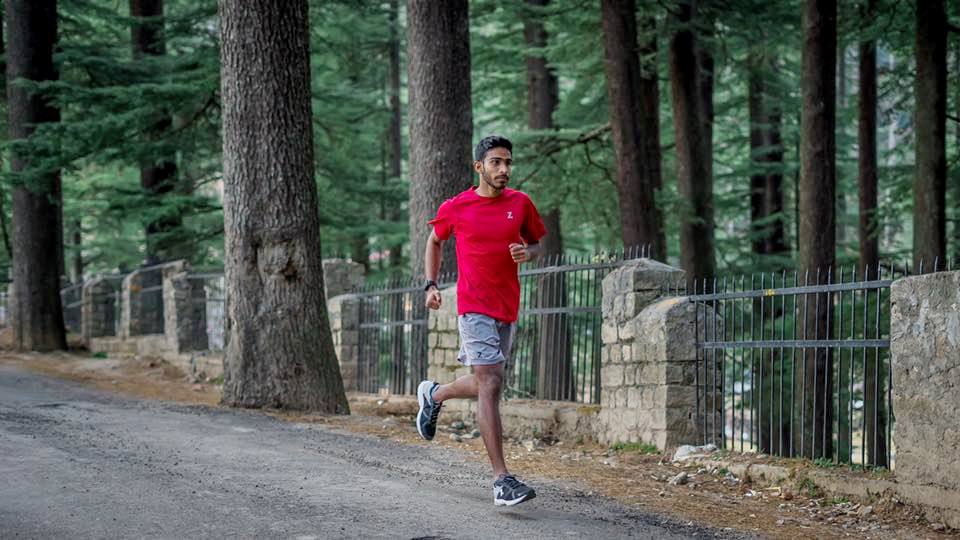
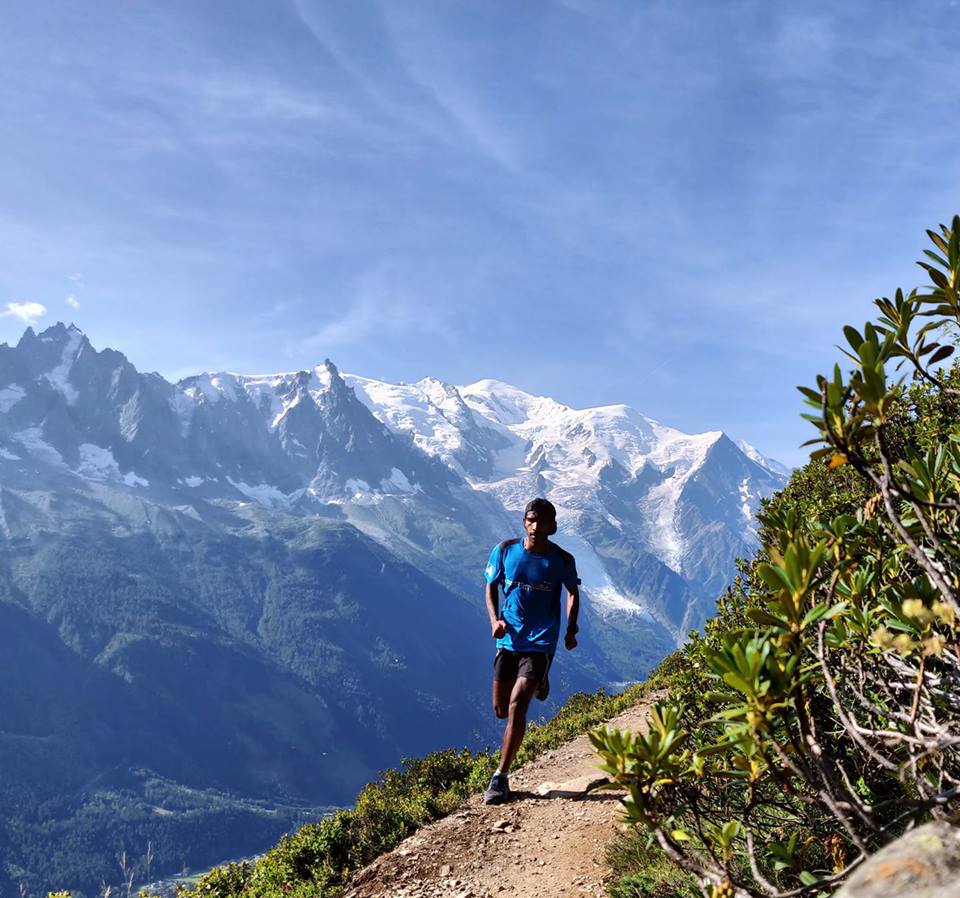
Kieren D’Souza (This photo was downloaded from Kieren’s Facebook page.)

Kieren D’Souza is among India’s promising, young ultra-runners. He has consciously chosen to make a livelihood from running; he does it as a full time job much the same way many of us go to office. Increasingly partial to trail running, he lives and trains in Manali, where the Himalaya provides the sort of landscape and environment for running, he identifies with. Kieren has been to ultramarathon races abroad, including the world championships. A regular visitor to the Tata Mumbai Marathon (TMM) as part of his association with the pain relief gel-brand Volini, he spared time at the 2019 TMM expo to talk to this blog about his experience, living off running. Excerpts:

It was in 2012 that you ran your first ultramarathon in Bengaluru. Roughly four years later in Leh, by the time you won the 111 kilometer-category of La Ultra The High in 2016, you had begun setting yourself up as a full time runner; someone hoping to provide for oneself through running. How has the journey been so far at a personal level and in terms of supporting yourself financially?

As a journey it has been perfect. I don’t wish I was doing anything else. I resolved to run full time in 2014; I got around to doing so in 2015. Every day has been a blast. I don’t remember having so much fun. That way it has been brilliant. As regards the goals I had set for myself – it has been slow but consistent progress. I am not where I want to be yet, but I am climbing up the ladder. I wish it were faster, though. On a financial level – a life of this sort has meant a lot of work. There is a lot of running around, a lot of approaching people and a lot of disappointments. You have to work with people, companies and brands. I understand that I have to work with them and I was mentally prepared for it when I started this journey. It has been a lot of hard work and definitely not the easiest thing.

Did you have a full understanding of what making a career of running entails, when you embarked on this journey in 2014-15?

Did I know that it would be hard to make money? Yes, I knew that. Did I know it would be so hard? I did not know that. It’s been a lot harder than what I thought, I guess. There are some similarities in what companies are looking for, but essentially every company looks for something different. Even people within companies look for different things. It is not the easiest to reach out to people. Finding the right contact is tough. Everything has been a process – from learning who to reach out to and having them respond to you. If I get a reply from some of the people I got in touch with, I am most excited. It may not even materialize into anything but just getting response; sometimes those are the most exciting things. Most of these exchanges – 99 per cent of it – don’t convert into an association. But having said that, the fact is – I need to do this. Nobody else is going to do this for me.

We are right now at the expo preceding the 2019 Tata Mumbai Marathon (TMM). If you keep aside the elite foreign athletes attending the race and you look at the Indian elite – most of them; are gainfully employed with one organization or another. Then there are some from the amateur category who race because prize money complements earnings from other sources or in some cases, is the only source of livelihood they have. In India, you don’t yet come across athletes who consciously run full time for livelihood or support themselves completely through running’s ecosystem.

That’s one thing I tell others – I can think of very few people who are living off only running. I mean there are the elite athletes but they are usually working with the armed forces, railways or the state-owned oil companies. They are supported by these organizations. That makes the choice I made tough, but I am okay with it.

There is the conventional logic that if you have a hobby you like, then you support it with earnings from some other source. There is also the argument that if your hobby – or an activity you genuinely like – becomes your source of livelihood, then it starts losing the fun originally associated with it. Have you ever felt so?

No. Like I said – last four years of doing this, I never thought on any day that I should be doing something else. I can’t think of sitting at a desk right now. I live in Manali and I love getting out every single day. I was talking to a friend a little earlier and he was saying that when I get back, it may be snowing and there won’t be much running I can do. It does not deter me. I will probably pack a bag; wear my boots and hike six hours every day. I don’t care. I love to get out. At the heart of it what I enjoy is – getting out and moving. Running is the simplest way of supporting it; it is accessible to me everywhere.

To labor the point a bit more in the interest of clarity – conventional Indian logic encourages you to secure yourself first and then take your chances. Are you the sort who believes that the chances must be availed first, security will follow?

I guess I was born with the spirit of adventure and running is taking me there. Back in 2013 -14, the running circle I was in had a lot of people who were in their thirties, forties and fifties. Even today many of my friends are much older than me. From their ranks, there were those quitting jobs – good corporate jobs – and getting into other things that interested them. When I thought of taking on running full time, I was at a cross road – either do it now when I am 21–22 (his age then), when I have fewer responsibilities and can take such risk or wait till I reached 45–50, which was 25–30 years away. I was not very keen to wait till 50. Maybe I would have got married, had children and got everything sorted out; but by the time everything gets sorted out, I would have also been way older. I had worked for a year before I made my decision and I knew I wouldn’t last at a desk job. I also did not want to become old and then look back and regret not having done what I wanted to. The assurance of security was not there when I made up my mind, but then I had to take the plunge – it was not a blind one, the future looked blurred, but I knew where I wanted to go, so I took the plunge.

The ultramarathon used to be associated with the older lot of runners. Now you have a lot of young runners entering the sport and they are setting new standards of performance. In your travels overseas you would have met some of these young runners, who like you, are into the sport full time. When you compare the ecosystem of support they enjoy and what you have here, what are the elements missing?

There isn’t a clear, black and white answer for this. In places where the sport and sporting culture is more established, there are a lot of other things – there are running stores, cycling stores; people can work in these kind of stores, you can avail coaching at colleges, schools etc. So there are ways to make money off the sport. If you are really good there are people who get sponsorship. I think we lack this ecosystem here. We have few running stores still in India. There is a big difference between how stores here and overseas work; there is difference in the operational style of running communities too. I don’t think a runner here goes to a running store to pick up a shoe. They will probably ask another runner. Slowly all that is changing; the opportunities are opening up. At the same time, it would be incorrect to assume that the going is easy for runners overseas. It is hard work for them too.

Kieren D’Souza (this photo was downloaded from Kieren’s Facebook page.)

Within the world of running would you say the ultramarathon is among disciplines that are hard to find sponsorships in?

It is a much smaller sport than road running. However, there is more sponsorship available now than before. The sport is growing.

At the end of the day, people are going to notice only the performance – typically the time a runner took to cover given distance. How you got there, whether you ran full time or part time, recedes in relevance. How does your choice of running full time then justify itself?

Because I am running full time, I have lot more at stake. I approach every race, very seriously. I don’t take any race for granted. You won’t see me going and doing a fun run or racing just for the heck of it. I plan things out because every race matters for me. Every race counts. In the grand scheme of things, when you are looking at performance, every race counts. When I am running I think about all this. When I fare badly, it definitely goes through my head. When I do well, it goes through my head. When you are not doing well and you have all this at stake, you have to control your thoughts and be in the moment. When you are doing well you can’t be just flying as well. You got to be in the moment. The things at stake prompt me to work hard. Still, I also slack off. But I don’t like it; I hate slacking off. The structure I work in adds a lot of pressure, most of it – me putting it on myself. None of this is however a burden on me. I enjoy getting out and doing it.

You have participated in ultramarathons overseas; you have also been to the world championships. How do Indian runners compare with talent overseas? What are the specific ingredients missing when training here?

I won’t be able to talk about specific ingredients because as runners, we are all different. But in general, in the sport we are way behind where the rest of the world is. For me personally, every race has been an opportunity to learn.

Specifically about you: what is the catching up you require to do?

I am still behind the winners, right? So – what is it that I must do to get faster? Getting faster – that is the basic thing.

Are you your own coach?

I have always been my own coach. I did train with Pace Makers for a year or so. But other than that I have been on my own. Probably that is also one reason why my progress has been slow. Maybe it would have been faster if I worked with a coach. But I don’t think we have a coach in India who can help me with trail running or ultra-running. The people you could work with are online. I am not excited to work with someone online. I interact with a lot of runners and discuss my training with them. If I feel I need to, I then make adjustments to the training plan accordingly. I was also working a lot with Henrik Westerlin, discussing my training plan and following some things he had shared with me last year.

We have the problem of the urban paradigm with its traffic, pollution, people and congestion, sparing no part of this country for long. Even Manali has changed over the years. Do you think you may have to shift elsewhere to train; maybe even move out of India?

I lived in Europe for a few months last year. The thing I miss the most in India is the company and the quality of athletes I got to train with overseas. The congestion aspect – I can work around it. Particularly because I am in Manali; if I was in the cities it would have been a different case. In Manali, I stay clear of the town. If I ever move out of Manali it will be to avoid the growing congestion but that thing about company – that will still be missing.

(The author, Shyam G Menon, is a freelance journalist based in Mumbai.)

JOVICA SPAJIC AMONG WINNERS AT ARROWHEAD 135

Jovica Spajic (Photo: Shyam G Menon)

Serbian ultra-runner, Jovica Spajic was among winners at the 2019 edition of Arrowhead 135 in Minnesota, noted for the very low temperatures in which the race happened, this January end.

As per results available on the race website, he was joint winner along with Scott Hoberg of the US. They finished the 135 mile race in 36 hours, nine minutes. The winner among women was Faye Norby of the US with a timing of 48:34:00. Jovica, Scott and Faye were listed in the supported category of runners. Jeff Leuwerke of the US, finished first in the unsupported category of runners. He too completed in 48:34:00.

Readers in India may recall Jovica from the 2016 edition of La Ultra The High, the ultramarathon held annually in Ladakh. In 2016, Jovica had been joint winner with Grant Maughan in the 333 kilometer-category of the event (for more on that race please click here: https://shyamgopan.com/2016/09/16/the-captain-the-teacher-the-warrior-and-the-businessman/). Finishing eighth overall among runners (as Faye and Jeff were joint sixth) was Ray Sanchez with timing of 49:33:00. Back in 2011 he had finished second in La Ultra The High, at that time 222 kilometers at its longest. Grant Maughan commenced 2019 Arrowhead in the unsupported category but pulled out later.

This photo was downloaded from the Facebook page of Arrowhead 135 and is being used here for representation purpose only. No copyright infringement intended.)

Arrowhead 135 is among the toughest endurance races. “ It is a human powered ultramarathon taking place in the coldest part of winter in the coldest city in the lower 48 states. Our average finish rate is less than 50 per cent; the finish rate for new racers is much lower. 2014 finish rate was 35 per cent,’’ the race website said. The 2019 race categories included bicycle, ski, foot and kick-sledding. Runners may be supported or unsupported.

Late January 2019 the media had reported of very cold conditions in the US caused by the polar vortex. Its impact was felt at Arrowhead 135 too. According to Runners World, temperatures this year at Arrowhead were as low as minus 30 degrees Fahrenheit (minus 34.44 degrees Celsius). It said that this year 146 participants started the race. USA Today, which pegged wind chill during the race at “minus-68’’ reported that only 52 of the 146 participants finished the race, a completion rate of 36 per cent.

(The author, Shyam G Menon, is a freelance journalist based in Mumbai.)

2018 GGR / JEAN-LUC VAN DEN HEEDE OF FRANCE WINS

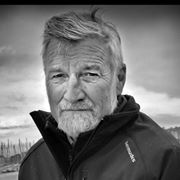
Jean-Luc Van Den Heede (This photo has been downloaded from the Facebook page of the French skipper and is being used here for representation purpose only. No copyright infringement intended.)

Jean-Luc Van Den Heede of France has won the 2018 Golden Globe Race (GGR) entailing solo nonstop circumnavigation of the planet in a sailboat.

According to news reports on January 29, 2019, the 73 year-old who spent close to 212 days (211 days, 23 hours, 12 minutes and 19 seconds to be exact) alone at sea in his boat – Matmut, was welcomed back at Les Sables d’Olonne in western France by Sir Robin  Knox-Johnston, the winner and sole finisher of the original 1968 edition of the race. Besides winning 2018 GGR, Van Den Heede is also now the oldest sailor to complete solo nonstop circumnavigation, reports said.

The French skipper had built up a formidable lead in the race since August 2018. However following a storm in the Pacific Ocean with damage to his mast, he had been forced to sail more cautiously, a move that affected his speed.  At one point he reportedly thought of halting in Chile for repairs, which would have taken him out of the main race and shifted him to the Chichester class reserved for those making one stop. But he avoided doing so, electing instead to continue the voyage with adjustments to his rigging. Later he also served a time penalty at sea for improper use of his satellite phone.

These developments allowed second placed Mark Slats of the Netherlands to gain on him narrowing the gap between their two boats – both Rustler 36 yachts – considerably.

News reports indicate that it may now be the turn of Slats to serve out a time penalty after his expedition manager contacted him directly about an approaching storm in the Atlantic. Such direct contact is not permitted under race regulations. As of late evening January 29 in India, the live tracker available on the GGR website showed Slats close to the Spanish coast and approximately 358 nautical miles away from the finish line in France.

Estonian skipper Uku Randmaa is in third position in the race while Istvan Kopar of USA is running fourth. Tapio Lehtinan of Finland is in fifth place. There is considerable distance between Slats and Randmaa; at the time of writing, the latter was 3520 nautical miles from the finish line on the French coast.

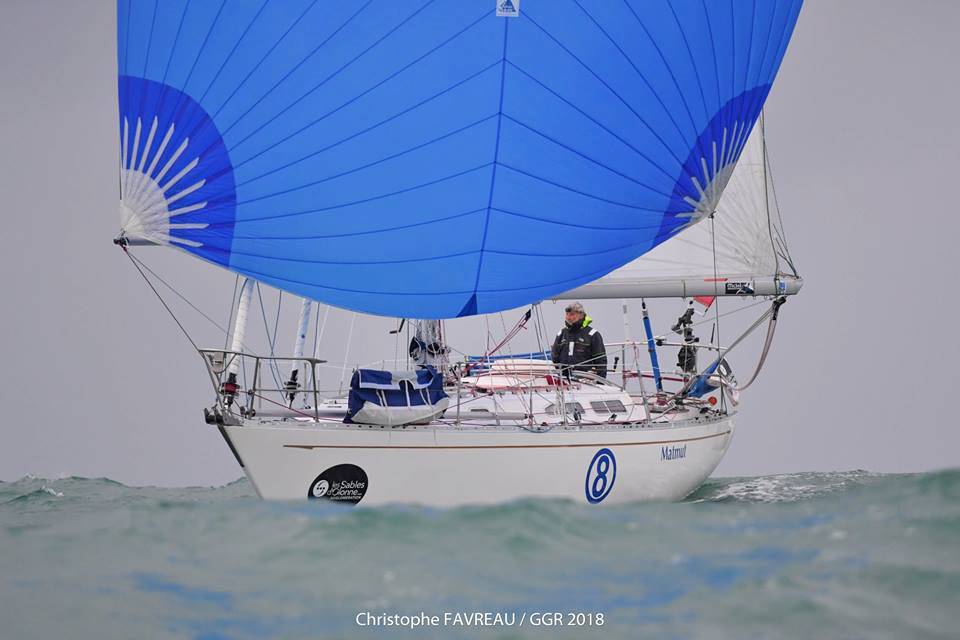
Matmut and her skipper (This photo was downloaded from the Facebook page of GGR. No copyright infringement intended.)

The 2018 GGR commenced from Les Sables d’Olonne on July 1, last year. The race was unique for pegging technology levels aboard participating boats at the same level as that prevailed in 1968. It was widely perceived as a return to purity in sailing. Of 18 skippers who commenced the race, only five remain in the main race at present. The rest have either retired from the race or shifted to the Chichester class.

Well known Indian skipper Commander Abhilash Tomy KC was among participants in the 2018 GGR. However he had to retire from the race following a severe storm in the southern Indian Ocean that dismasted his sailboat, the Thuriya, and left him injured. He was later rescued and upon return to India underwent surgery for the back injury. At the time of storm and accident, Abhilash was placed fourth in the race.

Update: News reports said that Mark Slats completed his solo non-stop circumnavigation on January 31, 2019 to finish second in 2018 GGR. He spent 214 days alone at sea. However a 36 hour-penalty incurred for direct communication with his team manager will have to be additionally factored in, bringing the total number of days to 216, the reports said. According to it, among those who received him at Les Sables d’Olonne was Jean-Luc Van Den Heede, the winner of 2018 GGR.

(The author, Shyam G Menon, is a freelance journalist based in Mumbai.)


SPOTLIGHT ON THERMAL STRESS / IMPACT ON SPORT EVENTS

Illustration: Shyam G Menon

This study posted on the IAAF website required little effort to catch one’s attention, especially after a Mumbai Marathon in warm conditions. It speaks of the 2020 Tokyo Olympics but essentially sensitizes all to the importance of choosing carefully the time frame of an event in times of climate change and where stress by weather is expected, how it may be managed.

On January 21, coincidentally a day after many sweated it out at the annual Mumbai Marathon in warm conditions, the International Association of Athletic Federations (IAAF) hosted on its website the summary of an engaging study meant to be a tool in managing thermal stress at sport events.

The study titled Quantifying Thermal Stress for Sport Events – The Case of the Olympic Games 2020 in Tokyo, pointed out that the upcoming  Olympics sits bang in that period of the year when hot weather prevails strongest in the Japanese capital. The researchers who include Paolo Emilio Adami, manager of IAAF’s Health & Science Department, has emphasized that the intention of the authors is “ not to prove a specific location unsuitable to host a sport event but rather to provide decision makers with a useful methodology to assess the prevailing conditions and take timely action in order to allow for a safe participation for athletes as well as spectators.’’

To put things in perspective, this blog elects to highlight a point the study’s authors have mentioned – large sport events like the Olympics typically happen in the summer months, the reason for which maybe their origin in Europe. In Europe, the summer season affords the largest share of thermally comfortable hours. But then, the whole world is not Europe and the Olympics moves from one location to another.

In the paper’s abstract, the authors have said that it is important for event organizers and medical staff to know whether a competition is happening at a time and place with extreme weather, or in general not appropriate weather and climatic conditions. To determine this, two factors have to be included when establishing the effect of atmospheric conditions on visitors and athletes – climatic conditions based on long term data and quantification of extreme events, like heat waves. The impact of environment on human thermal comfort includes meteorological and non-meteorological factors. Some of the meteorological measures are severely impacted by local environment; within this, the study mentions the capacity of urban environments to generate modifications “ by morphology and the surface properties of various specific elements and their configurations.’’ The latter refers to micro climatic variations urban landscapes can prompt. However the micro climate can also be modified by planning solutions that reduce heat load on humans attending the event.

The study is anchored around a couple of relevant indices. The first – Physiological Equivalent Temperature (PET) is one of the most commonly used indices in the field of human thermal comfort. It is defined as “ the air temperature at which, in a typical indoor setting (without wind and solar radiation), the energy balance of the human body is balanced with the same core and skin temperature as under the complex conditions to be assessed.’’ Like most complex thermal indices, PET is dependent on meteorological input parameters like air temperature, vapor pressure and wind speed as well as information about local radiation fluxes, the paper said. The second index anchoring the research is Modified Physiological Equivalent Temperature (mPET). It is based on classic PET but comprises a multi-mode heat transport model and a self-adapting clothing model. It also contains improved consideration of humidity. For the specific case of Tokyo as venue for 2020 Olympics, the study used meteorological data spanning August 1966 to June 2018 in 3h resolution provided by a meteorological station in the center of Tokyo.

According to the study, the very time of the 2020 Olympics from July 24 to August 9 can be deemed the hottest throughout the year. “ Both PET and mPET indicate increasingly warmer conditions for the time from 24th of July to the 6th of August and slightly cooler conditions on average for the 8th and 9th of August,’’ it said. Hours with PET of 35 degrees Centigrade and above are most frequent in July and August, where they are found between 9 AM and 3 PM. However on the average, even at nighttime, conditions in Tokyo may be perceived as warm in August.

The researchers conclude (based on results) that determining the right period for hosting sport events requires meteorological input data covering a long period of time, “ at least 30 years (as recommended by WMO), in high temporal resolution.’’ Analysis that is based on monthly resolution and average values cannot provide appropriate information.

“ In times of global climate change and urban areas being affected the most, it should be stated that most recent data should be used in order to account for changing frequency and intensity of heat waves and the recent development of the urban canopy influencing the urban heat island effect,’’ the paper said. Thermal stress in terms of heat stress can be reduced by either moving the date of an event or carefully setting the time of day an activity is slated for. The study was focused on visitors originating from Europe. It works for people from other regions with similar thermal climatic conditions. It can be adapted for people from still other regions by using a different assessment scale representative of corresponding climatic conditions.

The study made two other interesting observations:

Readings from a single meteorological station – as in the Tokyo case study – cannot be deemed representative of a whole city or urban area like Japan’s capital. Input parameters for thermal indices as well as the indices themselves are modified significantly by the urban environment and show “ strong variation in short distances of few meters.’’ Provided know-how as well as input data is available, the results can be further improved by considering actual local conditions using a “ building-resolving urban climate model.’’ Second, in terms of vulnerability to thermal stress, the study pointed out that visitors and tourists are more vulnerable than athletes. This is due to the shorter time for acclimatization they typically go with and lack of information on how to counter the effects of heat. Athletes on the other hand, tend to arrive a few days prior to competition allowing for progressive acclimatization with slow increase of exercise load up to the day of competition.

“ To allow for a safe participation in sport events, it is recommended that athletes arrive at the competition at least two weeks prior to the event. When arriving on the site of the event in advance is not possible, acclimatization should take place in an environment with similar climatic conditions to the final destination,’’ the study said.

(The author, Shyam G Menon, is a freelance journalist based in Mumbai.)       

“ I THINK THIS IS A TURNING POINT’’ / TALKING TO NITENDRA SINGH RAWAT

Nitendra Singh Rawat (Photo: Shyam G Menon)

Nitendra Singh Rawat finished first in the Indian elite category at the 2019 Tata Mumbai Marathon (TMM), held on January 20. Although falling short of his own course record in Mumbai by a few seconds, his timing at the race was good enough to make him eligible for the IAAF World Championships due in Qatar. Later on race day, Nitendra spared time to talk to this blog. Excerpts:

How was today’s race for you?

Today’s race was quite important for us because we had to meet the qualifying time to participate in the IAAF World Championship due in Qatar. TMM was the last race in India to attempt that qualification; true, there is still the Delhi marathon remaining but this was the main race. I am happy with today’s race because I managed to meet the qualifying time for the world championship and I also sense my old form returning. I think this is a turning point.

We last met in Ranikhet, where you were training. After that you took part in the 2018 TMM and finished second among Indian elites. Following this result, you made changes to your training, especially the location where you trained…

After 2018 TMM I went back to Ranikhet. I wanted to take a break. I wanted to spend some time with my family. As you know, Ranikhet which is our regimental training center is the town closest to my home. There was also the onus of training junior athletes and building up my own fitness. 2018 went by in this manner.

Are you back in the national camp?

No. Around November I shifted to Bengaluru to be with my coach, Surinder Singh Bhandari. I have taken a room on rent. There are fellow athletes for company. We cook food, do everything ourselves. The decision of including me in the national camp or not is for the concerned technical committee of the AFI to take. I cannot say anything on that matter. Running – which is my responsibility, I have executed that part. The rest is up to them.

Would you say the same about selection for the IAAF World Championship? You may have met the qualifying time but the actual selection is up to the concerned technical committee?

Yes; because there could be other Indian athletes who produce better timing and if there is a quota for the championship only that many may go. But I feel TMM was about the last opportunity you had within the country to achieve good timing. Going ahead, the weather in India will only get warmer.

What are your goals now?

In April I will participate in the 2019 London Marathon. The first goal will be to get a timing of between 2:12 and 2:13 there. And if you go below 2:12 we are in new territory as regards the longstanding national record in the marathon. So London is the main target. I haven’t yet thought of anything beyond that.

You have returned to form with today’s 2019 TMM. You completed the full marathon in 2:15:52. How much work is required to get from that timing to 2:12 or 2:13?

Two minutes is significant time to shave off in the marathon. For example, if I had been faster by four seconds or so today, I would have accomplished a new course record. That tells you how hard earned seconds are. In sprint events, the challenge is to earn micro-seconds. Then, there is the diet and overall race plan including aspects like physiotherapy. A lot of it will require changing. My dietician has already informed me that I will need to tweak my diet for London. So, there is quite a bit of hard work needed; quite a bit. Participating in 2019 TMM was a decision taken rather late in the day. I decided to run in Mumbai only a month and a half before the event. My eyes were set on the Delhi marathon but then this entry for London came along. If you are running in London and wish to do well there, then Delhi’s dates would seem too close for comfort. That’s when I decided to come to Mumbai. Like I said, I reached here with limited time to prepare – it was all done in a month and a half. But the preparation was nevertheless good. In fact on race day, we covered the first half of the course in Mumbai quite fast. That encourages me as regards the timing hoped for in London. Besides there will be the inspiration you draw from fellow athletes. I think if I stick with the second or third batch of runners in London, I should be able to progress towards the timing I am aiming for.

How did you find the weather today in Mumbai?

It was warm. Perhaps it wasn’t pronounced enough to call it so but it was hot weather. Those who ran would have realized that it was hot and you were getting dehydrated from within.

Do you think better weather may have helped you improve the timing further?

Yes, variables are many. Maybe if we hadn’t run the first half of the race that fast and managed the pace better, the result could have been different. Weather is another…

Now from Mumbai, you return to Bengaluru….

I have to go to Delhi to get my papers ready for London. To train, I will go back to Bengaluru. Since 2012, my coach is Bhandari sir. Whatever I have achieved so far is thanks to him. He believed in me; constantly motivated me. There have seen a lot of ups and downs in my career. I have been India’s top marathoner, then slid to zero due to injury and spent time recovering. Through all that, if Surinder sir was not there….I am a very emotional athlete. Mental, physical, emotional – I work with all three. I break down so much that recovery can be very difficult. When negative thoughts enter my head I get swept off, I fall deep into it. I need somebody to manage me during such times. I don’t think anybody in India can be that pillar of support for me, as Surinder sir can. I have stuck with him since 2012. As long as I am in sports, I will be with him.

You described yourself as someone who has had ups and downs in his career. Have you accepted that pattern as your true nature?

I never give up. Nitendra never gives up – that is my strong point. Yes I may go down, but I never give up. When I restart, I try to give it 110 per cent. But I also wonder how things may have been had I managed to stay steady. In 2013, I was a top athlete in 5000 meters when my fortunes plummeted. I had knee surgery. I was back at the top from 2015 to 2016. Then suddenly everything fell apart because I developed a hamstring problem. I recovered from that and set a national record in the half marathon. Then it was back down again; I developed pain in the stomach. So it’s been up and down. I do wonder how things would have been had I got two to three years of steady sailing.

Is there any international athlete you look to for inspiration or identify with?

For me, it’s Paula Radcliffe. She saw a lot of ups and downs in her life in sports; she had her share of injuries. My first target was to break Paula’s world record. Many people asked – why Paula’s record? For me it was simple – her world record is 2:15:25. I had run at 2:15:48. So that became the first mark to get past.

(The author, Shyam G Menon, is a freelance journalist based in Mumbai.)        

AN UNEXPECTED SETBACK / TALKING TO T. GOPI

T. Gopi (Photo: Shyam G Menon)

Thonakal Gopi came to the 2019 edition of the Tata Mumbai Marathon (TMM) as defending champion. Sometimes things don’t go according to plan. January 20 was one such day. Gopi finished second among Indian elite athletes. He also missed the qualifying time assigned for eligibility to participate in the IAAF World Championships due in Qatar. He has now pinned his hopes of qualifying on a race in Japan. The evening of January 20, Gopi spared time to talk to this blog. Excerpts:

How did today’s race pan out for you?

I ran seeking a record. I knew the national record can’t be aspired for in Mumbai but matching the course record or trying to dip below that seemed reasonable to attempt. I had trained well for 2019 TMM. But what can I say – till about 33 kilometers everything went well; the pace appeared headed for a 2:13 finish. Then very unexpectedly I felt a catch in my calf muscle. It was bad enough for me to halt and stretch afresh. I resumed the race but the onset of that problem had already impacted my mind. I was worried that if I go fast the injury may aggravate. The remaining part of the race had to be executed in guarded fashion.

So at one point, you actually stopped to stretch….

Yes. I stopped and stretched. When I was forced to halt due to the calf muscle problem, I was ahead of the others. It was around the 36 kilometer-mark that Nitendra Singh Rawat who eventually won the race, leveled with me.

A difference between the result of this year and last is that in 2018 the gap separating the two of you was thin – three seconds, this time it is a minute and 11 seconds. So, this is what caused it….

Yes. It was heading towards a good timing of around 2:13, when the setback occurred for me.

Do you still feel the injury after the race or has it subsided?

I still feel it. This is the first time my calf muscle is getting injured. My hamstring has a history of injury and I had recovered from the last hamstring problem I suffered. I also made sure to provide adequate support for the hamstring at 2019 TMM. There was a small pain while running but nothing significant or unbearable. However the calf muscle issue was out of the blue. It is the first time I am getting it; totally unexpected.

What made 2019 TMM critical for Indian elite athletes who participated is that it was a chance to meet the qualifying time for the upcoming IAAF World Championship in Qatar. You couldn’t make the cut in Mumbai. You still have one race remaining in Delhi to attempt the same….

I had planned to run in Delhi. But then I got sponsorship from Asics. Under this scheme, they have arranged for me to participate in a race in Tokyo on March 3. I won’t be in the elite category as registration for that closed earlier. It is alright if I have to run alone, by myself, not as part of a group with pacers around. I have this chance remaining with me to attempt qualifying for the IAAF World Championship.

In terms of weather, one would imagine conditions to be better in Japan than in Delhi…

That is a possibility. But when I looked up the Internet, it appears that is a time capable of rains too. Things will be clearer once I reach Japan. I am optimistic.

So preparing for this race would be your next step…

Yes. However, keep in mind that the qualifying criteria for the world championship are a bit complex at present. Previously, only the qualifying time used to matter for selection to Olympics or world championships. Now it is a bit different – besides timing, you should have run at least three races and your average across these races is considered. Further, your ranking at the global level also matters. It is thus tougher now for all aspirants. That said, if you secure good timing at a race; something that puts you in the top 100 list worldwide, it does improve chances.

You now go back to Bengaluru, back to national camp?

I go back to Bengaluru. But there is no ongoing national camp for the marathon right now. I train at the Sports Authority of India (SAI) facility. I stay outside in rented accommodation. I now train on my own in the company of fellow athletes.

(The author, Shyam G Menon, is a freelance journalist based in Mumbai.)

2019 TMM / PODIUM MUSINGS

Tata Mumbai Marathon (TMM) is the biggest event in India’s calendar of running events. The 2019 edition was held on January 20. Race day this year wasn’t easy on all; it was warm. Soon after the 2019 TMM got over, we spoke to some of those who got podium finishes at the event:
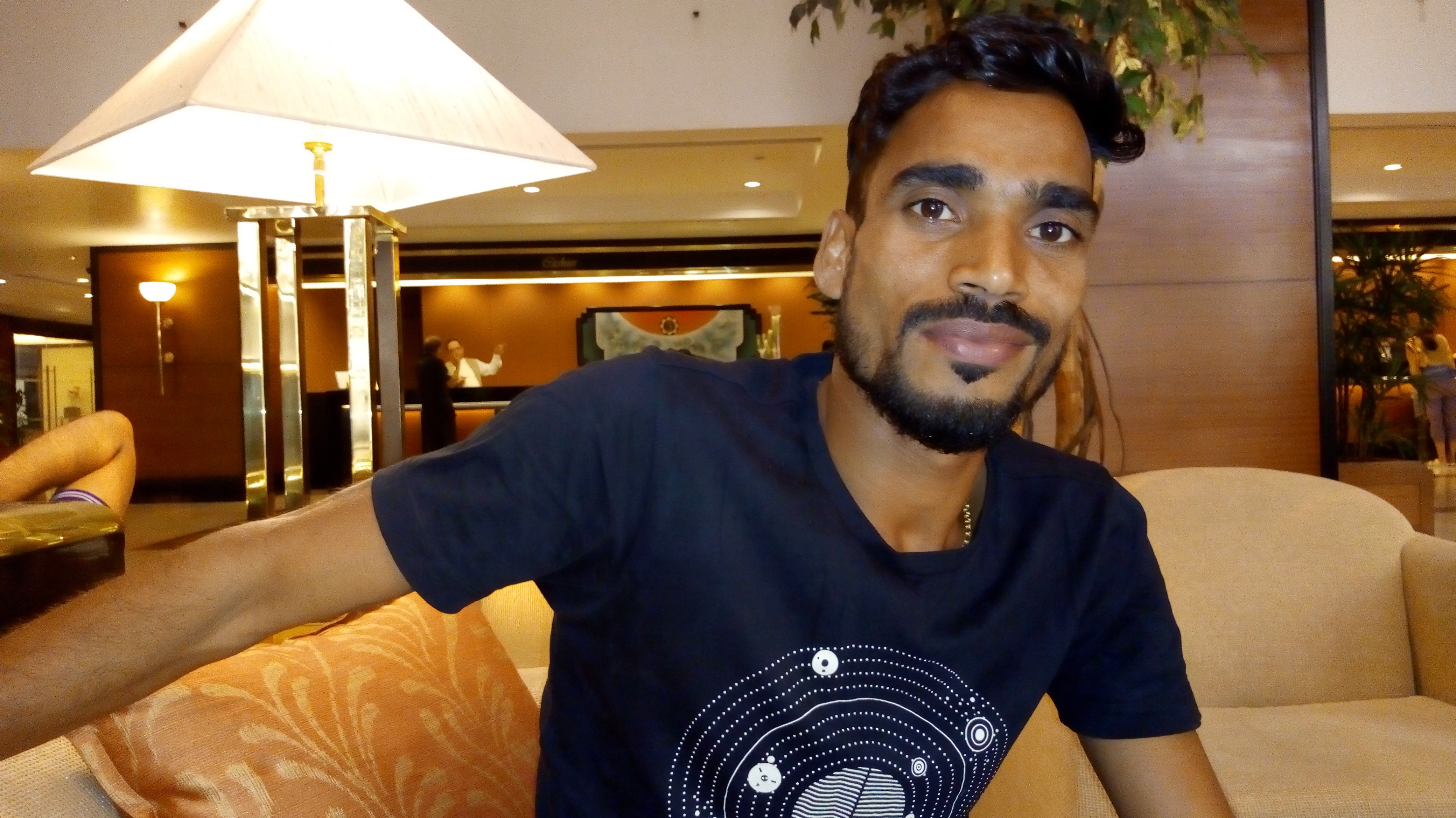
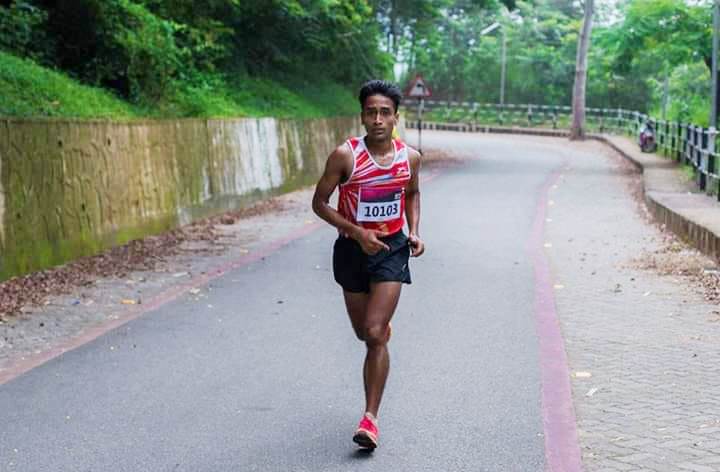
Bijay Deka

BIJAY DEKA / Full marathon (winner in amateur category and first in age group 18-24 years)

In 2018, Bijay Deka from Assam had won the amateur category of the Tata Mumbai Marathon (TMM) with a timing of 2:42 hours.

One year later, the 23-year-old was winner again in 2019 TMM’s amateur category, improving his previous year’s timing by nearly 10 minutes. He finished the winning run in 2:32:56, also his personal best.

At 2019 TMM, he started the run very well, running with two other runners at a moderately good pace. “We ran together until 17k.  After that, I stepped up my pace and kept increasing it, eventually completing the run with a personal best,” he said. He kept looking over his shoulder to find out if there was anybody. “There was nobody behind me in the latter part of the marathon,” he said. This is evident in the timings of the podium finishers. Tlanding Wahlang from Meghalaya who finished second with a timing of 2:40:53 was eight minutes behind Bijay.

Bijay has had sporadic stints in running since his junior school days but nothing structured to help him get into athletics.

“In 2008, I saw an advertisement for the Guwahati Half Marathon. I applied for it and ran the race. I ended in seventh position,” he said.

Running some of the local events, he got noticed by Amateur Runners Guwahati, a group based in Assam’s capital city. Some of the members of the group took keen interest in the young lad and started sponsoring his participation and travel to running events.

A resident of Guwahati, Bijay runs for a living. “I live in Guwahati with a couple of friends. We have rented a place,” he said. His mother and brother live with his uncle. He lost his father when he was in seventh grade in school.

He studied up to 12th standard but could not clear it. He now plans to resume his studies along with continuing his running.

He does not follow any specific diet. “I just eat home food. No special protein supplements or anything like that,” he said. Living in close proximity to a stadium, he is able to do his speed workouts there. “For strength training, I refer some of the videos on YouTube,” he said.

Bijay will be travelling to Gurugram to participate in the Amity Gurugram Marathon, scheduled for February 10 this year. His also plans to participate in the Airtel Hyderabad Marathon in August.
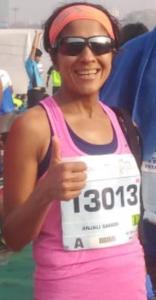
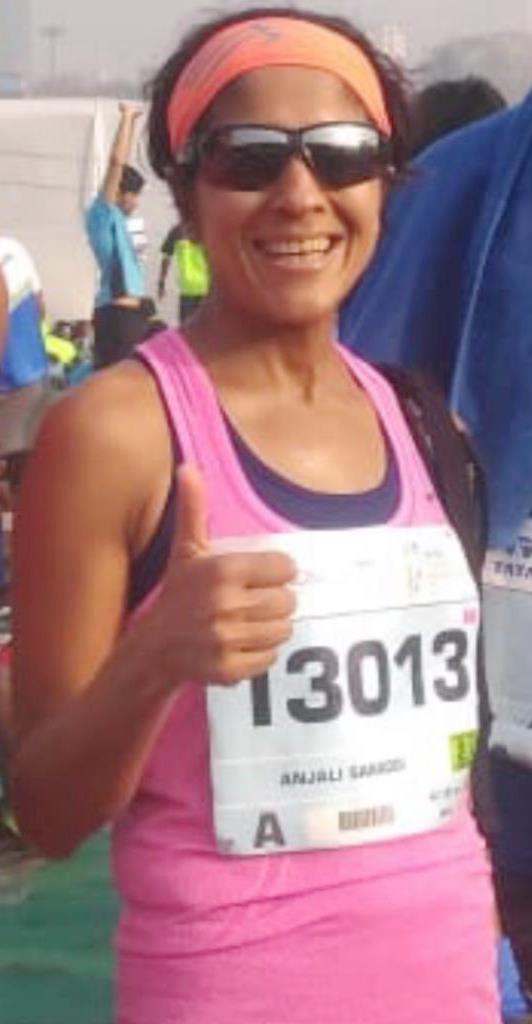
Anjali Saraogi

ANJALI SARAOGI / Full marathon (second overall among amateur women and first in age group 45-49 years)

This ultra-marathon runner was left with very little time to train for the 2019 edition of the Mumbai Marathon. The last few months have been very hectic for her. She went to participate in the 100 k IAU World Championships in Croatia barely weeks after a bout of dengue. In November, she ran the New York Marathon. Once back, she had to go in for surgery to remove lumps in her breast. “I started training for Mumbai Marathon towards the end of December,” she said.

Nevertheless, she had an excellent race finishing second overall among women amateur marathon runners and first in her age group (45-49 years). She completed the full marathon in 3:21:05.

“This year, the race organization was much better and the finish was smooth. Running the last 10 kilometers was very good because the organizers had carved out a separate lane for full marathon runners. We did not have to spend too much time and energy trying to wade through half marathon runners,” she said. Also, the volunteers were trained very well to hand out hydration.

“I love Mumbai’s cheering. Its there all along the route except on the sea link. This time around the number of full marathon runners was up at 8000 and that meant the quality of runners was much better,” Anjali said.

Post-race arrangements were also well managed this time, according to her. The overall experience was uplifting.

“Tata Mumbai Marathon is a dear race for me and I will continue to run it as long as I can. This time, I ended up second overall among amateur women runners and first in my age group,” she said.
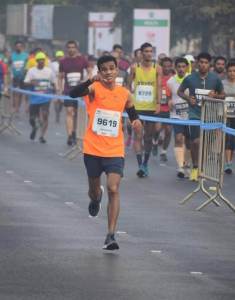
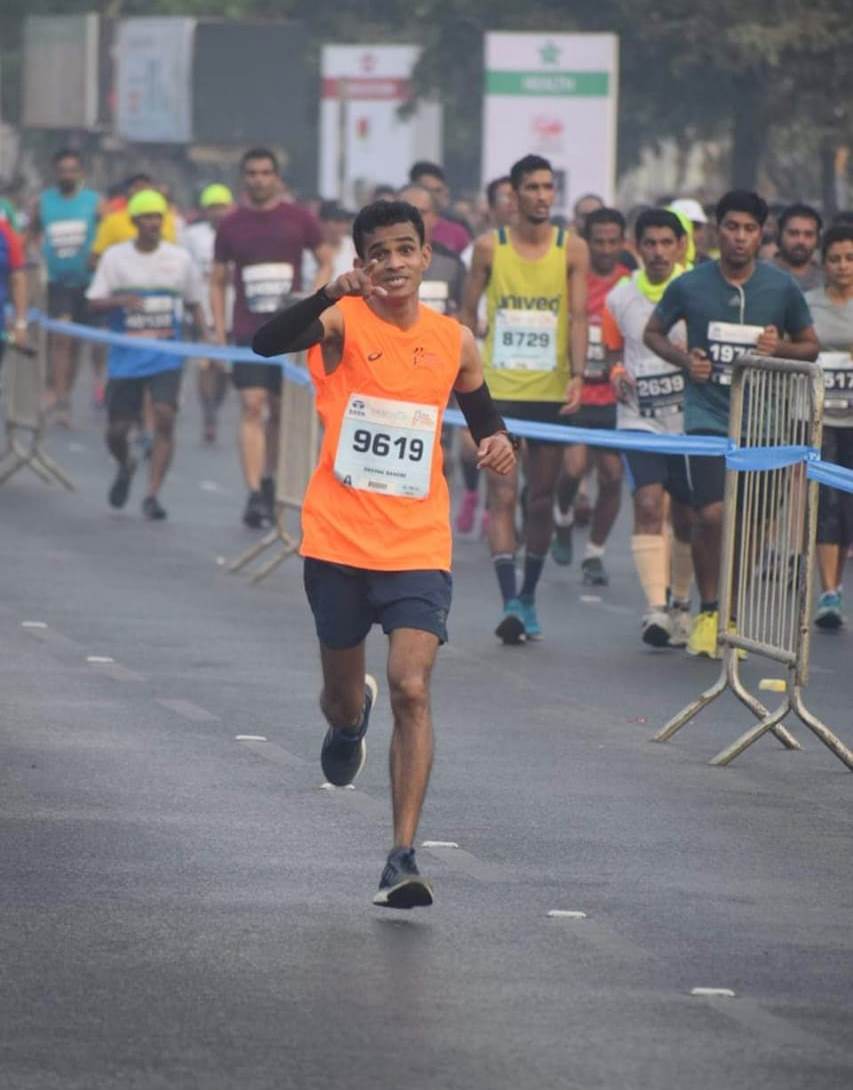
Deepak Bandbe

DEEPAK BANDBE / Full marathon (third in amateur category and first in age group 25-29 years)

At the Wasan Motors showroom in Borivali, Deepak Bandbe spends a lot of time on his feet as a sales executive talking about cars to potential clients.

“There are days when I may have completed a training run of 40 kilometers and be at my workplace by 10 AM,” he said.

Deepak has been participating in the Mumbai Marathon for the past three years. In 2019 he chose to attempt the full marathon.

He finished the race with a timing of 2:41:37 hours, emerging third overall among amateur marathon runners and first in his age category of 25-29 years.

Training under well-known coach Daniel Vaz, Deepak had a target of completing the marathon in 2:39 hours. “I was on track to achieve that timing. But in the last six kilometers you run into a wall of slow half marathon runners on the course. I had to dodge between runners and shout at them asking them to move out of my way. I almost ended up getting a sore throat doing that,” he said. At one point on Peddar Road, he nearly fell over a half marathon runner, who suddenly chose to flop down on the road to tie her shoelaces. “My heart was racing so hard when I suddenly stopped to prevent myself from falling over,” he said. Nevertheless, he enjoyed his run. “The overall arrangements were superb. The starting line-up was organized very well,” he said.

He has been running for the past three and a half years. “I had absolutely no exposure to sports during my school and college years. I had no idea about stretching and strengthening,” he said.

A resident of Borivali, he took to running out of interest and the need for fitness. Subsequently members of BNP Green Runners noticed him for his speed in running and offered him guidance.

“Initially, I got some guidance from coach, Melwyn Crasto,” he said. He currently trains with Daniel Vaz. Many of the runners of BNP GR support him with registration, gear and travel expenses.

Deepak is from Shembavane village in Rajapur, Ratnagiri district. His siblings, a brother and a sister, live in Virar and Sewri respectively while his parents reside in the village.

His next major outing will be the Comrades Marathon, an ultra-marathon event in South Africa on June 6, 2019. As part of his training for Comrades, he will be participating in Tata Ultra in February where he will be running 50k.
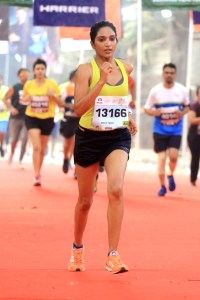
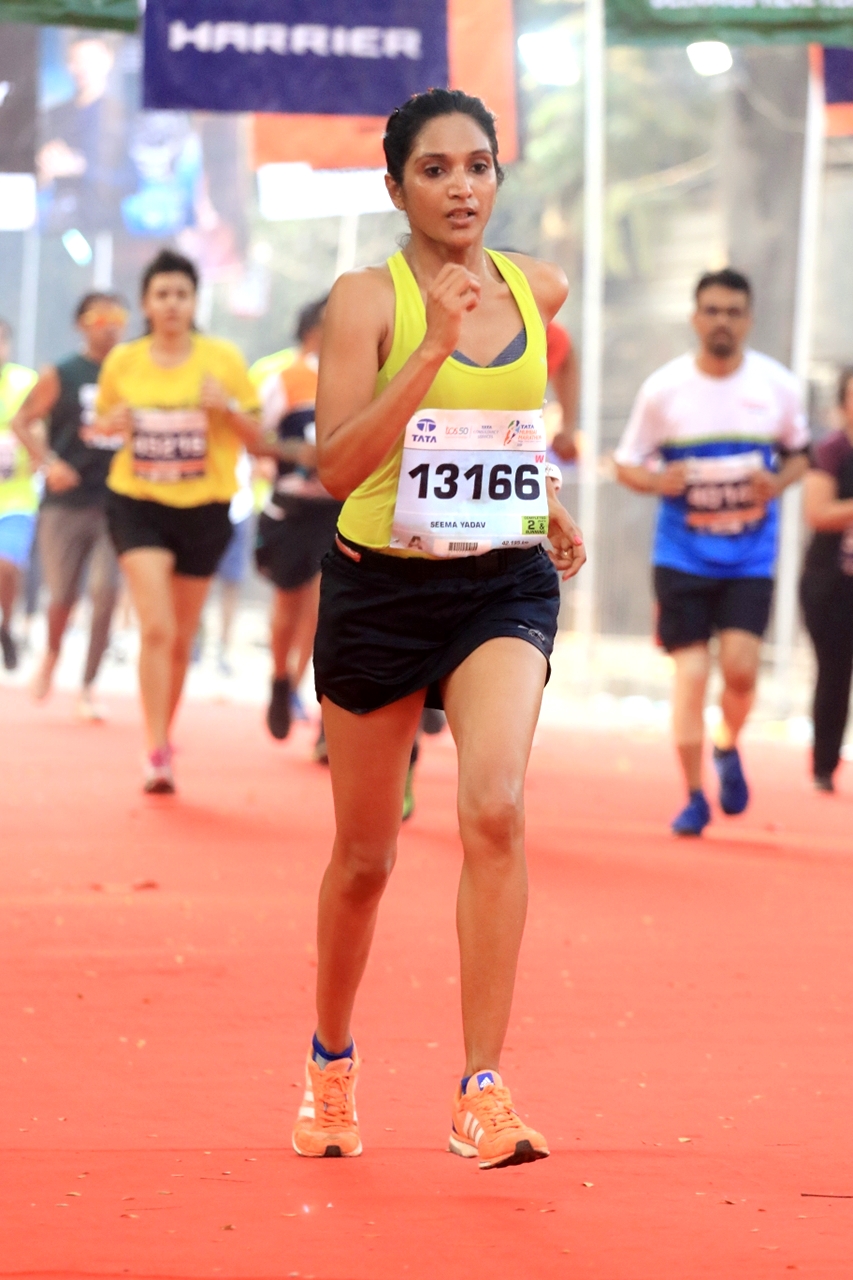
Seema Yadav

Seema Yadav / Full marathon (fifth overall among amateur women and first in age group 35-39 years)

In 2015, when her friends shared photographs of the Airtel Delhi Half Marathon, it sparked Seema Yadav’s curiosity about running. “ I contacted a friend. She told me I must first focus on strength training,” Seema said.

The idea of a gym did not appeal to her. Nevertheless she joined one. At the gym she met runners from Reebok Running Group and began running with some of them. A few runs later, Seema attempted the half marathon distance at the 2016 edition of IDBI Federal Life Insurance Marathon. She covered the distance in 2:02:36.

Subsequently, her timing in the half marathon kept improving. This prompted her to attempt the full marathon at the 2017 edition of Mumbai Marathon. She finished the race in 3:57 hours.

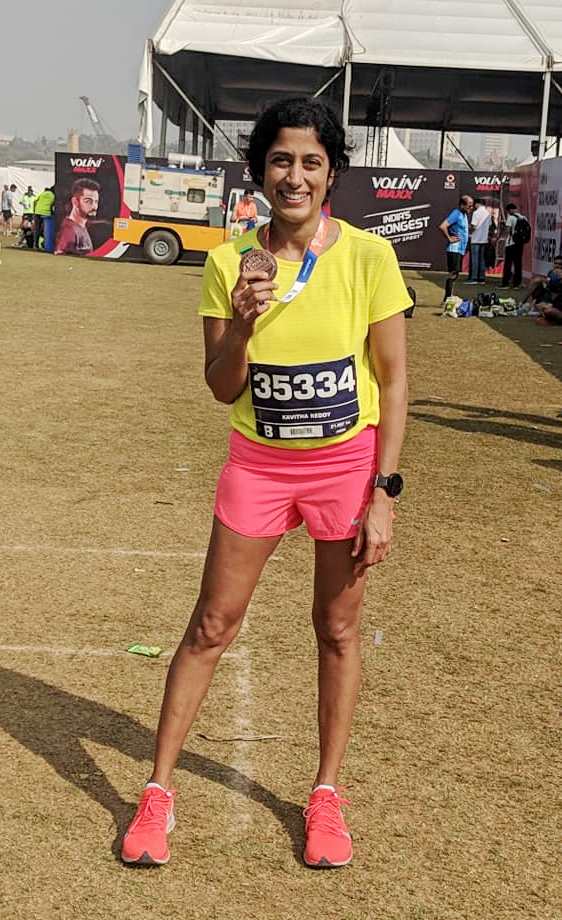
At the 2019 edition of Tata Mumbai Marathon, Seema’s run went as per plan and she finished the race in fifth position overall among amateur women; she also topped in her age category. The time she took – 3:30:01 – was a personal best.

“ I love running in Mumbai. I love the cheering here so much. You won’t find this kind of cheering anywhere else in India. This time the arrangements were quite good. For the last 4-5 kilometers there was a separate lane for full marathon runners,’’ Seema, now a resident of Faridabad, near Delhi, said. Originally hailing from Mumbai, the city’s weather was not an issue for her.

Seema’s next outing will be the 2019 Boston Marathon, for which she secured a berth through her timing.

Going forward, her focus will be on both the full and half marathon distances. “ I want to improve my timing in both these disciplines,’’ she said.
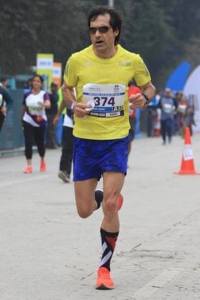
Ashok Nath (This photo has been downloaded from the runner’s Facebook page)

ASHOK NATH / Full marathon (first in age group 55-59 years)

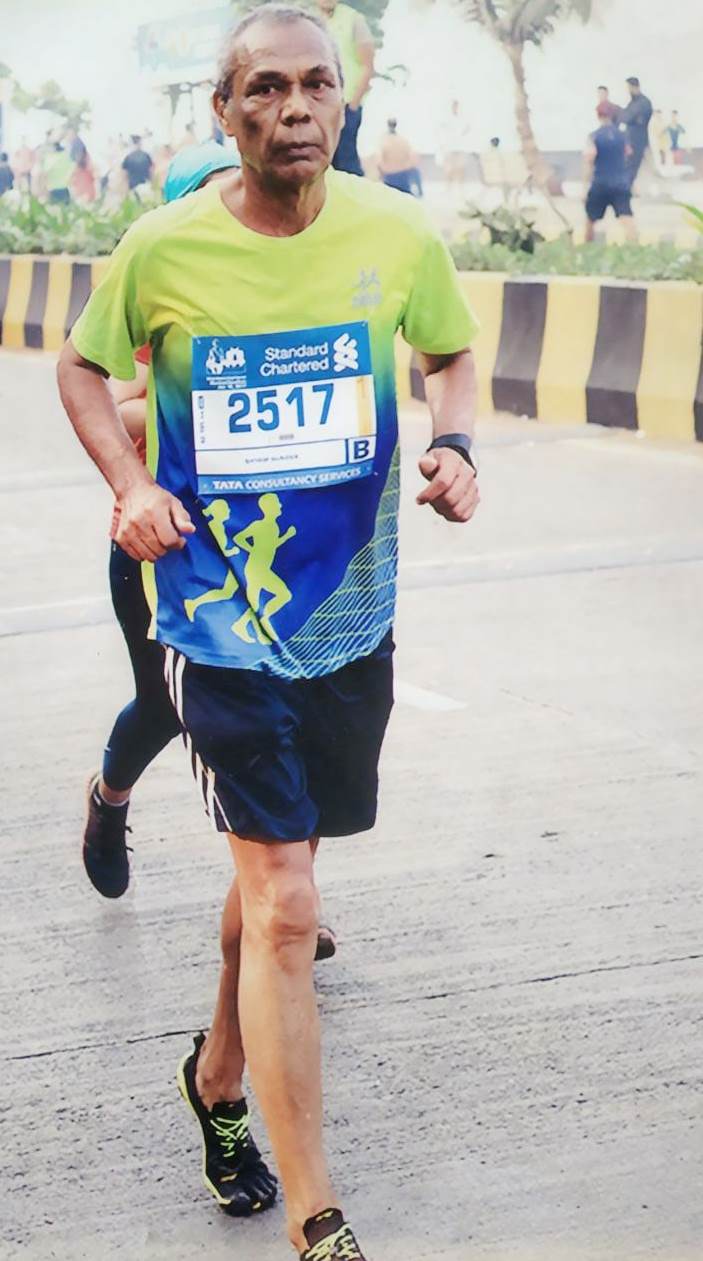
Bangalore-based Ashok Nath has been running for many years and is a regular participant at many marathons around the world including the iconic Boston Marathon.

At the 2019 edition of Mumbai Marathon, he was pacing a runner to help achieve his qualifying time of 3:17 hours for the Boston Marathon. “My timing is usually around 3:05 hours but this time I wasn’t racing to meet any target,” he said.

“As you grow older you need to be cautious about running so as to avoid injury,” he said.

He completed the full marathon at 2019 TMM in 3:17:05.

Many runners complained of harsh weather during Sunday’s marathon but Ashok felt the weather was not as bad as it was made out to be. Also, Mumbai Marathon is not a tough course. “Yes, one has to be watchful while running because the roads are not uniformly good,” he said adding that the Peddar Road uphill is needlessly exaggerated.

Mumbai Marathon has been improving in terms of arrangements over the years but there are some lacunae that need to be addressed soon. “The running corrals need to be more sharply defined especially for the marathon race. There should be sharper demarcation between corrals,” he said. Other issues that need to be looked into urgently are the quality of roads, demarcation of half marathon and marathon runners.

“Also, at the finish point the landing stretch must be spacious to allow the runners to continue running. The abrupt stop in running at the finish point is detrimental to the runner. These are issues that need to be looked into urgently,” he said.

Ashok will be attempting the full marathon in Delhi in February. He will head to the Boston Marathon in April.
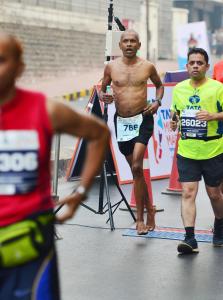
Thomas Bobby Philip

THOMAS BOBBY PHILIP / Full marathon (first in age group 50-54 years)

In recent times, Bobby has been a sub three hour-marathon runner. At the 2019 edition of Mumbai Marathon, he continued the trend. He completed the full marathon in 2:59:51.

Although sub-three hour finish, the time he took wasn’t an improvement over his personal best in the discipline. “The timing this year was not my best. My hydration strategy did not work,” he said.

A barefoot runner, Bobby was on track for a good finish for most part of the distance of 42.195 kilometers. However with barely four kilometers left to finish, he felt the impact of dehydration.

Well past Peddar Road, when he entered the Marine Drive section dehydration began to really hit him. “I found the Marine Drive stretch endless and I struggled there. I had to slow down,” he said.

Aware of Mumbai weather conditions Bobby’s hydration strategy during the marathon was to keep having sips of water. Obviously, that was not enough on January 20, race day. “During my training runs, I do not drink so much water,” he said.

“My finish was not good. For the last 400 meters I had to walk and jog. At the finish line, the medical team put me in a wheelchair to take me to the medical tent but I chose to get out as sitting in the wheelchair was giving me cramps,” he said.

“I found the energy of the city outstanding. From the event management point of view, I found it quite good,” he said adding that the quality of roads was also good and as a barefoot runner he faced no problems.

Bobby will now be participating in the New Delhi Marathon.

His approach straddles two key running events every year – the Tata Mumbai Marathon in January and the TCS 10 K in Bengaluru in May.
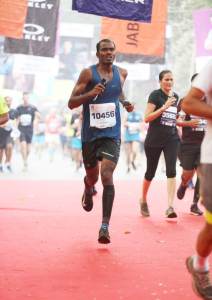
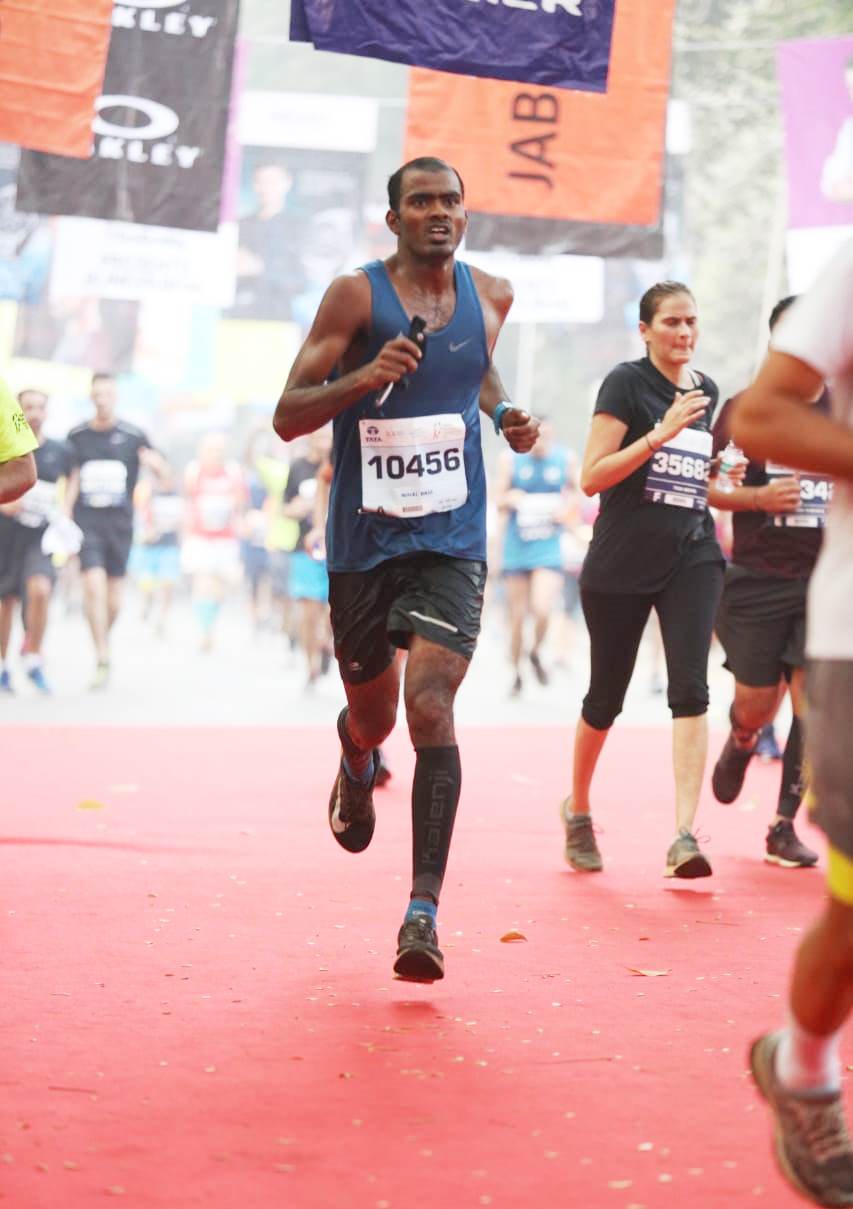
Nihal Baig

NIHAL BAIG / Full marathon (second in age group 18-24 years and ninth overall in amateur category)

It was Nihal’s first appearance at the Tata Mumbai Marathon.

He completed the full marathon in 2:47:29 to place ninth among amateur runners of the distance and second in his age category.

In the process he also chopped off 15 minutes from his previous best timing of 3:03:37 hours registered at the 2018 Hyderabad Marathon.

Nihal started running during his student days at IIT Mumbai, mostly doing five kilometer-runs. He then trained with the institute’s athletic team and represented IIT Mumbai in many competitive events.

“Last two years, I have been doing both half and full marathons,” Nihal said. He now works as Risk Associate with MSCI in Mumbai.

At 2019 TMM, his target was to finish the run with timing in the range of 2:50-2:52 hours. “After the first two kilometers, I felt I could increase my pace and was comfortable running at that pace. Past the first 10 kilometers, I slowed my pace a bit for the next 10 kilometers. For the remaining distance I once again stepped up my pace. I suffered cramps at around 39 kilometers and had to stop and stretch,” he said.

A triathlete, Nihal trains on his own and designs his own training program. Since he is an alumnus of IIT Mumbai he is able to run inside the institute’s sprawling campus at Powai.

“Being a triathlete has helped me improve my cardiovascular ability,” Nihal said.

In December of 2019, he participated in Half Ironman at Bahrain and emerged fifth in his age group, finishing the three disciplines in 4:44 hours.
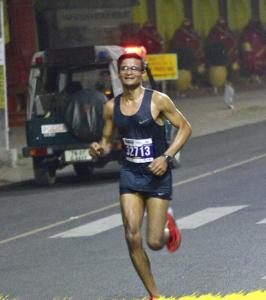
Sharath Kumar Adanur

SHARATH KUMAR ADANUR / Full marathon (first in age group 30-34 years and overall 12th in amateur category)

Sharath Kumar had some exposure to badminton during his undergraduate years. It was while doing his M.Tech at IIT Kharagpur that he took up running; he ran on a ground in the institute’s campus. “It was a 2.2 kilometer-loop and I kept running that loop. Slowly, the number of loops increased,” he said.

In 2013, he enrolled for TCS 10k in Bengaluru. With that his journey into long distance racing started. He has been running Mumbai Marathon since 2015 and his preferred distance here is the full marathon.

“I was very surprised with my podium position this time,” he said. Sharath Kumar finished the full marathon with a timing of 2:49:03 emerging first in his age category of 30-34 years. His overall position among amateur marathon runners was 12. This is his first podium at TMM. This is also his personal best.

“This time, my training was much better and I was mentally more prepared. I was able to hold on to the pace well throughout the race,” he said. He had a target of 2:47 but fell slightly short of that. Sometimes, wading through a sea of half marathon runners in the latter part of the race can sap one’s strength and take away some time, he said.

He was unperturbed by Mumbai’s weather. He felt such weather as one had on race day is to be expected in Mumbai. “The crowd support here is quite good,” he said.

Sharath Kumar chalks out his own training program. “I read a lot of books on running and trawl the internet for information. I try to incorporate what is relevant for me in my training,” he said.

A resident of Jamshedpur, Sharath Kumar works as Senior Manager at Tata Steel. “We have a very good synthetic track where I can do my speed workouts,” he said.

In April 2019, he will be heading to the Boston Marathon, his second outing there, followed by the Chicago Marathon later in the year.

He believes that with good training and proper diet he has the capability and to shave off another 10-12 minutes from his current timing in the marathon.
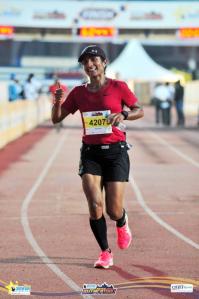
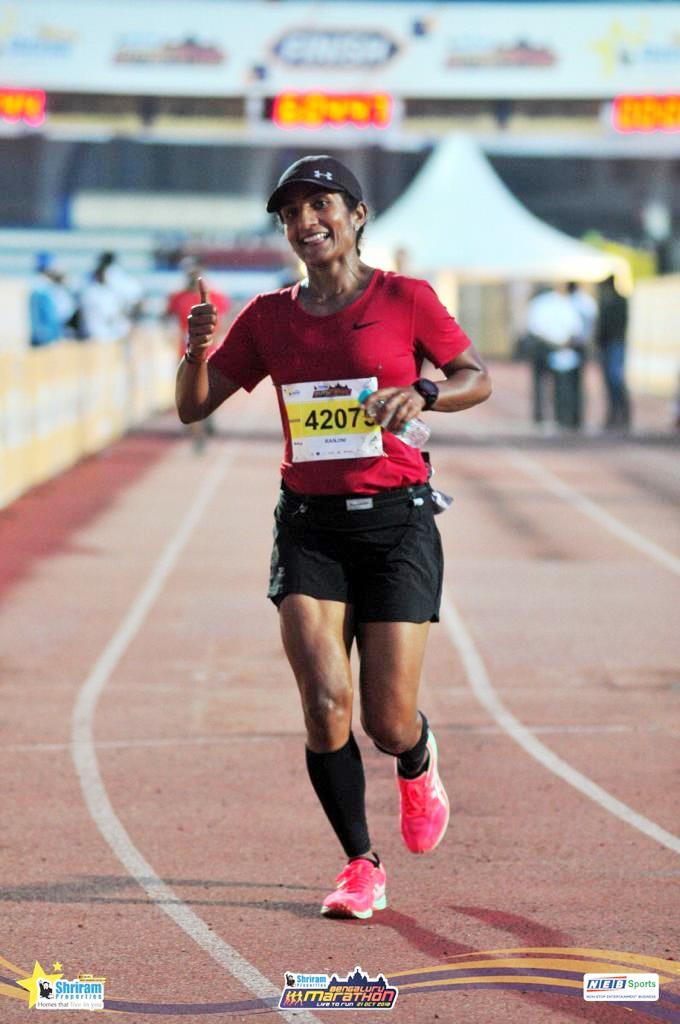
Ranjini Gupta

RANJINI GUPTA / Full marathon (overall eighth position among women in amateur category and first in age group 40-44 years)

A sportswoman, Ranjini Gupta took a hiatus from the active lifestyle for a few years. Six year ago, after the birth of her second child, she resumed her link with fitness beginning with jogging on the streets of Chennai, where she lived then.

Ranjini was a hockey player during her school days and went on to represent Karnataka state in the sport. Later, she also got into football and represented Bangalore University.

Her first race in running was a 10k organised by Dream Runners. “Initially, I did not know much about running as distinct discipline. I slowly started to understand the sport,” she said. She continued participating in races and from 2013, also found herself on the podium at some of these events.

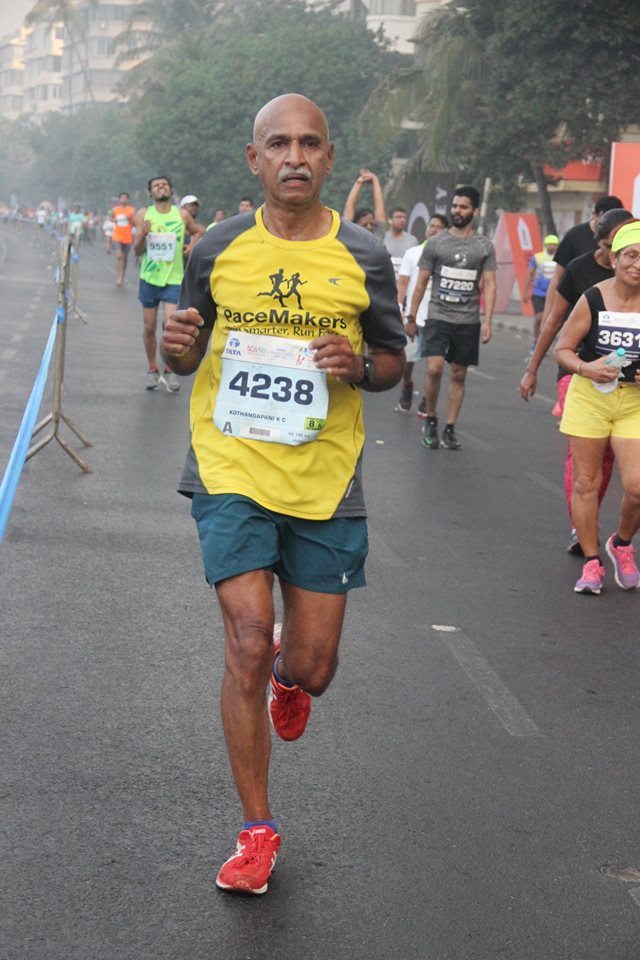
In 2013, she contacted Bengaluru-based coach K.C. Kothandapani and started to train online with him. Four years ago she moved to Bengaluru. That improved the training further.

At 2019 TMM, she had a specific plan designed by her coach. “It was executed well. I was supposed to run the first half in 1:48-1:50 hours and the second half in similar time. Right from the start, I held myself back and did not push,” she said.

She finished the run in 3:38:19 hours.

This marathon was her training run for the National Marathon Championships 2019, slated to be held on February 24 in New Delhi.

TMM was her third marathon in the last four months, starting with Bengaluru Marathon in October 2018 and followed by Bengaluru Midnight Marathon in December 2018.

“In Delhi, I would like to go all out and give my best. Also, the course is better and the weather is expected to be good,” she said.

She has participated in Mumbai Marathon four times so far – 2014, 2015, 2016 and 2019. She has also completed three of the World Marathon Majors – Berlin, Chicago and Tokyo. This year, she will be attempting the New York City Marathon and next year, the Boston Marathon.

An ACE (American Council on Exercise) certified personal trainer, she runs her own training outfit – Rungenie Fitness – which offers fitness-training to football players.
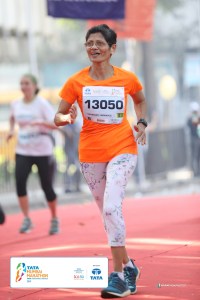
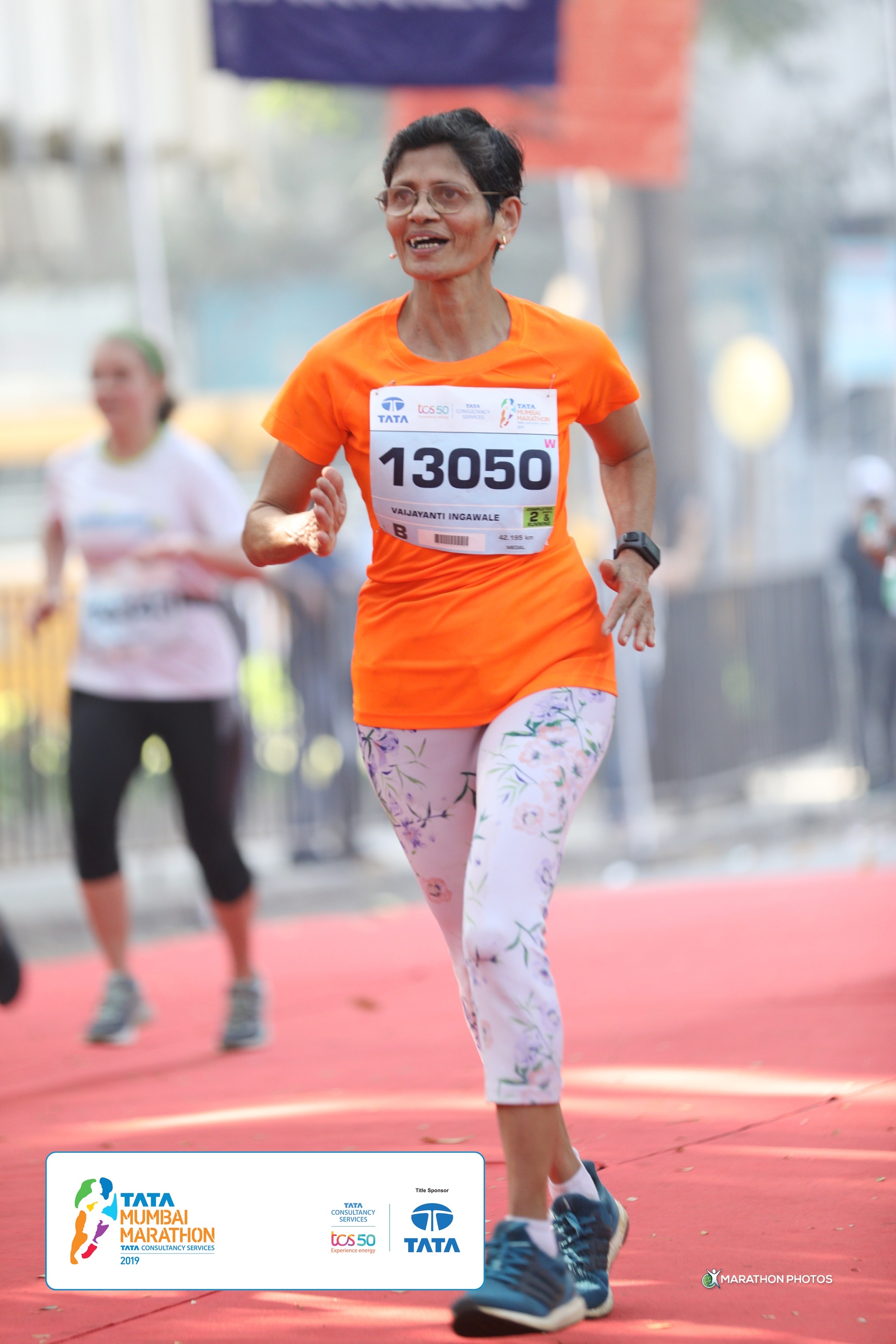
Vaijayanti Ingawale

VAIJAYANTI INGAWALE / Full marathon (first in age group 60-64 years)

A pediatrician by profession, Vaijayanti has secured podium finish in several of the events she participated in.

“This time around my training was not adequate. Right from the start I had to watch my pace. With the change in weather, fear of developing cramps was there. But I did not get any cramps until the finish line. The run went off quite well.”

In terms of timing, she ended the race with a time of 4:25 hours compared to her personal best of 4:19 hours.

According to her, the overall experience of running Mumbai Marathon was excellent.

This year, she has not planned any major running events yet. Apart from Tata Ultra nothing has been chalked out yet.
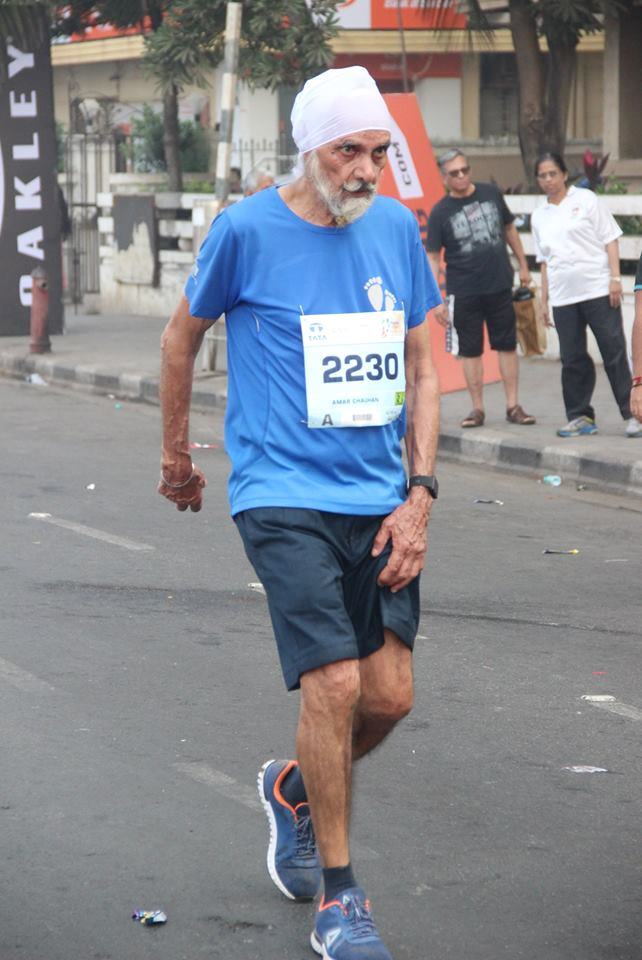
Amar Chauhan

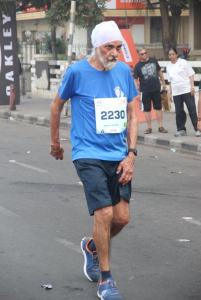
AMAR CHAUHAN / Full marathon (first in age group 75+)

This was the fourth win for Amar Chauhan in his age group at TMM.

At 2019 TMM, the 76 year-old completed the full marathon in 4:12:02 hours topping the list among runners over 75 years of age. “The person who came in second was 1:22 hours behind me,” he said.

Amar stays for six months in Chandigarh and spends the remaining six months of the year travelling to Canada and the US, where his two sons live. He participates in running event in these places. His win at 2019 TMM was his 56th win from 63 marathons participated in so far.

Confident of achieving a sub-four hour finish, his run went off smoothly until the 39th kilometer. “After 39 kilometers I started to get cramps. I had to stop and stretch.  This delayed my finish,” he said. His personal best of 4:02:27 in the full marathon happened during 2018 TMM.

Amar follows a meticulous training schedule. “I run one day and do brisk walking the next day. The mileage ranges from 12 to 20 kilometers,” he said. While in Chandigarh, he stays alone for the six months that he lives here.

He will be participating in a couple of marathons in the next few weeks. In March, he is scheduled to participate in the 12 hour stadium run in Delhi. “Since I am 76 years old I want to run 76 k during the allotted time period. I will resort to run-walk,” he said.
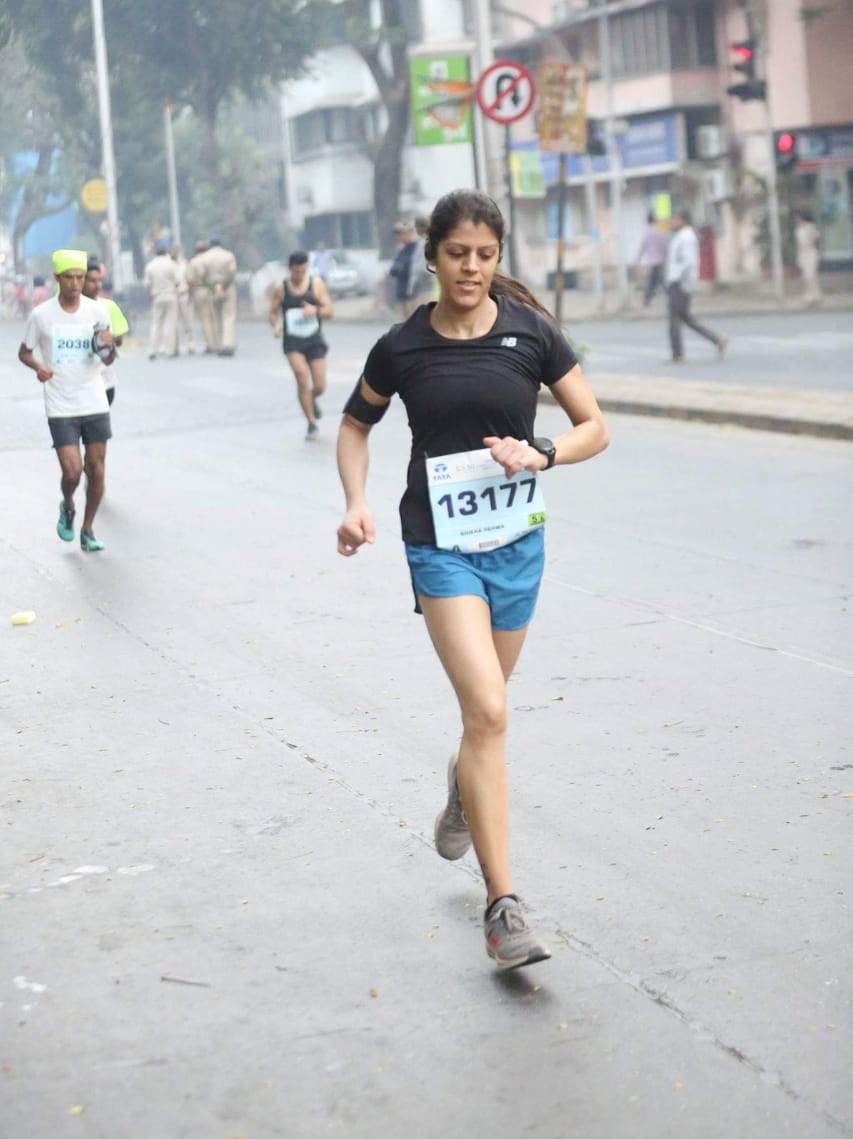
Shikha Pahwa

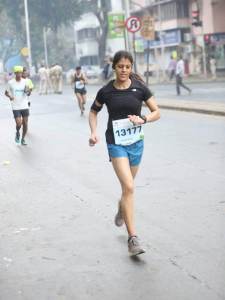
SHIKHA PAHWA / Full marathon (ninth among amateur women and second in age group 30-34 years)

Shikha Pahwa was unable to give her 100 per cent for her run at 2019 TMM run because she was nursing an injury.

“I could have done better,” she said.

Her target was to finish the run in 3:30 hours.

She completed the full marathon in 3:38:55 hours securing second position in age group 30-34 years and ninth overall among amateur women.

Shikha has been running for the last ten years. She started with shorter distances like the 10k and the half marathon.

After her first full marathon, she wanted to increase distance further into the realm of the ultramarathon.

She did a few 50k races such as Tuffman Mashobra Ultra and Chennai Trail Marathon. In 2017, she did the 72k Khardung La Challenge. She was the winner among women in this race.

In 2018, she participated in the 111k category of La Ultra The High finishing in twelfth place.

Her next race is the 2019 National Marathon Championships to be held in New Delhi on February 24.

According to Shikha, her preferred distance is ultra runs in excess of 100 k.
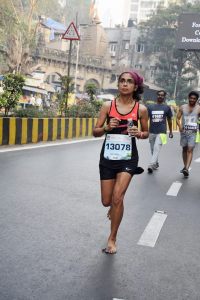
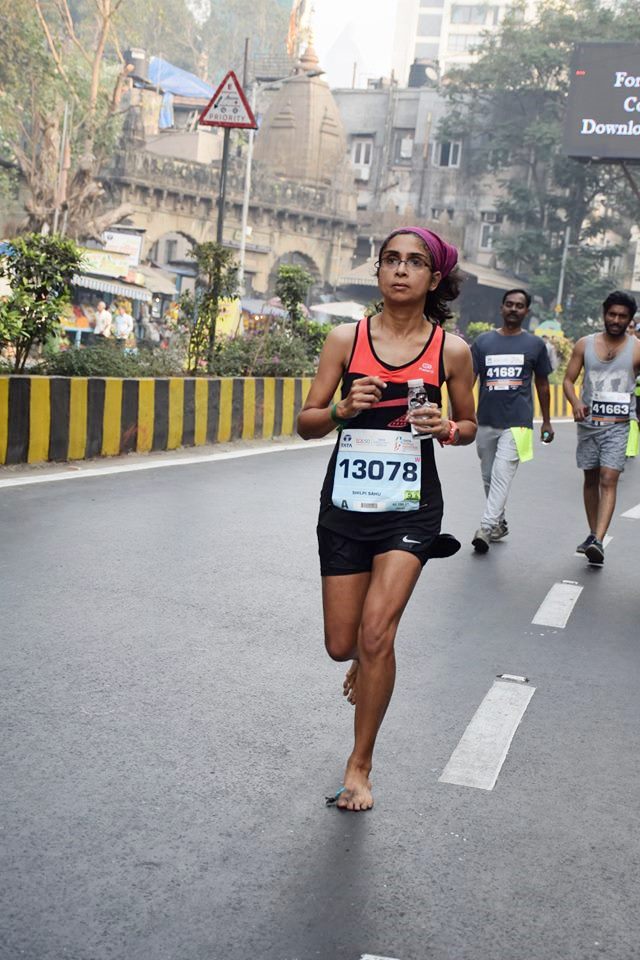
Shilpi Sahu (Photo: Bhavesh Patel)

SHILPI SAHU / Full marathon (seventh among amateur women and second in age group 35-39 years)

A barefoot runner, Shilpi Sahu commenced her running career about nine years ago.

“I was active in sports during my school days, mostly in track and field events. But, I was not very serious about it,” she said. Later during her B.Tech days at IIT Kharagpur, she also played basketball.

In a bid to stay physically active, she continued with short jogs. An engineer with Qualcomm in Bengaluru and a mother, Shilpi does not get much time to focus on running.

In 2010, with just three weeks of training, she enrolled for Bengaluru’s popular 10k run. “ I did not have much time to train as my child was still small,” she said. After running a few 10 kilometer-runs and half marathons she started running the full marathon in 2013. “I run three to four full marathons every year,” she said.

This time around, her training was much better. At the 2019 TMM she finished the full marathon with a personal best of 3:34:34 hours. “In Mumbai, the route is easy. It is slightly humid but not that difficult. I find the crowd support very good in Mumbai,” she said. She prefers the full marathon distance because she finds it challenging compared to the 10k and half marathon.

Shilpi is involved in sustainable zero waste initiatives. She raised a petition to Mumbai Marathon organizer Procam and other key authorities to reduce the use of plastic during the event. The petition helped reduce the use of plastic but lot more needs to be done in the area of greening the marathon, she said. According to her, the petition found support from over 100,000 people. She is part of a trust that manages urban lakes including Kaikondrahalli Lake in Bengaluru. She is also a key member of Green the Red, a volunteer led campaign to make women aware of healthy and sustainable menstrual products and help them make better choices. As part of her efforts to minimize carbon footprint, she cycles to work daily.
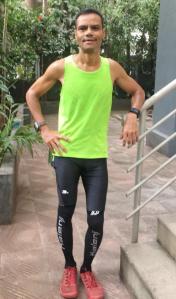
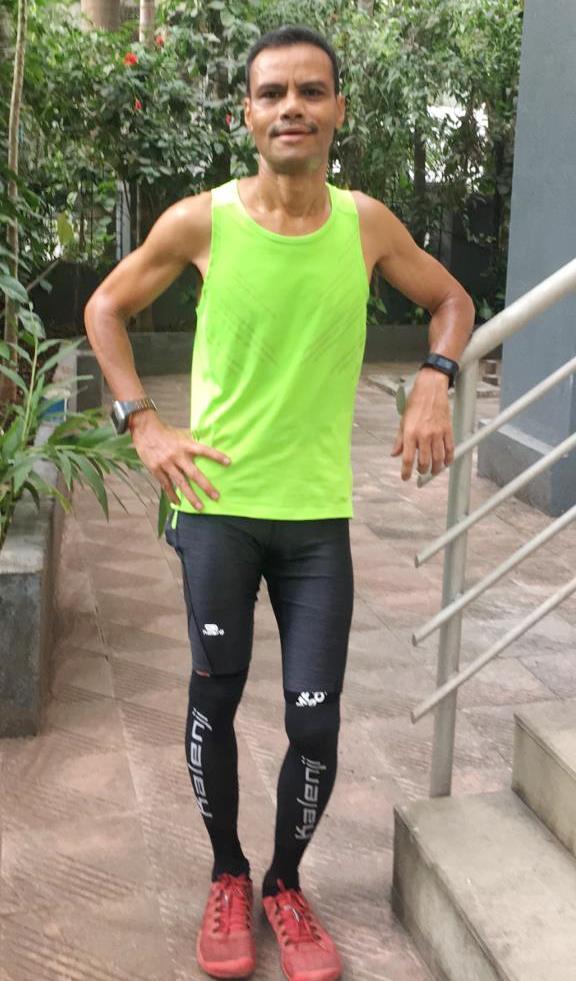
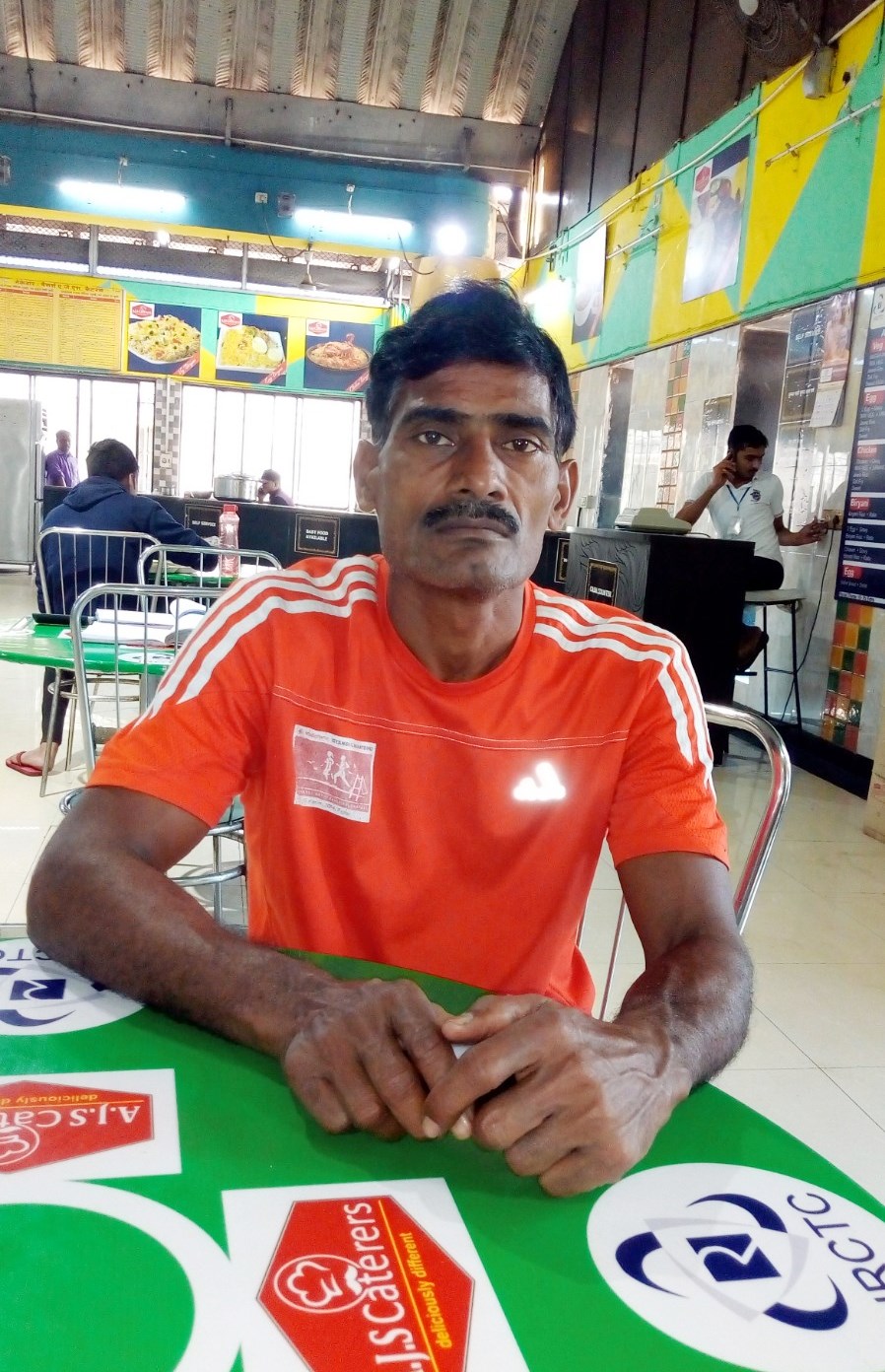
Pravin Gaikwad

PRAVIN GAIKWAD / Full marathon (second in age category 55-59 years)

Known for his meticulous training, Pravin, a pediatrician and running coach, often secures podium finish at the events he participates in. He has been running the Mumbai Marathon for many years. This time he ended up on the podium; his first time so at this marquee event.

“I started the run well. I had to hit a certain pace but ensure that I do not go beyond that. I was able to maintain my pace as per my plan,” he said.

For him, the most boring stretch is the Worli loop on the return leg of the marathon. He sometimes finds it never ending. “This time, I decided not to focus on the boring aspect and was able to go through that stretch quite easily.”

Around the 35 kilometer-mark he started to suspect cramps and his pace dropped. “Also, I was recovering from viral infection and so could not push myself in the last stretch of the marathon. Nevertheless, this was my first podium finish in the Mumbai Marathon,” he said.

Pravin completed the full marathon in 3:39:30.

With Tata taking over the title sponsorship of Mumbai Marathon, the event, he believes, is becoming more runner-centric. This is evident in some of the changes in the organization of the race – ten minute early start, segregation of the lane for full marathon runners towards the end, introduction of 10 k race and post-run arrangements. Barring a couple of drawbacks the run was well organised. “I will definitely continue to run Mumbai Marathon,” he said.

Going forward, he will be attempting the 50 k race at Tata Ultra in February. “In terms of racing, I will mostly do smaller mileages as my focus is fitness and anti-aging.”
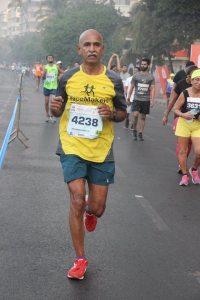
K.C. Kothandapani

K.C. KOTHANDAPANI / Full marathon (second in age group 60-64 years)

One of India’s best known coaches for amateur runners taking to the marathon, K.C. Kothandapani is known for his meticulous training. Formerly with the Indian Air Force (IAF), Kothandapani or “Pani Sir’’ as he is referred to by his wards, is a regular at Mumbai Marathon and often ends up on the podium in his age category.

During the 2019 edition of TMM, Kothandapani had a disciplined run. “For the first half of the distance, I was pacing runner Ranjini and we covered the distance in 1:48 hours. She continued with me until 27k and then asked me to go ahead. In the second half I increased my pace and finished the distance in 1:45 hours ending with a negative split,” he said.

This time, he planned his race well and did not push needlessly. He also ensured that his heart rate did not increase unduly until the 37th kilometer. “For the rest of the distance, I gave my 100 per cent and finished strong,” he said adding that his run went as per plan.

His hydration and nutrition plan also worked well. “Every 20 minutes, I took 200 ml of water and every seventh kilometer I had a gel. I took five gels in all. After 35 k I did not take any gels,” he said. He did not feel the impact of the humidity at all.

This time the execution of Mumbai Marathon was quite good. “Mumbai Marathon is the number one race in the country with crowd support and cheering,” he said. The only dampener was the nearly-four hour delay his flight from Bengaluru to Mumbai faced. “On Saturday, we were up at 3:30 AM and managed to reach our hotel only by 9 PM as we had to go and collect our bibs too on the same day,” he said.

Next on the cards for Kothandapani is the London Marathon of April 28. With this marathon, he will be completing the World Marathon Majors. In 2015, he did Boston Marathon followed by Berlin Marathon in 2016. In 2017, he did Tokyo Marathon. In the same year, he also did Chicago Marathon and New York City Marathon. In 2018, he attempted Boston Marathon for the second time but had to give up at 30 k because of adverse weather conditions.
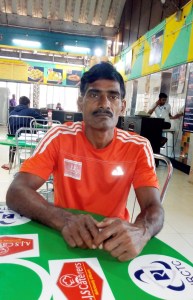
Sabhajeet Yadav (Photo: Latha Venkatraman)

SABHAJEET YADAV / Full marathon (third in age group 60-64 years)

A farmer from Dabhiya village in Jaunpur district of Uttar Pradesh, Sabhajeet runs to earn the prize money that comes with each of the races. He is a regular podium finisher at races across India and winner multiple times in his age category at the Mumbai Marathon.

In August 2018, he was down with typhoid and that impacted his strength. As a result he ended up in fourth position at Airtel Delhi Half Marathon in October 2018. However, he made up at the Vasai-Virar Marathon finishing first in the full marathon distance in his age category.

At the Mumbai Marathon, he managed good pace until the 12th kilometer. After that, his pace started to drop. He also had difficulty moving his right arm due to shoulder ache. “After the Vasai-Virar run, my training was quite inadequate. I had not done a single run of over 15 kilometers. Had I done even one training run of 30 kilometers I would have been able to do better here,” he said.

On Sunday he finished the full marathon at 2019 TMM in 3:34:00.

Sabhajeet will be back in Mumbai in February to attempt the Thane Hiranandani Half Marathon.
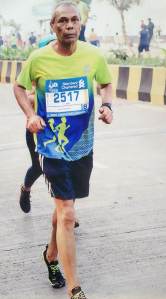
Shyam Sunder

SHYAM SUNDER / Full marathon (second in age group 70-74 years)

This was the ninth time Shyam Sunder was running the Mumbai Marathon. He usually runs the full marathon in around 4:50 hours. In terms of the time he took to complete the run, the Tata Mumbai Marathon 2019 edition did not go well for him. “I developed cramps along the way and I had to resort to walk-run. I started the run at a slower pace of seven minutes per kilometer for the first half of the course compared with my normal pace of 6:30 minutes per kilometer,” he said.

At the 23rd kilometer he started to get cramps in his calves and thighs. He had to resort to walking. “Every time I tried to run, I would have shooting pain and I had to slow down and walk. In the process, I lost a lot of time. The latter part of the run went off well and I completed the run without any aches. Many people were complaining about the adverse weather but I did not feel its impact. I am surprised by the podium position,” he said.

Shyam Sunder completed the full marathon in 5:24:06, placing second in his age category.

He does not like to miss out on the Mumbai Marathon. For him, this is a race he has positioned as a goal. Also, with TCS taking over the title sponsorship of Mumbai Marathon, it has improved further. “Fancy for the Mumbai Marathon hasn’t waned at all. I will continue to run the full marathon here. Next year, I will come into the age group of 75 years and above.”
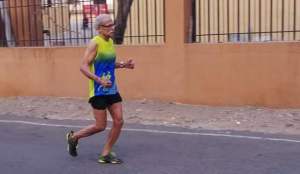
Ramachandra Rao

RAMACHANDRA RAO / Half marathon (first in age group 70-74 years)

Septuagenarian runner Ramachandra Rao participates in very few running events. A retired scientist, his preferred distance is the half marathon. He has been a regular at the Mumbai Marathon for many years.

His training was modest this time. “As the years advance, one tends to slow down,” he told this blog a day after the 2019 Tata Mumbai Marathon (TMM). His half marathon run at TMM – he covered the distance in 2:00:57 – put him at the top in his age category of 70-74 years.

“Last year, I was trapped by slow half marathon runners. This time, I had no problem at all. The arrangements were quite good. Right from bib collection to post-run nutrition everything was arranged very efficiently,” he said.

Rao prefers to participate in very few running events. “Right now, I just want to recover from this run,” he said adding that there are no major events planned in the next few weeks.
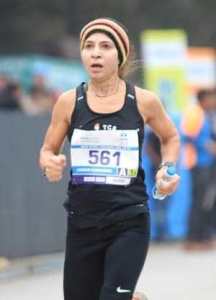
Lata Alimchandani

LATA ALIMCHANDANI / Half marathon (first in age group 60-64 years)

Lata chose to run the half marathon this time at TMM primarily because she is due to run the Tokyo Marathon in March and the Boston Marathon in April.

“I also wanted to find out if I can win the half marathon in my age group here. I feel it is more difficult to win a half marathon compared to the full marathon,” she said.

At 2019 TMM, she finished first in her age group of 60-64 years in the half marathon but was unable to achieve the timing she had targeted – a sub 1:55. She completed the race in 1:59:03. “The weather was bad and I had a cold. Barring these two factors, my run went off quite well,” she said.

Many of her friends and co-runners suffered cramps because of the warm weather.

“I enjoyed the run this time. The event was efficiently managed. The only difficult stretch for me was the Marine Drive section of the course,” she said.
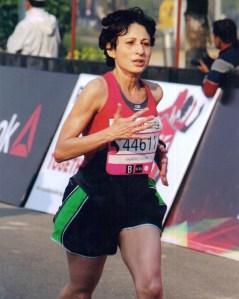
Khurshid Mistry

KHURSHID MISTRY / Half marathon (first in age group 55-59 years)

A regular podium finisher at many of the half marathon races she goes to, Khurshid had a difficult race this time. “I had a 1.3 centimeter tear in my hamstring muscle and that hampered my running all along. I started my run fast but later controlled my pace on the sea link,” she said.

Every passing kilometer proved to be tough for her as she was in pain. Over and above that, weather was quite warm. She completed the half marathon at 2019 TMM in 2:00:40.

“I have been having hamstring problem since August 2018. After Vasai Virar Marathon, the problem aggravated. A week before Mumbai Marathon I consulted a doctor and tests showed that I have a tear in my hamstring muscle. I will be off training for the next six weeks to allow for healing,” she said.

Khurshid, who balances half marathon races and sprinting events, was scheduled to go for the National Masters’ Athletics Meet in February. But with the hamstring injury she has decided to opt out of it.
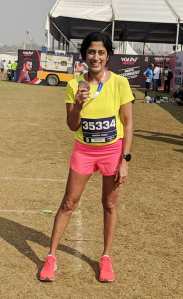
Kavitha Reddy

KAVITHA REDDY / Half marathon (first in age group 40-44 years)

Kavitha chose to run the half marathon at the 2019 edition of Mumbai Marathon.

“For the last two years I have been running the half marathon in Mumbai. In April this year I will be participating in the London Marathon. Therefore, I did not want to do the full marathon here. I decided to stick with the half. I try and attempt a maximum of two marathons in a year as recovery from race takes time,” she said.

This time at Mumbai Marathon, her run was good although she ended tad short of her targeted timing of 1:35 hours. She finished in 1:36 hours. “Overall, I ended up in 11th position among women half marathon runners,” she said.

Tata Mumbai Marathon is getting better every year, she avers. It is a well-managed run. “I will definitely come back every year to run the marathon here. This time as I was doing half marathon I could not experience Mumbai’s cheering. It was still dark when I completed the run early in the morning.”
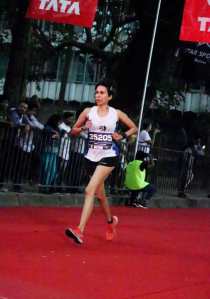
Vaishali Kasture

VAISHALI KASTURE / Half marathon (first in age group 45-49 years)

Vaishali has been running for the past 17-18 years; she has been participating in races for the last ten years.

Amid busy corporate life, managing family and active involvement in SonderConnect – an organization focused on empowering and promoting women entrepreneurs – where she is co-founder, running helps Vaishali find that elusive balance.

“I have a very busy schedule that involves a lot of travel both within the country as well as overseas. Running is something that helps me balance my corporate and personal life,” she said.

Her training is therefore not very strict although she would like to train more seriously. “Running is food for my soul,” she said.

She considers Tata Mumbai Marathon (TMM) as flagship race of the country. “It is a very well organised event and the course is good. Yes, weather is an issue. I did struggle a bit because of the weather,” Vaishali said. The struggle was partly because Vaishali, a resident of Bengaluru, is not often exposed to humidity levels akin to that of Mumbai during her training runs.

“Last two months have been quite cold in Bengaluru. I had not trained in humid conditions at all,” she said. She finished the half marathon at 2019 TMM in 1:45:01 hours. She has been running Mumbai Marathon since 2010, attempting both the half marathon and marathon races.

Having completed the World Marathon Majors, Comrades Marathon and a couple of 100 k runs, Vaishali has no specific target in terms of running events to participate in. “I will be running shorter distance races and focusing on building my strength,” she said.
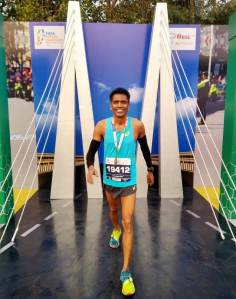
Idris Mohamed

IDRIS MOHAMED / Half marathon (first in age group 50-54 years)

Faced with a plantar fasciitis problem Idris could train for only 45 days. Nevertheless, the run went off well and he ended up winner in his age category with timing of 1:24:37.

“During the last three years I came second in my age category. Last year I had a better timing of 1:22 hours but ended up second in my age category.”

This time, the organization of Mumbai Marathon was much better. I have no complaints of weather because I come from Chennai where we experience similar weather conditions,” Idris said.

He will be participating in the National Masters’ Meet at Guntur in February. There he will take part in four events – 800 meters, 1,500 meters, 5,000 meters and 10,000 meters.

Going ahead, his plan is to participate in the Half Ironman event at Goa in October but that would entirely depend on his training in cycling. “I am good in running and swimming but need to improve my cycling.” Idris is a regular podium finisher at most marathon races that he participates in around the country.
Kamlya Bhagat (Photo: Shyam G Menon)

KAMLYA BHAGAT / Half marathon (second in age group 30-34 years)

Hailing from financially challenged circumstances and consequently known to make ends meet by racing for prize money, Kamlya Bhagat had completed his half marathon at 2019 TMM on a note of dissatisfaction. “ I did well for the first ten kilometers. Then my left hamstring started to hurt. At one point I thought of giving up. But I decided otherwise and told myself to continue,’’ he said. According to him, after he finished he didn’t bother to find out about his standing in the results; he expected nothing. By next morning however, he had the race result on his phone, official timing of 1:23:08 and a second place in his age category to chew on.

For Kamlya who now works at a school in Taloja, 2019 TMM happened with a rather short run-up in terms of preparation. “ I decided to go in rather late in the day,’’ he said. The hamstring in question had been troubling him since the past four months. He also missed Dnyaneshwar Tidke with whom he had enjoyed many a training session.  Following knee surgery, Dnyaneshwar – he is among Mumbai’s best marathoners – was forced to sit out 2019 TMM. “ Eventually, I trained for TMM all of one week. My longest run in that period was of 18 kilometers and I did that just once,’’ Kamlya said.

What should interest about this avowed runner of short and middle distance races – not to mention someone who fears that any attempt at the full marathon may result in pace reduced over the short / middle distances that are his bread and butter – are the moves being made to get familiar with longer hauls. In the year that went by he placed second in a 35 kilometer-run in Lonavala. He plans to attempt it again. Does it mean a full marathon sometime in the future? Kamlya was unsure about it. “ I am yet to get my pacing and strategy correct in the longer distances,’’ he said.
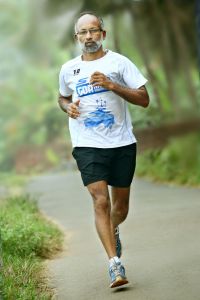
Thomas Pallithazhath

THOMAS PALLITHAZHATH / Half marathon (third in age group 55-59 years)

“I had good fun running the half marathon distance at TMM,” said Thomas Pallithazhath. He finished the run in 1:34:54 securing third position in the age group of 55-59 years.

In December 2018, he got a personal best of 1:33 running at an event in Pune. He was hoping to maintain or improve it at TMM but fell short by a minute.

A resident of Wayanad, Thomas took to running seriously after the age of 50. He works as a driver in Kerala. He took to driving as an occupation several years ago when he suffered losses in a business that he was managing. “As a driver, one is forced to sit for several hours. For health reasons, I took to yoga during those years,” he said.

His house in Wayanad is in close proximity to the villages T. Gopi and O.P. Jaisha, elite athletes, hail from.

Around the time Thomas turned 50 years of age, he started to develop knee pain. “A friend told me that running would help reduce the ache. I started running and my weight came down. My running-lifestyle helped me a great deal,” he said.

Thomas has secured podium finishes at many of the events he took part in. “I did participate in a couple of full marathon races but I felt it was prudent to stick to half marathon. My job as a driver is very hectic and if I have to do full marathon I need to take time off work to rest and recover. Running the half marathon is easier to manage with work,” he said.

He believes his stamina improved tremendously after he chose to eat raw foods such as nuts, fruits and sprouts. “Once a day, I eat sambhar rice but otherwise I only eat raw food. I have benefitted a lot from this diet. My stamina has improved a great deal,” he said.

(The authors, Latha Venkatraman and Shyam G Menon, are independent journalists based in Mumbai. Where photo credit hasn’t been specifically mentioned the picture has been provided for use by the runner concerned.)

2019 TMM / RUN MEGHALAYA SCORES AGAIN

The Run Meghalaya team, after the 2019 TMM (Photo: courtesy Habari Warjri)

Every year, soon after the Mumbai Marathon, the restaurants of South Mumbai get busy catering to families and groups of runners assembled for refreshment and banter after the annual outing.

This January 20, noon, Gaylord restaurant at Churchgate was no exception. The tables outside had their share of people in running gear; similar scene prevailed within. On the restaurant’s upper deck was a large group of runners from India’s North East. It was a group rich in fine timings at TMM. They were from Run Meghalaya, a Shillong based-initiative, regularly sending runners from the north eastern state to participate at leading Indian running events, including the Mumbai Marathon.

In life, you have to be lucky to be talented and financially strong at once. In running too, some of the best talent hails from challenged circumstances. As part of their goals, initiatives like Run Meghalaya persevere to bridge this gap. Those assembled at the restaurant included Darishisha Iangjuh, Kmoin Wahlang, Jefferson Kharnaior, Shaikupar Kharshiing, Swonding Mawlong, Tlanding Wahlang, Geoff Nongrum, David Wahlang, Clementina Lyngdoh, Kresstarjune Pathaw, Habari Warjri and Carolyne Lyngdoh. Four of them were racing at TMM for the first time. Team members were mostly from Shillong (based there); three of them were from Mawkyrwat, the region associated with some of the best runners in Meghalaya. Mawkyrwat’s running culture has been attributed to tough rural lifestyle and organic diet. Mawkyrwat also hosts an annual ultramarathon (Mawkyrwat Ultra) now.

Tlanding Wahlang (Photo: Shyam G Menon)

The strongest runner from the Run Meghalaya team was Tlanding Wahlang from Mawkyrwat. At 2019 TMM, he finished second overall in the full marathon for amateurs with timing of 2:40:53. In his age category (40-44 years) he placed first. In 2018 too, Tlanding had finished second in the full marathon for amateurs (Kresstarjune placed third); at that time his timing was tad slower at 2:42:57. According to Habari, Run Meghalaya has recommended Tlanding to authorities in Delhi for potential inclusion in the Indian team for the World Trail Championships scheduled in Portugal.

Another strong performer at 2019 TMM was Darishisha Iangjuh from Shillong. She placed third overall among women in the full marathon for amateurs with timing of 3:21:07. In her age category (18-24 years), she placed second. In 2018, Darishisha had finished first overall among women in the full marathon for amateurs with timing of 3:13:45. “ We are trying for some of our runners to qualify for the elite category,’’ Habari, who is part of the Run Meghalaya management, said. Swonding Mawlong of Mawkyrwat was yet another Meghalaya runner finishing on the podium in Mumbai this year. He placed second in his age category (50-54 years) completing the full marathon in 3:13:44. But the star performer was probably his mother in law, 71 year-old Kmoin Wahlang. The septuagenarian from Mawkyrwat – she is mother of 12 children and grandmother of 30 – finished the full marathon in 4:33:55 with a place on the podium in her age category (70-74 years) to boot. Interestingly her timing is significantly better than podium finishers among men in the corresponding age category.

Swonding Mawlong and Kmoin Wahlang (Photo: Shyam G Menon)

Race day was challenging for many amateur runners. While the marathon commenced under favorable weather conditions, it suddenly grew warm. Aside from speculation about weather’s impact on performance, there were no specific complaints from the Meghalaya runners on that front. They found the ambiance and crowd support very encouraging. The sight of people voluntarily offering snacks and water along the way was praised. This year, Habari said, some of the team members failed to get adequate rest before the Mumbai Marathon because their travel time got extended. The number of races runners were frequenting was also more; it has likely contributed to slower recovery. The Meghalaya team while more or less maintaining its positions on the podium in Mumbai has probably seen a dip in timing for some of the participants, Habari said.

Although the Mumbai Marathon is India’s biggest, it is a more compact team than usual which heads to Mumbai from Meghalaya. Given the distance from Meghalaya to Mumbai and the fact that some of the state’s gifted runners don’t hail from well to do circumstances with pockets deep enough to afford travel cost, bigger groups typically travel to events in Kolkata and Delhi, some of the team members said. The events next on the team’s radar are the two IDBI Federal Life Insurance marathons in Kolkata and Delhi.

(The author, Shyam G Menon, is a freelance journalist based in Mumbai.)
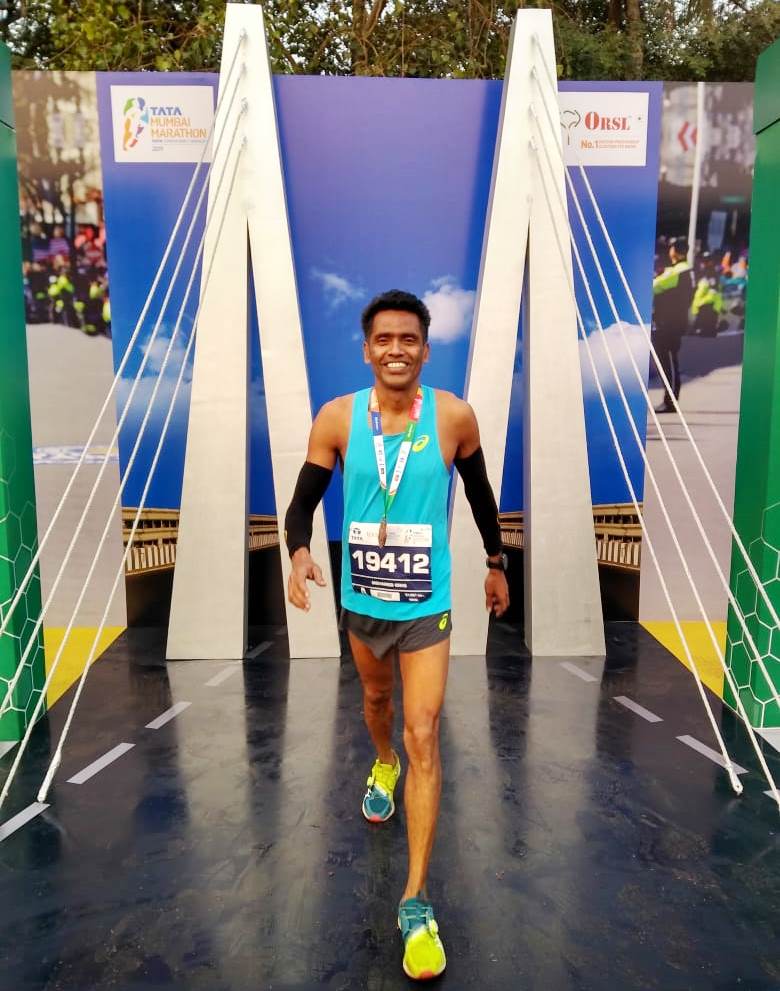
2019 TMM / LADAKH RUNNERS: JIGMET DOLMA PLACES THIRD

Runners from Ladakh with their coach, Savio D’Souza, after the 2019 TMM (Photo: courtesy Tsering Stobgais)
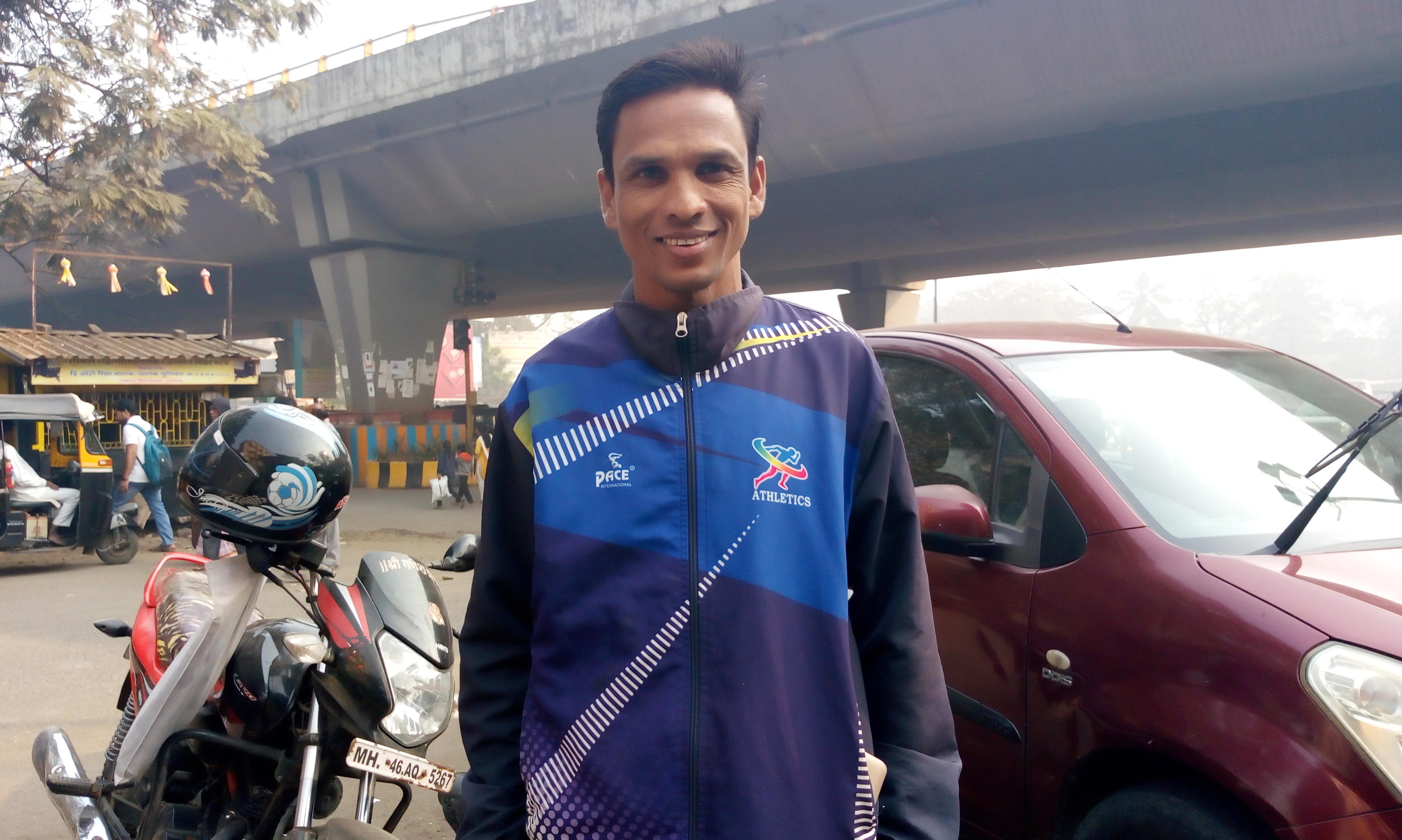
For the runners from Ladakh visiting Mumbai every year for the city’s annual marathon, the 2019 edition of the event was noteworthy. Jigmet Dolma finished third among Indian women in the elite category.

It was around mid-November 2018 that five runners – Jigmet Dolma, Tsetan Dolkar, Manzoor Hussain, Nawang Tsering, Khadim Hussain, Tashi Lador and Diskit Dolma – traveled from Ladakh to Delhi commencing another season of participating in running events across India.

From the assembled team members, Jigmet, Tsetan and Manzoor were focused on the full marathon. The rest were into the half marathon and distances shorter than that. After two days in Delhi, the team shifted to Darjeeling, a town in the Himalaya with elevation suited for training. It also has its own community of runners. Most important – for Leh based-Rimo Expeditions, which has been sponsoring this annual outing by Ladakhi runers, Darjeeling is second home. They have a good base there with infrastructure to support the runners. The team stayed in Darjeeling till December 13. Then, they moved to Kolkata for the Tata Steel 25k race of December 16. At this race, Jigmet and Tsetan placed eighth and ninth respectively, in the elite category. Tashi and Diskit participated in the 10 kilometer-race of the same event. Tashi finished second in the open category for women while Diskit placed fourth, Tsering Stobgais, team manager, said. The young man – a runner, he now studies in Delhi and discharges the duties of a team manager – hoped to eventually sculpt a career as certified coach. Three days later, on December 19, the team reached Mumbai, home of their coach Savio D’Souza. In Mumbai, an eighth member – Stanzin Chundol – also joined the team. With the running tracks at Priyadarshini Park and the university stadium inaccessible, their training was mostly at Marine Drive that huge arc of a seaside promenade, a picture of which is unmistakably Mumbai. Marine Drive is also regular haunt for many city based-runners. Every morning and evening you find people running here; on weekends several group runs originating in the suburbs head here.

According to Tsetan, the weather was a bit of a challenge on race day. “ It was fine when the full marathon started. But as the race progressed, it began to get really warm,’’ Tsetan, who grew up in the high altitude colder weather of Lamayuru, said. In fact, news reports by the end of race day, would talk of several runners experiencing dehydration at 2019 TMM. Weather notwithstanding, the Ladakh team scored a milestone. Their strongest runner is Jigmet Dolma. In 2017, the year she and Tsetan raced for the first time in Mumbai in the elite category for Indian women, Jigmet had placed third with a timing of three hours, 14 minutes, 38 seconds. In 2019, with an improved timing of 3:10:43, she placed third again. Tsetan finished in fifth position; her timing too improved, from three hours, 14 minutes, 42 seconds in 2017 to 3:13:05. Further according to Tsering Stobgais, Manzoor Hussain placed fourth in his age category, completing the full marathon in two hours 54 minutes. Manzoor’s timing at 2019 TMM is among the best reported by runners from Ladakh at TMM. From others in the team, Tashi placed fourth in her age category and seventh overall in the half marathon, Stanzin was sixth in her age category and ninth overall and Diskit was sixth in her age category, Tsering said.

TMM done, the team was set to participate in the Thane Hiranandani Half Marathon of February 10 (where they would divide their interest between the half marathon and the 10K) and finally, the IDBI Federal Life Insurance New Delhi Marathon of February 24. By March, the team should be back in Leh. A pattern visible in the team’s performance has been Jigmet and Tsetan finishing races, one following the other to the finish line; typically Jigmet in the lead and Tsetan following. Tsetan who also wishes to be a coach in the future, said that her goal is to do a sub-three marathon. The target has a reason, one that probably reminds both Jigmet and Tsetan of more work to be done. The best known woman marathoner from Ladakh is Rigzin Angmo. Back in February 1996, in New Delhi, she recorded her personal best in the discipline – 2:45:42. Amid the podium finishes the new lot of Ladakhi runners have been gaining, that’s something to dwell on.

(The author, Shyam G Menon, is a freelance journalist based in Mumbai.)