LADAKH RUNNERS: A SUNDAY THAT COULD HAVE BEEN BETTER

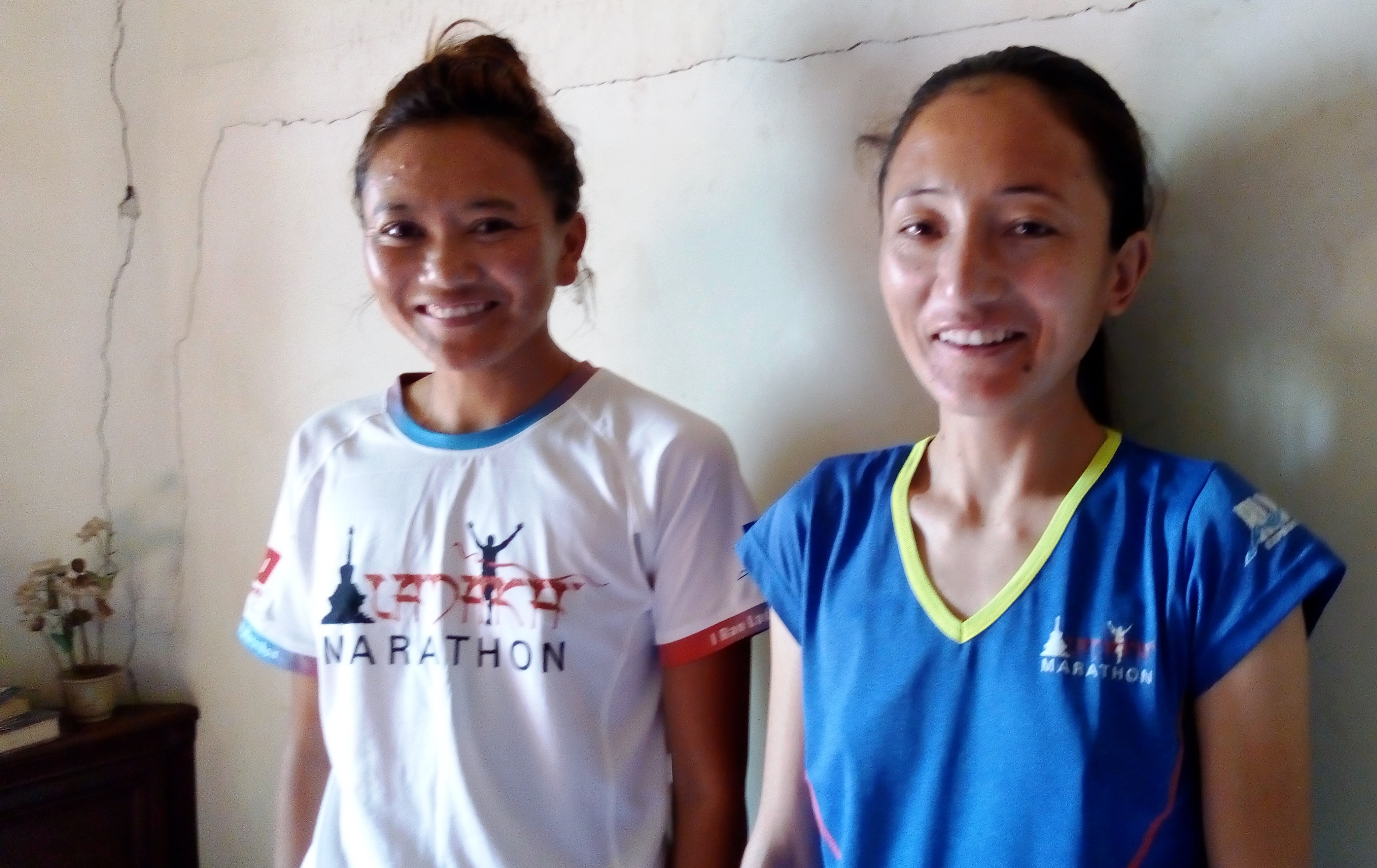
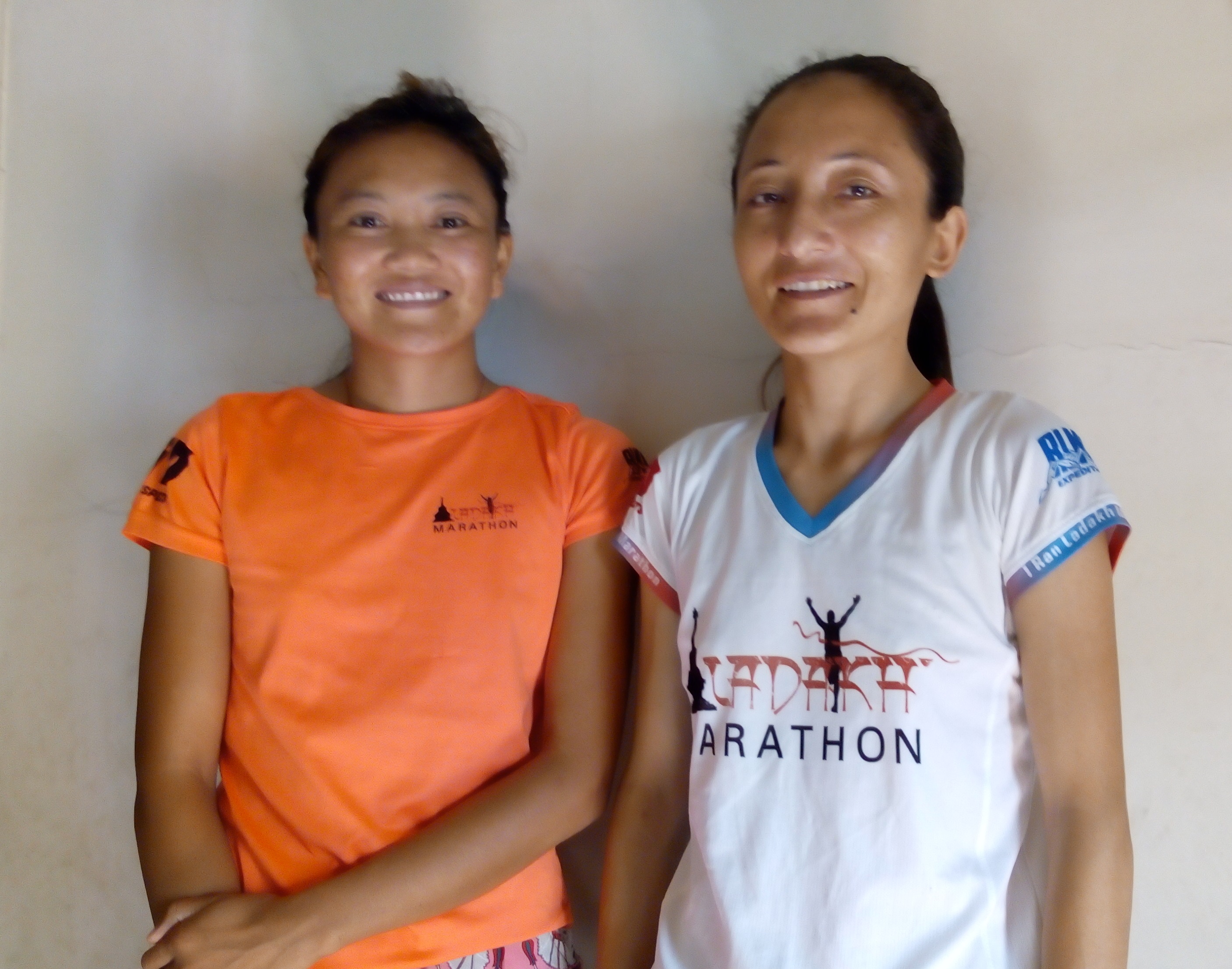
Jigmet Dolma (left) and Tsetan Dolkar; after 2020 TMM (Photo: Shyam G Menon)

Sunday could have been better for the runners from Ladakh visiting Mumbai every year for the annual marathon.

However even as podium finish eluded them at the 2020 Tata Mumbai Marathon (TMM), the team’s outing of 2019-2020 has been fruitful overall with Jigmet Dolma’s participation in the 2019 South Asian Games, Tsetan Dolkar’s triumph at the 2019 Vasai Virar Mayors Marathon (VVMM) and the duo’s fifth and sixth place finishes in the Indian elite women’s category at this year’s TMM.

The two runners’ performance at 2020 TMM is a repeat of tradition; not only are the timings close to each other (Jigmet -3:05:10; Tsetan – 3:05:14) but the splits are also very close right through. With PBs (personal best) of 3:01 hours and separated by mere two seconds, both have been on a quest to go sub-three. They came to Sunday’s race in Mumbai with a plan in place but unfortunately its execution wasn’t to the dot. “ Our strategy was to run the first 21 kilometers in about 1:27. But we were a bit slow and it became 1:30,’’ Jigmet explained. In a race, particularly when chasing a mark like sub-three, the seconds and minutes count. Otherwise, 2020 TMM was “ a good run.’’ They faced no difficulties, the weather was much better than what it was last time and their training had been good in the run up to race day.

Aside from Jigmet and Tsetan in the elite Indian women’s category of the full marathon, the team had one participant in the men’s marathon and the rest in the half marathon for both gender categories. This year, according to Jigmet and Tsetan (who this blog spoke to), they return without a podium-finish in any segment at TMM. In 2019, Jigmet (3:10:43) had finished third among Indian women and Tsetan (3:13:13) had placed fifth. On the bright side, there is improvement in the timing of both runners at TMM, from last year to now. Further within the space of their 2019-2020 outing, Jigmet’s timing at 2020 TMM is better than the timing she returned at the South Asian Games of December 2019 (3:07) while that of Tsetan is an improvement over her timing at VVMM (3:10:27), also from December 2019.

They now have the IDBI Federal Life Insurance New Delhi Marathon as last event to attend before heading back to Ladakh. They hope they are able to get that sub-three in Delhi. Asked if the mark seemed formidable, Jigmet said, “ it is not a big challenge. It is possible.’’

(The author, Shyam G Menon, is a freelance journalist based in Mumbai.)   

2020 TATA MUMBAI MARATHON (TMM) / NEW COURSE RECORD, ETHIOPIANS TAKE TOP HONORS

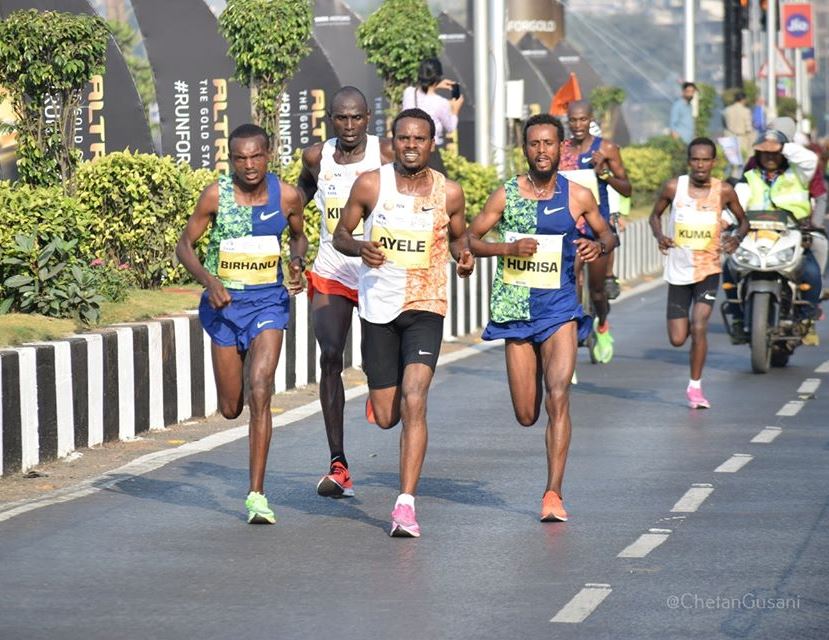
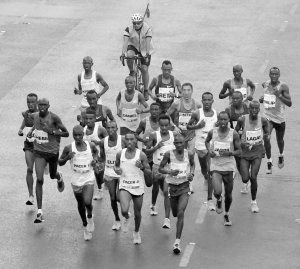
Elite runners at the 2020 Tata Mumbai Marathon. Eventual winner Derara Hurisa of Ethiopia can be seen, right of center (Photo: Chetan Gusani)

Srinu Bugatha, Sudha Singh winners among Indian elite

Ethiopian athlete Derara Hurisa set a new course record at the 2020 edition of Tata Mumbai Marathon, topping the men’s category with a finish time of two hours, eight minutes and nine seconds.

The previous course record was 2:08:35, set by Kenyan runner Gideon Kipketer in 2016.

Ayele Abshero and Birhanu Teshome, both of Ethiopia, also finished in timings better than the previous course record. Ayele, in second position, crossed the finish line in 2:08:20 and Birhanu, in third position, in 2:08:26.

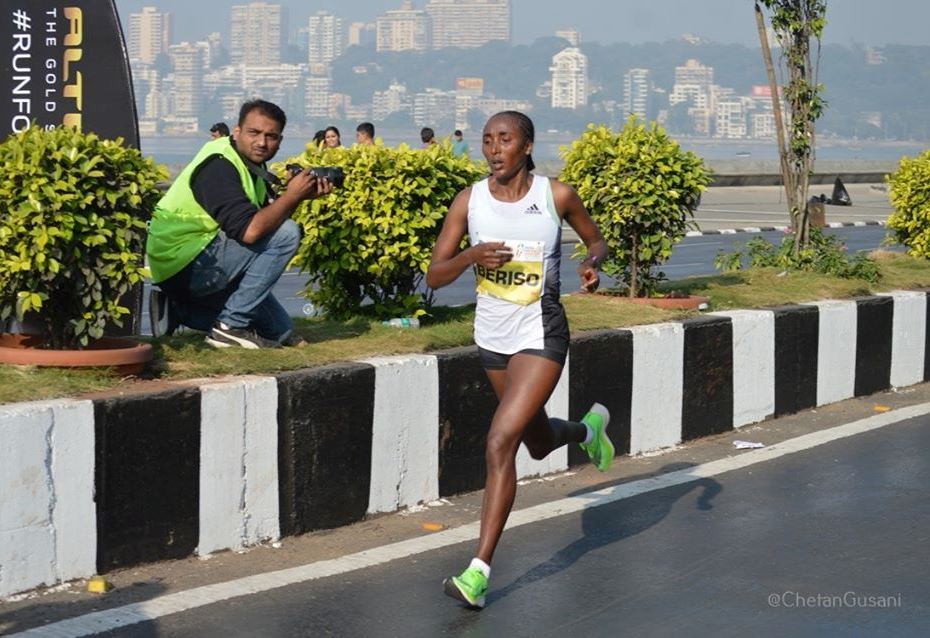
In the women’s race, Ethiopian Amane Beriso was the winner with timing of 2:24:51. She missed the previous course record of 2:24:33, by 18 seconds.

Amane Beriso of Ethiopia who topped among women runners at 2020 TMM (Photo: Chetan Gusani)

In second position was Kenyan runner Rodah Jepkorir, who finished in 2:27:14. Haven Hailu of Ethiopia came in third in 2:28:56.

Barring the Kenyan runner in second position in the women’s race, it was an Ethiopian sweep of the top podium positions.

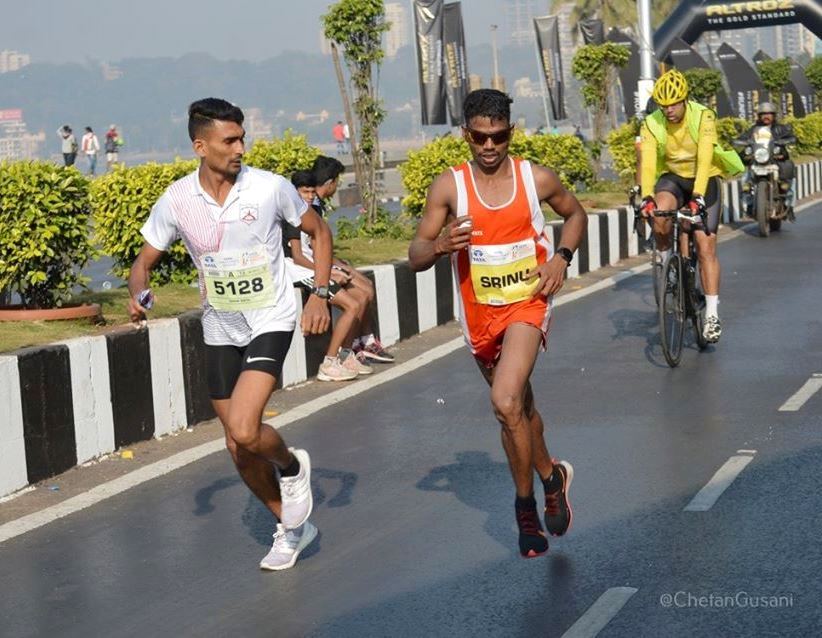
Among Indian elite runners, Srinu Bugatha and Sudha Singh were winners of the men’s and women’s races respectively.

Bugatha of Indian Army finished the race in 2:18:44. In second place was Sher Singh with timing of 2:24. In third position was Durga Bahadur Budha with timing of 2:24:03.

Srinu Bugatha at 2020 TMM (Photo: Chetan Gusani)

Defending champion Sudha Singh maintained her title with a winning finish of 2:45:30. Jyoti Gawate came in second with timing of 2:49:14. Shyamali Singh finished in third position in 2:58:44.

Jyoti Gawate had finished second in the 2019 edition of Tata Mumbai Marathon with timing of 2.45.48, which was her best timing at the race. “ There was a change in the route and that resulted in a wide gap between the winner and me,’’ Jyoti said.

Across various categories of races, over 55,000 runners participated in the 17th edition of Mumbai Marathon, held on Sunday, January 19, 2020.

(The author, Latha Venkatraman, is an independent journalist based in Mumbai. Thanks to Chetan Gusani for permitting the use of his photographs.)

AT A GLANCE / JANUARY 2020

Illustration: Shyam G Menon

Controversy over running shoes: World Athletics amends its rules

World Athletics (formerly International Association of Athletics Federations – IAAF) has amended its rules governing competition shoes.

The move is “ to provide greater clarity to athletes and shoe manufacturers around the world and to protect the integrity of the sport,’’ a press release dated January 31, 2020, available on the website of World Athletics said.

According to it, “ from 30 April 2020, any shoe must have been available for purchase by any athlete on the open retail market (online or in store) for a period of four months before it can be used in competition. If a shoe is not openly available to all then it will be deemed a prototype and use of it in competition will not be permitted. Subject to compliance with the rules, any shoe that is available to all, but is customised for aesthetic reasons, or for medical reasons to suit the characteristics of a particular athlete’s foot, will be allowed. Where World Athletics has reason to believe that a type of shoe or specific technology may not be compliant with the rules or the spirit of the rules, it may submit the shoe or technology for study and may prohibit the use of the shoe or technology while it is under examination. Further, with immediate effect there will be an indefinite moratorium on any shoe (whether with or without spikes) that does not meet the following requirements:

  • The sole must be no thicker than 40mm.
  • The shoe must not contain more than one rigid embedded plate or blade (of any material) that runs either the full length or only part of the length of the shoe. The plate may be in more than one part but those parts must be located sequentially in one plane (not stacked or in parallel) and must not overlap.
  • For a shoe with spikes, an additional plate (to the plate mentioned above) or other mechanism is permitted, but only for the purpose of attaching the spikes to the sole, and the sole must be no thicker than 30mm.

The competition referee will have the power to request that an athlete immediately provide their shoes for inspection at the conclusion of a race if the referee has a reasonable suspicion that the shoes worn by an athlete do not comply with the rules.’’

The media statement said that the rule amendments the World Athletics Council approved this week were recommended by its Assistance Review Group, an internal working group containing technical, scientific and legal experts as well as athlete representatives. “ The Assistance Review Group has concluded that there is independent research that indicates that the new technology incorporated in the soles of road and spiked shoes may provide a performance advantage and there is sufficient evidence to raise concerns that the integrity of the sport might be threatened by the recent developments in shoe technology. It has therefore recommended that further research be undertaken to establish the true impact of this technology and that a new working group, comprising biomechanics specialists and other qualified experts, be formed to oversee this research, and to assess any new shoes that enter the market, where required. Shoe manufacturers will be invited to be part of this assessment process,’’ the press release said.

Friday’s announcement by World Athletics follows months of controversy about Nike’s Vapourfly range of shoes, which many users had said improved their timing. Reporting on World Athletics’ decision, BBC noted that while the Vaporfly has been spared, that may not be the case with Alphafly, the prototype shoe worn by Eliud Kipchoge when he ran a marathon in under two hours in Vienna last year.

The World Athletics press release quoted its president Sebastian Coe as saying, “ it is not our job to regulate the entire sports shoe market but it is our duty to preserve the integrity of elite competition by ensuring that the shoes worn by elite athletes in competition do not offer any unfair assistance or advantage. As we enter the Olympic year, we don’t believe we can rule out shoes that have been generally available for a considerable period of time, but we can draw a line by prohibiting the use of shoes that go further than what is currently on the market while we investigate further. I believe these new rules strike the right balance by offering certainty to athletes and manufacturers as they prepare for the Tokyo 2020 Olympic Games, while addressing the concerns that have been raised about shoe technology. If further evidence becomes available that indicates we need to tighten up these rules, we reserve the right to do that to protect our sport.”

World Athletics will now establish an expert working group to guide future research into shoe technology (and consider any regulatory implications that that research might have), and to assess new shoes that emerge on the market. This group will report to the Competitions Commission, and ultimately to the Council. World Athletics remains open to continued dialogue with shoe manufacturers and other interested stakeholders regarding the amended rules and their impact as well as the broader question of how to balance shoe technology and innovation with World Athletics’ legitimate interest in preserving integrity in its sport, the press release said.

2020 World Athletics Indoor Championships postponed

The 2020 World Athletics Indoor Championships, due to be held in Nanjing over March 13-15, has been postponed to March 2021.

This follows the ongoing disease outbreak related to the new Coronavirus in China and since found to have surfaced in some other countries too.

“ It is with regret that we have agreed with the organisers of the World Athletics Indoor Championships in Nanjing (13-15 March 2020) to postpone the event to March 2021. We know that China is doing all it can to contain the new Coronavirus and we support them in all their efforts but it is necessary to provide our athletes, member federations and partners with a clear way forward in what is a complex and fast-moving set of circumstances.

“ The advice from our medical team, who are in contact with the World Health Organisation, is that the spread of the Coronavirus both within China and outside the country is still at a concerning level and no one should be going ahead with any major gathering that can be postponed.

“ We have considered the possibility of relocating the event to another country and would like to thank the cities that have volunteered to host the championships. However, given concerns still exist regarding the spread of the virus outside China, we have decided not to go with this option, as it may lead to further postponement at a later date.

“ The indoor season for athletics falls within a narrow calendar window (up to the end of March) and we believe we will be able to find a suitable date in 2021 to host this event. We would like Nanjing to be the host given the extensive planning and preparation they have put into this event,’’ a press release from World Athletics (formerly IAAF), dated January 29, 2020, said.

Kipruto sets new world record in 10K

Kenya’s Rhonex Kipruto has set a new world record in the 10 kilometer-road race. On January 12, at Valencia Ibercaja, he clocked 26 minutes, 24 seconds to win the World Athletics Gold Label road race, a report on the website of World Athletics (formerly IAAF) said.

The 20 year-old took 14 seconds off the yet-to-be-ratified mark set just six weeks earlier by Joshua Cheptegei in the same city, on a different course.

“ Only the legendary Ethiopian duo Kenenisa Bekele (26:17.53) and Haile Gebrselassie (26:22.75) have recorded faster times on the track, while Paul Tergat holds the Kenyan 10,000m record at 26:27:85,’’ the report said.

Sheila Chepkirui, also of Kenya, won the women’s race in 29:46.

Bouldering facility coming up in Nerul, Navi Mumbai

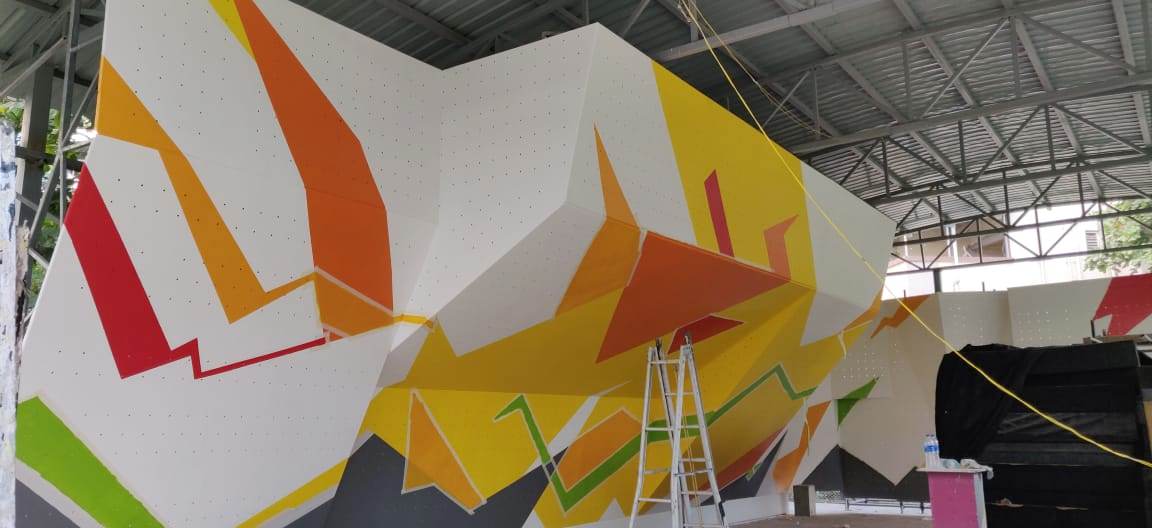
Work in progress at the climbing facility coming up in Nerul, Navi Mumbai (Photo: Prashant Venugopal)

In tune with the growth of sport climbing in the Mumbai region, Nerul in Navi Mumbai is set to get its first artificial climbing wall accessible to the public. At a park, roughly five minutes-walk from the Nerul railway station, the municipal authorities have installed infrastructure capable of hosting an indoor climbing facility. A large protected shed has been created with space adequate for at least three walls. At the time of writing, two walls had been installed and painting work was underway on the walls; the climbing holds were yet to be fixed. The main wall is an imported climbing wall fabricated by the French company, Enterprise. It was shipped into the country for use in the 2016 IFSC World Cup in bouldering that was held in Vashi, Navi Mumbai. Following that edition of the event, at the 2017 IFSC World Cup held in Vashi, it was used as a warm-up wall.

Both these world cups organized by Girivihar, were sponsored in the main by Tata Trusts. There was an understanding then that the club would find means to give back to society; in the world of climbing that typically means making the sport accessible to the public. The Nerul facility helps address that, a recent Girivihar circular to its members, said. The Navi Mumbai Municipal Corporation (NMMC) “ has given tremendous support and has built a structure for the wall in Nerul NMMC park. We continue to work with NMMC for setting up the wall in the premises and hopefully make it operational in the next two months,’’ the circular dispatched in January 2020, said. In Mumbai, the club has been involved in installing bouldering walls at Poddar College in Matunga, IIT Mumbai in Powai and YMCA in Colaba. When officially commissioned, the Nerul facility will likely be the biggest one so far, supported by Girivihar, those in the know said.

Ethiopian sweep at Dubai Marathon

Debutants Olika Adugna of Ethiopia and Eric Kiptanui of Kenya outwitted seasoned marathoners to finish first and second in the men’s race at the 2020 Standard Chartered Dubai Marathon, held on January 24.  They won in 2:06:15 and 2:06:17 respectively. The top ten finishers among men were separated by narrow margins. In the women’s race, Worknesh Degefa of Ethiopia won clocking 2:19:38, a report on the website of World Athletics (formerly IAAF) said.

Save Kiptanui’s place on the podium for men and Risper Biyaki of Mexico who placed tenth among women, it was an Ethiopian sweep right through to tenth place in both gender categories. The top ten positions as available in the report were: Men – 1. Olika Adugna, ETH 2:06:15 / 2. Eric Kiptanui, KEN 2:06:17 / 3. Tsedat Abeje, ETH 2:06:18 / 4. Lencho Tesfaye, ETH 2:06:18 / 5. Yitayal Atnafu, ETH 2:06:21 / 6. Yihunilign Adane, ETH 2:06:22 / 7. Aychew Bantie, ETH 2:06:23 / 8. Seifu Tura, ETH 2:06:26 / 9. Chalu Deso, ETH 2:06:29 / 10. Zewudu Hailu, ETH 2:06:31 Women – 1. Worknesh Degefa, ETH 2:19:38 / 2. Guteni Shone, ETH 2:20:11 / 3. Bedatu Hirpa, ETH 2:21:55 / 4. Tigist Abayechew, ETH 2:22:45 / 5. Dera Dida, ETH 2:22:52 / 6. Hawi Feysa, ETH 2:23:36 / 7. Bezunesh Deba, ETH 2:26:59 / 8. Obst Abdeta, ETH 2:29:30 / 9. Buze Diriba, ETH 2:30:18 / 10. Risper Biyaki, MEX 2:30:59.

Avinash Sable, Srinu Bugatha, Rashpal Singh, Sudha Singh, Jyoti Gawate lead Indian competition at 2020 Tata Mumbai Marathon.

Over 55,000 people expected to participate.

Srinu Bugatha winner of the 2019 Airtel Delhi Half Marathon and Tata Steel Kolkata 25k, and Rashpal Singh, silver medalist at the 2019 South Asian Games, are among Indian elite runners scheduled to participate in the 2020 edition of Tata Mumbai Marathon, due January 19, 2020. Also in the fray is Rahul Pal, winner of the 2019 Pune International Marathon.

According to a statement available on the race organizer’s website, Indian elite runners in the women’s marathon include defending champion Sudha Singh and Jyoti Gawate, bronze medalist at the 2019 South Asian Games.

In the men’s half marathon race, Avinash Sable, national record holder in 3000 meter steeplechase (he turned in a gritty performance at the 2019 World Athletics Championships in Doha) and Shankar Man Thapa will be among contenders. Swati Gadhave and Monica Athare will spearhead the challenge in the half marathon for women.

Nitendra Singh Rawat, course record holder among Indian runners and a popular face at TMM, won’t be running this year. In a Facebook post on January 13, he informed that after winning TMM in 2019 and giving his best at the London Marathon, “ it is very disheartening to say that I will not be able to participate in the upcoming TMM 2020 and Tokyo Olympics because of my fractured knee. I am advised to give complete rest to my knee.’’

A record number of 55,322 people are expected to participate in 2020 TMM. The 17th edition of this World Athletics Gold Label Road Race, will have 9660 runners running the full marathon, 15,260 runners in the half marathon, 8032 runners in the 10 kilometer-race, 19,707 participants  in the Dream Run, 1022 runners in the Senior Citizen Run and 1596 participants in the Champion with Disability, the earlier mentioned statement said.

According to it, women’s participation has increased to 35 per cent. Outstation participation has grown by 22 per cent and full marathon participation by 15 per cent.

Shoe war heats up

The controversy over Nike’s Vaporfly shoes worn by Eliud Kipchoge during his record breaking sub-two hour marathon in Vienna last year, has gathered momentum with recent media reports indicating that World Athletics may soon rule on their legality and share prices of shoe manufacturers responding accordingly.

On January 16, leading wire service Bloomberg informed that shares of Japanese manufacturer Asics Corp, a rival to Nike, “ surged as much as eight per cent before paring gains to 4.7 per cent as of 11:41 AM that day in Tokyo, after the Times of London and others reported that World Athletics was mulling a ban for Nike’s Vaporfly shoes in professional competition. Mizuno Corp, another Japanese maker of running equipment, rose as much as 1.6 per cent.’’

Nike’s Vaporfly Next % model was the shoe of choice for Kipchoge in Vienna and Brigid Kosgei, when she broke the women’s world record in the marathon, last year in Chicago. According to the Bloomberg report, the shoes gained popularity in Japan too resulting in a fall in share price for Asics at the start of 2020.

However, thick soles, the use of carbon fiber-plates and runners who used it confirming that the shoes contributed to improving their performance rendered the Nike model controversial. There have been calls since to restore a level playing field.

(The authors, Latha Venkatraman and Shyam G Menon, are independent journalists based in Mumbai.)


2020 TATA MUMBAI MARATHON / LAGAT, ALEMU SET TO RETURN

Flashback: elite runners at the 2019 edition of Tata Mumbai Marathon (Photo: by arrangement)

Defending champions Cosmas Lagat and Worknesh Alemu will be back for the Tata Mumbai Marathon (TMM), due January 19, 2020, a report dated January 4, available on the website of World Athletics (formerly IAAF), said.

In 2019, Kenya’s Lagat, breaking away from the rest of the pack at around kilometer 29 and running alone for almost a third of the race, had won in 2:09:15, the second fastest winning time in Mumbai. It was just 40 seconds outside the course record of 2:08:35, set by his compatriot Gideon Kipketer in 2016, the report said. To date only one man has won TMM back-to- back; Kenyan runner John Kelai did that with victories in 2007 and 2008.

According to the report, for the 2020 edition of the race, TMM organizers have signed up no less than 14 men who have run faster than 2:10:00, “ making it the strongest marathon ever to be staged in India.’’ Of them, nine have run faster than the course record during their careers and six have run under the super-elite benchmark of 2:07:00. The four fastest men in the field are all Ethiopians, led by Ayele Abshero who has a personal best (PB) from eight years back at the Dubai Marathon, of 2:04:23.

Ethiopia’s Alemu had won in the women’s category at TMM in 2019 with a PB of 2:25:25, which was also the second fastest winning time in the race’s history. She subsequently improved her best to 2:24:42 later in 2019 when finishing sixth at the Amsterdam Marathon in October, the report said. In 2020, Alemu heads a very strong women’s field that has eight women who have run under 2:28:00. The fastest woman in the field is another Ethiopian, Amane Beriso, who clocked 2:20:48 for a second place finish in the 2016 Dubai Marathon, placing her third on that year’s world list. She took a break from competitive running last year. The course record at TMM for women is 2:24:33, set by Kenya’s Valentine Kipketer in 2013.

In addition to the marathon – which has a total prize fund of US$ 405,000 – there is a half marathon, a 10km race, a Dream Run (5.9km), Senior Citizens Race (4.2km) and a Champions with Disability Race (1.5km). About 50,000 runners are expected to take part, the report said.

(The author, Shyam G Menon, is a freelance journalist based in Mumbai.)

ON A BICYCLE / MUMBAI-GOA

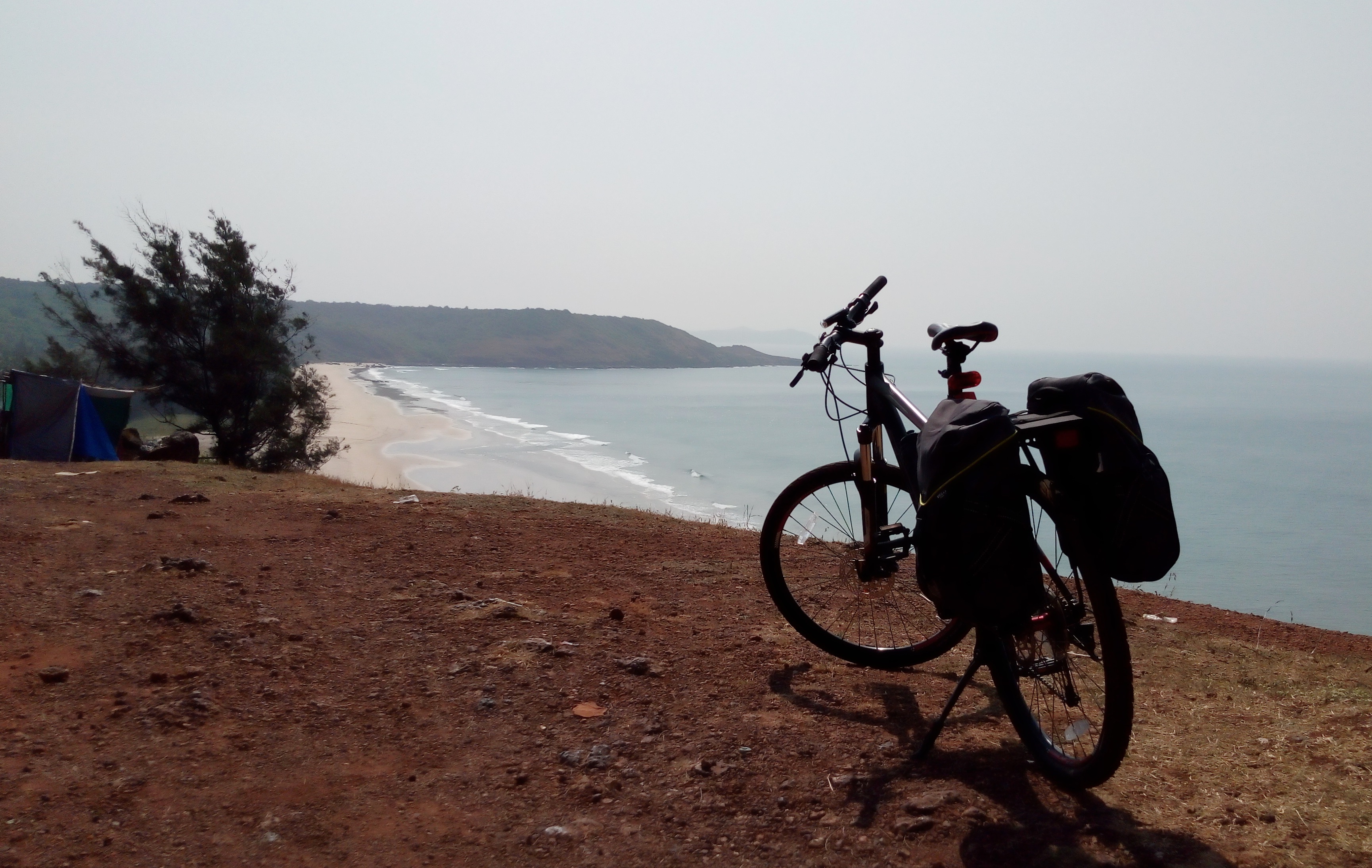
Photo: Shyam G Menon

Cycling from Mumbai to Goa is a popular endeavor undertaken by many. The journey is approximately 550km long and is usually done via roads hugging the Konkan coast although some seeking faster passage are known to take the highway. Each rider has his / her set of reflections. These are mine:

Summary

Mumbai-Goa: the pairing is old.

I didn’t know of people cycling between the two places, till into my thirties, working in Mumbai and more importantly – member of the outdoor club, Girivihar. In 2002, Rajneesh Gore, a club member, cycled to Goa with a friend and wrote a book on it called Goa on a Cycle. That was my introduction to the Mumbai-Goa cycling bug, later packaged into group-trips by commercial service providers and done by many every year. In December 2019, Prashant Venugopal, friend and fellow club member at Girivihar, decided to avail his annual leave from work. As residents of the same suburb in Navi Mumbai, we had done a couple of single day bicycle trips of 100km and more. We decided to attempt Mumbai-Goa via the coastal route, unsupported or as some call it, self-supported. However, we weren’t going to carry tent and stove. Those two needs – stay and food – we decided to pay and obtain on the way. Much of the rest – and there is a bit therein ranging from hydration to snacks, clothes, first aid kit, pump, locks and bike repair tools – we decided to carry ourselves.

Goa on a Cycle; the book by Rajneesh Gore

There was a reason for the above mentioned self-supported approach. As freelance journalist surviving frugally, I cannot afford commercial service providers although I would love to be client having support vehicle, hired mechanic, prearranged places to stay and no luggage carried on bicycle. Who wouldn’t? At the same time, as a once active hiker-climber, I am used to trading speed and achievement for the slower world of progress with all that you need lugged alongside. Not to mention – a major challenge in contemporary life (if challenge also be what you want) is not making things faster but slowing them down. Can the competitive mind with voracious appetite for distinctions, take it easy, be patient? Can it feast on life’s innocuous details, life’s ordinaries instead of the brag-worthy conquests? Over the years, little by little, we had accumulated some of the gear required for bicycle touring. All we needed to do was, load up the pannier bags and cast off.
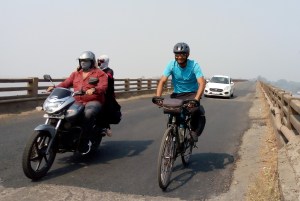
Prashant (Photo: Shyam G Menon)

To get us started, we needed a route map. That was easily found on the Internet. In our case, we picked the route available on the website of Add-Venture India, a commercial enterprise in Navi Mumbai started by a couple of Girivihar members, which among its activities, offers an annual cycle trip to Goa. It provided an overview of the route they followed; the rest we filled in ourselves or decided to figure out as we went along. Early morning, December 16, we pushed off. Less than seven days later, on the afternoon of December 22, we reached Panjim in Goa. Like most other denizens of the urban universe, we too ended up slaves of haste working our schedule back from limited number of days to spare. We kept a disciplined grind of cycling from 6AM every morning to about 6PM with a break of little over an hour for lunch, which isn’t recommended pattern, for the right way is to avoid wasting yourself in the warmest hours of the day. Our indestructibility wilted slowly. By around midway through the trip we were very mortal and most accepting of the laws deciding human limits. At Panjim, we loaded self and bicycle into one of those Volvo buses headed to Mumbai; suffered a vehicle breakdown near Kolhapur, changed bus to Pune, changed bus again at Pune and eventually reached Mumbai happy to sink our sore butts into the comfort of cushions and mattresses.
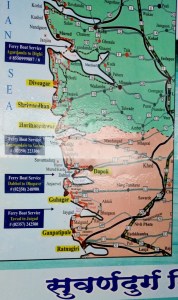
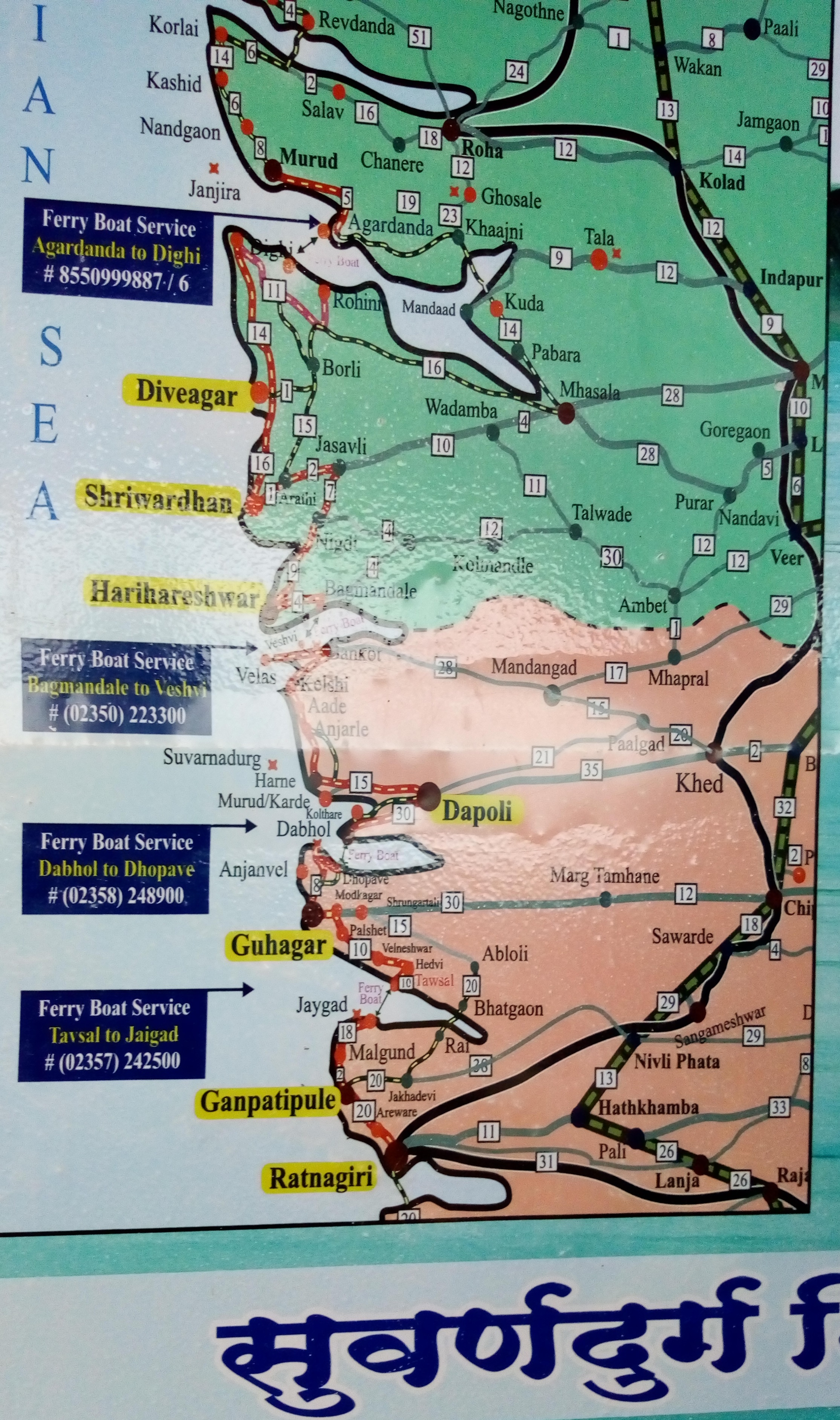
The poster we saw on a ferry boat (Photo: Shyam G Menon)

The route

Most commercial operators commence their cycling from Alibag after taking the ferry from South Mumbai’s Gateway of India. Given Prashant and I live in Navi Mumbai, we cycled through Uran to Karanja, took the ferry there to Rewas and then pedaled on to Alibag. That first day, ended in Murud.  Day 2: Murud – Agardanda – Dighi – Borli Panchatan – Harihareshwar – Bagmandla – Veswi – Kelshi. Day 3: Kelshi – Anjarle – Karde – Dapoli – Dabhol – Dabhol ferry – Dhopave – Guhagar. Day 4: Guhagar – Palshet – Velneshwar – Tawsal ferry – Jaigad – Ganpatipule – Ratnagiri – Pawas. Day 5: Pawas – Purnagad – Jaitapur – Padel – Devgad – Kunkeshwar. Day 6: Kunkeshwar – Achara – Malvan – Parule – Vengurla. Day 7: Vengurla – Aramabol – Panjim. This route likely includes some creative connections we opted for, making it marginally different from the original route map we had. For instance, both of us like ferries and didn’t waste a single ferry that presented itself as potential onward link. This was thanks in the main to a poster we spotted – we saw it first on the Agardanda-Dighi ferry – which listed the ferries along the Konkan coast. It also ensured that we remained close to the coast and never very far from the sea. When hard at work, I have a tendency to hunker down and slog in tunnel vision. I miss noticing the world. I am also not digital savvy; I prefer to ask people for directions. So credit for whatever adoption of navigation’s modern avatar we did, should go to Prashant, who is comparatively more comfortable with apps and Google.
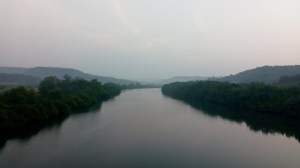
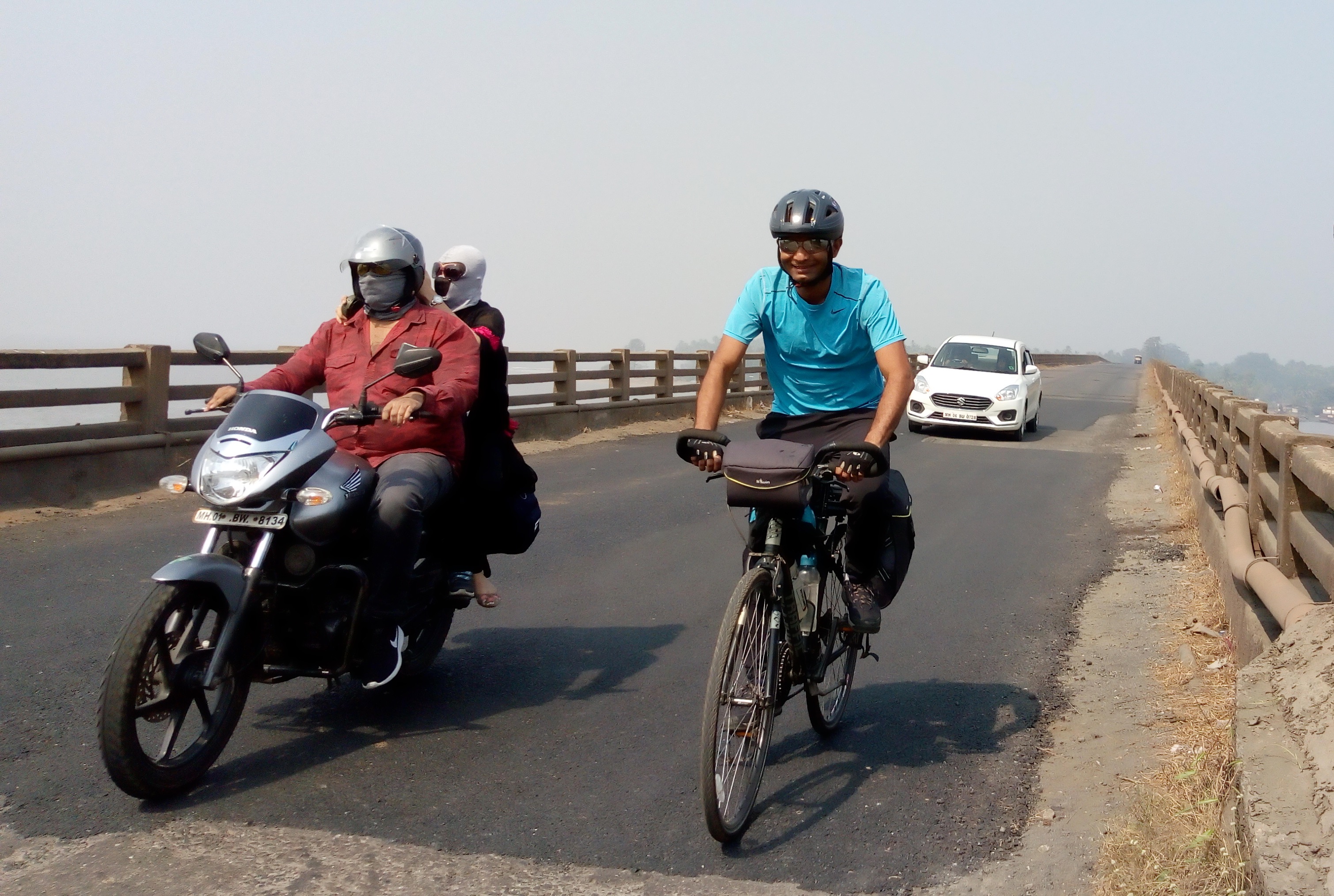
A scene from the trip (Photo: Shyam G Menon)

An easy way to visualize route

Keep your palm face down on the table. Now imagine climbing up each finger, then down into the cleft in between and up again over the next finger. That’s how our route was – it was relentless uphill, downhill. Every time you descend to sea level and find a bridge, ferry or beach, you know there is an ascent waiting, not far away.  Each segment of elevation gain is not significant compared to the height and size of hills elsewhere in India. What plays with your mind is the relentlessness of the up-down mix, which serves as idiom for the trip. It should also be mentioned that there are some sharp, stiff inclines served without notice and sometimes, served with notice, which the urban ego then shapes into a competitive tussle. It reminded me of lessons learnt in hiking. It took many hikes to abandon the competitive streak, discover one’s steady, sustainable pace and then gradually improve efficiencies therein. On the Mumbai-Goa coastal route, there were also a few combinations of sharp, stiff incline followed by longer uphill and bad road. Very memorable for me was one such combination of all three attributes or two, following which I emerged on to a flat, smooth road atop a plateau where a posse of policemen sat. They beheld my panting self on bicycle married to easiest climbing gear. They smiled and waved. Then the inspector shouted: o kaakaaa….kahan jaa rahen hain? Goa?  Strangely, unlike those instances from my early forties, when being called kaka (uncle) alarmed and reminded of fading youth, now it didn’t. Maybe there’s nothing left to defend and the mind knows it. Kaka waved back at the policemen, showed a thumbs-up and carried on.
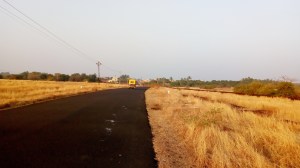
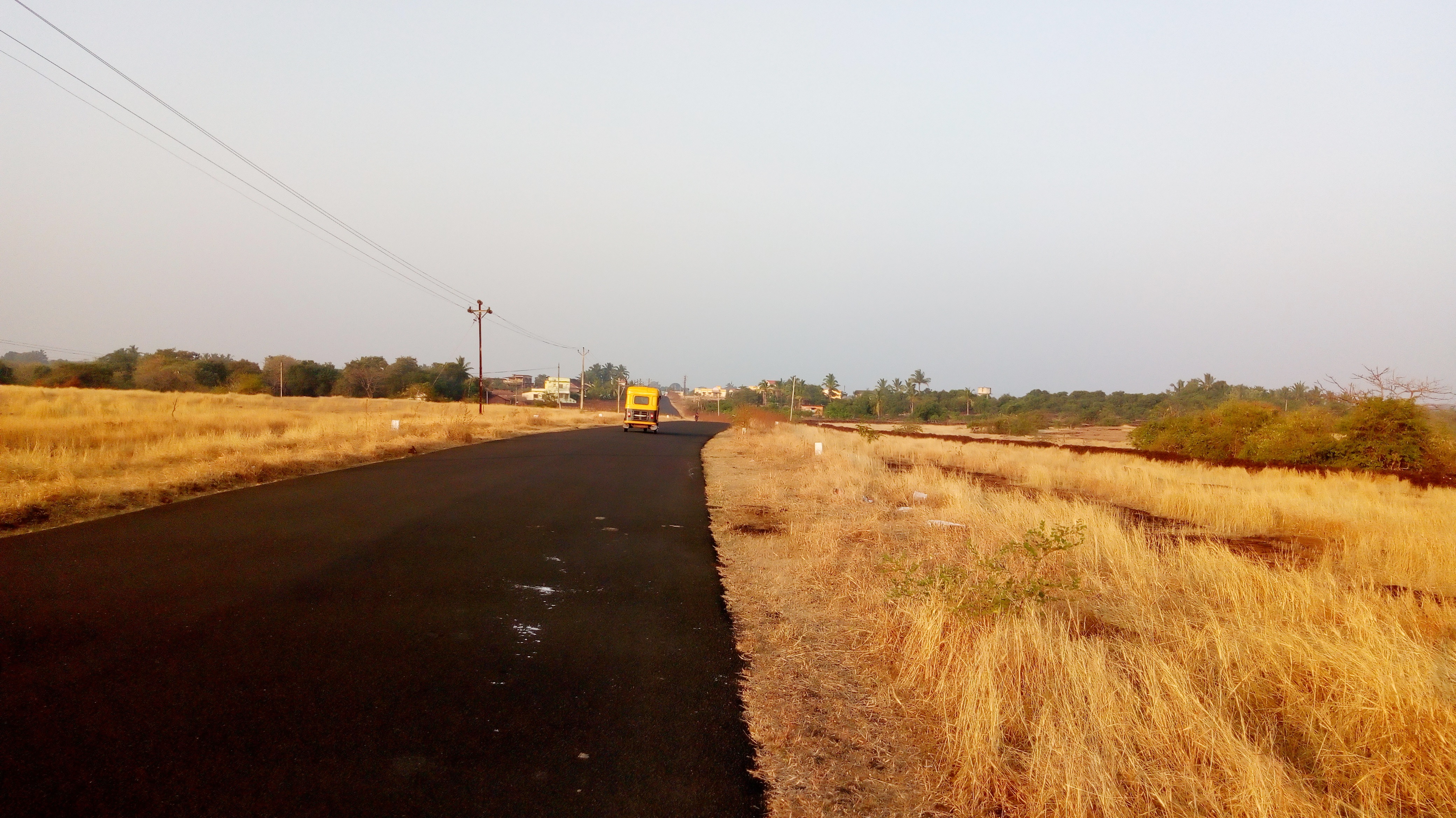
Road on plateau; a typical specimen from the trip (Photo: Shyam G Menon)

Eventually you embrace the uphill-downhill idiom of the Konkan coast. There are also portions of road that are utterly straight (like the one where I met those policemen) but they stretch like runways atop plateaus with no tree cover. It is solitary cyclist and miles of open space. We called it spaghetti westerns with a twist: Ennio Morricone’s background score plays as Clint Eastwood becomes visible on the horizon, not on a horse but a bicycle. Talking of plateaus with no shade; if there was one complaint we heard consistently from residents all through the route, it was this: this is not how December should be. It should be cool. But it just isn’t.  Welcome to climate change. And yet we ridicule Greta Thunberg. I am not a geologist. But the incessant ups and downs and the palm-on-table analogy it inspired, made me recall that era from India’s northward drift millions of years ago, when the volcanic explosions forming the Deccan, occurred. Were the fingers of land we kept ascending and descending, the remnants of ancient lava flows that cooled off into the sea? Is that how you got this beautiful weave of hills, estuaries, coves and inlets? Who knows? But I remembered well what Mumbai based cyclist Sumit Patil had recalled from his childhood. One of his earliest memorable experiences in cycling was a school trip. Led by their teacher, the class pedaled out to get an idea of the lay of their tehsil. On day one of our Goa trip, as I cycled through Alibag noticing the place with my eyes and feeling it under my wheels, I remembered Sumit. He grew up there. Cycling through, Alibag came alive as geography lesson. You want to learn? Then, you should walk, run, cycle, swim, sail or float in the air; anything else is a compromise. And by the way, there is no compulsion, no rush. Let it unfold at your pace.
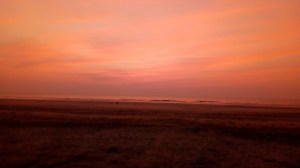
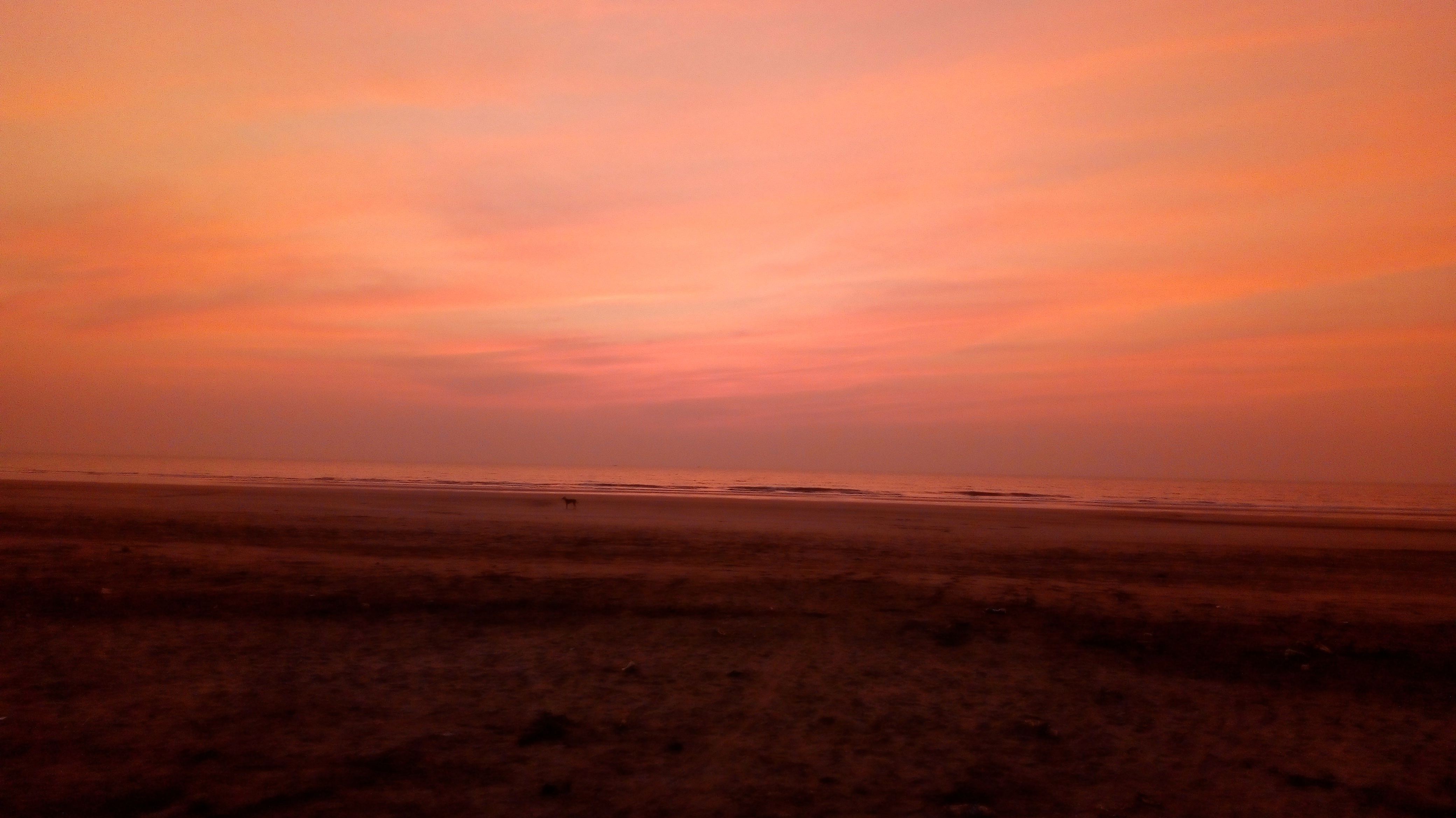
Beach at Kelshi; sunset (Photo: Shyam G Menon)

Some good people

Located in Raigad district’s Srivardhan taluka, Borli Panchatan is roughly 65 km south of Alibag. By the time we reached Borli Panchatan, we had become very aware of both the up-down nature of our route and another challenge – stretches of terrible road; some almost wholly gravel and dust, others, erstwhile tarred surface ruined by large potholes and craters. It was humbling to the mind (to realize that people lived so) and numbing to butt perched on bicycle saddle. In my assessment, a well finished asphalt / bitumen road is surface friendliest to cyclist. There’s something firm and yet soft about it. Unfortunately, there’s another category – concrete – increasingly popular with the ascent of infrastructure projects. That’s like a truck ramming bicycle frame, human bones and joints above it. The hardness is so much and so acutely felt that everything vibrates. Not far from Dighi we had run into a terrible stretch of potholed road. Then that gave way to a stretch of concrete. It felt weird. If you want to know how good a road is, you should run or cycle on it. Which government official overseeing roads does that? Unfortunately the surface quality of roads is decided by motorized vehicles engineered to soak vibration, not bicycle or human knee which sense vibration. The roadside tea stall we found at Borli Panchatan appeared a small, makeshift arrangement. We had no expectations when we sat down for tea. But a bunch of men there took great interest in our trip and proceeded to not merely inform us of the best route options ahead but also present it in terms of ascents, descents, road conditions and availability of shops for tea and snacks. That was amazing; most helpful. At Guhagar in Ratnagiri, the next district; the home-stay we chose referred us to their next door neighbor for dinner. According to the manager of our home-stay, Jog Kaku was in her seventies. She had a few tables and chairs for people to sit and eat at the back of her house. The dinner she served was the finest on the trip and among the best specimens of home cooked food I have had anywhere. Bless her. Food was without doubt, one of the highlights of this trip. There wasn’t a day without good, simple food for breakfast, lunch and dinner; all of it local cuisine, made with what was available. The less digital savvy of the two and often cycling alone to sense personal ecosystem, I was happy to periodically see pointers and markings drawn on the road, courtesy two names well known in the domestic cycling circuit. The first was `YHA’ – Youth Hostels Association; the other was `DC,’ which I assume is – Deccan Cliffhanger. As helpful as the lot at Borli Panchatan, was a juice shop owner on the outskirts of Malvan. An avid talker, he first informed that all groups of riders halted at his shop. Then as we sipped glasses of sugarcane juice and kokum sharbat, he provided a detailed overview of the way ahead, recommending lunch at Parule. We did as he said.
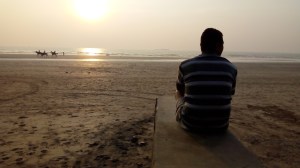
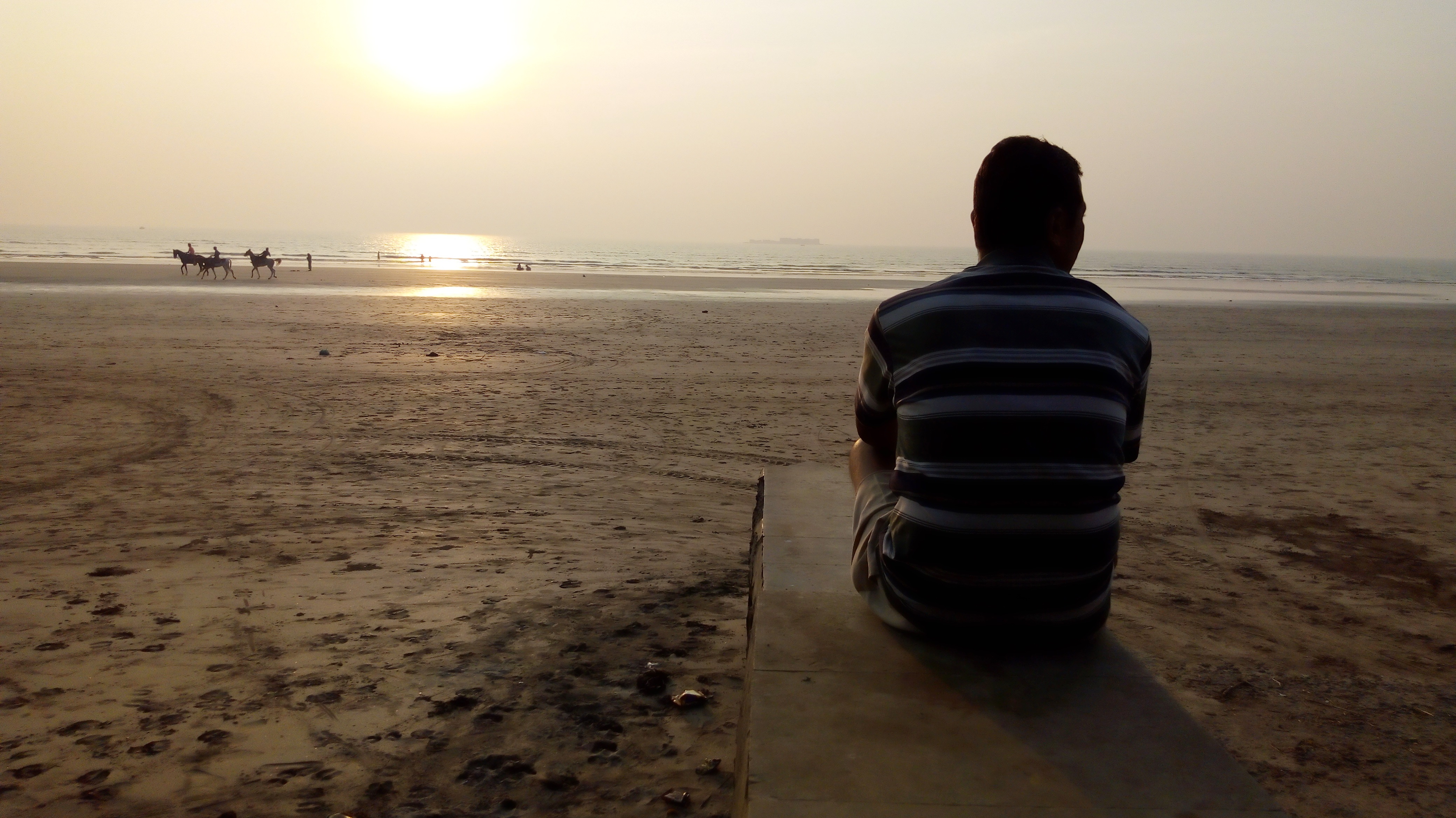
Murud beach; sunset (Photo: Shyam G Menon)

Whoooosh

“ Hello, happy journey?’’ the man on the scooter said, bit inquiringly, trying to figure out if cyclist was Indian or foreigner.  “ Thank you,’’ I replied, continuing to pedal. Encouraged, he drew alongside and said, “ your friend? He got puncture. But not normal puncture; it was like a small blast: whoooosh.’’ I stopped, thanked him for the information and turned back. Whoooosh didn’t sound good. All trips have some point when things go wrong. For us, that point occurred less than 10 kilometers past Ratnagiri, at Pansope, when one of our cycles suffered a burst tyre. It was a warm afternoon. What we had was a rip through both tyre and tube. We had carried spare tubes but not spare tyre. A new tyre had to be purchased. Given the cycle in question also seemed to have a few issues with gear-shifting, we figured the best option may be to take it to Ratnagiri, get it checked by a mechanic and if required, stay in town and carry on the next day. We parked the cycles in front of a small restaurant and using our phones, located a bicycle shop to go to in Ratnagiri. The husband and wife team running the restaurant served us tea. Then we flagged down a three wheeled-cargo carrier and asked if the driver would take rider and cycle to Ratnagiri. “ Are you the guys who called me on the phone?’’ he asked. Apparently, somebody in the neighborhood had called him for assistance in taking a damaged motorbike to the city. He was responding to that call. As it turned out, that caller was from a shop right across the road and the destination of the motorbike (its place of repair), pretty close to where the bicycle shop was. The motorbike owner agreed to take the bicycle too into town and suggested that if we paid the return fare, the same three-wheeler would bring the cycle back after repair. Prashant went along. I waited at Pansope.
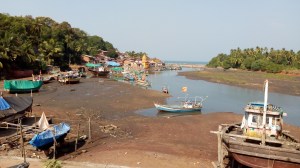
A scene from the trip (Photo: Shyam G Menon)

In that while, the husband and wife team at the restaurant served me some more tea, gave me a bottle of water, shut the place and left briefly to get supplies and on return, told me about their business – how long they had been running the restaurant, where they had started it first before shifting to Ratnagiri. It was a business model we saw in other places too – the woman ran the kitchen; the man got the supplies, served customers and maintained the front desk. Truth be told – the woman’s share of work, wherever we saw this model in action, seemed more. On day one, there had been a hotel we got into for lunch at Kashid. The man promised food without delay, barked a few orders loudly, the kitchen came alive like machine switched on, a woman in saree could be seen working furiously and chatting happily at once in there. Fifteen minutes later, as I tucked into the delicious fare she had cooked, I noticed that the kitchen was back to quiet and the woman was now busy cleaning the guest house adjacent to the restaurant. She was hanging sheets and towels out to dry. After lunch, as we asked for tea, one of the men around scratched his head, stared at the kitchen now bereft of its engine and said, “ sorry.’’ But the couple in Ratnagiri appeared quite happy. I felt envious seeing their happiness and wondered to myself – what monsters was I trying to slay in my head cycling daily from morning till evening when happiness is not a case of because of or due to, but simply, is? The bicycle repair-episode took some time. It was dark by the time we reached Pawas.
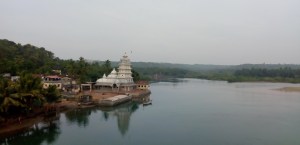
A scene from the trip (Photo: Shyam G Menon)

Me, mid-life and my baggage

As we age, we become several people in one till at some point, fed up of all that we are defending as accrued baggage, habit and conditioning, we strip away the layers and genuinely simplify. At 51, I am still far from that simplicity; ego rules. That’s what makes expeditions by humans tricky. It isn’t only about enduring nature; it is also about enduring one’s self and that of others as complicated, defensive and hauling baggage like you. Week-long outings as a team are a bit like that TV show: Big Boss; it can become too much of each other. Not to mention, all that plus the stress accumulating from pushing one’s limit daily. There are good days and bad days. Days when we speak a lot to each other; days when one or both clamp up briefly, often to preserve the peace. You can’t do anything about it. Staying aware of these possibilities is the best solution. Joke about situations; joke about your tortured butt. Give each other space. Visit a beach at day’s end. Clean your cycles. Have some good food. We did all that. Not every reflection in the mirror will be pretty. But hey, you knew this possibility from start. That’s why you are here – to know what all may happen.  Speaking of what all may happen, our first aid kit mercifully stayed untouched. The one time it begged being opened it had nothing to do with either of us; it was someone else in trouble. At the guesthouse we stayed at in Kelshi, the manager’s friend was delicately poised on a chair atop a table, repairing a ceiling fan, when both chair and table gave away like a pack of cards. The man fell awkwardly, hurt his hand; he was in considerable pain. For some time, that is. An hour later, he started his motorcycle and drove away.
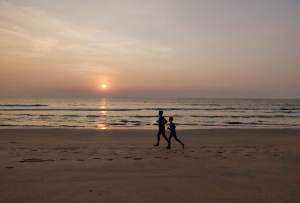
Beach at Guhagar (Photo: Prashant Venugopal)

Kabaddi country

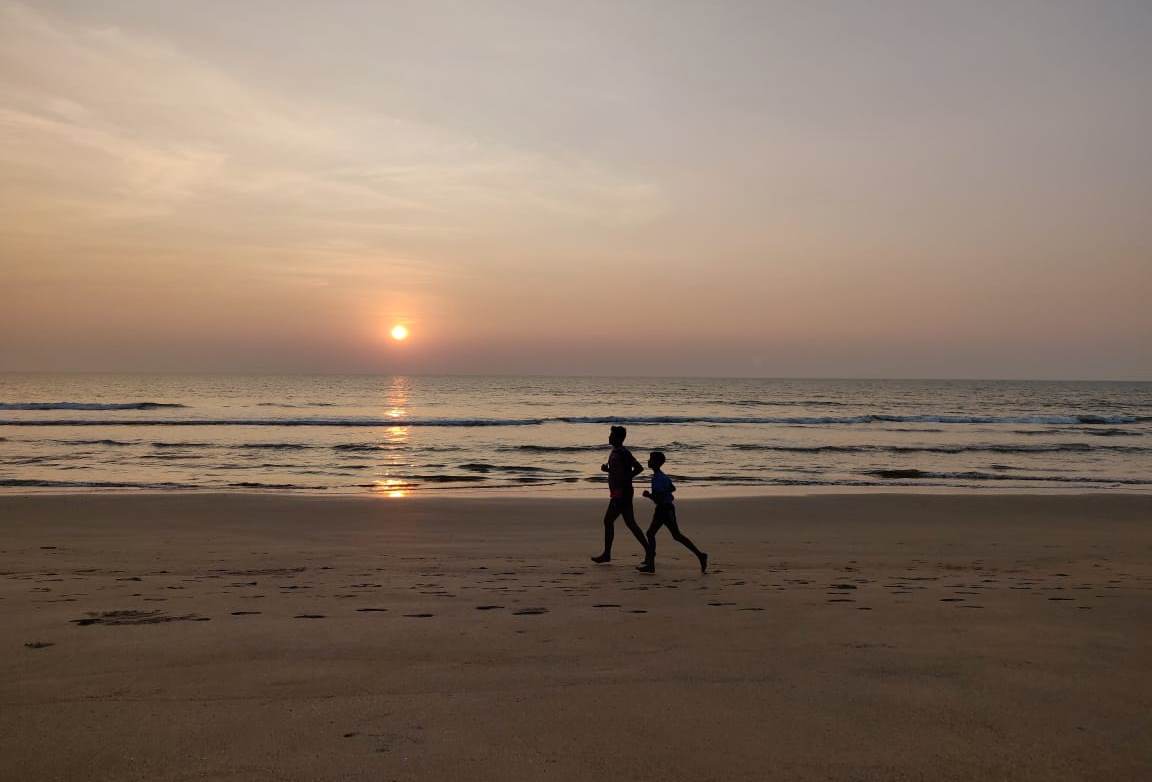
Kelshi in Ratnagiri district had a quiet beach. There were all of seven people there, the evening we visited. The absence of crowds and the soothing quietness seemed to come with an unspoken footnote for the visitor: you homo sapiens, you are the disturbance, so tread carefully and the less you are here, the better it is for aesthetics by nature. Hopefully someday, our species gets it. A couple of youngsters wearing identical T-shirts jogged barefoot on the beach.  On the approach to the beach, next to the village path; was a small playground with carefully nurtured mud floor. Two youngsters in identical T-shirts did exercises there. A few more, dressed the same way and on their way to the play field, told us that they weren’t the local running team as I thought, but recruits for kabaddi. The jogging on the beach was part of daily training. Kabaddi competitions existed in the region and on day six as we found our way to Vengurla, we met a youngster who was on his way to Sagareshwar beach for training. He said he occasionally played for Sindhudurg. There were kabaddi players running barefoot on Guhagar’s beach too. Possessing strong legs, they bounced along smoothly on the beach sand. Each lap would have been a kilometer, easily. It was the time of sunset. A woman sat meditating some distance away. As we prepared to leave, a different type of runner arrived. He wore black shorts and black vest and on his feet, were a pair of Vibram Five Fingers.
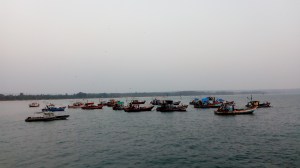
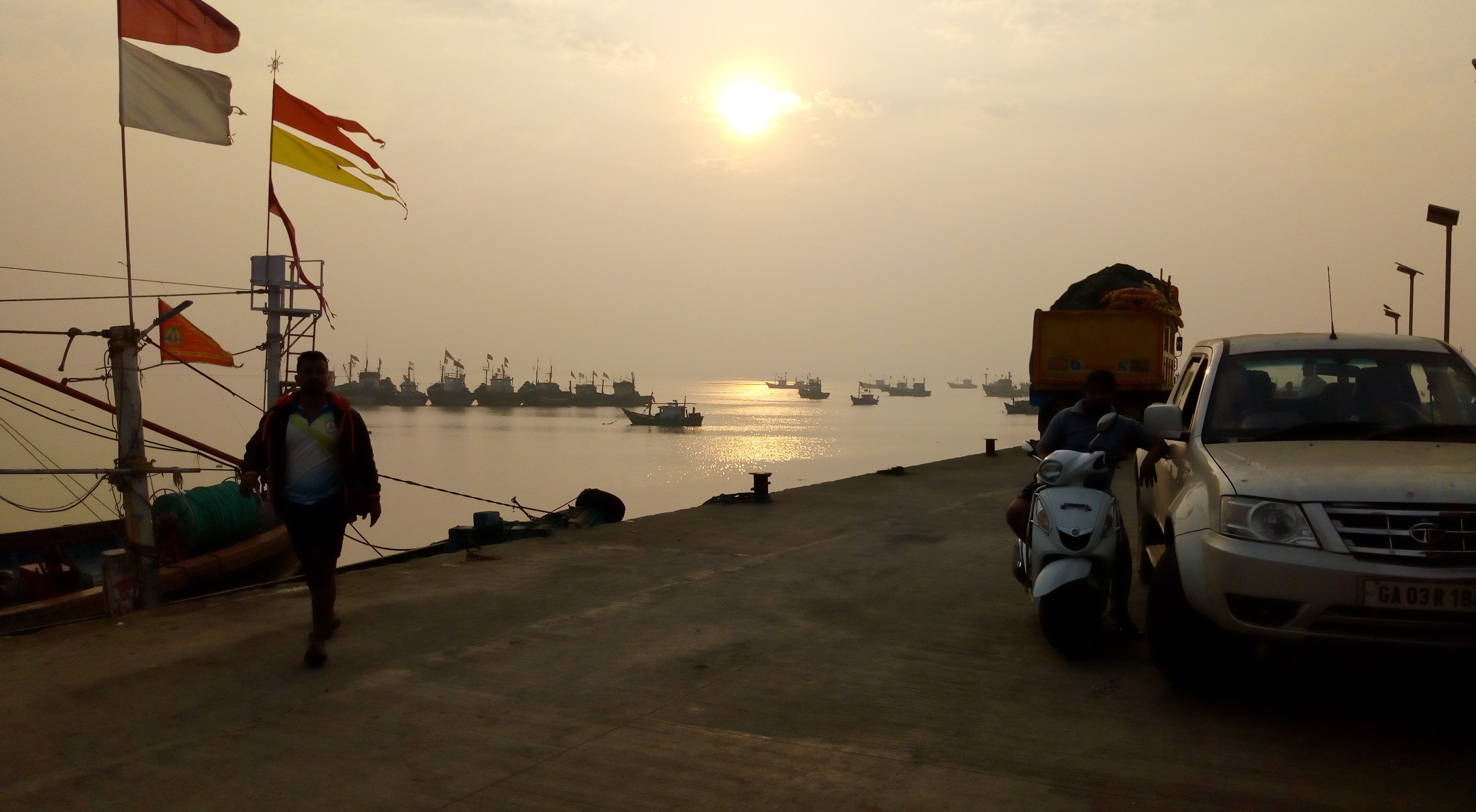
Fishing boats at Vengurla (Photo: Shyam G Menon)

Operation Thali

On day four, I was so hungry on the approach to Tawsal that I mistook the police station perched on the edge of a plateau just before long descent to ferry, to be a hotel. Most of these roads on plateaus have few restaurants and tea shops; so perhaps, it was a case of plateau-mirage, my mind replacing reality with that which I wished to see. Less than a kilometer before the ferry, we found a nice restaurant bathed in the aroma of cooking and ordered two thalis. The women in the kitchen promised to deliver it promptly. That was when a team of three or four policemen arrived. They seemed to have a feast unfolding at their office; maybe some senior officer visiting. For the next half hour they hung around, gazing expectantly into the kitchen, as the women fried several slices of fish, made chappathi, rice, curry and salad. Then they packed it all up along with steel plates and spoons, loaded a small pick-up with the precious cargo and proceeded to wherever the meal was due for staging. It was an operation effected with efficiency and enthusiastic team work; much like a crackdown on crime except, the target here was a dozen or more thalis laden with curry, fish and meat.“ I am sorry. We had to give them priority,’’ the elderly lady who served us, said apologetically. Understandable – that was a big order. By the way the thali we had – it was yet another case of delicious Konkan food.
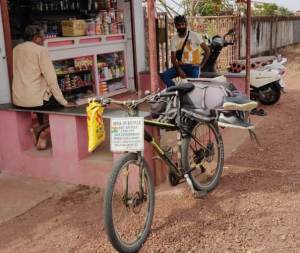
Ravinder and his bicycle (Photo: Prashant Venugopal)

Time and touring

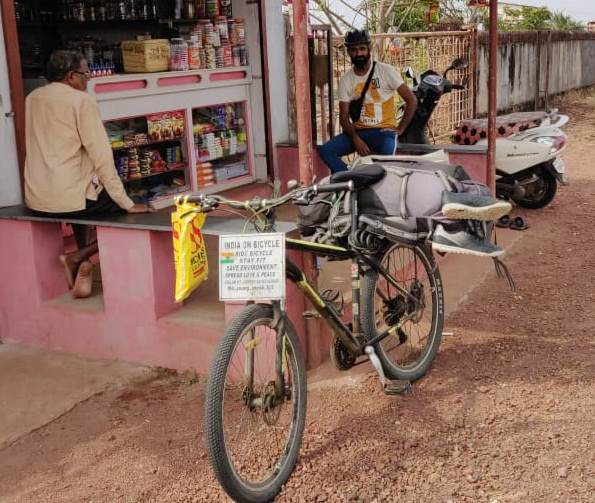
Sometime on day four, on a road atop a plateau – to be precise, after enduring that treeless road for long – I was happy to find a shop and check into its shade for a couple of cold drinks. I had by now abandoned caution and was experimenting with brands I was seeing for the first time; names like Fizzingaa or something similar. Five minutes later, Prashant too pulled in. We were at the shop for a while and when we left, true to my tunnel vision-self, I locked on to next major destination and pedaled off. Prashant on the other hand, noticed another cyclist – out touring like us – tucked into the shade of a nearby shop. Ravinder from Chandigarh was on a long journey through India. According to Prashant, he had been on the road for five months already. At the next halt, as we discussed Prashant’s meeting with Ravinder, it was opportunity to reflect on how differently time was perceived by people. Unlike us, this cyclist appeared comfortably settled into a patient experience of existence. I remembered some cyclists I know, who don’t hesitate to spend longer time than originally planned at places they like or pedal at leisurely pace making sure they don’t needlessly stretch themselves. We had limited number of days at our disposal; we just kept pedaling, chasing a goal each day. We might as well have been in the city. But more than that, it was mental; conditioning. We simply didn’t know how to cope with a slower flow of time, flow of course being a human sensation for time is whatever it is. Do less and you sense existence and time. Do more, you seem to own time, which (the ownership) is an illusion. Prashant’s meeting with Ravinder was brief. But the unhurried cyclist left us with much to think about.
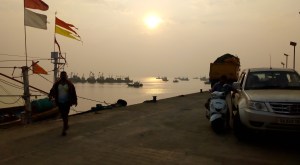
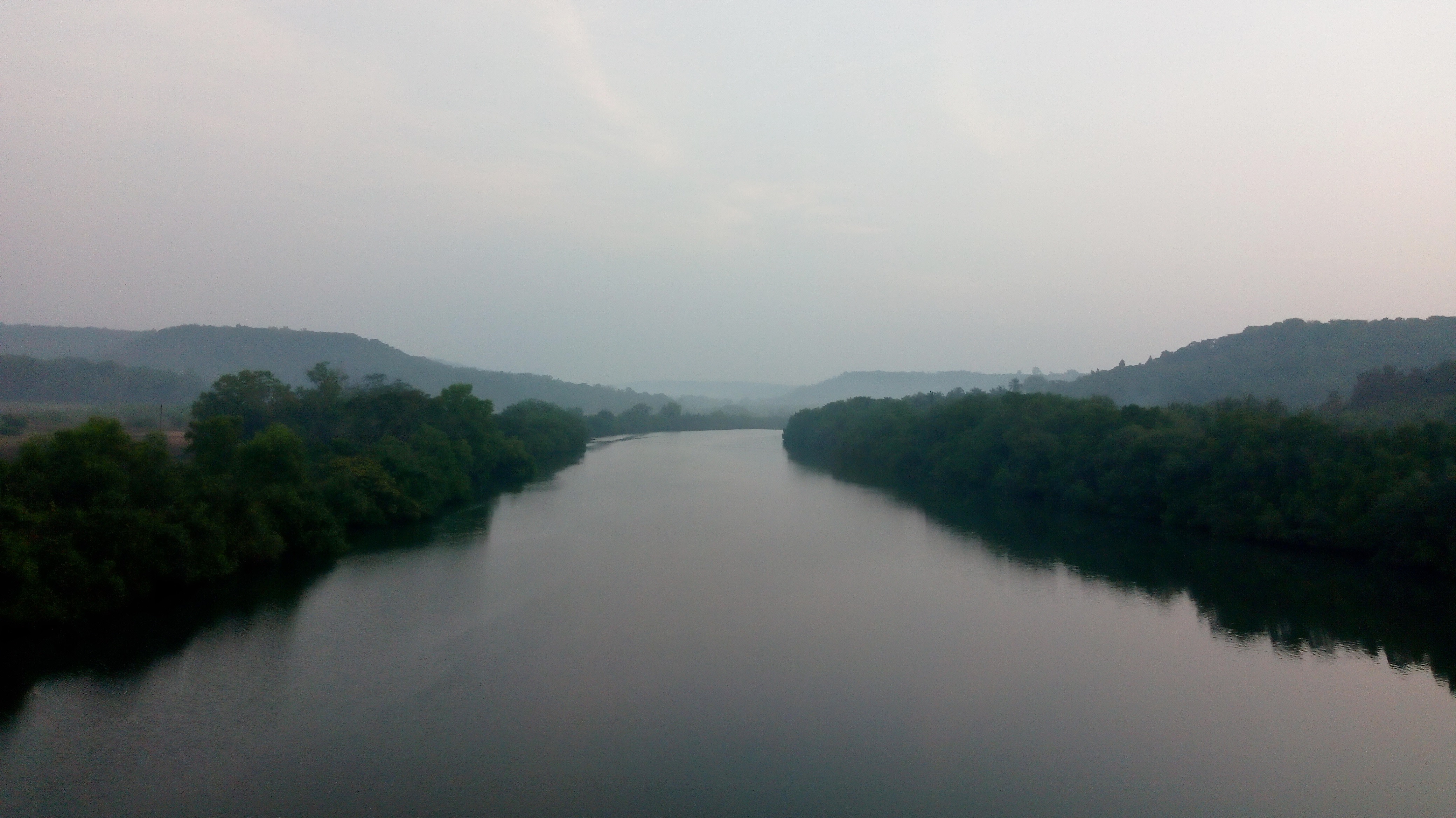
Karanja; early morning (Photo: Shyam G Menon)

Two low points: the beginning and the end

The coastal route to Goa is by and large an escape from the urban, competitive paradigm of life. However the route we were on started in city and ended in city. Both these ends are steeped in all that has gone wrong with the urban model; its best ambassador being ugly exploded traffic. Thanks to infrastructure projects, a major sea port and real estate business, the once pleasant road from Navi Mumbai to Uran has been usurped by vehicular traffic. Cycling here is not a pleasure anymore. You are at the mercy of a mindset that gives no damn for bicycles or thoughts in the slow lane; it’s called development. But you still cycle through the traffic laden road to Uran because there is something charming in the contrasting quietness of Rewas just a ferry hop away from Karanja. It is a contrast (like so many other such contrasts) that should inspire people to introspect: what are Indians doing to their daily existence? Does a tonne of money made, justify the ruining of life as we know it? A week after we set foot in Rewas, Navi Mumbai returned as Goa. It was Sunday and yet, the road from Mapusa to Panjim was filled with traffic. Life had come full circle. We were back in the embrace of development. Someone with a talent for the blues should compose a song: Development Blues; sing it like John Lee Hooker belting out Boogie Chillen.

(The author, Shyam G Menon, is a freelance journalist based in Mumbai.)           

AN AQABA TO REMEMBER

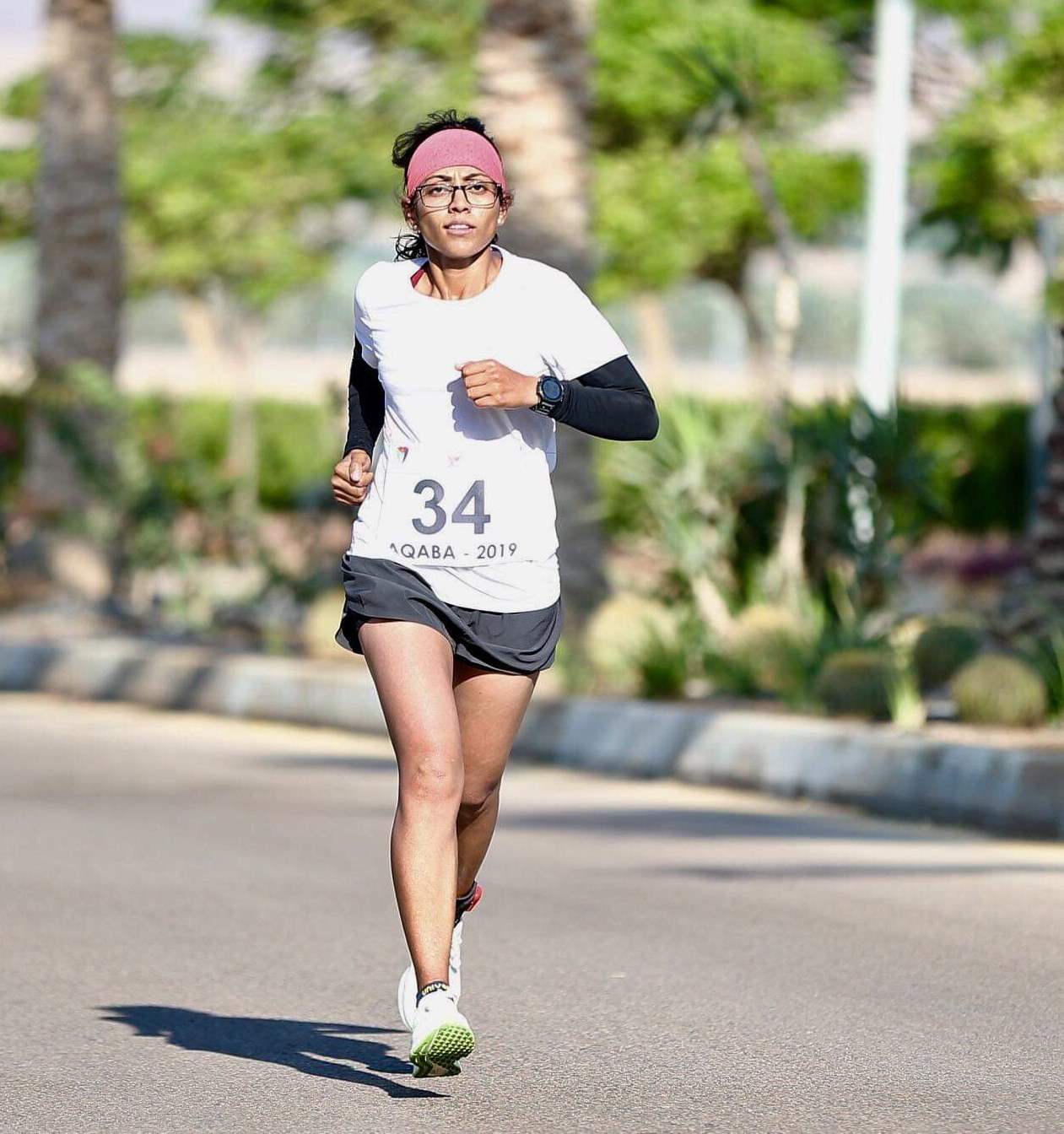
Nupur Singh (Photo: courtesy Nupur)

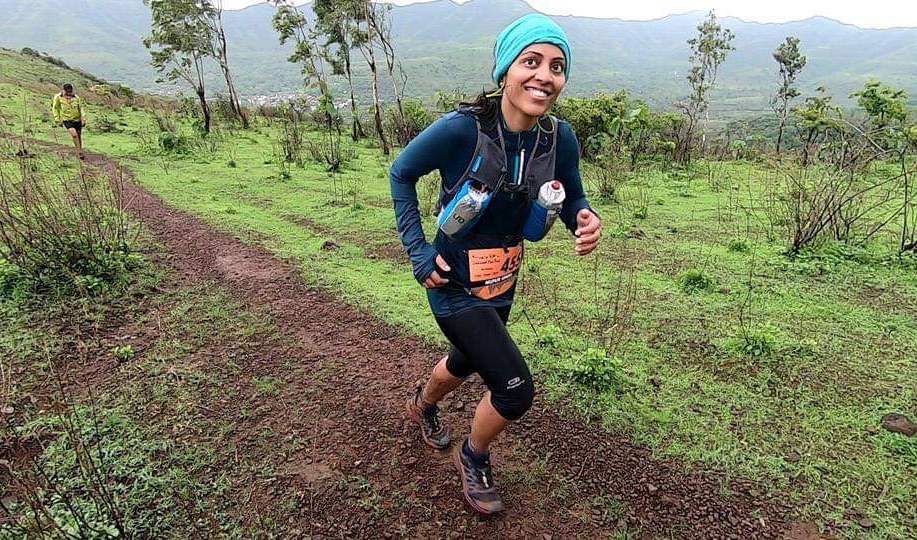
Nupur Singh got into running in 2014. Two years later, she quit her job in Delhi and moved to the mountains to organize races. In November 2019 (as reported earlier on this blog), Indian ultra-runners did well at an international 100 kilometer championships in Jordan. In the same event, Nupur – she was not part of the official Indian team but running in the open category – finished in fairly good time.

On November 23, 2019, a team of ultra-runners representing India participated in the 2019 IAU 100 kilometer Asia & Oceania Championships at Aqaba, Jordan. The men’s team won the gold medal and the women’s team, the silver.

Mumbai’s Deepak Bandbe won the bronze medal and set a new national record in the men’s 100 km. Kolkata’s Anjali Saraogi set a new national record in the women’s 100 km; she finished fourth. The course on which, the race happened was a 10km-loop.

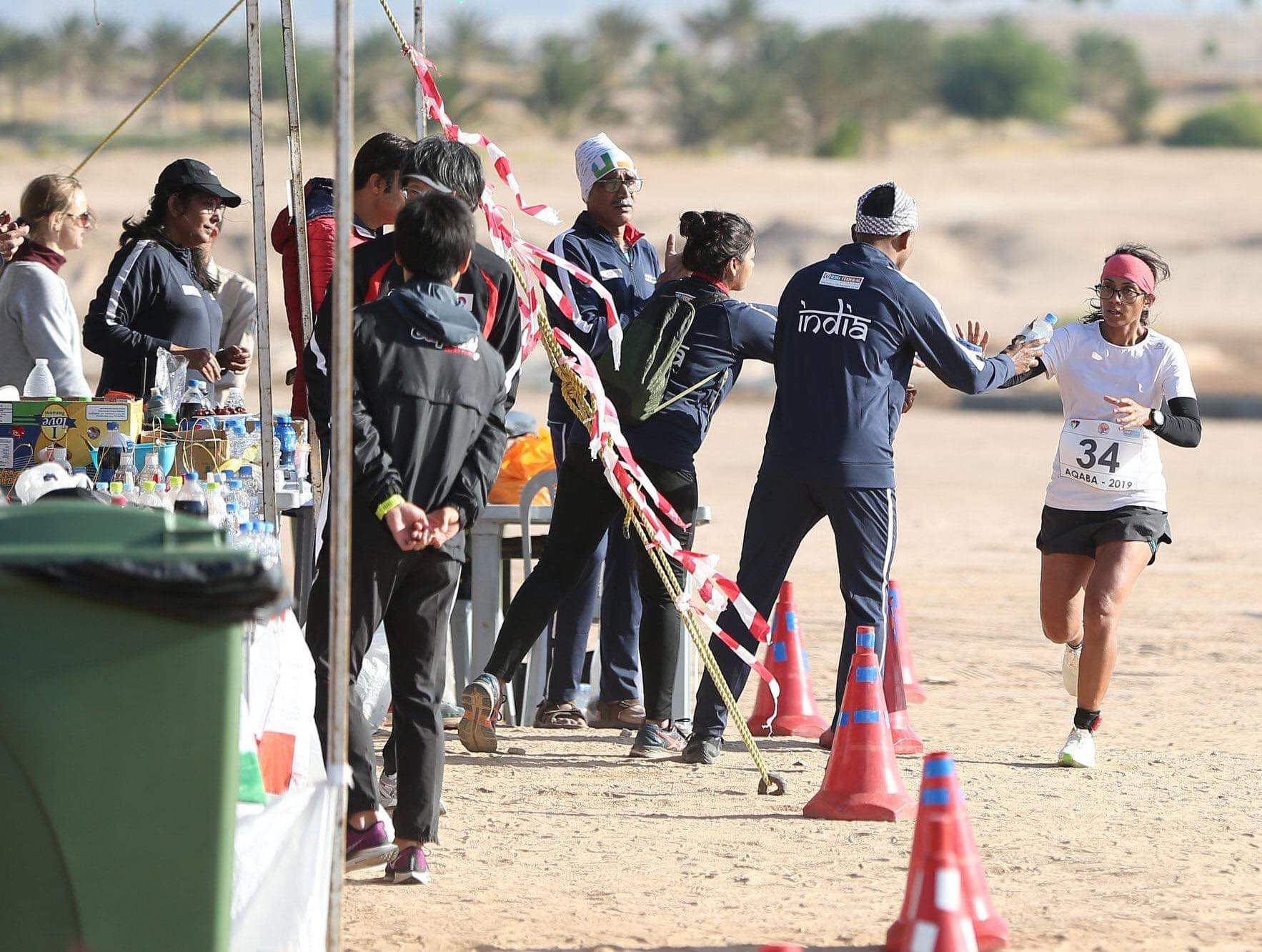
Alongside the Indian runners on that loop was another compatriot; Nupur Singh. She was running the same race but in the open category. She was not part of the Indian team. In fact, Nupur had resumed running only in July 2019 after a gap of three years. By November in Aqaba, it was only around four months since returning to running. Nupur finished the race in nine hours, 36 minutes and 15 seconds. She finished second behind British athlete, Joasia Zakrzwenski, the winner of the open race. Joasia finished in 8:25:50 hours. There were just two women in the open race in their gender category.

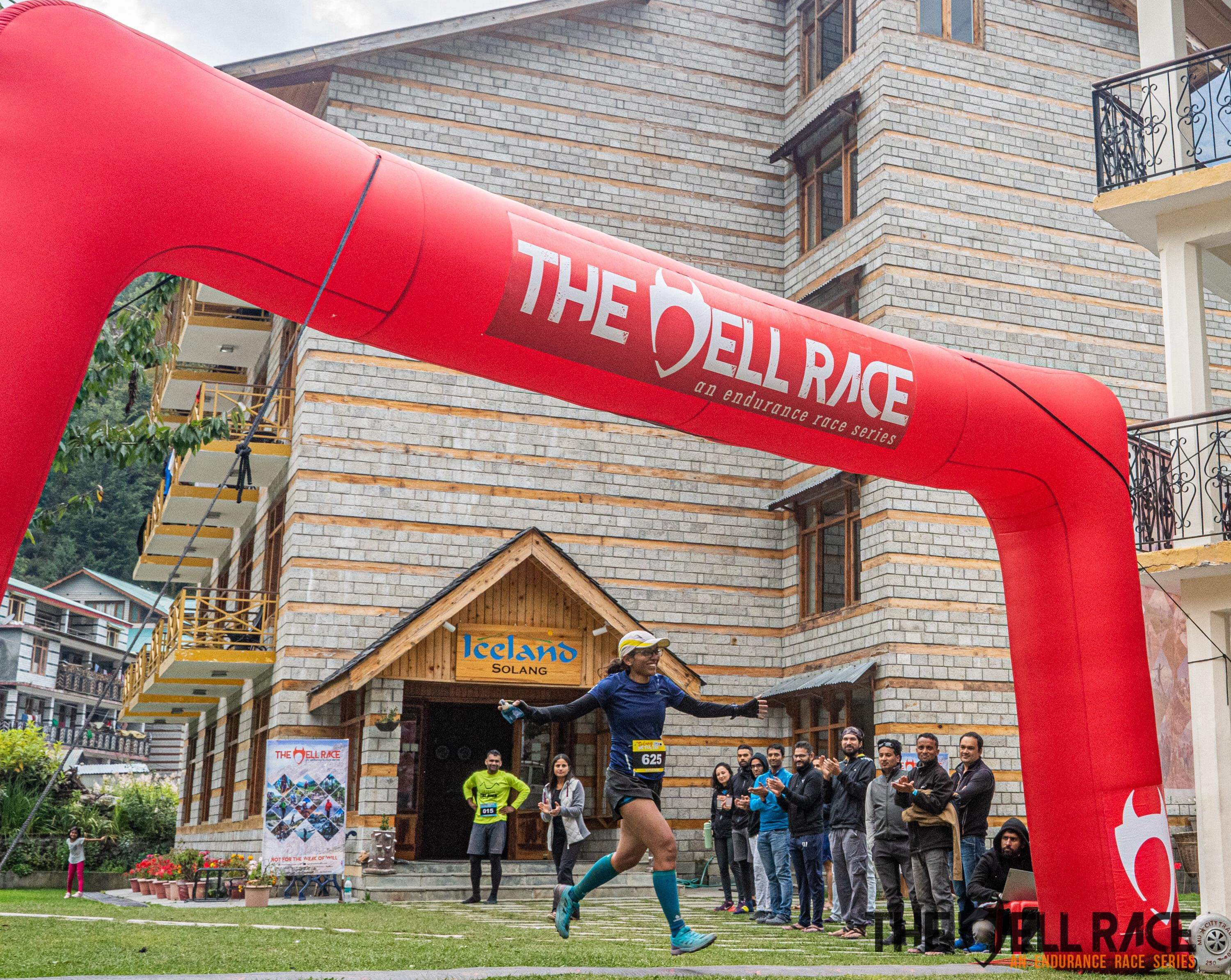
Nupur’s first race in three years had happened three months earlier – the AFMC Pune Marathon of August 2019, where she finished second overall among women. On October 6, 2019, she ran 60 kilometers at Solang Sky Ultra, which has cumulative elevation gain of 3570 meters and cut-off of 14 hours. She was the overall winner finishing the distance in nine hours, 46 minutes and 48 seconds. Aqaba followed.

Photo: courtesy Nupur Singh

Nupur, 32, is from Lalitpur in Uttar Pradesh. She took to amateur running in 2014. But she was not new to sports. “ I come from a conservative business family. My mother was the mayor of Lalitpur,’’ she said. She is the third among four siblings – two brothers and one sister. After an initial phase of schooling in Lalitpur, she did her senior years at Indore Public School. She was into a variety of sports such as swimming, tennis, basketball and cricket besides getting as far as the inter-school nationals in air-rifle shooting, wherein she secured a bronze medal. She moved to Pune to pursue graduation in architecture. As studies took precedence, sports got relegated to the background. Once done with studies, Nupur took up employment in Delhi. “ For three years, I was deeply involved with work with no room for any sporting activity,’’ she said.

In 2013, Nupur decided to take a break and went on a solo trek to Kedarkantha in Uttarakhand. “ This trek helped me get into the outdoors. I started trekking regularly. I also bought a cycle and started doing bicycle trips,’’ Nupur said. She spent a lot of time training to cycle from Manali to Leh, a trip that is hugely popular among amateur long-distance cyclists in India. After trekking and cycling, the next thing she got into was running. Nupur enrolled for the 2014 edition of Airtel Delhi Half Marathon (ADHM) and finished the race in two hours, pretty good time for a first time runner. It encouraged her to pursue running. Alongside the treks and bicycle trips continued.

In 2016, she quit her job in Delhi and moved to the mountains to organize races. She shifted to Bir in Himachal Pradesh. She joined hands with Vishwas Sindhu to co-found The Hell Race, which includes a clutch of races mostly held in the foothills of the Himalaya, besides routes in other ranges. That put a complete brake on her personal running plans. Organizing races under the Hell Race banner took up all her time. It involved traveling to various destinations, finding routes and marshaling the logistics required for the races plus other responsibilities.

Photo: courtesy Nupur Singh

In 2019, she decided to get back to running seriously. For that, she resolved to move away from The Hell Race but not from organizing races. Vishwas and Nupur decided to split The Hell Race. Of the many races organized under the banner, Nupur decided to take three and resume them with coach and ultra-runner Sandeep Kumar under the enterprise called Grand Indian Trails, also known as GRIT. “ We split on amicable terms,’’ she said. This new arrangement, Nupur hoped, would give her time for her own running. From the basket of races held previously under The Hell Race, the Deccan Ultra, Bir Billing Marathon and Coffee Trails are currently organized by GRIT. “ The best part of organizing running races is that both running and organizing are co-related. It needs discipline at my end to focus on both equally,’’ Nupur said.

In February 2019, she had met Sandeep Kumar at Deccan Ultra. The Deccan Ultra includes the Sahyadri peaks of Kalsubai, Alang, Kulang and Madan (Alang-Kulang-Madan is one of the classic hikes of the Maharashtra Sahyadri) in its route. Nupur decided to train under Sandeep in ultra-running. From Sandeep she learnt about IAU’s open category at the 100 km race at the Asia & Oceania Championships in Aqaba, Jordan. She applied for the same. Sandeep was part of the official Indian team heading to the championships. “ My training started in earnest only in September. Sandeep helped me with goal-setting, training plans, nutrition, recovery, running gear and race strategy,’’ Nupur said. Her preparations entailed all the elements required for an ultra-distance race – speed workout, core and strength workout and long runs. “ I could have done better in training. My weekly mileage was in the range of 100-150 km but my single day long run could not exceed 60 km,’’ she said.

At the race in Aqaba, Nupur’s first 50 km went off quite well. “ My target was to finish the first 50 km in 4:30 hours. I finished the distance in 4:15. At around 60 km, I had to slow down. I started to have stomach issues. At 70 km, I had to take a toilet break and then resort to some bit of walking,’’ she said. Headwinds were quite strong. Although the elevation was only 75 meters, repeated running on the 10 km route and the variations in temperature had an impact on many of the runners. “ The Indian crew was absolutely amazing. It is because of the crew members that I was able to finish the race quite well,’’ Nupur said. A lesson from the championship that Nupur takes home is that she needs to work on her nutrition. She recently shifted to being vegetarian. According to her, this choice has been helping her immensely in post-training recovery.

Photo: courtesy Nupur Singh

Two weeks after Aqaba, Nupur ran the SRT (Sinhagad-Rajgad-Torna) 53 km with cumulative elevation gain of 2350 meters and finished in the top position among women and sixth overall. She had a timing of 7:33:09 hours. At the time of her speaking to this blog, winter was beginning to set in and Nupur was scheduled to head back to Solang, where she has a base. This winter, she may attempt skiing. “ Last year, I learnt the basics of skiing,’’ she said. Sandeep believes Nupur has a good future in ultra-running. “ She trains wells, is quick to learn and works hard. Among women, she is one of the best in ultra-running in India,’’ he said. Going ahead, Nupur has her mind set on the Comrades Marathon (the downhill version) in South Africa, the IAU 100 km World Championships to be held in the Netherlands and the Asia Trail Master Races.

(The author, Latha Venkatraman, is an independent journalist based in Mumbai.)

A TALE OF TWO RESULTS

Jigmet Dolma (left) and Tsetan Dolkar (Photo: Shyam G Menon)

Early December, Tsetan Dolkar topped the open category for women at the 2019 Vasai Virar Mayor’s Marathon (VVMM), among prominent running events in the Mumbai region.

VVMM is one of the races that the team of Ladakhi runners supported by Rimo Expeditions participates in, during their winter season spent running at various events in the plains. Tsetan is one half of the now well-known duo of herself and Jigmet Dolma; both Ladakhi runners who worked their way up the ranks to be currently included in the elite category at races like Tata Mumbai Marathon (TMM). They usually finish very close to each other.  At the 2019 IDBI Federal Insurance New Delhi Marathon, which served as basis for selecting the marathon team that headed to the 2019 South Asian Games (SAG), Jigmet and Tsetan were apart by just two seconds. Jigmet made it into the Indian team.

According to her, when they are running the marathon in Ladakh, the two may be together for as much as 40 kilometers. In the races of the plains where competition is higher, they stick together till past the 21 kilometer-mark – sometimes more – and then progressively strike out on their own. It’s a sight regular participants at TMM have become used to – if one from this duo passes you by, the other is never far behind. That’s why the racing they did in early December 2019 is important from the perspective of their evolution as runners.

In a departure from the past, at 2019 VVMM, Tsetan was running from start to finish without her friend and fellow competitor from Ladakh for company. Around the same time, at the 2019 SAG in Kathmandu, Jigmet was doing the same thing. Tsetan placed first in the open category for women at VVMM; Jigmet finished fifth in her first outing as part of the Indian team. “ It is an indication of the runners slowly maturing with experience.  When you run alone, you have to know how to keep race strategy going and set the pace accordingly. You have to do that by yourself,’’ Savio D’Souza, Mumbai-based coach who has worked with both these runners, said. Tsetan’s victory was notable for two aspects. First, her timing at 2019 VVMM was better than the time she took to complete the full marathon at 2019 TMM at the beginning of the year. Second, she crossed the finish line with significant lead over those following her. In 2019, while it did have an elite category for men, VVMM did not have a corresponding segment for women. The strongest woman runners in the field were those topping in the open category. “ After 21 kilometers, I missed Jigmet,’’ Tsetan said recalling her run at VVMM and the practice the duo had got used to. She completed the full marathon in 3:10:27. This wasn’t Tsetan’s first time on the podium at VVMM. Three years earlier, it had been a very different experience.

When the 2016 edition of VVMM happened, it was still early phase for the Ladakhi team and their annual winter-outing to India’s races. Realizing that the location of VVMM was away from Mumbai city, the team had traveled to Virar a day before the race and found a place to stay there for easy access to the start point. On race day however, just the opposite occurred. Finding their way to the start line took time and the Ladakhi runners commenced their race much after the rest of the field had taken off. Although Jigmet and Tsetan had their bibs with them, they didn’t have pins to fasten them to their T-shirts. So they clutched the bib in their hand and ran. In due course they caught up with the rest. They not only completed the run but also secured podium positions; Tsetan finishing ahead of Jigmet.  They collected their medals and prize money. But not long afterwards, fellow competitors lodged protests against the duo’s late start. The problem was – while you are allowed to start late, the Ladakhi runners had started too late. They exceeded the grace period. It was a very valid protest. “ We had to return the cheques. Those who complained had a point,’’ Savio said. The result of December 2019 reversed that misfortune. “ This time also we stayed in Virar. But we found a place close to the start line and on race day, reported on time,’’ Tsetan said, putting the result in perspective. December 2019, the cheque is hers to keep.

TMM is anchor for the Ladakh team’s annual outing. Mid-December 2019, the entire team was not yet in place. Given the political developments in Jammu & Kashmir and Ladakh’s new found status as union territory, there had been uncertainty over exam schedules for some of the young runners headed to Mumbai. The remaining members of the team were expected to join a few days later, Savio said. While the team has kicked off its 2019-2020 season on a good note with Tsetan’s win at VVMM and Jigmet’s debut at SAG, there is something else they have their eyes on. According to Savio, both Jigmet and Tsetan tend to improve as the season progresses. Typically their final event of every season is the IDBI Federal Life Insurance New Delhi Marathon held in February. At its last edition (February 2019), both Jigmet and Tsetan had touched 3:01 hours in the full marathon. That is the closest they have come so far to the three hour-mark. “ I am hoping that they get to three hours or below this season,’’ Savio said.

(The author, Shyam G Menon, is a freelance journalist based in Mumbai.)      
JYOTI GAWATE GETS BRONZE IN WOMEN’S MARATHON AT SOUTH ASIAN GAMES

Jyoti Gawate (Photo: courtesy Ravi Raskatla)

Rashpal Singh and Sher Singh place second and third respectively in men’s marathon

Hiruni Wijayaratne of Sri Lanka secured gold in women’s marathon at the 2019 South Asian Games, currently on in Nepal. She covered the distance in 2:41:24.

Silver medal went to Pushpa Bhandari of Nepal ((2:50:11).

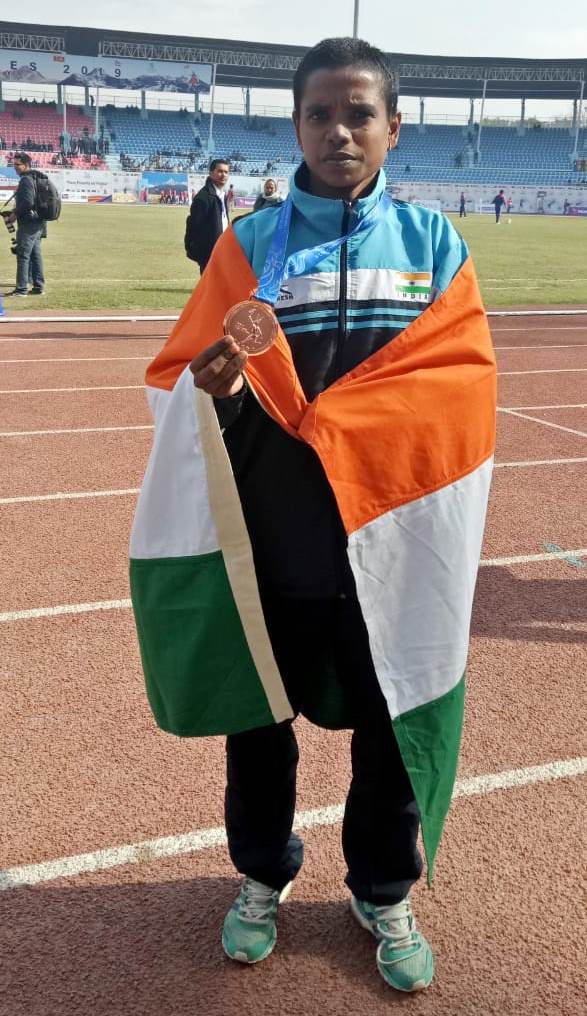
India’s Jyoti Gawate took the bronze (2:52:44).

Jyoti’s compatriot Jigmet Dolma placed fifth (3:07:24). This was Jigmet’s first time representing the country.

The race took place earlier today, December 7, 2019.

Hailing from Parbhani, Maharashtra, Jyoti is a familiar face at road races in the country including the annual Tata Mumbai Marathon (TMM), where she has been podium finisher multiple times. This was Jyoti’s second outing at South Asian Games. Earlier in 2016, she had been part of the marathon team for that year’s South Asian Games held in Guwahati. In 2011, she had taken part in the Asian Marathon Championships in Thailand and finished seventh among women with a timing of 3:17 hours. She was chosen for the event in Thailand because of her podium finish at the 2011 Mumbai Marathon. AFI had funded her trip and stay. The federation also sent her to participate in the SCO Marathon in China.

At the 2019 edition of TMM, she had finished second among elite Indian women with a personal best timing of 2:45:48. Both Jyoti and Jigmet were selected to represent India at the 2019 South Asian Games based on their podium positions at the fourth edition of the IDBI Federal Life Insurance New Delhi Marathon held on February 24, 2019. Ahead of leaving for Nepal and the 2019 South Asian Games, Jyoti had told this blog that she would be aiming for a performance close to what she achieved at TMM (for more on Jyoti please try this link: https://shyamgopan.com/2019/02/04/jyoti-and-the-eight-minutes/).

According to Wikipedia, Hiruni Wijayaratne is a Sri Lankan-American track and field athlete specializing in long distance running. She represented her country in the 2017 London Marathon and the 2017 World Athletics Championships. She holds ten Sri Lankan national records. She holds the Sri Lankan national record in the women’s marathon of 2:34:10, which is also a South Asia Area Record.  The Indian national record in the women’s marathon set by O.P. Jaisha at the 2015 World Championships in Beijing is 2:34:43.

In the men’s marathon, Kiran Singh Bogati of Nepal emerged victorious. As per information available on the official website of the 2019 South Asian Games, he clinched gold, covering the distance in 2:21:17. Silver went to India’s Rashpal Singh (2:21:57); India’s Sher Singh took bronze (2:27:07).

(The authors, Latha Venkatraman and Shyam G Menon, are independent journalists based in Mumbai. For more background information on Jyoti and Jigmet please click on this link: https://shyamgopan.com/2019/11/29/jyoti-jigmet-in-marathon-team-for-2019-south-asian-games/; you can also refer the archives of this blog for articles on them.)    

CHANGE OF MIND ON DENALI

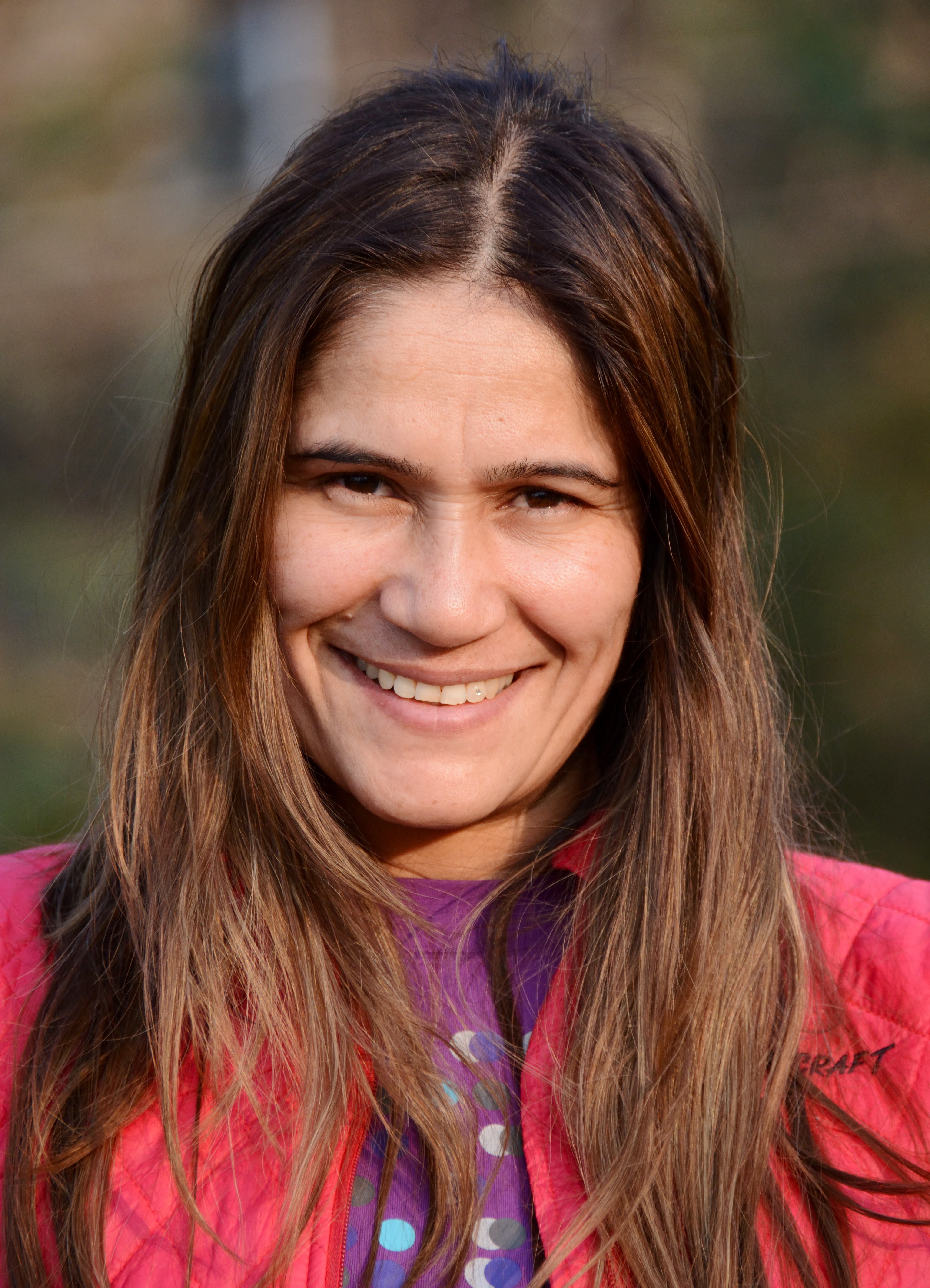
Seema Pai (Photo: courtesy Seema)

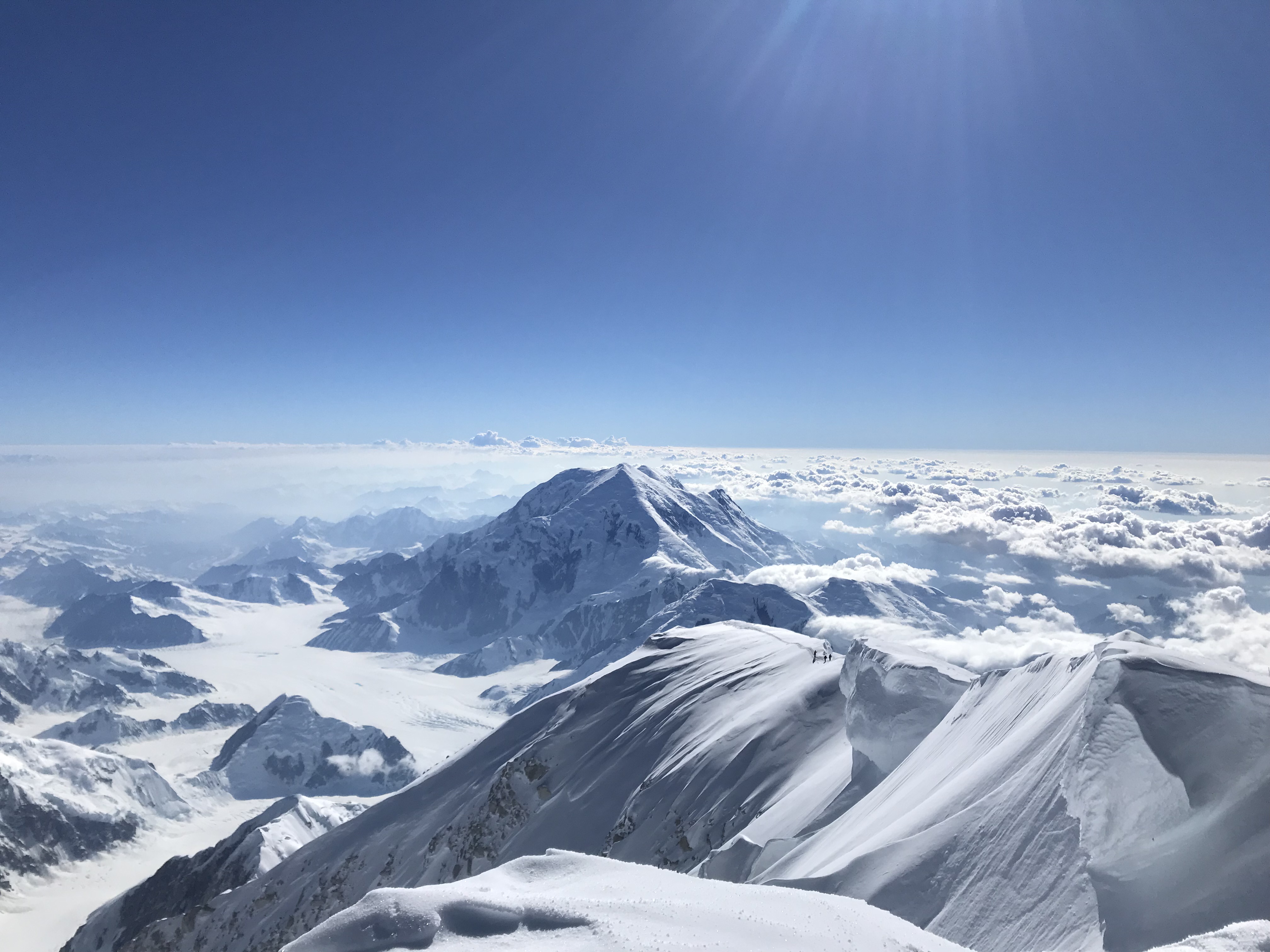
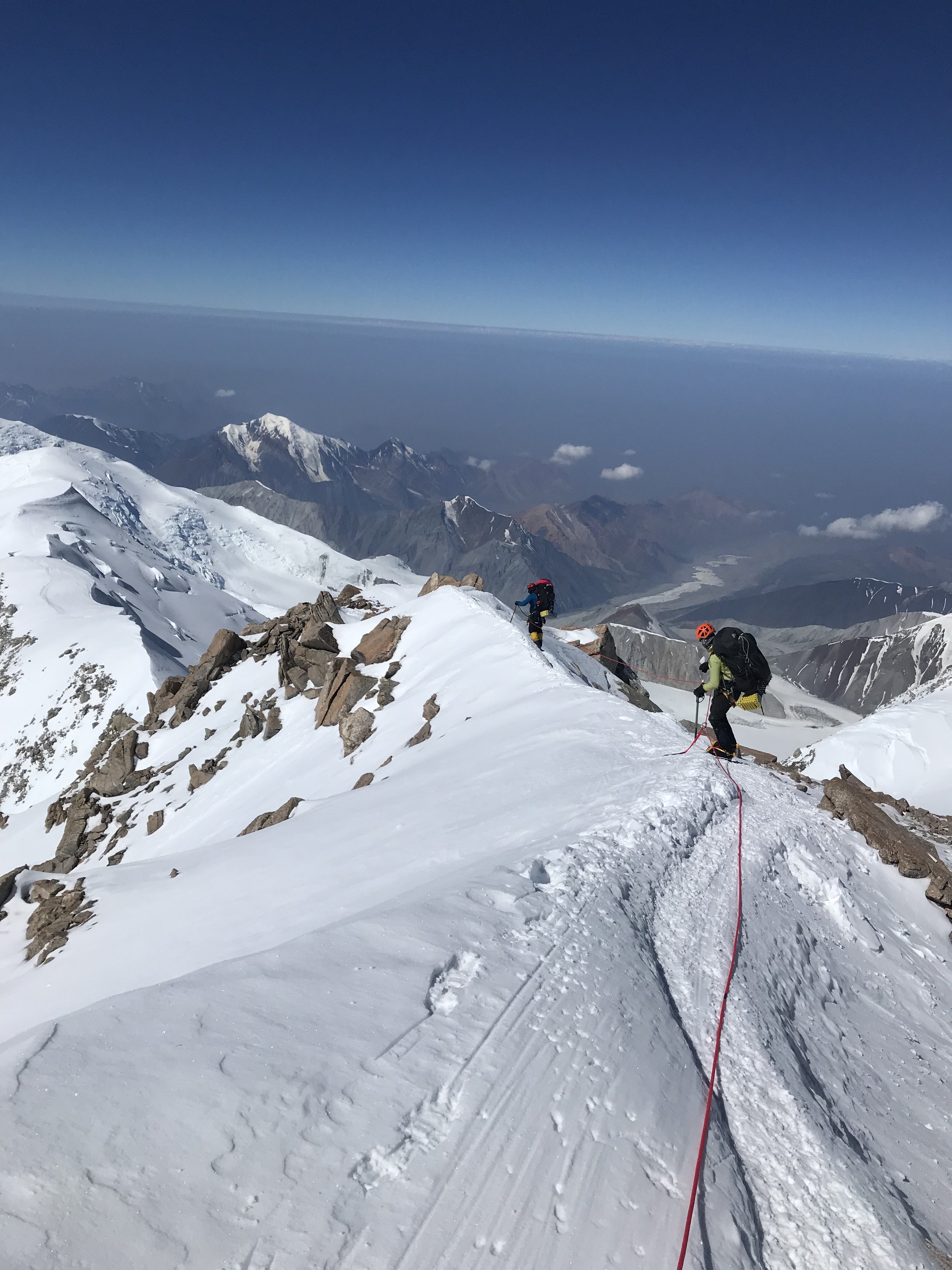
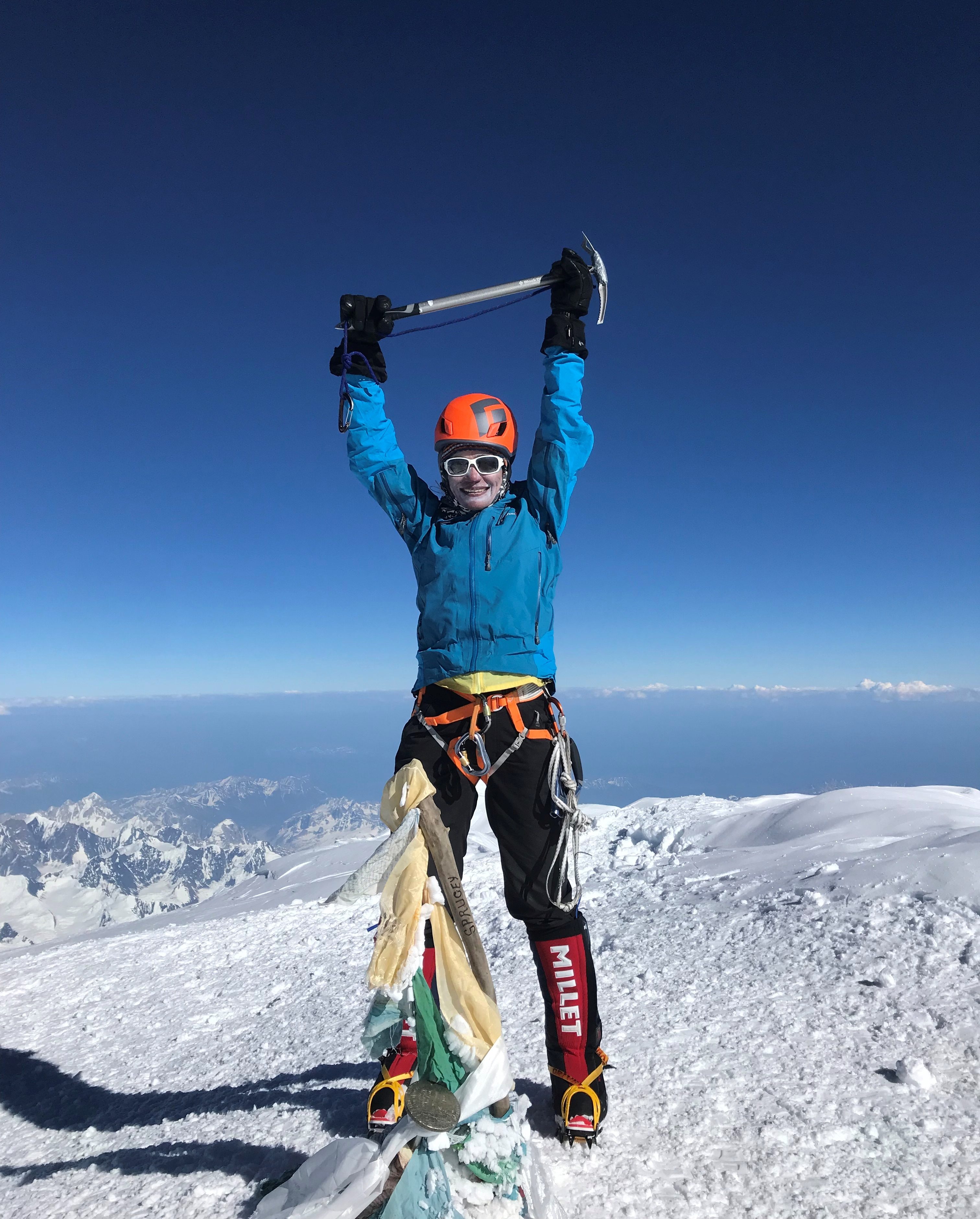
In late June 2019, Seema Pai from Bengaluru reached the summit of Denali, North America’s highest mountain. She returned with many questions in her head and the desire to rethink the projects she was working on.

It all started unexpectedly with a hike in the Sikkim Himalaya in March 2015. That was when Seema Pai and her partner, Dinesh Kaigonahalli, met Sergei Chulkov, a Russian mountain guide. They agreed to meet again; hopefully in the Caucusus Mountains, the mountain system at the intersection of Europe and Asia. A few months after the hike in Sikkim, Seema and Dinesh had an enjoyable outing in Ladakh, trying out a hiking route they hadn’t been on before, in the eastern Nubra Valley. The trek involved three passes all above 17,500 feet in elevation. At its end, the duo decided to extend their outdoor experience to the Caucusus. It seemed appropriate in another way – they were well acclimatized from their stay and hike in Ladakh. Why waste that fitness with a return to the plains?

They flew to Moscow and from there, traveled to the resort town of Mineralnye Vody in Stavropol Krai where they met up with Sergei. Given their recent acclimatization to high altitude and the fact that its benefits stay on for a brief while, Sergie recommended that they attempt Mount Elbrus (18,510ft), the highest peak in the Caucusus. A mountain guide, he kitted them out for the trip. That was how Elbrus happened. With it, rather unexpectedly, Seema found herself looking at the possibility of attempting Seven Summits. It wasn’t something she sought. Elbrus happens to be among mountains constituting the Seven Summits challenge in mountaineering. She had just traveled to Russia and climbed it. So, how about trying the rest? First accomplished by American businessman Richard Bass in 1985, Seven Summits entails climbing the highest peak on each continent. The seven peaks are: Everest (Asia), Aconcagua (South America), Denali (North America), Elbrus (Europe), Vinson Massif (Antarctica) and Kosciuszko (Australia) or Puncak Jaya aka Carstensz Pyramid (Indonesia). That last choice depends on whether you view Australia as continent or tectonic plate; if latter then Puncak Jaya in Papua, Indonesia qualifies to be highest.

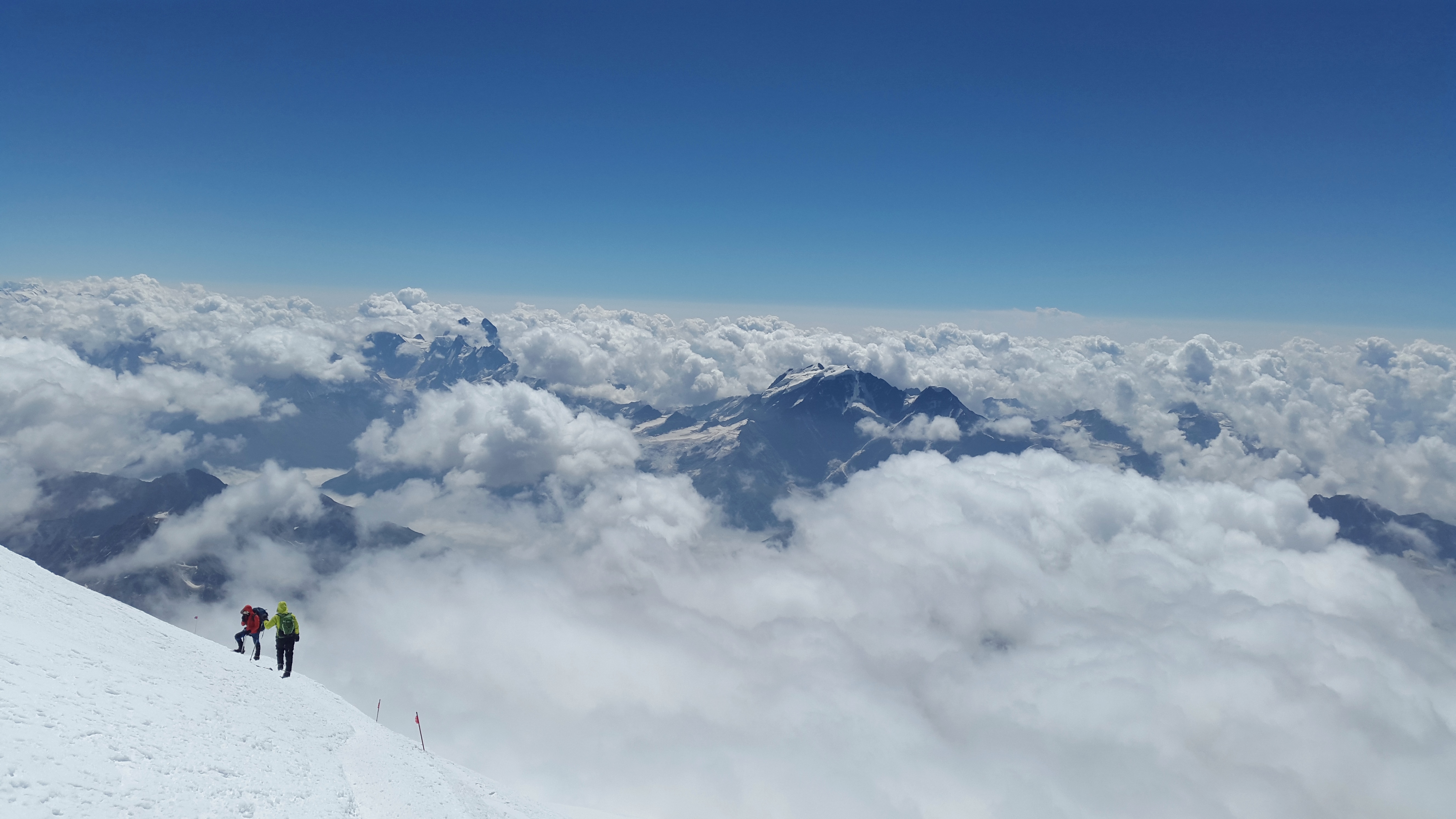
On Elbrus (Photo: courtesy Seema)

Belonging to Bengaluru’s early crop of woman rock climbers, Seema has been climbing, hiking and going on expeditions to the Himalaya for many years. A self-made person with multiple rebounds from testing predicaments to her credit she owned of a couple of shops selling outdoor gear in the city. In mid-August 2017, after another acclimatization trek in Ladakh, Seema and Dinesh flew to Tanzania. In less than a week they were atop Kilimanjaro (19,340ft), the highest freestanding peak in the world and the highest mountain in Africa. In early 2018, the two of them traveled to Argentina in South America, where Seema successfully climbed Aconcagua (22,841ft). All these ascents – Elbrus, Kilimanjaro and Aconcagua – were guided trips that were also supported (meaning – use of support staff) to varying degrees. It made the next expedition, Denali, stand out. Trips to Denali are mostly self-supported. It is only in the Himalaya and the mountains of Africa that clients are indulged with support services. In the world of hiking and mountaineering, respect is highest for people who do things by themselves. Seema was certain she did not want to be a tourist on Denali. She wanted an expedition in which, she did her share of hard work. There was also another angle at play here.

If you go through Wikipedia’s page on Bill Watterson, a sentence to remember is his observation that he works for personal fulfilment. Watterson is the creator of the popular comic strip: Calvin and Hobbes; first published November 18, 1985. Despite its success, Calvin and Hobbes had a syndicated run of only ten years, from 1985 to 1995. According to Wikipedia, Watterson stopped drawing the strip with a short statement to newspaper editors and readers saying that he felt he had achieved all he could in the medium. He is also known for his battle with publishers against merchandising his characters; something he felt would render his characters cheap. Amid the comic strip’s immense popularity even today, Watterson’s take on commercialization is, arguably, not as well-known. Seema is a huge fan of Calvin and Hobbes. In her childhood, she had been the strong-willed, independent sort with penchant for courting trouble. The story of the six year-old adventurous boy and his stuffed tiger had instant appeal. Among concepts that she latched on to was the idea of the transmogrifier, the cardboard box Calvin uses many times to transform himself and Hobbes into a variety of characters. She had long wanted her own cardboard box.

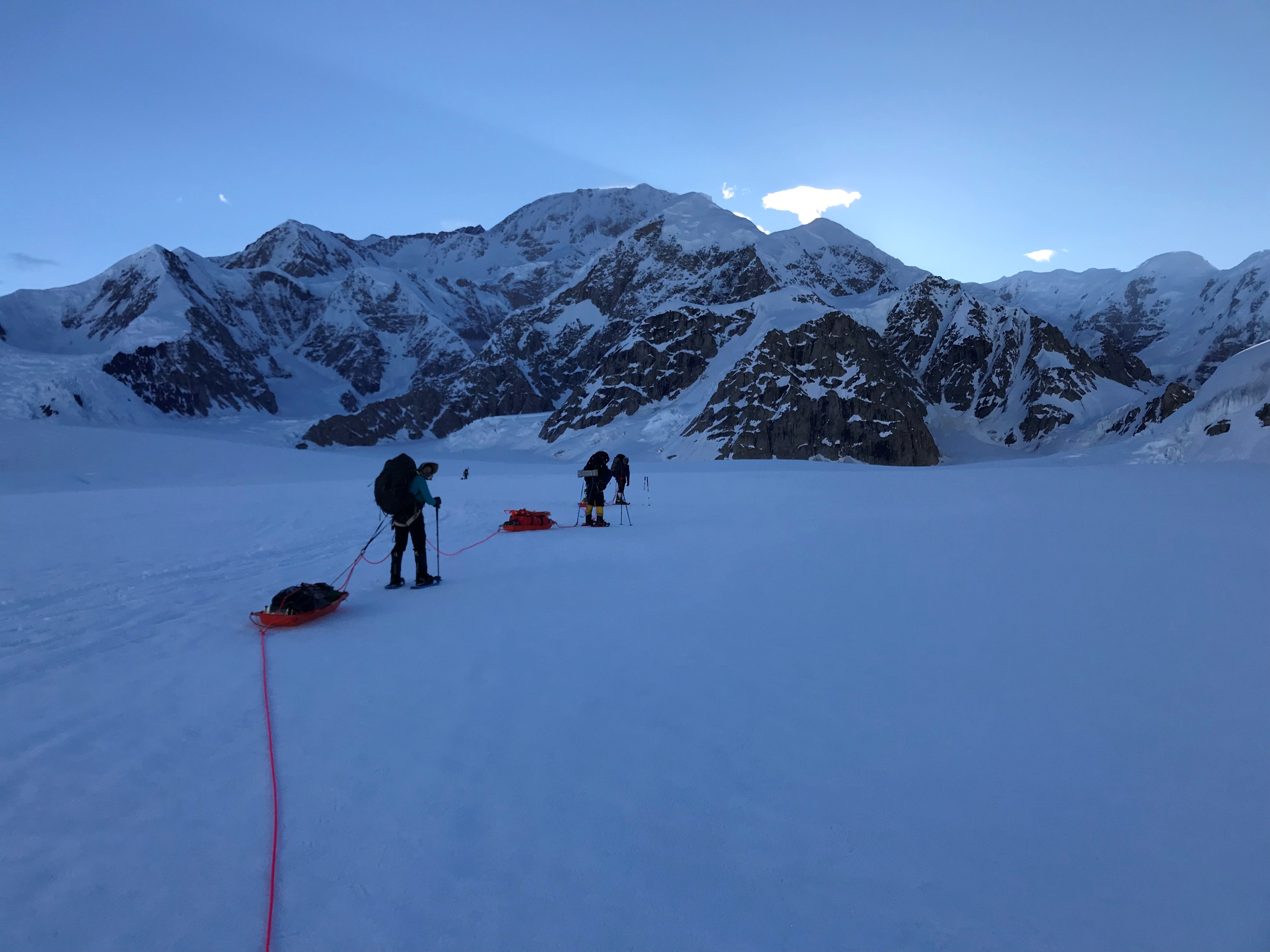
From the expedition to Denali (Photo: courtesy Seema)

Alaska has been an emblem for the world’s wilderness spaces. There are other places similar to it or near similar, but when it comes to imagining vast snowbound landscapes, polar weather and animal and human existence evolved in such circumstance, Alaska easily invades the brain. It is also true unfortunately that some of the results of human intervention – like oil spills; they too enter the frame. Alaska is home to North America’s best known mountain – Denali. For many years, the mountain was also known as McKinley, called so after William McKinley, 25th president of the United States who was assassinated in September 1901. Although its height is only 20,310 feet – significantly less than many of the peaks in the Himalaya – Denali is both a big mountain, among the world’s most northerly big mountains, quite cold and capable of attracting feisty weather conditions. There is also plenty of raw ascending involved given the walk-in starts at around 7000 feet on the Kahiltna Glacier. According to Wikipedia, the first verifiable ascent of Denali was in 1913, by Hudson Stuck, Harry Karstens, Walter Harper and Robert Tallum. Within the Seven Summits world, Denali is among the most demanding climbs because in addition to whatever it offers, the challenges are tackled with few of the luxuries of guided ascents. After Elbrus, Kilimanjaro and Aconcagua, as Seema knocked on Denali’s doors she knew a different experience waited. This would be her personal transmogrifier to become the sort of outdoorsperson she wanted to be.

In Bengaluru, along with her regular training, Seema commenced a special 24 week-program designed for the Denali ascent. The focus was cardio-vascular, core and strength training. Additionally she also pulled heavy tyres and periodically did stair workouts at an apartment block having 15 floors; her backpack loaded to almost 30 kilos. Then just before heading to the US, she and Dinesh spent two weeks in Ladakh. They hiked to two passes – Stok La and Ganda La – without much load; they carried just about five to six kilos of stuff in their backpack. The idea was to take it easy, provide a tapering, relaxed phase to all the hard work that had gone in. It was also a case of repeating the pattern they had resorted to before the previous peak ascents as part pf Seven Summits – Ladakh was ideal place to acclimatize ahead of expedition. Early June, they flew from Delhi to Seattle via Frankfurt. There they met Madhu Chikkaraju and Pranesh Manchaiah, climbers from Bengaluru who had previously been on Denali as part of faculty for a premier outdoor school. Seema had tied up with them for the Denali attempt. At Anchorage in Alaska, which they reached on June 16, they were also joined by Brian, who had come from Oregon. Seema’s birthday – her fiftieth – was celebrated at Anchorage in the company of her expedition team and friends from Sacramento, who showed up for the occasion. There was some final shopping also done at REI, Anchorage.

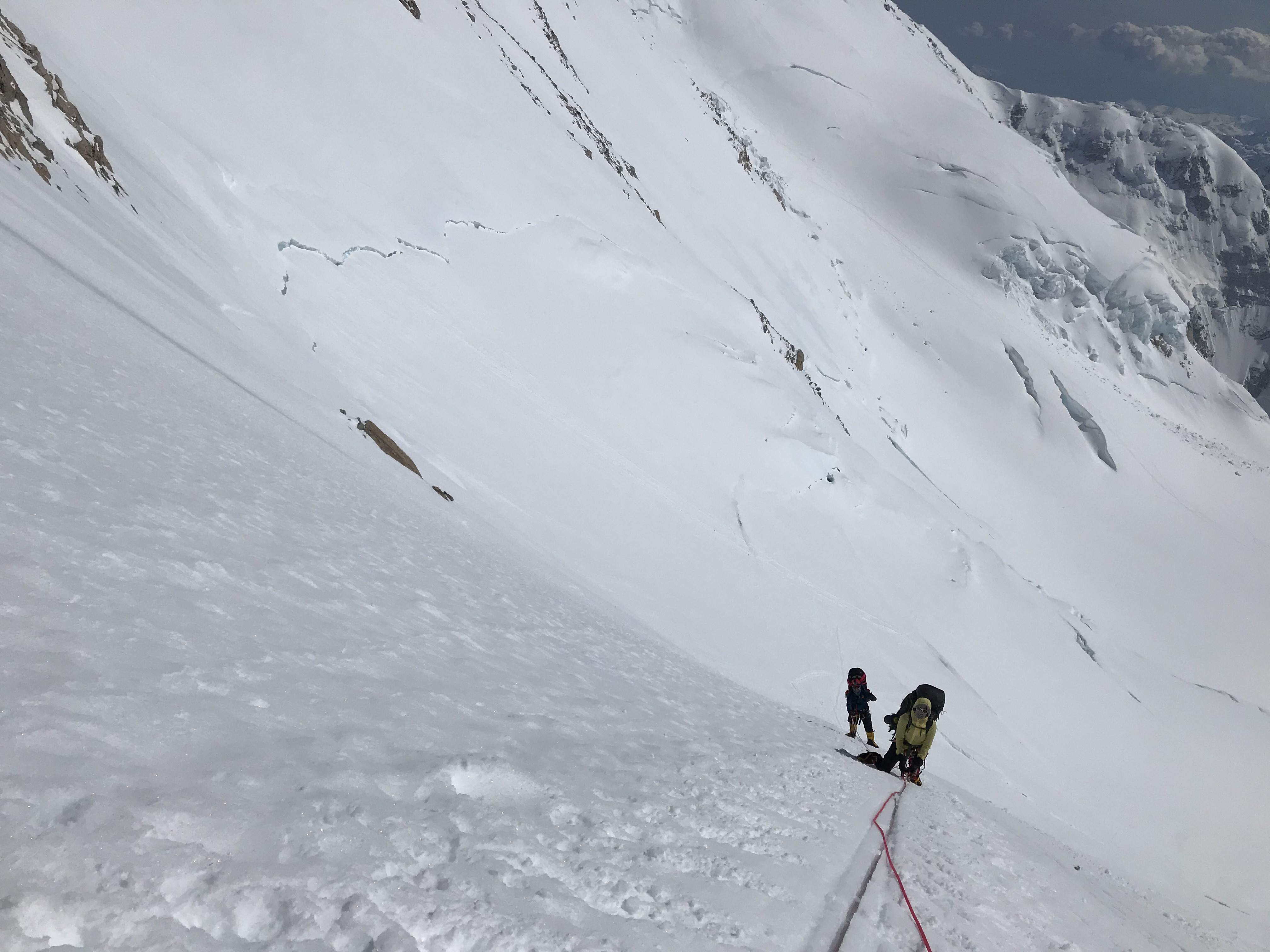
On Denali (Photo: courtesy Seema)

A few days later, the team proceeded to Talkeetna. “ It is a rugged place,’’ Seema said.  Here, the expedition’s gear and supplies were reviewed and repacked. Given an expedition proceeds setting up camps on the mountain and a load ferry precedes each camp, the supplies had to be repacked in plastic and dry bags so that they could be buried six to seven feet deep in the snow; each such cachet is identified with markers bearing the expedition’s name. “ Since there is nobody to help you haul what you take, every unwanted gram is left behind. You orient yourself for life based on essentials and what is relevant,’’ Seema said.

Talkeetna was where the final paperwork and briefing related to the expedition got done. The rangers who interviewed the team had already seen the climbers’ biodata. They had much respect for the altitudes of the Himalaya. But that didn’t stop them from checking whether the predominantly Indian team was aware of what it took to attempt Denali. They made sure the team members knew glacier mountaineering, that they knew the basics of climbing; they even asked how many trips Seema had made to the Himalaya given Bengaluru is in South India. Their focus was more on Madhu and Pranesh, who were the more experienced members and assuming responsibility for the rest. The region around Denali is a national park. The rangers gave a Power Point presentation on dos and don’ts; they also provided an overview of the route available for the season, prevailing conditions and how many attempts had happened as yet. The park service, responsible for maintaining the environment and ensuring visitors’ safety, provided sledges (to pull gear) and poop buckets (to collect and ship out human waste). You have to pay for these. “ The park officials were professional and articulate,’’ Seema said. The private expedition was given the name: Team Bengaluru. They would attempt Denali via the popular route – the West Buttress Route.

Indicative of the ice, wilderness and far flung settlements ahead, there were plenty of planes around in Talkeetna. They do the work of ferrying people and supplies to remoteness. Alaska is among regions that birthed bush flying, wherein the tough terrain that planes take off and land on offered few prepared landing strips and runways. It called for tough pilots, tough planes and much innovation. Bush planes are characterized by their ability to operate from short landing strips, large tyres to tackle bumpy terrain, undercarriage designed to host floats and skis and high wings that permit easy loading and unimpeded gaze downward for pilot and passengers. Alaska’s first bush pilot was Carl Ben Eilson, hailing from North Dakota in the US. Bush planes, pilots – they are as much part of Alaskan stories as nature and people are, in the region. Team Bengaluru flew from Talkeetna to Kahiltna East Fork Glacier. The Kahiltna Glacier is Alaska’s longest; it is 71 kilometers long. “ You are supposed to be dressed for life on glacier and ready for it from the moment you step on to the plane,’’ Seema said.

From the Denali expedition (Photo: courtesy Seema)

The plane dropped off the team and their gear, took on those waiting to go back and left. It was now down to four people, their supplies and a vast landscape. Backpacks weighed over 20 kilos; there was roughly 55-60 kilos of gear per head in total. The distance from East Fork at roughly 7000 feet elevation to Denali’s summit – 20,310 feet – is 29 kilometers. Sense of work to be done, sank in for reduced to the minimalism of so much stuff, a few humans and  nothing else around, one thing was clear – none of that gear is going to move unless human being hauls it. “ I am thankful that I put my butt on fire in Bengaluru, preparing for this expedition. You have to be fit if you want to attempt Denali as part of a self-supported team,’’ Seema said. It was the evening of June 19, 2019. Aside from two metal shelters, there was no other permanent installation at Kahiltna East Fork. It was just miles of glacier. You saw the lower portions of Denali; its middle and higher reaches remained unseen. The months of May, June and July form the traditional window to attempt Denali. Thanks to global warming, Seema said, late July is not recommended while late April-expeditions have begun happening. Although flying with Seema to Talkeetna, Dinesh wasn’t part of the climbing team. He was scheduled to return to India. Dinesh is among Bengaluru’s pioneers in rock climbing, a former NOLS instructor in mountaineering and one of the original founders of India’s popular backpack brand: Wildcraft.  Before leaving Talkeetna, he went for a cruise on the river. The settlement is at the confluence of three rivers – Susitna, Chulitna and Talkeetna. From the boat, he saw Denali in the distance. He recalls thinking how massive it seemed. Mt Foraker: Mt Hunter, Denali – they are all in the same area. But Denali towered above the rest.

Life on a giant glacier comes with its own protocols. There were assigned camping spots on Kahiltna East Fork and limits on how far you venture off the designated zone for there are crevasses. You respect the safety markers that have been put up; you also watch out for each other. Climbers heading to Denali stick to the assigned path, identifiable thanks to periodic markers and the footprints of those who went earlier. On vast, barren glacier with nowhere to hide, a pee-break or poop-break finds you going about your business while others look away to provide an illusion of privacy. Tents, easily set up on other types of terrain, can be installed on a glacier exposed to the wind only after sufficient snow has been shoveled off and a flat trough excavated for the pitching. With so much ice around, snow goggles are a must. Sleep is quite different from mountaineering in the Himalaya. The Alaskan year is divided into two halves of summer and winter. June is summer and in summer, daylight never goes off fully. “ You put a scarf on your eyes and try to sleep. I went to Denali like a student. You have to have humility. What I liked about Denali is that you can’t be competitive in this landscape. If you are still competitive, then you are spiritually zero. Nothing works here without team work,’’ Seema said. The first few days of load ferry is done wearing snow shoes, designed to prevent feet from sinking into snow. Back in Bengaluru, Seema had trained to pull sledges (that’s what the earlier mentioned tyres were for). Still doing it for real was a challenge. She hadn’t factored in how traction would be with snow shoes. On the approach to Denali, she elected to do her hauling in the backpack instead. The team used snow shoes and sledges till the fifth day. Then they were cached (buried) in the snow at Windy Corner to be retrieved on the way back. Past this point, Seem also stopped using both her trekking poles. It became a pole and an ice axe. Among the camps en route, the one at 14,200 feet was sizable. “ It resembles a colony and is just ahead of the actual climb up Denali. This camp has a medical facility with Gammo Bag to tackle altitude induced sickness,’’ Seema said.

On Denali (Photo: courtesy Seema)

Fixed ropes installed every season for the climb, commenced from this camp. Here the team also faced their first set of serious problems. To begin with a storm was forecast. Bad weather typically entails lasting it out for a fresh window to open up. That puts pressure on the team’s supplies. Then, one of the team members became unwell, apparently caused by altitude. The medical personnel advised that the individual descend for safety. He was relocated to camp at 11,000 feet. Simple as it sounds, in reality this wasn’t easy. In the thick of an expedition with work to do and summit to gain, altitude sickness is rarely acknowledged by patients. When it is established through external intervention, there is the issue of patient buying into it adequately and descending to safety. Finally in small alpine teams, when one person is taken out of the frame, the others have to pull that much more for there are only so many to get the job done. The diagnosis of altitude sickness and descent to safe camp to park the individual – all this happened alongside responsibilities parceled out and load ferry continued to set up higher camps. By now the body clock had gone haywire; in Denali’s blurred divide between day and night sleep was happening at hours distinctly odd by the habits of lower latitudes. And so one of the timelines read like this – team members after transferring their colleague to lower camp (where his condition started to improve) got back to the camp at 14,200 feet by 3AM. They rested till 3PM and then left for high camp at 17,200 feet – below Denali Pass – which they reached by 10.30PM. The weather was starting to go bad. They rested till 8AM, then, left for the summit at 10AM. The narrative may as well have been of one long solar day; sleep – a case of badly required shut eye and not world blanketed by darkness.

The summit push is divided into three parts – there is the Denali Pass, the summit slope and a large slushy snowfield, replete with the associated risks of glacier travel. The team moved efficiently, tackling Denali Pass in under-two hours. “ Summit day was 12 hours long for us. We reached the top of Denali at 5.50PM on June 28. Luckily for us, the weather didn’t worsen that day and the next. Having gained the summit, we got back to the camp at 11,000 feet and our friend recuperating there, by around 10PM,’’ Seema said. Reunited and briefly rested, they wound up the camp at 11,000 feet and descended to East Fork at approximately 7000 feet. Having returned to Bengaluru, Dinesh had been monitoring the weather in Alaska online. He saw the storm forecast. He also saw that around the team’s previously calculated summit window, conditions were holding and not deteriorating further. “ Up and down Denali in eleven days is admirable,’’ he said.

For Seema however, there were other thoughts taking root. The whole Seven Summits journey had been triggered unexpectedly. Once she launched into it, there had been the related big expedition-rigmarole of impressing sponsors, articulating purpose and marketing it. All of that to try and raise funds. A century ago, in times vastly different from now, George Mallory could say he wanted to climb Everest “ because it’s there.’’ Now, adventure finds support because it promises relevance for sale in human collective. Empowerment; no-limits, team work – such descriptions help market adventure, when it is actually a case of nothing but because-its-there and you wanting to try it. Bucket lists by fifty are perhaps no different. Or to be more precise – there is nothing wrong in wishing for something but if you want it to be a soul-cleansing experience alongside, then it has to be just that and not what impresses sponsors and human collective. Seema had Elbrus, Kilimanjaro, Aconcagua and Denali in the bag. Everest, Vinson Massif and Puncak Jaya remained. Denali in particular had come after much preparation. She had worked for it. It had been mission mode. And just when it delivered results, it also posed questions. What are you on a mountain for? “ I don’t want anything in mission mode anymore on a mountain. I want it to be a fuller experience of what it is like to be out there. On a normal expedition, one is happier. You have time. Mission mode, chasing an objective or ambition, does not offer opportunity to connect deeply to the experience, ’’ she said.

From the Denali expedition (Photo: courtesy Seema)

Denali done, Seema has been questioning her pursuit of Seven Summits. “ I don’t wish to go after the remaining peaks in Seven Summits. On the other hand, Denali has given me the confidence to attempt bigger peaks. Not tick them as some objective achieved. Woh race mein nahin lagne ka….’’ she said. Not to mention – Seven Summits is an expensive proposition and the peaks remaining to be climbed – Everest, Vinson Massif (in Antarctica) and Puncak Jaya (in Indonesia) – are costly affairs owing to challenges in logistics or the commercial enterprise they come wrapped in. Is mountaineering all about measurement by capacity to afford costly expeditions and logistics? In days of commercial expeditions like today, it would seem so. “ The problem in life is that sense of accomplishment easily transforms to self-obsession. I don’t want that,’’ Seema said. Back in Bengaluru, she has been reassessing her life. Alongside her business, Seema has maintained a presence in farming. The latter’s appeal has been growing. Denali was indeed transmogrifier.

(The author, Shyam G Menon, is a freelance journalist based in Mumbai. For more on Seema Pai please try this link: https://whynotat50.com/)