JUST MERCY

This image was downloaded from the film’s Facebook page and is being used here for representation purpose. No copyright infringement intended.

Let put it in plain and simple terms – some films are relevant.

Just Mercy is one.

Well-acted and directed, this 2019 film is based on the real life story of a person serving time on death row although he isn’t guilty of the crime he is accused of. It offers insight into the trumped up charges (how they were engineered) and the legal battle that followed to get him released, including the intimidating atmosphere lawyers endure to ensure justice. The film also informs you of how in many cases, death row became a parking spot for people dealt with unjustly by the system. Framed and with their appeals thwarted repeatedly by a prejudiced system, they languish in prison. It is the exceptional who hold themselves together in one piece.

The story is based in Alabama, US. For the contemporary viewer, it acquires impact given the ongoing Black Lives Matter movement and the simple fact that society anywhere on the planet is never far from the edge of injustice. It is a grim film particularly relevant for geographies that have seen or continue to see the type of forces portrayed in the plot. Above all, it tells why the law exists, what a lawyer means and that deep down, even the wrong doers tend to reflect and correct, however reluctantly that may be. But the price of such reluctance is steep. Innocents die while others rot in prison for years, for no fault of theirs except as the prosecution sometimes says (and gets away with): he had all the appearance of a guilty individual or all the signs of being a criminal. That dependence on perception conveniently overshadows the diligent lawyer’s question: where is the evidence?

Life in lockdown has stripped away my appetite for special effects and comic book heroes. They remind too much of excess. On the other hand, simple, bare films featuring people and their lives have been attracting as idiom for the times. It was that instinct, which made me click on Just Mercy when it showed up on Amazon Prime. It didn’t disappoint. And I didn’t mention that comic books-angle for nothing. The lead character – that of Bryan Stevenson, a lawyer – is played by Michael B. Jordan who has previously starred in Fantastic Four and Black Panther. Anchoring his legal firm – the Equal Justice Initiative – is Eva Ansley, portrayed by Brie Larson, known best for her role as Captain Marvel. Here, you see these actors for what they are genuinely capable of. Acclaimed for Ray, remembered for Django Unchained and with a detour to the Electro of Amazing Spiderman-2 in between, Jamie Fox plays Walter “ Johnny D” McMillian, the innocent man stuck in death row.

This is a film worth watching for what it is and to also reflect a bit on the many things the human being can be, ranging from the one who frames to the one who saves.

(The author, Shyam G Menon, is a freelance journalist based in Mumbai.)       

CROSS COUNTRY’S RETURN TO OLYMPICS WILL BE AS MIXED TEAM RELAY

Illustration: Shyam G Menon

The cross country event proposed for the 2024 Paris Olympic Games will be a mixed team relay featuring 15 countries, the World Athletics Council has confirmed.

“ Each team would be composed of two men and two women. Each member of the team would run two legs of the 2.5km course, alternating between male and female athletes as each athlete completes the 2.5km course and hands over to a teammate,’’ a press release dated July 30,2020, available on the website of World Athletics, said.

According to it, World Athletics will meet with the organizing committee of Paris 2024 in the near future to work out further details of the proposal. World Athletics, president, Sebastian Coe he expressed delighted at the prospect of cross country returning to the Olympic Games 100 years after it last appeared at the 1924 Paris Games.

“ My love for athletics began with cross country,’’ he was quoted as saying. “ When I joined my first athletics club, Hallamshire Harriers, the club president was Joe Williams, who ran in the last Olympic cross country race in Paris in 1924. It would be hugely symbolic for this wonderful athletic discipline to return to the fold after a century, and for a new generation of runners to fall in love with the glorious challenge of running off-piste,” Coe has said.

(The author, Shyam G Menon, is a freelance journalist based in Mumbai.)

THE KING

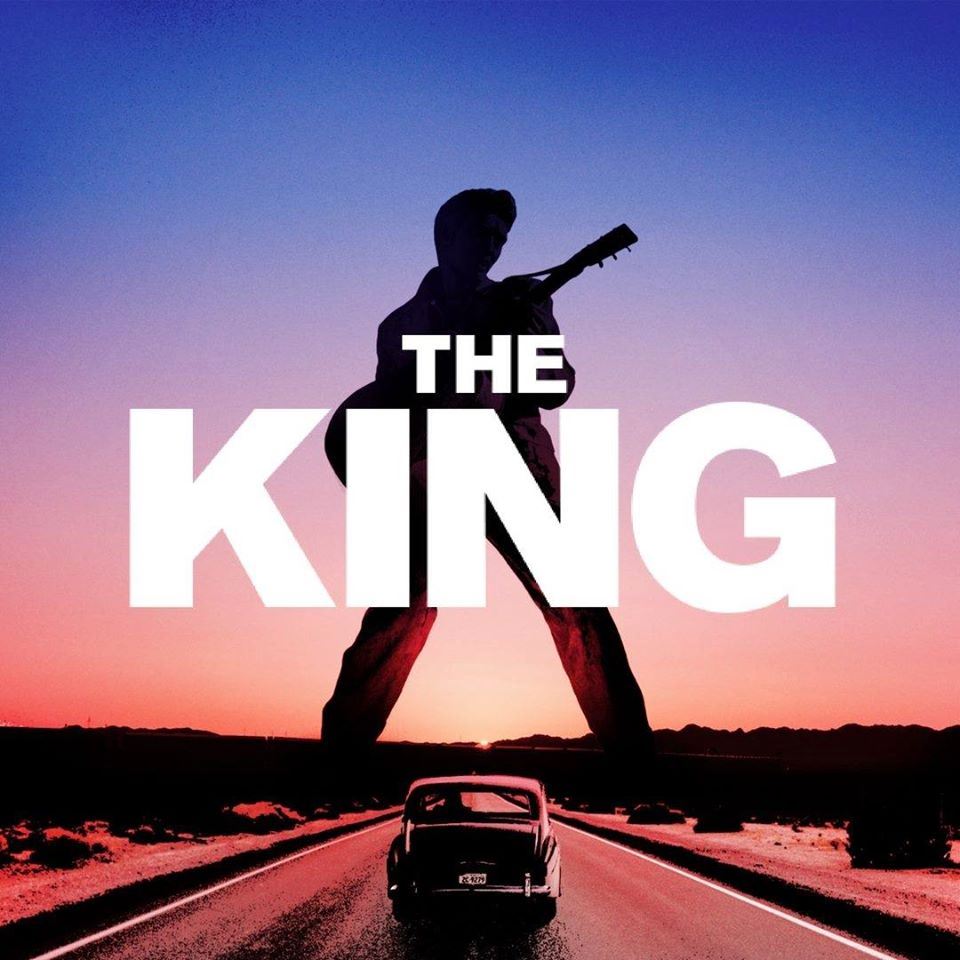
This image was downloaded from the film’s Facebook page and is being used here for representation purpose. No copyright infringement intended.

Do you shape the journey or does the journey shape you?

That’s a question creative people often confront. I don’t know if the makers of the 2017 documentary The King had a theme to chase or whether the chase served up a theme. My hunch is it was more the latter. Whatever the reason, this is an outstanding documentary on a familiar subject – Elvis Presley.

There was no doubt in my mind as regards what the topic maybe, when I saw the film and its title show up on Netflix. Elvis is so strongly linked to that reference: the king; he is the king of rock `n’ roll. Most documentary films about rock stars end up a carefully struck balance between puff piece and their struggles, typically the product of complex life or acquired habits. What I didn’t anticipate in The King was the manner in which the documentary explored the origins of Elvis’s music, the social circumstances that led to him and not others being the king of that genre, the many ways in which his popularity was leveraged leaving him a brand and eventually a commodity and how all this probably reflected at a larger level, a nation’s aspirations hijacked by money and power and rendered hypocritical.

That’s a lot to squeeze into a documentary film of finite dimension. But The King pulls it off magnificently with its idiom of traveling through Elvis country in the king’s own Rolls Royce and chats with singers and actors recorded as they ride in the car. None of those participating in the documentary – they range from Ethan Hawke to Alec Baldwin, Mike Myers, Chuck D and Emmylou Harris – hold back on what they think of Elvis. This makes the film natural and engaging. The musical genres Elvis promoted were not new; some of his songs were sung by others earlier and sung pretty well too. Even the car comes in for scrutiny – if Elvis was as representative of the American Dream as he was marketed to be, why did he keep a Rolls Royce? It puts the spotlight on what ingredients constituted the Elvis phenomenon. How did genres and lines that were already existing become a hit when sung by him? And in proportion to how things worked for him, you realize why it didn’t work for others. Little by little, the film, as it unravels the imagery around Elvis, unravels alongside the progressive decline of the original American Dream – life, liberty and happiness. The values the country once evoked appear lost through emphasis of money, companies and empire building, not to mention the steady propagation alongside of misleading imagery by a powerful entertainment industry.  The picture of America became that latter synthetic facade. A yawning gap opened up between it and reality. The King is as much about Elvis as it is it about what happened to America.

A few things made this documentary interesting to watch. First, as viewer, you live in the present with questions about America born from the social inequality and turbulence you saw happening there over the past few years.  Second, as you deconstruct the Elvis-image you see how much the above mentioned situation has remained simmering and unchanged through all those years.  Third, this film is not only absorbing for its subject but also for how it was made. It has an organic, evolving-on-the-go feel, which – when you think about it – is possible only if the creative mind is complemented by courage. Finally, work of this sort makes you respect America. Such films – and others, more hard hitting and on more sensitive topics – wouldn’t be made if room for critical perspective shrank as it is has in some other democracies currently diluting freedom of expression.

This is a documentary worth watching.

(The author, Shyam G Menon, is a freelance journalist based in Mumbai.)     

WARM SPRINGS

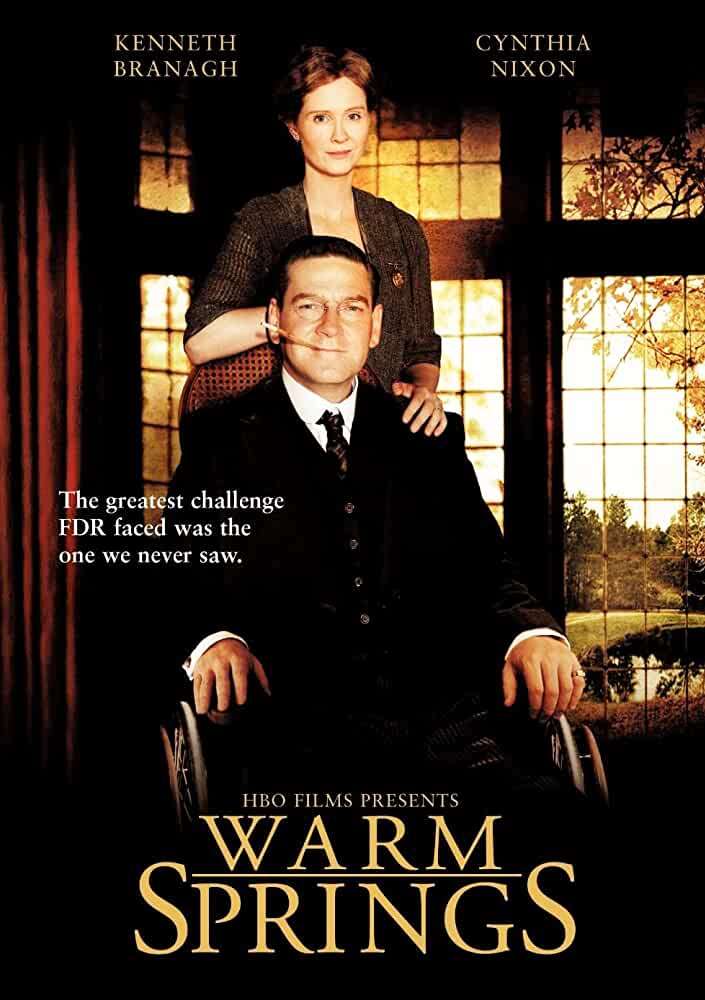
This image was downloaded from the Internet and is being used here for representation purpose. No copyright infringement intended.

As mentioned before on this blog, one of the lockdown induced-drifts I experienced was an appetite for films that told a human story in an uncluttered idiom, free of special effects. The algorithms at streaming media platforms are pretty good these days and soon enough, Disney-Hotstar recommended the 2005 television film Warm Springs. It proved to be a rewarding experience at many levels.

The film depicts a stage from the life of Franklin Delano Roosevelt, 32nd president of the United States. It picks up from the 1920 presidential election campaign, in which Roosevelt is the Democratic Party’s candidate for Vice President. At this point, Roosevelt is a picture of possibility. He hails from a well-known influential family, has had access to good education; is wealthy and married to Eleanor.  In the election however, his side loses. The Republicans gain a landslide victory. Roosevelt takes the defeat in his stride. It does little to dampen his spirit or invite introspection. He carries on as before, included therein being an affair with his wife’s secretary, Lucy Mercer. Eleanor discovers the affair and it causes severe strain on their marriage. A divorce is prevented by Roosevelt’s domineering mother, Sara.

Around this time, Roosevelt is struck by poliomyelitis. The disease leaves him paralyzed from waist down. Besides being a personal setback, the impact of paralysis is amplified by the effect it can potentially have on his political image and career. It seems the end of Roosevelt the politician. However, his political advisor Louis Howe believes, that needn’t be the case. In his assessment, the loss at the 1920 hustings had served to catapult Roosevelt to the national stage. He and Eleanor stand by Roosevelt during the period of his illness, drawing up plans to keep the extent of damage a secret and at the same time doing what they can to keep Roosevelt’s name afloat in political circles, including forays by Eleanor into the women’s suffrage movement. The film’s real story revolves around Roosevelt’s journey to a spa resort in Georgia and his subsequent stay there trying out hydrotherapy as means to improve his condition. Impressed by his progress and inspired by the people he meets, he decides to acquire the property in the hope of creating a center offering the therapy to those in need. It is a period that restores his faith in himself and also mends to an extent, the soured relationship with Eleanor. The film concludes with his return to active politics.

Aside from the fact that polio too is caused by a virus, what made this film relevant amidst COVID-19 lockdown, was Roosevelt’s tenure as president of the US and the curiosity to know what all went into making him the person he was. Beyond being the longest serving president of the US, Roosevelt is associated with his service to the nation during two critical periods – the Great Depression and World War II. The Great Depression began during the presidency of Herbert Hoover, with the Wall Street Crash of October 24, 1929. Roosevelt became president in the depths of the depression and it was under his leadership and the programs his government introduced, that America began clawing its way out of economic downturn. His interventions, while effective, were not welcomed by big business. The website whitehouse.gov notes, “ By 1935, the nation had achieved some measure of recovery, but businessmen and bankers were turning more and more against Roosevelt’s New Deal program. They feared his experiment, were appalled because he had taken the Nation off the gold standard and allowed deficits in the budget, and disliked the concessions to labor. Roosevelt responded with a new program of reform: Social Security, heavier taxes on the wealthy, new controls over banks and public utilities, and an enormous work relief program for the unemployed.’’

As an outside observer, you wonder – how did a person born and raised in elite circumstances come to embrace such an approach and lead his country out of an economic crisis? For me, now tackling the economic consequences of COVID-19 lockdown, that was the dominant instinct while watching Warm Springs (the film is named after the place where the spa resort stood), which scans a small but important phase of Roosevelt’s life. The film didn’t disappoint, unraveling in its sweep, the personal suffering Roosevelt endured on account of polio, the society he encountered in the conservative south, the fellow disadvantaged souls he attracted to the spa resort and the inclusive community he built there. As a politician, he was already a people’s man albeit withdrawn since the polio episode. In addition to his own transformation through hdrotherapy, what you notice in the film, is the change to the social circles he elects to connect with and learn from. You get a sense of cocoon breached and world seeping in. The film has a solid cast with Kenneth Branagh as Franklin Delano Roosevelt, Cynthia Nixon as Eleanor, Jane Alexander as Sara Delano Roosevelt, David Paymer as Louis Howe, Kathy Bates as Helena Mahoney and Tim Blake Nelson as Tom Loyless.

Warm Springs remained dear to Roosevelt’s heart. He died during his fourth term as president. He was in Warm Springs when the end came.

(The author, Shyam G Menon, is a freelance journalist based in Mumbai.)

OLYMPIC QUALIFYING SYSTEM TO RESTART FOR ROAD ATHLETES FROM SEPTEMBER

Illustration: Shyam G Menon

World Athletics will lift the suspension of the Tokyo Olympic qualification system for the marathon and race walk events from September 1, 2020.

This follows concerns over the lack of qualifying opportunities that may be available for road athletes before the qualification period finishes on May 31, 2021, an official statement dated July 28, 2020, available on the website of World Athletics, said.

The original suspension period, from April 6 to November 30, 2020, was introduced due to the competition and training disruption caused by the global pandemic, and remains in place for all other track and field events. “ Road athletes will be able to register Olympic qualifying entry standards from September 1 to November 30, but only in pre-identified, advertised and authorised races being staged on World Athletics certified courses, with in-competition drug testing on site,’’ the statement said. The accrual of points for world rankings and the automatic qualification through Gold Label marathons /Platinum Label marathons remains suspended until November 30, 2020.

According to the statement, World Athletics President Sebastian Coe noted that it had become apparent that marathon and race walk athletes may have very limited opportunities to register Olympic qualifying times in 2021 due to the uncertainty around staging mass participation events over the next year given these events  rely heavily on cities around the world agreeing to stage them. The statement quoted Coe, “ Most of the major marathons have already been cancelled or postponed for the remainder of this year and the evolution of the pandemic makes it difficult to predict if those scheduled for the first half of next year will be able to go ahead. That situation, combined with the fact that endurance athletes in the marathon and race walks can only produce a very limited number of high-quality performances a year, would really narrow their qualifying window without this adjustment. We have also been assured by the Athletics Integrity Unit that the anti-doping system is capable of protecting the integrity of road races during this period and will put in place strict testing criteria for all athletes.”

The Virgin Money London Marathon, due to take place on October 4, is committed to working with World Athletics to promote this opportunity to athletes around the world and to assist with their travel challenges so they can participate in London and achieve their Olympic qualifying time, the statement said. World Athletics will also work with the ADNOC Abu Dhabi Marathon to see if they can offer similar opportunities. In addition, World Athletics expects there will be at least two major race walking events staged between September 1 and November 30, 2020.

Both the Athletes’ Commission and Competition Commission were consulted prior to this decision and approved the proposal. The Athletes’ Commission noted that this decision does not assist all athletes, given the travel restrictions still imposed by some countries, but will support the majority of road athletes in the particularly difficult circumstances they face to qualify for the Tokyo Olympic Games. In making the decision, the World Athletics Council also noted that the conditions for making the Olympic standards at the World Athletics Championships Doha 2019 were challenging for road event athletes whereas the conditions for in-stadium events were excellent as the results showed.

“ World Athletics will also work with its Member Federations and meeting organisers to ensure that there are sufficient pre-Olympic competition opportunities for all track and field disciplines, particularly those that traditionally have fewer meeting opportunities, from December 1, 2020 onwards,’’ the statement said.

(The author, Shyam G Menon, is a freelance journalist based in Mumbai.)

THAT YES OF 2017

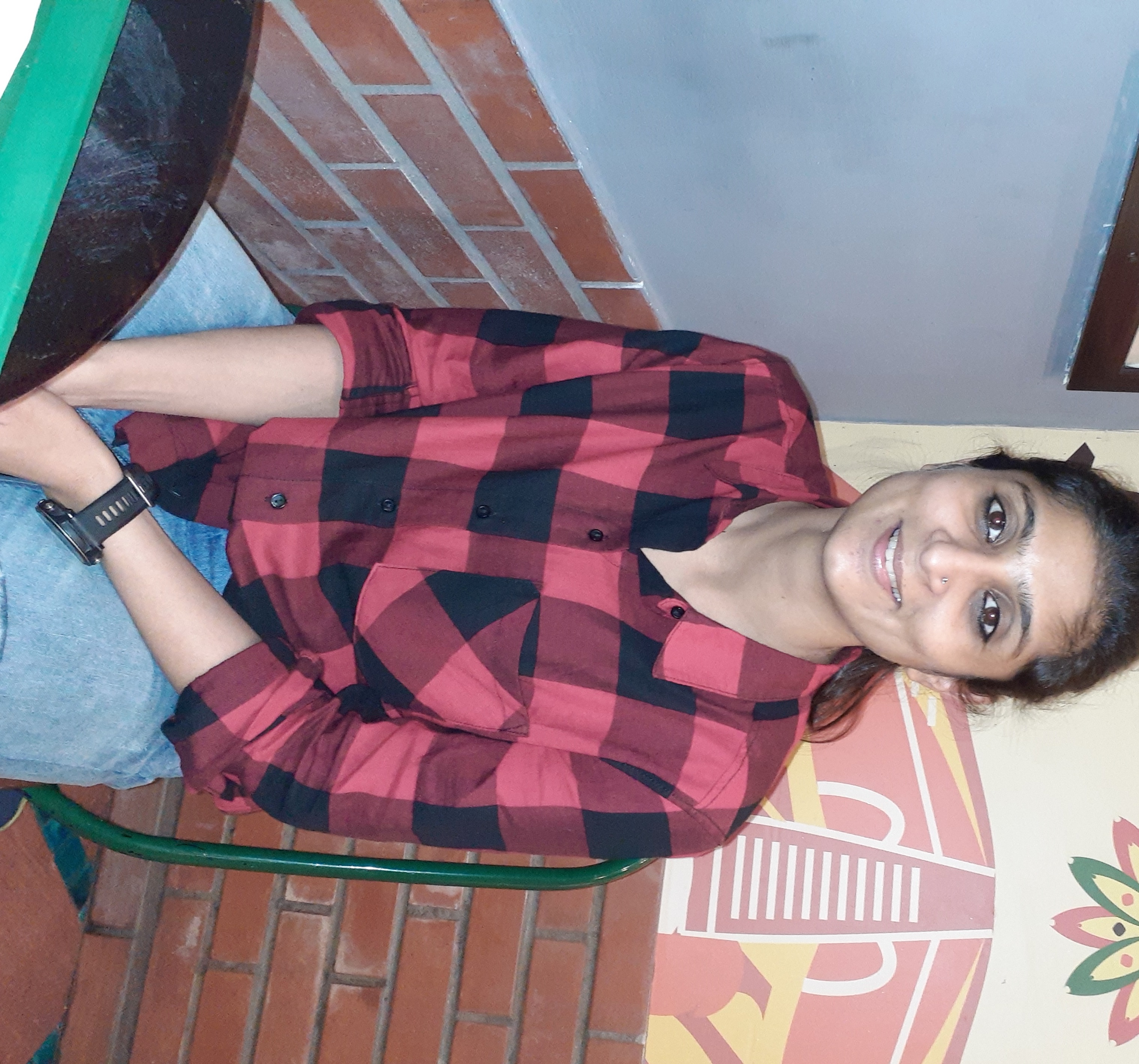
Apoorva Chaudhary (Photo: Latha Venkatraman)

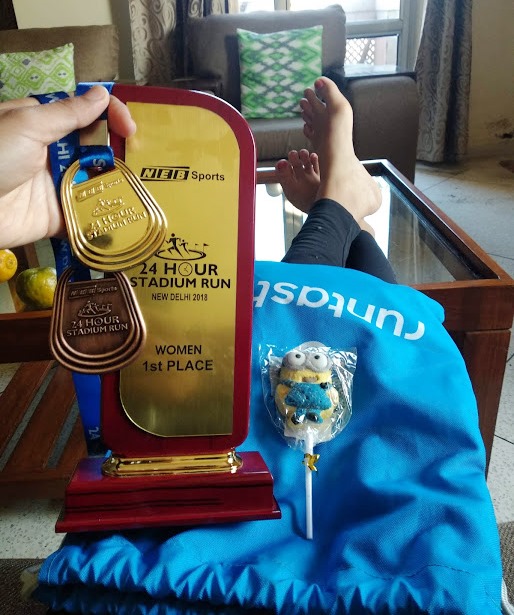
In October 2019, two years after she took up running in a dedicated fashion, Apoorva Chaudhary was among athletes representing India at the start line of the IAU 24-hour World Championships, in Albi, France. She covered a distance of 202.212 kilometers, at the event. The distance logged was a national best in the 24-hour run for women in India. The new record was less than a year after a previous national best of 176.8 kilometers, Apoorva set at the NEB 24-hour Stadium Run in New Delhi in December 2018. This is her story:

It was February 2020; the Delhi before COVID-19 locked down India. For runners, there was a major event imminent – the 2020 IDBI Federal Life Insurance New Delhi Marathon. People had begun reaching the city from other parts of India for that.

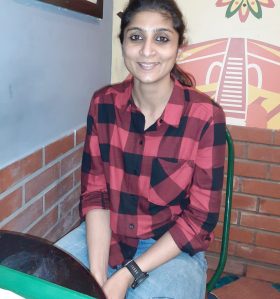
Connaught Place and the café we were in, bustled with activity. Apoorva Chaudhary recalled her years at Navodaya Vidyalaya in Bijnor, roughly 150 kilometers away from Delhi. These schools were commenced by the central government in 1985-86 to bring quality education comparable to the best in a residential school system. It was meant mainly for students from rural areas. Alongside studies, Apoorva was into running a range of distances at the school – 800 meters, 1500 meters and 3000 meters. She also played basketball. She didn’t get into teams higher up in the pecking order because she never came first in school races. As she put it, “ I always ran slowly, finishing second or third. My father used to tell me that I wasn’t doing a good job of sticking to the person who was leading.’’ Still the routine of boarding school meant, she participated consistently in sports. That routine was silver lining, for Apoorva secretly disliked boarding school. She hailed from Bijnor and her home wasn’t far off; she couldn’t understand why she had to be in boarding. She took part in the 1500 meters and 3000 meters till she completed her tenth standard.
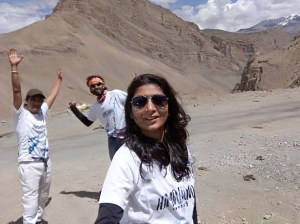
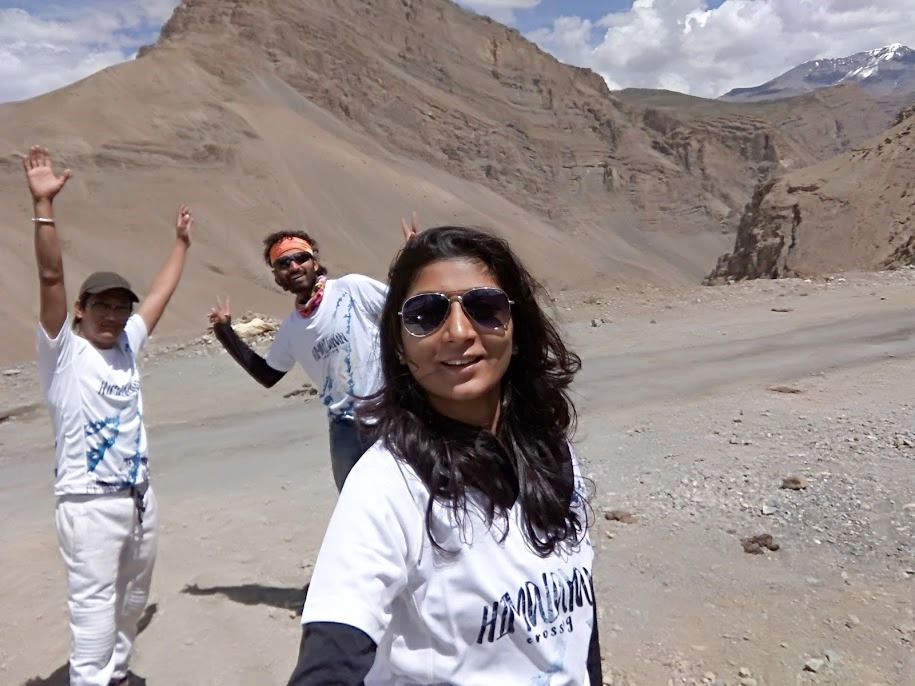
From Himalayan Crossing, July 2016; the others in the frame are Tserin Negi and Avinash Pratap Singh (Photo: courtesy Apoorva)

An eldest child, Apoorva had grown up with the belief that she would become a doctor. “ My grandfather always told me that I will become one,” she said. Her desire was to be an ophthalmologist. In India, the phase of education following matriculation is when professional orientation to studies creeps in. Those couple of years leading to entrance exams for professional courses are usually intense. After completing her twelfth at Bijnor, Apoorva attended coaching classes in Dehradun, chasing the ophthalmologist-dream. The natural outcome of a life dedicated to academics was that sports got completely side-lined. Then, a setback occurred. Apoorva didn’t make the cut in the entrance exam. With her hard work gone waste and chance to study medicine denied, she slipped into depression. For a brief period, she wondered whether she should make another attempt at clearing the exam. Then she gave up on that plan and opted instead for a B.Tech in biotechnology from Kurukshetra University.

Apoorva’s college days didn’t feature much sport. She occasionally played basketball and dabbled in yoga. More importantly, in these years, she developed serious asthma. Following her studies, Apoorva secured work at a company in Bengaluru. She shifted to the southern metro. Not long into this stint, she quit her job; she found it hard relating to experiments on animals, something the work required her to do. A period of volunteer work with NGOs ensued. During this time, following links she made in the film making fraternity, Apoorva said, she was called to act as body double in a film about Kavitha Kanaparthi. Founder of Globeracers, Kavitha organized foot races of ultramarathon distances under that brand. Kavitha was pregnant at that point in time and the film makers needed a body double for shooting some running scenes. Apoorva didn’t know what ultra-running was. During the shoot, she had to run on multiple occasions, at times notching up quite a distance. “ I don’t remember getting tired from those runs,” she said.
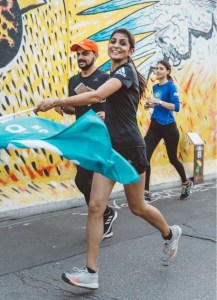
At the annual Adidas Runtastic Ambassador Meet, Berlin, September 2019 (Photo: courtesy Apoorva)

Her connection with Globeracers led to Apoorva volunteering for some of the events they organized. In February 2016, she volunteered for Run of Kutch. “ I enjoyed volunteering for the event. The work also entailed marking the route before the race,” she said. In that same year, she was called to volunteer for Himalayan Crossing, another race from the Globeracers stable. A ringside view to great challenges is often the best encouragement one can have to take the plunge oneself. “ I remember thinking about the insanity of the runners doing these ultra-long distances, little knowing that I myself would opt for such mileage in due course,” she said. Her foray into recreational running commenced after the second edition of Run of Kutch. Apoorva was into running and trekking. The latter activity picked up through personal trips to Dharamshala and Shimla and the visit to Spiti for Himalayan Crossing with Globeracers, peaked on a 2017 holiday in Ladakh that saw her ascent the popular trekking peak, Stok Kangri (20,187 feet). She had set out for Stok Kangri from Leh, alone and self-supported. Along the way, that altered a bit after she met a group from the army headed to the same peak. They in turn, planted in her head the idea of doing a Basic Mountaineering Course. She applied for the course offered by the state-owned mountaineering institute in Jammu & Kashmir and upon their seats for mountaineering being full, was offered a place in the skiing course. It should have been on her agenda for 2017 but then other things happened.

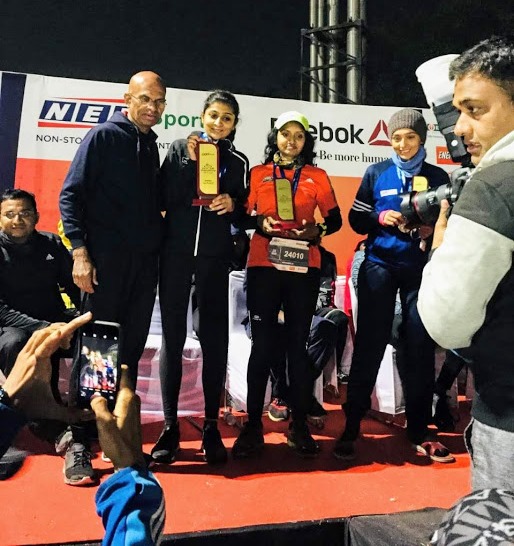
Sometime in 2017, she participated in an informal 15 km-run organized by Delhi Running Group, at Sanjay Park in New Delhi. For most people, their first major project in amateur running is the half marathon. Shortly after the run in Sanjay Park, Apoorva signed up for her first half marathon – part of Adidas Uprising, due in December that year. During her training runs Apoorva heard of runners finishing the half marathon in under-two hours. At Adidas Uprising, not only did Apoorva get her sub-two-hour finish, she emerged the overall winner among woman participants. The prize was a coupon worth Rs 10,000, using which she could buy Adidas products of her choice. She bought her most expensive pair of shoes till then, she said.
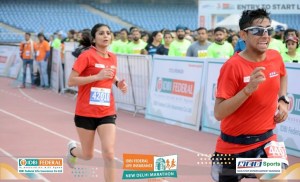
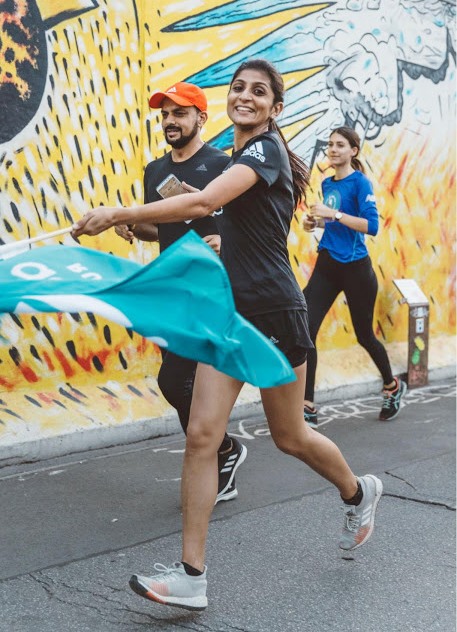
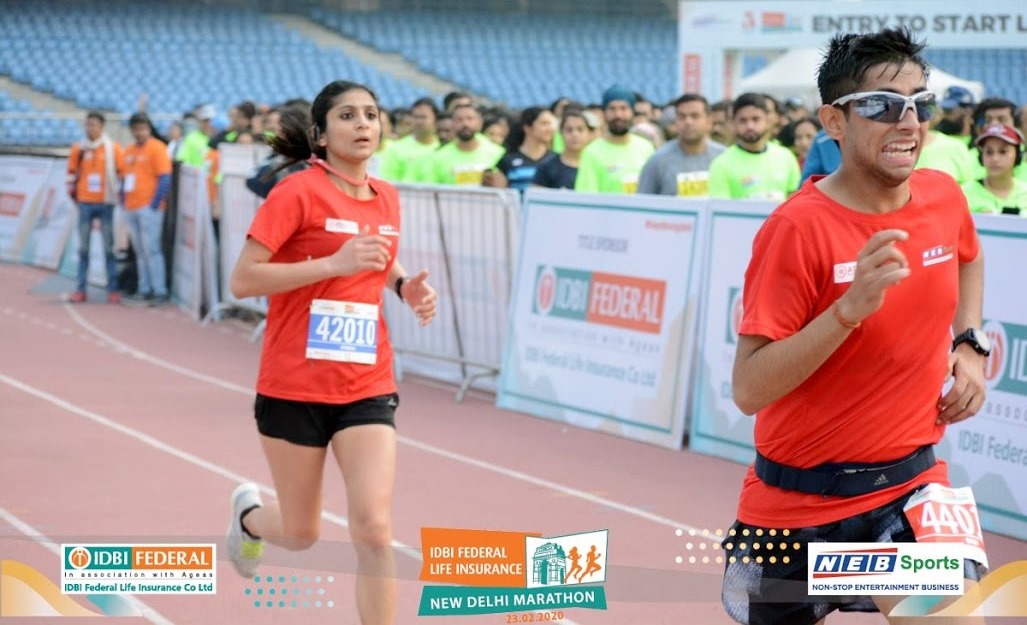
Apoorva and Kanan Jain sprinting towards the finish line at the IDBI Federal Life Insurance New Delhi Marathon, February 2020 (Photo: courtesy Apoorva)

After the Adidas Uprising event, Apoorva signed up for the half marathon at the IDBI Federal Life Insurance New Delhi Marathon of February 2018. She finished the race in 1:56:03. “ This was my second half marathon. At this event I met Kanan Jain. Later that year I was to volunteer for the Bhatti Lakes ultramarathon and Kanan was scheduled to try the 100 kilometer-run there. He asked me if I would be interested in attempting a 24-hour run,” she said. The 24-hour run that Kanan suggested was the one to be held by NEB Sports in December 2018 at New Delhi (Kanan Jain is a young ultramarathon runner. In the months to follow he would be part of the official team representing India at the 2019 IAU 24-hour World Championships held in Albi, France. He is now Apoorva’s coach drawing up her training schedules for ultramarathon races). Apoorva said she had no experience of distance running except the two half marathons she had completed. Kanan persisted; he pointed to her volunteering for ultramarathons and her interest in hiking. He asked her to consider the idea. She did. What she found difficult to overlook was how Kanan had pitched the whole thing. He had asked her if she would like to represent India in the discipline of running very long distances. That was a target too hard to ignore. Next day, she said “ yes’’ to the idea.

The ultramarathon embraces distances beyond the length of a marathon. A 24-hour run is one of the many forms of ultramarathon. It is typically held over a short loop. The runner, who covers the maximum distance during the stated period, is the winner. In India, Runners for Life is credited with commencing the 24-hour and 12-hour ultramarathons through their event, Bangalore Ultra. 2017, the year Apoorva commenced her recreational running was also coincidentally host to the last edition of the Bangalore Ultra, pioneer in that space in India. Apoorva’s first tryst with distances beyond the half marathon happened soon after that “ yes’’ to the idea of attempting a 24-hour run. In 2018, she and Kanan participated in the run from Gurugram (Gurgaon) to India Gate organized by Aashayein. At 29 kilometers, it was far from ultramarathon. But the journey had begun.
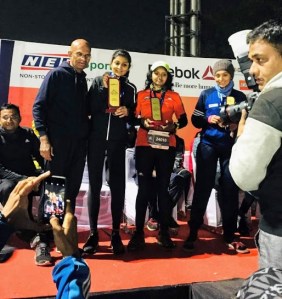
From the 24-hour stadium run in Delhi in 2018; others in the frame are Sunil Shetty, Shyamala Gopalan and Shibani Gharat (Photo: courtesy Apoorva)

The 24-hour run the duo targeted was scheduled for the end of the year. Apoorva had time to build up her mileage. “ If you have a goal, it is prudent to have pit stops before you reach the goal,” she said. To create a tiered progression towards the 24-hour run, she decided to do the 12-hour run offered as part of the 36-hour Stadium Run organized by NEB Sports in Bengaluru, in August 2018. To gain entry to this stadium run, Apoorva opted to first run a 50 kilometer-race at Mashobra Tuffman Shimla Ultra. As part of her training for this event, she had managed to do just one 50 kilometer-run. At the Tuffman event, she finished the race in 6:03:56 hours. “ This was my ticket to the 12-hour run in Bengaluru,” she said.

Unexpected twists in life had seen Apoorva resurrect her interest in running from school days and take to recreational running as an employed adult. Hers was a family of five; her father who is a farmer, her mother who is a homemaker and two younger brothers. Her parents were unaware of the changes afoot in the life of their daughter who had elected to work away from home. Nobody in Bijnor knew of Apoorva’s mission to participate in the 24 hour-run. Each time she visited Bijnor, the mission manifested in the form of unavoidable training runs. “ My father was not very happy with me venturing out to run,” she said. He had his reasons. There was the question of a woman’s safety; not many people ran regularly in Bijnor. If Apoorva was running for fitness, he felt a few days of exercise missed wouldn’t inflict significant damage. He was also unaware of the full dimensions of the journey Apoorva had set herself on and why she required to train diligently. Once during a visit home, Apoorva was admonished for stepping out for a run. Even if she had revealed her plans, till tangible results are produced, plans don’t hold water – that’s the Indian approach. Unfazed by the opposition, Apoorva proceeded with what she had to do. She would slip out of her home, walk some distance, change into running shoes and commence her run. “ I cannot afford to miss my runs,” she said. Over time, Apoorva apprised her mother about her passion for ultra-running. Eventually however, to circumvent the situation, for much of 2018, she kept her visits home to the bare minimum. Her determination paid off.
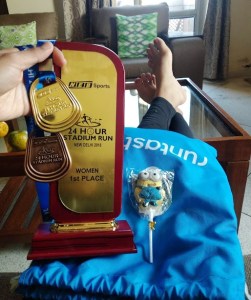
The day after the 24-hour stadium run in Delhi in 2018 (Photo: courtesy Apoorva)

At the 12-hour run in Bengaluru, Apoorva finished first among women and fifth overall, covering a distance of 99.76 kilometers. “ I had a target of 100 kilometers. I was completely overwhelmed by this experience. I hadn’t imagined that I would have the ability to do something like this,” she said. With this 12 hour-run, Apoorva’s circle of friends in running grew. Running groups wanted her to join them on their outings. It felt good. In the days following the 12-hour run, she increased her mileage as part of training for the upcoming 24-hour event in New Delhi. “ I knew that if I am opting for ultra-running, then I am opting for pain and challenge. One is always preparing for a worst case scenario in such long-distance races,” she said. However, there is more to preparing for an ultramarathon than just the mileage accumulated in training. Nutrition and hydration are important aspects. You have to know what foods your body can hold down and utilize while it is being pushed for endurance at the same time. There is no one size fits all; each runner’s preferred nutrition during a race is the outcome of trial and error. Then there is how you race; how you pace yourself when the distance to cover is huge. All this takes time. Experience counts. In December 2018, Apoorva stood at the start line of the 24-hour run with little understanding of fuelling plan or race strategy. “ Prior to the event, during my training, I had done two weeks of 100 kilometer-mileage and one week of 90 kilometers,” she said. It was modest mileage striking a balance between adequate training and saving yourself for a race. That may have addressed the running side of things. But as regards overall experience in the ultramarathon, she was very much on a learning curve.

The 24-hour stadium run in Delhi was tough. At the end of 12 hours, she had covered around 102.4 kilometers, which was more than what she managed in the 12 hour-run of August 2018. “ I was strong for the first 14 hours. Until about the 18th hour I was holding myself well but after that it became very tough. I was dehydrated, tired and nowhere near my target of 200 kilometers,” she said. She even began to doubt whether she would touch 100 miles (160 kilometers). She remembered ultra-runner Sunil Sharma intervening to help her. Vishal Adhav, another runner, started to pace her. “ He ran ahead of me and asked me to just follow his footsteps. For the last two hours of the race I kept doing that and got into a trance chasing the feet running ahead of me,” she said. Apoorva covered a distance of 176.8 km during that 24-hour period. It was a national best among women in India. But it was an effort that left her with questions. “ During breaks in the race I used to ask myself: why am I doing this?’’ she said. There was also a valuable lesson learnt. As part of her fuelling, she had tried yogurt. It suited her.
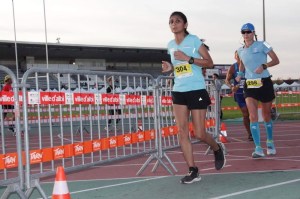
From the world championships in Albi, France, 2019 (Photo: courtesy Apoorva)

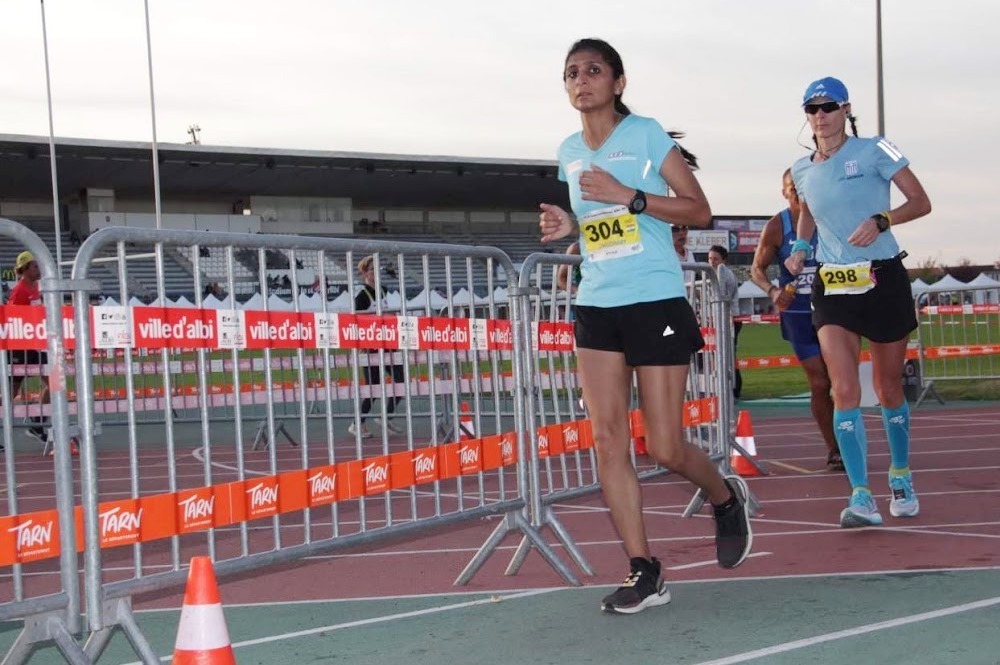
For all athletes, there is a point when effort pays off and fortunes change. At home in Bijnor, the morning newspaper bearing reports of the stadium run in Delhi told Apoorva’s parents the full story of what their daughter had been up to. The training runs started to make sense. Neighbours who read the newspaper, asked: isn’t that your daughter? The win in Delhi also made the Indian ultra-running community take note of Apoorva. She was selected for the IAU 24-hour World Championships, due at Albi, France, in October 2019. By the time she got to Albi, Apoorva was more knowledgeable of her nutrition, hydration needs and racing strategy. “ That was my strongest 24-hour run,” she said of her experience at Albi. Running alongside Apoorva were some of the world’s best ultra-runners, including US athlete, Camille Herron, who would set a new women’s world record of 270 kilometers at the event. At the end of 24 hours, Apoorva had covered a distance of 202.212 kilometers. It was a new national best for women. And it had come less than a year after the previous national best of 176.8 kilometers she set at the NEB 24-hour Stadium Run in New Delhi in December 2018.

Couple of days after meeting this blog at the café in Connaught Place, Apoorva filled in a gap in her progression to the ultramarathon. She ran her first marathon – the IDBI Federal Life Insurance New Delhi Marathon, held on February 23, 2020. She finished seventh overall among women and second in her age group of 18-34 with a timing of 3:28:45. Having graduated to ultramarathon from the half marathon, the classic marathon was a case of going back and catching up on a rung in the ladder, she had missed. On March 24, India slipped into a nationwide lockdown triggered by COVID-19. For almost a month, Apoorva – she now works at the Gurugram office of PeopleStrong, a technology firm in the HR space – was confined to her apartment in Gurugram. She focused on strength training. She was scheduled to represent India at the IAU 24-hour Asia & Oceania Championships, slated to be held in Bengaluru over July 18-19, 2020. It therefore made sense to continue her training in whatever way she could. The Bengaluru event was subsequently called off due to COVID-19.
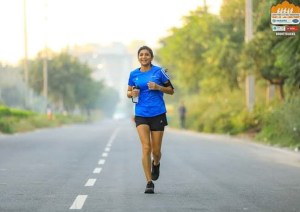
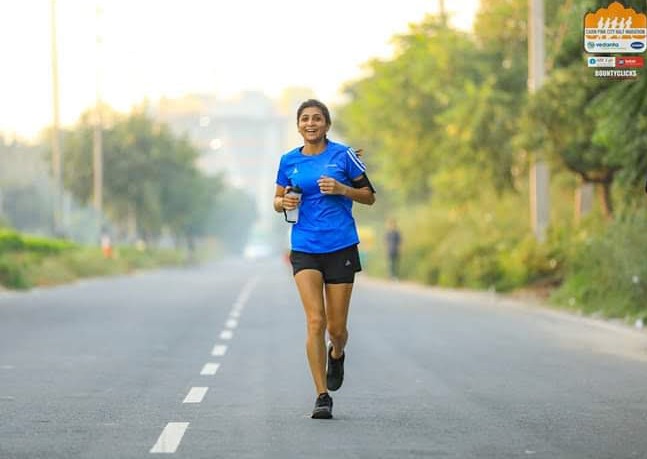
Training in Leisure Valley Park ahead of the world championships in Albi, France (Photo: Bounty Narula)

On May 25, Apoorva managed to travel to Bijnor, where her parents live. She resumed her running there, stepping out very early in the morning for her daily run. It is an hour when few people are out. It suits her for she generally likes to run alone and sometimes with one or two others. The morning run takes around two hours. With no races on the horizon, she does not need to train hard. Her parents are supportive. Nowadays on her return from training, her father asks her how the run was. He still worries for her safety but has his own emergent interest in fitness, which he blends into the solution. “ Today morning as I was returning home, he came cycling towards me. He wanted to make sure that I am alright. From tomorrow onwards, he says, he will be cycling alongside while I run. He says that will keep him fit too,’’ Apoorva said, mid-July. Asked if she had managed to answer that question of why she was running the ultramarathon (she had asked herself that during the 24-hour run in Delhi), Apoorva said, “ I think it has to do with wanting to get out of my comfort zone. If I don’t do that, I won’t get to know what I can do.’’ There was also another question begging an answer. Apoorva’s running had commenced in school. Despite running the 800 meters, 1500 meters and 3000 meters in that phase, she got nowhere. After a long hiatus and for no particular reason except curiosity, she took to recreational running in Bengaluru in 2017. By October 2019, she had set one national best and rewritten it. What was different about her journey in running, post 2017? “ I think Kanan gave me an engaging goal in that 24 hour-run and the prospect of representing India. I took it up but was at the same time under no pressure. I had nothing to lose,’’ she said.

(The authors, Latha Venkatraman and Shyam G Menon, are independent journalists based in Mumbai. This article is based on two rounds of conversation with Apoorva.)

PSYNYDE BIKES / IT’S TIME TO CYCLETOWORK

This image was downloaded from the Facebook page of Psynyde Bikes and is being used here with prior permission.

The ongoing COVID-19 pandemic has bolstered the case of cycling, worldwide. Amidst the requirement to stay healthy and also keep adequate physical distance, the good old bicycle has emerged a fine combination of encouraging fitness and observing pandemic related protocols. News reports in the recent past cited bicycle sales spiking in several countries. The bulk of the new interest was in practical bicycles for commuting purposes.

Pune based boutique manufacturer of bicycles, Psynyde Bikes, plans to introduce a model that packs into this slot. Aptly named “ cycletowork,’’ the commuter bicycle had been in the pipeline for the past one to one and a half years, Praveen Prabhakaran, founder of the company, said. The pandemic and the relevance of cycling it highlighted, has authored an opportunity to formally bring the model to the market. True to Psynyde’s value-for-money positioning, the commuter bicycle is slightly high end in components and looks but affordably priced for those specifications. “ We are hoping to price it at around Rs 25,000-26,000,’’ Praveen said.

The bike, which has been designed by Psynyde in India, has an aluminum frame and steel fork. The frame is a completely new design with geometry meant for commuting. “ Its new from ground up,’’ Praveen said. The bike employs Shimano Tourney derailleurs at the front and back. It has altogether 24 gears (8×3 set up). Where it makes a departure from other similar models in the Indian market is with regard to its crank. “ It has a hollow spindle crank,’’ Praveen said. The hollow spindle crank is a bit fatter in build than its brethren. This makes it stiff and thereby capable of better response when it comes to translating effort to movement. At the same time, because the component is hollow inside, it is light and does not affect the overall weight of the bicycle, Praveen said.

The company has around 100 numbers of the commuter model in stock. “ We have been getting enquiries,’’ Praveen said.

Psynyde is a home-grown company, founded by cycling enthusiasts. Its earlier models – Psynyde Furan (MTB) and Psynyde Oxygen (hybrid) – are known well in the Indian market. The company started as an outfit making custom-built bicycles and performance oriented bicycle components. It is now a young, small enterprise that sells a limited number of bicycles designed by it. For more on Psynyde please try these links:    https://shyamgopan.com/2014/02/06/the-story-of-psynyde/, https://shyamgopan.com/2016/11/09/psynyde-alert-the-hour-of-the-furan/, https://shyamgopan.com/2019/08/03/psynyde-bikes-weathering-tough-chemistry/

(The author, Shyam G Menon, is a freelance journalist based in Mumbai.)         

THE LITTLE TRAITOR

This image was downloaded from the film’s Facebook page and is being used here for representation purpose. No copyright infringement intended.

At the heart of elegance is simplicity.

When you have just one thing to say, things typically turn out well. When you have more than one thing to say, the game gets complicated. Not that simplicity loses its importance. Just that you have to analyze and delineate simplicity applicable across strands to link them all together.

The Little Traitor had its moments of doubt, when you thought it might derail and end up a mess. But it didn’t. Much of it thanks to the talent of a young actor called Ido Port supported magnificently by an equally competent cast led by Alfred Molina. This 2007 Israeli-American film, tells the story of Avi Leibowitz aka Proffy, whose family moved to Palestine after enduring the anti-Jew atrocities of World War II. The year is 1947. The region is controlled by the British and the modern nation of Israel is yet to be a reality.

For Proffy’s family, who have moved here with Israel in mind, the British presence is unacceptable. The youngster and his friends emulate the adults around them. They forge their own little conspiratorial circle, assume a cloak of secrecy and hatch plots designed to irritate the British and force them to leave. Life changes when Proffy is caught for being out during curfew by a British soldier, Sergeant Dunlop. The boy confronts the soldier with tenor molded by the adult world around him; he resonates defiance and anti-British sentiment. Dunlop though, proves to be the inquisitive self-critical sort with an appetite for learning. He seeks Proffy’s help to learn Hebrew and understand the writings of Judaism. For Proffy, it becomes opportunity to brush up on his English. Unknowingly the little boy finds in Dunlop, a person he can confide in and talk to comfortably, something his father, committed to Israel and cast on serious lines, has denied him. As his friendship with Sergeant Dunlop grows and he fails to report for his gang’s next mission, Proffy’s friends discover his proximity to the enemy soldier and brand him a traitor.

Into this simple story line, are added the strands of Proffy’s own growing up. Such layering in the narrative is made possible by the empathy Dunlop offers; it opens up room in the story for more than one of Proffy’s struggles. For a while, having enjoyed the simplicity of the film progressing on a single track – something you find in works from the Middle East and West Asia – you fear, it may end up a case of too many cooks spoiling the broth. Miraculously it doesn’t. Ido Port, his expression alternating between the puzzlement before questions; delight at the opportunity to know and the satisfaction of knowing, holds the narrative together with his portrayal of Proffy. The multiple strands blend and you end up with a heart-warming film. The movie is based on the novel, Panther in the Basement by Israeli author, Amos Oz.

The Little Traitor is currently available on Amazon Prime.

Try it.

(The author, Shyam G Menon, is a freelance journalist based in Mumbai.)             

MAGICAL ANDES

This image was downloaded from the Internet and is being used here for representation purpose. No copyright infringement intended.

Sometimes there is a wealth of meaning in coincidence.

Mid-July, 2020 as one of India’s biggest online AGMs (Annual General Meeting) got underway – the company in question also seeing it as opportunity to showcase its technological capability – I was watching a docuseries set in distant South America.

From my little apartment that has been address cast in stone since the nationwide lockdown began, I traversed the 7000 kilometer-length of the world’s longest mountain chain, taking in a multitude of fantastic ecosystems and the people in their midst. Watching Magical Andes, currently available on Netflix, was without doubt an uplifting experience.  In my early fifties and freelance journalist to boot, I am resigned to the fact that I won’t see the places I have marveled at in the pages of books and the videos of the Internet. My earnings season on Earth is over. What I have left still, is an imaginative mind. Like the Andean Condor, recently reported in The Guardian as capable of flying 100 miles without flapping its wings, a window to the world’s wild places with few people therein, is a high that is strong enough to keep me happy for a few days. It gives me something to dream about; a counterpoint to latch on to and stay afloat in world locked down by virus.

To be honest, the 2019 docuseries although lovingly shot and narrated, is not exceptional. It is an edited view that diplomatically evades the negatives of life. Let’s face it; the countries the Andes passes through have known their share of trouble. At the same time, the series doesn’t drip sugary, like a tourist brochure trying to attract visitors. Its idiom stays midway between brochure and documentary. It is a nice balance of abject wilderness; wine country, adventure sports, Martian landscape valued in space research and a variety of human characters happy to be alive and working in the Andean environment. It is more or less a place as it is; emphasis on geography’s power to shape life. I don’t know how the series may work on the tourist but it worked well for this journalist. Had it been too journalistic with life’s troubles spewing forth, maybe it wouldn’t let the bird in me escape lockdown’s gravity and fly.

On that same note, the reason this docuseries engaged me at this juncture in time was the journey outdoors – albeit on the Internet – it offered, just when tech companies have been promising a contact-less future authored by data, digitization and advanced telecom. Those last three have few complaints about the lockdown upon us. No thoughts of whether we miss being human. They have the capital and political patronage to make things happen their way. So what if humanity can’t move about? We have you in the cross hairs and everything will be home delivered as long as you pay for it.

Well Magical Andes was a case of home delivery for me. But the good thing about documentaries of this sort is that they help me stay true to my wiring – life is outdoors; not indoors. Not to mention – there is a difference between future trends as sought by you and trends rendered inevitable by the power of corporate capital. The first is a choice; the second is an imposition. The first celebrates freedom; the second doesn’t care if world is free or not. Series seen, I am already off on 7000 kilometer-journey in my head, riding imaginary bike bought with imaginary money. I nurse a small fear though: how long before them with capital control the space between my ears as well? How long before they kill my imagination?

Magical Andes; try it, if you haven’t already.

(The author, Shyam G Menon, is a freelance journalist based in Mumbai.)

AT A GLANCE / JULY 2020

This photo was downloaded from the Facebook page of Chicago Marathon. It is being used here for representation purpose. No copyright infringement intended.

2020 Chicago Marathon cancelled

The 2020 Bank of America Chicago Marathon has been cancelled.

A statement available on the event’s website said, “ On Monday, July 13, event organizers and the City of Chicago announced the decision to cancel the 2020 Bank of America Chicago Marathon and all race weekend activities in response to the ongoing public health concerns brought on by the coronavirus pandemic.

“ In regard to the unique set of circumstances surrounding the decision to cancel the 2020 race, the event has put into place an exception to our standard event policies. Each registered participant will have the option to receive a refund for their 2020 race entry or to defer their place and entry fee to a future edition of the Bank of America Chicago Marathon (2021, 2022 or 2023).

“ 2020 Bank of America Chicago Marathon registered participants will be contacted via email with additional information and the opportunity to select one of the following options,’’ the statement said.

More details are available on the race website.

2020 Ladakh Marathon cancelled

The 2020 Ladakh Marathon has been cancelled.

A press release dated July 2, 2020, available on the event’s website said, “ Ladakh Marathon which had been scheduled for 13th September 2020, has been cancelled because of COVID-19.

“ This year, the Ladakh Marathon would have been holding its 9th edition. Like previous editions, this small community of ours was greatly looking forward to welcoming runners from around the world. This 9th Edition was even more special as Ladakh Marathon had become a Qualifying Event of Abbott World Marathon Majors Wanda Age Group. However, we also cannot simply ignore a global crisis of such proportion.

“ In India, even as we exit from the nationwide lockdown, we are witnessing a peak in positive COVID-19 cases. The border areas of Ladakh are also currently facing a tense situation, so we are looking at the coming months with great uncertainty.

“ As per the latest World Health Organisation (WHO) guidelines for holding events involving mass participation, we have undertaken a risk assessment exercise and have taken the collective decision to cancel the four races of the 9th edition of Ladakh Marathon so as to not endanger our runners, the residents of Ladakh, our volunteers and staff.

“ All registrations for these 4 races (Marathon, Half Marathon, 10 km and 5 km) which were to be held Sunday 13th September 2020 have been automatically transferred for a period of two years to 2021-2022,’’ the statement said.

However, it added that the status of the two elite races – the 72 km Khardungla Challenge (17,618ft) and the 122 km Silk Route Ultra – is “ under review’’ as the number of participants is restricted to 200. A final decision on these two races is expected by 30th of July. “ Until then, we request all registered runners of these two races to NOT reserve any flights,’’ the press release said.

World Athletics president Sebastian Coe becomes a member of IOC

The president of World Athletics, Sebastian Coe, has been elected a member of the International Olympic Committee (IOC), news reports said on July 17.

Coe was nominated in June. But to be admitted, he needed to first step down from other private business responsibilities he held which constituted potential conflict of interest. World Athletics wasn’t having a member on the IOC since 2015.

A statement dated July 17, available on the website of World Athletics said, “ World Athletics is honoured to have regained its International Federation membership of the IOC today. World Athletics would like to thank all IOC Members for their trust in our sport.” The IOC too had a statement on its website confirming the development. According to it, the 136th session of the IOC elected two vice presidents, two executive board members and five new members.

World Athletics revises its shoe technology rules again

World Athletics has revised further its rules governing shoe technology.

“ These amendments, approved by the World Athletics Council and introduced with immediate effect, are based on significant ongoing discussions with the Working Group on Athletic Shoes, established this year, and with the shoe manufacturers,’’ a press release dated July 28, 2020 available on the website of World Athletics said.

They alterations include changes to the maximum height of spiked shoes for track and field events and the establishment of an ‘Athletic Shoe Availability Scheme’ for unsponsored elite athletes. The maximum height for road shoes (40mm) remains unchanged.

“ The purpose of these amendments is to maintain the current technology status quo until the Olympic Games in Tokyo across all events until a newly formed Working Group on Athletic Shoes, which includes representatives from shoe manufacturers and the World Federation of the Sporting Goods Industry (WFSGI), have had the opportunity to set the parameters for achieving the right balance between innovation, competitive advantage and universality and availability,’’ the statement said.

Details are available on the website of World Athletics.

According to World Athletics CEO Jon Ridgeon, the previous rule changes, announced in late January, were designed to give the athletes clarity before the Tokyo Olympic Games, which were originally due to take place in July-August this year. However the later postponement of the Olympic Games for a full year, due to the global pandemic, gave the governing body more time to consult with stakeholders and experts and develop amended rules that will guide the sport through until late 2021.

Meanwhile the new Working Group on Athletic Shoes (WGAS) met for their first meeting on July 22. It is tasked with scoping and overseeing studies around shoe technology, exploring definitions to provide clarity to athletes about the shoes they are able to compete in, creating a robust certification and control process and providing expert advice and recommendations to the World Athletics Competition Commission on the future direction of World Athletics’ Rules and Regulations concerning elite athlete shoes for the long-term which may or may not be different to the current rules, the statement said.

World Athletics Council resolves to expel RusAF if payments not received by August 15

The World Athletics Council has decided to expel the Russian Federation (RusAF) from membership of World Athletics if it does not make the outstanding payments of five million dollars in fine and 1.31 million dollars in costs before August 15.

According to a press release dated July 30, 2020 available on the website of World Athletics, the Council, meeting by teleconference due to the ongoing global Covid-19 pandemic, agreed to follow the recommendations of the Taskforce, delivered by chairperson Rune Andersen in his report. Addressing the Council, Andersen expressed his disappointment that the Taskforce had seen “ very little in terms of changing the culture of Russian athletics” in the past five years.

He said the Taskforce had spent an enormous amount of time and effort trying to help RusAF reform itself and Russian athletics, for the benefit of all clean Russian athletes but the response from RusAF had been inadequate.

According to the press release, in the light of a letter sent to World Athletics by the Russian Minister of Sport Oleg Matytsin, which promised payment of the overdue amounts by August 15, the Council decided to recommend to Congress to expel RusAF from membership of World Athletics, but to suspend the decision.

However this decision will come into effect immediately and automatically if RusAF does not meet the following conditions:

  • Payment in full of the two outstanding RusAF invoices to be received on or before close of business in Monaco on 15 August 2020.
  • The RusAF Reinstatement Commission to provide the draft plan referenced in the third paragraph of Council’s decision of 12 March 2020 – of suitable scope and depth, with an implementation plan and progress indicators – to the Taskforce on or before 31 August 2020.
  • Any changes required by the Taskforce to the draft plan to be incorporated to the Taskforce’s satisfaction on or before 30 September 2020.
  • The plan to be brought into effect and satisfactory progress achieved against the plan (as determined by the Taskforce, based on the input of the international experts appointed by World Athletics), as reported by the Taskforce to Council at each of its subsequent meetings.

(The author, Shyam G Menon, is a freelance journalist based in Mumbai.)