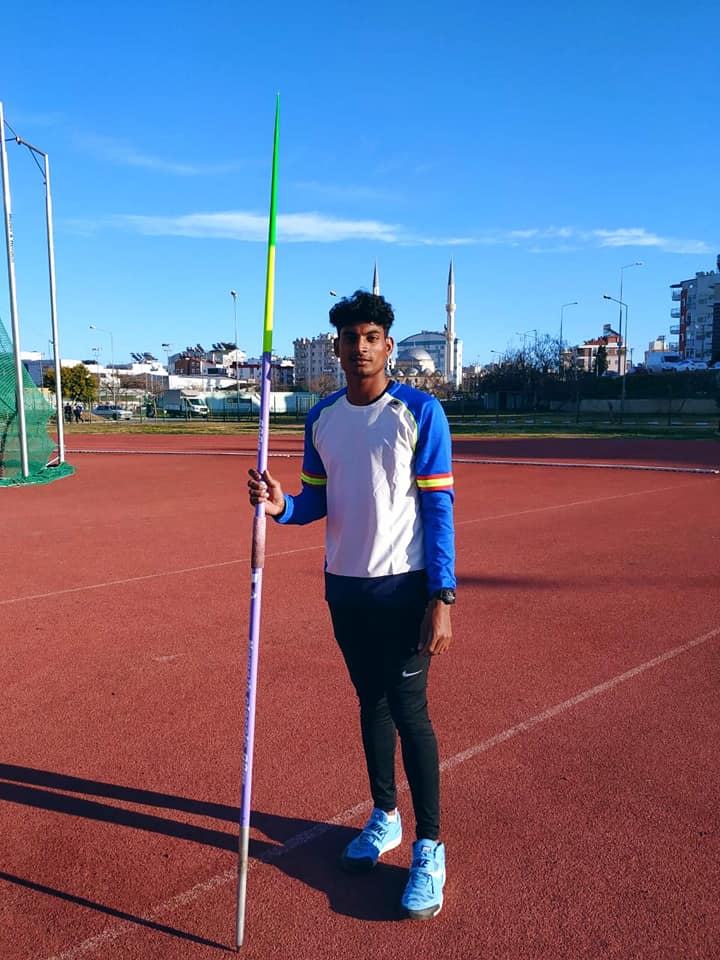
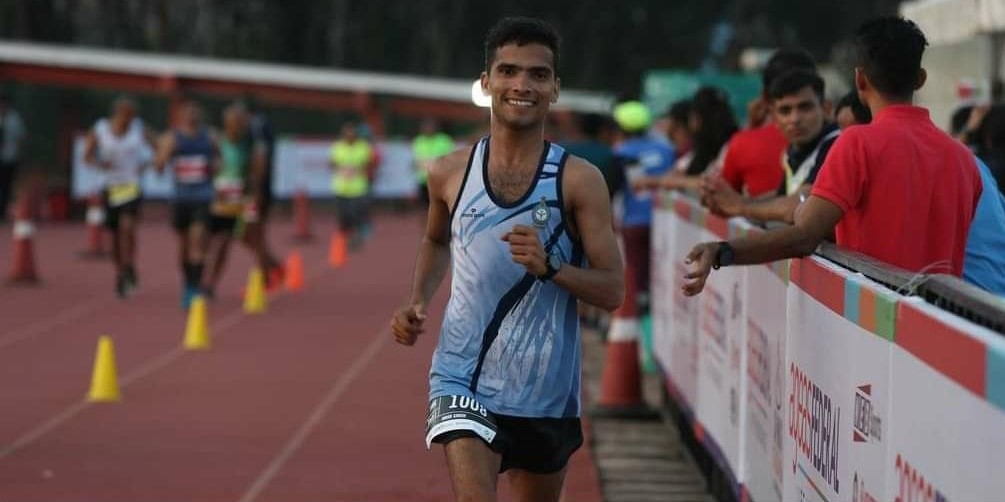
Rohit Yadav. This photo was downloaded from the athlete’s Facebook page. No copyright infringement intended.
India’s Rohit Yadav has made it to the final of the javelin throw competition at the 2022 World Athletics Championship in Eugene, Oregon, USA. In the Group B qualification round, he achieved a distance of 80.42m, sufficient to place eleventh in the list of 12 athletes from Groups A and B, eligible for the final.
In Group A, Neeraj Chopra, the country’s strongest athlete in the discipline, qualified for the final with an impressive throw of 88.39m. He placed second on the list of finalists headed by Anderson Peters of Grenada who managed 89.91m. As per media reports, the qualifying mark was 83.50m; in results published, four out of the 12 athletes making it to the final, had throws exceeding the qualifying mark. The best 12 throws in the qualifying round ranged from 80.03m to 89.91m.
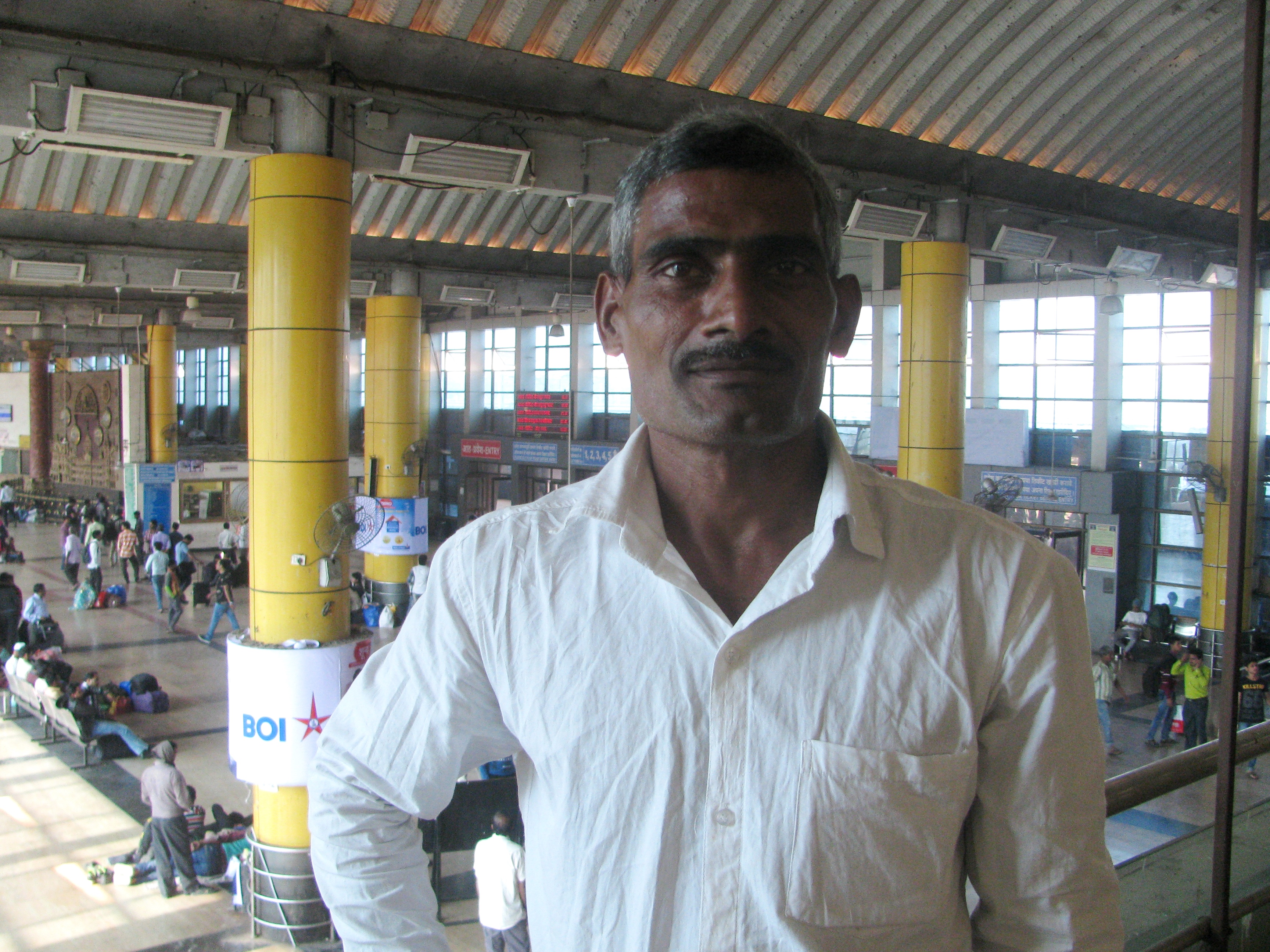
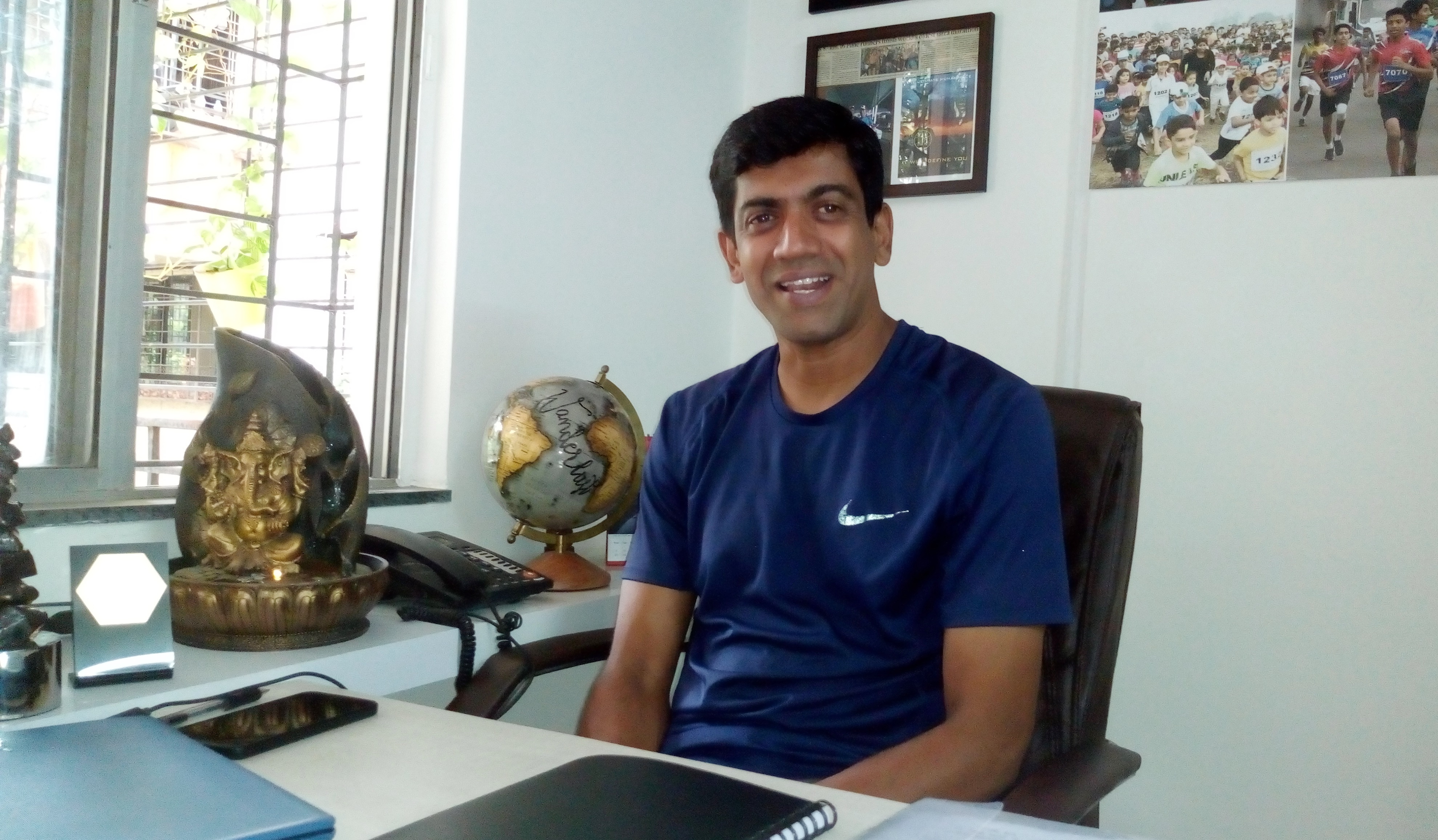
Rohit, 21 (age as per data on the website of World Athletics), is the son of Sabhajeet Yadav, well-known amateur runner. A farmer from Dabhiya village in Jaunpur, Uttar Pradesh, Sabhajeet has several podium-finishes at city marathons to his credit. “ We are so happy that Rohit has made it to the final. He will get a chance to compete with leading athletes,” Sabhajeet said when contacted.
Sabhajeet Yadav (Photo: Shyam G Menon)
“ We woke up at 4 AM to watch the event on television. All of us, my wife, my two other sons and several boys from the village have been here since morning. We are quite thrilled,” he said, adding Rohit’s trip to Oregon for the world championship will be a valuable experience. Rohit is scheduled to participate in the 2022 Commonwealth Games as well.
The world of amateur running has played a role in Rohit’s ascent. Given income from farming is rarely steady and adequate, Sabhajeet participated in amateur marathons to augment his family’s resources. He won consistently in his age category and the prize money helped. During the annual Mumbai Marathon, he acquired a reputation for reaching the city by train, sleeping at the railway station, waking up in the morning, competing in the marathon and going back to his village, a place on the podium earned. The tough farmer was soon noticed by other amateur runners who rallied to his support. Foremost among them, was businessman, Bhasker Desai.
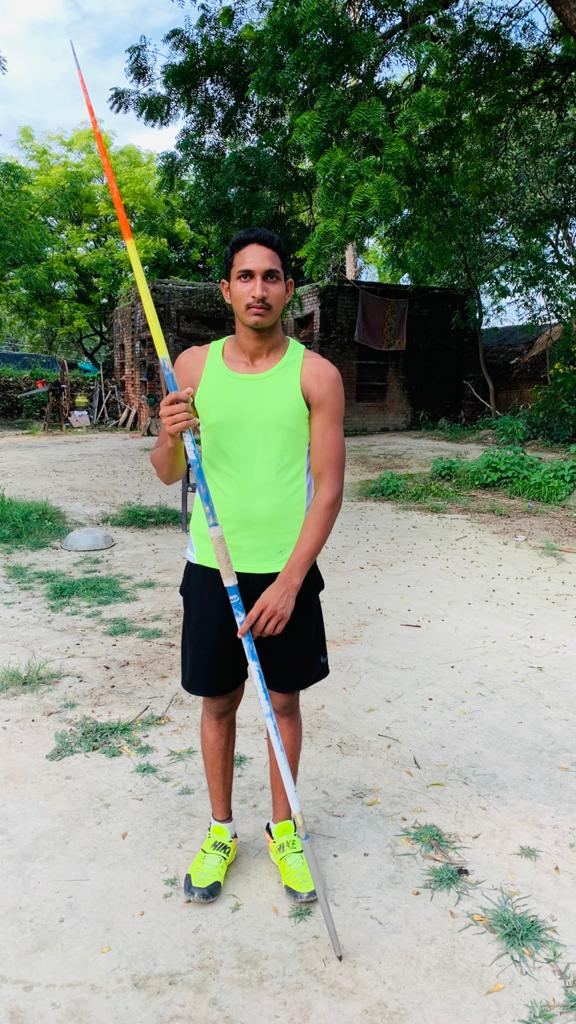
Rohan Yadav (Photo: courtesy Bhasker Desai)
Bhasker learnt of Rohit’s interest in the javelin throw, the promise he showed in the discipline and his training in Sabhajeet’s village with a home-made javelin. As Rohit moved up in performance and ranking, Bhasker funded the purchase of a top-notch, imported javelin for the young athlete to train with. “ This is a major high for me,’’ Bhasker said when asked of the athlete he supported reaching the world championship final. While he may have helped purchase a new javelin, Bhasker maintained that the credit for Rohit’s ascent should go to the athlete and his father. According to him, Sabhajeet has never wavered in his belief that Rohit would one day be at the Olympics. Equally important, Bhasker said, has been the role played by Olympic gold medallist Neeraj Chopra. Rohit looks up to Neeraj as his mentor and the senior athlete’s presence has helped Rohit endure the competitive ambiance at major championships like the one currently on at Oregon, Bhasker said. In an audio message to Bhasker from the US after he qualified for the final, Rohit has said that notwithstanding the newness of figuring in such a big final, he will give his best.
What should interest, is that Rohit’s entry to the world championship final may be just the start of a longer story from Dabhiya. Rohit’s younger brother, Rohan, 16, has also taken to the javelin and, according to Bhasker, already touches distances beyond 72m. Spotted by the army as a promising talent, Rohan currently trains at their sports facility, Bhasker said.
(The authors, Latha Venkatraman and Shyam G Menon, are independent journalists based in Mumbai.)
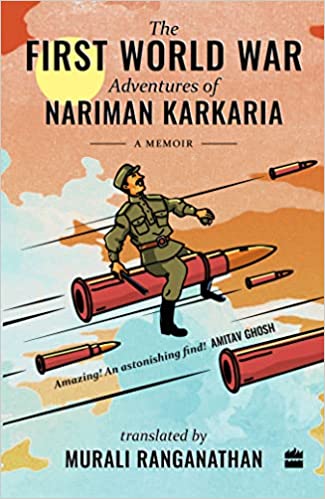
For some reason, the day I visited him, a copy of this book in hand, my uncle began talking of Tintin and the near complete collection of Tintin’s adventures, he had helped compile in the family. I don’t know if it was triggered by the Tintin-esque cover of the book, which I had placed on the table. That or not, the digression to Tintin sat well for Nariman Karkaria’s memoir appealed much the same way – his is the story of a youngster, training to be a priest in Navsari, who in 1910, trades that existence for a shot at seeing the world and fighting in one of its biggest wars. It is adventure, honest writing and a progressively evolving view of the world; you sense the perceived manliness of being in the military but also the butchery and meaninglessness of war. The author’s capacity to state things honestly, as they appear to him, probably makes this book less appetizing for today’s politically correct lot. Sample this bit about Indian society, as much valid now as it must have been then: Was it an ordinary matter to reach London, the original vilayat for us Indians? I had grown up hearing so much about the place and its personalities that London seemed to be something out of this world. I was rather impatient to see the city. Who among us wouldn’t like to go to vilayat? The very mention of it leaves many of us salivating with expectation. When a man returns home from a trip to vilayat, he seems to be in seventh heaven and his mother struts around town with her nose in the air. Is it therefore strange that a simpleton like me was so excited? Its narrative free of overbearing judgement, this is a book for those who love a quick, engaging read. One that runs smooth (the original Gujarati text has been translated to English and cast in a very readable style), sticks close to its central objective of travelogue and observation of life and flies like an arrow. Towards the final chapters, a bit of fatigue and repetitiveness in perspective did set in but that was pardonable. Plus, two other factors came to mind. First, it amazed to hear the First World War and the trenches of France described through Indian eyes. Nariman Karkaria’s accounts in this regard are among the few narratives by Indian participants in World War I, discovered yet. Second, the whole adventure in a youngster casting off to Hong Kong without informing his parents and working his way from there via China, Siberia, Russia and Europe to England (counting mainly on the Parsi diaspora for support) and then eventually seeing action with the British army in France, West Asia and the Balkans is an absorbing story cast the old school way. Its appeal is timeless. At least, it was enough to make this fifty plus writer – life’s errors and regrets in tow – wish he was fifteen again and staring at a clean slate. But perhaps, what genuinely engaged me about a memoir from the early part of the twentieth century was something else. Compared to our times reduced to celebrating specialization, monetary success and social standing, Nariman Karkaria seemed all about discovering world and existence without the contemporary recourse to pursuing elite scholarship and bright, saleable future. He heeded the call of the universe and all it took him was resolve, fifty rupees and a steamer to Hong Kong. Further, in his writing style, there is no straining to justify his thoughts and actions; cast it in some politically correct paradigm. He states it, as it is, baggage-free. The First World War Adventures of Nariman Karkaria – try it. For me, it was an astonishing find. The book also reminded me of another account from a slightly later yet adjacent period – With Cyclists Around the World (written about earlier on this blog), which narrates the experience of a group of cyclists from Mumbai (then, Bombay), who cycled around the world during the period 1923 to 1927.
(The author, Shyam G Menon, is a freelance journalist based in Mumbai.)
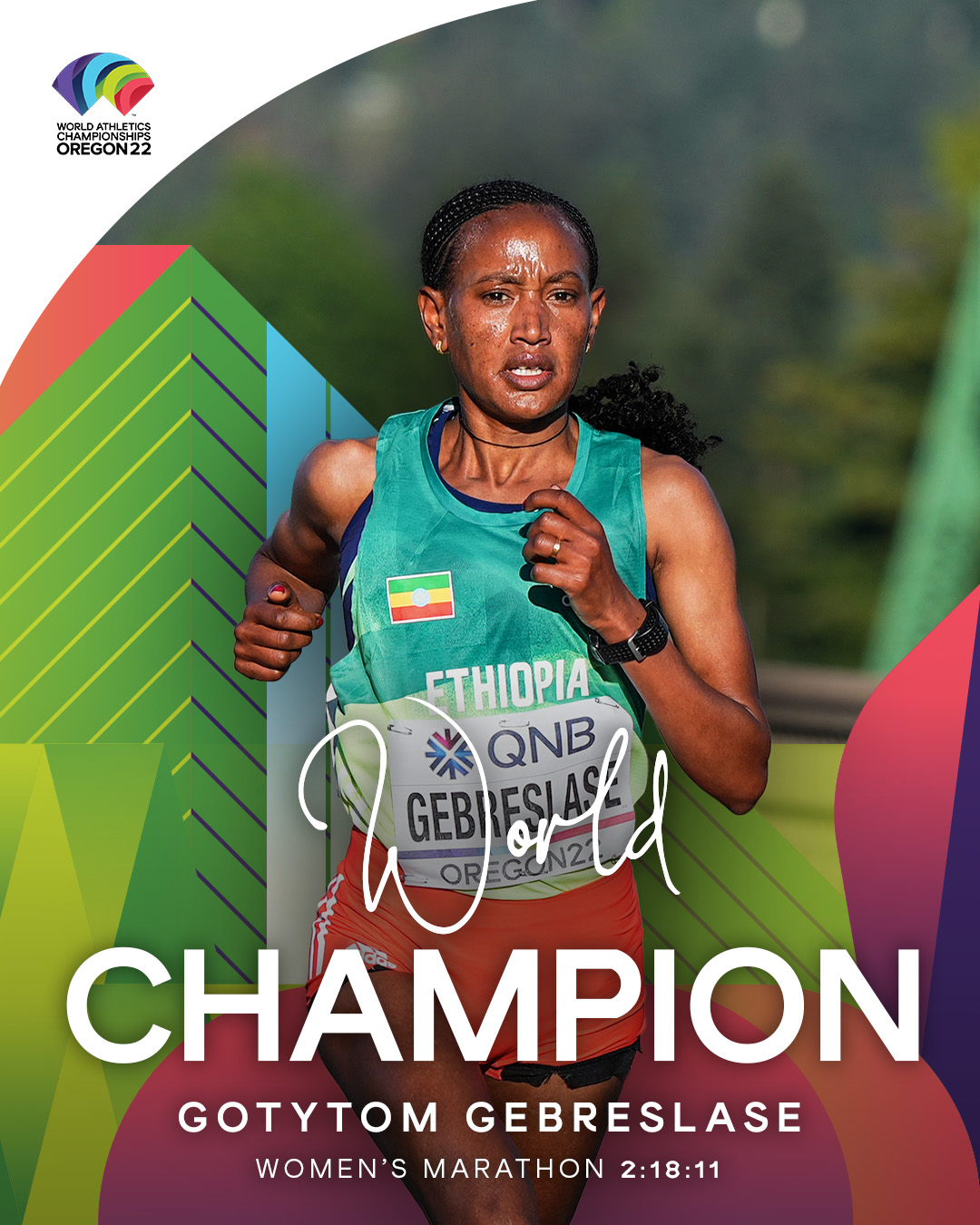
Gotytom Gebreslase. This image was downloaded from the Facebook page of World Athletics and is being used here for representation purpose. No copyright infringement intended.
Gotytom Gebreslase of Ethiopia won the women’s marathon at the 2022 World Athletics Championship, finishing the race in a new championship record of two hours, 18 minutes and 11 seconds.
Judith Jeptum Korir (2:18:20) of Kenya took silver and Lonah Chemtai Salpeter of Israel (2:20:18), the bronze.
It was an engaging race with a lead pack built around defending champion Ruth Chepngetich of Kenya, emerging not long after the start. However, Chepngetich was forced to withdraw from the competition between kilometres 18 and 19, due to stomach issues (as per race commentary). When Chepengetich stepped off the course, the others in the pack wasted no time in accelerating, ostensibly to make it difficult for her to catch up. From this churn, a new lead quartet was born featuring Korir, Angela Tanui of Kenya, Gebreslase and Ababel Yeshaneh of Ethiopia. It appeared a case of two Kenyans and two Ethiopians set to battle it out for the medals. The rest of the field was behind by a visible margin although the racers were still short of the half-way mark.
Past the half-way mark, the quartet progressively split into two distinct groups with Korir and Gebreslase emerging as potential contenders for the top two positions. The two groups were separated by a sizable margin. For some time Tanui and Yeshaneh seemed to vie for the bronze before Yeshaneh moved ahead only to be overtaken in turn by Lonah Chemtai Salpeter of Israel and Nazret Weldu of Eritrea. The latter two had steadily reduced the gap between them and Tanui, and then, Yeshaneh. Despite figuring in the lead pack (and later, the duo trailing the leaders) for a good portion of the race, Ababel Yeshaneh eventually dropped off; she was seen clutching her side periodically in the build up to DNF. Roughly two kilometres from the finish line, Gebreslase who had been hovering close at the shoulders of Korir, sometimes to the latter’s discomfort, strode out in front. She increased the gap consistently and went on to finish with a new championship record to her credit.
It was a race with remarkable performances – there was the measured way in which Gebreslase ran; the display of quiet determination by Salpeter, working her way up to pass Tanui and Yeshaneh and stay ahead of Weldu for the bronze medal, and Sarah Hall of the US who too came from behind to finish fifth ahead of Tanui. There was no dramatic sprint-finish or any such flourish for the race. What lingered instead as aftertaste was the fruits of determined running.
Gebreslase, 27, made her debut in the women’s marathon at the 2021 Berlin Marathon, which she won in 2:20:09. Later, at the 2022 Tokyo Marathon she finished third with a timing of 2:18:18. Korir, who took silver, had in April 2022, won in the women’s category at the Paris Marathon with timing of 2:19:48. Born in Kenya and now running for Israel, Salpeter has a personal best of 2:17:45 achieved at the 2020 Tokyo Marathon, where she placed first among women. Yeshaneh is a former world record holder in the women’s half marathon (1:04:31). Prior to that she had finished second (2:20:51) at the 2019 Chicago Marathon. Tanui had earlier placed fourth (2:18:42) at the 2022 Tokyo Marathon and before that in October 2021, won at the TCS Amsterdam Marathon (2:17:57). Weldu was winner (2:21:56) among women at the Daegu International Marathon held in April 2022 in Korea. In November 2020, she had finished seventh among women in the Airtel Delhi Half Marathon.
According to Runner’s World, besides Sarah Hall, two other American athletes – Emma Bates and Keira D’Amato – finished in the top ten of the women’s marathon at the 2022 world championship in Eugene, making it the best performance by a US marathon squad, male or female, to date at the event. In terms of nationality, the top ten finishers also included two athletes from Kenya and one each from Ethiopia, Israel, Eritrea, Japan and Mexico.
(The author, Shyam G Menon, is a freelance journalist based in Mumbai.)
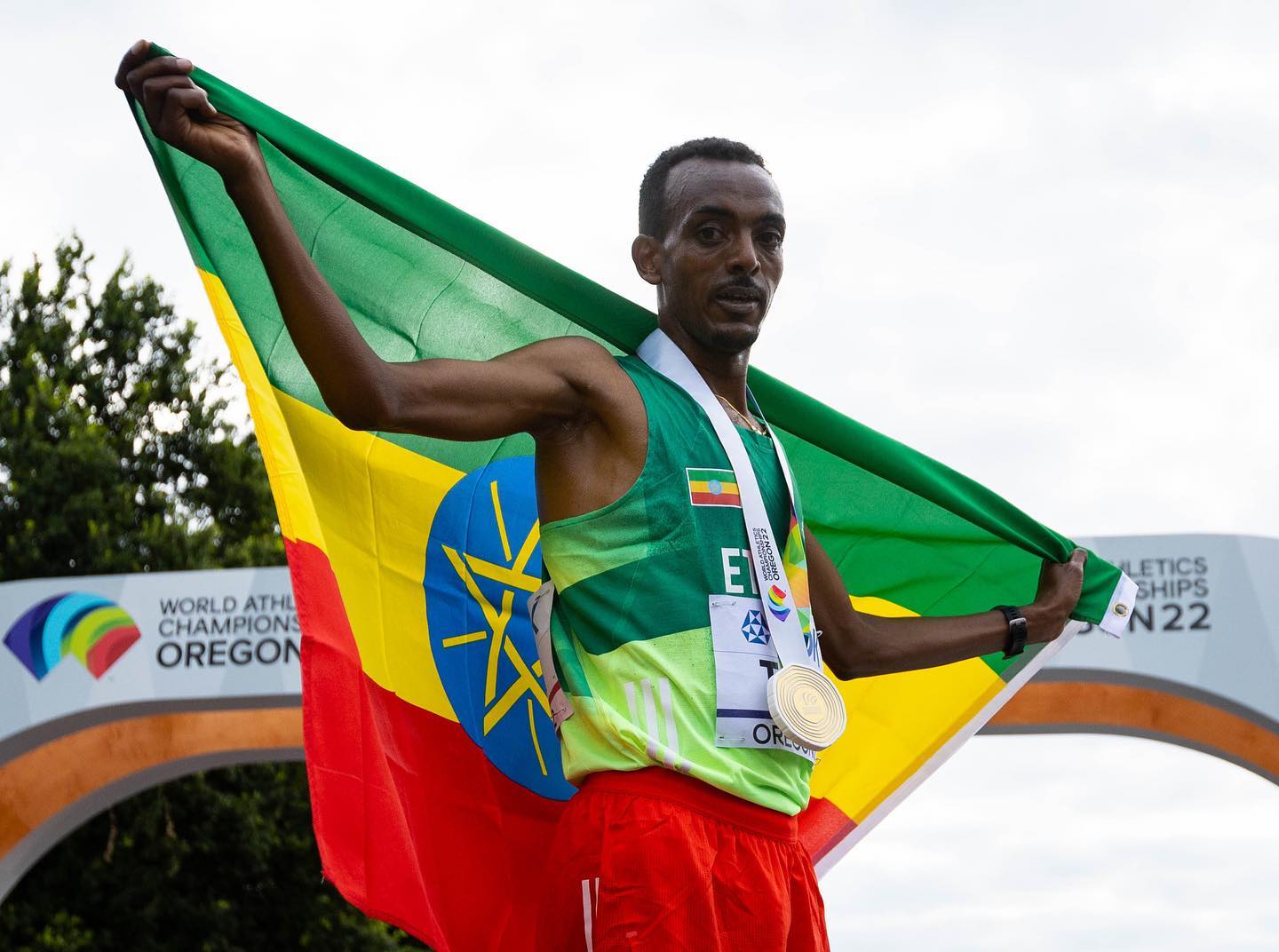
Tamirat Tola. This image was downloaded from the Facebook page of the 2022 World Athletics Championship and is being used here for representation purpose. No copyright infringement intended.
Tamirat Tola of Ethiopia won the men’s marathon at the 2022 World Athletics Championship, covering the distance in a new championship record of two hours, five minutes and 36 seconds.
His compatriot Mosinet Geremew (2:06:44), who took silver, completed the Ethiopian domination of the podium. The bronze went to Bashir Abdi (2: 06: 48) of Belgium.
In its report, Runner’s World attributed Tola’s performance to “ blasting the stretch between 30K and 40K in 28:27.’’ The move helped him put a significant gap between himself and the rest of the lead pack. The previous championship record (2:06:54) was held by Abel Kirui of Kenya; it was set in Berlin in 2009.
Following the race at the 2022 world championship, World Athletics reported on its website that it had been a dream come true for Tola. “ I learned from my mistake in 2017 (World Championships) and I made sure it did not happen again. ” On that occasion, Tola’s attempted run for home 10km from the end was thwarted as Kenya’s Geoffrey Kirui overtook him to win gold. This time there was no faltering on the 30-year-old Ethiopian’s part,” the report said.
It added, “ By the 34km marker his lead was seven seconds. At 35km it was 12 seconds, at 36km it was 17 seconds and at 37km it was 26 seconds. With 5km to go, the gold was gone and the drama of the race resided in which of the chasing group of four – Abdi, Geremew, Levins and Kamworor – would share the podium.’’
In the past, Tola had finished second in the men’s marathon at the 2017 world championships held in London. In March 2022, he had placed third in the annual Tokyo Marathon and prior to that, won the 2021 TCS Amsterdam Marathon. Geremew owns the third fastest time yet in the marathon; 2:02:55, set at the 2019 London Marathon. No stranger to India, he was twice winner – in 2014 and 2015 – of the TCS World 10K held every year in Bengaluru. Abdi, who is originally from Somalia, had earlier won the bronze medal in the men’s marathon, at the Tokyo Olympic Games.
Finishing just after Basher Abdi at the 2022 world championship in Eugene, was Cameron Levins of Canada. He earned a new national record of 2:07:09. At the Tokyo Olympics held in 2021, he had finished 72nd in the men’s marathon. The highest ranked Kenyan athlete in the men’s marathon in Eugene was Geoffrey Kamworor. He covered the distance in 2:07:14 to place fifth. Among American runners in the men’s marathon at Eugene, Galen Rupp was the first one home in 2:09:37. He placed nineteenth. A highly ranked runner in the US, Rupp had earlier won a bronze medal at the 2016 Rio Olympic Games and subsequently finished eighth at the Olympic Games in Tokyo (the marathon was held in Sapporo).
As per results available on the website of World Athletics, the top ten finishers in the men’s marathon at Eugene included three athletes from Ethiopia and one each from Canada, Kenya, Tanzania, Brazil, Bahrain and Zimbabwe. A notable DNF was well known Ethiopian long-distance runner, Lelisa Desisa (a past winner of the annual marathons in Boston and New York, in 2011, he was winner of the Delhi Half Marathon).
(The author, Shyam G Menon, is an independent journalist based in Mumbai.)
This image is being used here for representation purpose only – as a general depiction of mountain landscape – and is not indicative of the places mentioned in the article alongside.Photo: Shyam G Menon
More peaks opened up for trekking and climbing in Uttarakhand
The Uttarakhand government has added 30 more peaks and 10 high altitude treks (trekking peaks) to the list of objectives available for trekking and mountaineering in the state.
According to news reports, only 12 teams with 10 members each can attempt any of the peaks in the new list, twice a year. Further, to ensure that non-biodegradable waste does not litter these high-altitude areas, the teams will have to make a security deposit, which is returnable on the condition that they bring back all such waste. In its report, Times of India, quoting a senior government official said that the mountaineering and trekking activities will be done in league with local eco-development committees.
The addition of these peaks to the existing list of mountains available for climbing and high-altitude trekking is expected to give a push to adventure tourism in the state, the media reports said.
The 10 new trekking peaks are Bhagnyu, Lamchir, Lamchir South, Nar Parbat, Narayan Parbat, Nanda Lapak, Ratangarian, Yan Buk, Mahalay Parbat and Pawagarh.
A senior mountaineer pointed out that the 30 new peaks offered for mountaineering also include three – Devistan I, Devistan II and Rishi Kot – whose routes are described as “ inside Nanda Devi sanctuary’’ in the list. The routes are via the Nanda Devi National Park and the relevant check point is Lata. The Nanda Devi sanctuary was declared off-limits to locals and climbers in 1983. The Nanda Devi National Park was declared a UNESCO World Heritage Site in 1988.
2022 CWG / Gold for Jessica Stenson in women’s marathon
Jessica Stenson of Australia won gold in the women’s marathon at the 2022 Commonwealth Games (CWG) in Birmingham, UK. She covered the distance in two hours, 27 minutes and 31 seconds. Silver went to Margaret Wangari Muriuki of Kenya (2:28:00). Defending champion, Helalia Johannes of Namibia (2:28:39) had to settle for bronze. There were 16 runners in the fray.
This image was downloaded from the Facebook page of the 2022 CWG and is being used here for representation purpose. No copyright infringement intended.
Neeraj Chopra to miss 2022 Commonwealth Games
Neeraj Chopra, Olympic champion in javelin throw and silver medallist this month (July) at the 2022 World Athletics Championship, has withdrawn from the upcoming Commonwealth Games (CWG) due to injury.
“ Chopra, the defending CWG champion, had injured his groin during the World Championship final in Eugene, USA, on Saturday. He underwent a MRI scan the following day and was subsequently advised one-month rest by the doctors, according to Rajeev Mehta, the secretary-general of the Indian Olympic Association,” the Indian Express reported.
Neearj, 24, was to be India’s flagbearer at the event in Birmingham, UK. The report said a decision on the new flagbearer would be taken soon.
With Neeraj unavailable, India will be represented in the javelin throw competition at CWG by D. P. Manu and Rohit Yadav. They will be up against a strong field that includes world champion Anderson Peters of Grenada.
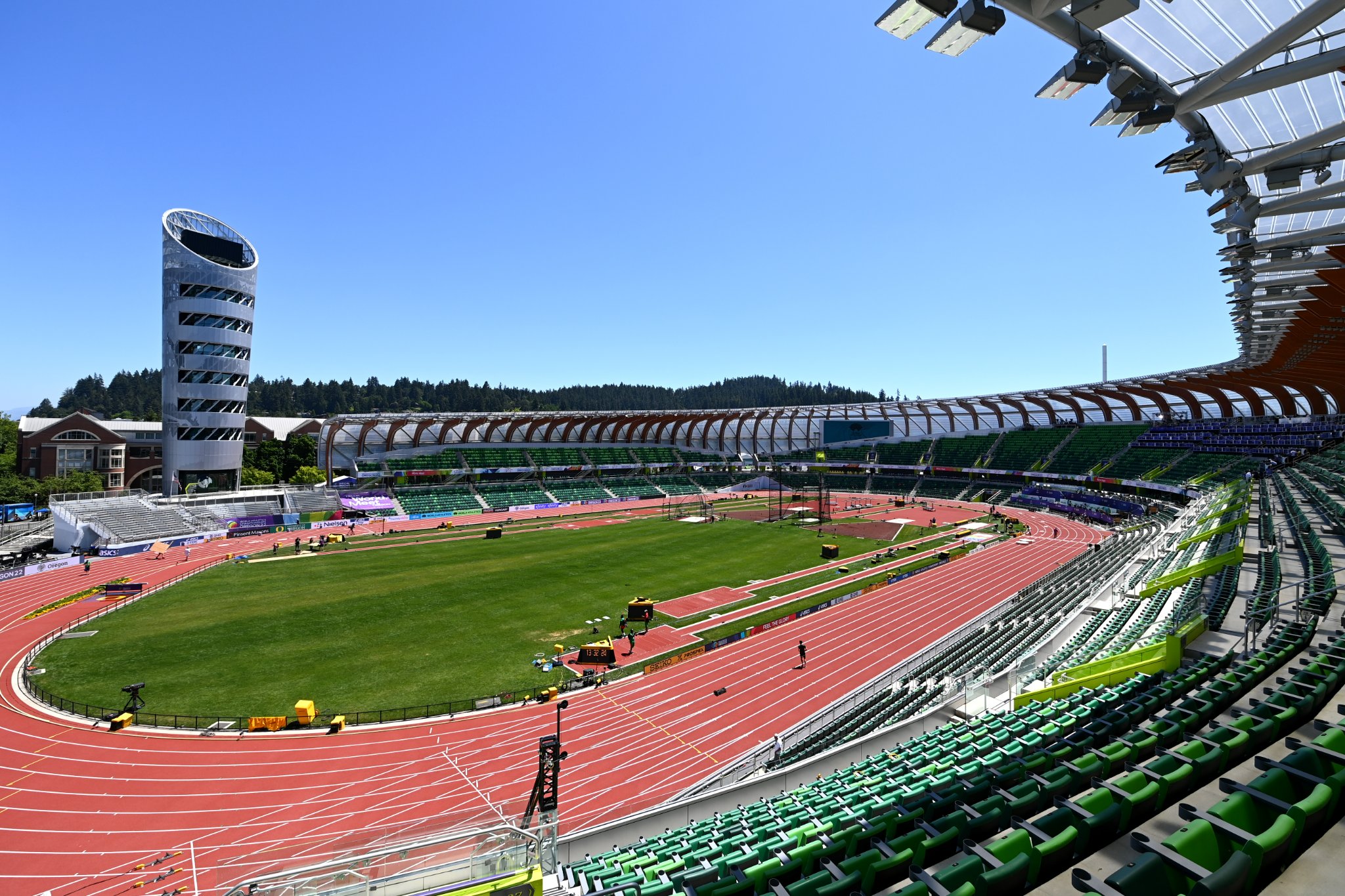
Venue of the 2022 World Athletics Championship. This image was downloaded from the Facebook page of World Athletics and is being used here for representation purpose. No copyright infringement intended.
Eldhose Paul becomes first Indian to reach the triple jump final at World Athletics Championship
Eldhose Paul became the first athlete from India to qualify for the triple jump final at the world athletics championship. At the 2022 edition of the event in Eugene, Oregon, USA, the 25-year-old jumped 16.68m to qualify for the final.
Those who cleared 17.05m or featured in the 12 best jumps in the qualifying round spread over two groups, were eligible for the final. In the qualification round, Paul placed twelfth overall. As reported in the media, Paul works for the Indian Navy and hails from Ernakulam in Kerala. According to data available on the website of World Athletics, his personal best is 16.99m, achieved in April 2022.
Morocco’s El Bakkali treats himself to steeplechase world title; Sable finishes eleventh
Reigning Olympic champion Soufiane El Bakkali of Morocco lapped up the title of world champion, winning the 3000m steeplechase final in a time of eight minutes, 25.13 seconds, at the 2022 World Athletics Championship. Lamecha Girma of Ethiopia (8:26.01) took silver and Conseslus Kipruto of Kenya (8:27.92), the bronze.
The race, keenly awaited in India owing to the presence of Avinash Sable in the field, saw the Indian athlete finishing eleventh with a time of 8:31.75. Sable’s time was well short of the 8:12.48, he set at an international meet in Rabat, Morocco, in June 2022. It must however be remembered that such measurements in athletics are influenced by conditions on the field, including how a race unfolds in accordance with the pacing and strategies of the race leaders. For instance, El Bakkali’s time in his gold medal winning performance at the 2021 Tokyo Olympics, was 8:08.90. The world record in the men’s steeplechase is 7:53.63, set by Qatar’s Saif Saaeed Shahin (formerly Stephen Cherono of Kenya) in 2004.
Sreeshankar finishes seventh in long jump final
Parul Chaudhary sets new personal best
India’s Murali Sreeshankar, who had earlier become the first Indian athlete to qualify for the final in the men’s long jump event at a world championships, finished seventh in the final at the 2022 World Athletics Championship being held over July 15-24 at Eugene, Oregon, in the US.
The 23-year-old had qualified with a jump of eight metres. However in the final, his best jump best measured 7.96 metres. The final was won by China’s Jianan Wang who managed 8.36 metres.
In the women’s 3000m steeplechase heats, India’s Parul Chaudhary failed to qualify for the final although she earned a new personal best of 9:38.09.
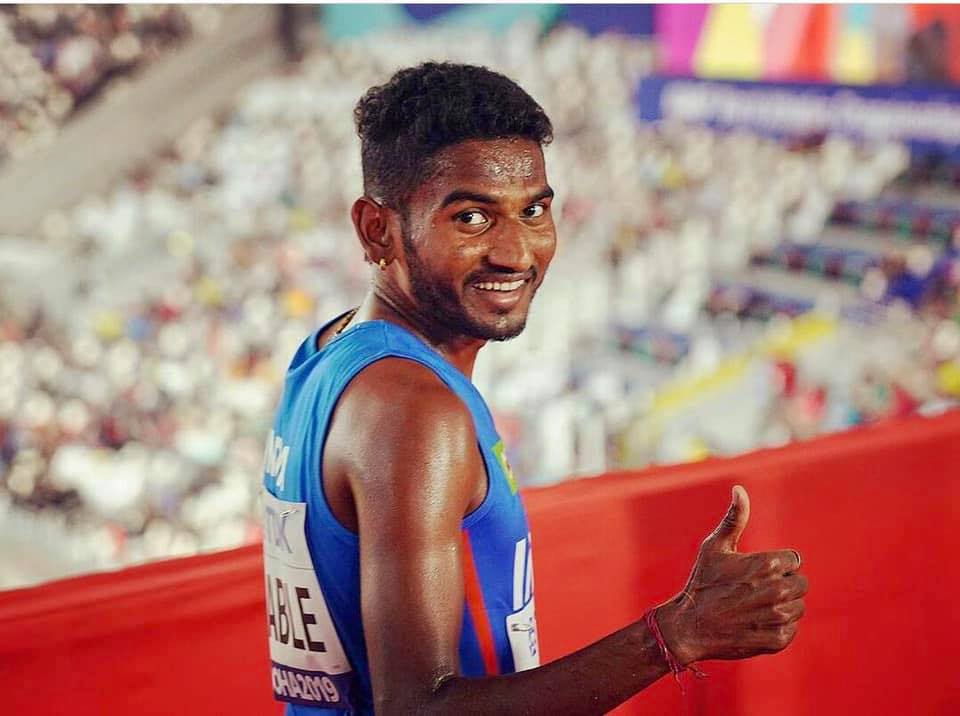
Avinash Sable. This photo was downloaded from the Facebook page of the athlete and is being used here for representation purpose. No copyright infringement intended.
Sable in steeplechase final, Sreeshankar in long jump final
India’s Avinash Sable has made it to the final of the men’s 3000m steeplechase event at the 2022 World Athletics Championship, being held over July 15-24, at Eugene, Oregon in the US.
In the heats, Sable finished third with timing of 8:18.75. Hailemariam Amare of Ethiopia (8:18.34) and Evan Jager of the US (8:18.44) placed ahead of him. Sable holds the Indian national record in 3000m steeplechase – 8:12.48. Notably, the 27-year-old has broken the national record several times, commencing (as per Wikipedia) with the 8:29.80 he set at the 2018 National Open Championships in Bhubaneshwar. The last time he broke the national record was at an international athletics meet in Rabat, Morocco.
Sable also holds the national record in the half marathon – 1:00:30, set at the Delhi Half Marathon in November 2020.
Among other Indian athletes competing at the world championships in Eugene, Murali Sreeshankar made it to the final of the long jump. The 23-year-old jumped eight metres to make the cut. He is the first Indian to qualify for the final in the men’s long jump at the world championships.
Jim Thorpe sole gold medallist of 1912 Olympic pentathlon and decathlon
Nearly 110 years after he was stripped of his medals for violating the strict rules governing amateur sport at the time, American athlete Jim Thorpe was reinstated as the sole gold medallist of the 1912 Olympic pentathlon and decathlon events.
“ Thorpe, a Native American, returned to a ticker-tape parade in New York, but months later it was discovered he had been paid to play minor league baseball over two summers, an infringement of the Olympic amateurism rules. He was stripped of his gold medals in what was described as the first major international sports scandal. Thorpe to some remains the greatest all-around athlete ever. He was voted as the Associated Press’ Athlete of the Half Century in a poll in 1950,’’ AP said in its report on the reinstatement.
According to it, in 1982, 29 years after Thorpe’s death, the IOC gave duplicate gold medals to his family but his Olympic records were not reinstated, nor was his status as the sole gold medalist of the two events. Two years ago, a Bright Path Strong petition advocated declaring Thorpe the outright winner of the pentathlon and decathlon in 1912. The International Olympic Committee had listed him as a co-champion in the official record book.
“ This is a most exceptional and unique situation, which has been addressed by an extraordinary gesture of fair play from the National Olympic Committees concerned,’’ IOC president, Thomas Bach, was quoted as saying in a statement (dated July 15, 2022) related to Thorpe’s reinstatement.
(The author, Shyam G Menon, is an independent journalist based in Mumbai.)
Pune-based ultra-runner, Ashish Kasodekar, completed Badwater 135 in 38 hours, 24 minutes and 26 seconds.
At the 2022 edition of the race, he was, as per results available on the event’s website, the thirty first runner to cross the finish line. The overall winner of 2022 Badwater 135, the 217-kilometre ultramarathon held annually in California, was Yoshihiko Ishikawa from Japan. He finished the run in 23:08:20. Yoshihiko had won the 2019 Badwater 135 setting a course record of 21:33:01.
Triathlete and ultra-runner, Ashley Paulson of the US, won the women’s race at 2022 Badwater 135, crossing the finish line in a new course record of 24 hours, nine minutes and 34 seconds. The previous course record was 24:13:24 hours set by Polish runner Patrycja Bereznowska in 2019.
The overall second place finisher at the 2022 edition was Ivan Penalba Lopez of Spain. He finished in 24:02:57 hours. Ashley Paulson was the third runner to finish.
(The authors, Latha Venkatraman and Shyam G Menon, are independent journalists based in Mumbai.)
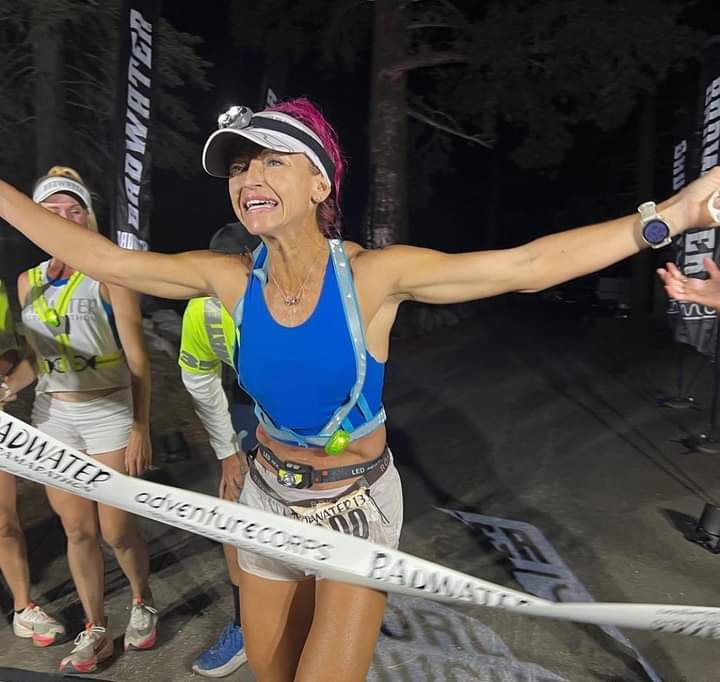
Ashley Paulson. This image was downloaded from the Facebook page of the event and is being used here for representation purpose. No copyright infringement intended.
Ashley Paulson sets new women’s course record
India’s Ashish Kasodekar close to finishing
US-based triathlete and ultra-runner Ashley Paulson won the women’s race at 2022 Badwater 135, crossing the finish line in 24 hours, nine minutes and 34 seconds, a new course record.
The previous women’s course record was 24:13:24 hours, set by Polish runner Patrycja Bereznowska in 2019.
The overall winner of 2022 Badwater 135, the 217 kilometre-ultramarathon held annually in California, was Yoshihiko Ishikawa from Japan. He finished the run in 23:08:20. Yoshihiko had won the 2019 Badwater 135 setting a course record of 21:33:01. The race was not held in 2020 due to the COVID-19 pandemic. In 2020, the overall winner was Harvey Lewis of the US (25:50;23); the winner among women was Sally McRae (30:48:47), also of the US.
The overall second place finisher this year was Ivan Penalba Lopez of Spain. He finished in 24:02:57 hours.
Ashley Paulson was the third runner to finish.
At 11.11 PM (IST), the time of publishing this report, India’s Ashish Kasodekar (from Pune) was past the time station at 131.1 miles (210.98 kilometres). The race is 135 miles long.
(The authors, Latha Venkatraman and Shyam G Menon, are independent journalists based in Mumbai.)
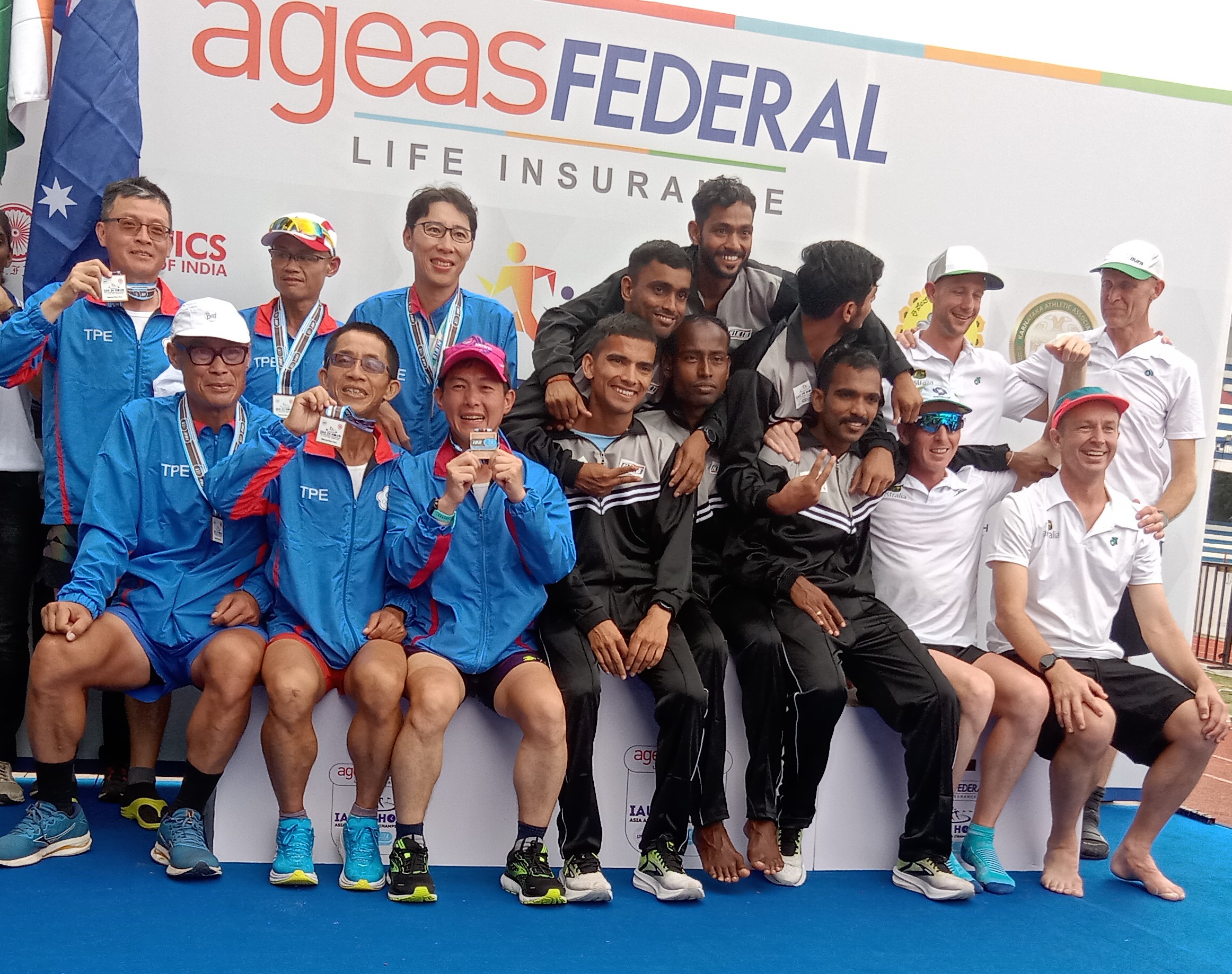
The men’s teams: (from left) – Chinese Taipei, India and Australia (Photo: Latha Venkatraman)
Indian men’s team wins gold, women take silver
Indian men sweep individual medals
Amar Singh Devanda, Anju Saini rewrite national bests
Ultrarunners Amar Singh Devanda and Anju Saini broke the men’s and women’s national best in the 24-hour run category at the IAU 24-Hour Asia & Oceania Championships that was held in Bengaluru over July 2-3, 2022.
The Indian men’s team won the gold and the women’s team the silver in the competition that concluded at 8 AM on Sunday, July 3. Indian runners also swept the podium in the individual category in the men’s section.
Amar Singh Devanda, running strong from the start of the 12-hour run at the Sree Kanteerava Stadium in Bengaluru, surpassed the national best of 250.37 kilometres set by Ullas Narayana at the IAU 24-Hour Asia & Oceania Championships at Taipei in December 2018.
Amar first bettered his own personal best of 240.8 km (also a national best on Indian soil) and then went on to set the new national best of 258.418 km.
Later, Anju Saini, who was the race leader from among Indian women, set a new national best of 204.314 km, surpassing the previous national best of 202.212 km set by Apoorva Chaudhary at the IAU 24-Hour World Championships held at Albi, France in October 2019.
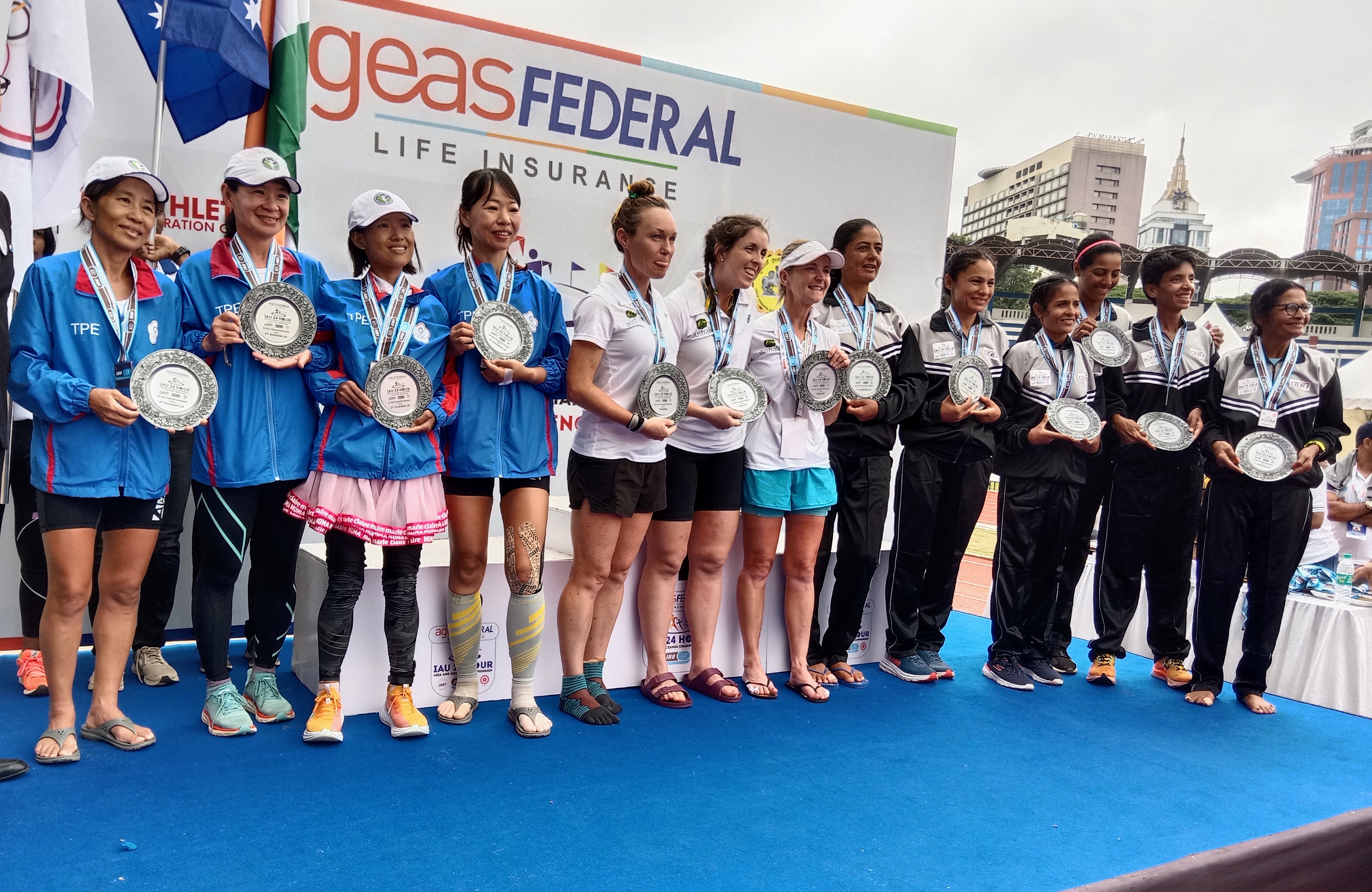
The women’s teams: (from left) – Chinese Taipei, Australia and India (Photo: Latha Venkatraman)
The Indian men won the team championships with a combined distance of 739.959 km (the aggregate of the mileage of its top three runners). Australia won the silver with a cumulative distance of 628.405 km and Chinese Taipei the bronze with a distance of 563.591 km.
In the women’s team event, Australia won the gold, India the silver and Chinese Taipei the bronze.
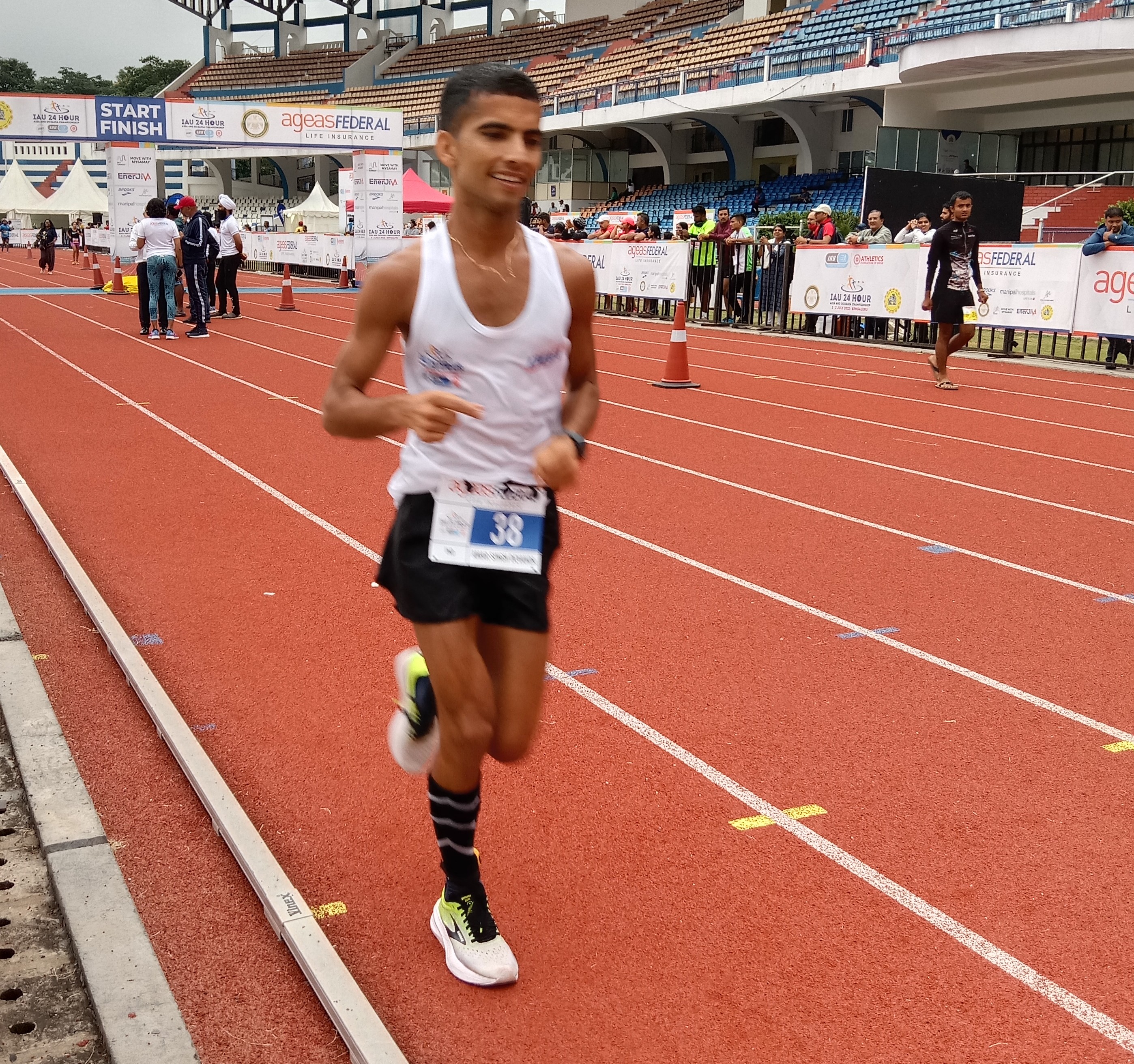
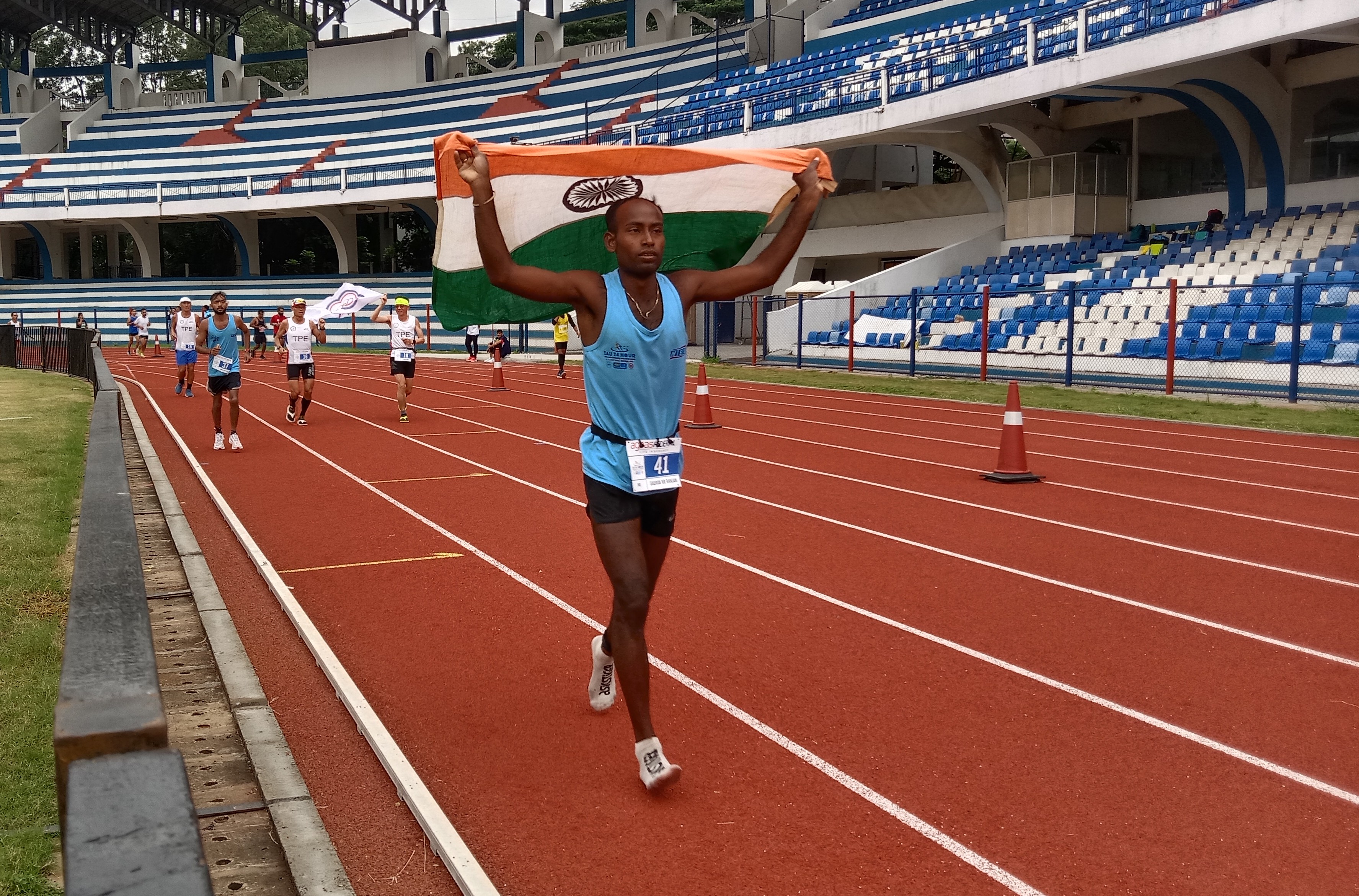
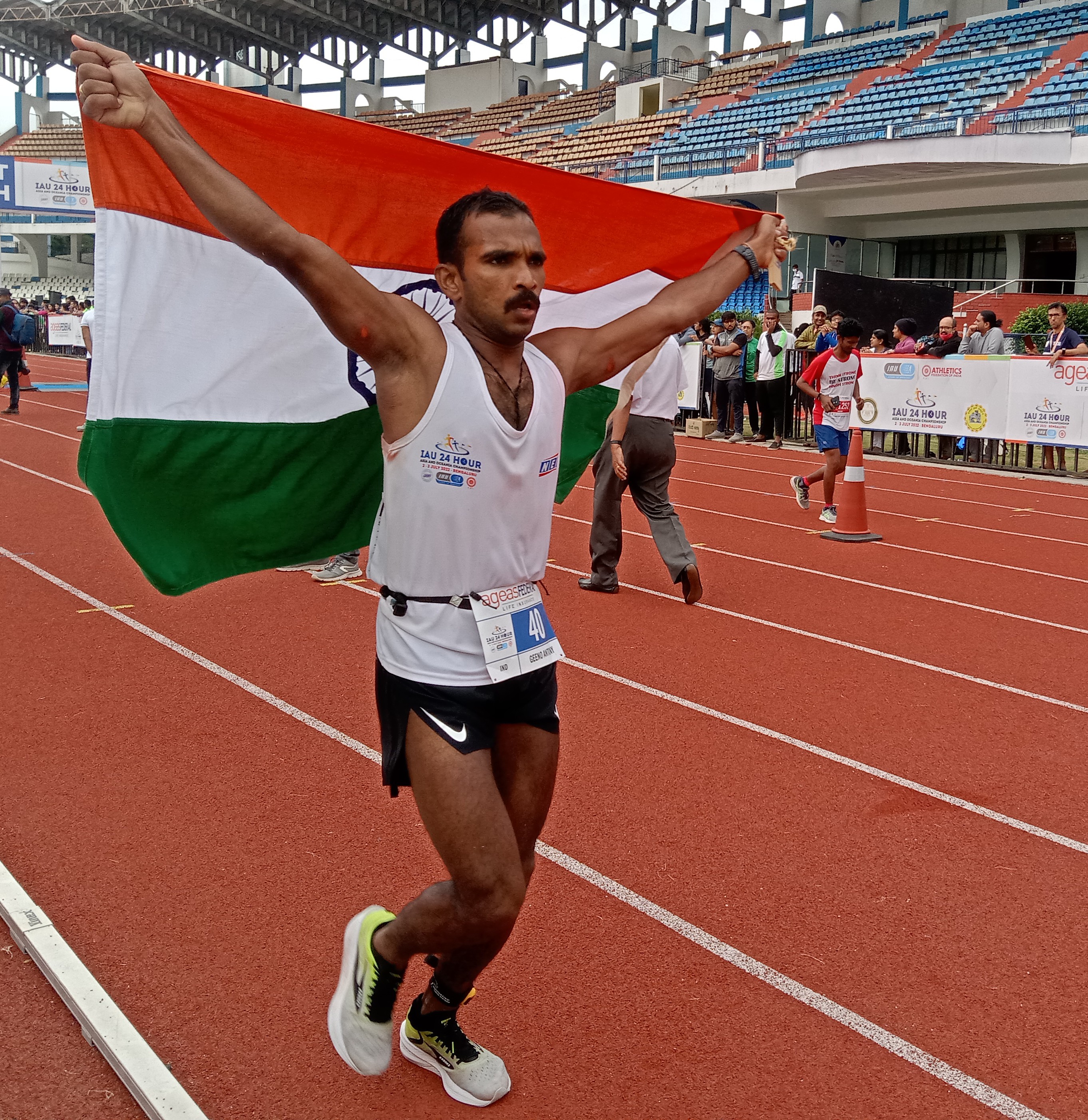
In the individual men’s race, Amar Singh Devanda won the gold, Saurav Kumar Ranjan got the silver (242.564 km) and Geeno Antony the bronze (238.977 km).
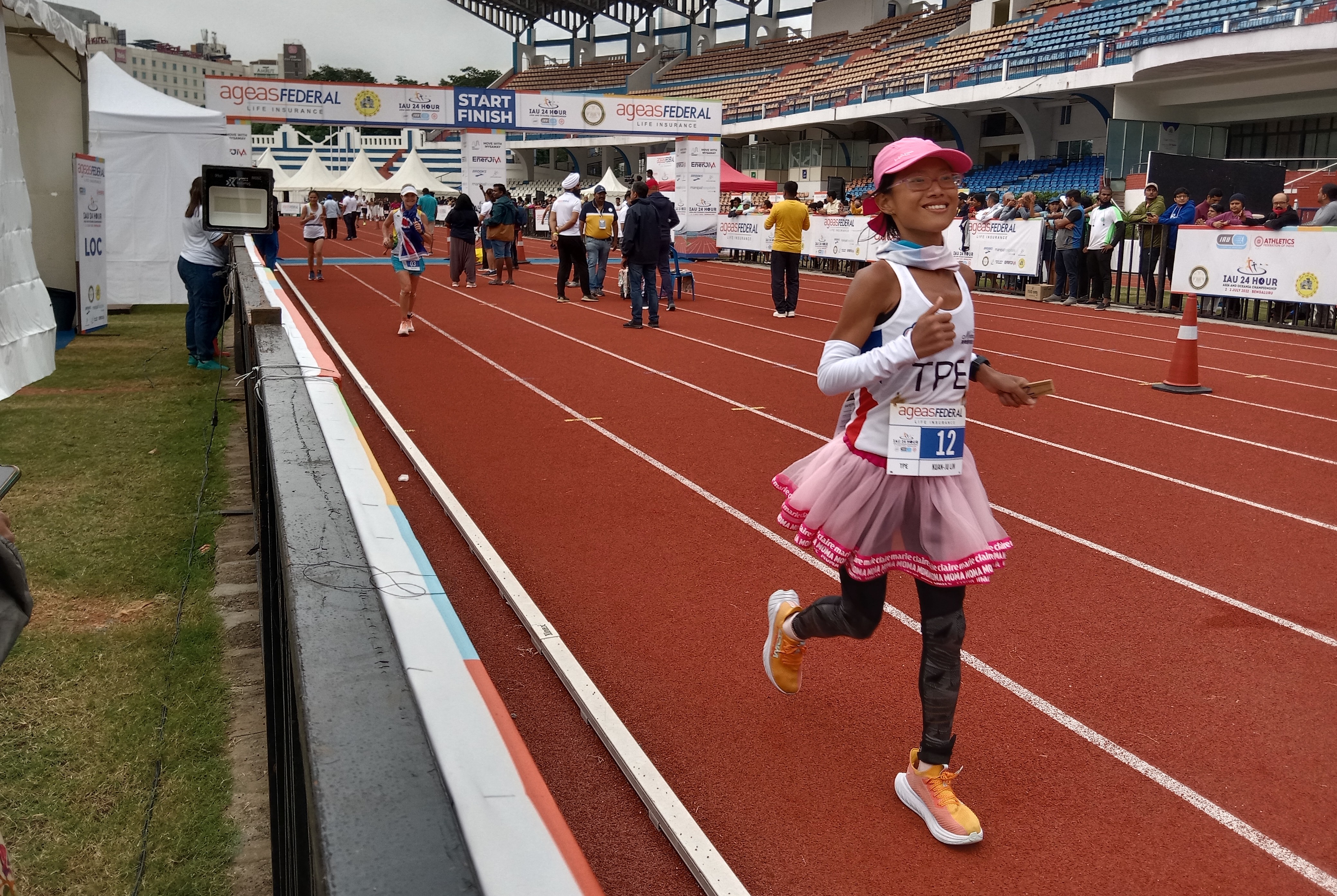
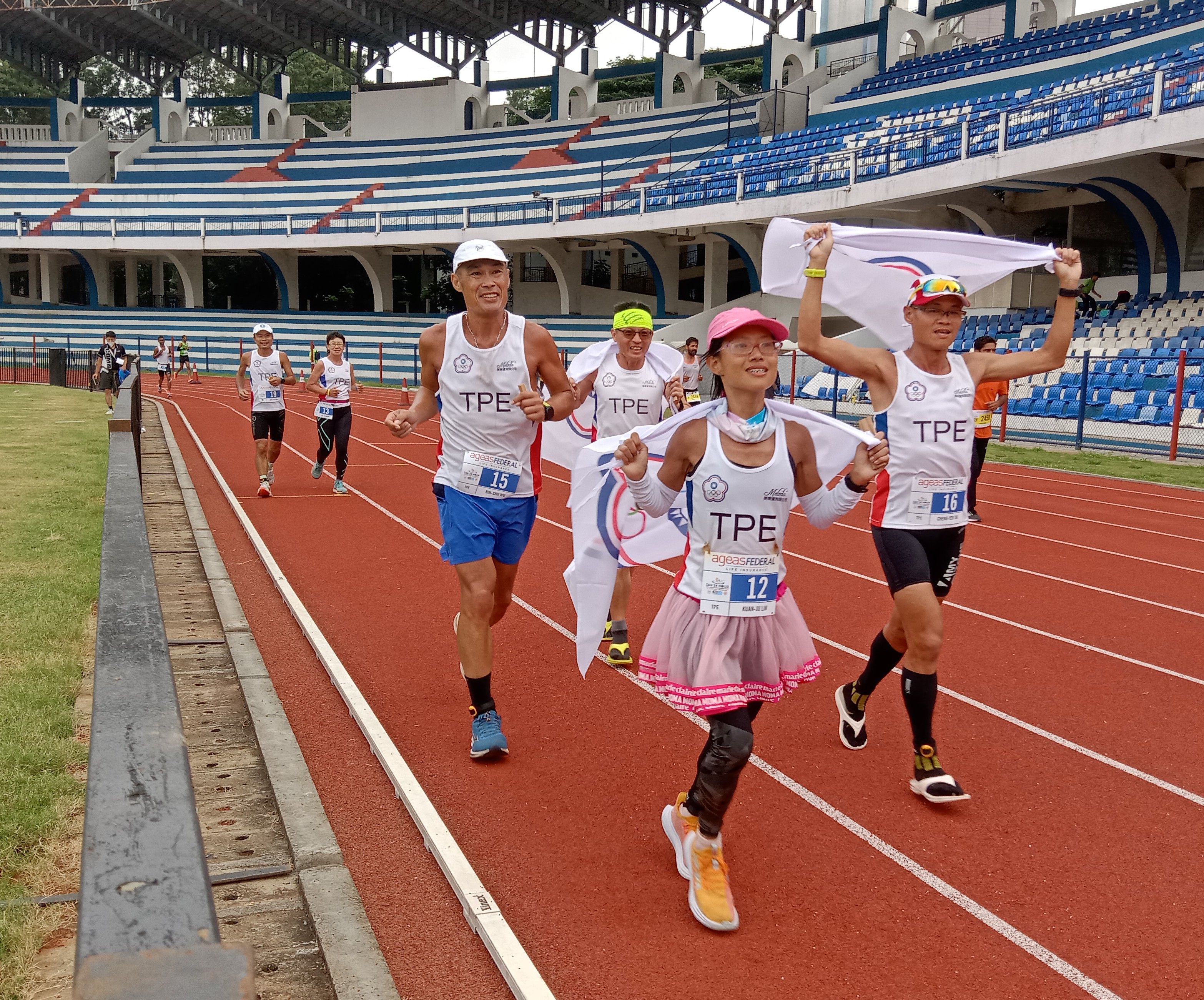
In the individual women’s race, Kuan-Ju Lin from Chinese Taipei won the gold covering a distance of 216.877 km. Cassie Cohen of Australia won the silver with a distance of 214.990 km and her compatriot Allicia-Grace Heron won the bronze with a distance of 211.442 km. In terms of team mileage in the women’s category, Australia logged 607.630 km, India – 570.700 km and Chinese Taipei – 529.082 km.
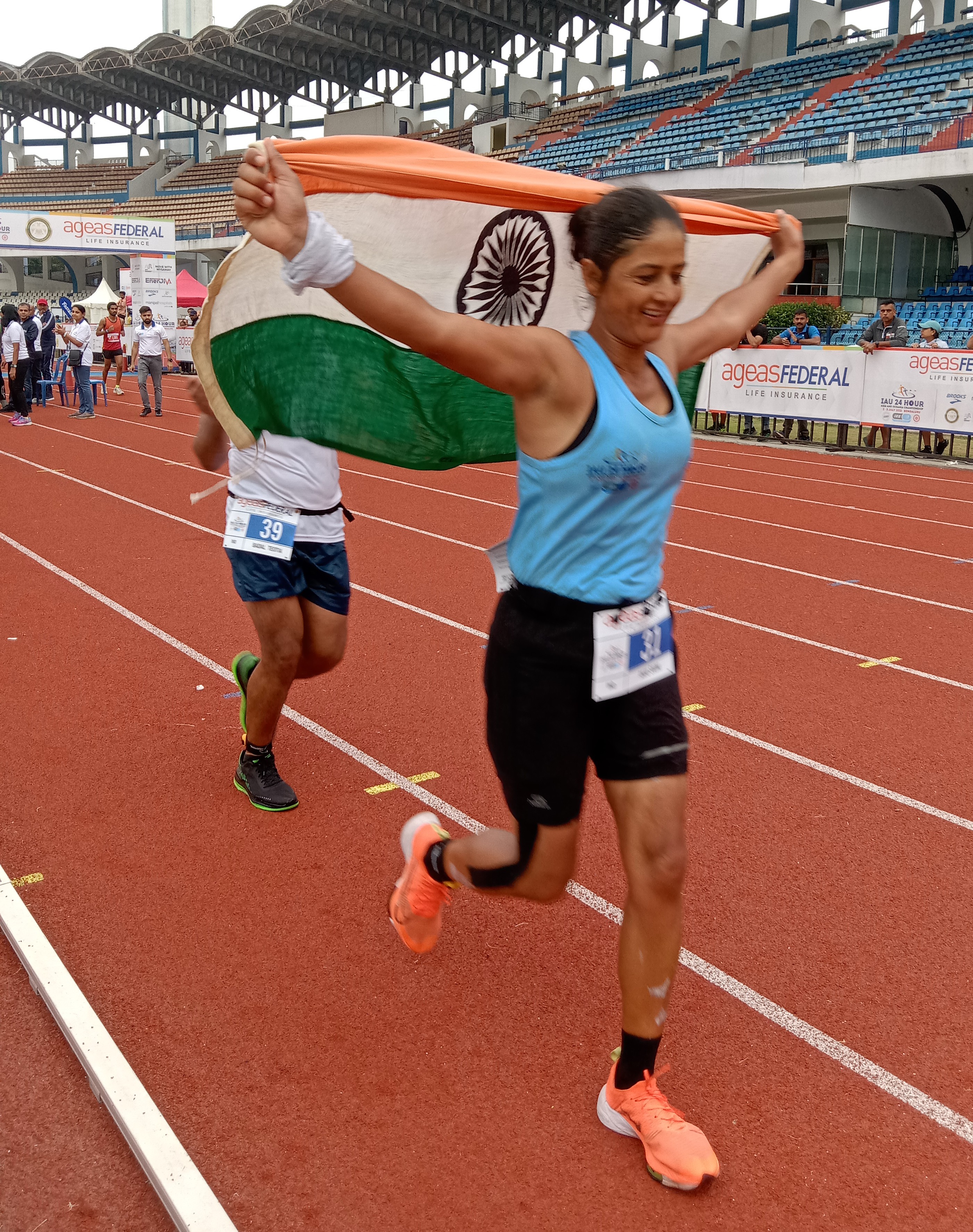
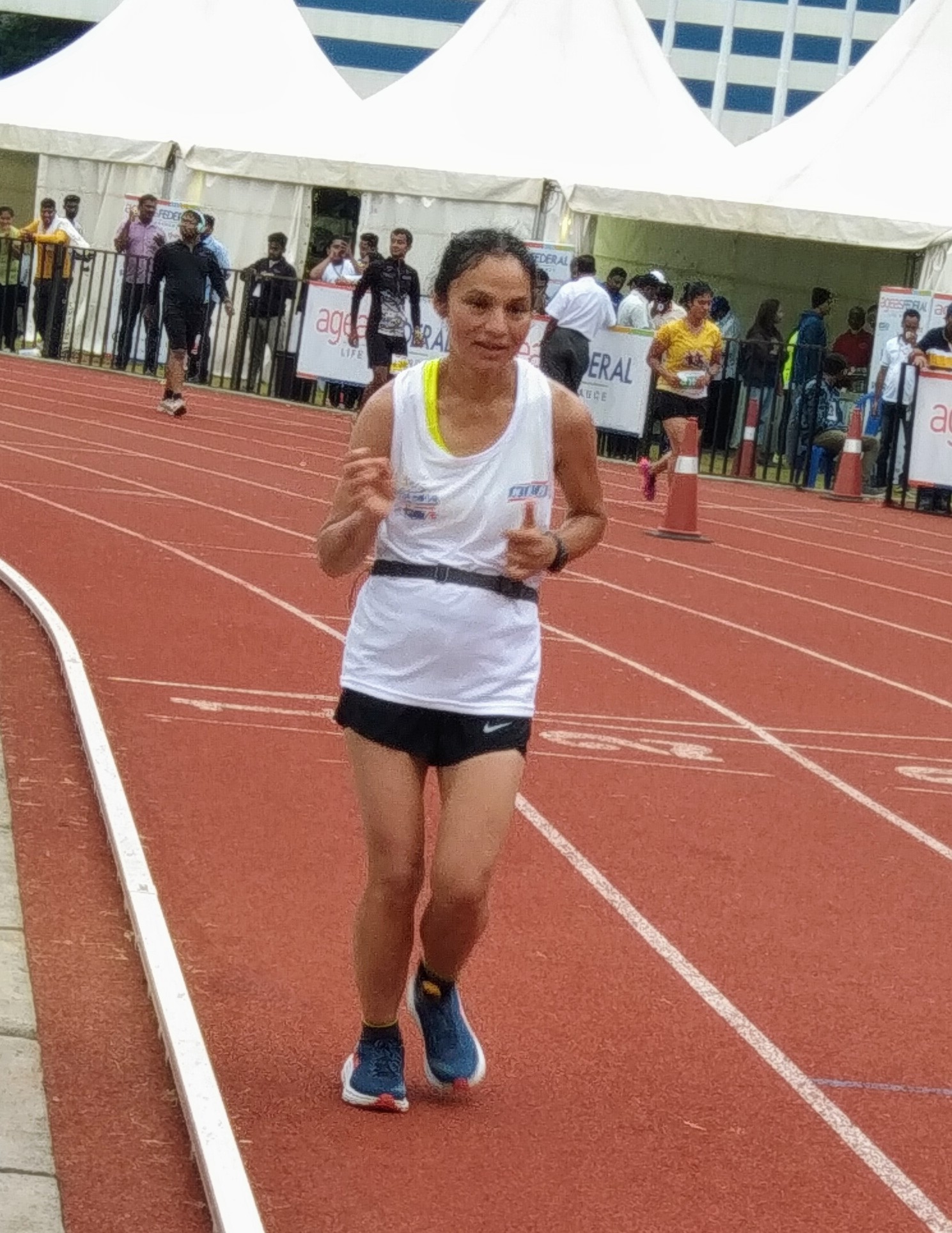
Among Indian women, Anju Saini was followed by Shashi Mehta (182.8 km) and Asha Singh (179.6 km).
Anju Saini (Photo: Shyam G Menon)
Amar Singh Devanda (Photo: Shyam G Menon)
The 24-hour race commenced at 8 AM on July 2, 2022 and concluded at 8 AM on July 3, 2022. “ Weather conditions during the daylight hours of the first day were not very conducive,” Asha Singh, said. According to her, the cool breeze of the night hours helped.
While overall the weather was good, the heat and the humidity of the initial hours of the race impacted digestion, leading to stomach issues for some of the runners. Preeti Lala said she had a tough morning but subsequently settled to a steady pace. Race nutrition and the right types of food to ingest during a race have always been among challenges in ultrarunning. Adding to the challenge is how this is couched in a basket of variables, among them weather conditions.
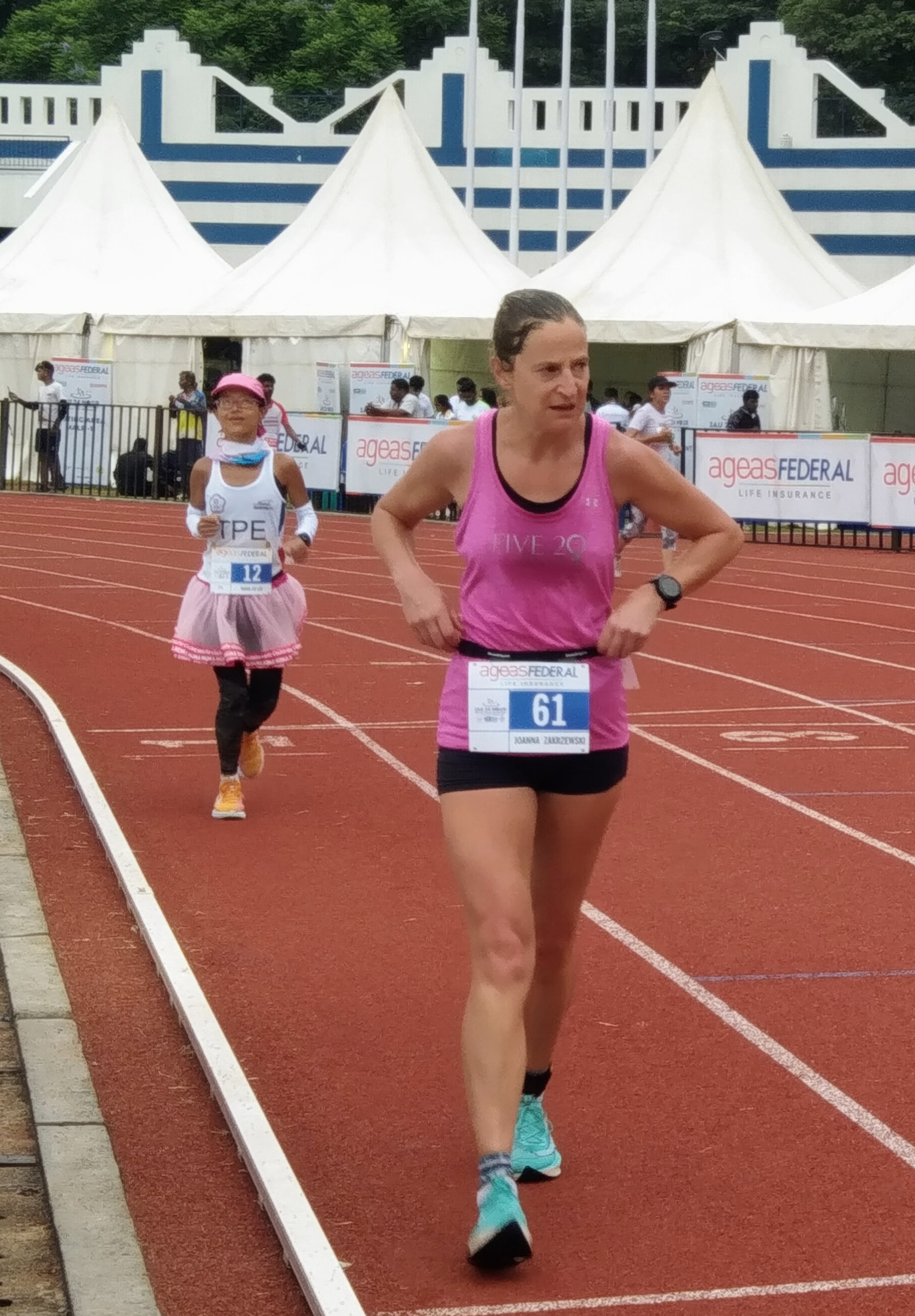
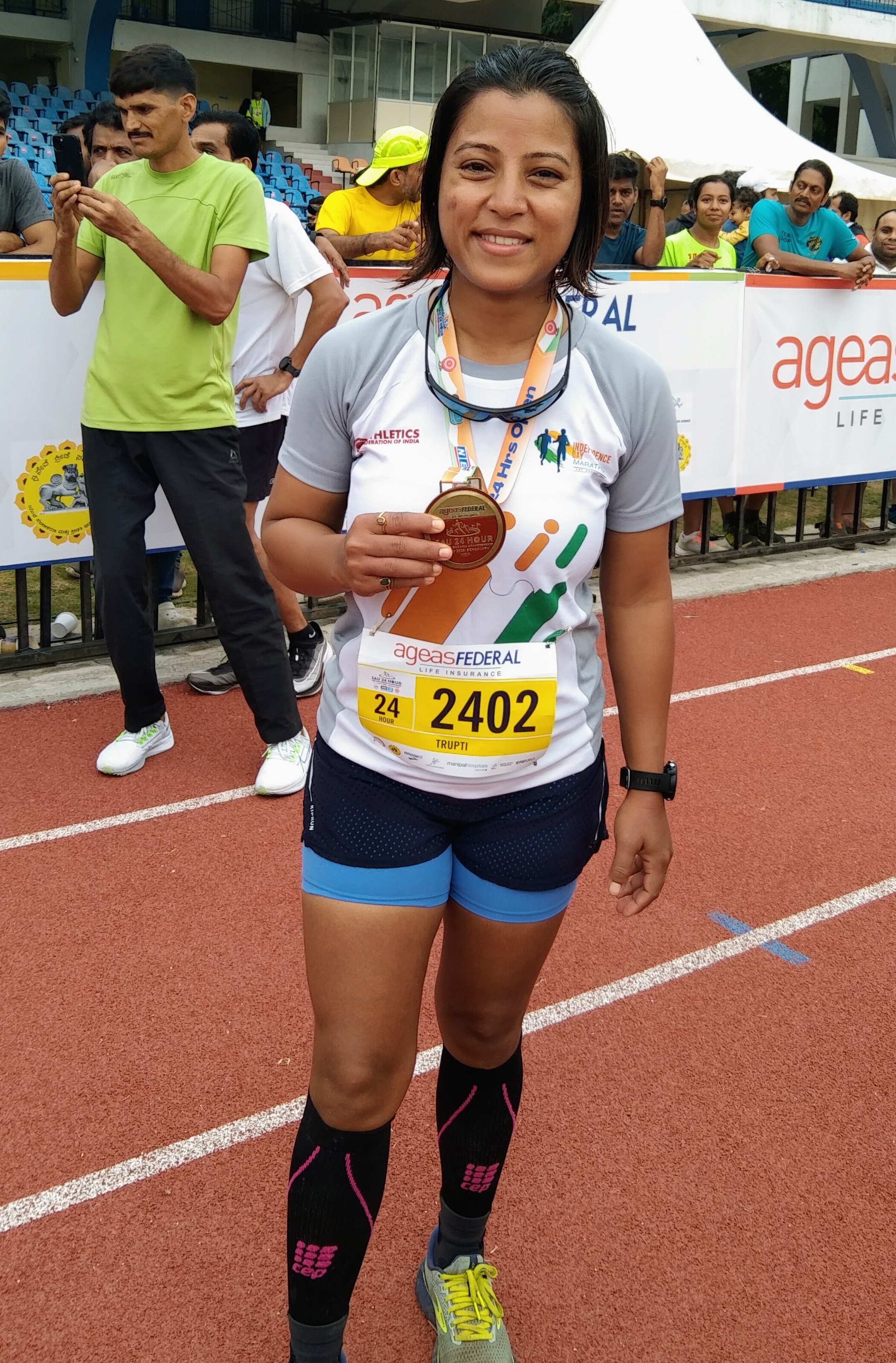
Joanna (Joasia) Zakrzewski of United Kingdom won the gold in the women’s 24-hour open category. In silver position was Trupti Chavan from Maharashtra.
Kuan-Ju Lin (Photo: Shyam G Menon)
In the men’s open category of the 24-hour race, the winner was Poland’s Tomasz Pawlowski.
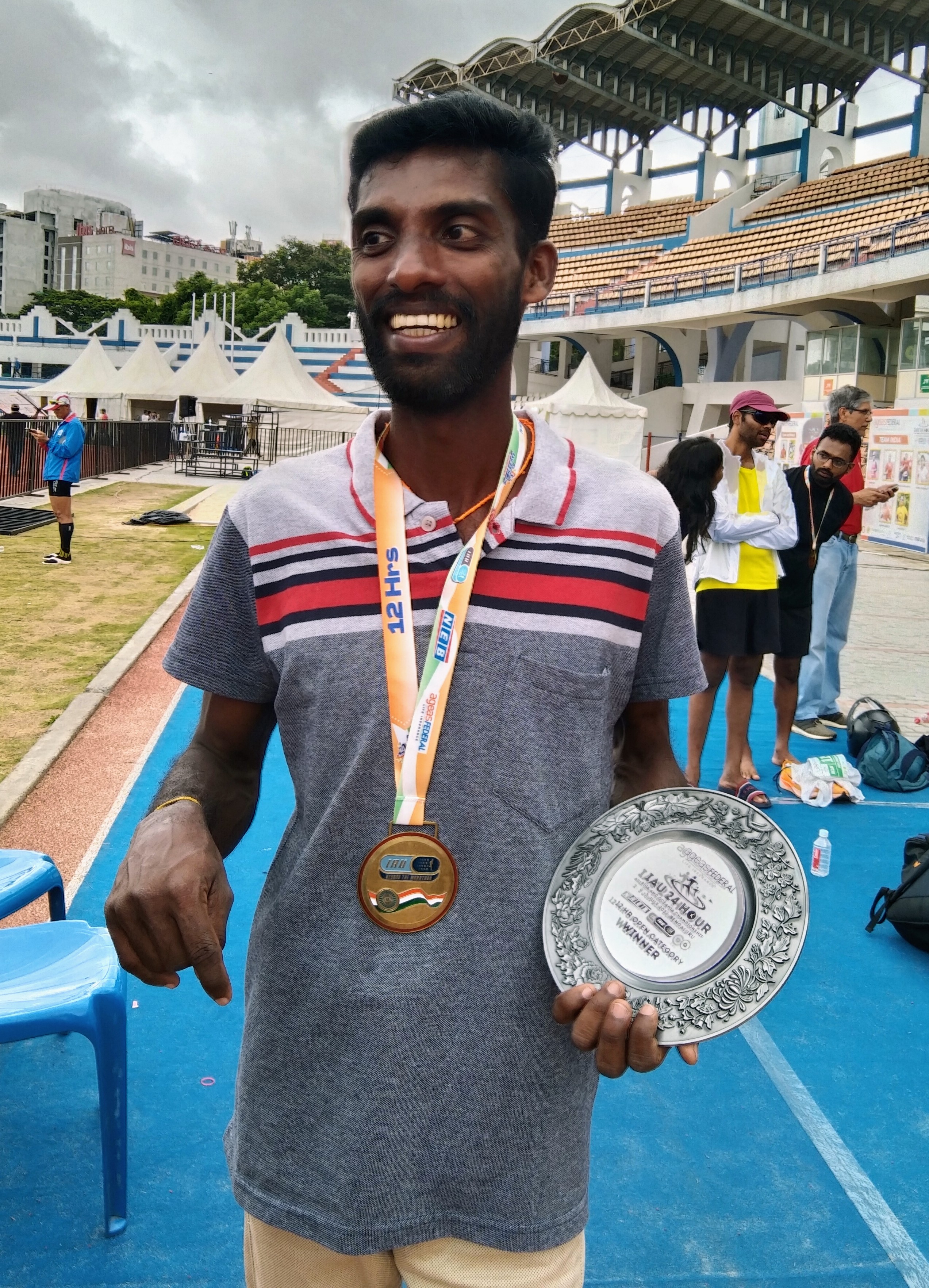
In the 12-hour women’s race, Balbinder Kaur was the winner with a distance of 96.798 km. Bindu Juneja took second position covering a distance of 94.608 km. In the men’s race, the winner was Harikumar K. L with a distance of 115.632 km covered. He was followed by Charudutt Mishra in second position (112.128 km) and Pritam Rai in third position (109.5).
The cheering at the event came in for praise from the participating runners. Encouragement matters in the marathon and ultramarathon, both of which test endurance.
The next IAU 24-Hour Asia & Oceania Championships will be held two years down the line in Canberra, Australia. Bengaluru meanwhile, will gear up to host the IAU 100K Asia & Oceania Championships in 2023.
(The authors, Latha Venkatraman and Shyam G Menon, are independent journalists based in Mumbai. Please note that this article has been updated to reflect the latest mileage data [individual and team for the top three in each gender category] as available in IAU’s press statement dated July 4, 2022. Anju Saini’s mileage is as available on NEB Sports’ Facebook page.)
Presenting some more photos:
Saurav Kumar Ranjan (Photo: Shyam G Menon)
The runners from Chinese Taipei (Photo: Shyam G Menon)
Shashi Mehta (Photo: Latha Venkatraman)
Joanna (Joasia) Zakrzewski / 24h open category (Photo: Latha Venkatraman)
Geeno Antony (Photo: Shyam G Menon)
Harikumar K. L / 12h (Photo: Latha Venkatraman)
Trupti Chavan / 24h open category (Photo: Latha Venkatraman)
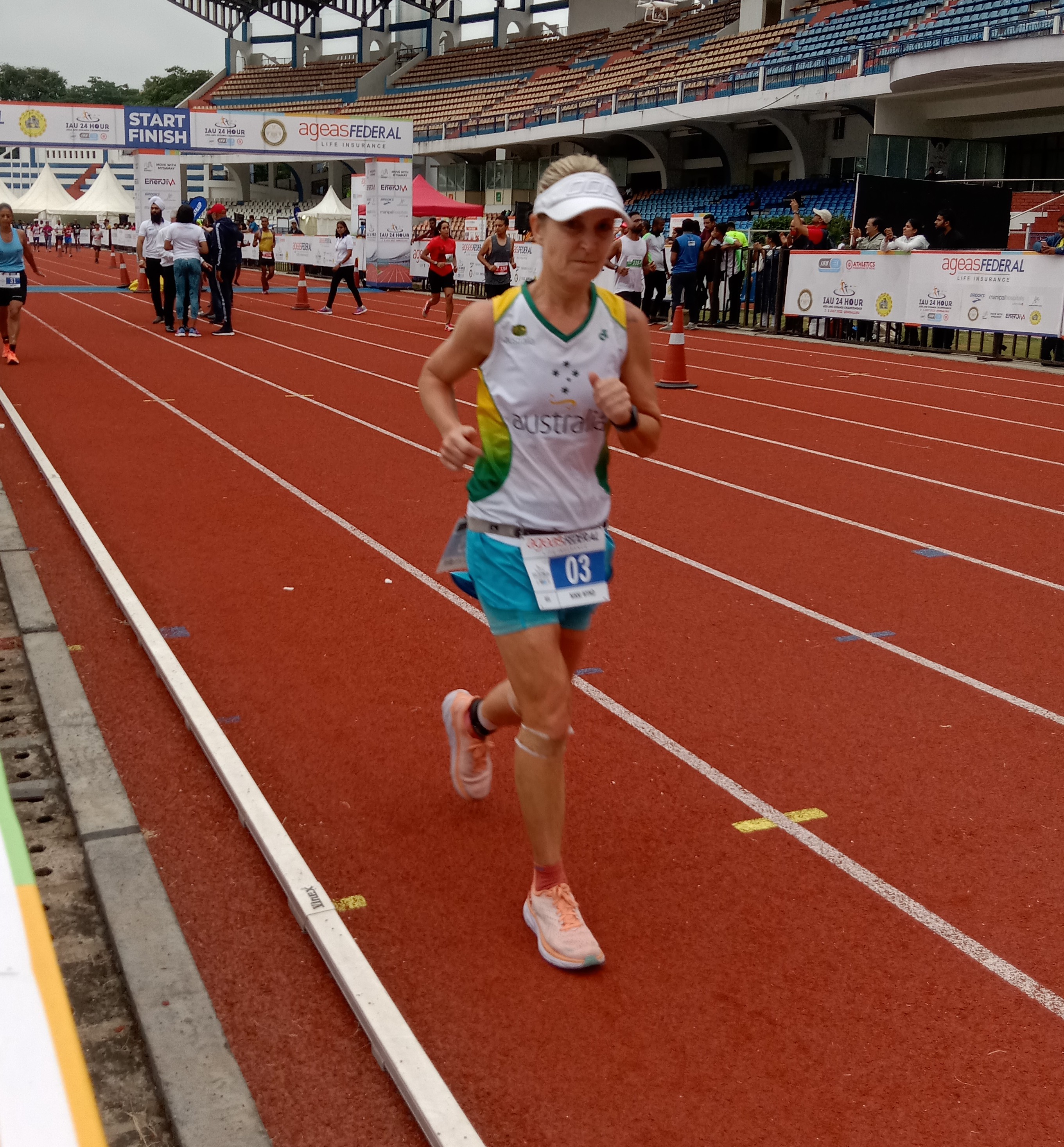
Nikki Wynd (Photo: Shyam G Menon)
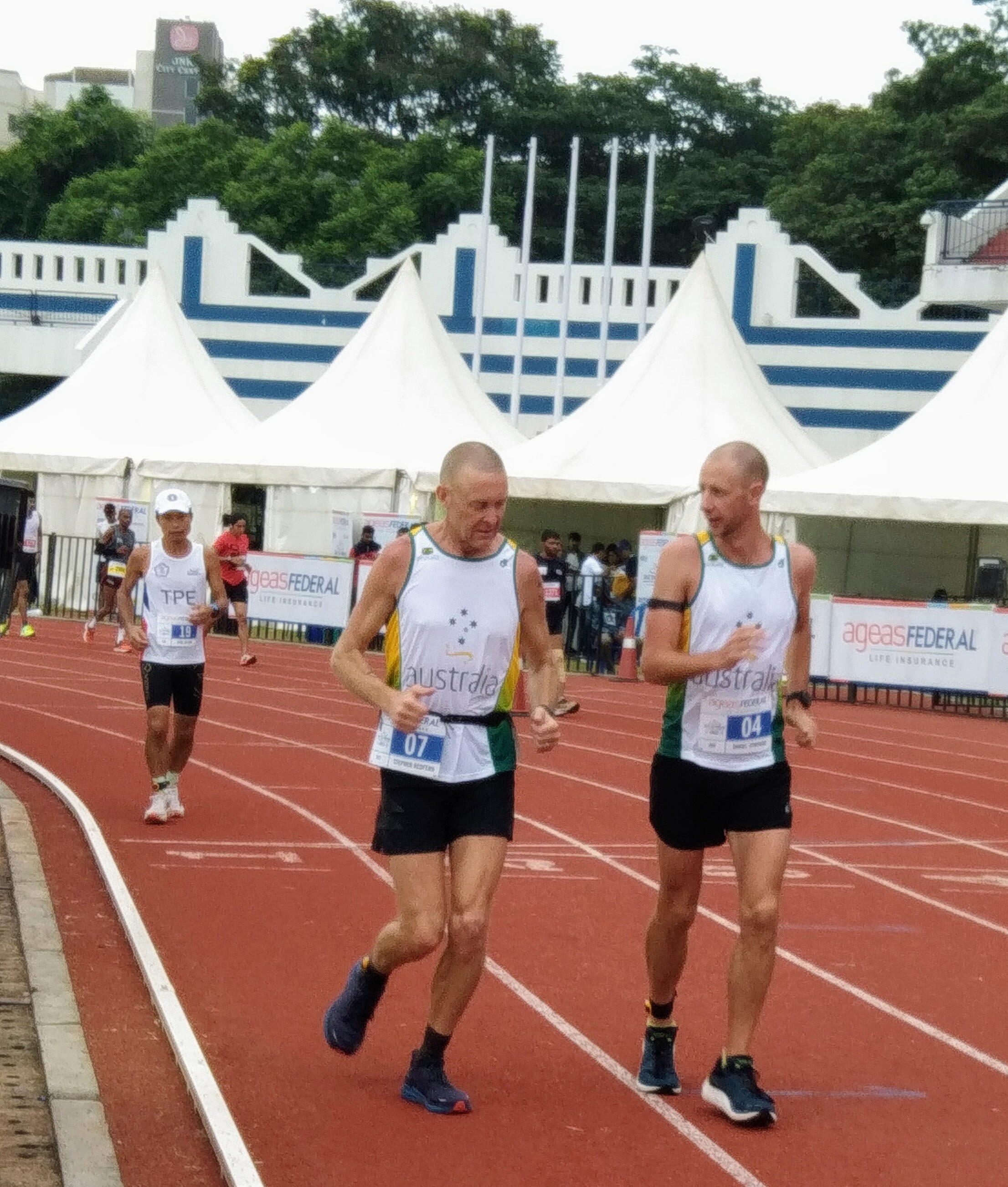
Stephen Redfern and Daniel Symonds (Photo: Latha Venkatraman)
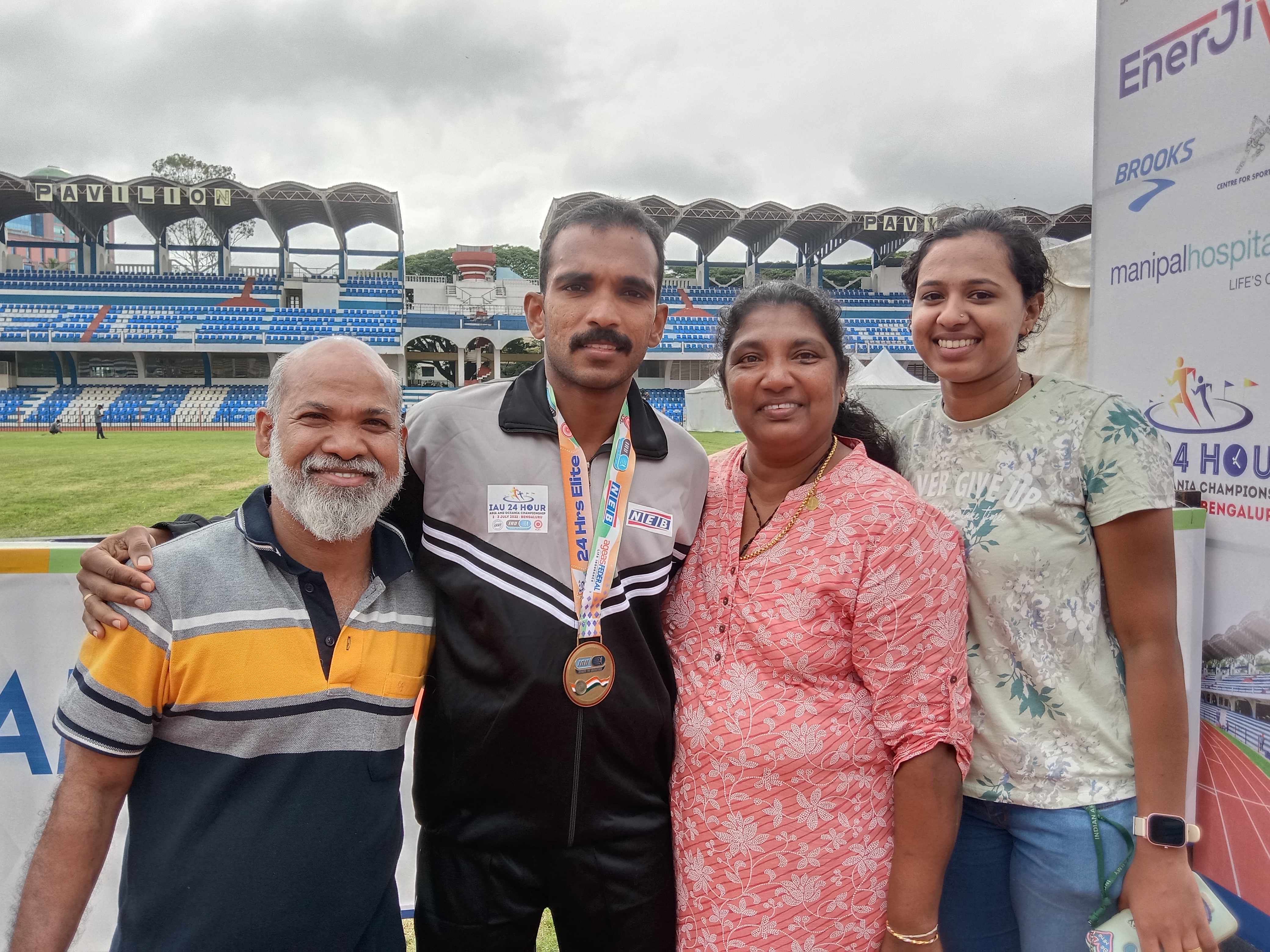
Geeno Antony and his family at Kanteerava Stadium, Bengaluru (Photo: Shyam G Menon)
Thumba in Thiruvananthapuram has reason to celebrate.
On the morning of Sunday, July 3, while Kerala’s capital witnessed its usual share of morning walks and jogs, Geeno Antony finished third in the men’s category at the IAU 24H Asia & Oceania Championships, in Bengaluru.
Geeno, who hails from Thumba, was part of the Indian men’s ultrarunning team which won the gold medal (team medals are awarded on the strength of the aggregate mileage of each team’s top three runners). Runners did repeated laps on the 400-metre-synthetic track of Bengaluru’s Kanteerava Stadium, for 24 hours, from 8 AM on July 2 to 8 AM on July 3.
Geeno logged 593 laps translating to 237.2 kilometres covered. “ The first half was tough for me. The second half was better,’’ he said. It was in the night hours of July 2 that Geeno moved up from fourth position to the third. But it was a lead by a fragile margin and he had Joe Ward of Australia snapping at his heels. The situation was different by next morning. The final results for men showed fourth placed Matt Griggs of Australia at 581 laps and Joe Ward (he finished fifth) at 551 laps.
Geeno’s family was present at the stadium to witness the Indian team’s performance. Employed with the Indian Army, Geeno may sometimes be seen doing his long runs on the bypass linking Kazhakkoottam and Kovalam, when on leave and visiting home in Thiruvananthapuram.
(The author, Shyam G Menon, is an independent journalist based in Mumbai.)
Amar Singh Devanda close to breaking the national best
Checked at 5.50 AM AM on Day 2, the race leader board showed three Indians runners – Amar Singh Devanda, Saurav Kumar Ranjan and Geeno Antony – still heading the field in the competition for men at the IAU 24H Asia & Oceania Championships, currently on in Bengaluru.
Amar had done 592 laps of the 400 meter-track covering a distance of 236.8 kilometres. Saurav had 554 laps to his credit and Geeno, 542.
The national best for men in the 24-hour category held by Ullas Narayana is 250.37 kilometres. Amar’s personal best is 240.8 kilometres, which is incidentally the best time registered on Indian soil.
The competition concludes at 8 AM on July 3.
Among women, Kuan-Ju Lin of Chinese Taipei was leading with 490 laps done. In second position was Cassie Cohen of Australia (486 laps) and in third, Allicia-Grace Heron (480 laps), also of Australia. The highest placed among the Indian women was Anju Saini (464 laps). Shashi Mehta had accumulated 417 laps, Asha Singh, 416.
(The authors, Latha Venkatraman and Shyam G Menon, are independent journalists based in Mumbai)