
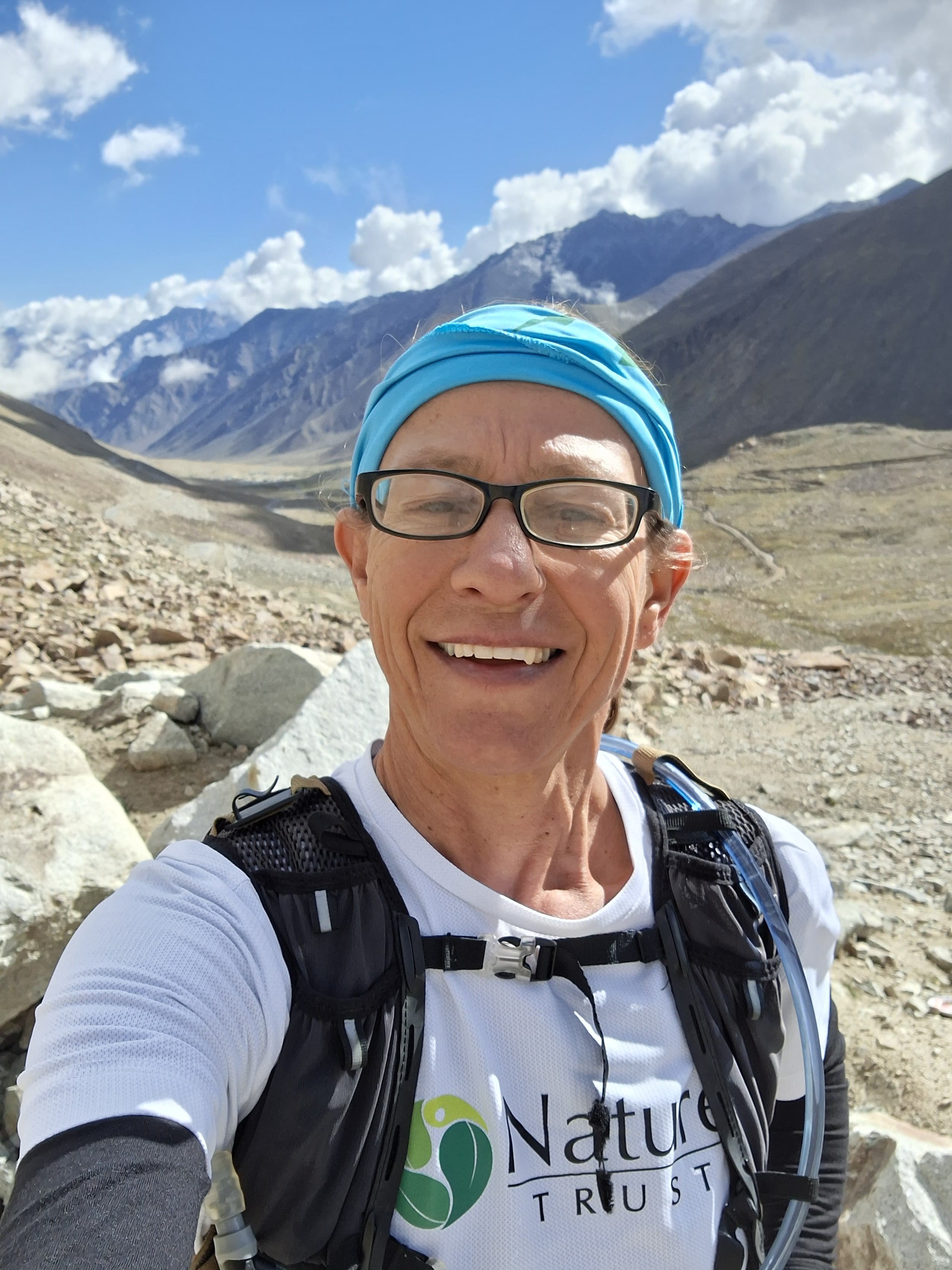
Having finished third in the women’s category at an earlier edition of the Khardung La Challenge, Corina Van Dam (Cocky) decided to try the 2024 Silk Route Ultra (SRU). She had to DNF (Did Not Finish). But she came off happy, with no sense of unfinished business in Ladakh and clear reasons for aborting her race.
A bus trip to Nubra Valley with 60 kindred spirits, including accommodation, entertainment, and food. The only catch is that you have to walk back to Leh across Khardung La’.
That was my description of Silk Route Ultra (SRU) from Ladakh Marathon before the 122-kilometer-long race started.
It wasn’t that I didn’t take it seriously. Not at all. Though the Khardung La Challenge of 2022 was not too hard on me – I finished third in the women’s category in 11.10 hours – I knew that SRU wouldn’t be a fair comparison. Add 50 kilometres to an already challenging ultra……!!
I registered late because I was stuck in the Netherlands due to visa issues. The first thing I did when I reached home was signing up for SRU. From that moment on, all my efforts (I am a triathlete) were geared towards this unique race in the Himalaya. In May, I increased my mileage, which had dropped in the Netherlands where I had to combine odd working hours, meeting friends and follow up on stressful bureaucratic processes. When I returned, Mumbai was hot and humid. That was a shock after the Dutch rain and cold. In June, I started doing back-to-back long runs with midweek half marathons. July was for six-hour runs, ultras and weekend night runs in the colony where I live. In August, I started tapering and enjoyed local races as ambassador and race mentor with one mid-term exam ` The Mumbai Ultra’, a 12-hour race in which I scored a good grade. The only exacerbation in the whole process was a 12-hour swim a few weeks before the final exam…. But as this was a low impact activity, I did not think that would do much harm.
I flew in to Leh on the first day of bib-collection, the absolute minimum for acclimatisation. I found it hard. I had travelled overnight and it was actually only the Sunday after SRU that I felt that I had acclimatized to Leh’s altitude (my Garmin was correct!). I enjoyed the morning run / walk that focused on getting used to the altitude and the climate; I also enjoyed meeting ultra runners from across the country. The bib collection was like a school reunion with our friendly but stern principal Chewang Motup Goba who exemplifies what Ladakh Marathon stands for: personal commitment, respect for the mountains, respect for each other, fairness and sports(wo)manship. The excitement, anticipation and camaraderie at Ladakh Marathon’s ultras is unique. As part of the preparations in Leh, I went with a group for a run up and down Khardung Top and a car ride to Umang La, now the highest motorable pass in the world.
For me, a lot had changed in two years. In 2022, I was an unknown runner but now ` strangers’ shouted ` hey champ!’ at me across Leh Market and added that they followed me on Instagram / Strava. As the only ` Athlos athlete’ participating in SRU, I was invited to lead Athlos’ shake-out sessions before the races. Seventy people turned up for the run, coffee and cookies at Metta Café. Expectations were high and my co-runners assessed that SRU would be “ easy for me.’’ No doubt about that.
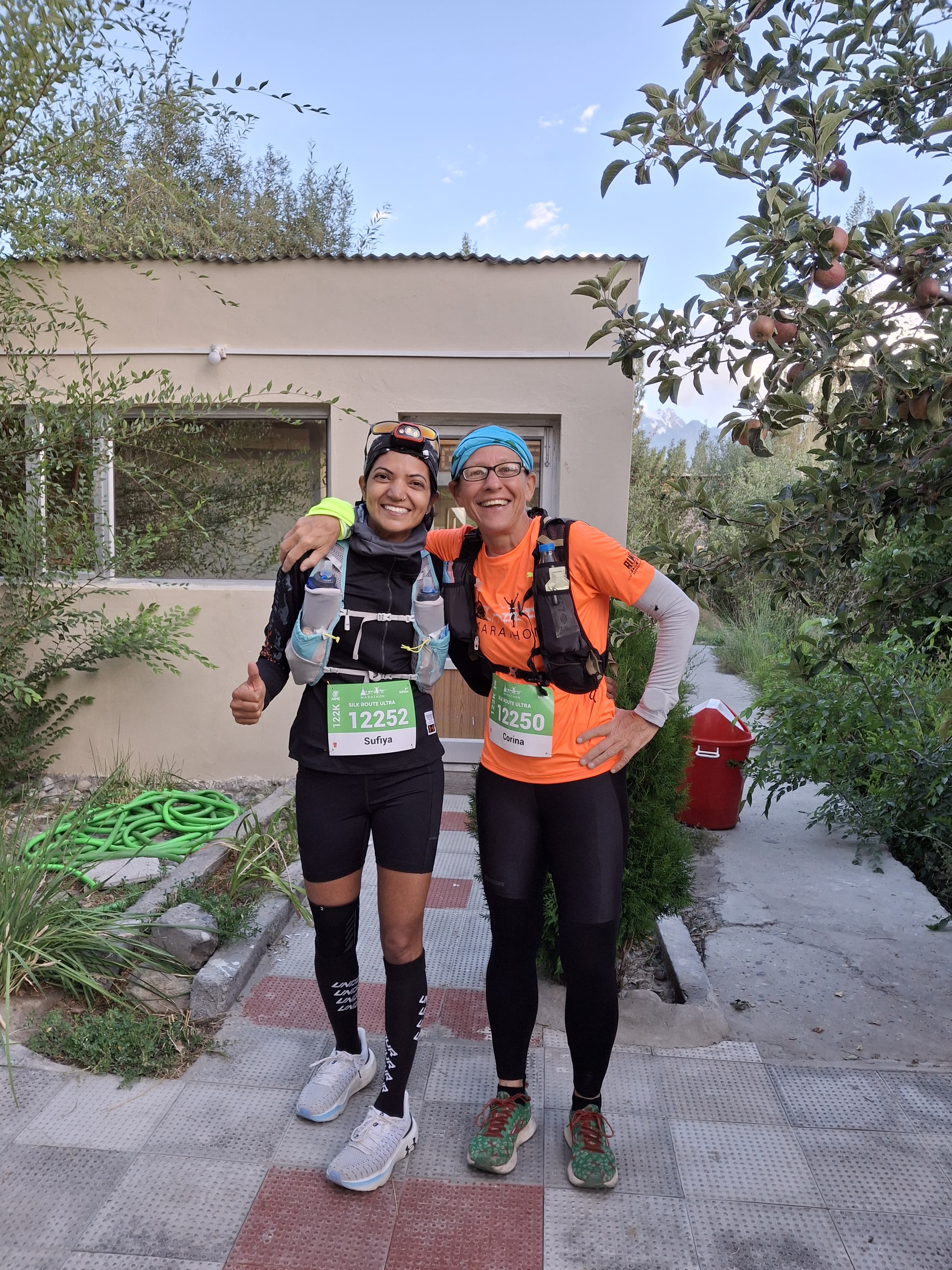
On the day of the race – after a long night’s sleep, a cultural programme and meals that allowed us to load plenty of carbs -, doctors came to check our vitals. I had been nervous about the race. This had now turned into nervousness about the test results. Out of the blue, I had high blood pressure – as did many of us as this seems to be quite usual in the mountains. I tried to relax and make jokes but my blood pressure went up even more. Three of the biggest pieces of garlic I have ever seen and a couple of glasses of lukewarm water, did the trick: my BP came back into normal range. My nervousness was gone, I was just relieved that I could participate.
So, I was a happy woman at the start, without any worry. The race started at 7 pm. Just before sunset. The inhabitants of Tiggur came out of their houses to cheer us on. Pictures were taken, sponsors shot their last videos with willing participants and then we went: off to Leh….! The first 27.6 kilometres are relatively flat and led us through several communities where the villagers welcomed us with apple juice and high fives. As it got dark, we left the villages behind us and each of us got into their own rhythm. I ran ahead of some runners, then they overtook me, I overtook them and settled in running alone as the evening got darker and the stars brighter. The first cut-off was Khalsar. I reached well in time and was happy to have cleared the first hurdle which I knew that not everyone would be able to take.
From Khalsar, the 22.4 km climb towards Khardung village started. The first 12 kilometres were tough as the road was under construction. This slowed me down but there were volunteers with lights at corners and unexpected dark spots, motor bike support and aid stations at seven-kilometre-interval. The temperature was reasonable and when at some point of time, my headlamp refused duty, I enjoyed moving on in the dark under a clear sky. The white lines on the roads were easy to follow and my thoughts drifted while my feet kept on track. I could see Khardung Village from far. It took forever to reach it though….
I arrived in Khardung Village before the Khardung La Challenge was flagged off and with half an hour in hand before the cut off. The otherwise quiet village was bustling with nervous runners. I knew the feeling. I managed to stay ahead of the KC crowd. Behind me I could see a long line of headlamps on the mountain. At some point, the first KC runners started overtaking me: local participants, army personnel and just before K-Top, the elite amateur runners. I cleared the 17.1 km to the unofficial cut off at North Pullu with 45 minutes in hand and even more at the top of Khardung La (another 15.1 km further). After the top, it would be down towards Leh. I knew it would not be easy but soon I would see Leh and then it was just a matter of finishing. I had plenty of time.
My experience in 2022 told me that running from K-top to South Pullu is challenging. Gravity pulls you but the air is thin. Your legs want to go fast but your lungs don’t like it at all. So, I opted for power walking. The sun was shining, my legs felt good, I had enough fuel in the tank and I enjoyed the company of KC runners who slowly caught up with me. Every now and then I had to stop myself because my body had the tendency to move downwards at a faster pace than my legs could carry it. One of my Mumbai Sea Swimmers group members overtook me and that is when I realized that I had a problem. He warned me that my body was tilting to the right. What was he talking about? I walked perfectly straight, I thought. The thought that my brain was not able to register the state of my body was unsettling. He suggested that I adjust so that I would not be taken out of the race. I was not worried about that. My concern was that I could not observe what he observed. In the meantime, I reached South Pullu (14.3 km) and took some rest.
When I peed along the roadside (yes, that is what we do…) I noticed that I was not able to balance myself. Usually during ultra runs, when I squat, I am limited by my rather painful calves, hamstrings and glutes. This time they felt great but I was not able to coordinate my movements. This is when I had my vitals checked. Of course, my oxygen level was lower than usual and my blood pressure a bit higher. But there was nothing that got the army doctors worried. I continued the race but I was not comfortable at all, descending a mountain without being in full control of my body. In front of my eyes, I saw one of the female marathon runners from the first Olympic women’s marathons in 1984. She had zigzagged through the Olympic Stadium and refused support because she felt great. I certainly did not want to finish like that. There and then, I DNF-ed.
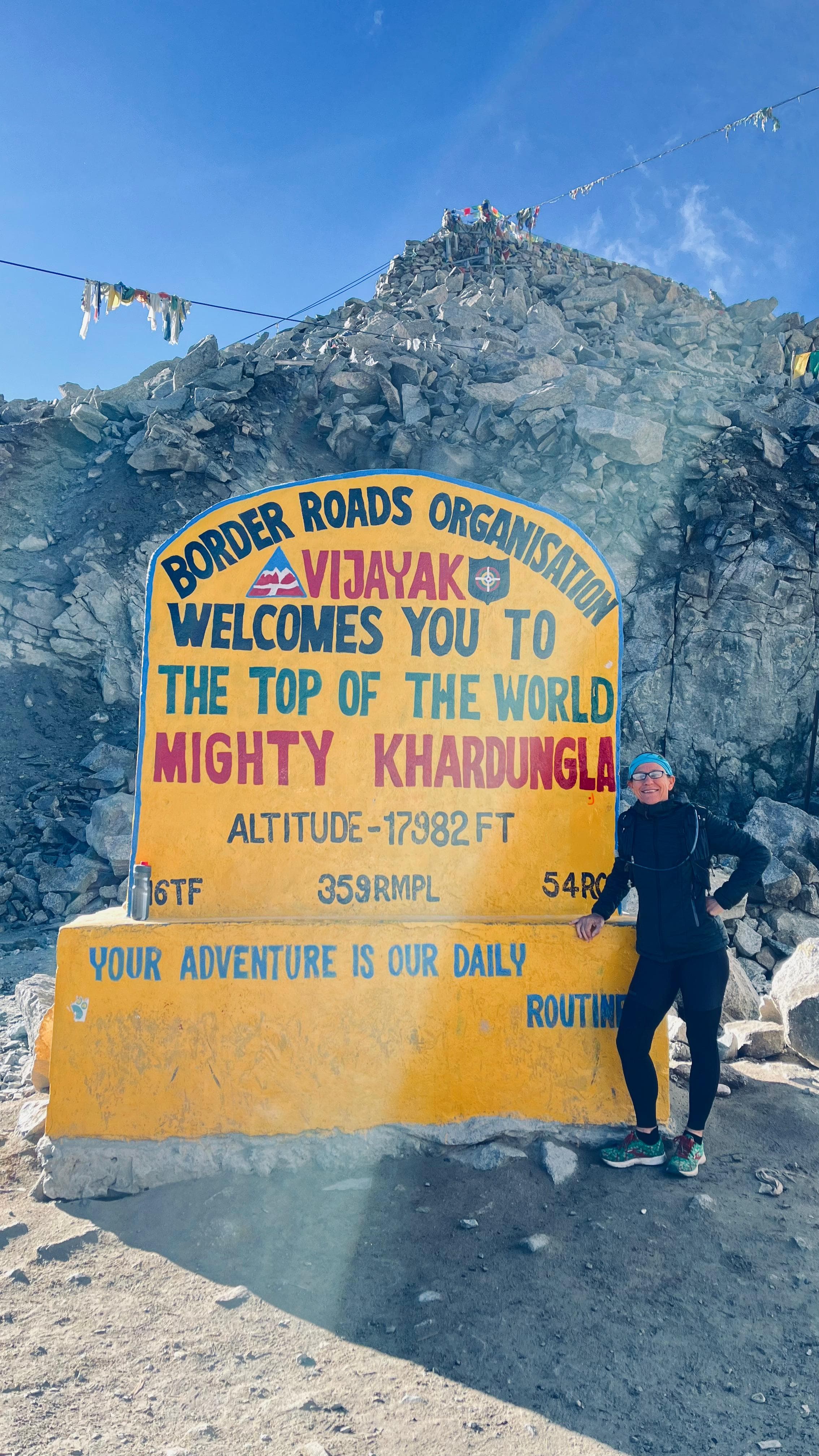
On my way down in the doctors’ car, I noticed that there were many runners with the ` leans’ (it had an unofficial name) and everyone felt fine. I stand behind my decision to withdraw from the race. In the meantime, I have spoken to several other runners. Some have sent me articles; others are still investigating. So far it seems that there is no consensus about what is behind this phenomenon: peripheral fatigue, loss of central motor control because of increased core body temperature, Exercise Associate Hyponatremia (EAH), lack of oxygen, lack of nutrition / hydration. I was surprised that the army doctors in Ladakh did not have an explanation.
At the finish there were people waiting for me, patiently, while I entered Leh through the ` backdoor.’ Some were even more disappointed than I was. They asked me if I have ` unfinished business’ in Ladakh. No, I do not have. I had a great experience and – to be honest – the best part was the climb in the dark……! Signing up for KC or SRU is a commitment. For four months, my life had been about ` running in Ladakh’. Training for an ultra means a huge investment in time and an ultra in the highest mountains, takes even more. And I am not even speaking about the mandatory 10 days holiday that you ` have’ to spend in Ladakh… But these are all thoughts….
In the end, there is nothing better than running the ultras of Ladakh Marathon….!
(The author, Corina Van Dam [Cocky], is a triathlete and a senior official at an NGO, based in Mumbai)
 Outrigger
Cocky you are our hero and star. And star always shine and provide light to others. Love ur zeal n spirit. Good write up. Lots of power from ur peer Jaya