
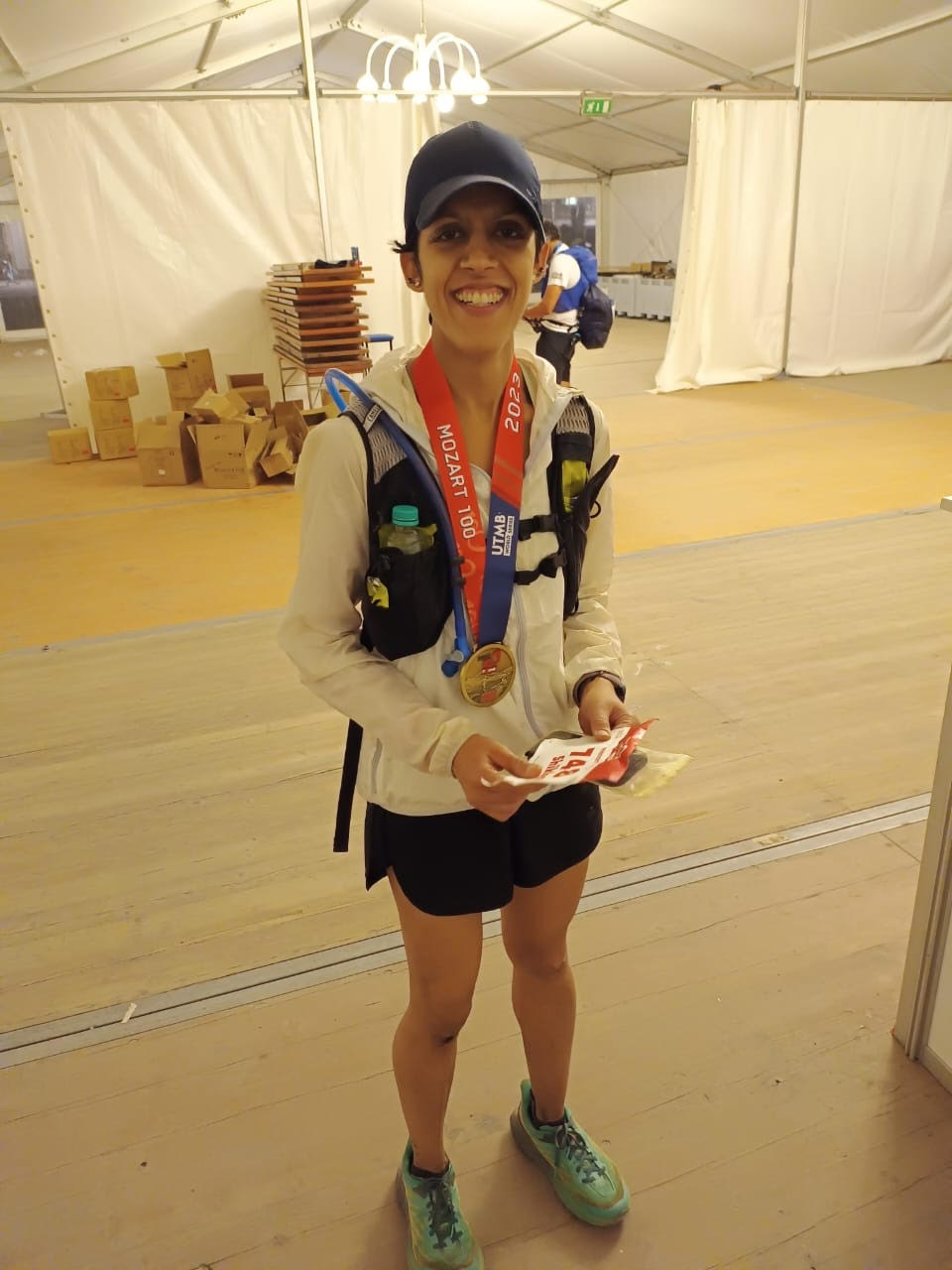
This is an article by invitation. In June 2023, Delhi-based ultrarunner, Shikha Pahwa, participated in the year’s edition of UTMB Mozart 100. She was the lone participant from India and completed the race in 19 hours, 56 minutes and 39 seconds. Herein is Shikha’s account of the run; in her words:
The UTMB Mozart 100 was not on my radar.
It happened by chance.
My plan was to go to Italy and I was looking for a race in or around Italy on very specific dates. The only one I found was Mozart 100 in Salzburg, Austria.
Seen on the race website it looked like an extremely scenic run (this was where The Sound of Music was shot after all). City roads, mountains, river, vast green fields, it had it all; enough to tempt me. Plus, the date was perfect. Looking at the distance options, as usual, I scrolled down to the longest one; 105k it said. Doable I thought. The cut-off was 22 hours which should have made me curious as it seemed liberal compared to some other races but I took it at face value. I knew this was a race with some crazy elevation but what I ignored or rather didn’t understand was the extent of trail and the grade of trail involved. I signed up. It appeared a done deal.
I started training around three months before the race with focus more on mileage. Since Delhi is flat, training for elevation is a challenge. My trainer Krishan Tiwari trained me like he had for the Ladakh runs of the past. There was a lot of resistance training to give the climbing feel, some walking-running with a weighted jacket, in addition to strength training and consecutive long runs. All this in the Delhi summer was completely draining and combined with my regular work, it exhausted me 100 percent. But that’s how ultrarunning (and training) is – never-ending runs irrespective of time, weather and terrain.
Fast forward to race day. I reached the start point at 4:30AM (5AM start). With 700 participants arrived, the place looked like a festival! None of my earlier ultra runs had witnessed such a big crowd and they all looked like experienced trail runners. I was very intimidated and what got me really worried was the one common thing all of them had – trekking poles (the ones used for trail running are light and collapse to really small dimension for ease of carrying).
That was when it hit me that I may have got myself into something I wasn’t ready for. Forget getting poles, I had never used them! I was a 100 per cent road runner, so poles had never been needed. The one trail run I did attempt had featured a technical trail and it had ended up with me injured and a DNF to my credit. I therefore had no fond memories of trail. But now, I was at the start line of my first international race and there was no turning back. The race began and the first few kilometres were flat. It seemed to go well until I saw an arrow indicating a turn into the bushes. And there it began – not flat, not straight…just pure rocky trail.
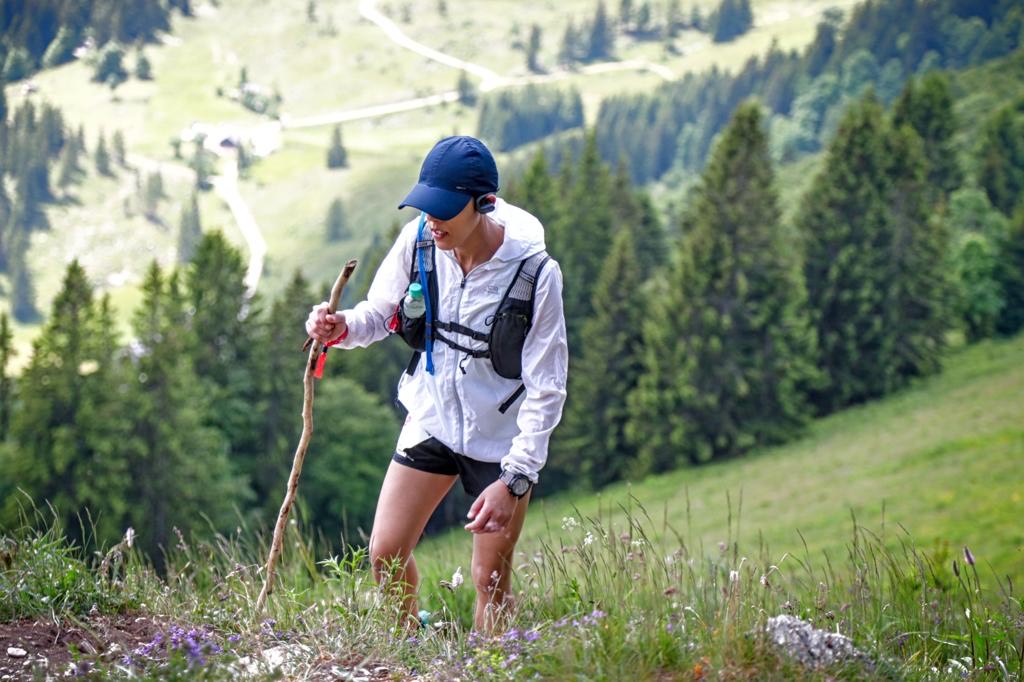
It was a narrow path and the whole lot of us going up on it. So, we had to form a queue. Wherever there was the tiniest space on the sides, some runners would overtake. Gradually the fast runners disappeared from view. Still, more and more people kept overtaking. Their training showed in the way they moved; smooth steps, almost without much thought. Me on the other hand watched every step, holding on to branches to pull myself up where the step was too high. Around four or five kilometres into the trail I realised that I couldn’t keep using my hands for support. I needed to find my version of trekking poles. I picked a stick fallen on the ground. It took me a few attempts to find the right one; right height, weight and grip. It wasn’t perfect but helped. My free hand was still used for extra support of course.
Given 5000 meters elevation for the race, the climbs were intense. This was just the first one, there were eight or nine more. In my mind I assumed there were five in all. I don’t know how I got that but it threw me off when they just kept coming.
Climbing up was hard and although there were faster runners, there were many around me proceeding at a pace similar to mine. So, I wasn’t all that slow. Where I did really feel disadvantaged was in the downhill sections. Usually, downhill is where I make up for lost time (and that’s because I had done mostly road runs). But here it was much slower than the climbs. It was also terrifying as one wrong step could send me rolling down the rocks or into the rocks or worse. The other runners just ran down as I would on road. It showed how experienced they were. I took my time and went as slowly as I needed to go. Others overtaking me at this stage, didn’t matter at all. I was quite okay coming in last as long as I finished without injury. Besides, somehow, I was managing to catch up with the same people on the next climb. It showed, my training did work after all.
A slower pace in this race was not a concern, I just needed to be fast enough to reach the various cut-off points along the course within the set deadline. Failure to do so was an immediate disqualification from the race. So it had to be planned in advance and I had asked my everything-ultrarunning guide Dr. Rajat Chauhan (founder and race director of La Ultra The High) for help. Everything-ultrarunning because he had answers to all the questions, I had about long distance running in the past few years, especially when it came to the whole “ mental preparation’’ bit. He was kind enough to go through the route map in detail and advise on how to pace myself to make it to the finish line in time.
Going one step at a time and pushing myself mentally, I kept moving ahead. Because of the terrain my feet kept twisting to the side. Luckily no injuries there. I did trip three times along the way which gave me bruises on both knees and hands but no internal damage. The bigger problem came once it got dark. Finding my way with just the headlamp required a lot more focus but the fatigue and bruises weren’t allowing me to do so. The downhills looked even more dangerous in the dark. I was left alone after everyone ran down. To make it worse, my headlamp started acting up. It suddenly got dim and I had no backup. It looked like it could die at any point, so I quickened my steps and hoped for the best. Once I got down, there were some people around so I could see better.
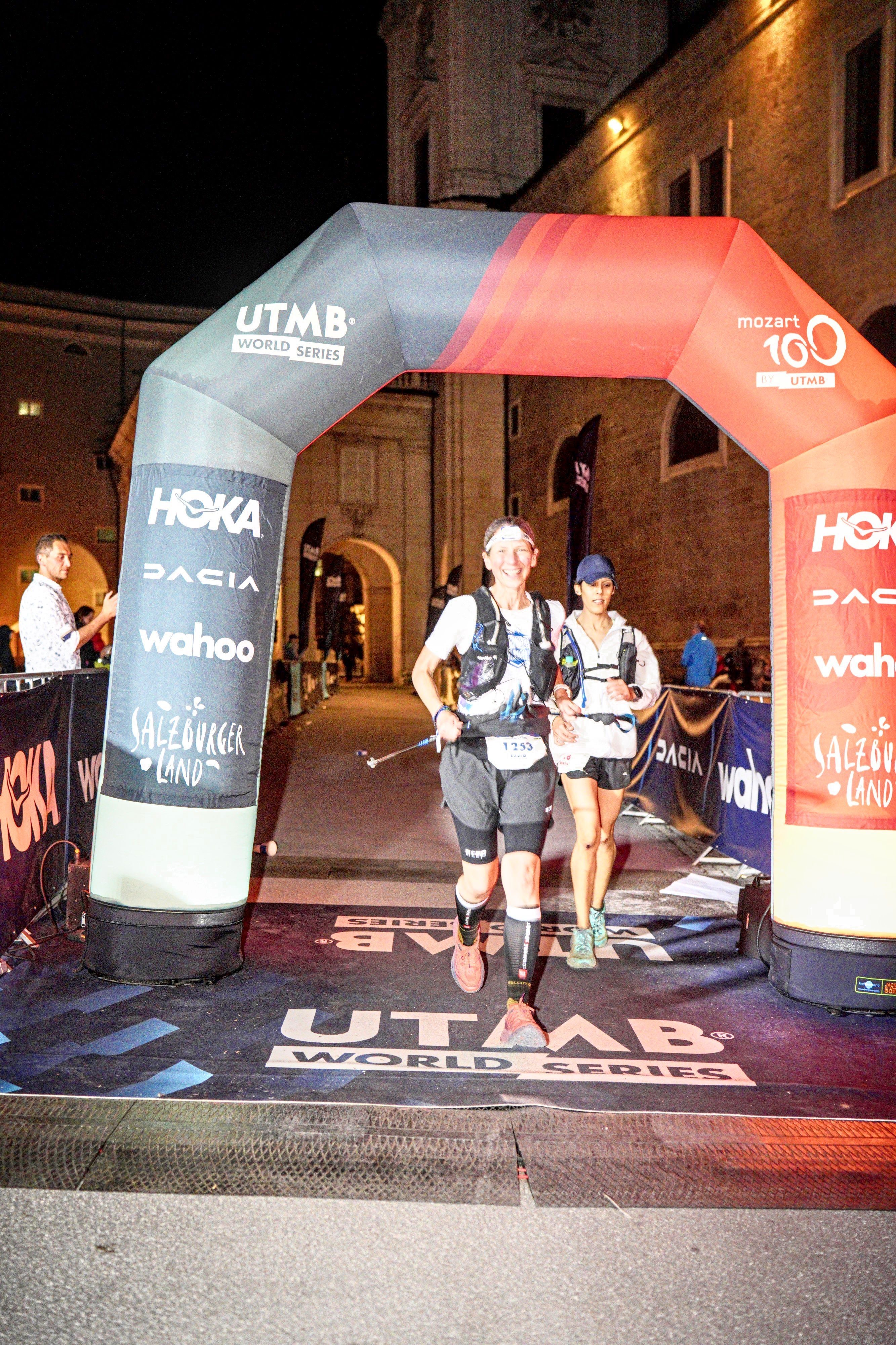
The official race distance was 106 kilometres and according to my watch it wasn’t far. Then I spied a road ahead and an aid station; I could feel the finish coming up. Looking for signs of finish, I started to jog. The road turned into the trees again and up we went! Some more up and down and we returned to a road again. The GPS was off because 106 kilometres was already done for me. Now I could see some signs of finish and hear some people in the distance. Finally, I was closing in on the last stretch and some twists and turns in the road. I found a place to put my stick down. Then, I saw my sister cheering for me, then running behind me and I finally saw the finish line. My watch showed 109 kilometres. It wasn’t a distance I hadn’t done before but this terrain made it ten times harder. It was more of a mental race for me, especially since I wasn’t prepared for it. I was way out of my comfort zone, so a rank of 420 out of 700 and being the only Indian participant felt great.
(The author, Shikha Pahwa, is a Delhi-based entrepreneur and ultrarunner)
 Outrigger