Miho Nakata (This picture was downloaded from the website of International Association of Ultrarunners (IAU) and is being used here for representation purpose. No copyright infringement intended.
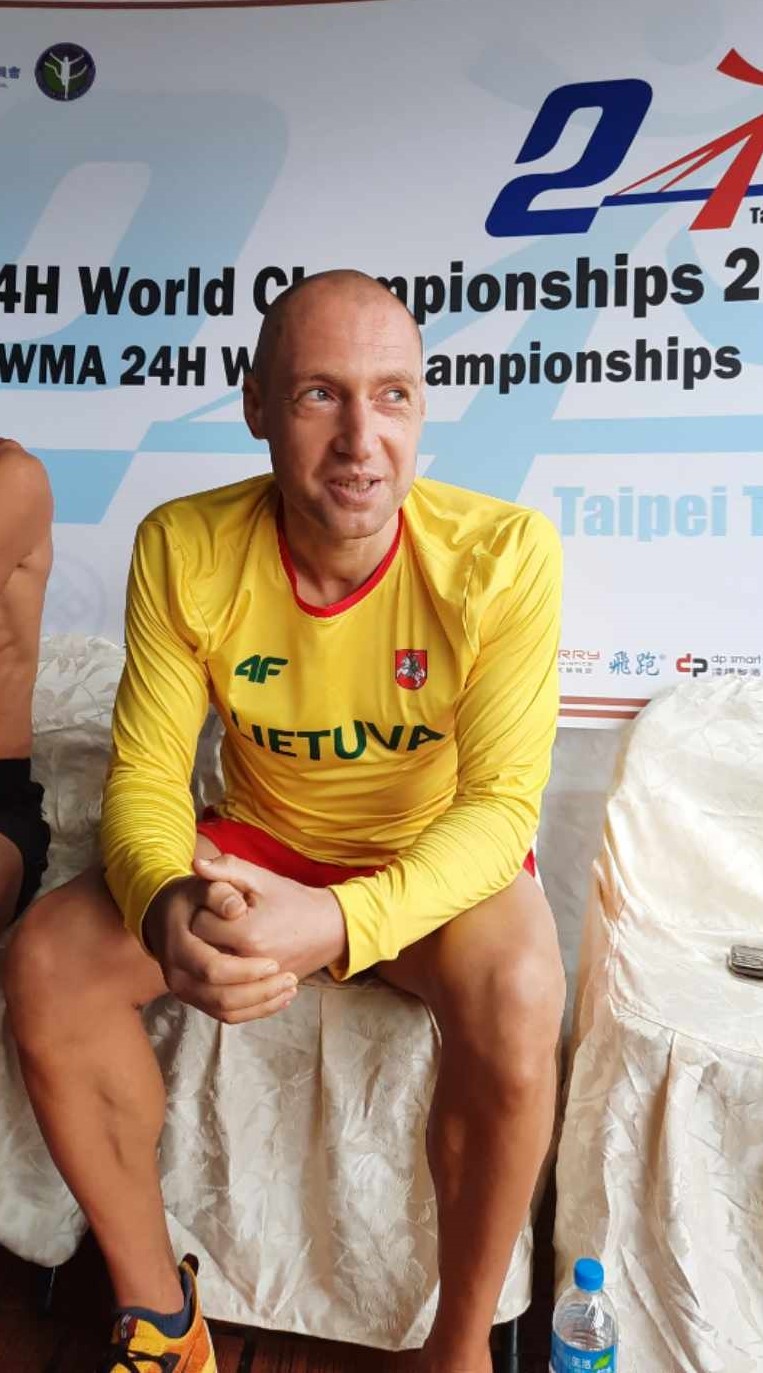
Lithuania’s Aleksandr Sorokin triumphs in the men’s segment
Poland wins women’s team gold, Lithuania in men’s
Indian men’s team finishes ninth, women fifteenth
Japan’s Miho Nakata set a new world record for the 24-hour run at the 2023 IAU 24-Hour World Championships held at Taipei, Taiwan over December 1 and 2.
She covered a distance of 270.363 kilometers during the stipulated 24 hours, breaking the previous record of 270.116 km (provisional) set by Camille Herron in 2019.
Aleksandr Sorokin of Lithuania defended his world champion title winning in the men’s category with a distance of 301.790 km covered. Europe dominated the podium in both team and individual segments.
In team ranking, Poland won the gold in the women’s race with a combined distance of 726.552 km covered. Japan earned silver with a total distance of 702.911 km while Czech Republic took the bronze with an aggregate distance of 697.275 km covered by its best performing three runners during the 24 hour-period.
In the men’s race, Lithuania won the gold with a combined distance of 813.368 km followed by Poland (787.964 km) and Great Britain and Northern Ireland with a distance of 771.794 km.
In the women’s individual category, Olena Shevchenko of Ukraine (254.463 km) finished second to win silver and Partycja Bereznowska (249.541 km) of Poland, the bronze.
Aleksandr Sorokin (this photo was downloaded from the website of IAU and is being used here for representation purpose. No copyright infringement intended)
In the men’s individual category, Fotios Zisimopoulos of Greece (292.254 km) took the silver and Andrii Tkachuk (284.540 km), the bronze.
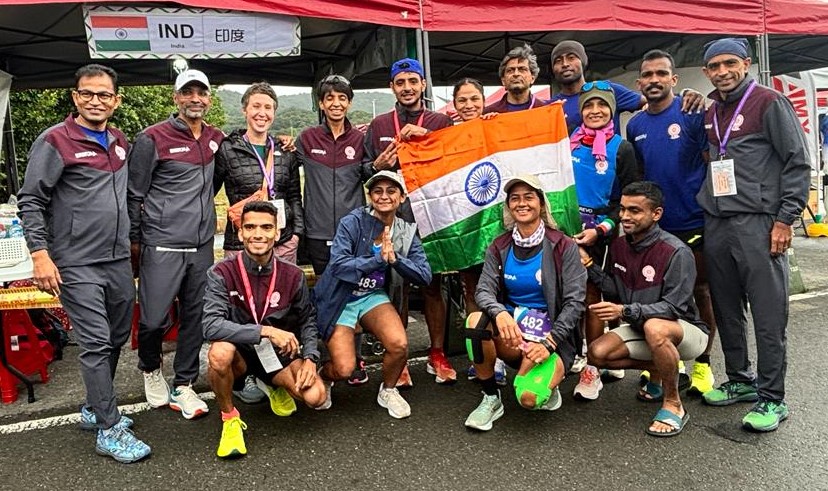
The Indian men’s team finished in ninth position with a combined distance of 691.849 km. The women’s team finished fifteenth with a total distance of 540.964.
Amar Singh Devanda was topped among Indian runners covering a distance of 236.800 km in the assigned 24 hours. Saurav Ranjan was second with a distance of 228 km and Ullas Narayana, third with a distance of 226 km.
Among Indian women, Anju Saini topped with 186.252 km covered in 24 hours. Anju holds the national record for the 24-hour segment. She had set that record of 204.314 km at the IAU 24 Hour Asia & Oceania Championships, 2022, held at Bengaluru. Shashi Mehta was second among Indian women with a distance of 182.632 km. Priyanka Bhatt was third with a distance of 172.080 km.
“ My race usually starts in the last six hours of the 24 hours. But here in Taipei, the weather took a turn for the worse. At the start of the race, it was windy. The sun was hidden behind a thick layer of clouds. After a few hours it started drizzling but humidity stayed high,” Anju told this blog.
By the evening of December 1, the rains turned heavy and were accompanied by strong winds. “ I started to get fever and body ache. It was very tough for most runners. Many runners gave up the race,” she said.
Anju herself considered quitting many times but was convinced by the team manager to keep going. “ I also had blisters on my feet as my shoes were wet. I changed my shoes twice but to no avail,” she said.
“ We had trained for a completely different weather scenario in Taiwan,” she said.
The Indian team (photo: courtesy Santhosh Padmanabhan)
According to the Indian team manager Santhosh Padmanabhan, the weather conditions were tougher than expected. “ It was cold and windy with rain while we came prepared for heat and humidity,” he said.
The Indian team’s performance – both men’s and women’s – was historic as the men’s team broke into the top 10 and the women into the top 15 at a world championship, he said.
“ The best part of the Indian team’s performance was that none of the runners gave up despite difficult conditions,” Anju said.
“ This is a big learning experience for us. We will take the learnings from this race and come back stronger,” Santhosh said.
(The author, Latha Venkatraman, is an independent journalist based in Mumbai. All distances given are provisional)
For Ashish Kasodekar, this was the case with a project he undertook in late 2021.
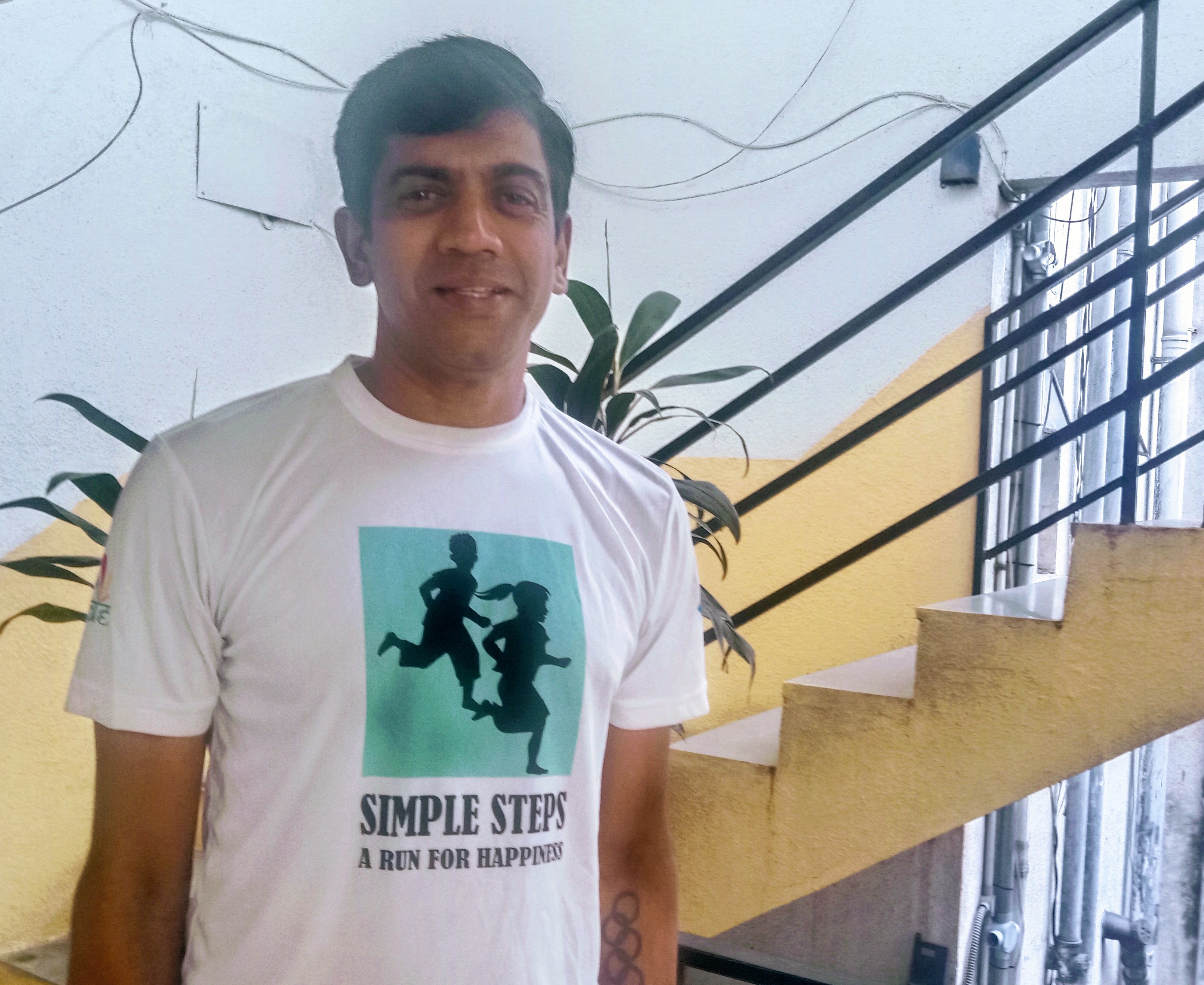
Starting November 28 that year, he had run 61 marathons over 61 consecutive days. The venue was Pune University. A route had been fleshed out on its campus and eight loops of it was equal to a marathon. Few would have doubted Ashish’s capacity to complete the project; he is among the best-known ultrarunners from India. What amazed Ashish and fuelled his motivation for those two months was the support provided by others who turned up to run and keep him company. In November 2021, the pandemic was still a recent phenomenon and restrictions hadn’t been relaxed fully. Yet people arrived. Their presence gave Ashish, who was running the same five kilometre-loop for two months, something to look forward to, every day. He recalls that in that period, never once did he require a morning alarm to wake up and go to the venue. The motivation level was that good. “ It was the most beautiful thing in my life,’’ he said of the project, which showed him what a supportive human community meant. For the purpose of Guinness Records, the number of days and marathons was kept as 60 (the previous record at that time was 59). The additional one day of running was a case of testing himself after the 60 day-period.
From the impression this project left in Ashish’s mind, was born another – a quest to link a low point in geography to a high point. Initially, he imagined the run on a grand – maybe even, audacious – scale. He could try running from the Dead Sea in West Asia (it is bordered by Jordan, Israel and Palestine’s West Bank) to the Himalaya in South Asia. At over 1400 feet below sea level, the shores of the Dead Sea represent the lowest elevation on land on the planet while the Himalaya hosts its highest peaks. He also saw in the play of words framing the project, a segway to addressing the issue of mental depression, a condition spoken of as perhaps the most widespread problem of our troubled times. “ I wasn’t expecting anyone to be cured and feeling high at the end of such a long run. I was hoping, I could convince people to enjoy the running and enjoy the passage from a low point to a high,’’ Ashish said. Physical activity like running is known to release endorphins that contribute to an improved sense of well-being. As Ashish’s project encountered reality, the angle around mental wellbeing, survived. The one attempting to connect Dead Sea and the Himalaya, stayed still born. There was a reason for it.
Ashish progressively realized that the route spanning half a continent, was a political minefield. He would be running through countries that had experienced conflict or were still trapped in conflict and by the time he reached Pakistan, there would be the frosty, unpredictable ties between India and Pakistan to negotiate. True, a project of this sort may help set a new tone for politics and understanding between people but the variables over such a long and volatile route were too many. For instance, at the time he thought of the project, Ashish didn’t have reason to worry excessively about the Levant. By October 2023, there was full scale confrontation between Israel’s armed forces and Hamas.
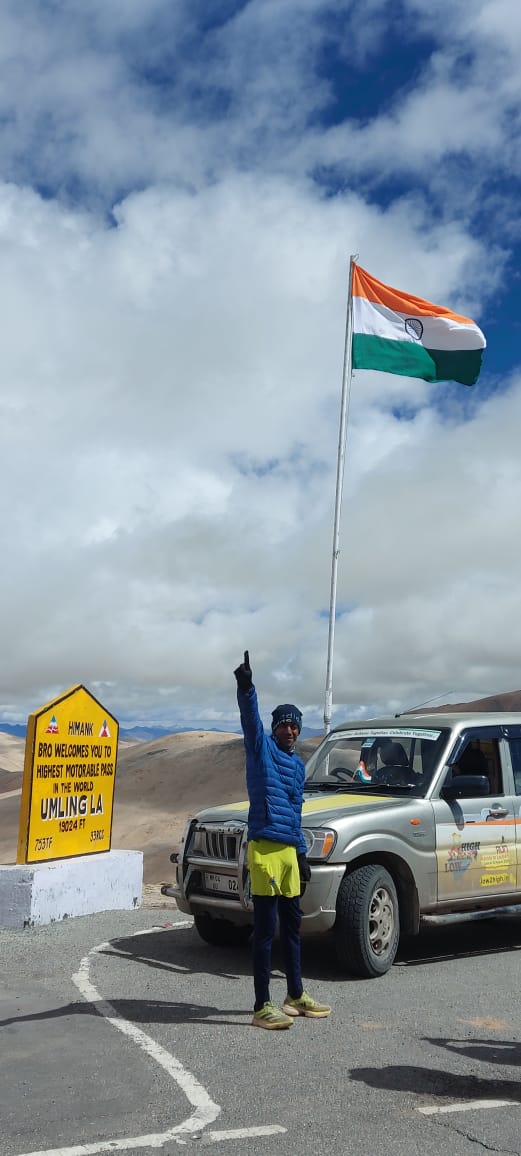
Ashish’s project didn’t die. Instead, after his run at the 2022 Badwater Ultramarathon in the US, Low2High (as the project came to be called) got underway in a different format. To begin with, there appeared to be no problem accessing the Himalaya in India or Nepal. So, the aspect of “ high’’ was trouble-free. “ Low’’ demanded reimagination. For the lowest point in geography, Ashish decided to search within India. West Asia’s Dead Sea was thus replaced with Kerala’s Kuttanad, which is officially the region with least elevation in India. Located in central Kerala and long famed for its paddy cultivation, Kuttanad is among the few places in the world where farming happens four to ten feet below sea level. It was decided to run from Kuttanad to Umling La in Ladakh, which at 19,024 feet is currently the highest motorable pass in the world. It was also decided to cover the distance in 76 days, so that the finish coincided with India’s 76th Independence Day on August 15, 2023. Alongside, an app was designed whereby in a repeat of the community support Ashish had enjoyed in his project of 61 marathons in 61 days, a host of people who downloaded the app were visualized aggregating 76 lakh kilometres in their daily exercise sessions. The ambitious figure of 76 lakh kilometres didn’t have to come via running alone. It could be from walking, jogging or cycling – the idea being to create a mutually engaged, supportive ecosystem for the duration of the project. The punchline was: be together, achieve together and celebrate together, all of it couched in the larger paradigm of a nation being fit if each one is physically fit.
Ashish’s own target of 76 days to project-completion required him to cover 55 kilometres every day and repeat it daily without a break. Given his background in ultrarunning, both seemed doable. Prior to this project, Ashish had – among major events – run the 333km and 555km races of La Ultra The High, Brazil 135, Badwater 135 and the 61×61 event at Pune University. Ashish commenced Low2High from Kainakary in Kuttanad, on June 1, 2023. Traditionally, that is the day when the south west monsoon hits India, the southern tip of Kerala being where it manifests first. In 2023, the onset of the annual rains (Kerala has two seasons of it every year) was tad delayed. But the pre-monsoon build-up was palpable and the early days of the run were wrapped in heat and humidity (pre-monsoon-Kerala can be quite humid). As Ashish ran northward, the monsoon slowly caught up from behind. The first rain he experienced on the run, struck in Karnataka on June 11; it poured. He did 50-55 kilometres in that weather. Ashish’s daily schedule was simple. He would start running by about 6AM; after 10 kilometres he would take a tea-break, after 21 kilometres there would be breakfast. Lunch was at around 1.30PM. He would conclude his run by 4PM. It was a mix of running and walking. By 10PM, he would go to sleep. For the first 25-30 days, he covered roughly 60 kilometres every day. Twenty three days after starting from Kainakary in Kuttanad, Ashish reached Pune, his home town.
At Umling La (photo: courtesy Ashish Kasodekar)
Each place he passed through, left an impression. Kerala was generally clean with good local roads to run on but irritated in the early stages of the journey with its heavy traffic. In Maharashtra, traffic made the Thane-Ghodbunder stretch tough. “ Haryana was action packed. Everyone wanted to know what I was trying to do,’’ Ashish said. There were minor physical problems. After 40-45 days of running, one evening, there was pain in his leg. It was tackled. For three days, in the wake of that leg pain, he opted to walk 50 kilometres. He had an ice bath every day. The support team traveling alongside in a vehicle found a place to stay and secured the ice. His support team included his younger brother Amit, Rishikesh Gaikwad and Harikrishnan Damalpati. Every 15 days, Ashish did a medical test. Electrolyte levels and kidney functioning were checked. Along the way, there were social engagements too. Ashish and his team distributed 35 fitness kits (each contained items like footballs and skipping ropes) to various schools; they also gave talks. By the time Ashish reached Punjab, the heavy rains that caused havoc in Himachal Pradesh in 2023, had happened. His route had to be reconfigured here and there depending on road condition and which roads stayed open. He reached Umling La on schedule, on August 15, having covered 4003 kilometres in 76 days. Notes kept by the team show that almost half the distance covered was on NH48. Second was NH3 with roughly 450 kilometres. The notes also reveal the team’s frustration with traffic at various points.
Project Low2High lived up to expectations. Except perhaps in one department – the app found roughly 8000 subscribers and their cumulative mileage was quite short of the 76 lakh kilometres originally envisaged. However, the real take away from Low2High is the template and ideation (for example, within Kerala itself, runners could imagine linking Kuttanad to the highlands of Idukki). As Ashish pointed out, his interactions with people during the journey told him that when it came to fitness, everyone from an IT professional to a truck driver, faced the same challenge of not having the time for exercise or lacking motivation for the same. With an engaging journey for central theme and the model of a community motivated enough to keep him company, he believes he can contribute his bit to get people moving.
It was early October, 2023. “ So, what’s next?’’ I asked as we reached the end of our chat, at his house in Pune.
“ I would like to try the Barkley Marathon,’’ Ashish said referring to the race in Tennessee, rated as a difficult ultramarathon with a history of few finishers.
(The author, Shyam G Menon, is a freelance journalist based in Mumbai)


 Outrigger