
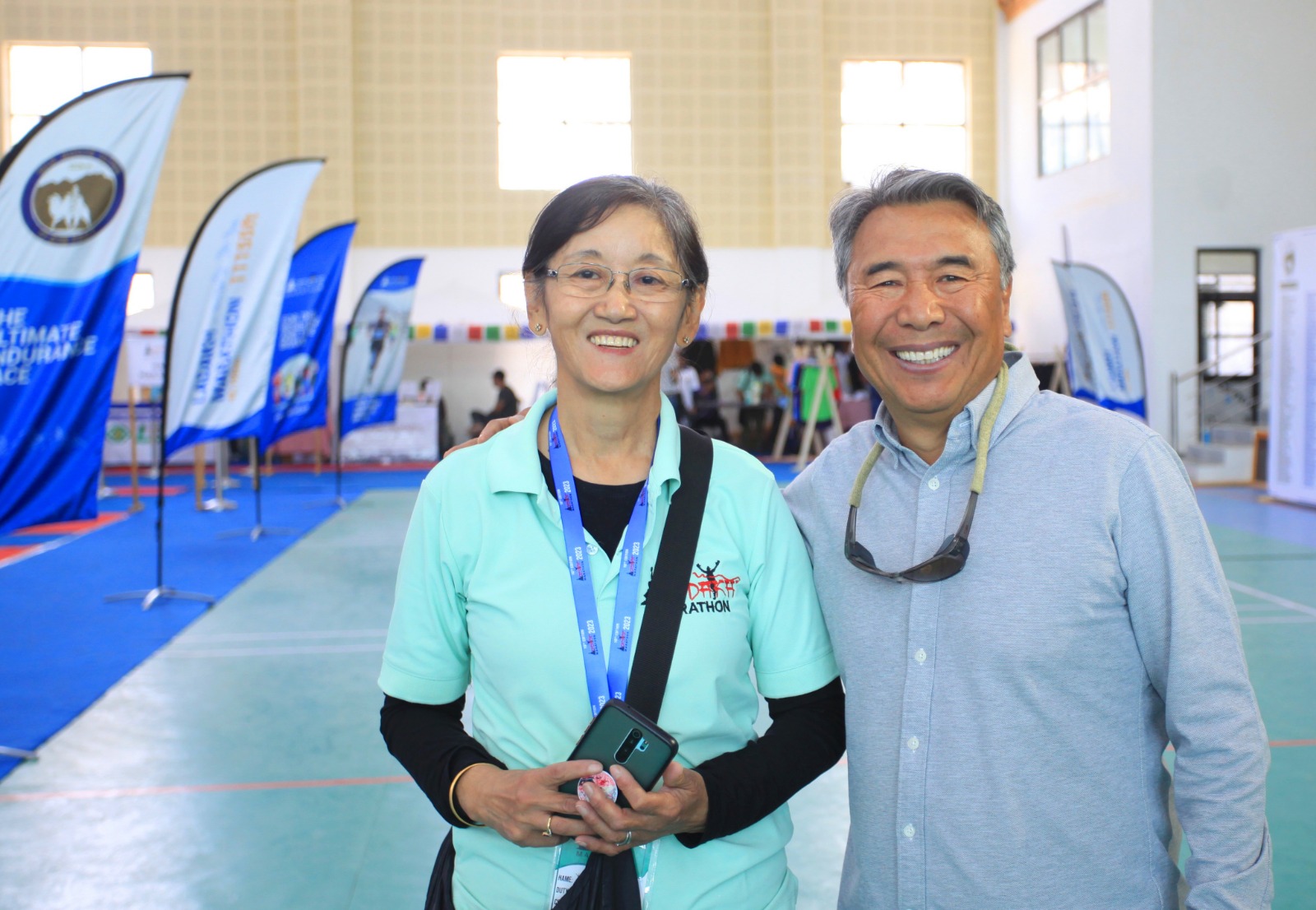
Going into the annual Ladakh Marathon, Chewang Motup’s big worry had been the impact high altitude may have on those who arrived for the event’s races.
He kept reminding participants of the need to respect acclimatization protocols. As race director, he experiences the tension that nearly 6000 people congregating for the four day-event and the potential of non-Ladakhis in the fray acquiring altitude related illness, bring. The event’s races happen across altitudes spanning Leh’s 11,500 feet to the 17,618 feet of Khardung La, among the world’s highest motorable passes. As altitude rises, oxygen level in the atmosphere reduces making athletic performance tougher. In this context, the problems organizers face (as mentioned in an earlier article on this blog) are several. There are participants who don’t disclose pre-existing medical conditions, which could worsen at altitude. To get used to functioning at altitude, some days dedicated to the purpose, including rest therein, is essential. But there are those who think that protocols for acclimatization are unimportant and treat it lightly. As this writer noticed, runners arrive late and insist on getting bibs. Friends reached early try collecting bibs for those unable to reach Leh on time. It provokes arguments, for collection of bibs in person and on time are the primary means by which organizers stay convinced (to the extent possible) that protocols are being followed.
Making matters worse, there is no hesitation on the part of some runners in throwing their weight around. Position, status, importance of self – all these come into play even as organizers emphasize that the acclimatization protocols are in place to protect participants. Holding one’s ground against such negotiators is tough. Thanks to the safety measures the organizers must take and the lengthier duration of stay demanded (due to acclimatization protocols), the Ladakh Marathon is an expensive affair. Those who paid money and registered, try to ensure money’s worth. It reminds of an Everest expedition (albeit on a much smaller scale), where the hunger for achievement risks trumping reality. It will be so unless there is awareness and ownership among runners of what they are getting into. In other words, a race at high altitude is very dissimilar to a race in the plains.
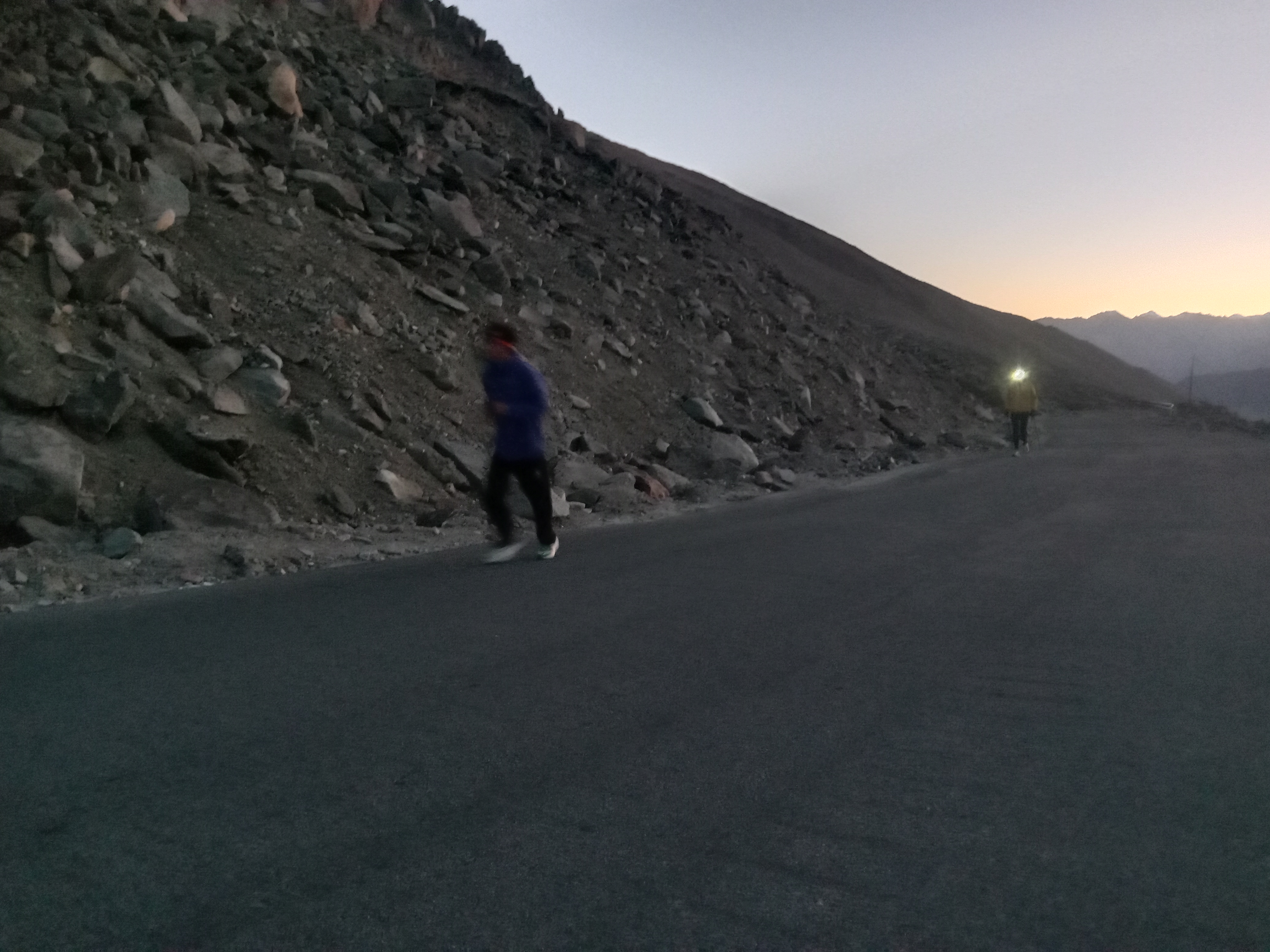
Unlike events at low altitude, where laxity may be accommodated without any grave consequences to one’s health, at high altitude, poor acclimatization and subsequent ailments can result in death if medical intervention is not quick. There is thus a greater degree of responsibility expected on the part of participants, as regards events at high altitude. On the last day of the marathon expo (it is where racers collect their bibs), Motup was heard telling a participant pleading for relaxation of rules around bib collection, “ I am sorry, we are now very close to the race. I can’t give the bib to someone else and without seeing you in person. Don’t tell me how supremely fit you are or what your past record at races is. I have people working for me who climbed Everest multiple times. And yet, each of them has no option but to follow protocols when freshly coming to high altitude.’’ Besides being race director of Ladakh Marathon, Motup also owns Rimo Expeditions, one of the biggest adventure travel companies in India.
To complicate things, health problems experienced at high altitude are still a subject of study in medicine. Not only does each person seem to take differently to altitude but the same person needn’t have the same response to altitude, always. Even if protocols are met, things may go wrong depending on variables ranging from conditions on race day to the physical and mental state of a participant at that instance. While this can easily strengthen the lobby trivializing acclimatization protocols, fact is – all the precautions taken and safety measures met, matter in the analysis of a mishap. Documented evidence is vital. This is among reasons why race organizers insist on protocols being followed. This is why they feel beleaguered when runners argue on critical topics like protocols around acclimatization. “ My conclusion is that runners are taking altitude lightly,’’ Motup said.
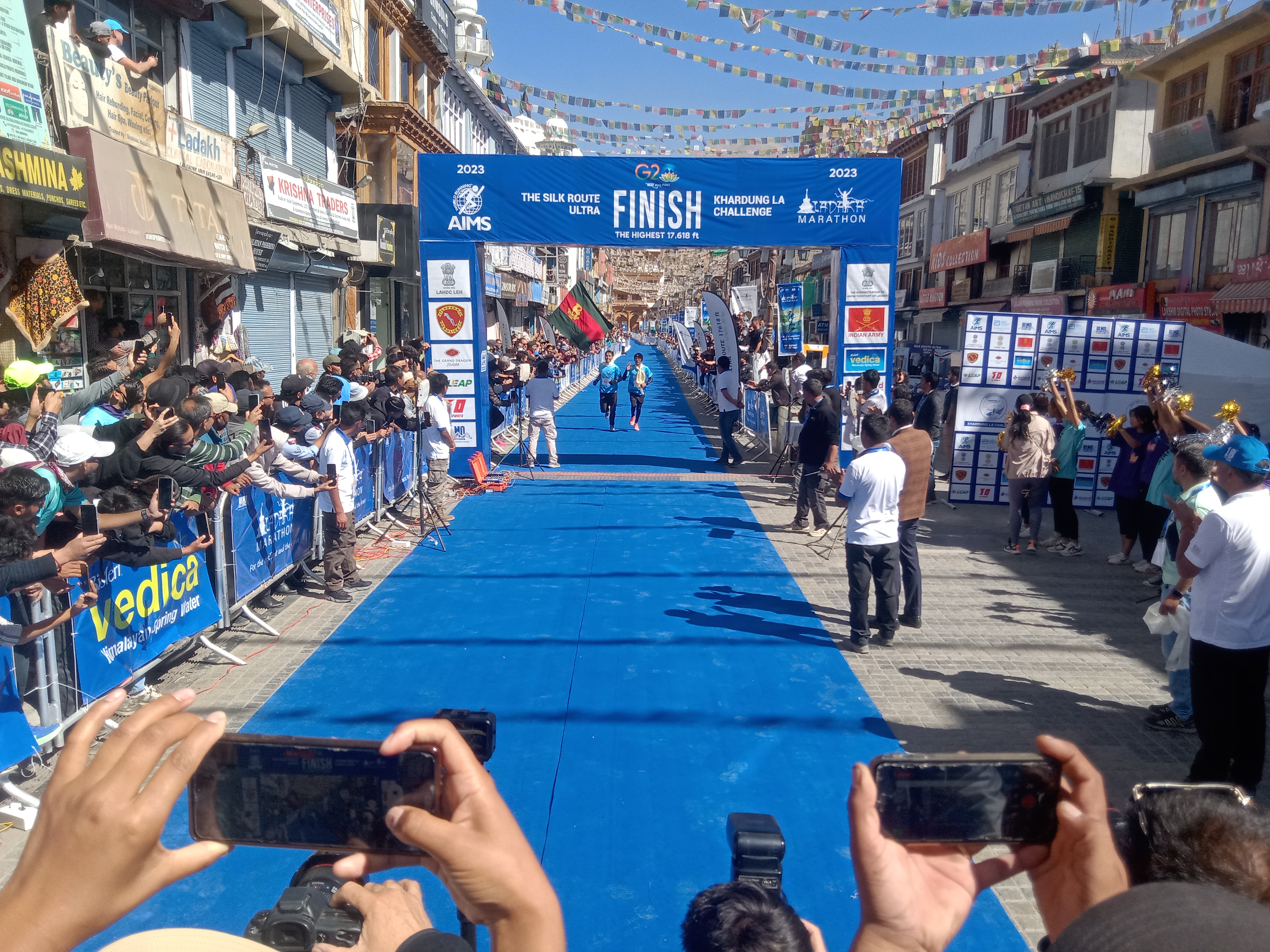
Two days after the 2023 edition of the Ladakh Marathon had concluded, this writer met Motup for a post-race chat. The stress he had accumulated dealing with the event and its participants, was still only working its way off. As with previous editions (the event is now a decade old), the 2023 race witnessed no fatal incident on its course. In the run-up to the event, a lady who had come to run the half marathon collapsed at dinner and died, in Leh (11,500 feet elevation). In another incident, a runner who completed the half marathon in Leh, passed away after reaching home in Mumbai. Whether high altitude had any role to play in these unfortunate demises, we may never know. Ahead of the Silk Route Ultra-runners setting off for Kyagar (start line of the race), there was a session by a high-altitude medicine specialist, on the challenges of performing in such rarefied atmosphere. Including what distress calls from the body to stay alert for and when to call it quits. The session concluded with a moment of silence to pay respects to one of the departed. On race day, the two ultramarathons within the Ladakh Marathon fold (Silk Route Ultra and Khardung La Challenge, both of which touch heights exceeding 17,500 feet), witnessed a few worrisome incidents. Luckily, none were fatal. Ambulances were nearby and people could be evacuated in time. Besides ambulances on the ready, the Ladakh Marathon also keeps a helicopter on stand by for speedy medical intervention.
With roots in mountaineering, Motup looks at high altitude and performance at high altitude through eyes forged in that sport. He has been involved with numerous climbing expeditions (some of them research expeditions as well) and is currently the president of the prestigious Himalayan Club. Rimo Expeditions have been guides and providers of support for many high-altitude mountaineering expeditions, all along the Indian and Nepal Himalaya and that part of the Karakoram ranges which fall in India. Motup speaks from experience. For the 2024 edition of the Ladakh Marathon, he said that he would like to see runners showing greater respect for acclimatization protocols. There will be reduced room for any special considerations. Bibs may have to be collected in person, on time. On the race front, a degree of self-support – mainly the use of hydration packs – may be made compulsory in the two ultramarathons. Since the hosts must set an example themselves, Ladakhi ultrarunners, who have so far run the ultramarathons like an extended marathon, counting on aid stations for water and nutrition, may be told to start getting acquainted with hydration packs. The organizers may look to acquire chip-based tracking devices that allow them to monitor runners’ progress and act quickly if anyone is suspected to be in trouble. And in 2024, the tiered start of the Silk Route Ultra seen so far (in 2023, the elites commenced their run one and a half hours after the rest of the field had started) may be replaced by a single, consolidated start.
Motup also explained why he doesn’t support the oft heard demand for relaxed stage cut-off in the Silk Route Ultra. At 122 km, plenty of uphill, the Khardung La pass to cross and stage cut-offs that continue to challenge despite being eased a bit in 2023, the Silk Route Ultra is a pretty difficult undertaking for any runner. As Motup pointed out, a longer stage cut off simply keeps a participant at high altitude for a longer period of time. Being at high altitude and straining there anyway damages the human body. At the same time, high altitude with its accompaniment of reduced oxygen level, is not apt ambiance for the body to heal. So, longer exposure to high altitude is simply an invitation to worsen matters. This is why it’s so much better to prepare well for the race at more hospitable altitudes, follow acclimatization protocols in Ladakh, take a reasonable shot at performing in the high-altitude race and not stay around for too long in the risky heights of the course. At this point, as a matter of fairness, it should be mentioned that race arrangements must also stay sensitive to the need for runners avoiding long stays in truly high portions of the course. In 2023, for instance, some runners told this blog of a lack of order and retrievability in how drop bags were stored at one of the really high aid stations. It caused a delay in locating bags. They wanted such details improved.
Motup said that in his estimation, the presence of high altitude as its distinguishing feature, rendered the Ladakh Marathon an event with limited comparable brethren to consider for benchmark, when it came to deciding eligibility for participation. Elevation may be piled on by doing gradients at lower altitude but Ladakh’s high altitude (and its dry weather) or the altitude of Khardung La cannot be easily replicated. Finding exactly similar races to qualify for the races at Ladakh Marathon, is difficult. He said that over time, he may look to eligibility being decided by races within the Ladakh Marathon fold. Thus, performance at the Ladakh Marathon (42 km) may be used to decide eligibility for the Khardung La Challenge (72 km), which in turn may be treated as eligibility for the Silk Route Ultra (122 km). Motup found this reliable and safe to decide eligibility as these races are happening in the same overall high-altitude ecosystem and near similar sub-ecosystems. “ I think someone doing the Khardung La Challenge in under 11 hours could be considered for the Silk Route Ultra. Someone completing KC in under 10 hours, even more so ‘’ he said. However, asked about trail races, Motup said that while he would love to see Ladakhi runners take on trail based-events elsewhere, hosting a trail race in Ladakh would be quite challenging as off-road medical and search and rescue capabilities in Ladakh are not as evolved as they are, overseas. For now, sticking to the road made sense.
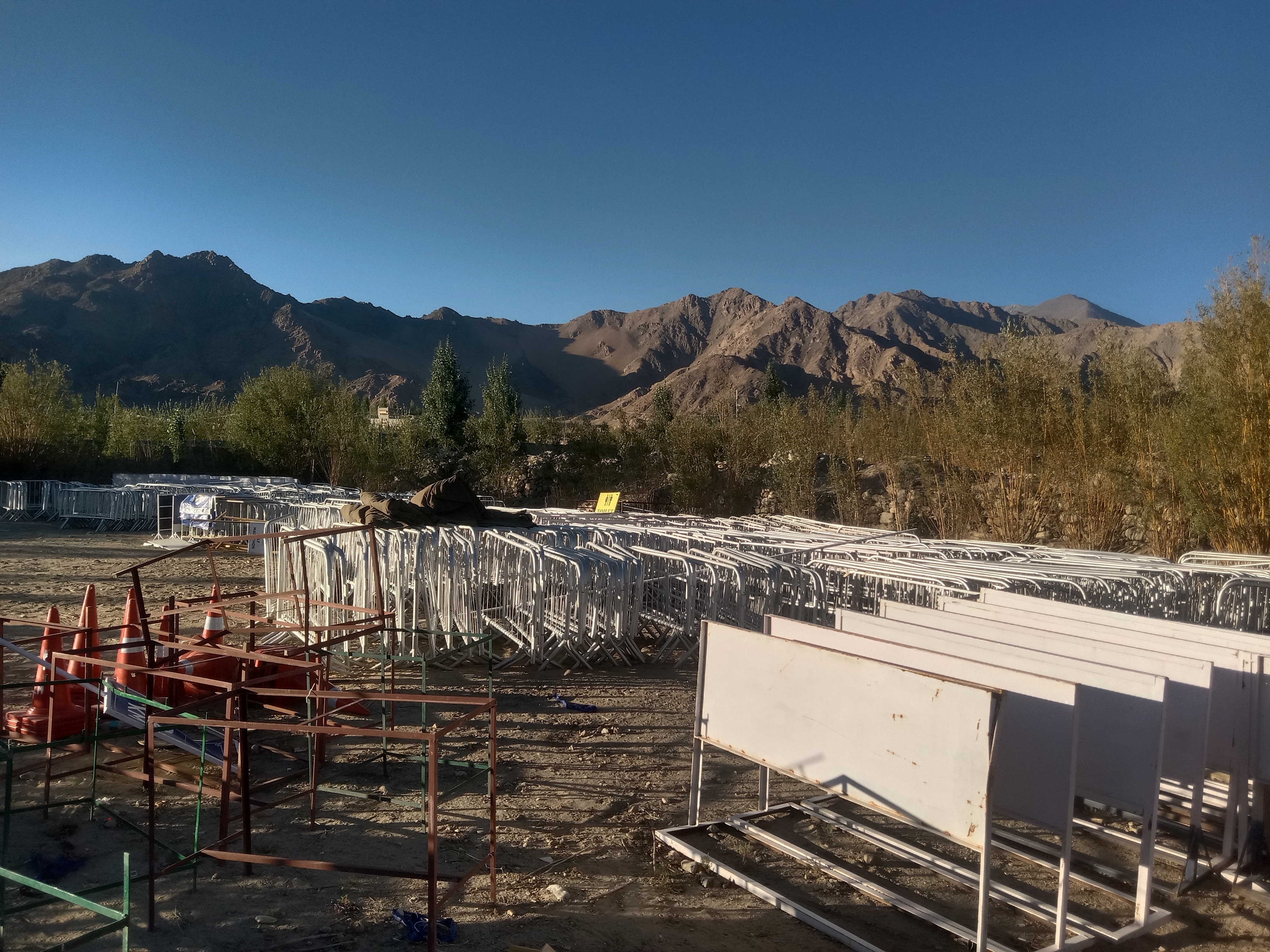
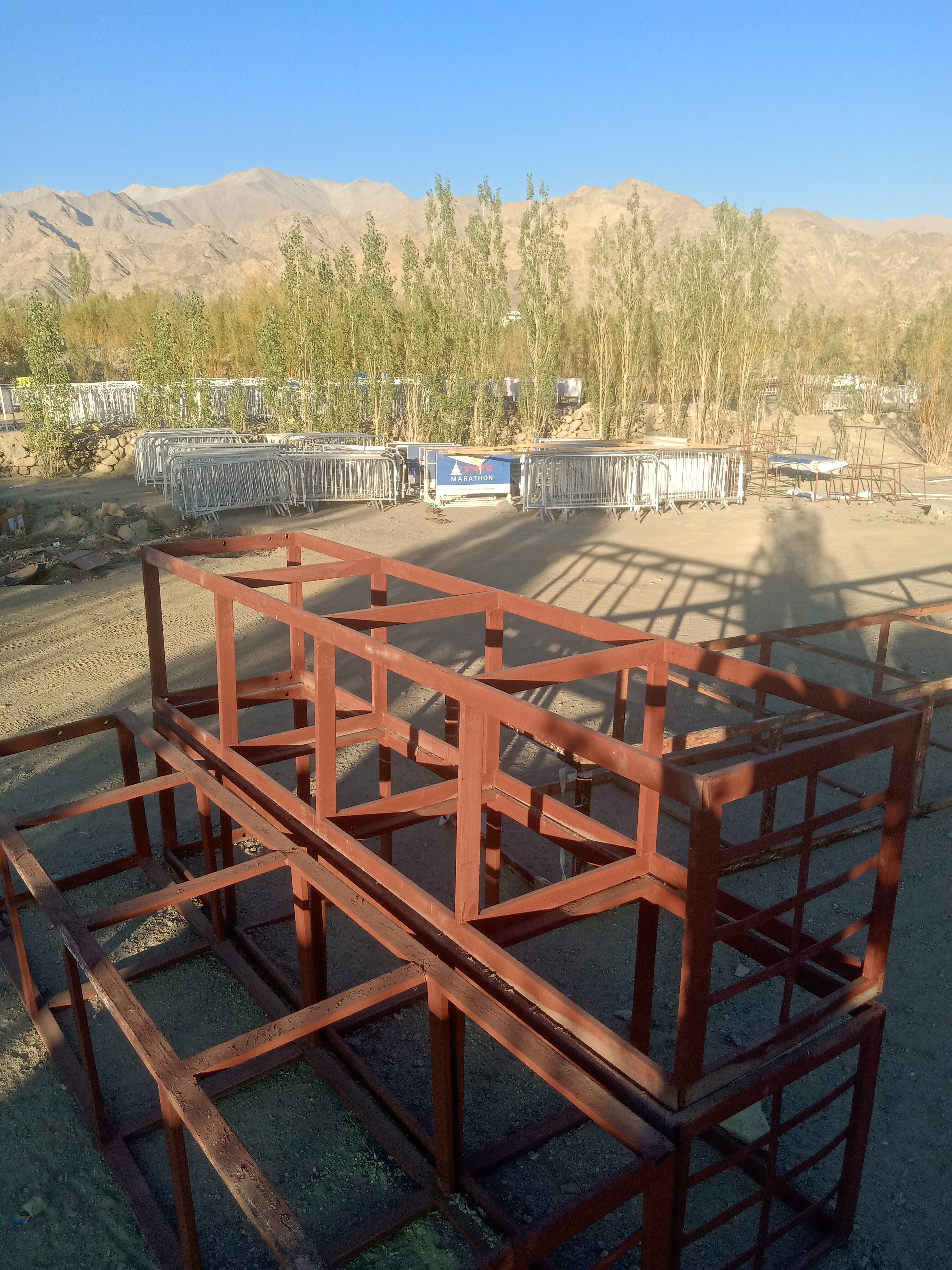
The evening of September 13, a day after the post-race chat with Motup, this writer beheld a large yard (owned by Rimo) in Shey village, where the Ladakh Marathon had come to hibernate till 2024. Hundreds of road dividers fabricated from metal arranged in rows, stacks of traffic cones, the metal framework of tables and arches and plenty of signages bore testimony to the groundwork the organizers had put in for over ten years. All, the physical infrastructure of a marathon; they basked in Ladakh’s evening sunshine, counting the days to another edition of India’s premier running festival at high altitude.
(The author, Shyam G Menon, is a freelance journalist based in Mumbai.)
 Outrigger