JUST MERCY

This image was downloaded from the film’s Facebook page and is being used here for representation purpose. No copyright infringement intended.

Let put it in plain and simple terms – some films are relevant.

Just Mercy is one.

Well-acted and directed, this 2019 film is based on the real life story of a person serving time on death row although he isn’t guilty of the crime he is accused of. It offers insight into the trumped up charges (how they were engineered) and the legal battle that followed to get him released, including the intimidating atmosphere lawyers endure to ensure justice. The film also informs you of how in many cases, death row became a parking spot for people dealt with unjustly by the system. Framed and with their appeals thwarted repeatedly by a prejudiced system, they languish in prison. It is the exceptional who hold themselves together in one piece.

The story is based in Alabama, US. For the contemporary viewer, it acquires impact given the ongoing Black Lives Matter movement and the simple fact that society anywhere on the planet is never far from the edge of injustice. It is a grim film particularly relevant for geographies that have seen or continue to see the type of forces portrayed in the plot. Above all, it tells why the law exists, what a lawyer means and that deep down, even the wrong doers tend to reflect and correct, however reluctantly that may be. But the price of such reluctance is steep. Innocents die while others rot in prison for years, for no fault of theirs except as the prosecution sometimes says (and gets away with): he had all the appearance of a guilty individual or all the signs of being a criminal. That dependence on perception conveniently overshadows the diligent lawyer’s question: where is the evidence?

Life in lockdown has stripped away my appetite for special effects and comic book heroes. They remind too much of excess. On the other hand, simple, bare films featuring people and their lives have been attracting as idiom for the times. It was that instinct, which made me click on Just Mercy when it showed up on Amazon Prime. It didn’t disappoint. And I didn’t mention that comic books-angle for nothing. The lead character – that of Bryan Stevenson, a lawyer – is played by Michael B. Jordan who has previously starred in Fantastic Four and Black Panther. Anchoring his legal firm – the Equal Justice Initiative – is Eva Ansley, portrayed by Brie Larson, known best for her role as Captain Marvel. Here, you see these actors for what they are genuinely capable of. Acclaimed for Ray, remembered for Django Unchained and with a detour to the Electro of Amazing Spiderman-2 in between, Jamie Fox plays Walter “ Johnny D” McMillian, the innocent man stuck in death row.

This is a film worth watching for what it is and to also reflect a bit on the many things the human being can be, ranging from the one who frames to the one who saves.

(The author, Shyam G Menon, is a freelance journalist based in Mumbai.)       
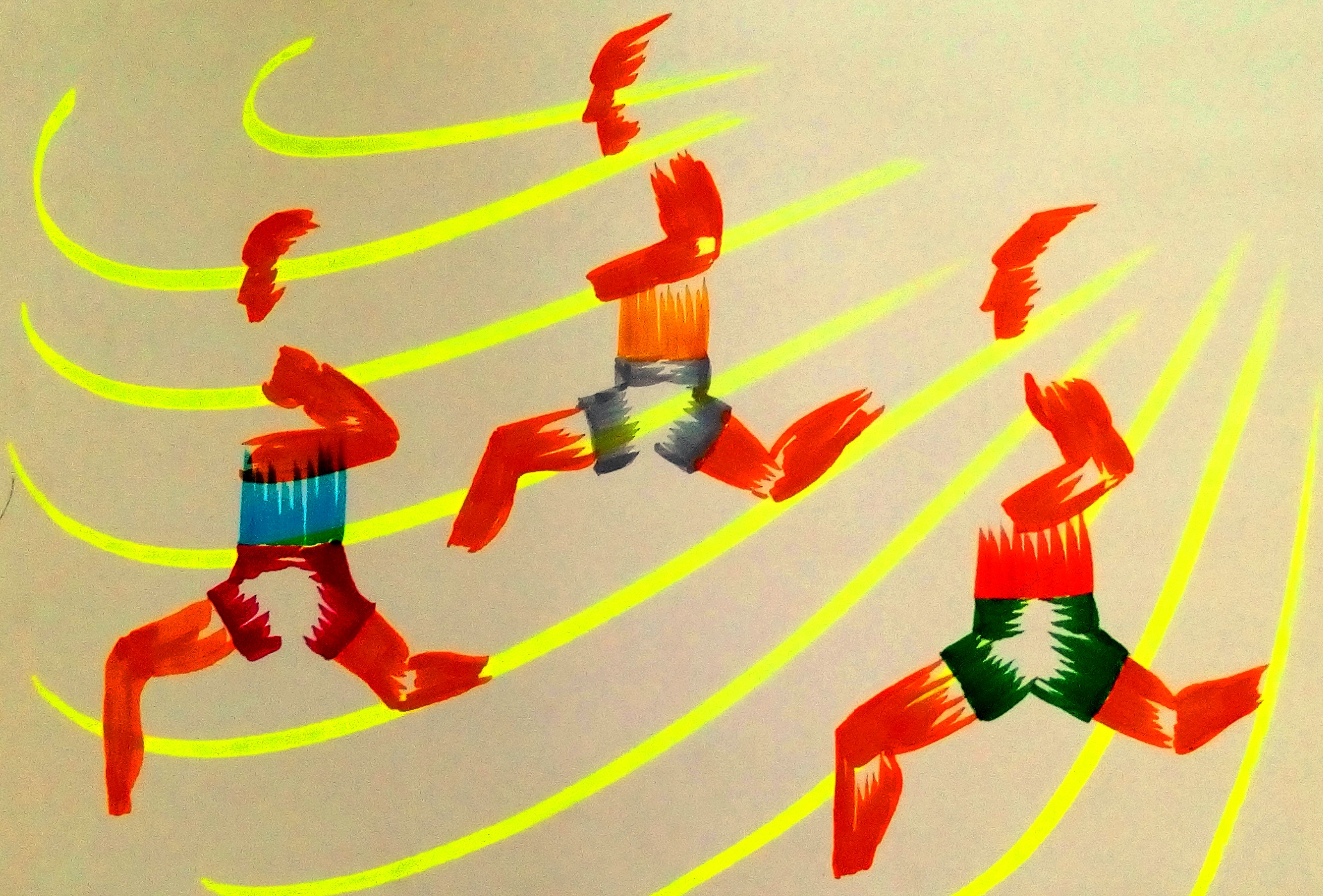
CROSS COUNTRY’S RETURN TO OLYMPICS WILL BE AS MIXED TEAM RELAY

Illustration: Shyam G Menon

The cross country event proposed for the 2024 Paris Olympic Games will be a mixed team relay featuring 15 countries, the World Athletics Council has confirmed.

“ Each team would be composed of two men and two women. Each member of the team would run two legs of the 2.5km course, alternating between male and female athletes as each athlete completes the 2.5km course and hands over to a teammate,’’ a press release dated July 30,2020, available on the website of World Athletics, said.

According to it, World Athletics will meet with the organizing committee of Paris 2024 in the near future to work out further details of the proposal. World Athletics, president, Sebastian Coe he expressed delighted at the prospect of cross country returning to the Olympic Games 100 years after it last appeared at the 1924 Paris Games.

“ My love for athletics began with cross country,’’ he was quoted as saying. “ When I joined my first athletics club, Hallamshire Harriers, the club president was Joe Williams, who ran in the last Olympic cross country race in Paris in 1924. It would be hugely symbolic for this wonderful athletic discipline to return to the fold after a century, and for a new generation of runners to fall in love with the glorious challenge of running off-piste,” Coe has said.

(The author, Shyam G Menon, is a freelance journalist based in Mumbai.)
THE KING

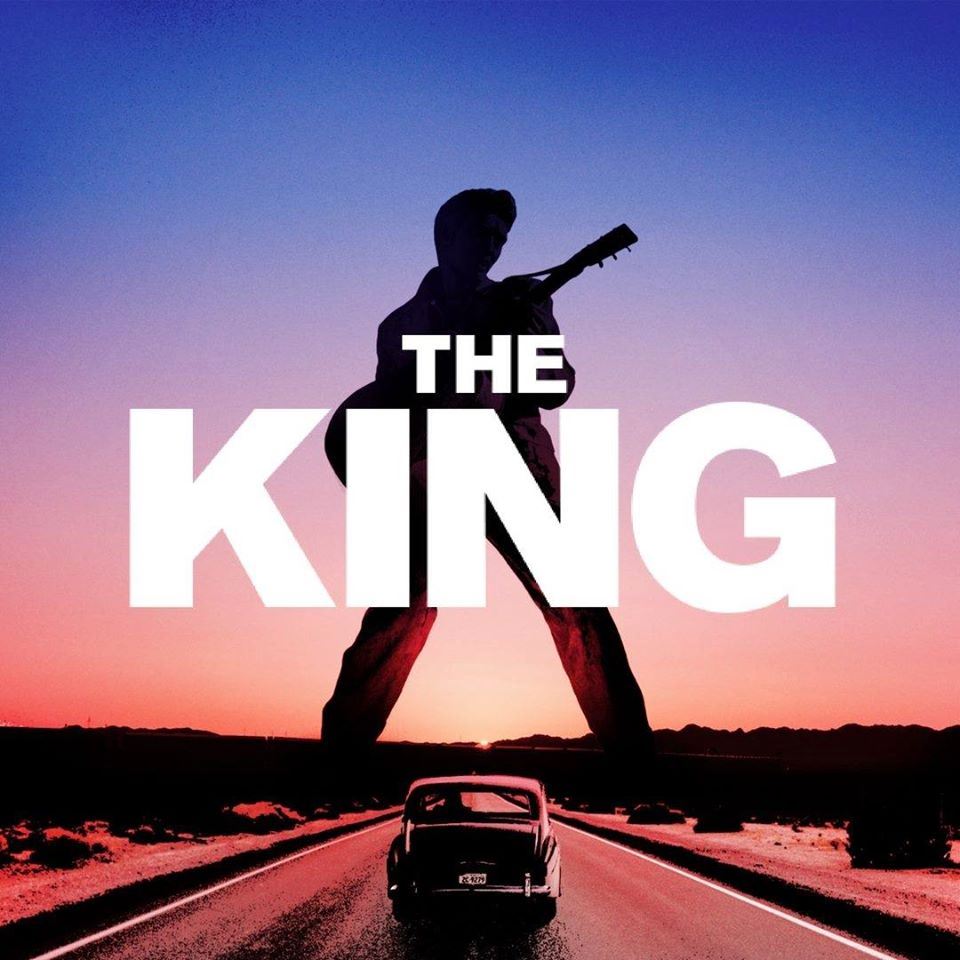
This image was downloaded from the film’s Facebook page and is being used here for representation purpose. No copyright infringement intended.

Do you shape the journey or does the journey shape you?

That’s a question creative people often confront. I don’t know if the makers of the 2017 documentary The King had a theme to chase or whether the chase served up a theme. My hunch is it was more the latter. Whatever the reason, this is an outstanding documentary on a familiar subject – Elvis Presley.

There was no doubt in my mind as regards what the topic maybe, when I saw the film and its title show up on Netflix. Elvis is so strongly linked to that reference: the king; he is the king of rock `n’ roll. Most documentary films about rock stars end up a carefully struck balance between puff piece and their struggles, typically the product of complex life or acquired habits. What I didn’t anticipate in The King was the manner in which the documentary explored the origins of Elvis’s music, the social circumstances that led to him and not others being the king of that genre, the many ways in which his popularity was leveraged leaving him a brand and eventually a commodity and how all this probably reflected at a larger level, a nation’s aspirations hijacked by money and power and rendered hypocritical.

That’s a lot to squeeze into a documentary film of finite dimension. But The King pulls it off magnificently with its idiom of traveling through Elvis country in the king’s own Rolls Royce and chats with singers and actors recorded as they ride in the car. None of those participating in the documentary – they range from Ethan Hawke to Alec Baldwin, Mike Myers, Chuck D and Emmylou Harris – hold back on what they think of Elvis. This makes the film natural and engaging. The musical genres Elvis promoted were not new; some of his songs were sung by others earlier and sung pretty well too. Even the car comes in for scrutiny – if Elvis was as representative of the American Dream as he was marketed to be, why did he keep a Rolls Royce? It puts the spotlight on what ingredients constituted the Elvis phenomenon. How did genres and lines that were already existing become a hit when sung by him? And in proportion to how things worked for him, you realize why it didn’t work for others. Little by little, the film, as it unravels the imagery around Elvis, unravels alongside the progressive decline of the original American Dream – life, liberty and happiness. The values the country once evoked appear lost through emphasis of money, companies and empire building, not to mention the steady propagation alongside of misleading imagery by a powerful entertainment industry.  The picture of America became that latter synthetic facade. A yawning gap opened up between it and reality. The King is as much about Elvis as it is it about what happened to America.

A few things made this documentary interesting to watch. First, as viewer, you live in the present with questions about America born from the social inequality and turbulence you saw happening there over the past few years.  Second, as you deconstruct the Elvis-image you see how much the above mentioned situation has remained simmering and unchanged through all those years.  Third, this film is not only absorbing for its subject but also for how it was made. It has an organic, evolving-on-the-go feel, which – when you think about it – is possible only if the creative mind is complemented by courage. Finally, work of this sort makes you respect America. Such films – and others, more hard hitting and on more sensitive topics – wouldn’t be made if room for critical perspective shrank as it is has in some other democracies currently diluting freedom of expression.

This is a documentary worth watching.

(The author, Shyam G Menon, is a freelance journalist based in Mumbai.)     
WARM SPRINGS

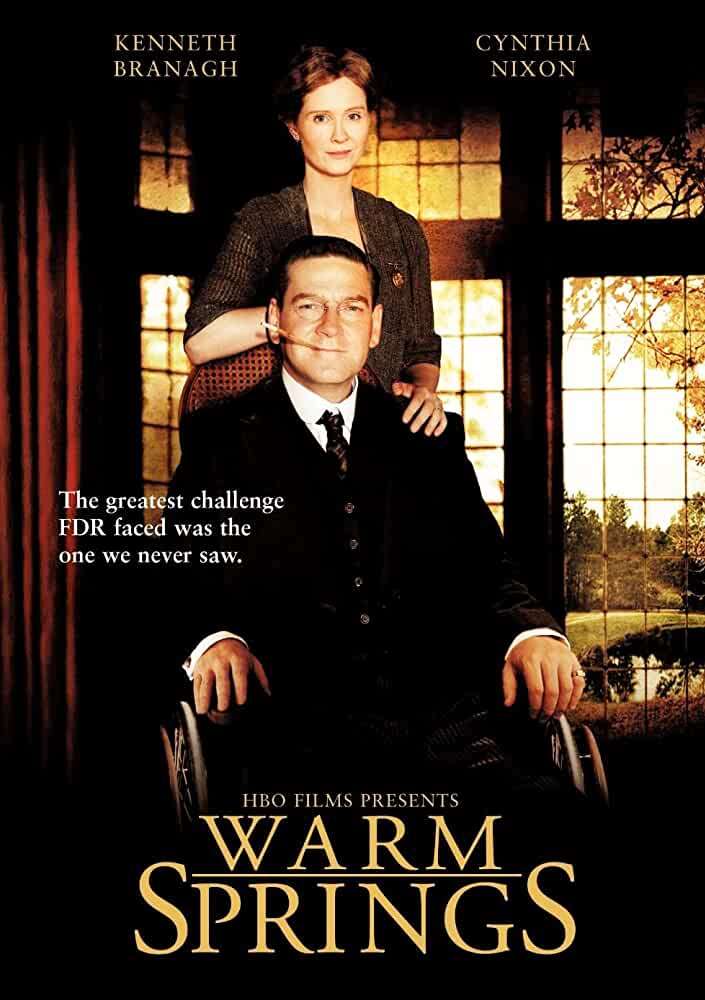
This image was downloaded from the Internet and is being used here for representation purpose. No copyright infringement intended.

As mentioned before on this blog, one of the lockdown induced-drifts I experienced was an appetite for films that told a human story in an uncluttered idiom, free of special effects. The algorithms at streaming media platforms are pretty good these days and soon enough, Disney-Hotstar recommended the 2005 television film Warm Springs. It proved to be a rewarding experience at many levels.

The film depicts a stage from the life of Franklin Delano Roosevelt, 32nd president of the United States. It picks up from the 1920 presidential election campaign, in which Roosevelt is the Democratic Party’s candidate for Vice President. At this point, Roosevelt is a picture of possibility. He hails from a well-known influential family, has had access to good education; is wealthy and married to Eleanor.  In the election however, his side loses. The Republicans gain a landslide victory. Roosevelt takes the defeat in his stride. It does little to dampen his spirit or invite introspection. He carries on as before, included therein being an affair with his wife’s secretary, Lucy Mercer. Eleanor discovers the affair and it causes severe strain on their marriage. A divorce is prevented by Roosevelt’s domineering mother, Sara.

Around this time, Roosevelt is struck by poliomyelitis. The disease leaves him paralyzed from waist down. Besides being a personal setback, the impact of paralysis is amplified by the effect it can potentially have on his political image and career. It seems the end of Roosevelt the politician. However, his political advisor Louis Howe believes, that needn’t be the case. In his assessment, the loss at the 1920 hustings had served to catapult Roosevelt to the national stage. He and Eleanor stand by Roosevelt during the period of his illness, drawing up plans to keep the extent of damage a secret and at the same time doing what they can to keep Roosevelt’s name afloat in political circles, including forays by Eleanor into the women’s suffrage movement. The film’s real story revolves around Roosevelt’s journey to a spa resort in Georgia and his subsequent stay there trying out hydrotherapy as means to improve his condition. Impressed by his progress and inspired by the people he meets, he decides to acquire the property in the hope of creating a center offering the therapy to those in need. It is a period that restores his faith in himself and also mends to an extent, the soured relationship with Eleanor. The film concludes with his return to active politics.

Aside from the fact that polio too is caused by a virus, what made this film relevant amidst COVID-19 lockdown, was Roosevelt’s tenure as president of the US and the curiosity to know what all went into making him the person he was. Beyond being the longest serving president of the US, Roosevelt is associated with his service to the nation during two critical periods – the Great Depression and World War II. The Great Depression began during the presidency of Herbert Hoover, with the Wall Street Crash of October 24, 1929. Roosevelt became president in the depths of the depression and it was under his leadership and the programs his government introduced, that America began clawing its way out of economic downturn. His interventions, while effective, were not welcomed by big business. The website whitehouse.gov notes, “ By 1935, the nation had achieved some measure of recovery, but businessmen and bankers were turning more and more against Roosevelt’s New Deal program. They feared his experiment, were appalled because he had taken the Nation off the gold standard and allowed deficits in the budget, and disliked the concessions to labor. Roosevelt responded with a new program of reform: Social Security, heavier taxes on the wealthy, new controls over banks and public utilities, and an enormous work relief program for the unemployed.’’

As an outside observer, you wonder – how did a person born and raised in elite circumstances come to embrace such an approach and lead his country out of an economic crisis? For me, now tackling the economic consequences of COVID-19 lockdown, that was the dominant instinct while watching Warm Springs (the film is named after the place where the spa resort stood), which scans a small but important phase of Roosevelt’s life. The film didn’t disappoint, unraveling in its sweep, the personal suffering Roosevelt endured on account of polio, the society he encountered in the conservative south, the fellow disadvantaged souls he attracted to the spa resort and the inclusive community he built there. As a politician, he was already a people’s man albeit withdrawn since the polio episode. In addition to his own transformation through hdrotherapy, what you notice in the film, is the change to the social circles he elects to connect with and learn from. You get a sense of cocoon breached and world seeping in. The film has a solid cast with Kenneth Branagh as Franklin Delano Roosevelt, Cynthia Nixon as Eleanor, Jane Alexander as Sara Delano Roosevelt, David Paymer as Louis Howe, Kathy Bates as Helena Mahoney and Tim Blake Nelson as Tom Loyless.

Warm Springs remained dear to Roosevelt’s heart. He died during his fourth term as president. He was in Warm Springs when the end came.

(The author, Shyam G Menon, is a freelance journalist based in Mumbai.)